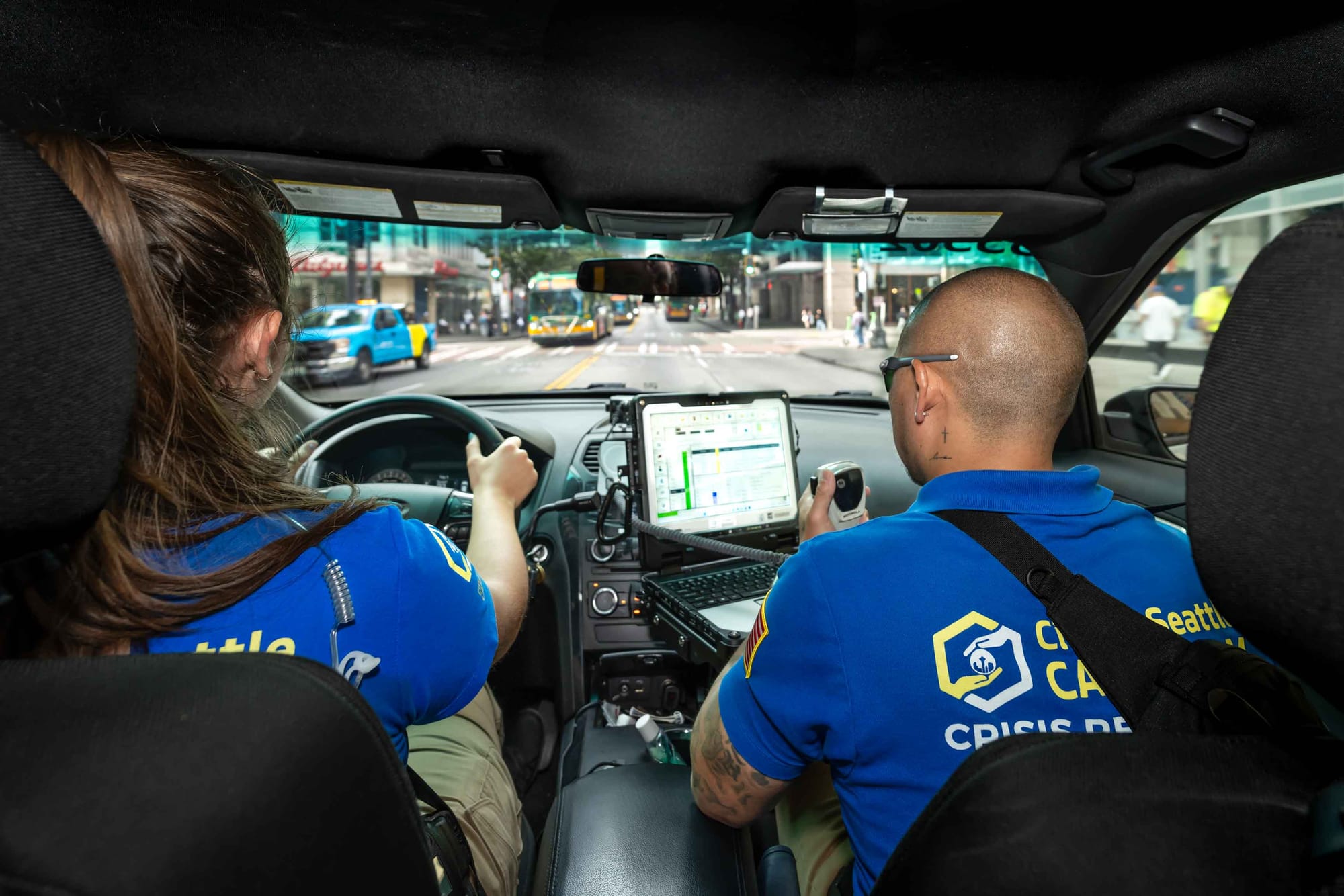
While the planned expansion of Seattle’s civilian crisis response program from 24 to 48 responders is proceeding, the team is still being blocked from performing much of the clinical work for which they are qualified due to the conditions laid out in the new Seattle Police Officers Guild (SPOG) contract.
Community Assisted Response & Engagement (CARE) department Chief Amy Barden told The Urbanist that the first training cohort of new community crisis responders recently graduated and are currently undergoing field training. The CARE team currently has 32 community crisis responders, with another nine scheduled to join during the next training cohort in June.
The department has not yet set a date by which to complete the full expansion to 48, CARE spokesperson Bobbie Nickel told The Urbanist.
The department is still in the process of deciding whether to use the increased worker capacity to have more teams available during peak hours or whether to focus on expanding hours of service, leaving fewer teams working at any given time.
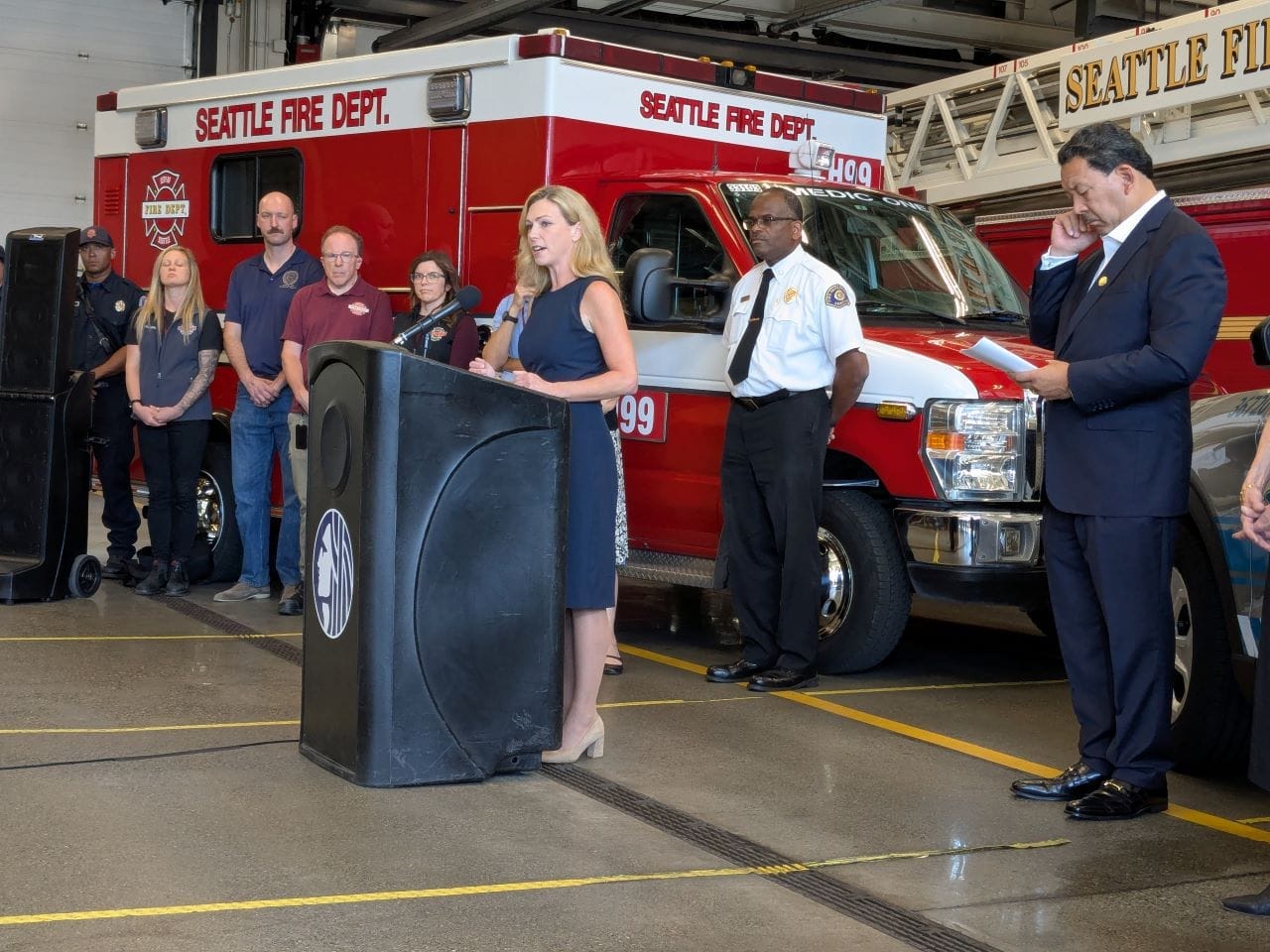
Former Mayor Bruce Harrell announced the CARE expansion last September just before introducing his 2026 proposed budget.
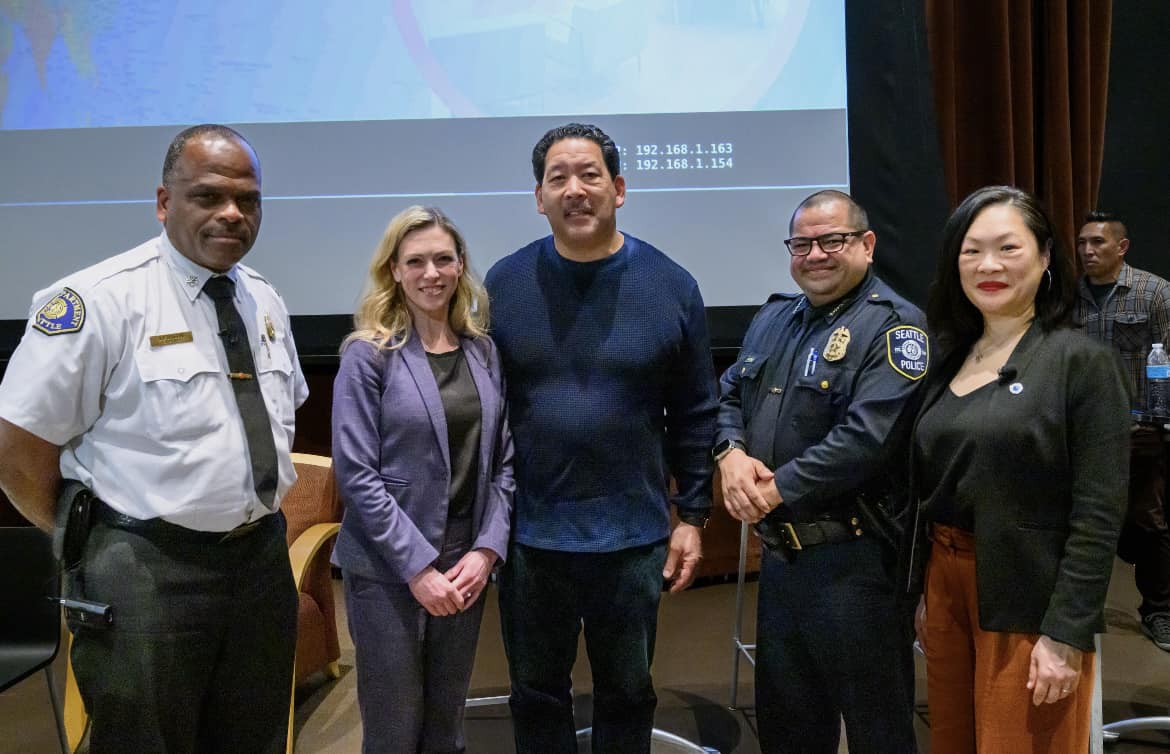
The money to pay for 24 new CARE responders came from a new 0.1% public safety sales tax authorized by the state legislature. The Seattle City Council passed this new sales tax in October in a 8-1 vote, with Councilmember Maritza Rivera casting the sole no vote. The $6.9 million funding the expansion represented about 18% of the sales tax increase.
Harrell accompanied the announcement of the doubling of the CARE team with the assurances that contract negotiations with SPOG were going well. These negotiations mattered because the previous SPOG contract capped the total number of CARE responders the City was allowed to hire at 24.
When Harrell announced the new SPOG contract later in October, he again gave assurances that the CARE team would now be allowed more freedom of operation.
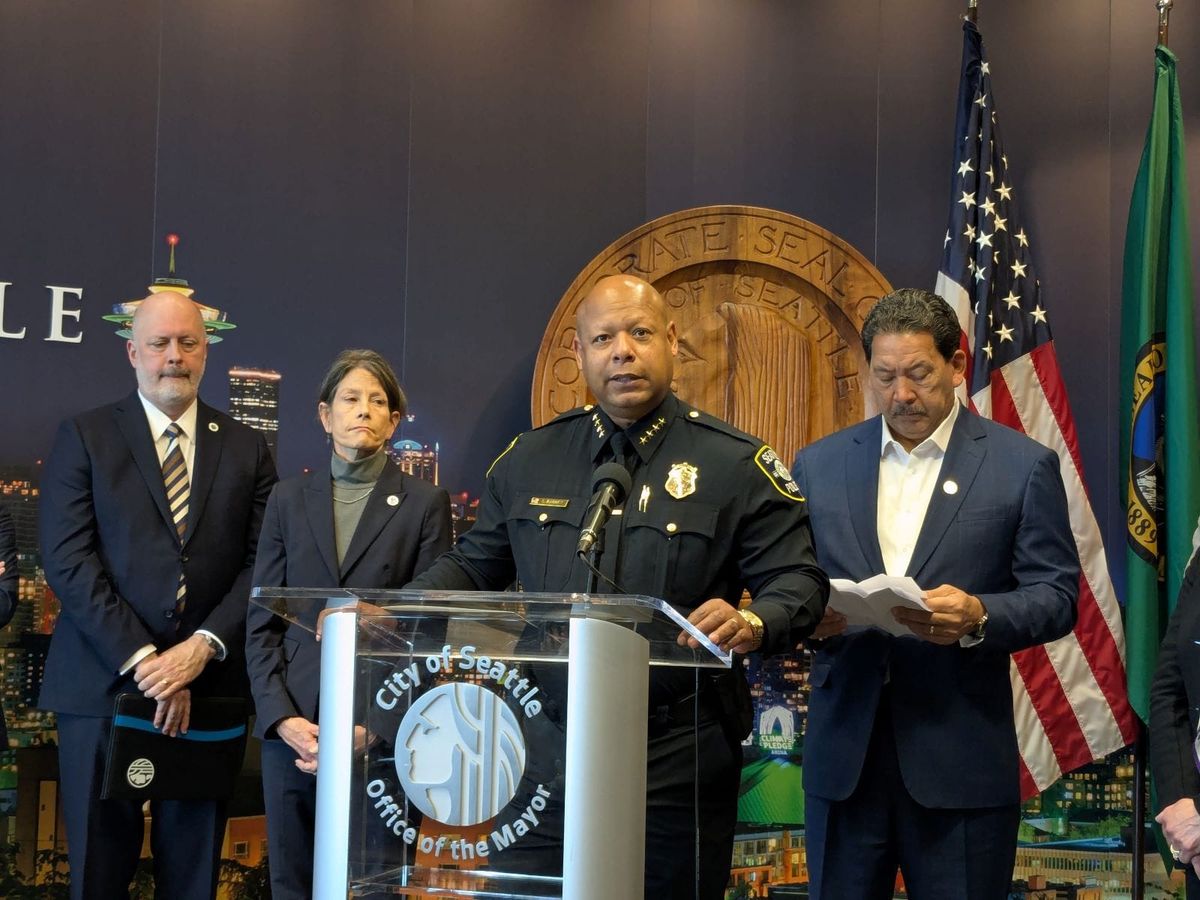
“This contract that we've been able to negotiate and almost get it across the finish line [...] really moves the CARE department, the Community Assisted and Response Engagement Department, from a pilot to a permanent entity, from a promise to public safety to a complete paradigm shift,” Harrell said. “And again, it removes the limits on its growth.”
However, while the SPOG contract did make the CARE team permanent and remove the cap on its growth, it imposed many restrictions on when the CARE team can be dispatched by 911 by themselves – restrictions that, in practice, have continued to prevent the CARE team from doing their jobs.
At the time, Barden told The Urbanist the City hadn’t even shown her the new SPOG contract before having her speak at a press event touting its positive impact on the CARE department.
While some councilmembers seemed to understand that the new SPOG contract wouldn’t actually allow Seattle to effectively field alternative crisis response – namely, Councilmember Alexis Mercedes Rinck – others sounded more confused during the final vote on the contract.
“Here's some also solid reform of the department's dispatch practices and policies, namely, the CARE department expansion,” Councilmember Rob Saka said. “That's a good community win. It's a big deal.”
Saka voted no for the contract not because of its hamstringing of the CARE team but because he said he wanted to see greater gains in accountability.
Councilmember Dan Strauss, however, did vote for the contract.
“We find ourselves in a position where the only way to expand CARE's community response teams or our other police alternatives is through this contract, and the only way to move accountability provisions forward into arbitration today is through this contract,” Strauss said. “Without this contract, we would be delaying our ability to expand CARE indefinitely.”
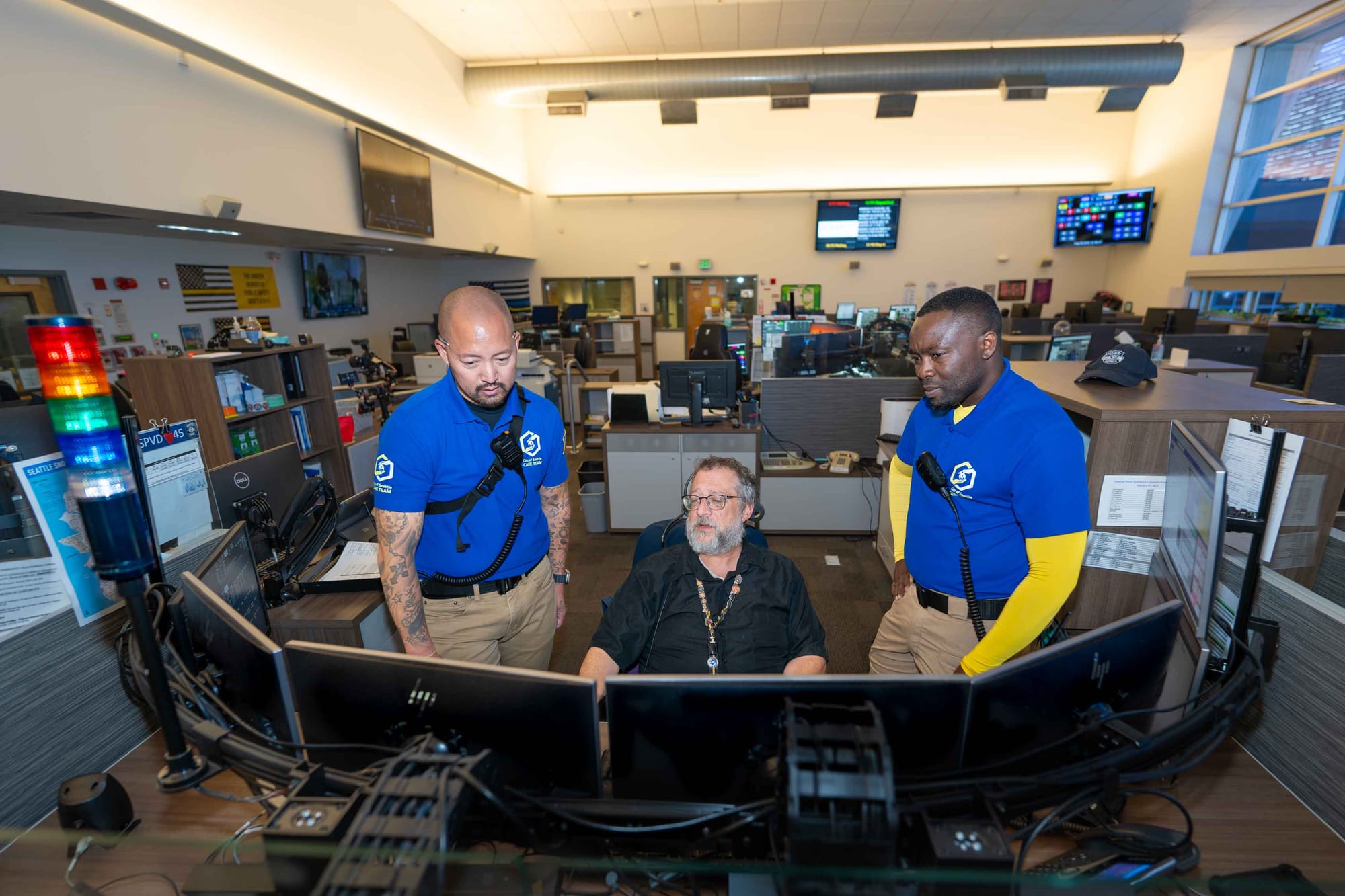
Since the passage of the SPOG contract, Barden has said things have gotten worse instead of better, telling PubliCola that the sergeants who decide whether to dispatch CARE have been increasingly dispatching SPD’s Community Service Officers (CSOs) instead, who do not receive the clinical training required to be a CARE responder. However, CSOs work within the command structure of SPD, unlike the CARE responders.
“Although about 2,400 calls come into 911 every day, we estimate that perhaps 10 to 20 would qualify for CARE solo dispatch,” Barden told the Seattle City Council Public Safety Committee in March.
PROTEC17’s Unfair Labor Practice Complaint
In mid-April, PROTEC17, a labor union that represents many City workers including the CARE responders, filed an unfair labor practice (ULP) complaint against the City and SPOG.
The complaint says that the section regarding the CARE responders in the most recent SPOG contract should be thrown out because it was improperly bargained. This section stipulates both working conditions and duties and bodies of work of CARE responders, which PROTEC17 representative Stephen Prey said should have triggered mandatory bargaining between the City and the union on behalf of the responders.

The SPOG contract also outlines minimum hiring standards for CARE responders, another issue that seems strange for the City to bargain with a guild that doesn’t represent the actual workers being impacted.
However, the City did not provide notice to PROTEC17 nor initiate bargaining proceedings around the myriad conditions imposed on the CARE responders by the new SPOG contract.
Unless the City is able to circumvent the blockage, December’s SPOG contract represents the latest in a string of broken promises made to Seattle residents by elected officials to stand up effective alternative emergency response.
Fielding a civilian response constituted one of the chief demands of the George Floyd protests of 2020 – although it was overshadowed by the more publicized and controversial demand of defunding SPD by 50%. In spite of the subsequent commitment by then-Mayor Jenny Durkan to “reimagine public safety,” efforts to stand up the behavioral health responder team have been repeatedly stymied over the last six years, leading to Seattle lagging behind other American cities that have initiated alternative response programs during the same period of time.
One of the chief issues currently in contention is independent 911 dispatch. The most recent SPOG contract continued to give power over which responder should respond to which calls to SPD by failing to allow CARE responders to be dispatched alone to the vast majority of calls to which they might be the appropriate response. Instead, that power rests with SPD sergeants, ultimately positioning the CARE responders and their deployment as another bargaining chip for the police guild.
As they set about negotiating their next SPOG contract, City officials do run the risk that SPD can further impede the flow of calls to CARE as means of illustrating their leverage.
The complaint from PROTEC17 throws into stark relief the contrast between the way the City is treating its police officers versus its community crisis responders.
Other possible solutions
Examples elsewhere in the country show a few more potential paths forward for civilian 911 response in Seattle.
The City of Columbus, Ohio had a charter amendment on its ballot a couple weeks ago to ensure the creation of an alternative crisis response system with a team of clinicians, social workers, and EMTs to respond to non-violent emergencies.
The amendment received overwhelming support, passing with 77% of the vote. The ACLU of Ohio was one of its major proponents.
The passage of this voter initiative gives more stability to Columbus’s alternative response, insulating it from the vagaries of politics, whether that be new elected officials or police guild collective bargaining negotiations.
A similar charter amendment in Seattle could give 911 dispatch the independence it has been seeking. It’s likely too late to spearhead such an attempt this year, but running a ballot initiative in 2027 is a possibility.
Another route forward involves state-level legislation. In 2021, the Illinois legislature passed the Community Emergency Services and Support Act (CESSA), which requires emergency dispatch to refer calls involving mental and behavioral health support to a team of mental health professionals instead of police. CESSA only allows co-response (police and a mental health professional responding at the same time) to these calls when there is violence or criminal activity.
While Illinois’ law was originally supposed to be implemented by July 2022, the effective date for CESSA has been pushed back more than once, now standing at July 2027.
Legislation requiring all 911 dispatches within Washington state to send civilian mental health professionals to crisis calls would be a different tack for the legislature. In 2025, Rep. Shaun Scott (D-43rd Legislative District, Seattle) sponsored House Bill 1816, which would have established the right for a city to set up a civilian alternative response team and prohibited collective bargaining with police guilds about the program elements of the response. The bill received stiff opposition from labor interests and didn’t receive a floor vote.
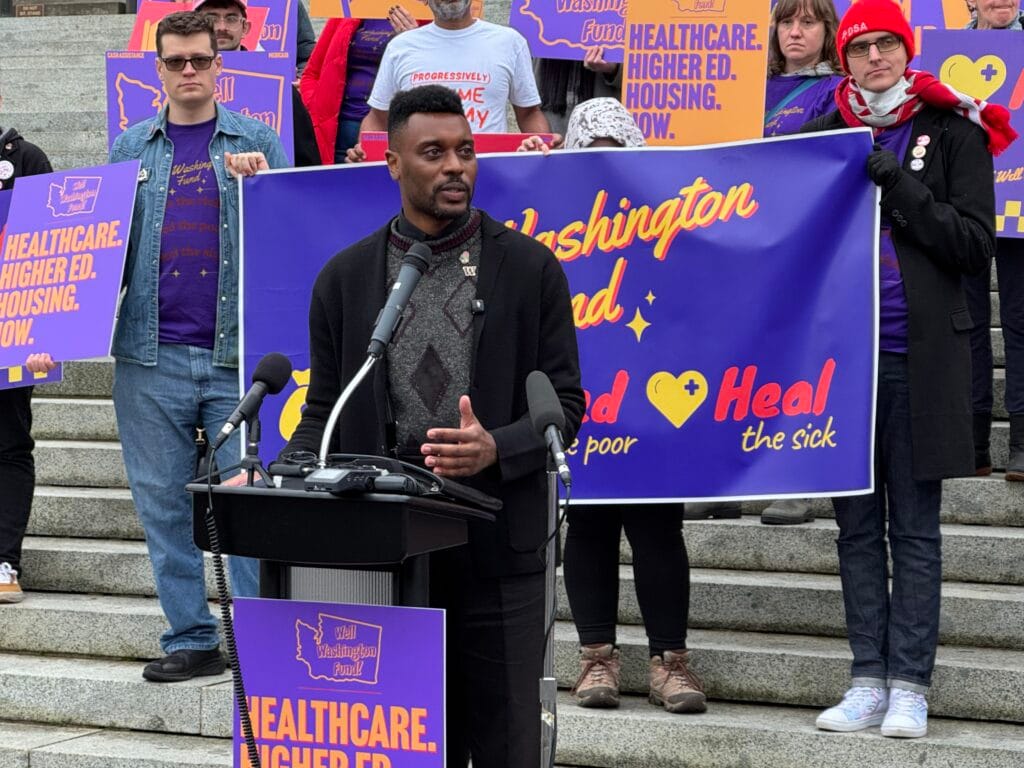
However, a requirement for 911 dispatch to send a civilian alternative response, foregoing any interference with police guilds’ collective bargaining rights, might allay some labor opposition.
It’s also possible the way Seattle’s 911 response system is set up might be illegal due to the Americans with Disabilities Act. The U.S. Department of Justice (DOJ) has found several municipalities have been engaged in a pattern or practice of conduct that discriminates against people with behavioral health disabilities when providing emergency response services, including Oklahoma City, Minneapolis, and Louisville, Kentucky.
However, DOJ made all of these findings before President Donald Trump took office for his second term, overhauling the DOJ and broadly targeting diversity, equity, and inclusion (DEI) programs for repeal.
Finally, there is the solution Barden has been discussing publicly since last year: training 911 operators to divert crisis calls to 988, which would take charge of dispatching teams of mental health responders. This approach would get around the SPOG contract’s rules for the CARE team, but could lead SPOG to submit a ULP against the City.
Barden was very clear when she briefed the Council’s Public Safety Committee at the beginning of March.
“Today, we estimate that the 24 responders are, on average, fulfilling only 28% of their capacity due to the constraints described,” Barden told the committee. “And so we must innovate. It is unacceptable to not fully maximize this important team, and it's also unacceptable to waste even one dollar in such a challenging budget environment.”
 Amy Sundberg