This week, Bellevue took a step away from its suburban-oriented past, with a quiet, little-acknowledged vote Tuesday to implement a paid parking program throughout the Downtown, Wilburton, and Belred neighborhoods. Primarily a way to ensure regular turnover of high-demand on-street parking spaces, a curbside parking program will also provide revenue for Bellevue to implement other transportation programs, strategies identified in the City's 2023 curb management plan.
An idea that has been moving forward for years, the final vote came tucked in a consent agenda, approved with a slate of other uncontroversial bills.
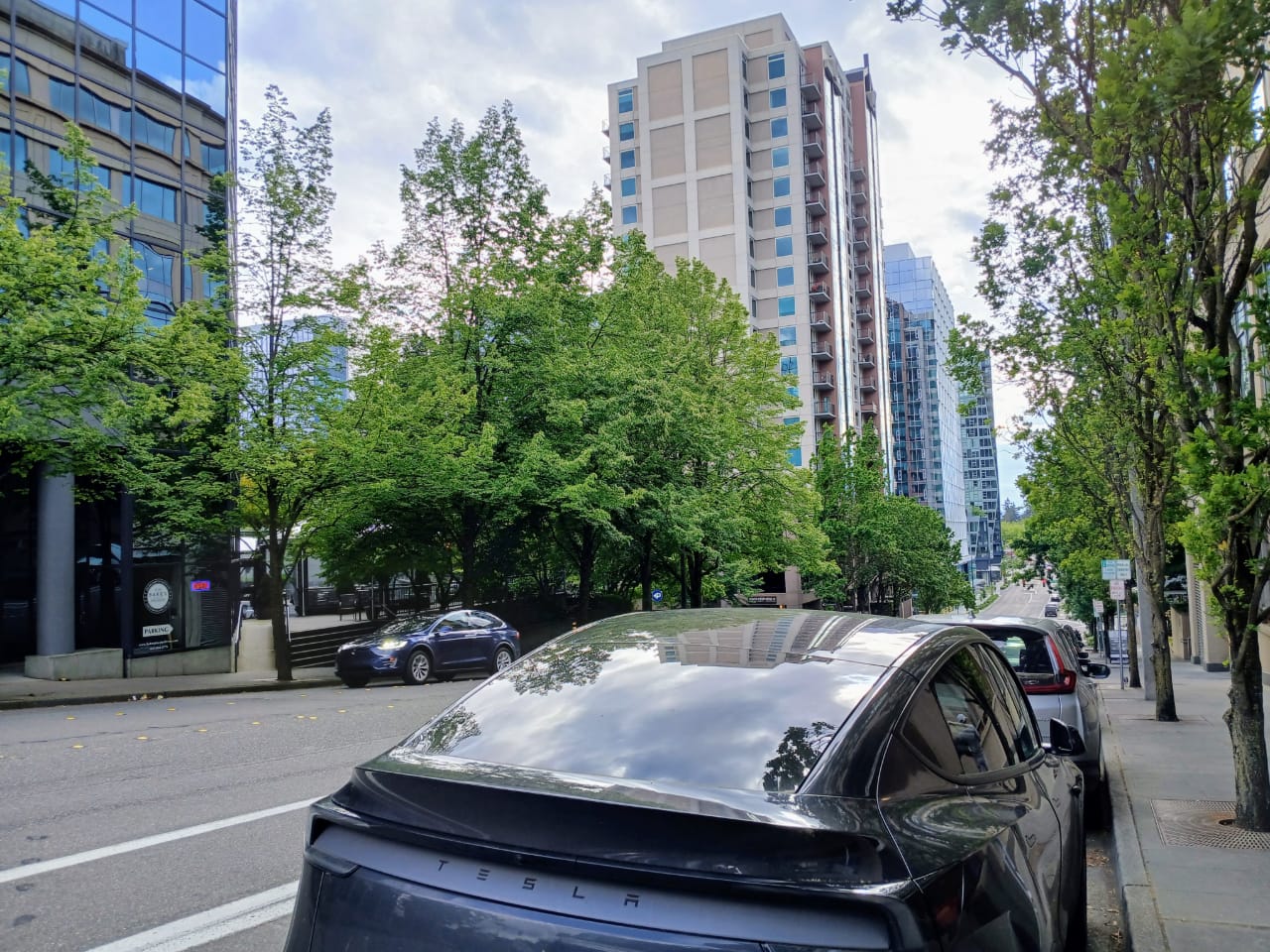
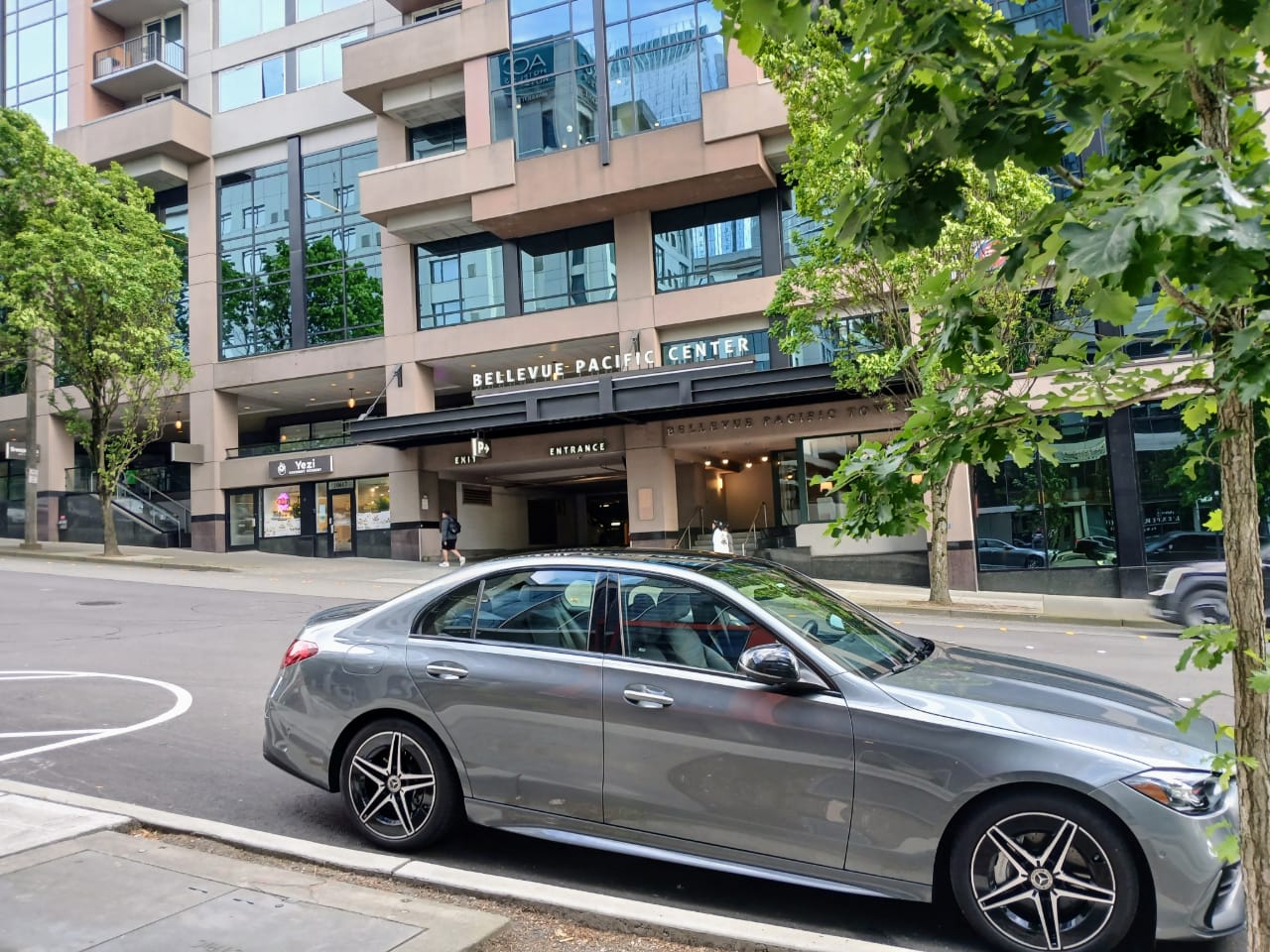
Curbside parking is actually fairly scarce in central Bellevue, with many of the curbside lanes used to move vehicles and thousands of off-street stalls squirreled away in the neighborhood's buildings. As of 2022, Bellevue counts only around 600 on-street stalls throughout Downtown, BelRed, and the Spring District, compared to approximately 55,000 off-street stalls in garages and parking lots.
Though time-restricted, these on-street spots are not metered. A lack of enforcement translates into drivers regularly overstaying their welcome.
"Our top priority here is to improve access to the street-level businesses that rely on the street parking, and today the street parking is as a challenge through most of the day," Chris Long, Bellevue's Assistant Transportation Director, told the Council at an April 28 discussion on the bill. "Starting around noon, the parking is full, and we're finding that, in addition, through the data collection we did in 2024 and '25 that about 25% of vehicles are also overstaying the limit, due to the limited enforcement that we have throughout the project area."
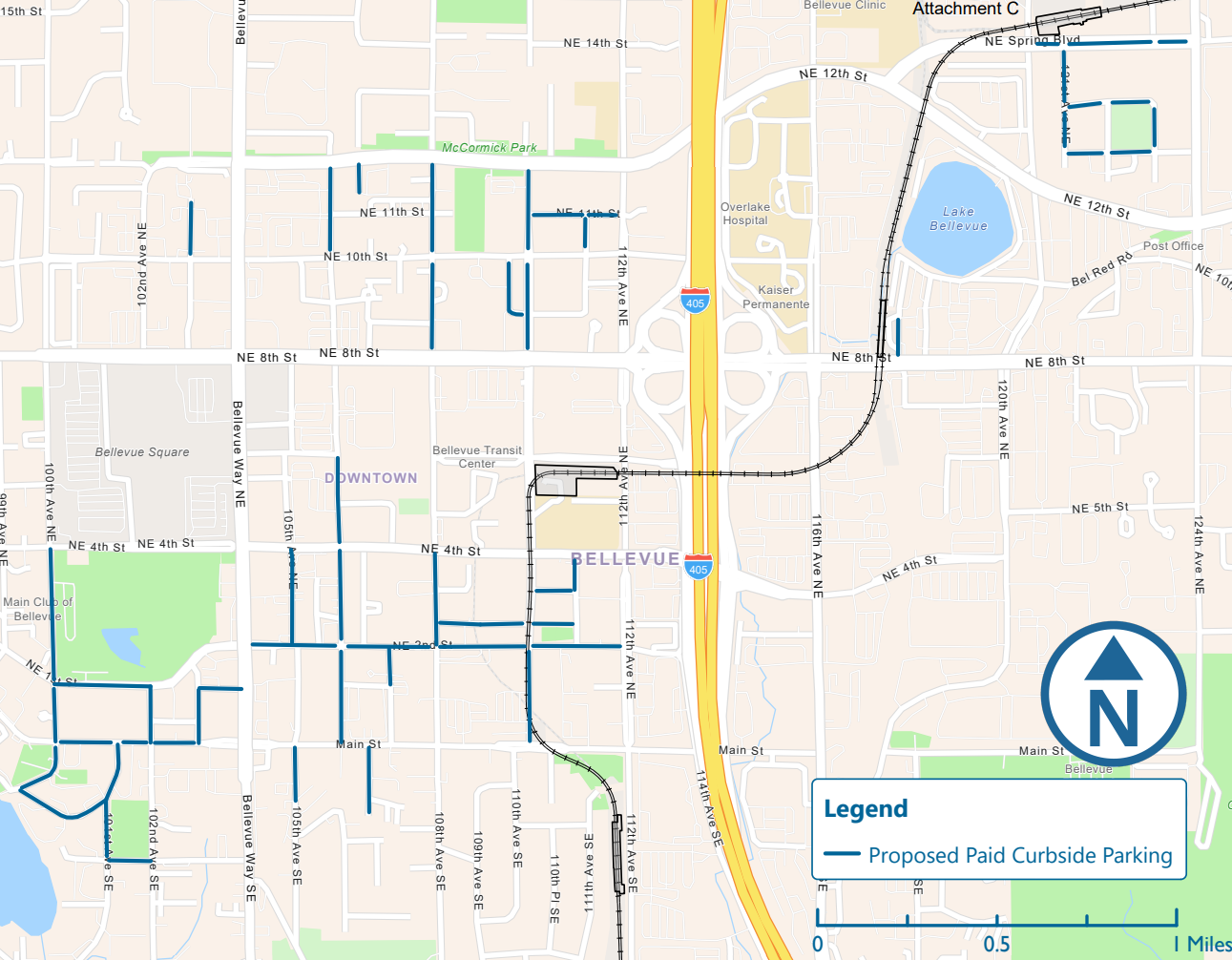
The code update approved this week only establishes a range of $1 to $8 per hour for curbside pricing, with Bellevue's transportation department poised to use a dynamic pricing model to come up with exact rates. A similar system has been in place in Seattle since 2010. Under dynamic pricing, the north star will be whatever hourly rate translates to approximately one or two parking spaces being open and available per block at any given time throughout the day, based on modeling.
"We do not intend to start at the top of the range. That would be for a very unique situation if we are finding that there's a challenge in getting that turnover," Long said.
After making back the funds used to establish the parking program, Bellevue will be tasked with deciding how to reinvest the remaining proceeds. The establishing ordinance spells out specific uses for those dollars, including street activation, transit access improvements, and traffic safety upgrades.
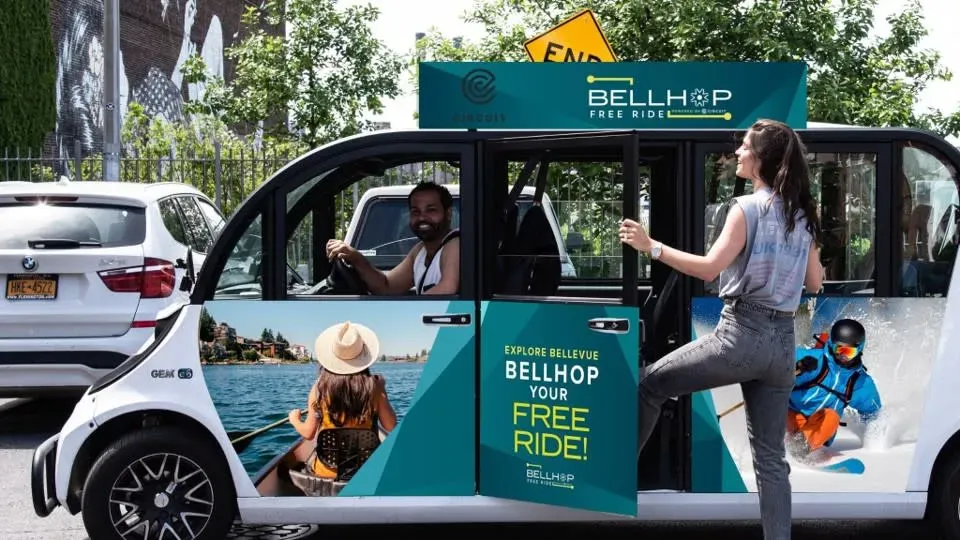
One specific program that has already been identified is an expansion of the operating hours for Bellhop, the city's free shuttle program that launched in 2023. Operated by app, Bellevue residents and visitors can hail a shuttle from most parts of downtown, and much of Wilburton and the Spring District. Currently, Bellhop stops running at 9pm. City leaders hope that it can operate later into the evening to connect workers and visitors with light rail.
Expanding the service area to include South Bellevue Station's parking garage could also be in the cards.
Parking revenue could also be used for physical improvements throughout downtown, including upgraded bus stops. It could also pay for street activation – projects that turn some of Downtown Bellevue's windswept streets into livelier spaces, with things like parklets and streeteries.
As an infamously car-oriented city, the idea of implementing paid parking has been somewhat controversial. Management at the Bellevue Collection, the retail complex that includes Bellevue Square Mall owned by longtime Bellevue powerbroker Kemper Freeman, has opposed the move. That complex includes more than 10,000 parking stalls provided to shoppers for free, dwarfing the number of stalls on the street by an order of magnitude.
With Freeman's encouragement, the idea of free parking has been synonymous with Downtown Bellevue for decades.
However, the prospect of providing businesses with more direct access via open parking spots at the street combined with additional city revenue was ultimately enticing enough to push Bellevue to get in line with thousands of other cities in operating paid parking programs.
"I'm not a big fan of paid parking. I was really hoping that our city could continue its tradition of not charging for parking, because it's such a unique thing in this region, but I understand the need to try this," Councilmember Lynne Robinson said in April. "I just want to do a major check-in in three years, and really, my bottom line is our business is benefiting from this program, and however you measure that, I hope it's thorough."
Bellevue did consider whether it was feasible to continue to allow drivers to park for free for their first 30 minutes, but had to go to Boise, Idaho to find a comparable city with such a policy in place, and the verdict from Boise was not an encouraging one.
"In talking to Boise, they noted that it does create quite a bit of user confusion and had an impact on revenue," Long said. "We dug a little bit more into the revenue side, and found through additional turnover studies we performed that, depending on the area, we were seeing 25% to 50% of activity being less than 30 minutes, so with that loss of revenue, and the loss of the first 30 minutes of every other stay at the curb, it results in a significant impact to the overall gross revenue, which would basically leave us with no additional revenue to reinvest into the curb management plan."
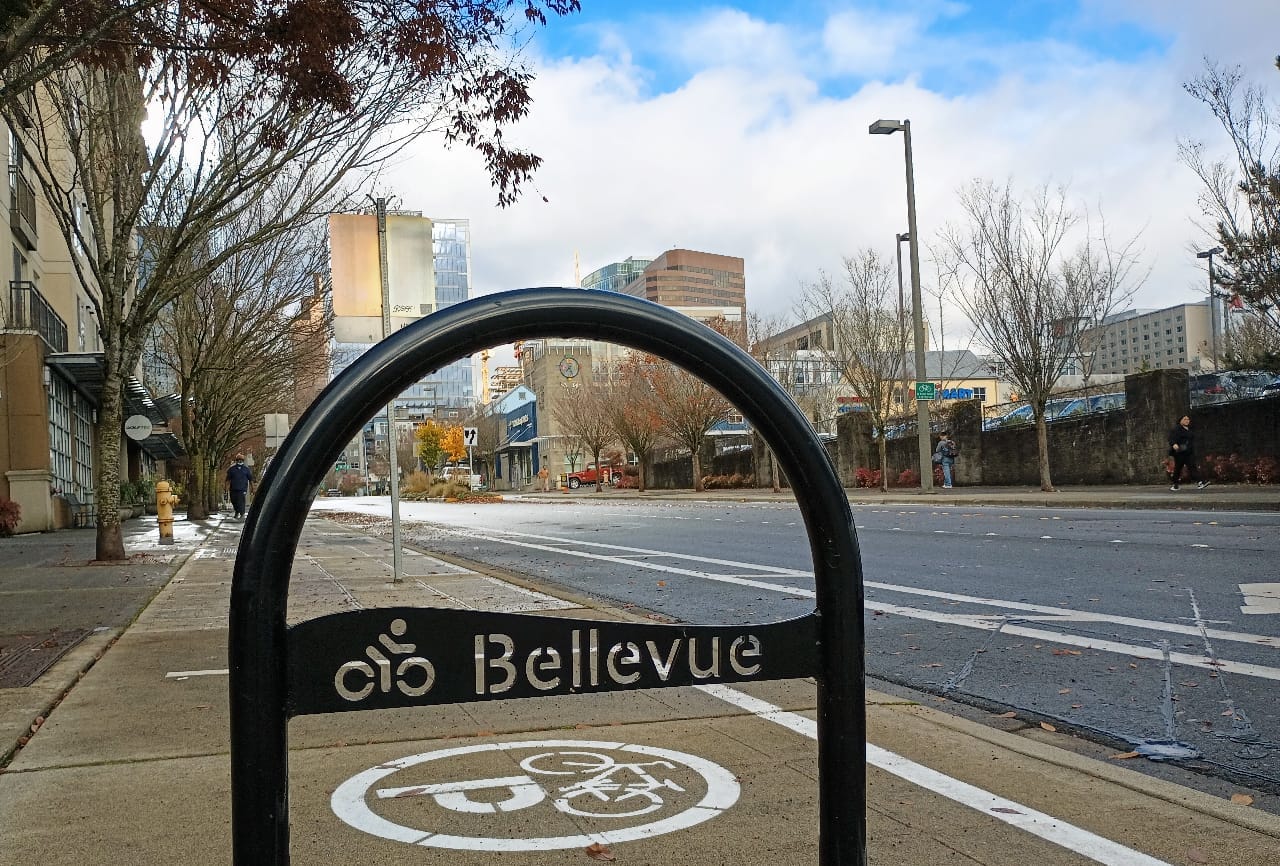
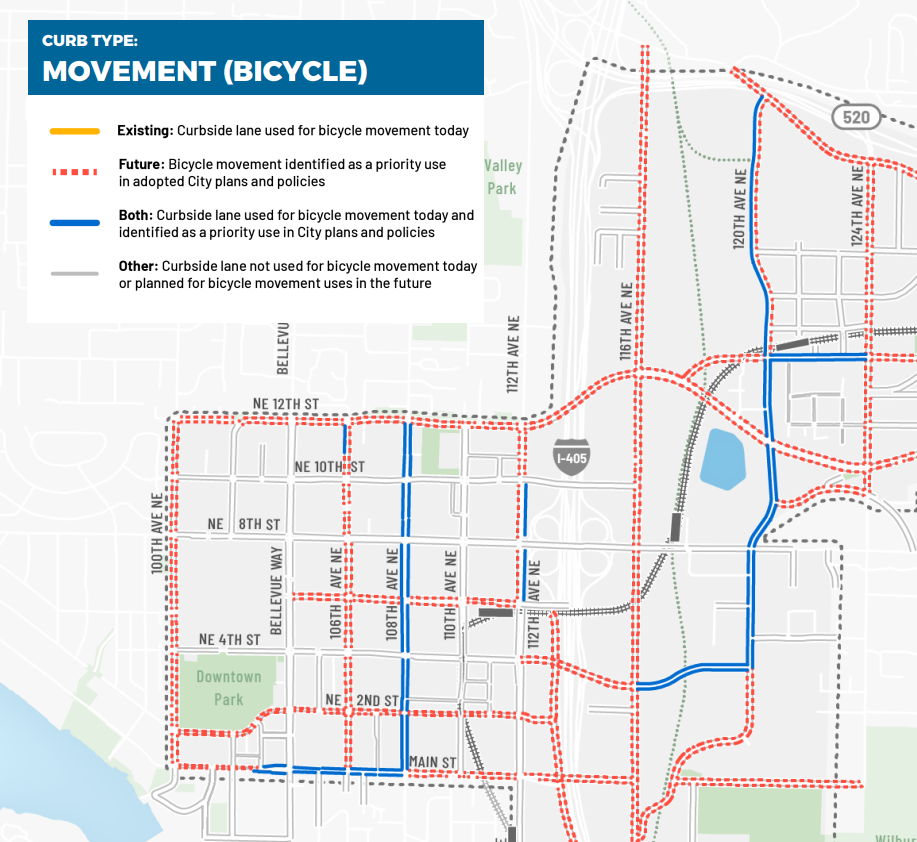
Of course, there's also the question of whether vehicle storage is the best use of Bellevue's curb space, as the city moves toward becoming a more multimodal city oriented around the 2 Line. The 2023 curb management plan noted that many streets throughout Downtown and the Spring District are slated to see bicycle facilities on paper. But the ambitious Bike Bellevue Plan, which was watered down in 2024, remains a shell of its former self, with the only bike upgrades planned downtown this year involving sharrows, narrow painted bike lanes, and in one instance buffered bike lanes, on 116th Avenue NE.
While a paid parking program is one example of Bellevue catching up with the times, the city clearly has a long way to go on multimodal policy more broadly. Though many may see paid parking as a move that will hurt drivers, in reality they're likely to be the biggest beneficiaries, spending less time circling the block to find a spot.