A ballot initiative has been filed aiming to overhaul Sound Transit governance.
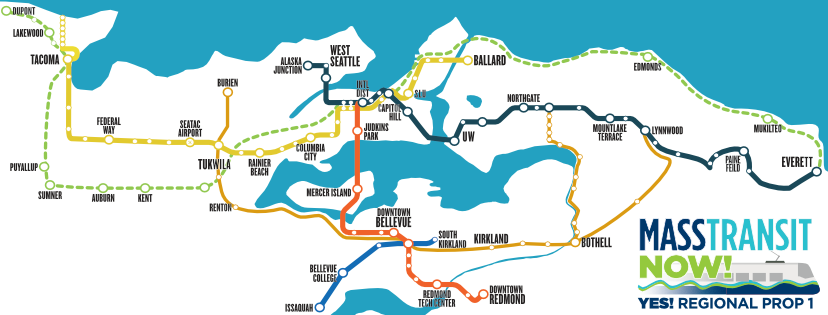
Clear majorities of Puget Sound residents voted in 2016 to approve Sound Transit 3 (ST3), a major expansion of our region’s mass transit system. Ten years later, very little progress has been made in getting those projects ready for construction.
Last week, the Sound Transit Board of Directors approved a plan to further delay some of those projects, some of which might not open until the 2050s or later.
The status quo isn’t working. Maintaining it risks our ability to deliver the passenger rail expansions we approved and so urgently need. While many things must change to deliver what we approved in ST3, one of them is that Sound Transit must be governed in a better way than it is today. Members of the public, and even current Sound Transit board members like King County Councilmember Claudia Balducci, are calling for change.
We need a board that is capable of getting ST3 built – and rebuilding the public trust needed to expand the system even further. We do not have that board today. It is time to reform the governance of Sound Transit.
That is why I filed an initiative to scrap the current Sound Transit board.
IL27-123, also known as The Effective and Responsive Transit Board Reform Act, is an initiative to the state legislature that would create a hybrid board, whose members would consist of:
- Eleven board members directly elected, one from each of eleven districts;
- The secretary of the Washington State Department of Transportation (WSDOT), who would remain a member of the board; and
- Seven board members who are appointed by the elected board members and the WSDOT secretary for their technical expertise.
The goal is a board whose majority is directly accountable to the electorate, but with a substantial membership that is there to help make decisions based on their experience in helping build and operate a successful mass transit system or other major projects.
Transit board governance is getting a closer look around the country. Colorado just signed into law a reform of Denver’s Regional Transit District board that would create a hybrid board similar to what is proposed in IL27-123.
This initiative is intended to spark a serious discussion that leads to a revised initiative we can submit to the legislature for approval. If legislators do not adopt it, the initiative would go before voters in 2027. The first election for the Sound Transit board would take place in November 2028.
Ten years is long enough. The climate crisis is here, and now an energy crisis has come with it. The future prosperity and sustainability of our region depends on getting the ST3 projects built quickly. After last week’s vote to delay many ST3 projects, voters will expect to see significant reforms to Sound Transit if they are to trust the agency with their tax dollars again.
There is an urgent need for change. We cannot wait any longer.
Details of the initiative
The Effective and Responsive Transit Board Reform Act proposes that eleven districts of equal population be drawn within the boundaries of the Central Puget Sound Regional Transit Authority (RTA) by a commission appointed by the governor.
Every four years, beginning in November 2028, voters across the RTA would elect one director from their district using ranked choice voting. Terms would not be staggered, so every four years, all 11 directors would be up for election. This is to ensure that if changes are needed in the direction of the agency, the electorate is able to make those changes happen.
Elected directors could not concurrently serve as elected officials in another office, and could not be current Sound Transit employees or contractors. They would be paid $100,000 per year and be provided with staff.
Directors would take their seats in January after the election is certified, meaning the first elected board would take office in January 2029. Those 11 elected directors, along with the WSDOT secretary, would then appoint seven more directors who meet the technical expertise qualifications for each of the appointed positions.
Districts would be redrawn once per decade, following each U.S. Census. If the population living within the RTA boundaries has grown by at least one million residents from one census to the next, two new districts will be created for voters to elect a board member.
Some of those who make the decisions for Sound Transit should have experience in the technical aspects of building and operating a mass transit system, to help ensure better decisions are made.
This initiative therefore proposes that once the 11 directly elected board members have been elected and sworn in, they and the WSDOT secretary together would appoint seven more board members who each have a strong background in at least one of seven areas pertaining to the construction and operation of a mass transit system:
- Government finance
- Construction of major projects
- Urban planning and land use
- Operations of public transportation systems
- A representative of a labor union which has bargained a contract with the Authority
- A person who is disabled and who regularly rides transit within the Authority's boundaries
- An enrolled member of a federally-recognized tribal nation, whose reservation is included in whole or in part within the boundaries of the Authority
As this is a discussion draft, these seven areas of expertise are an initial proposal. Feedback is welcome as to whether these are the right areas of expertise, or whether they need to be refined or changed.
Important caveats
The Effective and Responsive Transit Board Reform Act should be considered a starting point, a discussion draft, rather than a finalized proposal that is ready for signature gathering. It has not been vetted by a lawyer, though it was reviewed by the state Code Reviser. It is adapted from a bill proposed by several Washington state senators in 2017. Some of the items in this draft may need to be changed or cut based on feedback from an attorney.

There is also a limit to what a single initiative can accomplish. Initiatives in Washington State must conform to what is known as a “single-subject rule.” That means an initiative can only address one subject, and courts enforce this strictly.
This rule means the same initiative probably cannot be used to reform Sound Transit governance and also address other topics like the ST3 project list and phasing, revenues, bond capacity, subarea equity rules, or anything of that nature. The “single subject” of this initiative is how the Sound Transit board is chosen.
This is not a campaign announcement. I do not have the money to pay for signature gatherers or to mount a campaign to pass it. But it is my hope that discussion on this proposal can lead to a revised initiative, and that we can forge a coalition to mount a serious, funded effort to gather the signatures to send that revised initiative to the legislature.
The legislature would then have three options, according to the Secretary of State’s office:
1. The Legislature may adopt the initiative as proposed, and it becomes law without a vote of the people;
2. The Legislature may reject or refuse to act on the proposed initiative, and the initiative will then be placed on the ballot at the next state general election; or
3. The Legislature may propose a different measure dealing with the same subject, and both measures will be placed on the next state general election ballot.
If option 3 is chosen, and both measures pass, the measure that receives the most votes is the one that would become law.
The deadline to turn in signatures in order to have this initiative acted on in the 2027 legislative session is December 31, 2026. The Secretary of State’s office estimates about 386,000 valid signatures are needed.
Rationale for a hybrid board
The current Sound Transit board is made up of elected officials who hold other positions in government. Most of them are not paid full-time for that other elected position. For them, the Sound Transit board is a part-time job on top of a part-time job.
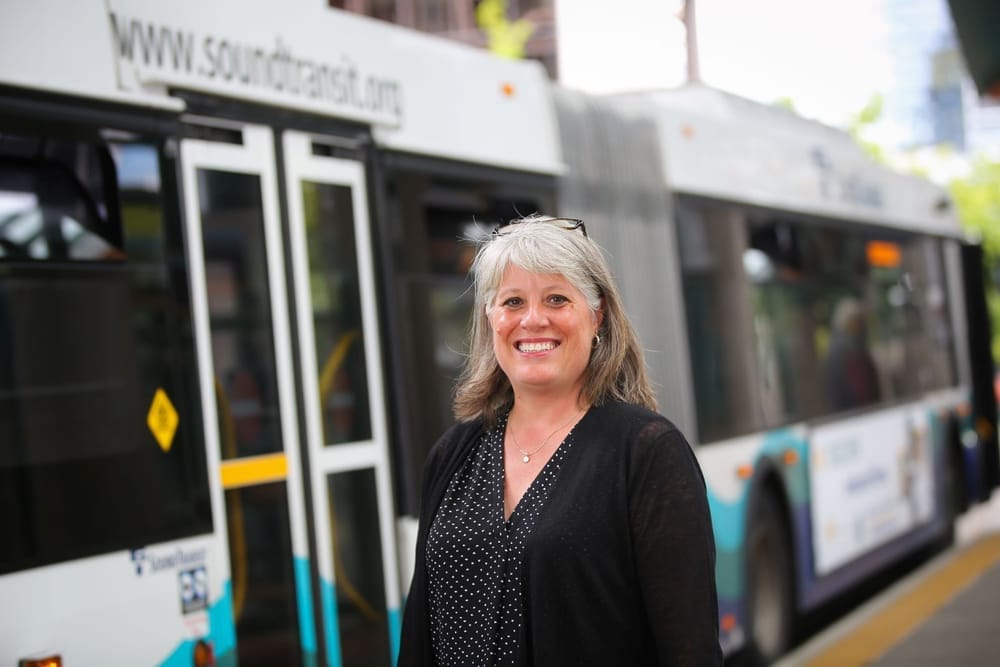
As Councilmember Balducci put it in an interview with PubliCola last Friday:
“I really do think it’s time to start talking about governance,” Balducci said. “If we’re in this constant cycle of crisis, recovery, crisis, recovery, crisis, recovery, maybe a board full of people who are expert at transit running a transit agency and delivering transit projects would be more attuned.”
“I’m an experienced amateur, but an amateur,” Balducci continued. “None of us are experts. How did we not see $35 billion creeping up on us? A hole that big opened up before we took this on. […] Maybe it’s time to evolve.”
While current board members all appear committed to the goals of building a regional mass transit system, they simply do not have the time or expertise to dedicate to ensuring that system is built and operated effectively.
The results speak for themselves. Ten years after voters approved ST3, the board voted to scale back many of the projects voters had approved. Surveys demonstrated the public wanted to find new revenue rather than cut or delay rail expansion, yet the board chose delays and cuts instead.
This will likely lead to a loss of trust in Sound Transit that risks future expansion. If Sound Transit is ever to seek approval from voters or legislators for more funding or other reforms needed to deliver ST3 and other projects, they’ll need to rebuild that trust. Voters will need to see that something fundamental has changed about how Sound Transit operates.
A new governance model, with directly elected board members and members appointed for their technical expertise, is a crucial step toward restoring lost trust.
This proposed initiative cannot overturn the decisions made by the Sound Transit board last week. But it can provide more effective governance to get all of ST3 back on track – and enable future system expansion.
This initiative is not a reflection on the performance of any individual board member. After all, many of the board members who approved the resolution last week were new to the board, yet continued on a path set for them by previous board members. That suggests there is a structural problem with Sound Transit’s governance, and requires a structural fix.
Under this proposal, residents of all three counties would get direct representation on the board. Eleven districts should be enough to ensure voters in Snohomish, King, and Pierce counties are all fairly and fully represented, with the voters of each county having a voice in how Sound Transit spends its money.
There is a rich debate already happening about whether a transit board should be “political” or not. It is my view, based on more than 20 years of experience, that it is simply not possible to remove politics from the development, construction, and operation of a transit system.
Every transit agency in the world is political in one form or another. Sometimes the politics are obvious, as with Sound Transit’s board of local elected officials or the San Francisco Bay Area Rapid Transit (BART) board of directly elected members. Sometimes the politics are indirect, such as Transport for London, whose members are appointed by the elected Mayor of London. Sometimes the politics are hidden, such as transportation agencies in China that answer to Communist Party officials. But there is always a process of politics involved.
This initiative proposes that a majority of the Sound Transit board be directly elected. This is because those politics should be overt and directly accountable to the voters. Elected directors must defend their decisions in public, and if the public disagrees, those directors can be voted out of office.
It is the kind of check on power that does not exist with the current board, which went against the wishes of the public in scaling back ST3 projects rather than seek new funding or innovative design approaches to complete them more quickly.
Still, transit advocates who call for those with technical expertise to be making decisions about the future of mass transit have a good point. The current Sound Transit board suffers by not having experts among its membership, and are often easily led by staffers toward a pre-determined conclusion even if it’s not good for the system or the public.
That is why this initiative would facilitate appointment of seven board members with technical expertise. That will help ensure that future discussions about system expansion and operation are informed by facts and evidence.
A partly elected board will be good for transit
Various board reform proposals have been floated over the years. Some of them came from Seattle legislators, like this 2001 proposal from then-Representative Ed Murray. Others came from opponents of mass transit, convinced that a directly elected board would help them kill Sound Transit and prevent rail projects from being built.
It’s possible they may have been correct when Sound Transit was fighting for its life. But these opponents have consistently underestimated public support for building rail, especially since the ST2 vote in 2008.
At this point in the late 2020s, with packed trains finally operating across Lake Washington and across county lines, it is unlikely that voters would elect transit opponents to the Sound Transit board. While the risk is not zero, it is low. Northern California voters have not sent transit opponents to serve on the BART board.
The same conditions apply here. Mass transit is widely popular across the Puget Sound region. The problem facing Sound Transit today is not that a voter revolt might cancel rail projects, but that the Sound Transit board itself appears to be walking away from its promises to voters.
A directly elected board, then, would be the ultimate lever of accountability to ensure that passenger rail gets built. If board directors wanted to once again cut or delay projects that voters approved, then those directors would be putting their own jobs on the line. Voters would have the chance to fire them to prevent projects from being delayed or cut, or to ensure those projects get restored.
Let’s have a discussion
It’s time to have a public conversation about how Sound Transit is governed, and from that, craft a final proposal to circulate for signatures later this summer.
Some of the questions that should be considered as we craft that final proposal include:
- Is a hybrid board the right approach?
- Is 11 the right number of elected members?
- Are these the right kinds of technical experience to seek out in appointed members?
Expanding our mass transit system is popular, and critical to our region’s success in the remaining decades of the 21st century. The current Sound Transit board has failed to ensure that expansion happens in a complete and timely manner. We cannot go on like this. It’s time for change.
Let’s fix the Sound Transit board and get the mass transit we voted for, while we’re still alive to ride it.
Robert Cruickshank is an organizer with Save Ballard Rail and a longtime transit advocate.
 Doug Trumm