Anthony E. Jackson moved from Seattle to a home in the mixed-income Salishan development in Tacoma 13 years ago. Since then, the retired 63-year-old Army veteran has been actively involved in life in the Tacoma Housing Authority development, and serves on the neighborhood’s homeowners association board.
In that time, Jackson has become intimately familiar with the conditions along Portland Avenue, one of the city’s most dangerous roads.
“You got the traffic lights there. I think that's a great thing they put in [ … ] but other than that, you just got to pay attention to what you're doing. [ … ] When two o'clock comes, the flow of traffic picks up. Another thing is, you got big communities on both sides of Portland Avenue, and it's continued to grow,” Jackson said. “That's going to cause a lot of cars utilizing Portland Avenue to get to their homes or go to work. It's still kind of hectic.”
Jackson isn’t alone in his observations. The road’s dangerous conditions have been a focal point for the area’s overlapping communities for some time. In addition to running through Puyallup Tribe land, the road stretches through Tacoma’s Eastside, a community still bearing the brunt of racist urban planning practices, including redlining and underinvestment in infrastructure. In its Transportation Improvement Plan, the City also named Portland Avenue as one of its highest crash-risk corridors.
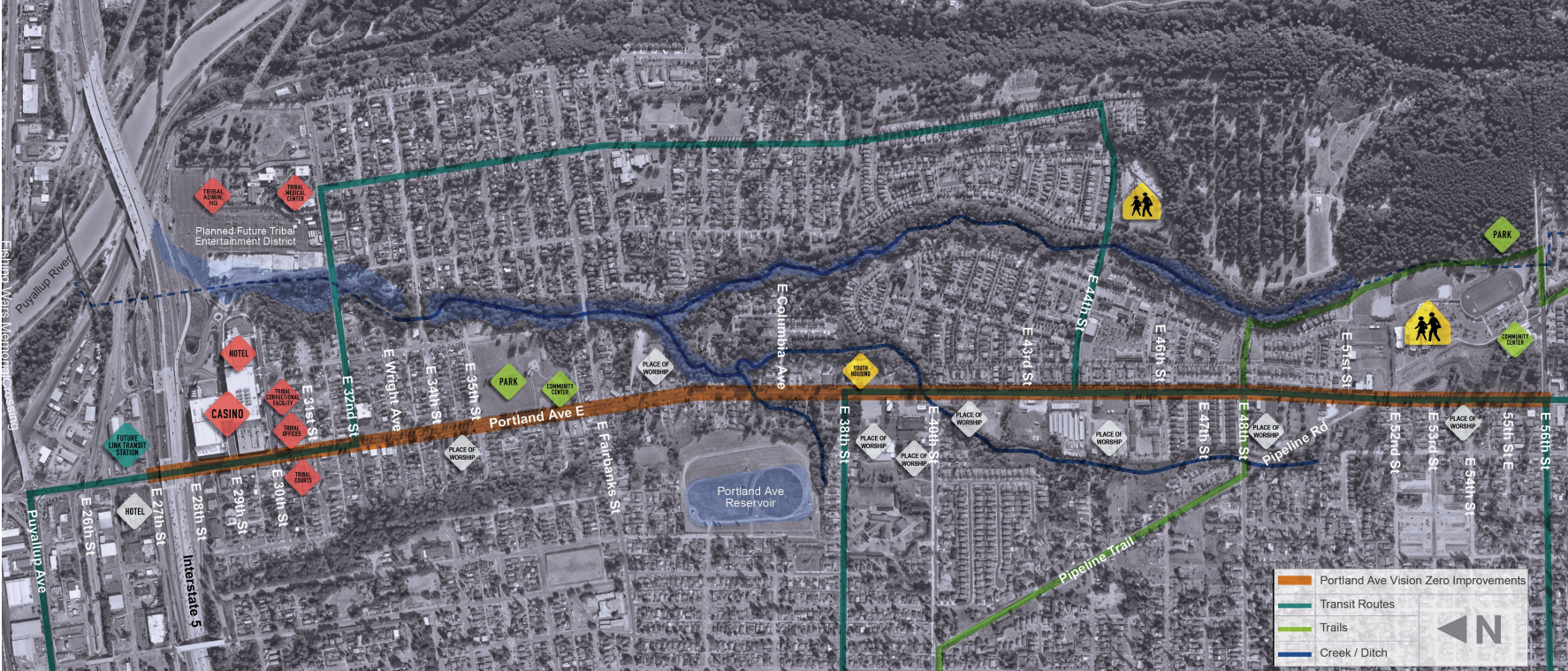
These physical and historic social conditions are why the City of Tacoma, in close collaboration with the Puyallup Tribe, has been pursuing an ongoing overhaul of the road as part of the City’s Vision Zero initiative, meant to eliminate traffic fatalities and reduce traffic-related injuries by 2035.
Additionally, if voters pass a ballot measure boosting Pierce Transit funding in November, the road may get another upgrade that could go a long way towards improving road safety: a new, longer bus route that would provide direct north-to-south access along Portland Avenue.
The goal is to create a Portland Avenue that is significantly safer, supports better living conditions, and opens up transit options for all, especially for historically underserved communities who have long had to go the extra mile — proverbial or otherwise — to access equal living and working opportunities in Tacoma.
A history of safety inequity
In its 2015 Safety Plan, the Puyallup Tribe was the first to identify severe safety issues along the portion of Portland Avenue that runs straight through Tribal land. The Tribe’s subsequent 2016 safety audit comprehensively reviewed the road’s poor, dangerous conditions.
“East Portland Avenue is the primary arterial to reach essential services which include Tribal Government, Housing, Police, Gaming, and Health,” the 2015 plan reads. “This route has a high posted speed limit and high pedestrian counts. There are few places to cross the street and the level of service during rush hour is routinely failing.”
Robert Barandon, the Tribe’s director of planning and land use, said in an email that the Tribe incorporated Portland Avenue into the plan and audit, because it “is a very important corridor for the Tribe as it is a primary arterial and adjacent to many Tribal facilities, businesses, and essential services.”
In 2020, the city released its Vision Zero plan, which intentionally incorporated Tribe-identified safety issues that needed to be rectified, including the conditions of Portland Avenue.
Laura Svancarek, who is executive director of Tacoma On The Go, said that the traffic on the road is “very high-speed, high-traffic,” and that it’s “very unpleasant to walk on the sidewalks along it, but particularly unpleasant and unsafe feeling to cross Portland Avenue because it is so high-speed and high-traffic.”
The wideness of the road is likely linked to rampant speeding — a well-documented relationship many safe streets advocates and practitioners have noted.
“It's a very wide roadway as well. Generally speaking, it’s a real thoroughfare of a road in that way, because when you look at it in the context of the Eastside, it starts to become even more of a severe issue,” Svancarek continued.
In addition to several Tribal buildings and parks along the road, the Pacific Cultural Center was located in a building on Portland Avenue for several years.
“[On] the Eastside of Tacoma, you see a lot more communities of color, folks from the Tribe, folks who are low-income, and so it combines into this systemic issue,” Svancarek said. “You kind of get stuck on one side of Portland Avenue, and if you are not someone that's able to drive whenever you want to, it very much separates you from other resources and the rest of the city in what can feel like a more industrial area, especially as you get closer to the [Port of Tacoma].”
Even though he owns two cars, Jackson has seen how bad the sidewalks are. He said that he used to be unable to cross the road on foot to get to the different stores on the other side, including the grocery store.
“It was a nightmare, but I think they put some measurements in place like safer pedestrian crosswalks. [ … ] I've seen [the City] working on that — improving the sidewalk, the walking conditions, working on the stops, the traffic lights and stuff like that — because usually there are a lot of accidents,” he said. He noted that the City installed more obvious pedestrian crosswalks close to where he lives, and that “those things look really good. [ … ] They're putting that work effort in place.”
Svancarek also highlighted that national statistics show that Indigenous people suffer the highest rate of traffic-related deaths: “You see that repeat itself here in Tacoma and Pierce County, when you look at the type of roadways that intersect with Tribal land.”
The Puyallup Tribe’s 2015 Safety Plan states that between 2010 and 2013, the road within the boundaries of the Puyallup Indian Reservation saw a total of 154 reported crashes. Of those, five resulted in major injuries, and 65 resulted in minor injuries. Eighty-four resulted in property damage.
Most of the crashes happened during the daytime on dry roads. Tribal officials attributed a majority of crashes to a failure to yield, followed by driver inattention or distraction. More than 80% of the crashes happened at intersections or driveways.
Community emphasis on safety, walkability, bike-ability
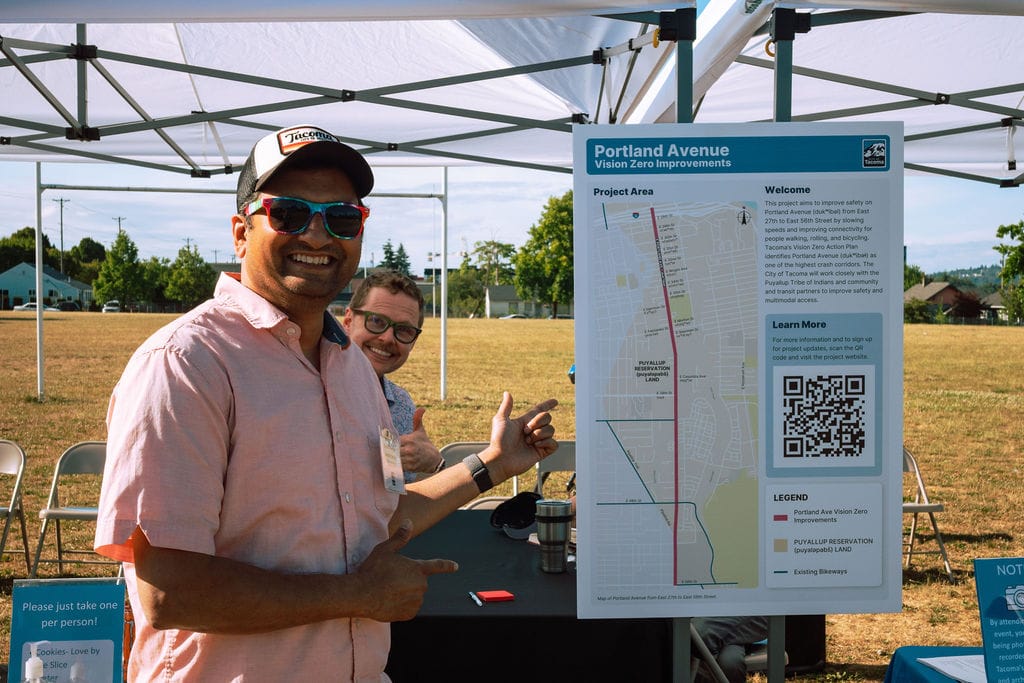
In 2023, the City secured a $2.1 million grant from the Federal Highway Administration’s Transportation Alternatives Program to fund community engagement regarding Portland Avenue and the work to plan and design the road.
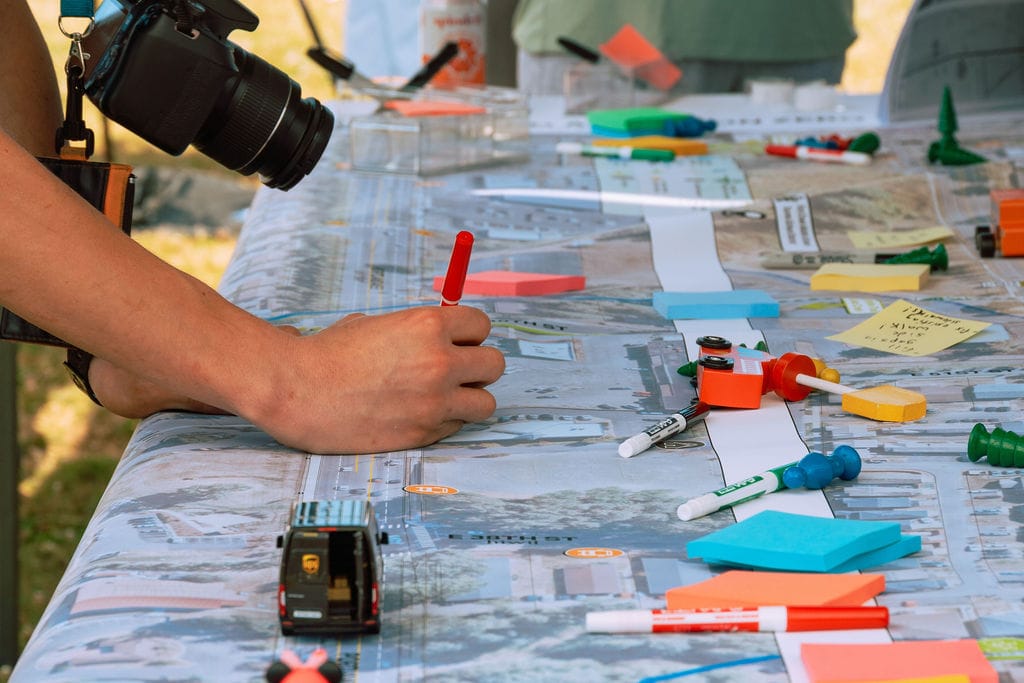
During this preliminary phase, City staff is identifying the best possible places for upgrades along the road. These upgrades include incorporating bicycle lanes and pedestrian access, as well as planting trees and vegetation.
If the City identifies design needs that extend beyond the public right-of-way, Chavez said, it will need to buy those rights from private entities. This will require the City to spend additional money, but “we are always highly intentional about when and where we take that step.”
Chavez also said that the hope is to bring forward the City-identified cross-sections for community feedback next year.
“We’re going to be asking the community to give us some perspective of what it is they would like for us to implement. It could be that at the end of this exercise, we may probably utilize a combination of cross-sections — in some areas we can do more, in some areas we can do less,” he said.
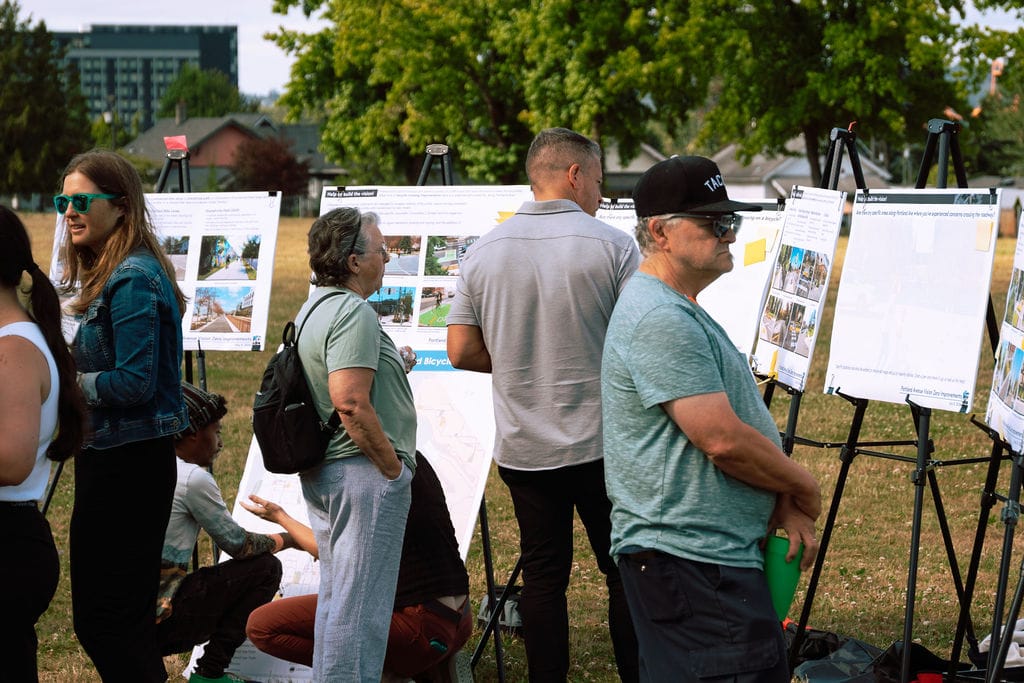
Over the summer, the City held two community feedback sessions, one as an in-person event, and another as a survey. The in-person event attracted 93 people, and 161 people returned surveys.
The total feedback the City received underscored the need for safety improvements, including traffic calming measures — the road is notorious for speeding — improved and maintained sidewalk infrastructure, more crosswalks, and repaved road surface. The City plans to hold additional listening sessions beginning in the first quarter of 2027.
“The theme throughout all of it really was safety,” said City Transportation Division Manager Jennifer Kammerzell, reflecting on the feedback. “Some people just weren't comfortable walking along the route. There definitely wasn't access for bicycles. [ … ] What we had heard is [that we need to work on] making it more walkable, having an alternative or some route for bicycle access. Slowing down traffic really was the biggest concern that we've heard previously, and then even in our current engagement as well.”
Barandon said that the Tribe would work with the City to weigh in on potential alternatives to proposed improvements.
“As it progresses beyond that and actual projects or improvements are programmed there is opportunity to partner and help the City to acquire funding,” he said. “Again, it’s early in the process, but we are hoping to get more information soon.”
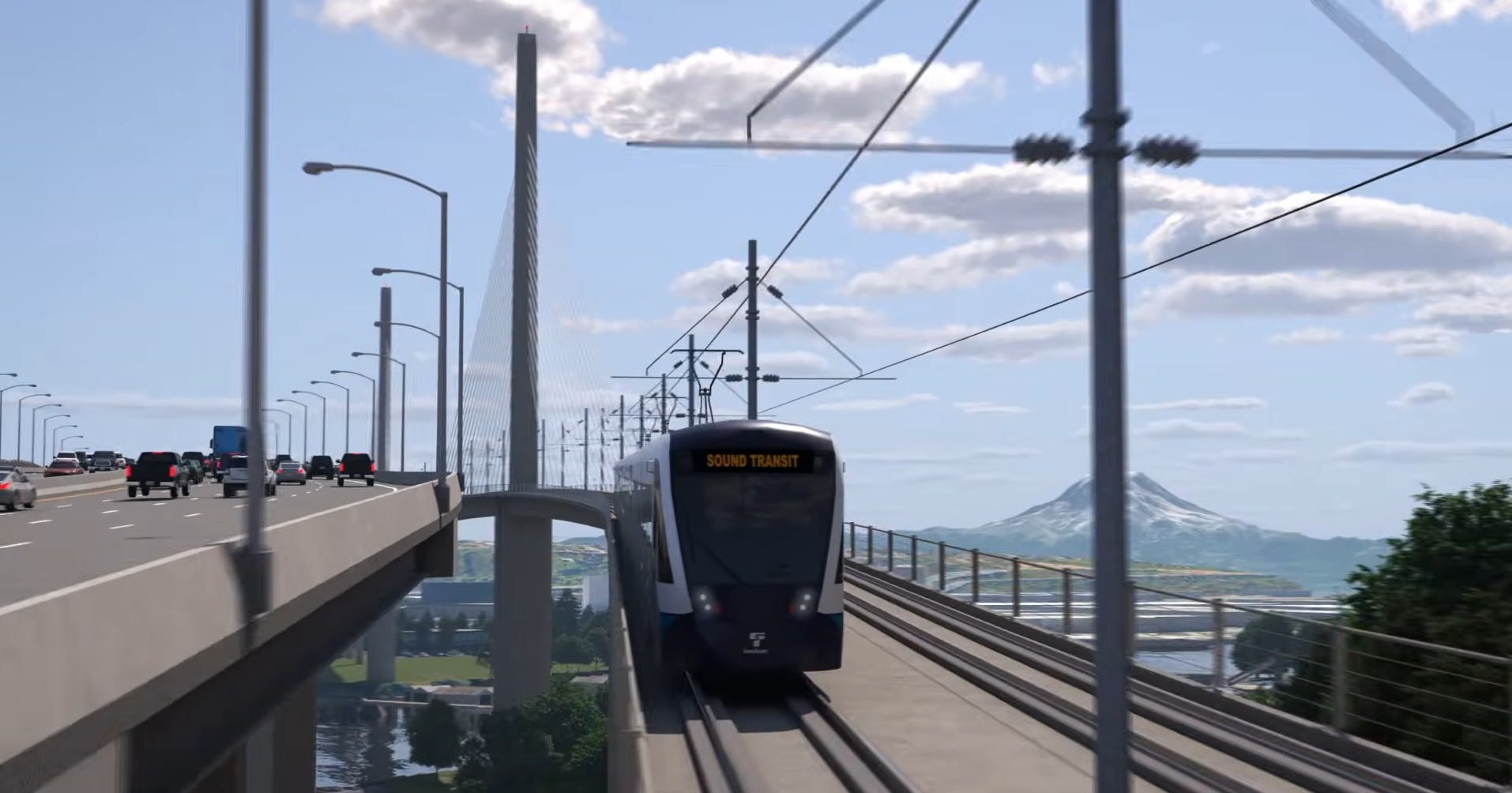
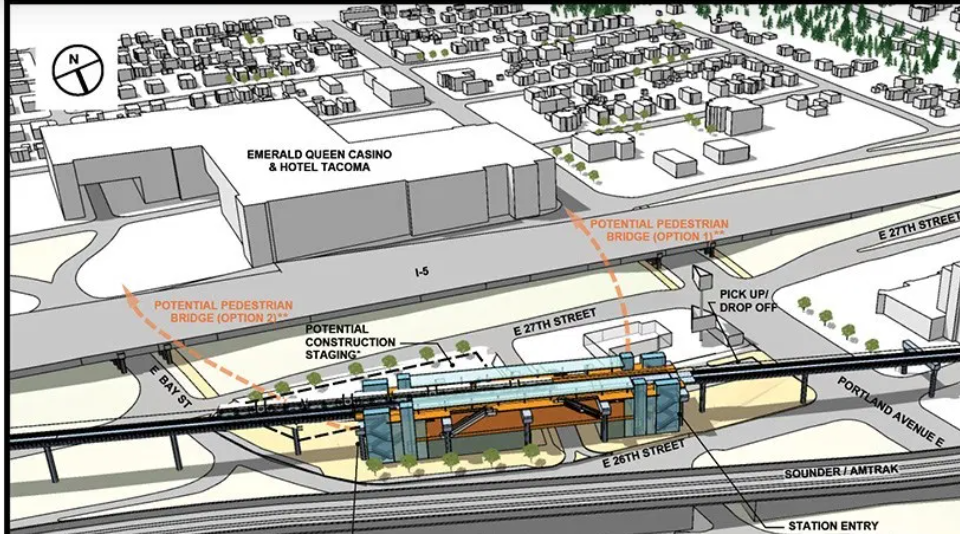
Kammerzell also said that she meets with the Tribe on a monthly basis to work on transportation-related projects, including Portland Avenue. She said that the Tribe is looking towards diversifying and activating more of their commercial areas, particularly with their new casino, entertainment district, and administration building, as well as the new Portland Avenue station planned as part of Sound Transit’s Tacoma Dome Link Extension Project, which is slated to open in 2035.
“Even right now, their casino is expanding and they’re building a new parking garage,” she said. “I've been working with their development team on what their Portland Avenue improvement might look like, and how could that complement a future Portland Avenue Vision Zero corridor project.”
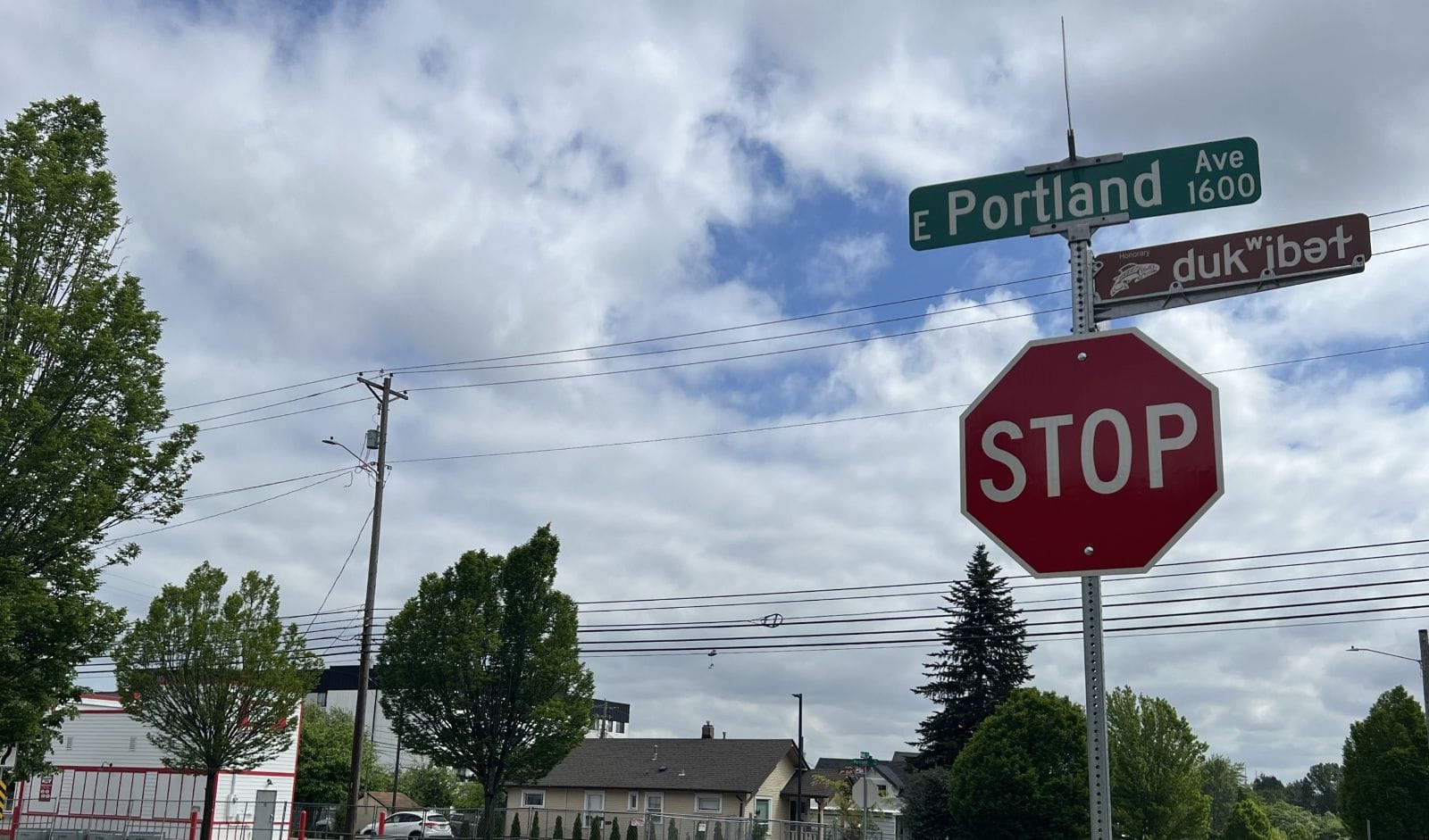
The City has also installed honorary Twulshootseed (the language of the Puyallup Tribe) street signs on the portion of Portland Avenue that runs through Tribal land, as part of a street naming partnership with the Puyallup Tribe. The Twulshootseed name for Portland Avenue is dukʷibəł (in English, “The Changer”), referring to the Lushootseed creation story, in which dukʷibəł moves through the land, changing creatures and plants into who they are today.
Chavez said that the Portland Avenue project will be “very expensive.” But where the funding comes from and ultimately how much the City will need will be determined by how final improvement and design plans shake out.
“We really don't have any of those elements in place yet, because we really don't know how we're going to be proceeding in terms of the design itself until we get the feedback from the community and landing on the potential cross-sections that we need to implement on this,” he explained. “It most likely will be built in phases. We cannot just secure funding for this long corridor. [ … ] When we get to the point of defining the potential phases, then we're going to start targeting as to what potential grant funding could be an avenue that could help us construct this corridor.”
“Options are one of the best things you can have in this world”
Though the City’s roadwork is neither tied to nor dependent upon Pierce Transit’s ballot measure, if the measure goes through, Chavez said, it could create more opportunities to explore future roadwork.
The transit agency’s ballot measure, Proposition 1, includes a new, longer, more frequent bus route along Portland Avenue, as well as upgrades to existing bus routes. These Portland Avenue-specific upgrades are part of a package of transit improvements Pierce Transit will be bringing to voters in November. That package is funded through a local sales tax increase of 0.3% — bringing the agency’s sales tax up from 0.6% to 0.9% — and would take effect April 1, 2027, if approved.
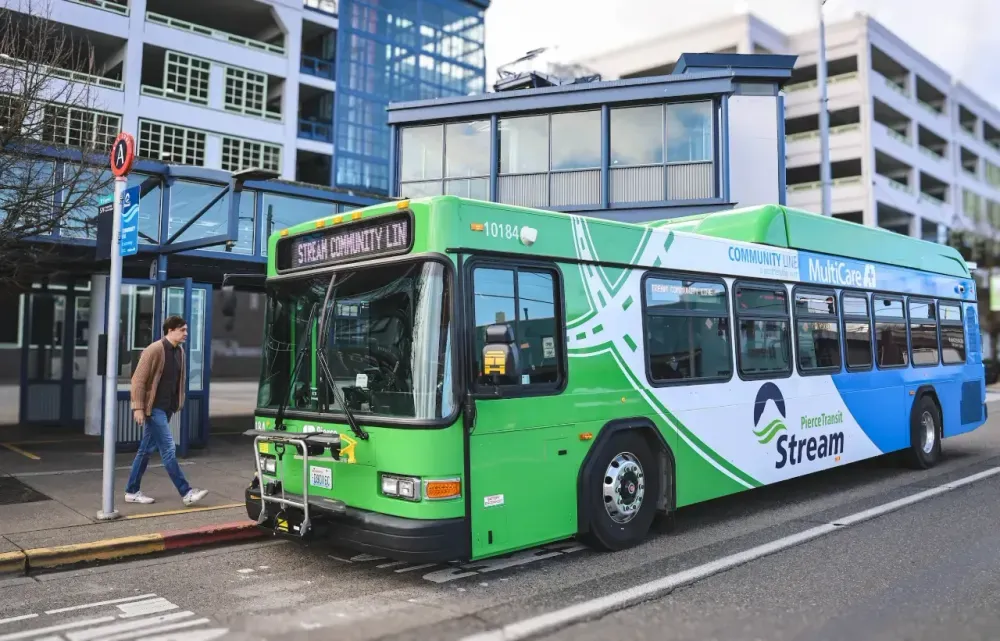
While Pierce Transit does operate two buses, the Route 41 and Route 54, along Portland Avenue, neither serves the portion of the road stretching between E 32nd Street and E 38th Street.
Tacoma City Councilmember Kristina Walker, who serves on the Pierce Transit board, said that she “would call [the available buses] a lifeline service — there's not nothing, but it's certainly not convenient.”
As service stands now, the Route 41 bus takes a long, meandering route from the Commerce Street Station to Tacoma Mall Transit Center in an effort to catch most of the Eastside. Pierce Transit spokesperson Stacy Van Horne said in an email that the Route 54 bus connects the Tacoma Mall Transit Center to the 72nd Street Transit Center, and runs along Portland Avenue E from E 38th Street to E 72nd Street. She also said that there is Runner microtransit available along Portland Avenue from E 64th Street to the end of the road at E 112th Street.
The road also sits at the bottom of a steep hill about 500 feet to the west, and at the crest of yet another steep hill about a half-mile east, Van Horne said.
Like the current conditions along Portland Avenue, the bus route reflects an historic lack of investment in the area. Walker said that Pierce Transit is working to rectify that, and that the agency uses a program similar to the City of Tacoma’s Equity Index to figure out the areas of highest need.
“We have a finite number of dollars for stops, but we're going to invest in the low equity areas first,” Walker explained.
Both Walker and her Pierce Transit board colleague, Pierce County Councilmember Rosie Ayala, said that the most frequent issue they hear from community members is a lack of bus frequency.
“A common story I hear is that bus connections are extremely difficult either because of traffic delays or schedules,” Ayala wrote in an email. “Having more frequency means less wait time and getting to places on time.”
If voters pass Pierce Transit’s measure, Portland Avenue’s two buses would get more frequent runtime boosts. The Route 41 would also receive improved connections to rail.
The two existing bus routes would also be joined by a brand-new bus route, the Route 40, which would link the Port of Tacoma with East Tacoma. This route would also include access to the city’s new Maritime|253 Skills Center, a newly opened maritime career institute for high school students, as well as parts of Portland Avenue that aren’t currently served by existing bus routes. It would also connect people directly to light rail service at Sound Transit’s planned Portland Avenue station.
“It has the potential to be a really significant increase in access for folks on the Eastside [by] adding more frequency for folks who rely on that service, adding [...] nicer stops, so that there is coverage and there's places to sit — things like that,” Svancarek said. Being able to use the bus, she continued, would also help make it “more viable for folks who are interested in cutting down on household costs but need transit” to get around to be able to stay and live along and around Portland Avenue.
Even though he doesn’t regularly use the bus, Jackson said that he still rides the buses along Portland Avenue occasionally as part of his HOA board member duties. He supports the idea of improved buses along the road, even if people have cars.
“If [the price of] gas rises up, they got a secondary way of getting to work without using their cars. I'm talking about if you work on Portland Ave or you work through the Port of Tacoma or wherever along that way, you're giving people options and I think if they had more options, someone might use the bus more often,” Jackson explained, adding that he knows a lot of people who are feeling the strain of escalating gas prices, and that while he hopes that gas prices will fall, giving people the option to take the bus would be a good idea.
“I like having options. And when I say options, I mean giving them a chance to ride the bus and get to their jobs,” Jackson continued. “I totally agree with bringing that, extending out that bus route. [...] That's another option. And options are one of the best things you can have in this world.”
 Carolyn Bick
 Ryan Packer