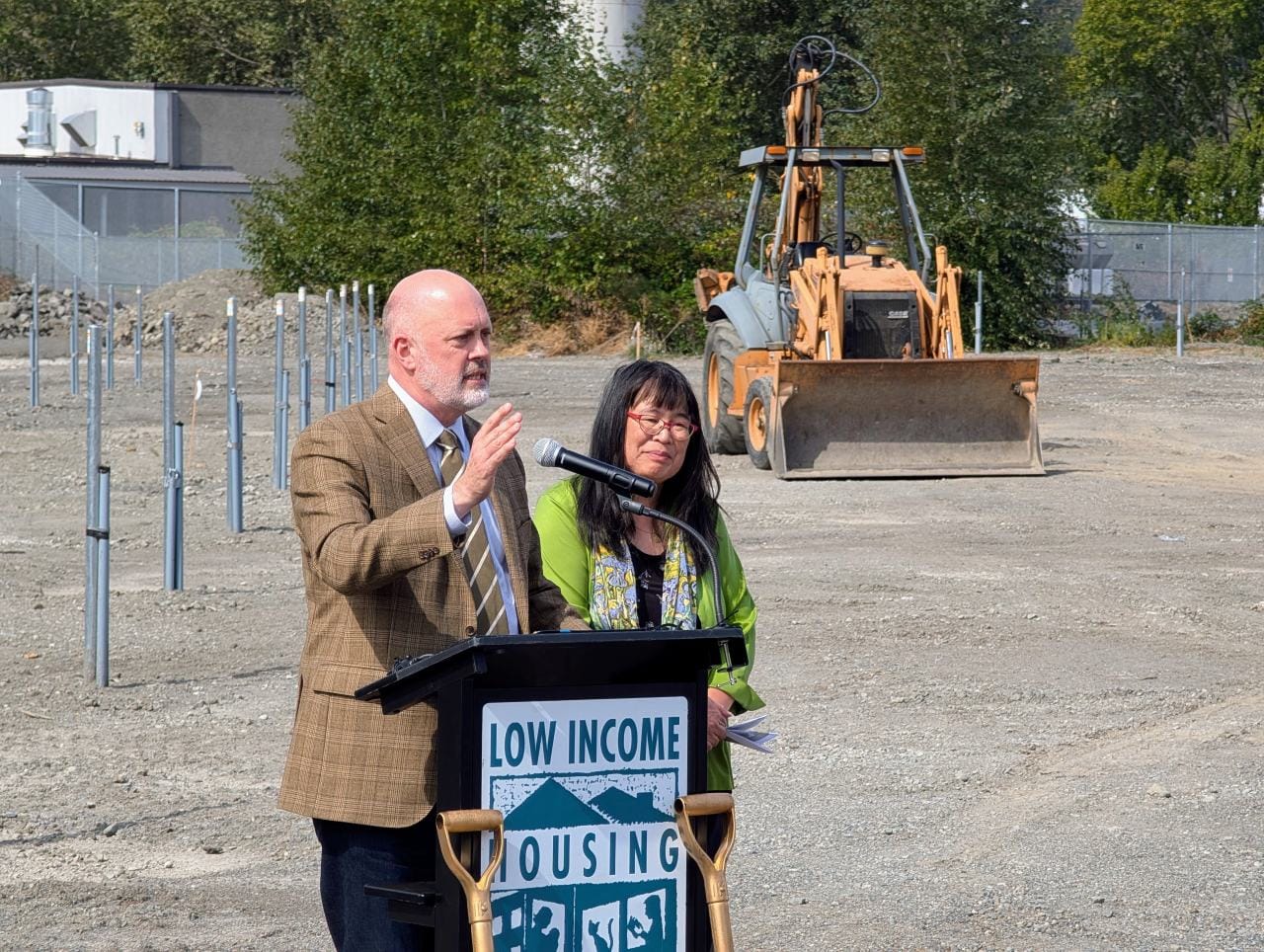
Last Thursday, the Low Income Housing Institute (LIHI) hosted a groundbreaking ceremony for Seattle's Glassyard Commons, a new RV safe lot near South Park that is intended to provide another pathway out of homelessness and into stable housing.
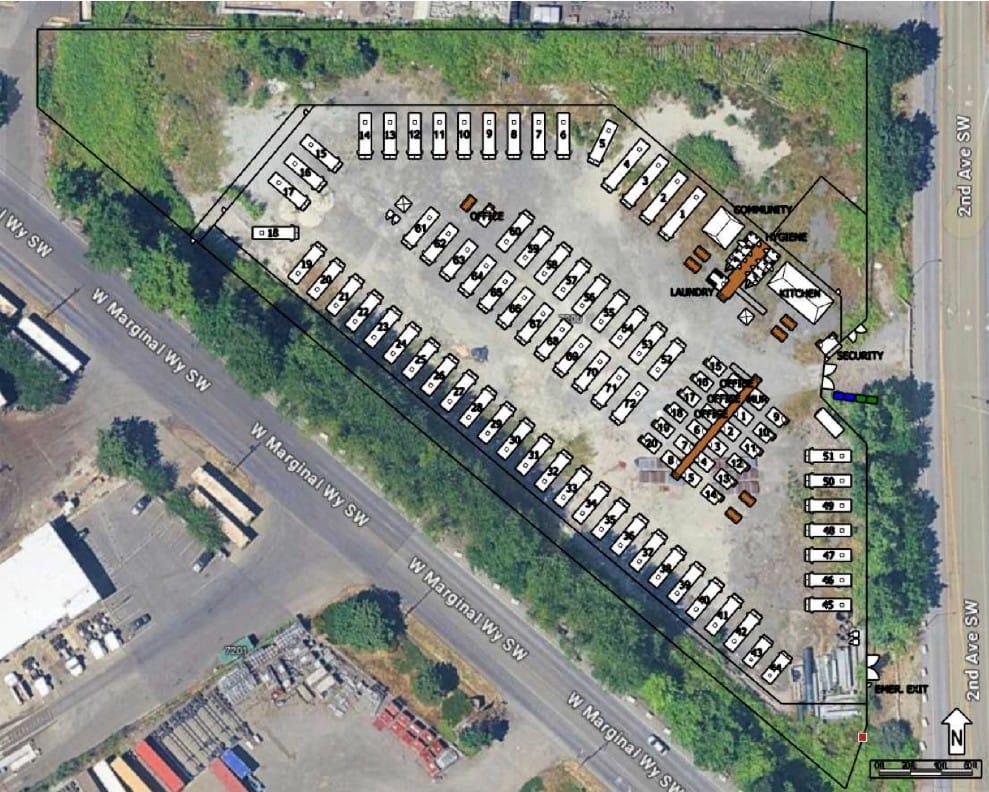
The facility will feature parking for 72 recreational vehicles (RVs) and 20 tiny houses on 3.9-acre site that LIHI is leasing from the Washington State Department of Transportation (WSDOT). The triangular parcel is hemmed in by 2nd Avenue SW and W Marginal Way SW and located just south of the 1st Avenue S bridge over the Duwamish River. LIHI expects Glassyard Commons to open by mid-November and serve 140 people.
The WSDOT property had been considered as a site for transitional housing during a previous mayoral administration, according to reporting from the West Seattle Blog, but ultimately moved forward quickly after Katie Wilson took office promising to add 1,000 shelter beds within her first year in office. This week, Wilson scaled back that plan to a more achievable 1,000 beds by the end of 2027.
The Urbanist's Fall Member Drive is in full swing! Support our work, read ad-free, and help us hit our goal for the member drive!
At the groundbreaking, LIHI Executive Director Sharon Lee emphasized that the lot is intended to serve people who are homeless – and that surrendering their vehicle once they're permanently housed is part of the bargain.
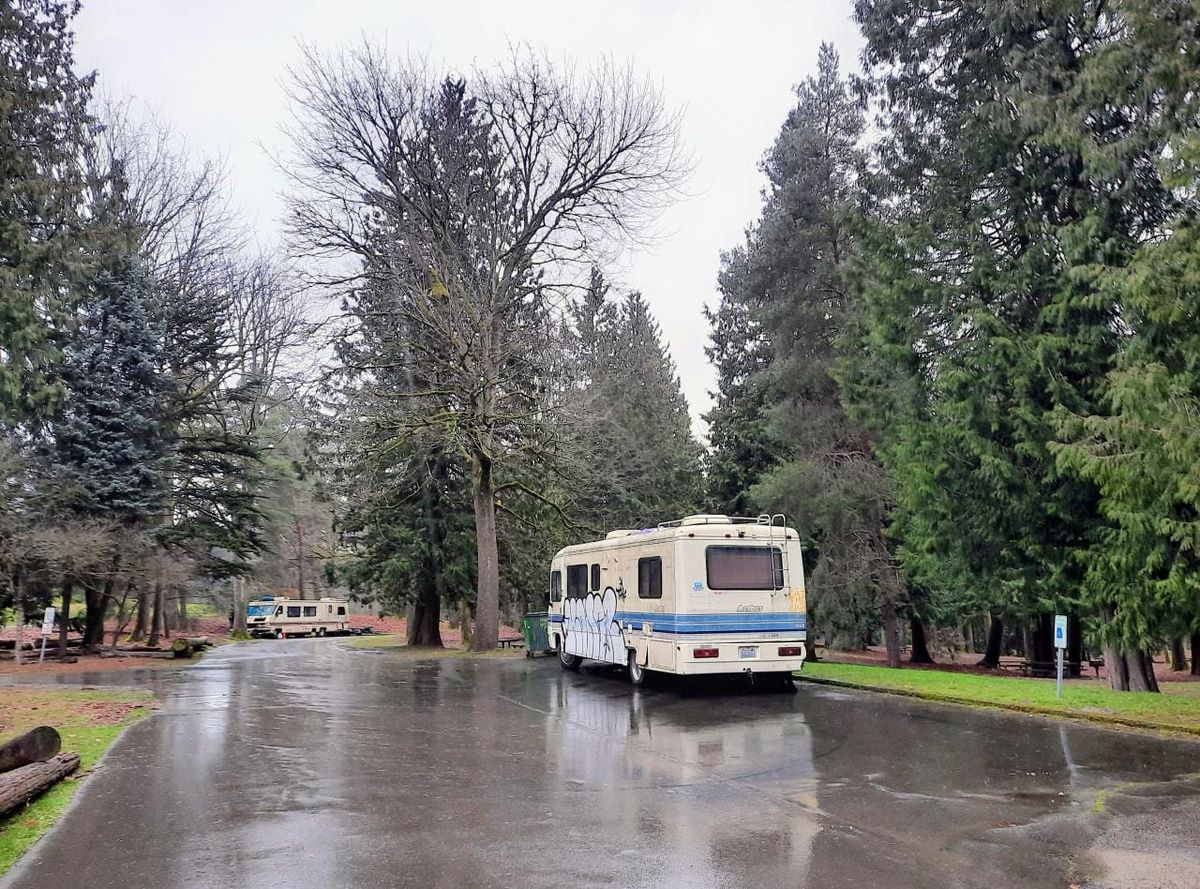
"There could be as many as 300, 400 RVs [across Seattle]," Lee said. "Not all of them will want to come into the safe lot because part of the requirement for the safe lot is that they consider moving into housing. Not that they, you know, just hang out here, right? This is not just a parking place for people traveling through Seattle. This is for people who have no home except to survive in a RV, and oftentimes the RVs are pretty derelict, rundown, and unsafe."
Lee said these rundown RVs pose a public health risk. Councilmember Dan Strauss, who was not at the event, has also raised the issue and proposed legislation ramping up enforcement on illegally parked RVs, including seizure of non-compliant vehicles. In order to be admitted to the safe lot, RVs will be drained of fuel and electrified, with the ultimate goal of transitioning its residents into a different form of housing.
“People die living in dilapidated RVs because they are dangerous and can catch on fire. Far too many people are trying to survive in RVs because they don’t have access to housing they can afford," Lee said. "Glassyard Commons will create pathways to stable housing and will help remove hundreds of RVs off the streets of Seattle.”
As of last week, the site consisted largely of gravel and markers showing where structures will be placed. Construction has already begun on a concrete pad for a shared kitchen and utilities for the RV spaces, Lee said.
The City of Seattle, through the Human Services Department (HSD), will be providing $3.3 million in annual funding to support operations on site.
“My top priority is getting people inside with quality shelter and access to services," Mayor Katie Wilson said in a statement. "Every person experiencing homelessness has their own unique hurdles we need to help them overcome, and it is important to provide a range of types of shelter and services. Glassyard Commons will provide a personalized approach for individuals living in unsafe and unhealthy RVs, giving them a path to the help they need and permanent housing.”
Glassyard Commons will feature a staffed entry pavilion, 24/7 staff, case management offices, a community kitchen, and hygiene and laundry facilities, LIHI said. "On-site case managers will support participants with obtaining identification, employment, health and behavioral health services, education, and housing navigation."
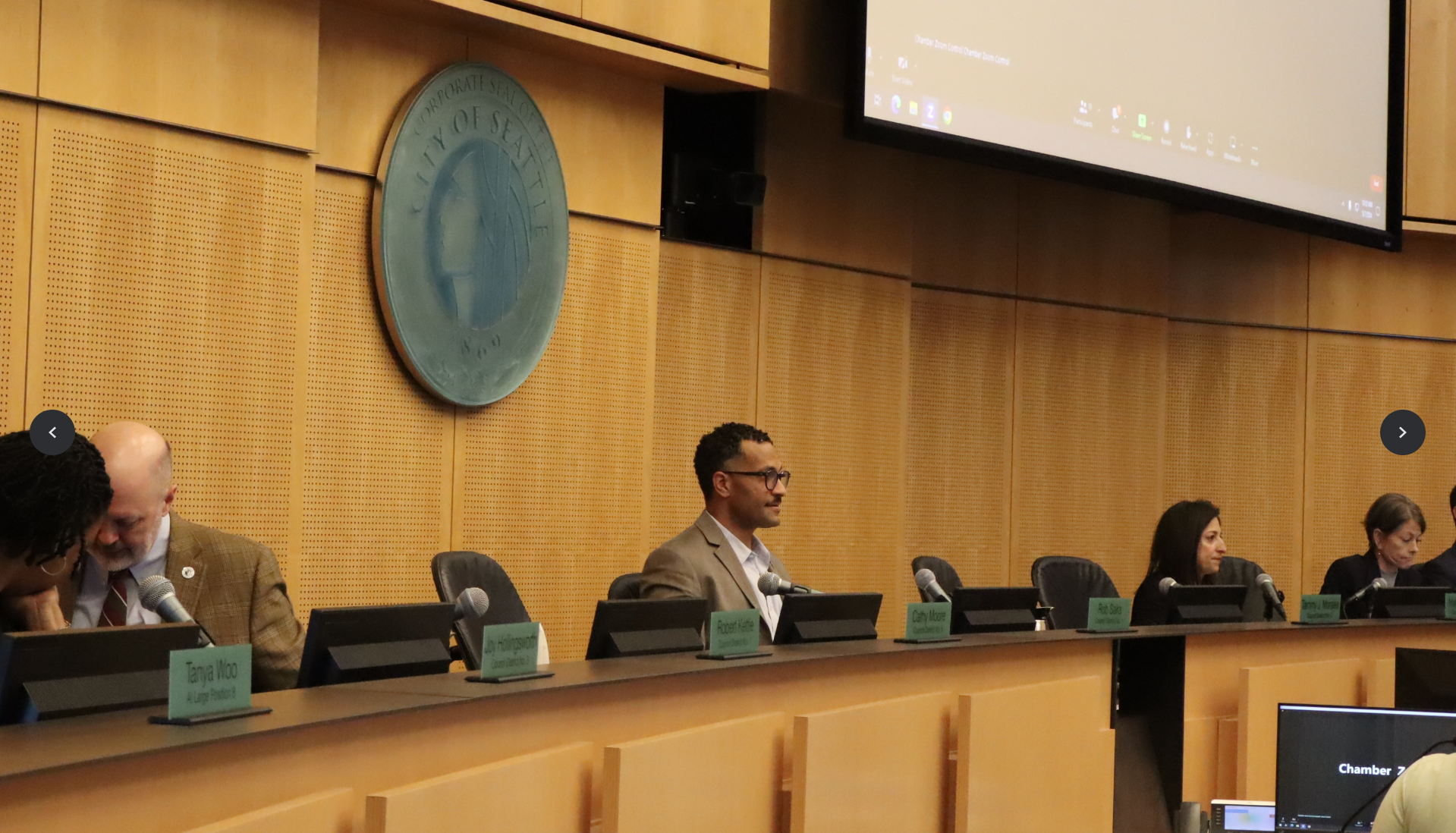
Councilmember Bob Kettle (District 7) stressed that RV lots fit well into a public safety response. During a recent City Council meeting, Kettle claimed that unsupervised pods of RVs often become magnets for illegal activity, like drug dealing and trafficking in stolen goods. Kettle has become one of the mayor's biggest critics in recent weeks, particularly when it comes to issues surrounding the Seattle Police Department, but in this case aligned himself fairly directly with Wilson's overall goals for increasing shelter capacity.
“When we have a big collection of RVs, oftentimes one starts dealing drugs and we have a drug market,” Kettle said. “And once you have a drug market, you have a stolen goods market.”
At the ceremony, Kettle noted his advocacy for the Salmon Bay Village, a former RV safe lot in Interbay, which provided a template on which Glassyard Commons was modeled.
"I saw it very directly before I became a councilmember, as someone in the community that was engaged," Kettle said. "I was working this really hard in terms of the Salmon Bay Village project, and I saw how it worked. I saw the work that LIHI put in in terms of community outreach, for example, with the Magnolia Community Council and other groups, but then also implementing the lessons learned [...] having the counselor there to work with the people to break that emotional link between the RV, and then moving on to housing. That is so key."
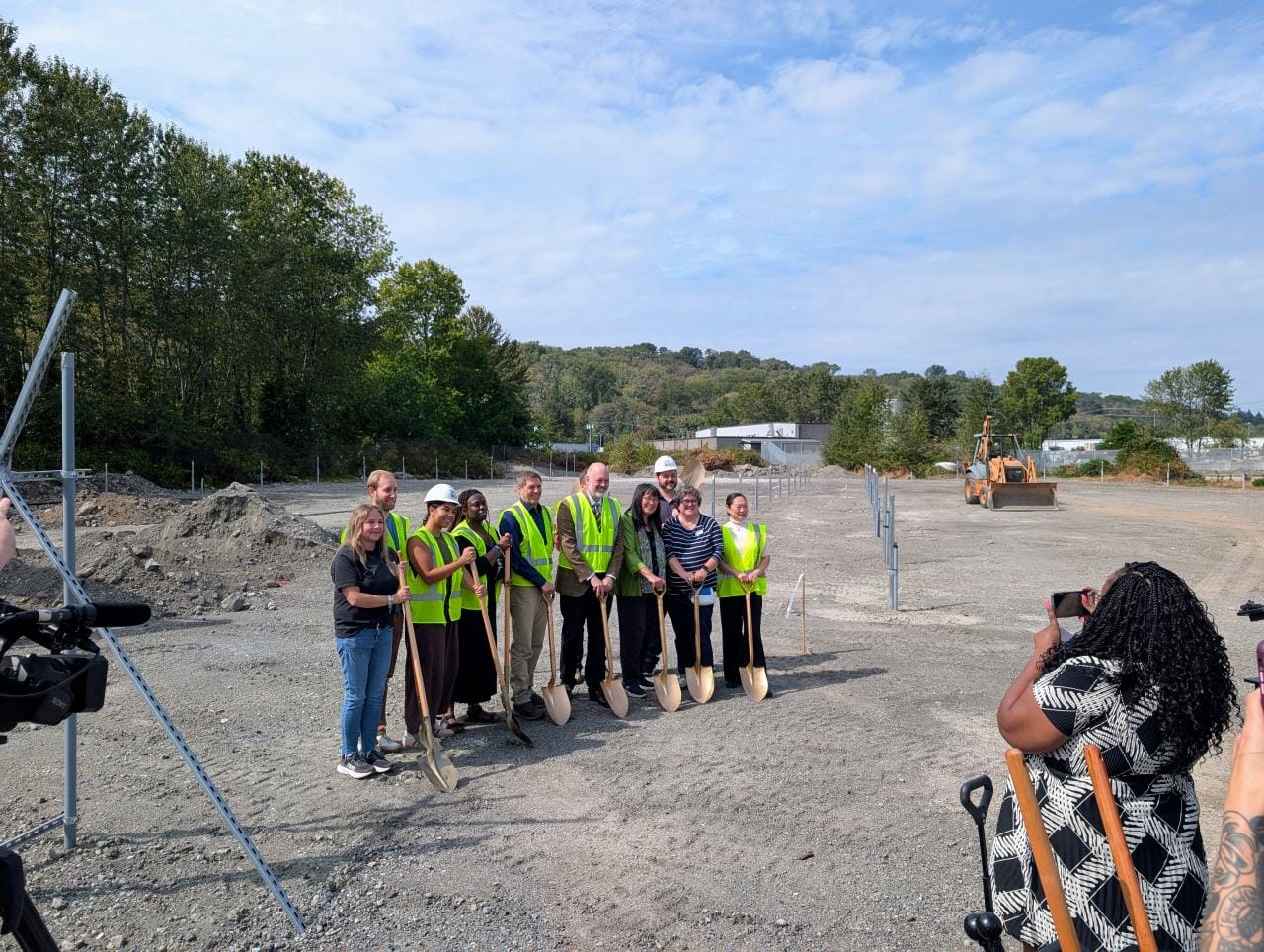
When The Urbanist asked if he supports Strauss's RV legislation, Kettle demurred, saying the package of bills had to work its way through the committee process.
"At the end of the day, we have to get to a place where we're doing right for those that are in crisis, our neighbors, but also for our neighborhoods," Kettle said. "And I'm looking for that balance, and basically looking to address the seam that exists between traditional public safety, but also the public health, housing, and services."
In its press release, LIHI has stressed that getting unsafe RVs off Seattle streets is key part of their mission: "The goal of Glassyard Commons is to encourage vehicle residents to leave their rundown RVs, move temporarily into the safe lot or a tiny house, and work with case managers to obtain permanent housing. Once housing is secured, the RVs are demolished and disposed of by LIHI at no cost to the participants. This prevents the RVs from being recirculated back onto the streets of Seattle."
Brian Nielson, WSDOT's regional administrator for Northwest Region, spoke at the event, highlighting that encampments encroaching on highway right-of-way have been an issue for the state.
"We need to be clear about transportation: It's not a safe place to live," Nielson said. "The areas are designed for highways and transportation infrastructure. Living there puts people close to traffic and other hazards. They do not provide the basic infrastructure and services that people need to live safely. This is why Glassyard Commons matters. WSDOT is providing the property, but LIHI and their partners are creating something much more important: a place where people have safety and stability, access to services and case management, and the opportunity to work toward permanent housing. This is what partnership should look like."
The auditory experience of the groundbreaking made clear that while the safe lot won't be located directly on highway right-of-way, it's still sandwiched into a busy trucking corridor with plenty of loud traffic going by. Amenities are scant in the industrial area, although the nautically themed Mighty Mugs Coffee Shop and a truck stop Subway sandwich shop are about a 10-minute walk away. The lot is close to a bus stop.
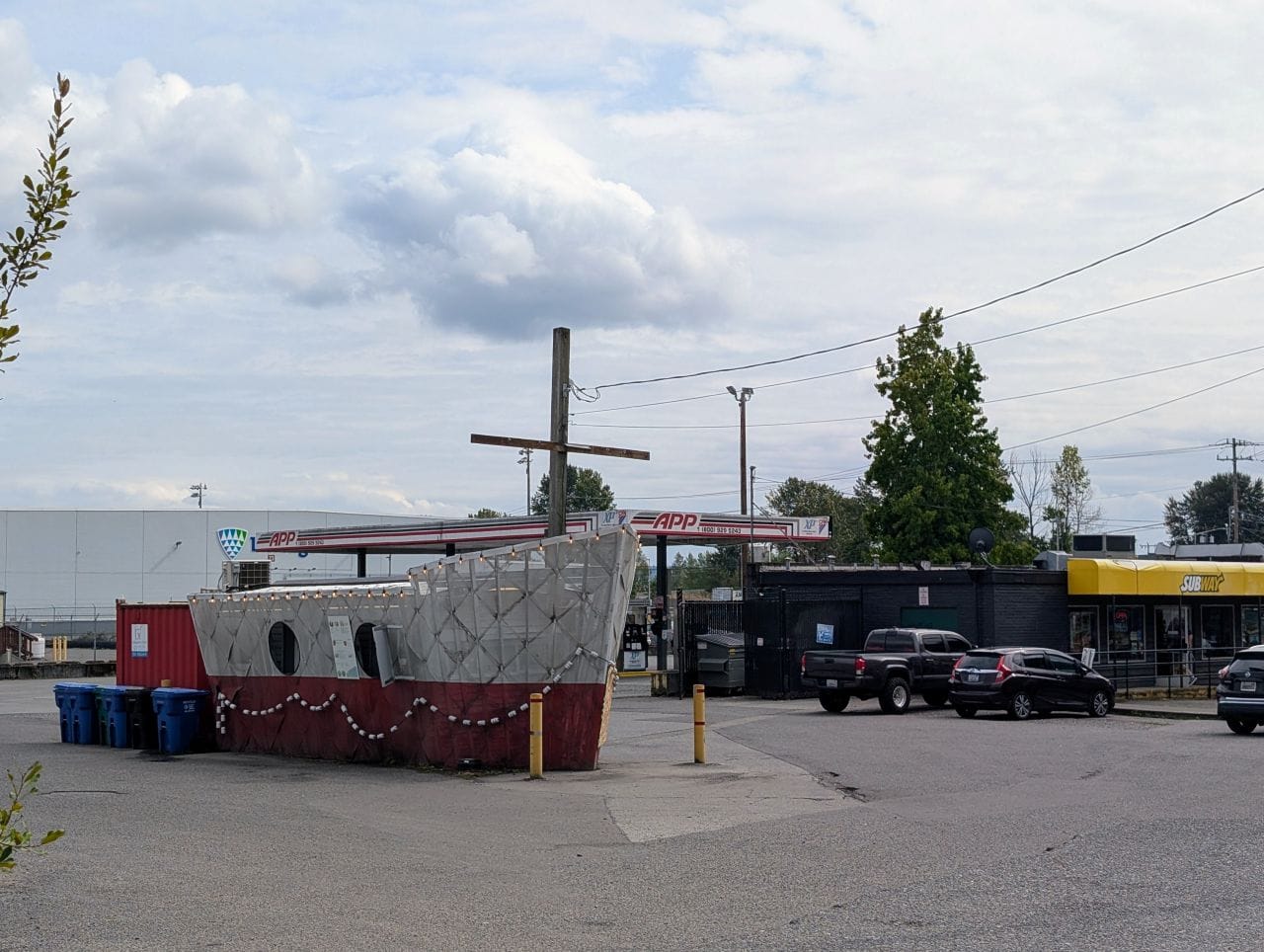
LIHI had been working with WSDOT for a long time to find surplus land that could work for a project, Lee said. Given the large amount of space they need and the potential for complaints from neighbors, RV safe lots have largely been sited in industrial areas.
Referrals for spots at Glassyard will be made from outreach workers contracted through the HSD. Preference will be given to Council District 1 and other locations with large numbers of RVs, LIHI noted.
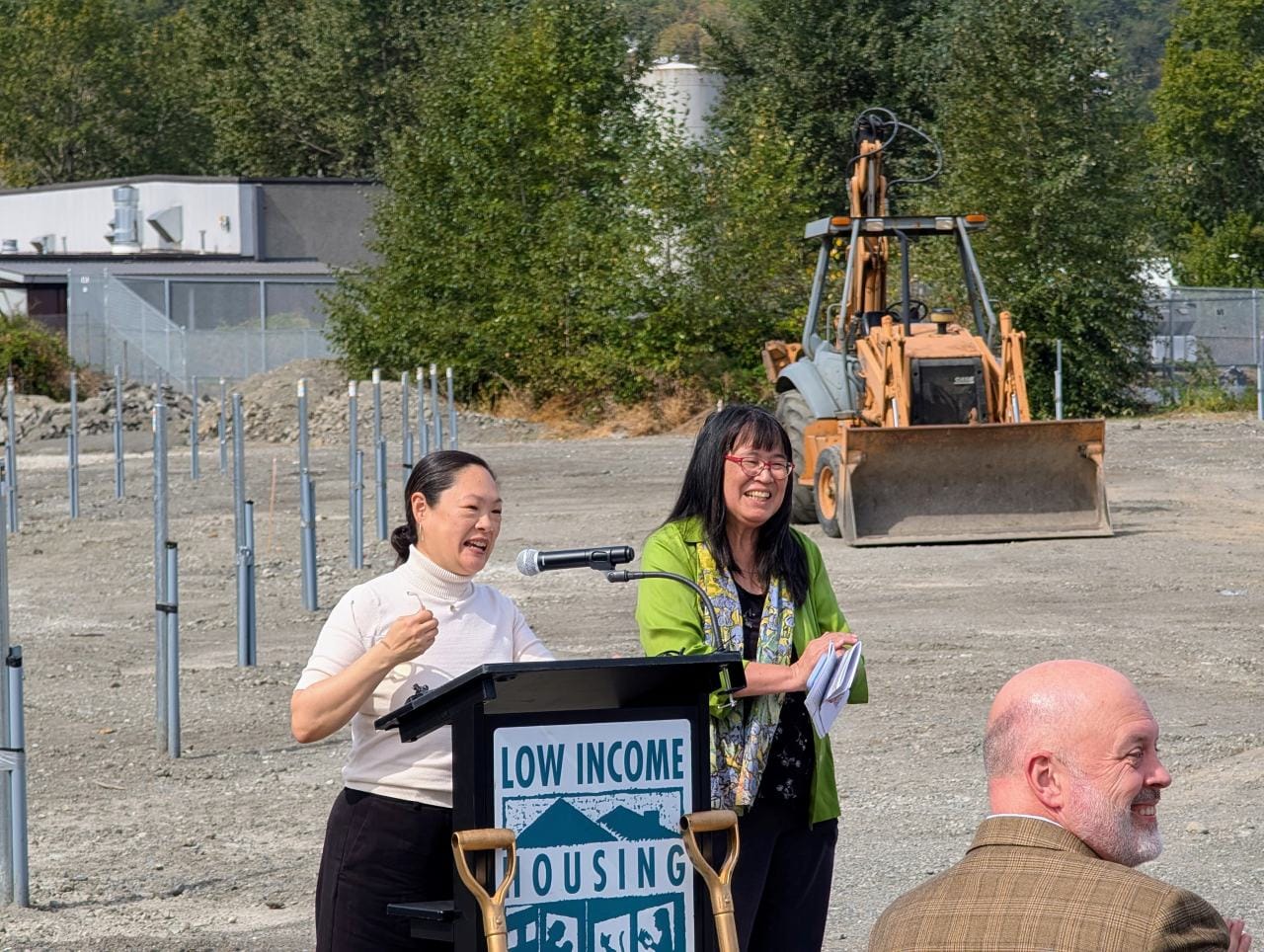
HSD Director Tanya Kim noted that more shelter expansions and tiny home villages were on the way.
"The City is investing in two more tiny home villages, a master leased shelter, and two shelter expansions that are scheduled to open at the end of this year and at the beginning of next year," Kim said. "So there is much more coming, and they're diversified."
To accelerate permitting for the RV safe lot, LIHI partnered with New Hope Missionary Baptist Church, allowing it to benefit for an incentive program reducing red tape. The New Hope Missionary Baptist Church was also the faith sponsor of Salmon Bay Village, which Reverend Dr. Robert Jeffrey Sr. noted was a success in a statement.
“Glassyard Commons is a proven concept offering safe RV parking and is modeled after the success of Salmon Bay Village RV Safe Lot in Interbay," Jeffrey said. "Over a short period of time 67 RVs were taken off city streets and destroyed and 89 people, including five homeless veterans, received services, shelter or housing to exit homelessness.”
On Thursday, a New Hope church member named Erica also delivered the clearest call to action of the program, urging Seattle to invest even more in the social safety net to lift more out of poverty.
"Dr. Martin Luther King says any religion that professes to be concerned about the souls of men, humans, and not concerned about the slums that damn them, the economic conditions that strangle them, and the social conditions that cripple them is a spiritually morbid religion awaiting burial," Erica said. "And so today, as I stand here as a faith representative for New Hope Church, it's good to be here. I see this as a glass full, but we must be reminded in this place today that this is not just the only thing that we must do. We must continue to fight for the liberation and well-being of all people."
 Amy Sundberg