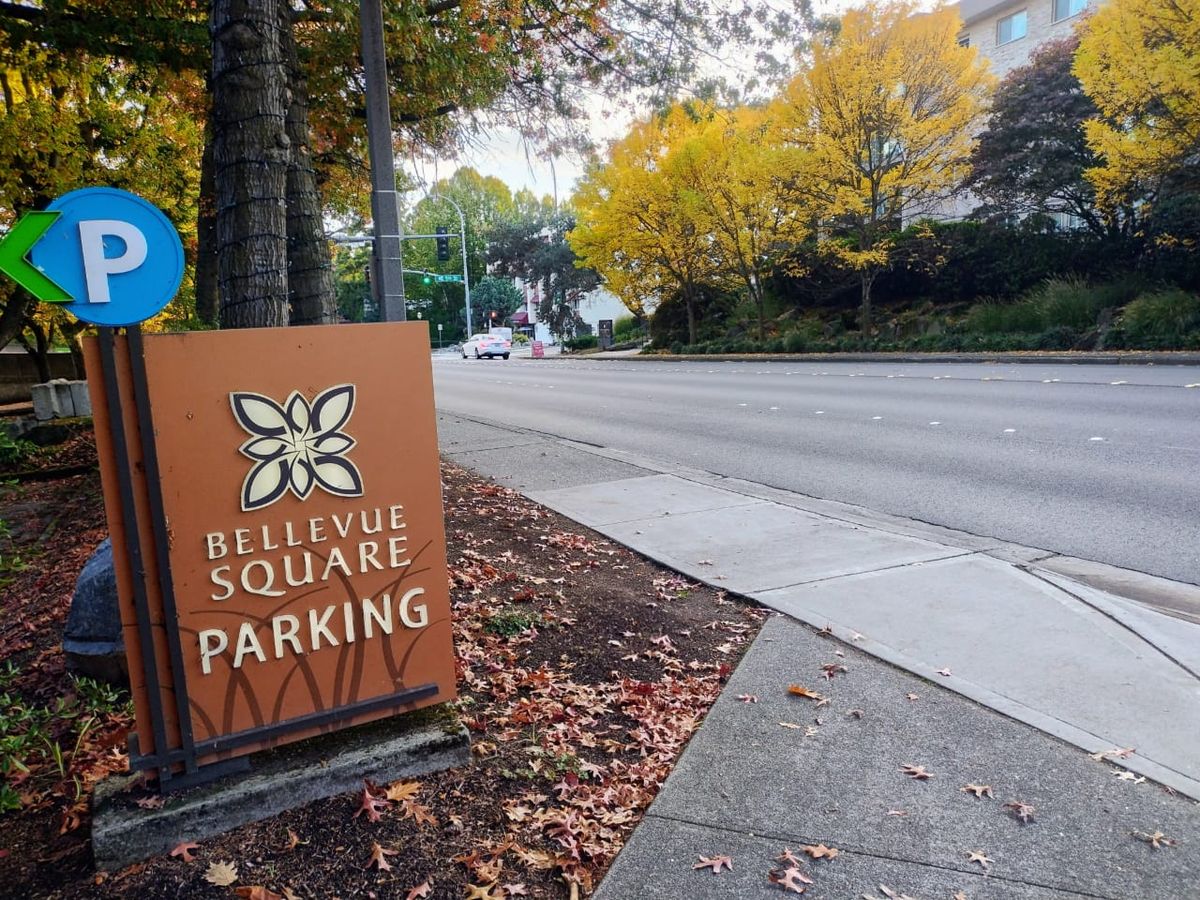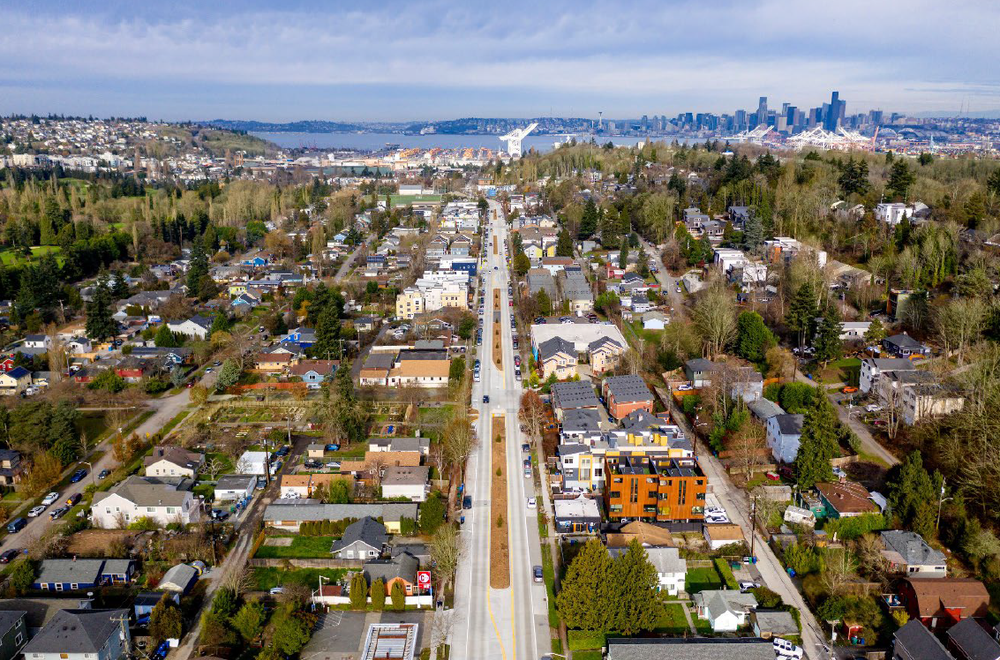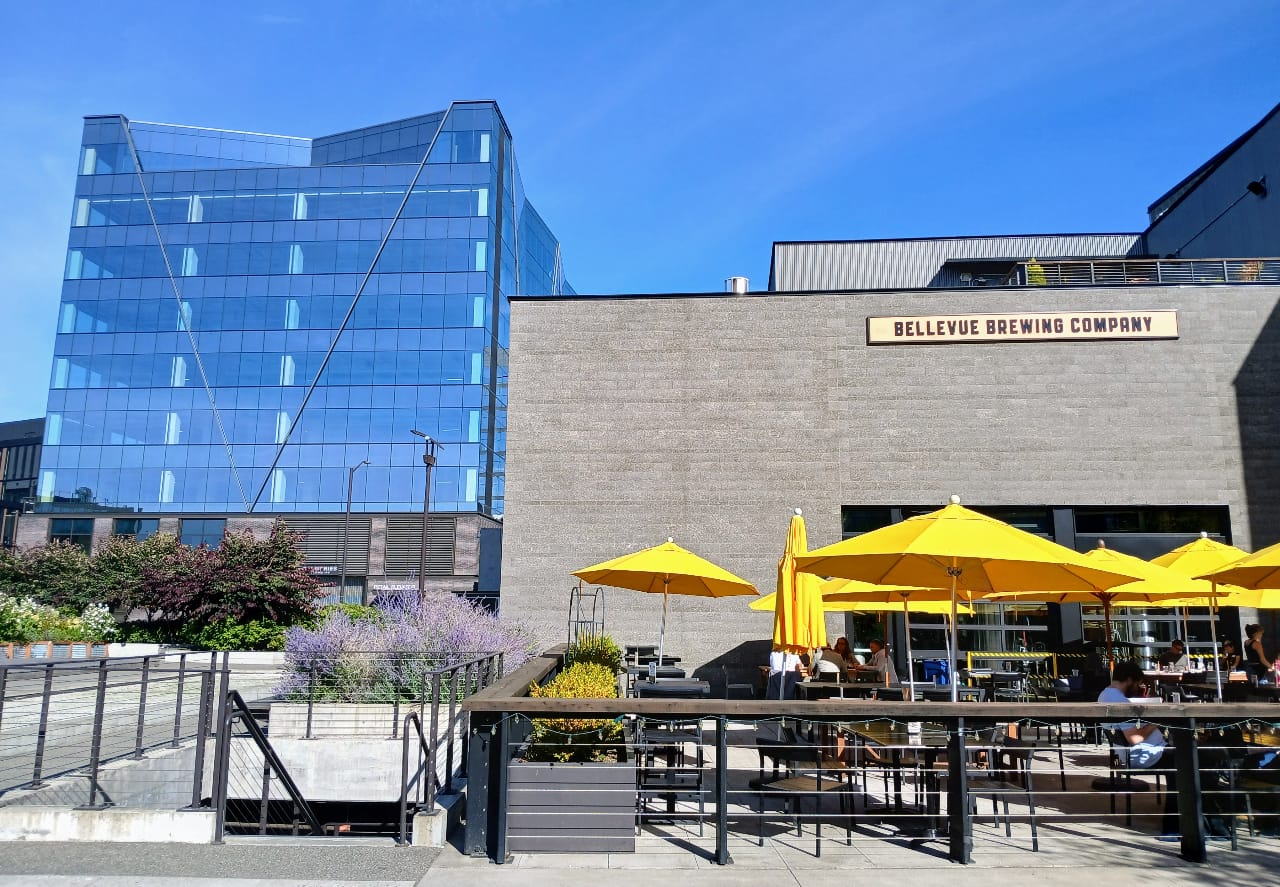
The Eastside's largest city is grappling with a new state mandate to scale back its off-street parking requirements for new development. In facing choices around going further than the new state-required baseline, Bellevue's leaders are facing crosswinds: a desire to continue reducing barriers to homebuilding is crashing into the city's car-oriented status quo.
The Urbanist's Fall Member Drive is in full swing! Support our work, read ad-free, and help us hit our goal for the member drive!
The new mandate is coming thanks to Senate Bill 5184, a law approved last year that sets strict caps on the number of off-street parking stalls that Washington cities can require with new building projects. By next January, Bellevue will no longer be able to require more than one parking stall for every two apartment units, nor more than two parking stalls for every 1,000 square feet of commercial space.
The City will also be barred from requiring any parking for a broad set of uses, including apartments less than 1,200 square feet in size, commercial spaces that are less than 3,000 square feet, child care facilities, and affordable and senior housing.
The statewide parking reform is intended to ease cost burdens on builders, which are passed along to renters and homebuyers. Adding garage parking typically costs builders $60,000 per stall or more, according to the housing-focused Pacific Northwest think tank Sightline Institute.
Cities across the state are grappling with the new requirements, but Bellevue's size, prevalence of transit infrastructure, and positive trends in housing permit starts are putting a spotlight on how this new mandate gets implemented. Earlier this year, numerous councilmembers expressed clear interest in looking at how to be more ambitious in giving developers flexibility around parking, but recommendations that came out of Bellevue's planning commission hew much closer to the bare minimum.
A growing number of Washington cities are taking steps to fully eliminate parking mandates from their land use codes, following in the footsteps of places like Spokane, Port Townsend, and Bellingham. Vancouver abolished parking mandates as part of its Comprehensive Plan update earlier this year, with Tacoma next on deck. Next door to Bellevue in Issaquah, city leaders are considering eliminating mandates across a wide swath of the center city – an area where increasing housing growth is the goal.
A full repeal is likely a step too far for Bellevue, no matter the studies showing the range of positive benefits that come from doing so. Earlier this year, UCLA's Institute of Transportation Studies published a new research synthesis looking at a range of studies considering the impact of arbitrary requirements to build parking and the quantified benefits that come from wiping them off the books.
"Across the research literature, scholars generally recommend eliminating minimum parking requirements. Removing these mandates lifts a major barrier to new housing and businesses, reduces the risk of parking oversupply, and encourages more efficient use of existing spaces," the researchers noted. "Slowing the growth of parking infrastructure can improve walkability and urban design, reduce environmental harms, and support more sustainable travel behavior."
A full repeal is likely a step too far for Bellevue officials, so instead the debate will focus on pulling a few additional levers.
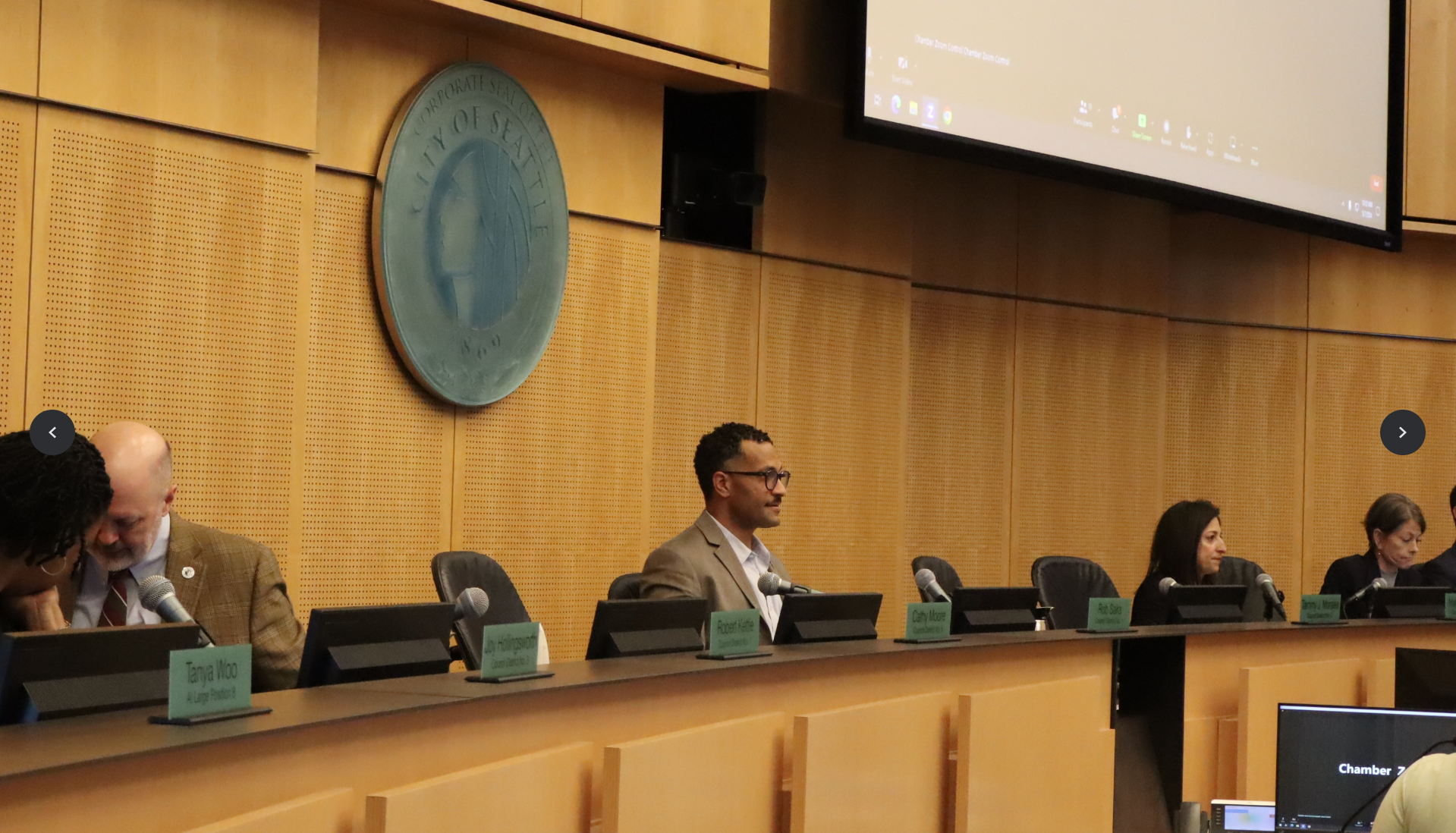
"Considering that we have appropriately aggressive housing goals, and that many projects are struggling to move forward, I think we should continue to keep our foot on the gas. And I think there are some modifications we should consider to the final code, so that we can do that," Bellevue Deputy Mayor Dave Hamilton said last week.
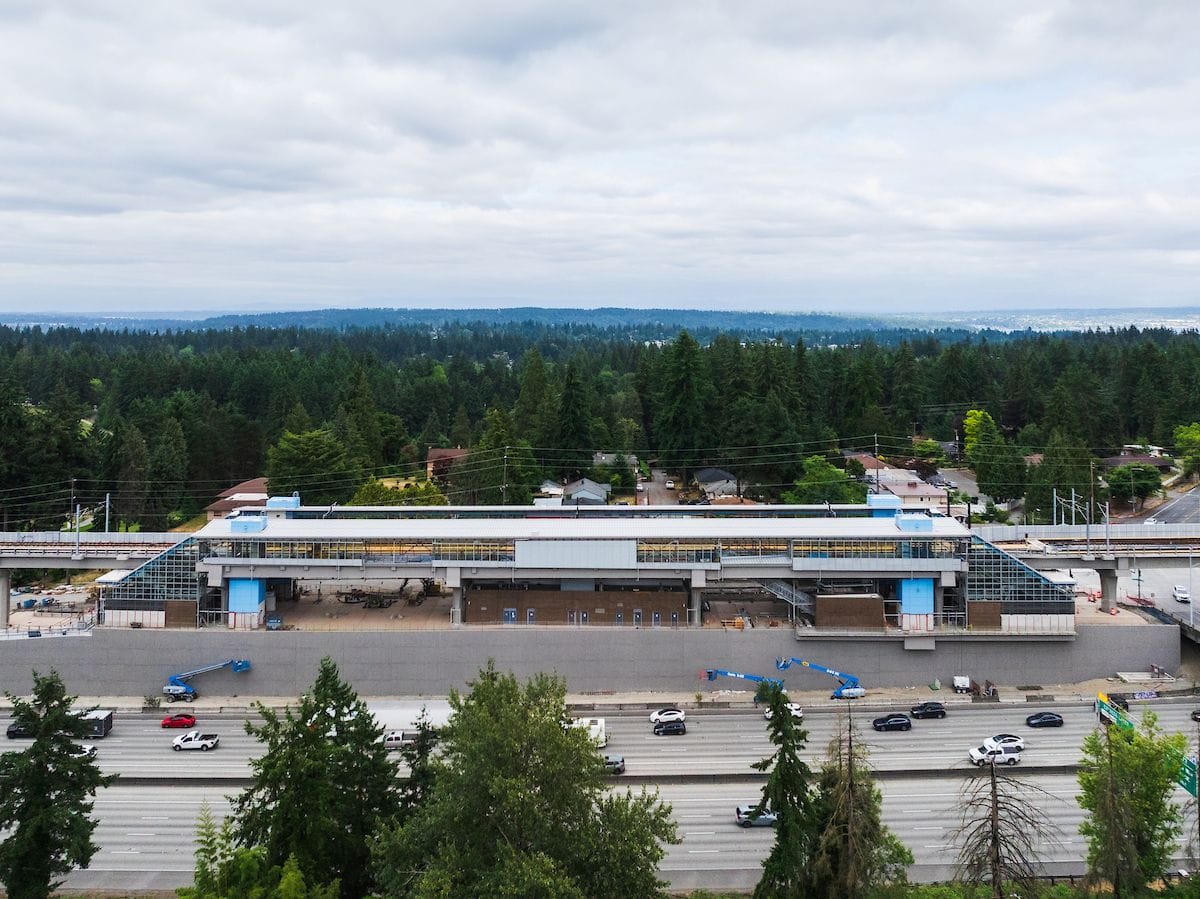
By 2029, Bellevue will need to remove parking mandates from within a half-mile walk of light rail stations and within a quarter-mile of RapidRide bus stops. The city is going ahead and making that update now, but the council could expand that radius to a half-mile distance from RapidRide stations, which includes the B Line and the K Line, planned to open by 2030.
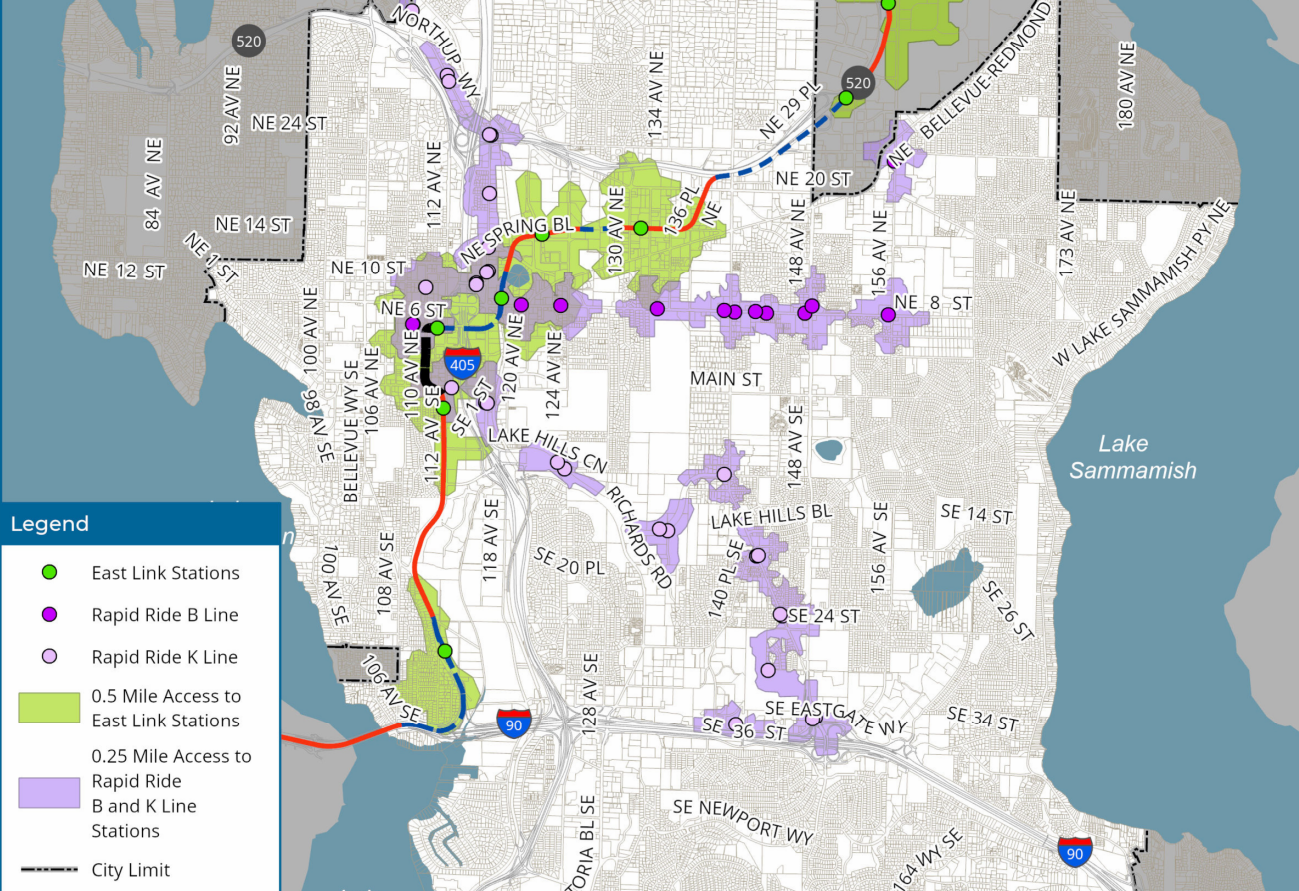
"Council has already established policy direction that we want more housing capacity near high-capacity transit, including allowing six units by right in a half mile of light rail and quarter mile of bus rapid transit [BRT], removing mandatory parking requirements in those areas that are transit served is consistent with the broader direction," Councilmember Vishal Bhargava said. "I would ask that we consider [...] the half mile around the BRT, and just as an analysis to see what the puts and takes would be towards that."
Naren Briar was the only councilmember to bring up the idea of a full repeal of parking mandates, laying down a potential marker for the future.
"I am personally interested in exploring citywide eliminations of parking minimums. According to the research I did, cities like Austin, San Jose, Buffalo, had done this and seen a tremendous amount of economic boost as a result of that. So I do want us to, to be clear, I think if we did that now, it might cause a little bit of chaos," Briar said. "But I do want us eventually to see a city that is comprehensively integrated and allows end-to-end walkability as an effective mode of transportation for senior citizens, for young kids waiting at the bus stop, for for any resident or visitor of Bellevue."
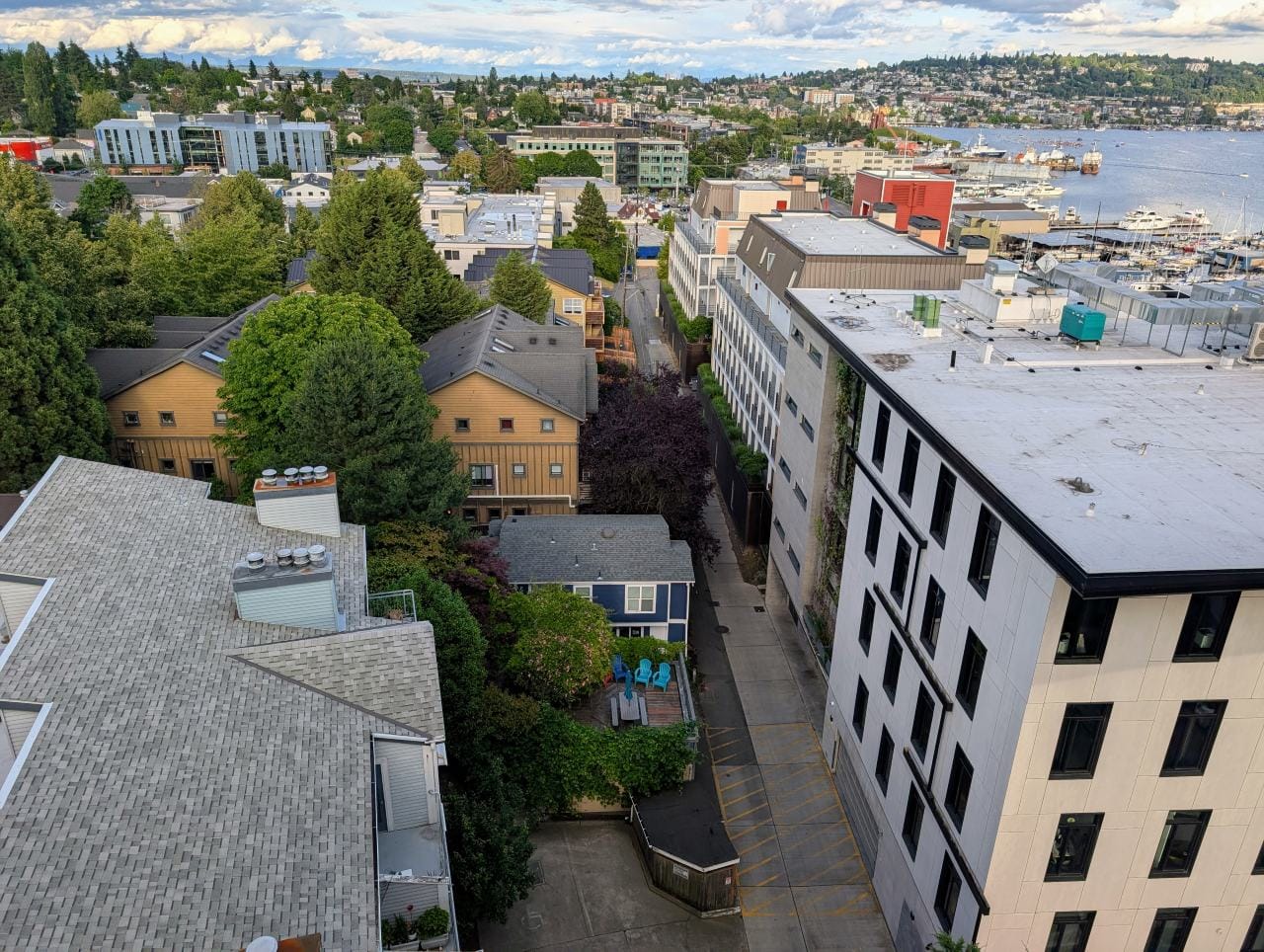
Another issue likely to come up before a final vote in October is visitor parking. The draft code approved by the planning commission includes a set of requirements on top of the minimum required parking stalls for residential units, mandating every development with more than six units include one visitor stall for every 20 units. After 50 units or 20,000 square feet of gross floor area that requirement no longer applies, bizarrely.
"I'm inclined to think that our mandate should be eliminated, and I'm looking to Seattle and Redmond, where they don't have any visitor parking mandate," Hamilton said. "I think housing providers understand their customers' preferences and will build projects accordingly. This may be an area where we can follow the lead of neighboring cities and help ensure that folks who move here are not penalized."
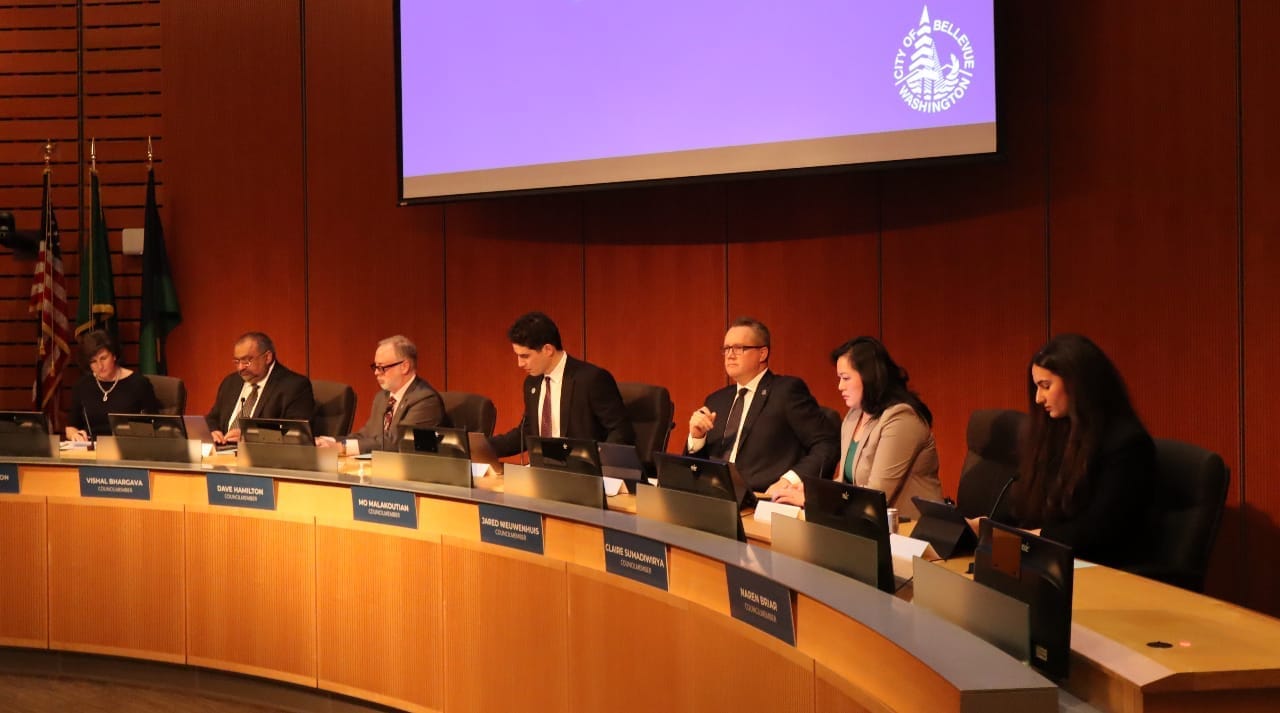
There will also be a push in the other direction. At last Tuesday's meeting, a clear bloc formed in favor of sticking with the planning commission recommendation that included Jared Nieuwenhuis, Lynne Robinson, and Claire Sumadiwirya.
"Myself, I live in a townhouse community, so I would say if there's no visitor parking, somebody is not able to walk a half mile, take the light rail, then nobody's gonna ever visit me," Sumadiwirya said. "I have a lot of elderly friends, so I think it's really important to know that. I appreciate the take of meet the state minimum first. I think whenever there's something [that] changes in the policy, it's always good to be safe and finding that balance versus just I think making drastic, too bold changes that will be different."
Robinson, who served as Bellevue's mayor from 2020 to 2025, went even further than her colleagues and suggested that the city might make a push to amend state law to mandate parking at senior living facilities. She pushed back most strenuously on the idea of going further than the planning commission recommendation.
"Nobody's going to have service providers serve the seniors. Nobody's going to get a visitor, and Silver Glen is our only, I think, our only independent [living facility]," Robinson said. "I guess there's one next to Emerald Court, but independent senior living, and all those people have cars, and most of them cannot walk that far, so they're staying connected to the community by having the ability to drive, and if we take the parking away, it's going to really limit people's ability to live independently."
According to the National Resources Defense Council, 37.6% of Americans over the age of 75 have driving limitations, as of 2025. Nothing in the land use code would limit the ability for developers of senior and independent living facilities from building off-street parking with their projects – removing the mandate simply gets the city out of the business of deciding what's appropriate.
While not likely to represent a major sea change, the October 20 vote on parking reform will certainly signal what direction Bellevue is heading.
 Ryan Packer