On Tuesday, Seattle Mayor Katie Wilson announced that the City will be immediately moving forward with the expansion of the Seattle Police Department’s (SPD’s) surveillance program that was approved by city council last fall.
To assist her in this decision, Wilson engaged the New York University (NYU) Policing Project to perform a governance audit assessing the civil rights and liberties risks posed by SPD’s surveillance program, including their real-time crime center, CCTV cameras, and Seattle Department of Transportation (SDOT) cameras. Wilson said the City plans to implement many of the recommendations outlined in the report.
NYU didn’t assess the civil liberties risks of Seattle’s automated license plate readers due to their usage being suspended earlier in the year to comply with a new state law.
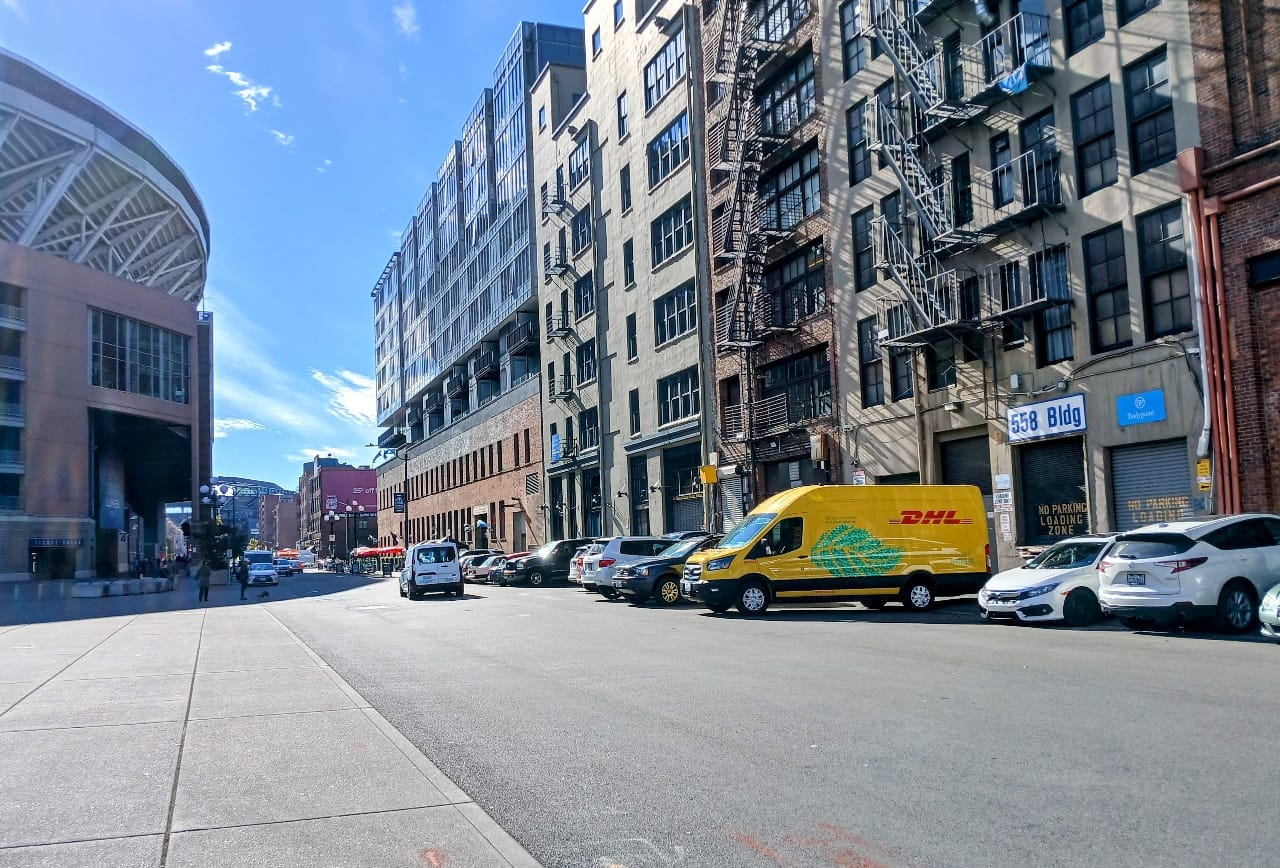
During her campaign, Wilson ran on an anti-surveillance platform, and at the beginning of her term, activists asked her to turn off all of SPD’s surveillance cameras. Instead, Wilson opted to postpone the installation of new SPD cameras in two new areas: the Capitol Hill nightlife district and an area around Garfield High School in the Central District. Wilson allowed new cameras to be installed in the Stadium District but only turned them on while Seattle was hosting World Cup matches this summer.
The NYU audit appears to have satisfied any qualms Wilson had about increasing the surveillance apparatus in Seattle.
“When I paused the expansion of CCTV, I did so because I believed we needed to ask some hard questions about data security and the protection of civil liberties, especially in the context of a federal administration that is targeting vulnerable communities and violating civil rights,” said Wilson. “After reviewing the evidence, the recommendations, and the safeguards available to us, I believe there is an important and responsible role for the RTCC within Seattle's public-safety system.”
The NYU Policing Project did not conduct any analysis around the cybersecurity risks of the data being collected by SPD.
Wilson said that Seattle has fewer surveillance cameras (so far) than many other American cities, an observation that hits differently at a time when the U.S. government is ramping up mass surveillance and the U.S. Immigration and Customs Enforcement (ICE) is planning to deploy a domestic surveillance program in Seattle early next year.
Nevertheless, the surveillance cameras in the Stadium District will be turned back on immediately, and the City will proceed with the plans to procure and install cameras in the Capitol Hill nightlife district and the Central District.
“I also want to emphasize that these are not Flock cameras,” Wilson said. “Our system is managed by a company called Axon, and while there are obviously similarities in the technology, I think it's fair to say that Axon has a more responsive record.”
While less widely criticized than Flock, Axon has been receiving plenty of negative attention in its own right. In 2025 alone, Axon held $31.9 million in contracts with the U.S. Immigration and Customs Enforcement (ICE). And just last week, a class action lawsuit was brought against Axon, alleging that Axon “blatantly violated” rules enacted by the California State Legislature regarding how Axon can capture, use, and store the data collected by their license plate readers.
“Like its competitors, Axon sells a centralized, vendor-controlled camera system that municipalities rent,” said Noah Williams, a local cybersecurity expert and member of advocacy group Communities Not Cameras. “Unlike Flock, it provides municipalities with a false sense of control over their camera footage.”
Wilson’s change of heart came in spite of the NYU audit clearly stating that SPD’s real-time crime center does involve real civil liberties risks. “Short of ceasing to retain RTCC data altogether, SPD cannot eliminate fully the risk that such data could be obtained and used for purposes prohibited under Washington law,” the report reads.
Vulnerabilities include data obtained via public disclosure laws, data obtained via subpoena of either the City or Axon, and data obtained illegally.
The City of Seattle paid the NYU Policing Project $223,000 for the audit, which found the same kind of sloppiness, lack of clear policies, and failure to live up to commitments in SPD’s surveillance program that were highlighted in the recent audits by the Seattle Office of the Auditor and the other from the Office of the Inspector General (OIG).
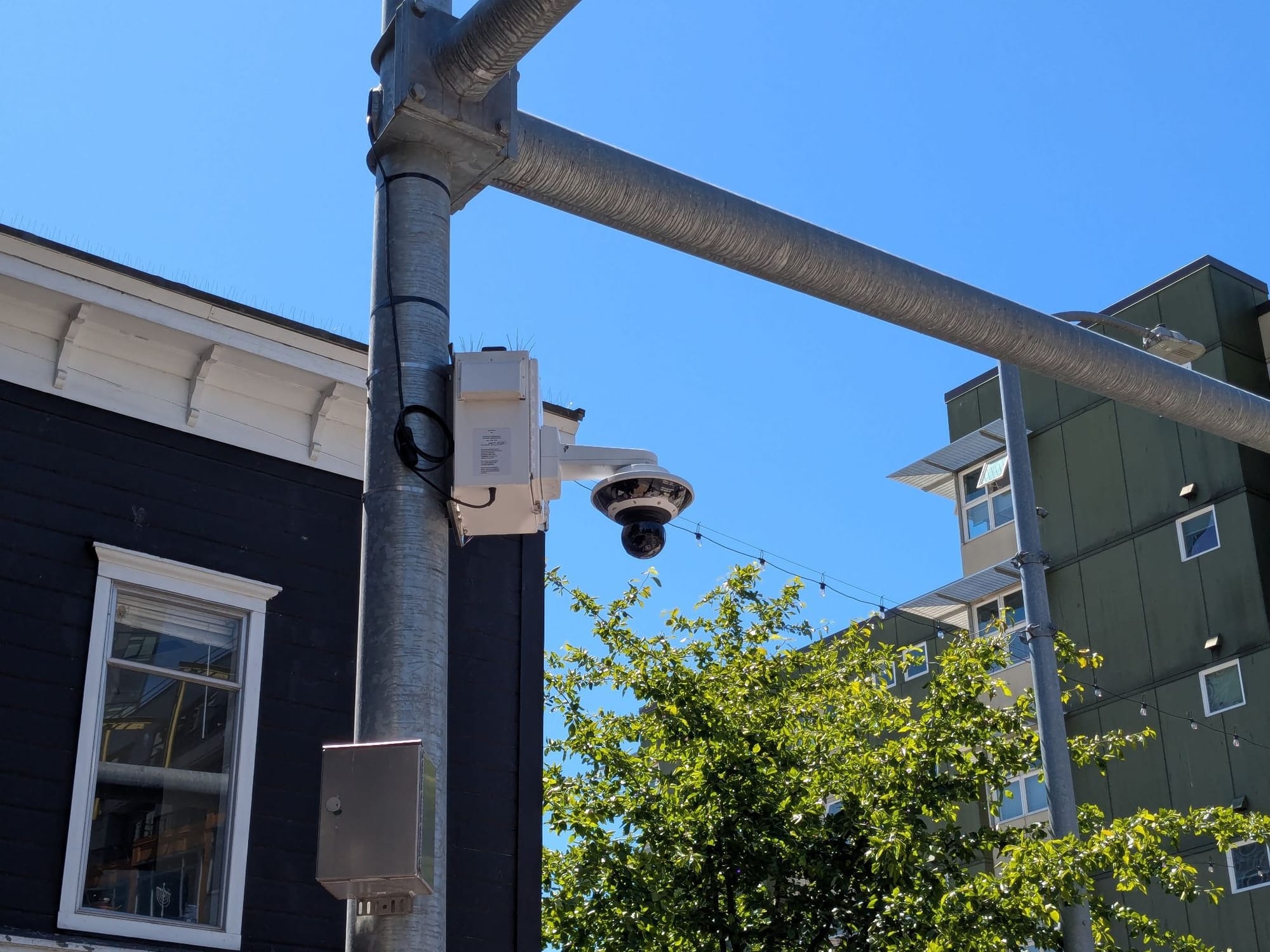
The original SPD surveillance pilot installed cameras in the Third Street corridor downtown, the Chinatown-International District (CID), and Aurora Avenue in North Seattle. Since that time, SPD has been given access to a large number of SDOT traffic safety cameras through their real-time crime center, as well as incorporating 23 private cameras from three private businesses, all of which are located in the Capitol Hill nightlife district where Wilson had said she was pausing SPD camera surveillance.
The private cameras in Capitol Hill were plugged into SPD’s real-time crime center with no notice to community members.
Ryan Talen, a nurse who lives in Capitol Hill and member of Communities Not Cameras, was unaware of the private cameras in his neighborhood being streamed into SPD’s real-time crime center until The Urbanist let him know after the press conference.
“It's a violation of our privacy,” Talen told The Urbanist.
The University of Pennsylvania is performing a separate audit in cooperation with the OIG, initiated during Mayor Bruce Harrell’s term, on the efficacy of SPD’s surveillance program. According to the NYU audit, the University of Pennsylvania’s audit won’t be completed until late next year.
Not everyone found the NYU audit as reassuring as Wilson.
“The report revealed what we've known since visiting the RTCC,” Communities Not Cameras said in a statement. “The recommendations to reform the RTCC in the report are half-measures. More oversight, audit policies and targeted use won't eliminate the fact that this system can and will be abused. Seattle has had a long history of police brutality and corruption and a short history of community healing. We need more of the latter. Addressing poverty, mental health and solving root causes of crime is what will make us safer.”
What the NYU report says
The NYU audit was conducted by a team of lawyers who found that there are “significant gaps” in the governance around the real-time crime center and made 19 recommendations that the authors say should be implemented if SPD continues their surveillance program.
The audit’s purpose was not to call out the general benefits and risks of SPD’s use of the real-time crime center, nor to make a recommendation on whether SPD’s surveillance should continue as designed.
However, in an apparent contradiction to Wilson’s claims that adding more surveillance cameras to SPD’s real-time crime center will make Seattle “safer,” the audit states, “Although the potential benefits of the RTCC as described by the City are plausible, the current research base supporting these benefits is thin. There is more robust research studying the public safety impacts of CCTVs on their own (i.e., not connected to an RTCC), but that research is best characterized as mixed.”
At the press conference, Wilson appeared to be focused more on the potential upsides of surveillance, albeit not currently backed by empirical studies, as opposed to the costs of expanding a technology that is known to aid in repression and authoritarian control.
“Once data exists, no city or agency can guarantee it will never be shared,” the audit emphasized.
According to the audit, there is an important distinction between targeted surveillance and what a real-time crime center does, which is categorized as “indiscriminate surveillance,” meaning the system surveils the public at large and collects information about people who are not suspected of any offense or wrongdoing. Indeed, due to the real-time crime center integrating many different technologies, the audit says, “The centralization of surveillance systems and data can enable far more powerful and intrusive forms of surveillance than any one system could accomplish on its own.”
When considering the many gaps, lack of clear policy, and lack of follow-through outlined in the audit, it’s striking that SPD had an entire two years since council approval of the real-time crime center surveillance pilot to make progress on these goals. The real-time crime center became operational on May 20, 2025. Thus, the City has been operating this surveillance system for almost a year and a half without the development of basic policies for its use and the timely delivery of commitments SPD made as part of the City’s Surveillance Impact Review process. This lack of engaging seriously with the agreements and responsibilities around using such a robust surveillance apparatus seems in line with SPD’s past conduct regarding surveillance technologies in the City.

Auditors found that there is a lack of clarity around the approved purpose of SPD’s real-time crime center, centering on whether it should be used for low-level misdemeanors as well as more serious incidents. According to the report, SPD found guidance that limited surveillance use for misdemeanors “challenging from an operational perspective,” and yet the surveillance pilot was originally passed with the intention of reducing gun violence and human trafficking (despite no empirical evidence has proven that this kind of surveillance reduces either of these categories of crime).
In practice, the City is left with a surveillance system that could theoretically be used to police low-level issues like trespassing, public drug use, or shoplifting a package of diapers. Wilson refused to comment on this possibility other than to state that she’s looking forward to the University of Pennsylvania report that she expects to provide information as to how the real-time crime center is being used. Wilson’s answer suggests that the Mayor’s Office doesn’t expect to fully understand how SPD is using its surveillance system until two and a half years after it went operational.
While “real-time” is in the name, in practice the crime center is also used after the fact to investigate past events. If surveillance footage were to be used by SPD after the fact to track someone without a warrant, this usage would raise constitutional concerns and could potentially land the City in legal hot water. However, Wilson said SPD does not currently use the center for this purpose.
In addition, there are no firm policies in place for how to use the real-time crime center for large events. While passive monitoring of SPD camera feeds appears to be prohibited by policy, in practice, the auditors discovered that SPD created a case number for the entire World Cup and streamed live camera feeds through the real-time crime center throughout World Cup events.
Surveillance at protests is another gray area of SPD’s surveillance program, and the audit recommends SPD develop policies around the real-time crime center and protest activities that are protected by the First Amendment. Currently, demonstrations are captured by default if they take place where SPD and SDOT cameras are installed.
In order to improve transparency, the audit recommended that SPD fulfill its two outstanding Surveillance Impact Review commitments made in 2024: to have a public-facing dashboard that reports on real-time crime center use and to develop “an omnibus surveillance technology policy.” SPD told researchers that both projects were delayed but in process, and Wilson announced at the press conference that both projects would be completed. Why SPD would need an outside agency like the NYU Policing Project to recommend they fulfill their own previous commitments remains unclear.
“It's disappointing how unscientific this whole process is,” Ryan Talen, a nurse at Harborview and member of Communities Not Cameras, told The Urbanist. “It doesn't even feel like there are standards. You know, we're just accepting the SPD's word after they say they're going to do something, they're not doing it, and we're still moving forward with the program. What does that tell us about who's calling the shots around here? Clearly, not the people that elected Katie Wilson.”
The auditors also recommended SPD institute a five-day data retention policy, given that’s what SPD say they already do in practice, and that they institute a data retention policy around the data they clip and attach to investigations so they don’t retain the data indefinitely, long after a particular investigation is closed.
“Video clips and other data stored on Evidence.com are retained by SPD indefinitely, resulting in a substantial and growing repository of data that outside agencies could seek to obtain,” the report reads. Evidence.com is Axon’s cloud-based evidence management system.
Another recommendation suggests that SPD should publish “in a clear and conspicuous location on its website” a full list of the tools and features it is using — and seeking approval to use — in its real-time crime center at least twice a year, as well as institute a policy for regular internal audits of the real-time crime center. In addition to internal audits, NYU researchers suggested the OIG should add identifying material changes to SPD’s use of surveillance tools to its annual audit requirements.
No teeth to the audit recommendations

What the audit fails to address is what to do if SPD fails to implement these recommendations in practice. The OIG audit from October, for example, showed that SPD has already failed in its commitment to make sure every camera has privacy masking in place if it’s facing a private residence. And SPD has failed to live up to commitments it made in the Surveillance Impact Review back in 2024, even though two years have passed.
Instead of taking accountability for its mistakes, SPD has made a host of excuses. In the case of the privacy masking issues, SPD said there weren’t enough available technicians. In the NYU audit, SPD blamed its failure to develop an omnibus surveillance technology policy to turnover of personnel.
“A department that does not follow its own rules cannot be trusted with more cameras,” Community Not Cameras wrote.
The agency has failed to institute a consistent policy for the private cameras streaming into the real-time crime center, even while NYU researchers report that SPD has already purchased approximately 100 more devices that would enable private camera integration. Nick Zajchowski, SPD’s Director of Technology, said the department is not planning to give away these devices at this time.
The NYU audit suggests more future audits to ensure compliance with stated policies and commitments, but this recommendation fails to grapple with SPD’s long history of failure to comply with such commitments.
The audit also doesn’t address issues of illegal behavior, whether that be by an SPD employee unlawfully sharing data with various federal agencies, Axon as the vendor not fulfilling their commitment to protect the data it holds, or an independent bad actor hacking into the system and retrieving surveillance data.
“The Mayor has completely broken the promise she made to our community,” Talen said. “She told us she was going to Trump-proof the city, and now she's giving him a key to the door. She's setting up a system that allows his administration to ask a judge to give them access to all that information, and it's going to put all of our immigrant community at risk here in the city of Seattle.”
 Amy Sundberg