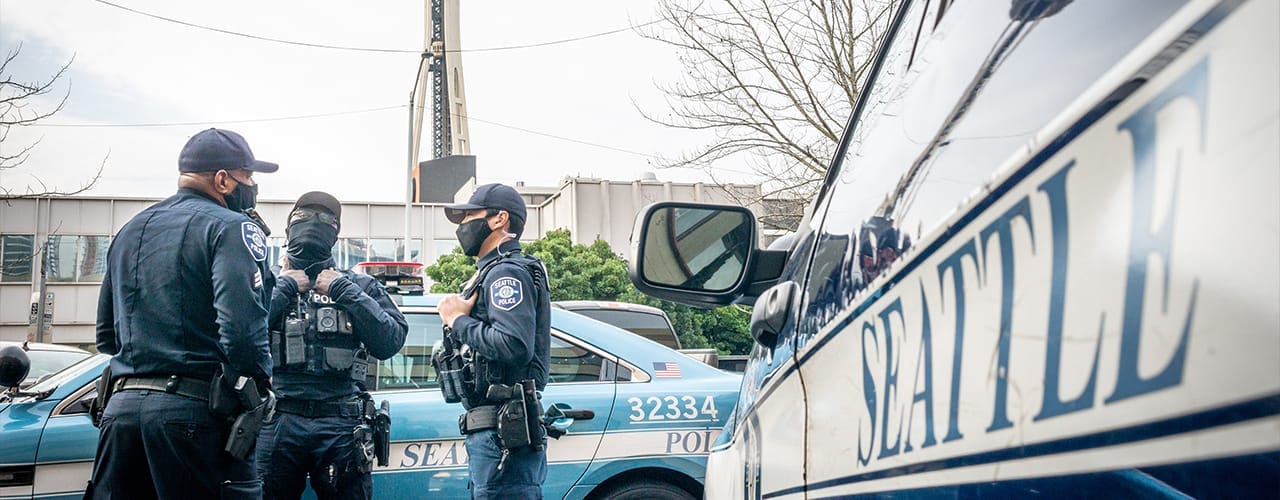
Seattle’s public safety departments – particularly the Seattle Police Department (SPD) – have historically received unique treatment and favored allocation of resources, including both money and technological tools. Reviewing recent developments in the City of Seattle, that special treatment does not look to disappear any time soon.
Until it was terminated after 15 years by Judge James Robart last fall, SPD’s consent decree acted as a reminder of the impunity under which SPD had routinely been allowed to operate. The dismissal of the consent decree was postponed after SPD officers responded to the George Floyd protests of 2020 with violence and the indiscriminate use of less lethal weapons such as tear gas, pepper spray, and rubber bullets.
In the final consent decree hearing, Robart repeatedly talked about how the Seattle Police Officers Guild (SPOG) contract had “neutered” Seattle’s police accountability ordinance. While utilization of the Community Assisted Response and Engagement (CARE) team has recently improved following the departure of former SPD Chief Shon Barnes, the SPOG contract has also hampered the CARE team’s ability to respond to appropriate calls.
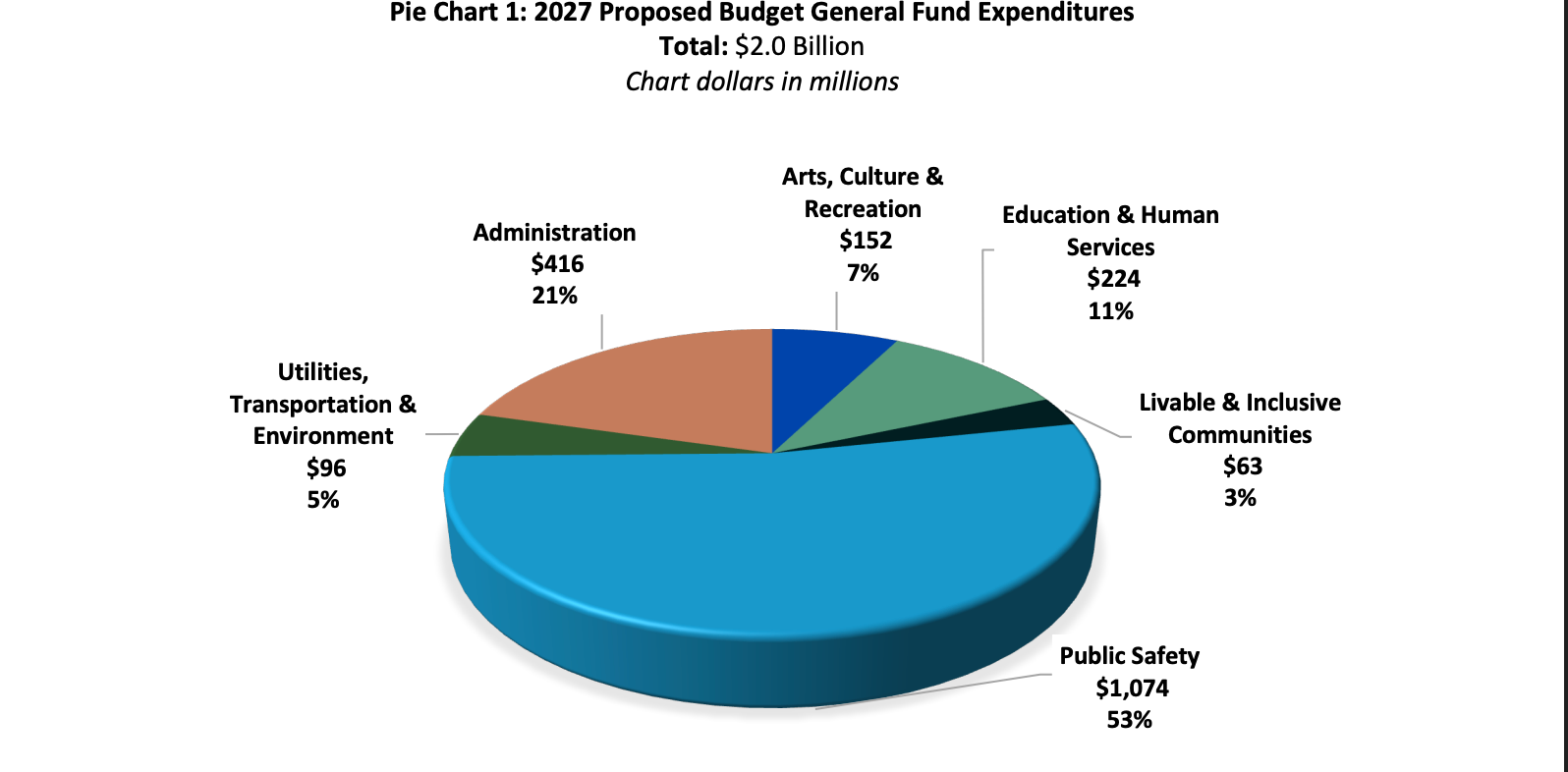
SPD receives a large share of the City’s discretionary General Fund. Public safety as a whole accounts for 53% of the $2 billion of General Fund expenditures in Seattle Mayor Katie Wilson’s proposed 2027 budget, and by itself, SPD receives more than a quarter of the total General Fund.
That largesse comes in spite of the lack of fiscal responsibility demonstrated by the department. One recent example: in June of this year, SPD overpaid about 900 of their employees by $13.1 million due to a “payroll error.” Because most of these employees are represented by SPOG, the City will have to negotiate with SPOG to try to recover the bulk of these funds, meaning it could be years before the money returns to the City’s coffers.
Four and a half months after the error, neither the Mayor’s Office nor SPD would comment about whether they have identified the person or persons responsible for this mistake or whether any disciplinary action would be taken.
In addition, neither the Mayor’s Office nor SPD shared any plans to avoid such errors in the future. While the overpayment was one time in nature since it was caused by an error in the calculation of payment of retroactive pay increases provided by recent union contracts, it could presumably be made again the next time new contracts require a similar calculation.
SPD receives special budgetary consideration beyond the mere size of its annual budget in the way the department routinely overspends its overtime budget. Data from a council central staff report in 2015 showed that SPD had overspent its overtime all but one year from 1995-2014, a trend that has continued, including this year and last year.
SPD has also traditionally received an extra slush fund through “ghost cop” positions, funded officer positions that will definitely not be filled. While these positions have finally been eliminated, under the current 2027 budget proposal, SPD is expected to achieve $4.5 million in salary savings.
The Seattle Fire Department (SFD) might also get in on the slush fund act. SFD took a cut to its overtime budget in Wilson’s proposed 2027-2028 budget, with two competing budget amendments from councilmembers looking to address this cut. Budget Chair Dan Strauss and Councilmember Maritza Rivera had identical amendments proposing to restore SFD’s overtime by the full $7.1 million amount of the cut.
Councilmember Dionne Foster’s amendment, on the other hand, suggested increasing SFD’s overtime by $5.1 million. Foster had asked council’s central staff to do an analysis to come up with this number based on the number of new hires at SFD, as well as the likelihood that some shifts at SFD would remain uncovered due to lack of volunteers to do overtime. Foster’s goal was to achieve the same target daily staffing level with fewer dollars.
“If SFD does receive this $7.1 million in overtime funding, but does not spend it all for that purpose, that funding will be in the SFD budget, and it will be available to cover unbudgeted costs in other areas,” said Ann Gorman, a central staff analyst. “Perhaps SFD will need funding in some other areas that haven’t been identified, and unneeded overtime costs will just be shifted into those accounts.”
Budget Chair Dan Strauss chose to include the larger $7.1 million SFD overtime addition to his balancing package released this week, potentially allowing SFD access to $2 million they are unlikely to use for overtime.
Public safety, surveillance, and tech
SPD got into hot water back in 2012 when the Seattle City Council learned that the department had obtained two unmanned aerial drones via a federal homeland security grant they received in 2010. SPD hadn’t kept the council informed about their plans to use the drones even though they’d already started training officers in their usage. At that time, the department hadn’t drafted any policies around usage of the drones. A public outcry led to the SPD abandoning their drone plans, and the ACLU took the opportunity to ask the City for a surveillance ordinance.
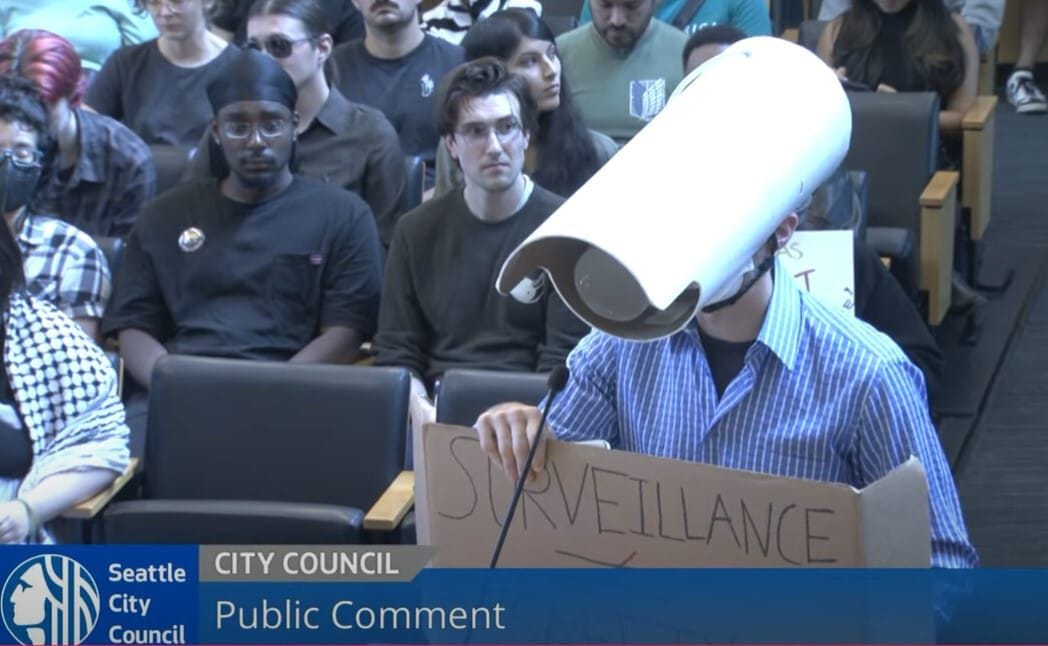
A surveillance equipment ordinance was passed in 2013, but that wasn’t the end of the saga. Instead, SPD secretly purchased social media tracking software in 2014, which, when discovered in 2016, the department said wasn’t covered under the surveillance equipment ordinance because it was software, not hardware. This episode ultimately led to the council passing a new, revamped surveillance ordinance in 2017.
More recently, two audits released earlier this year showed further overreach on SPD’s part. In the last year, SPD integrated several unapproved Seattle Department of Transportation (SDOT) traffic camera feeds into its real-time crime center. While SPD failed to adopt a formal policy around how it would integrate private cameras into its real-time crime center, the Office of the Inspector General (OIG) also found SPD has trouble following its own camera masking requirements for private areas viewed by its cameras due to the lack of availability of technicians.
Now questions have arisen about SPD’s usage of aerial drones, which originally led to Seattle having a surveillance ordinance and is still not allowed.
However, the King County Sheriff's Office (KCSO) has a fleet of drones that can fly into Seattle to help SPD, whether that be for large events like World Cup games or after emergencies.
“We have concerns that KCSO drones flying over Seattle enables SPD to essentially bypass the Seattle surveillance ordinance and the protections it is intended to provide,” said Tee Sannon, ACLU-WA’s technology policy program director. “Without proper regulation, drones pose a serious threat to people's privacy and civil liberties. They can carry multiple surveillance tools that capture data about people and their movements without their knowledge or consent, which could potentially chill free speech and impinge on people's free association rights. For law enforcement agencies seeking to use tools like drones, the use must be carefully regulated to minimize these threats from surveillance, such as by placing strict limits on what data they can collect, how long it can be retained, how it can be used, and who it can be shared with.”
Records shared with The Urbanist by Rose Terse show that in spite of not being allowed to use drones due to the surveillance ordinance, SPD was directly involved in applying for a federal grant to fund a regional drone program. During her time employed at SPD, Carrie Martin née Chitty, then the Regional Law Enforcement Homeland Security Program Manager for the SPD Metropolitan Safety Services Bureau, played a significant role in pulling together a regional drone proposal in 2020 that received money from the Homeland Security Grant Program in 2021.
Martin communicated with several local law enforcement agencies about their drone programs and convened a meeting with members of the Everett and Renton Police Departments to discuss the regional drone program and identify “a lead agency” for the grant proposal.
After the project successfully received the grant, Martin (then Chitty) explained her continuing role to Renton Police Department’s Commander Charles Karlewicz on April 1, 2021.
“The Fy21 UASI sUAS project was funded at $100,000!!! Super exciting,” Martin wrote. “I am going to be working with Deputy Chris Pelczar from KCSO TAC30 on developing the Regional deployment plan for the equipment that will be purchased with the grant funding.”
Martin is now employed as a grants administrator at KCSO, and SPD has benefited from the culmination of the regional drone project she helped bring about, often “borrowing” one of KCSO’s drones.
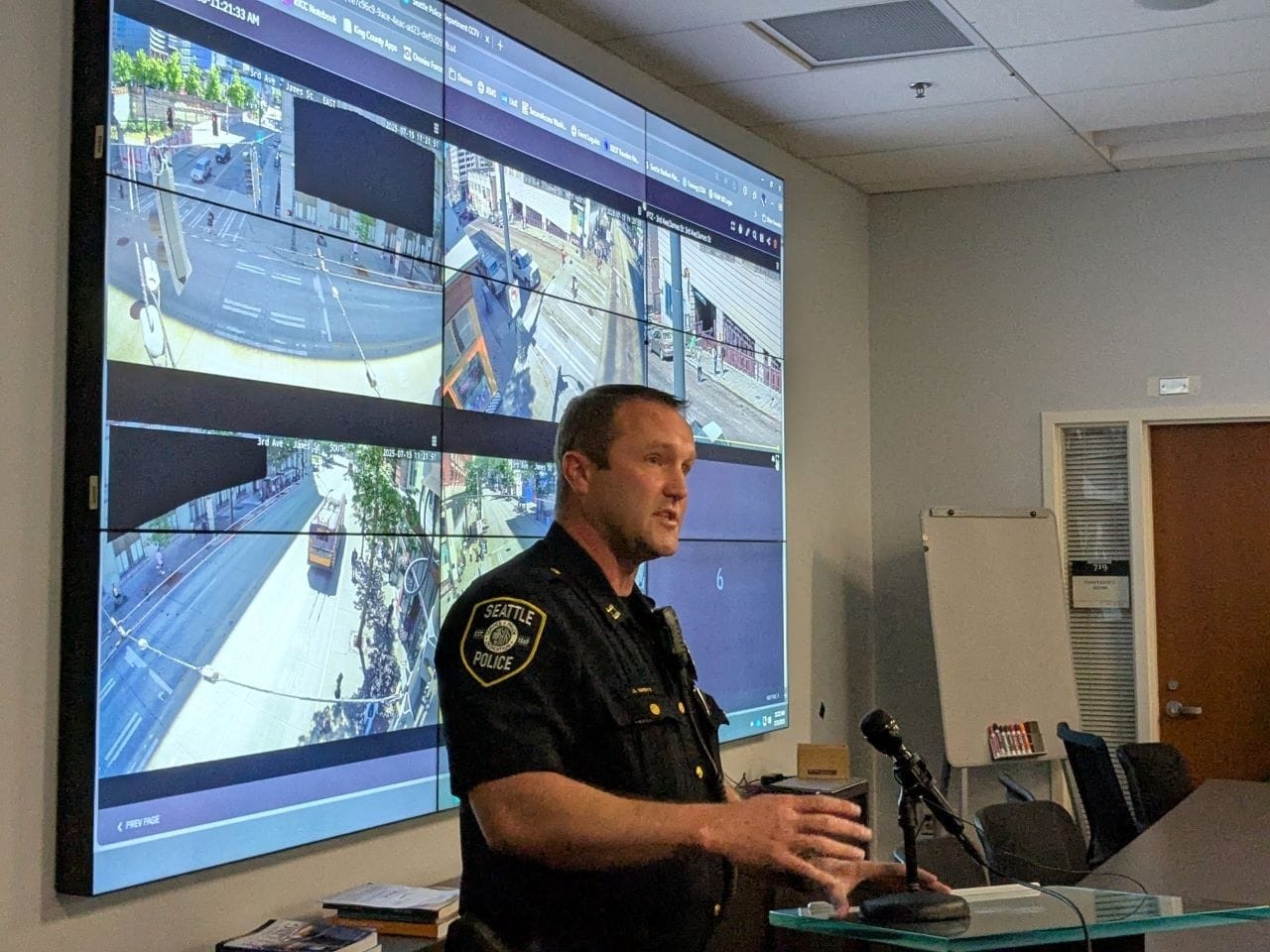
“It's pretty common for the SWAT team to borrow the drone for deployments where you have a barricaded armed subject,” SPD Captain James Britt told The Urbanist during a tour of the real-time crime center in 2025. “We have a great relationship with our friends over at the Sheriff's Office in their TAC 30 unit. It's common for the SWAT team to do it. It's not common beyond that.”
According to The Seattle Times, both Seattle IT and the OIG’s Inspector General for Public Safety Lisa Judge agree that the surveillance ordinance doesn’t apply when SPD calls in KCSO’s drones.
“The City can’t enforce its surveillance ordinance on other jurisdictions,” Dan Pitts, audit supervisor at the OIG, told The Urbanist.
Communities Not Cameras, a local grassroots organization that opposes surveillance, says the distinction lies in which agency is directing the activity of the drones.
“KCSO operating drones in Seattle is not, per se, a violation of that ordinance,” the group wrote to The Urbanist. “When Seattle Police direct that use, outside of exigent circumstances, they are doing so in violation of the law.”
Communities Not Cameras pointed out that in 2021, SPD submitted a Surveillance Impact Report for helicopters with infrared cameras, which was a tool they were borrowing from KCSO, and the council adopted it by ordinance.
“Drones should go through the same process. A rule that applies only to equipment SPD owns is not oversight. It is a procurement rule,” Communities Not Cameras wrote. “If borrowing exempts a tool, any technology the Council has rejected or never reviewed is one phone call away, including license plate readers, cell site simulators, and facial recognition held by neighboring agencies. Mutual aid exists for emergencies. It should not become a standing workaround for public review.”
Communities Not Cameras would like the council to amend the ordinance to state plainly that it covers any surveillance technology used at the request of, or on behalf of, a City department, regardless of who owns or operates it. They also want to include a requirement that SPD report every mutual aid request involving surveillance technology.
“The spirit, if not the letter, of the law already prohibits the department from acquiring and using drone technology through a third-party like KCSO,” Communities Not Cameras wrote. “There is just no appetite on the City’s side to enforce it.”
On the SFD side, in June, The Seattle Times reported that an AI technology had been assisting SFD 911 dispatchers since 2023 in deciding which callers would get a rapid response and which would be referred to a nurse-staffed call center in Texas. SFD has been using the AI tool, provided by the Danish company Corti, without any disclosure to the public or any evaluations of efficacy, safety, or data privacy.
Ryan Calo, a University of Washington law professor and co-director of the university’s Tech Policy Lab, shared his concerns with The Urbanist.
“People have the right to know if AI is being used to make consequential decisions such as who should be fast tracked and who should be sent on an alternative track,” Calo said. “More specifically, if you’re a person who has been sent to the nurse’s line or an alternative path because AI suggested it and you get hurt or don’t get the care you expect, you should know AI is involved. I don’t like the fact it was hidden from the public.”
Calo said he didn’t like the idea of a third party listening into 911 calls without notice.
Recent reporting from The Seattle Times uncovered a 2019 internal privacy risk analysis memo written by Ginger Armbruster, then Seattle’s chief privacy officer, which revealed concerns about data ownership and sharing, data breaches, and equity.
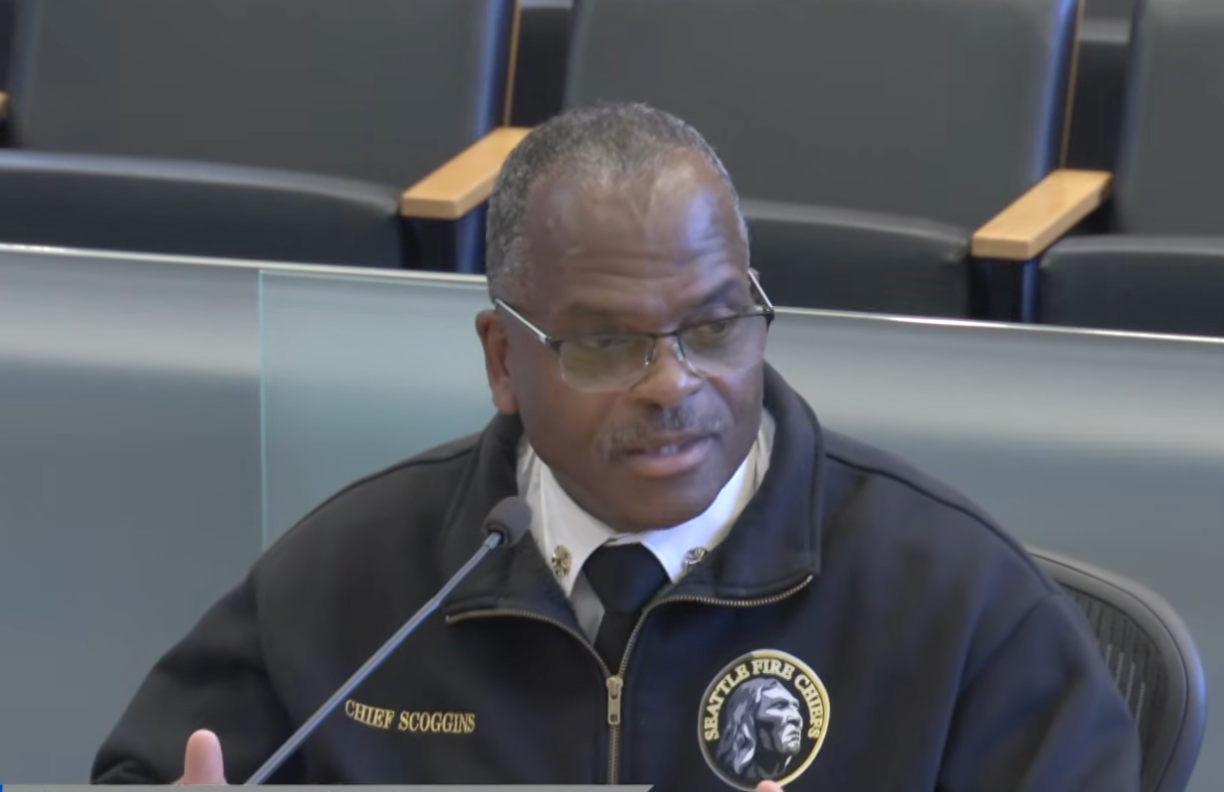
In September, when Kettle invited SFD leadership to a public safety committee meeting to discuss the issue, SFD Chief Harold Scoggins defended the department’s use of the Corti AI tool.
“All of our dispatchers are firefighter EMTs. They have all worked in our system,” Scoggins said.
“AI does not make any decisions. It offers an opportunity, but the dispatchers still make the ultimate decision.”
Councilmember Rob Saka underlined that when using AI tools, it is important to “make sure humans remain in the loop” as SFD’s use of the Corti tool does.
However, the jury is out on how much control a human in the loop maintains. Research from Anthropic released last week showed that 86% of its analyst participants went with the Claude chatbot’s recommendations that were chosen by a coin toss – a number that would have been around 50% if the chatbot’s recommendations had no impact on the final decisions. Furthermore, only 15% of participants were self-aware enough to credit the chatbot as an influence on their final decision.
Calo said there were a few reasons why an AI tool’s recommendations would affect the thinking of a 911 dispatcher.
“They could be susceptible to automation bias, which is the idea that people tend to overvalue recommendations from a computer. That’s a well-studied phenomenon,” Calo said.
Calo suggested dispatchers might also be biased in favor of the AI recommendations in an effort to be seen as team players who are constructively using a tool paid for by the department.
In The Seattle Times, another UW professor, Emily Bender, who works in the field of computation linguistics, said the Corti tool could work less well for 911 callers who speak differently because of accents, disabilities, or stress. Bender also worries that the use of the Corti tool could cloud questions of accountability when an error is made.
Scoggins shared that SFD had contracted with the University of Washington for an evaluation of the technology’s effectiveness.
Dr. Michael Sayre, who is a professor in the Department of Emergency Medicine at the University of Washington and the medical director for SFD’s Seattle Medic One, told The Urbanist the evaluation hasn’t yet been completed and he didn’t want to speculate on when it would be delivered.
In the meantime, a notification that AI is being used to help triage calls is still not provided to 911 callers. “We do not want to delay 9-1-1 call processing when we need to immediately gather the address and the problem the 911 caller is experiencing or witnessing to get help on the way,” an SFD spokesperson told The Urbanist.
Calo suggested the City could be transparent with callers after the fact, sending a notification after a 911 call that an AI tool had been used to triage the call to an alternate path. Other advocates think usage of the Corti tool should be suspended altogether.
Tara Lee, the director of communications at the Mayor’s Office, didn’t comment specifically on SFD’s use of the Corti tool.
“We continue to explore if the AI policy meets current needs as the technology changes,” Lee told The Urbanist. “This is something we intend to dig into deeper over the next few months.”