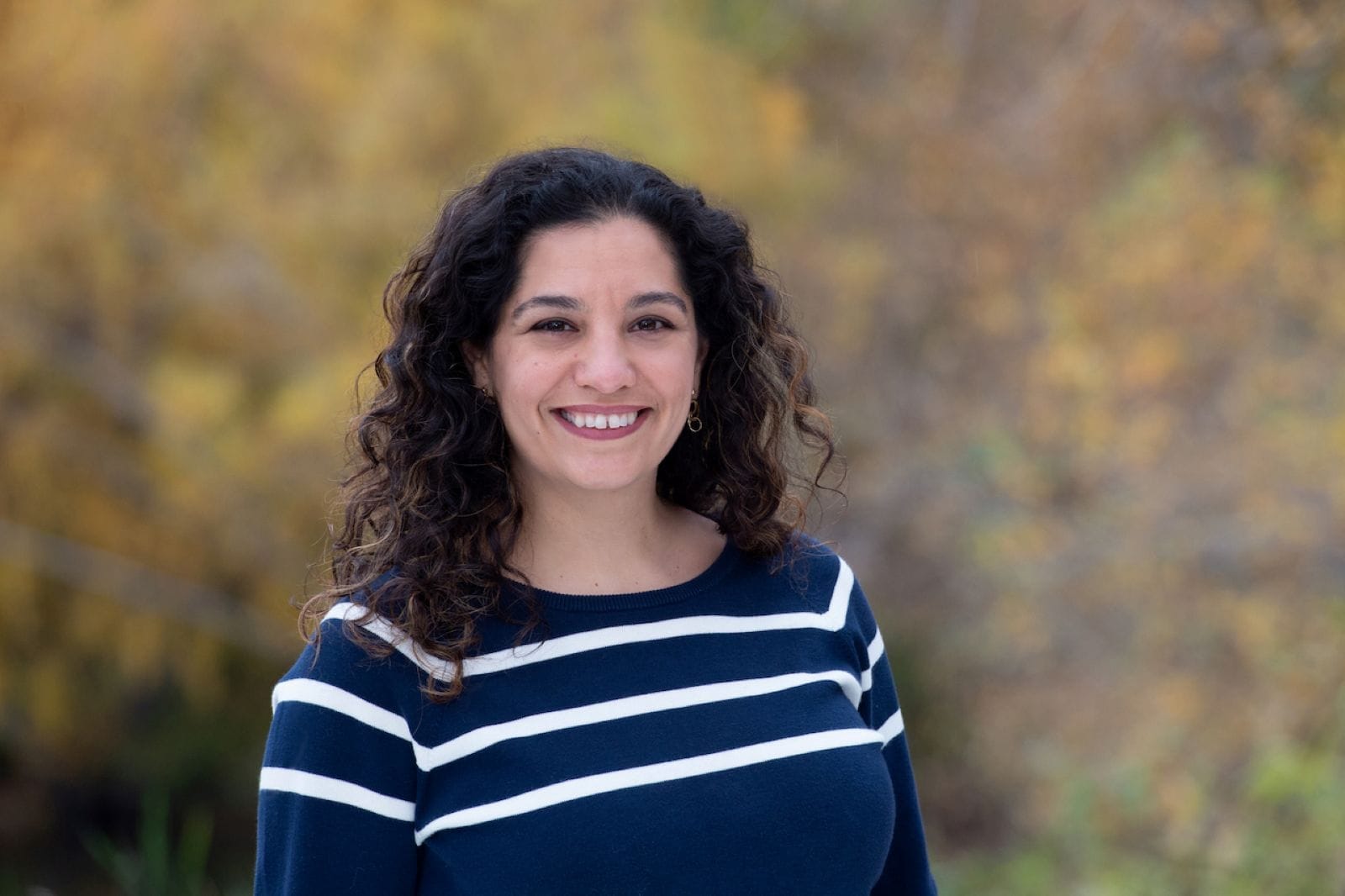
Nilu Jenks has won a Seattle City Council seat based on the decisive 17-point lead she ran up on election night. That lead is likely to grow as more votes are counted in coming days, since last-minute votes lean progressive in Seattle. Jenks' lead held steady in Wednesday's ballot drop.
A progressive advocate, Jenks led the nonprofit FairVote Washington, which fought for the ranked-choice voting reform that is going into effect in Seattle municipal elections next year. She also ran for city council in 2023 and finished third in the primary, trailing centrist Cathy Moore and ChrisTiana ObeySumner, whom The Stranger endorsed. The Urbanist Elections Committee (on which I serve) endorsed Jenks in that 2023 race and again in 2026.
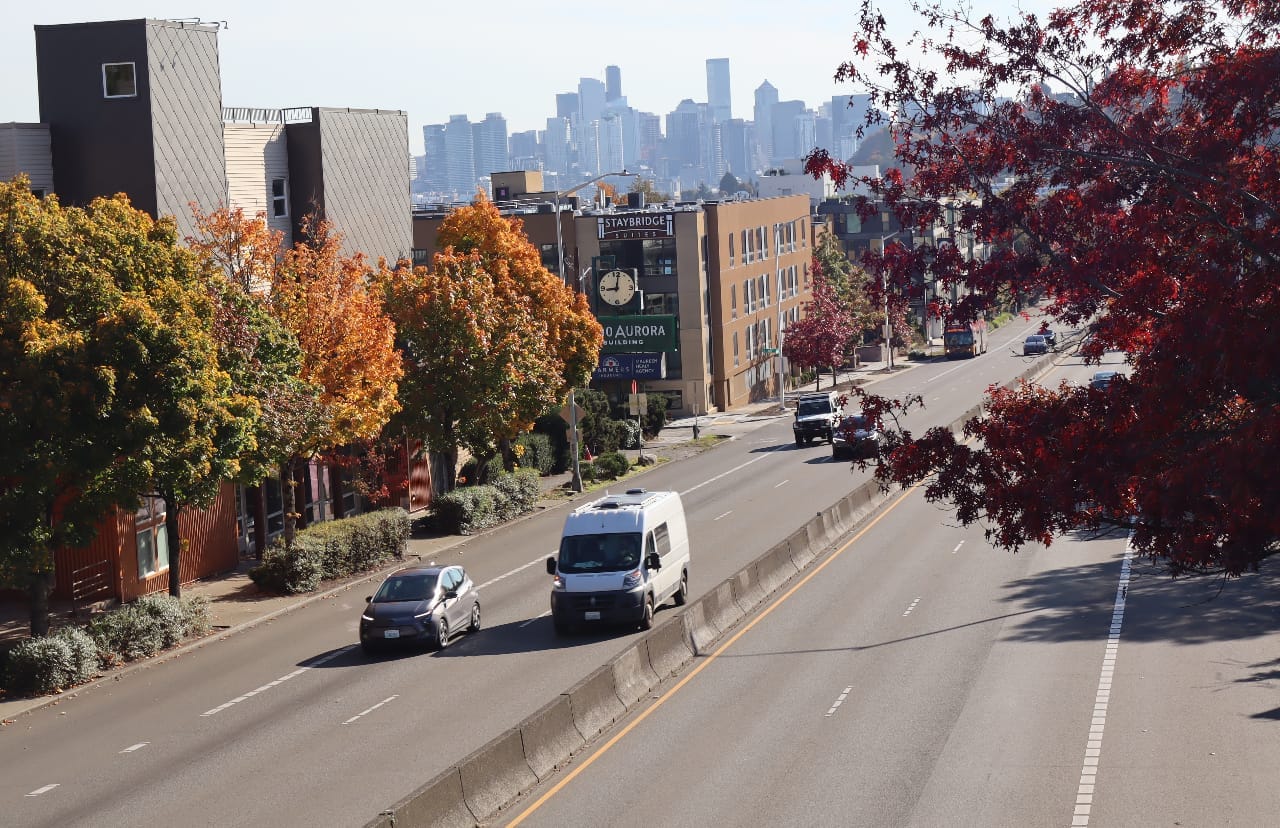
After victory became apparent Tuesday, Jenks told The Urbanist that safety-focused designs of Aurora Avenue N and Lake City Way were among her top priorities. Aurora has a $50 million state grant earmarked for it, but state lawmakers like Seattle Rep. Julia Reed have grown impatient with the slow pace of getting the project shovel-ready.
"I would love to get the money allocated for Aurora moving and actually really get more, so that we can make Aurora a place that everybody gets to enjoy from bikers and walkers, and have good dedicated bus lanes, but also so that you can go to those businesses along there that deserve our support," Jenks said. "I also want to get similar funds for Lake City Way. It's another area where a lot of people get hit, and you know, it's not safe for pedestrians."
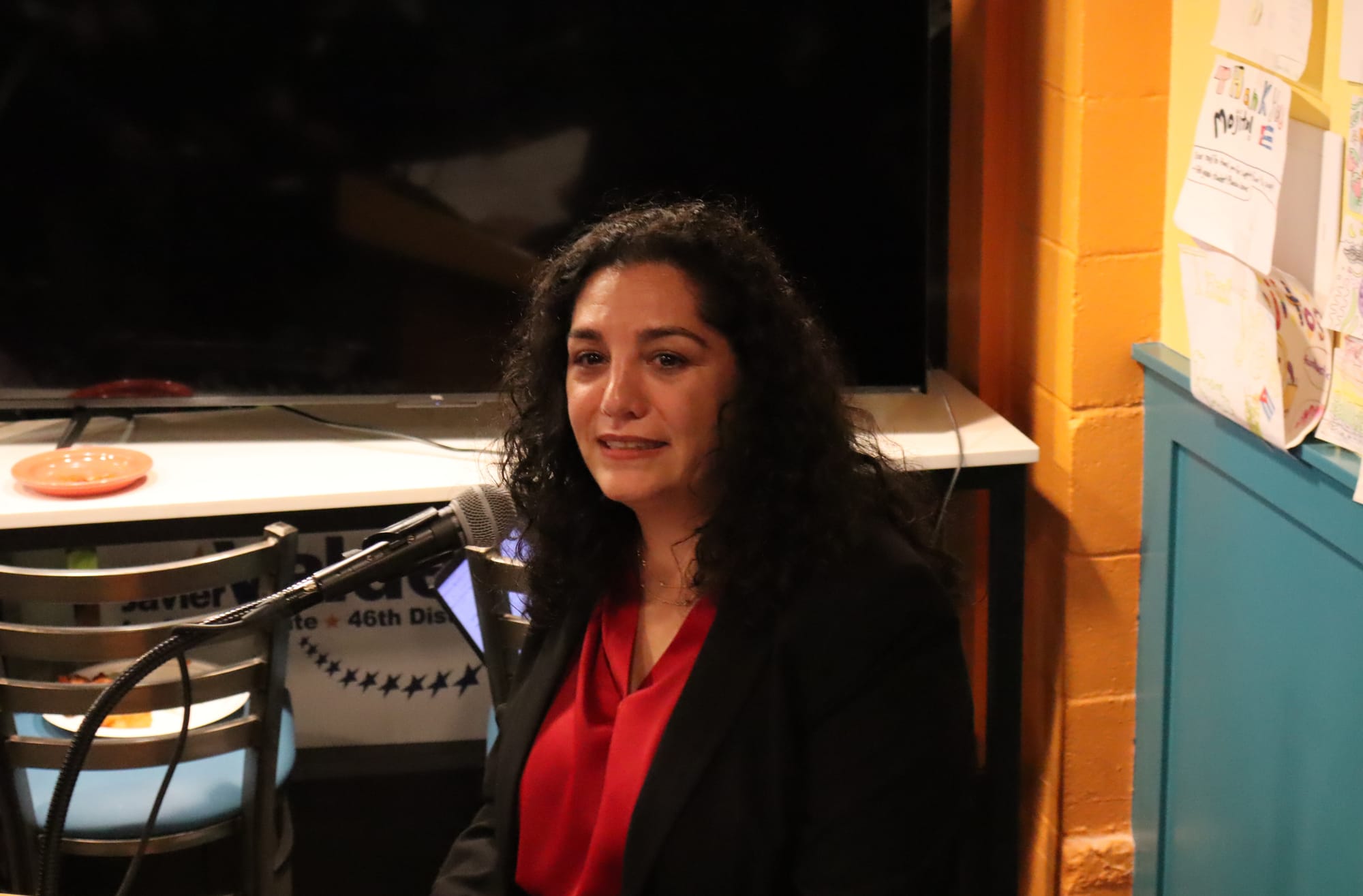
At an election night gathering of supporters at Mojito in North Seattle, Jenks framed her apparent victory as part of the larger battle to stop Trumpism, restore faith in American institutions, and lower the cost of living.
"As the daughter of Iranian immigrants, I know democracy is not something we can take for granted," Jenks said in her election night speech. "I grew up watching my parents lose their country, and as an Iranian American, I watch an ever-looming threat of war hang over the country my family came from while families here at home face fear, uncertainty, and rising costs. Trump's war with Iran has cost billions of dollars, with rising fuel prices adding pressure to household budgets."
With Democrats winning the U.S. Senate and House of Representatives in Tuesday's blue wave election, pressure to end the Iran war will be ramping up.
Meanwhile, Jenks' win will shift the balance of power on Seattle City Council, growing the progressive bloc to four members. The remaining five members sometimes form a centrist bloc, although D6's Dan Strauss and D1's Rob Saka sometimes vote with progressives. Flipping the D5 seat from centrists to progressives will give Mayor Katie Wilson an easier time moving her legislation. Moreover, it will remove interim Councilmember Debora Juarez, who had been one of the mayor's harshest critics, especially on public safety issues.
Jenks has a different approach to public safety than Juarez or Moore, emphasizing the need to expand the civilian-run Community Assisted Response and Engagement (CARE) Department. When The Urbanist asked which issues she would seek to lead at council, Jenks brought up expanding CARE, tackling food deserts, and adding incentives for heat pumps as a way to shrink energy bills and the city's climate footprint.
"I am really excited to figure out food deserts and how we can solve that problem," Jenks said. "I would love to work to expand the CARE team. Get us a police chief that loves this city, and will be collaborative with an alternative response team, and ideally has worked with one before. I am excited to work on trying to figure out on-bill financing for heat pumps to stabilize our heat grid."
In winning her seat, Jenks defeated Julie Kang, an educator and former bank chair who had backing from centrist leaders in the District 5 special election. Councilmembers Bob Kettle and Maritza Rivera endorsed Kang, as did former Councilmembers Sara Nelson and Tim Burgess, who also donated to a political action committee (PAC) backing her. Current Council President Joy Hollingsworth endorsed both Jenks and Kang.
The drubbing Kang took appears as a warning sign and a repudiation for those centrists as they face their own elections next year, when all seven district-based council seats are up. D5's seat was up in an even-year special election due to Cathy Moore's decision to resign before her term was up. Jenks will assume office as soon as election results are certified later this month, rather than waiting until January, but she'll also face reelection next year.
In her speech, Jenks emphasized that she saw that District 5 residents were facing struggles and she intended to do something about it.
"I see the person who can't afford a car or the unbelievable gas prices and who relies on public transit and protected bike lanes to get around their city," Jenks said. "I see the immigrant family and the young trans person who wants what we all want: to feel safe, loved, and free to be themselves – to build a future here, and know their city will stand by them."
Another campaign focus for Jenks was food security and access, which became a hot button issue when grocery giant Kroger announced the closure of the Lake City Fred Meyer store upon which many community members had relied.
"I see the grocery store working hard for fair wages and also for accessible food in our neighborhoods. Thank you. I see the senior on a fixed income wondering whether they can afford to stay in the city they helped build as rent, housing, and property taxes keep rising," Jenks said. "I see the small business owner who has poured everything into their business and wants a safe, thriving neighborhood where they can succeed in a city that helps them instead of getting in their way, and I see the parent who wants their child to walk home safely in a city that responds to public safety with both urgency and compassion. These are the people behind this campaign, and these are the people I'm going to carry with me to City Hall."
To defeat Trump's campaigns of hate and corruption, Jenks argued Seattle must be a shining city on a hill and provide a beacon of light showing progressive leadership in big cities is able to deliver. Urbanist touchstones of high-quality transit, connected sidewalks, and abundant housing were a key part of the image Jenks invoked during her campaign, illustrating why she won The Urbanist's endorsement this year (and in 2023, for that matter). Bus improvements will be much more feasible with the passage of the Seattle Transit Measure, which ran up a huge lead in election night returns.
"That's what this moment demands of us: not that we stop being afraid, but that we refuse to let our fear decide who we become," Jenks said. "Across this country, Trump and his allies tell us our cities are broken, that the answer is more fear, more division, and more crackdowns. But Seattle is choosing another path. Once every vote counted, it's time to deliver. Our cities have to show they can govern, not someday, now. When we can't build housing, fix a sidewalk, or keep a bus stop safe, we make the argument for the people who say our cities don't work. So let's prove them wrong by making this city work for all of us."
 Ryan Packer