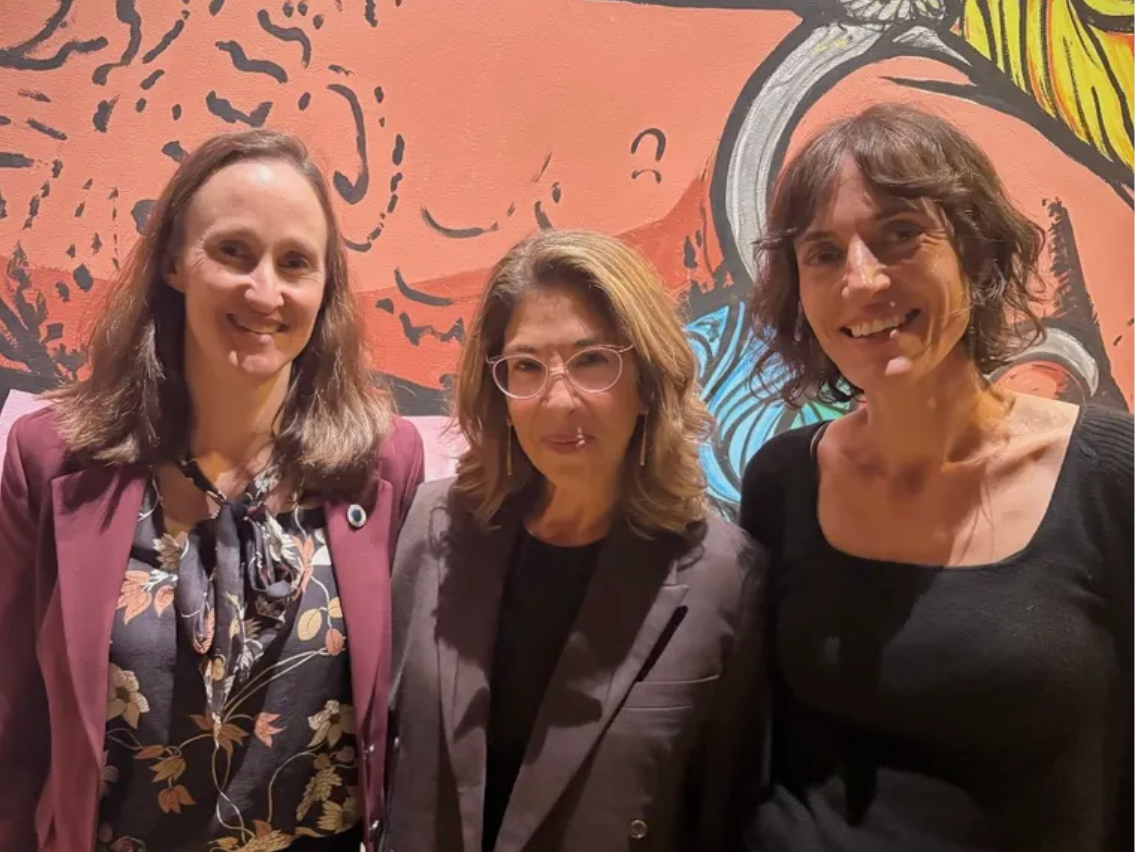
Last week, Naomi Klein and Astra Taylor made an appearance at Seattle Town Hall in conversation with Seattle Mayor Katie Wilson to promote their new book, End Times Fascism, which has become an international bestseller.
Both the book and a 10-minute video shown at the beginning of the talk open with the story of a presentation by American real estate moguls Jared Kushner and Steve Witkoff at the annual summit of the World Economic Forum in Davos this past January. The two men shared their vision for redeveloping Gaza into a resort city for the super-rich, a flagship project for President Donald Trump’s “Board of Peace.”
“Let’s just plan for catastrophic success,” Kushner said at the event.
End Times Fascism posits that while there is much to learn from looking at the history of fascism, the path of fascism today is precipitated by different crises than those in the past.
“We think of fascism as capitalism's most ferocious threat response,” Klein said. “It emerges during times of crisis, when the system is collapsing and failing people on a mass scale.”
However, the details around how it emerges and functions can differ. We live in a world of advanced technologies compared to, say, post-World War I Germany – including nuclear weapons and comprehensive surveillance – and we are confronting an accelerating climate crisis in the wake of the trauma caused by the global Covid-19 pandemic.
These different crises, the authors argue, have led to changes in the far-right and shaped the alliance of forces pushing fascism in this and other countries: an alliance bound by their fascination with the idea of a forthcoming apocalypse. In the book, the authors detail the three main groups as they see them, all of whom agree in pushing the idea of the world being in its end times: the religious extremists, the tech oligarchs, and the ethno-nationalists.
“We argue in the book that fascism, in addition to being a response to systemic crises, is also a response to these credible threats from the left,” Taylor said. In the past, those credible threats included events like the Russian Revolution and the beginning of the Reconstruction after the American civil war. In the most recent fascist push, Taylor said those threats have included Black Lives Matter, the Me Too movement, and the revitalization of labor unions.
The book concludes by building the case for a movement dedicated to “hereness.” Unlike the fascist trio of groups detailed above, who believe in a future where the privileged few can leave this planet, whether that’s through the Rapture, building bunkers and walled nations, or colonizing space and uploading brains into the cloud, Klein and Taylor detail the hard but satisfying work of those committed to staying on this planet and making a healthier and safer world for everyone who lives here.
While the book focuses primarily on global and national forces, Wilson’s participation in the conversation as the mayor of a large American city – which Klein said was a first such event for the writing duo – illustrated how the increasing national interest in the ideas of democratic socialism is playing out on the local stage.
The Urbanist's Fall Member Drive is in full swing! Support our work, read ad-free, and help us hit our goal for the member drive!
Americans have participated in widespread resistance to the tech elite through last year’s Tesla Takedown protests and this year’s pushback against the construction of data centers and the installation of Flock (and other) surveillance cameras, coupled with resistance to the ethno-nationalists with the rapid response and mutual aid networks deployed in defense of immigrants and the 2024 pushback in universities across the country to the religious extremists’ project of destruction and death in Gaza.
Americans have also shown their dissatisfaction with the status quo at the ballot box with the election of Zohran Mamdani in New York City and Katie Wilson in Seattle.
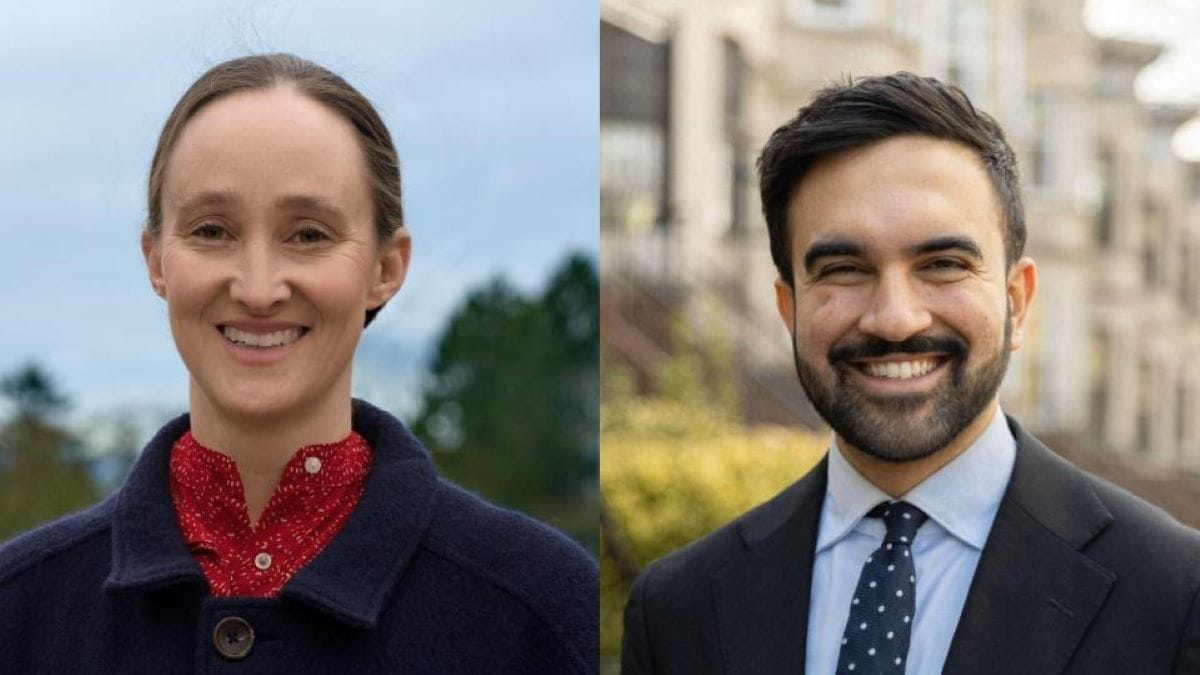
Klein spoke to Mamdani and Wilson’s shared love of their cities and cosmopolitan urbanism broadly as a strong message against the end times fascism described in the book.
“The very fact that cities are possible, and that diverse cities are possible, that people can live together, be curious about each other, be interested, realize that our lives are enriched precisely because of our differences, is the antithesis of fascism,” Klein said. “When people in cities say we love it here and run on these very positive visions, [...] where there's sort of love letters to the city and what makes them different and what makes them special, it reminds all of us that there's a reason why we live where we live.”
“I do believe cities are inherently anti-fascist,” Klein said.
After the introductory video, Wilson shared one line that particularly stuck out to her: “Fascism always emerges in moments of systemic crisis to protect elites from the threats of redistribution and accountability.”
Wilson provided a short summary of history from the post-Cold War 1990s during what she called “the peak of a certain version of neoliberal globalism,” a promise whose cracks began to show around the turn of the century with the rise of the anti-globalization movement.
“Fast forward to 2008, when I think the real systemic crisis began, and the Great Recession that followed that prompted Occupy here in the US, and that was really this recognition that that ‘rising tide lifts all boats’ was no longer believable here in the U.S.,” Wilson said. “There was now this whole generation of young people who realized that they were having less economic security than their parents did, and that kind of loss of legitimacy of the status quo really opened up space for the growth of new left movements, including that mainstreaming of democratic socialism that we're seeing today.”
Wilson observed that the crisis of legitimacy that began in 2008 has only deepened and contributed to the worldwide political polarization we’re currently living through.
Points of tension in a big tech city
Seattle has a bit of an uneasy relationship with big tech and the tech oligarchs that Klein and Taylor call out as a current fascist force.
In 2024, Seattle ranked second among the 50 largest U.S. cities for its share of tech workers, with 13.3% of its employed workers being in tech. As of the end of 2024, 23% of the country’s AI engineers lived in Seattle, a number only topped in the San Francisco Bay Area. And Anthropic, one of the country’s leading AI firms, signed a lease this summer for a 113,000-square-foot space in Seattle.
Meanwhile, about 70% of JumpStart payroll expense tax payments come from just 10 companies, most of them in the technology sector, including Amazon, Mega, Google, and Expedia. As of 2026, the first tier of the Jumpstart tax kicked in at $194,452 in individual annual compensation, with the tax paid only on the portion in excess. The City of Seattle has depended on the JumpStart tax to balance its budget since it began being collected in 2021.
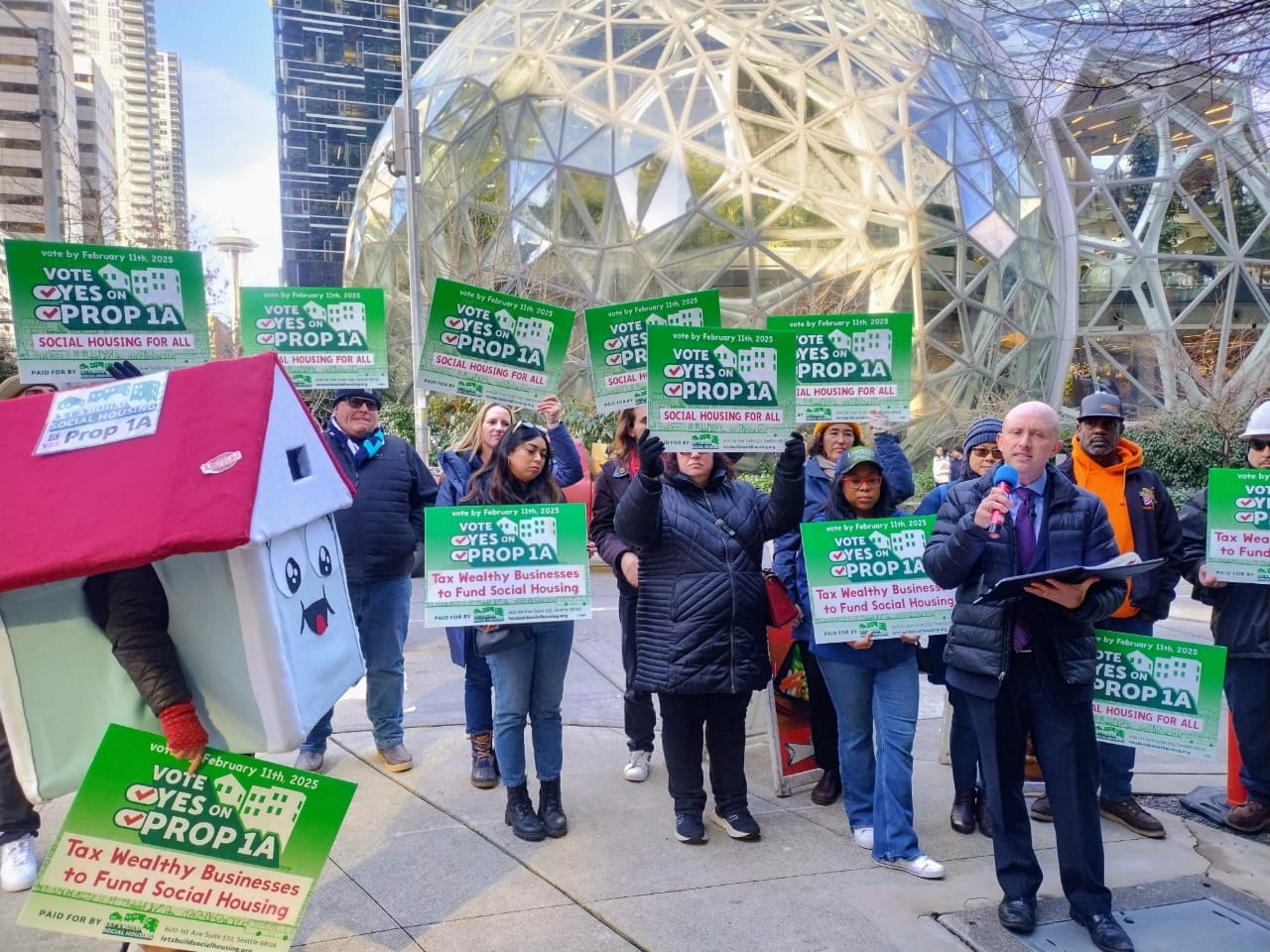
At the same time, Seattle’s City Council passed a one-year moratorium on constructing new data centers within the city limits earlier this year. And while the council as a whole has supported increasing police surveillance in the city, that effort has met with local resistance. The mood around the rise of AI as touted by the tech oligarchs, similar to around the country, has been mixed even as Klein and Taylor’s book names and shames these oligarchs as playing a major role in the current fascist push.
Wilson acknowledged this tension on stage at the book talk.
“I feel like there's a lot of complexity here for all of us living in one of the big tech capitals of the world, and I have a lot of chance to reflect on this as the mayor, thinking about how AI and other technologies that are being developed really do have the potential to improve human life, but they also come with huge risks, and there are real questions about responsible use, especially in a profit-driven economy,” Wilson said. “And all of us in Seattle, and especially maybe me as mayor, are in this complicated position because also our workforce, our residents, and our city budget depend on high-wage tech jobs, and so I've done a lot thinking about what is my role as mayor and all of our roles in growing an economy that's as life affirming as possible, and it's a challenge.”
Wilson recently released an executive order with plans to convene a "Resilient Seattle Economy Task Force,” make regulatory and permitting changes to to make it easier to start and grow businesses, and direct the Seattle Strategic Initiatives Fund to develop a proposal to “explore tools” to help diversify the City’s economy.
“We need to get to the political economy,” Taylor responded to Wilson’s assertion of complexity. “Who owns it? Are we making investments in the things humans need so that the tech, if we use it, serves us?”
When considering the ethno-nationalist prong of the fascist alliance posited in the book, Wilson brought up Trump’s immigration policies.
“Here in King County, our population growth, our economic growth is really driven by international immigration,” Wilson said. “If you look at the numbers, it is astounding. I think in the last five years, we would have a net outflow of population if you didn't count really significant international immigration, and so then when the Trump administration starts aggressively restricting H-1B visas, then that threatens that kind of pipeline, and so it's this very self-defeating kind of posture.”
The promise of cities, and an opportunity for the Left
Wilson was clear about the antidote against the political movement pushing for different versions of the end times.
“What we need to do is we need to have that credible, hopeful, inclusive vision for what the future can be, and we have to trust that people will go for that, and then we have to actually deliver it,” Wilson said.
This remark echoed both what Wilson said on the campaign trail and what she said about her recent executive order designed to promote government efficiency and budget sustainability: that her mission is to show that local government can deliver. Wilson also discussed an opportunity she sees on the left to take over the “adult in the room” persona that has long been the province of the rightwing in the US.
“With Trump, that's just totally fallen apart,” Wilson said. “You have this extreme fiscal irresponsibility that is paired with wholesale destruction of core government functions, and I think that really opens up the space for the left to be the adult in the room and recapture some of that language and maturity in a way that can allow us to put together governing coalitions that can really be effective.”
Klein and Taylor discussed Wilson’s mayoral win last fall in the book, using it as an example that Mamdani’s victory in New York City was neither singular nor too liberal to succeed elsewhere and quoting from Wilson’s inaugural speech.
“Wilson was a very different kind of politician: a long-time transit activist, she's a little geeky and not a natural performer," the authors wrote. “But like Mamdani, her platform emphasized affordability, including quality social housing and accessible childcare, and it challenged local billionaires’ agenda for the city. Seattle is a tech stronghold, and Wilson questioned the wisdom of keeping the city dependent on a sector racing toward world-burning AI and banking on a post-human future. She put economic diversification and sustainability on the ballot.”
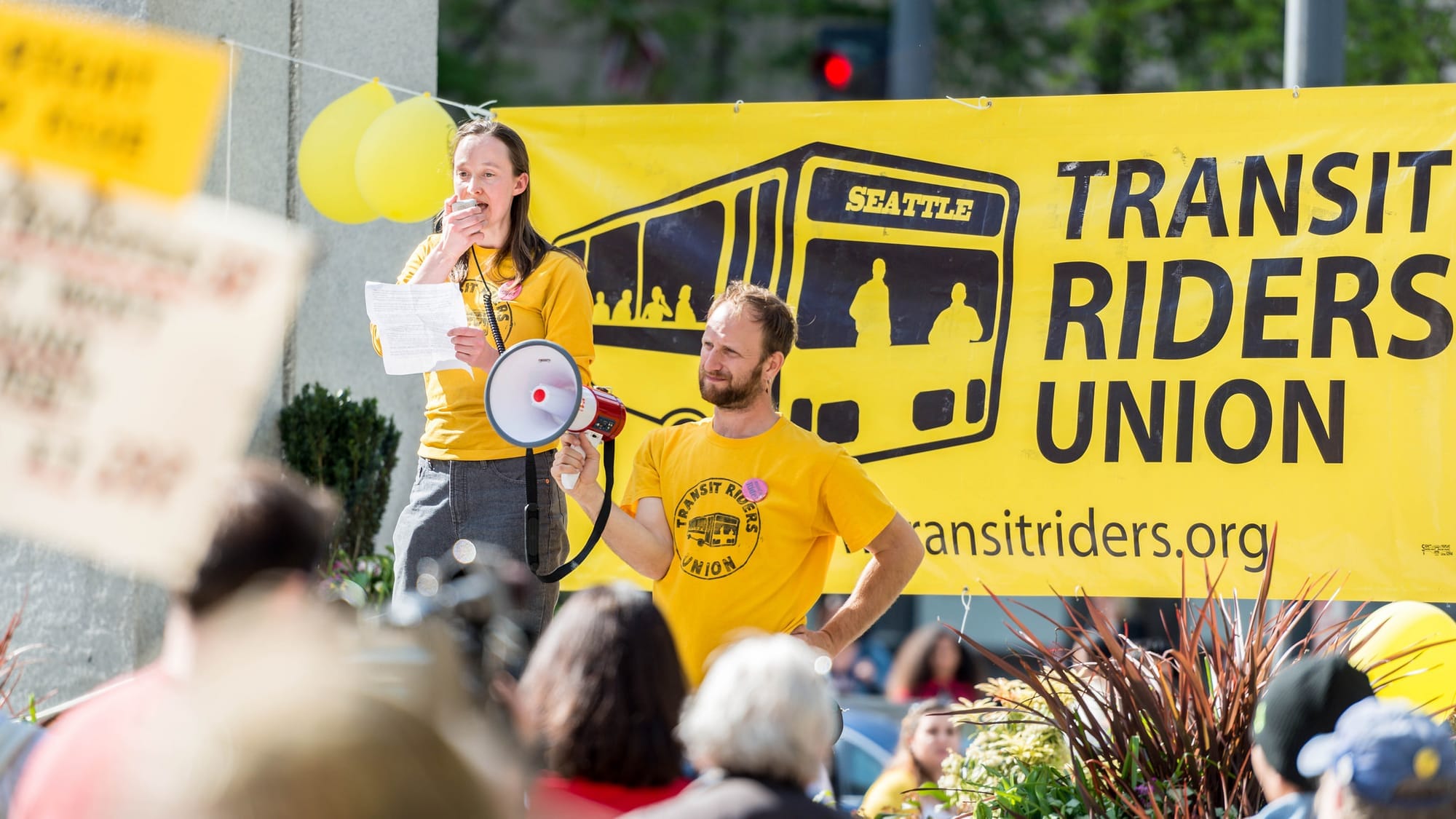
While Wilson is taking a small step forward toward economic diversification with the recent executive order outlined above, it is hard to say how much she will ultimately challenge the city’s billionaires. For example, Amazon gave a statement to KIRO Newsradio last week supporting her recent budget proposal.
What remains clear is Wilson’s commitment to cities in general, and to the City of Seattle in particular, as she gushed about how cities are humanity’s greatest invention. She explained that her “this is your city” tagline expresses a message of belonging, participation, and collective responsibility to one another.
“We have a shared responsibility to each other and to the city that we share, and so, to me, that really is the antithesis of end times,” Wilson said. “It's about what we can create together in a way that is inclusive and that's life affirming. And I feel like cities are a place where we can really do that.”
 Amy Sundberg