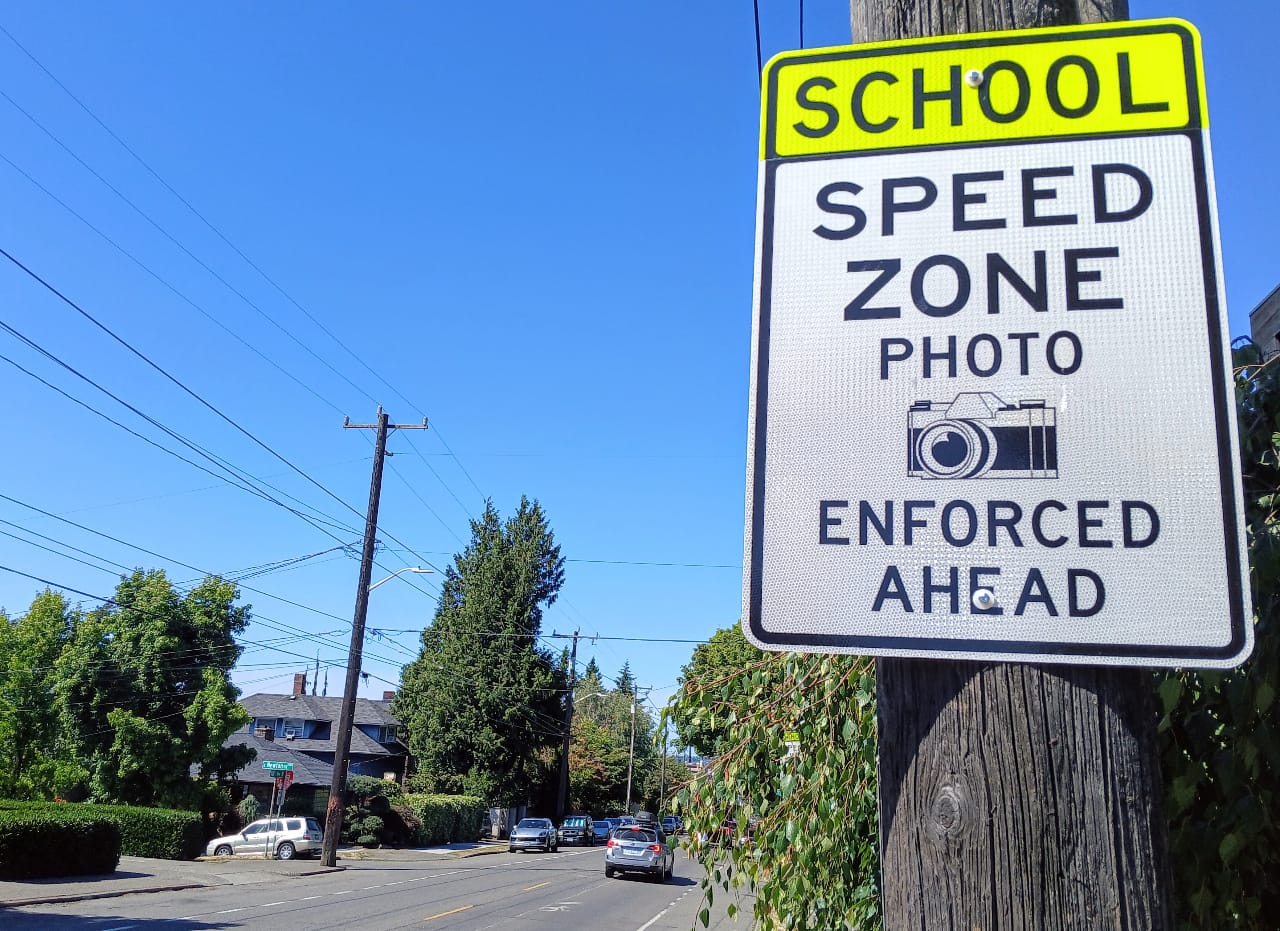
Seattle is set to see four new automatic speed cameras in 2027, but it's not the number of cameras that will make the move notable. The cameras will be the city's first full-time speed cameras, after decades of keeping automatic speed cameras confined to time-limited school zones.
The Urbanist's Fall Member Drive is in full swing! Support our work, read ad-free, and help us hit our goal for the member drive!
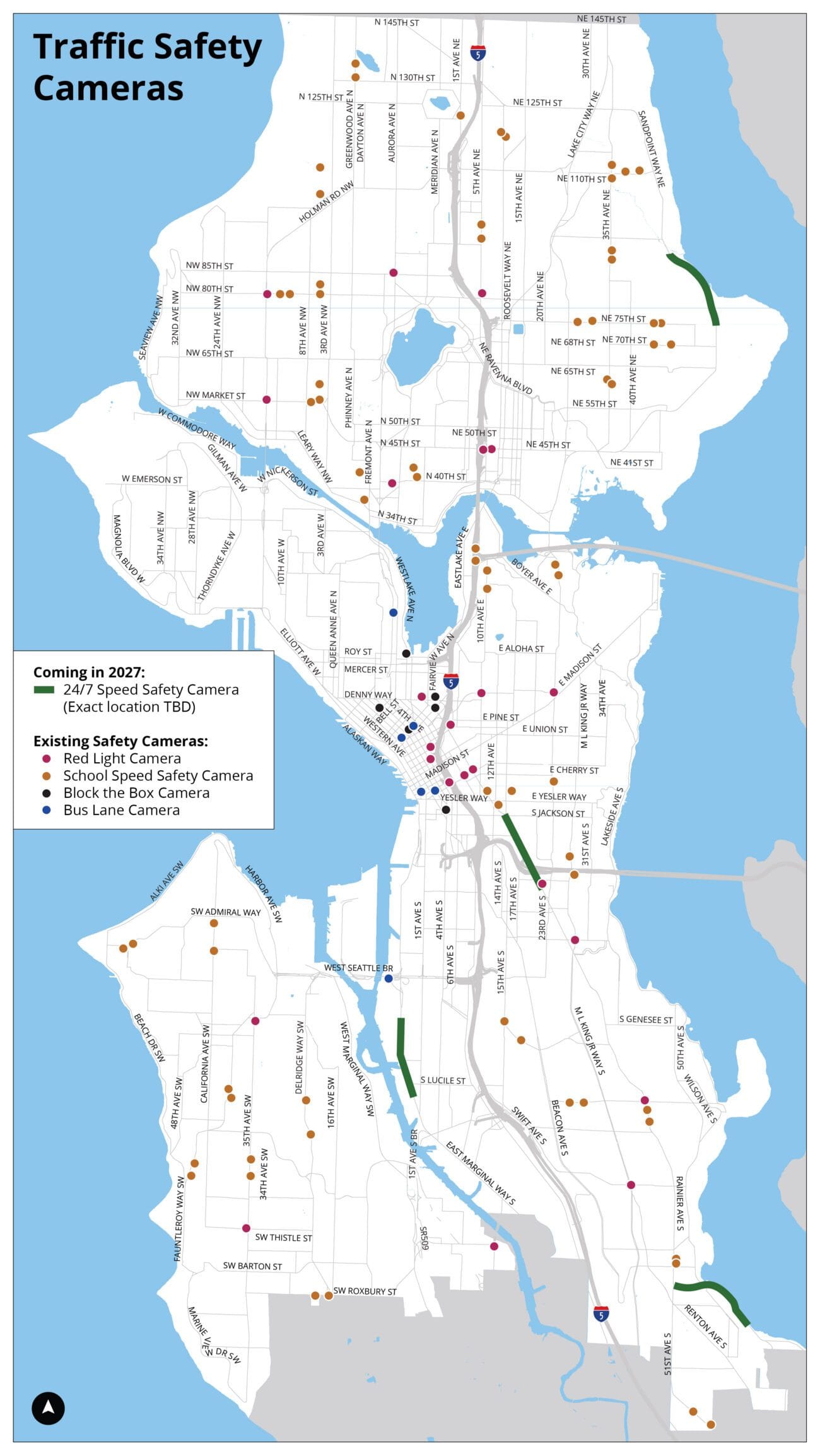
Drivers will encounter the cameras along E Marginal Way S, and Sand Point Way NE, and two different segments of Rainier Avenue S – locations where driver speeds are consistently much higher than posted speed limits. Exact cross-streets where the cameras will be installed are still being determined, according to an announcement from the Seattle Department of Transportation (SDOT).
SDOT also maintains a constellation of red light cameras, along with less common cameras tasked with enforcing bus-only lanes and intersection blocking. The authority to put up a 24/7 camera away from a school zone comes from a 2024 overhaul to state law governing camera use that was codified into city code last year.
While the issue of the Seattle Police Department's CCTV camera network has been an incredible contentious one during Mayor Katie Wilson's first months in office, a clearer political consensus has emerged around automatic traffic cameras. Unlike CCTV cameras, significant guardrails govern the use of traffic cameras by state law, including the inability for traffic camera footage to be turned over to officers investigating other crimes.
Wilson's executive order accelerating work on traffic safety projects, released on August 21, included a commitment to add 10 cameras to the city's arsenal by early 2029, with these four cameras representing a down payment on that promise.
"Everyone needs to get around safely, and we are committed to our goal of ending deadly crashes and serious injuries in Seattle. As we work to accelerate traffic safety projects throughout the city, we’re moving forward with new 24/7 speed safety cameras in four locations with a history of excessive speeding and deadly crashes," the department wrote in a blog post last week touting the move.
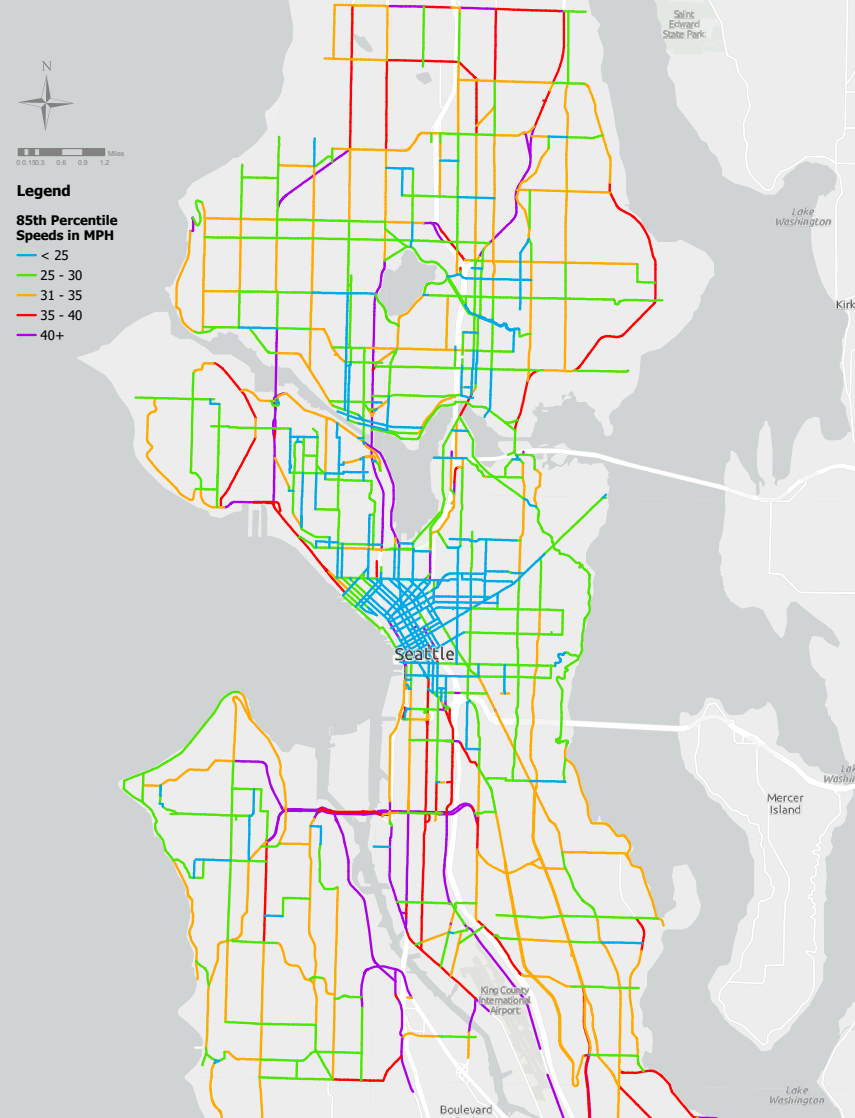
Two of the new cameras – along E Marginal Way and Sand Point Way – will be located along streets that have a posted speed limit that is higher than the city's default arterial limit of 25 mph. But Seattle's 2025 annual traffic report shows that drivers are still regularly exceeding the speed limit there. For example, despite a 30 mph limit along Sand Point Way, the 85th percentile speed – the speed at or below which 85% of drivers travel – was somewhere between 35 to 40 mph.
"Our data shows that 15% of people driving in all four of these locations were traveling 10+ mph over the speed limit," the blog post continued. "Our goal was to boost safety where it’s most needed, while trying to avoid over-concentration of cameras in historically disadvantaged neighborhoods."
Normalized, excessive speeding increases the risk of crash severity significantly, especially for people traveling around the city by walking, biking, or rolling. According to the Insurance Institute for Highway Safety, a pedestrian struck at 20 mph has an 18% chance of sustaining a serious injury, but at 35 mph, the risk of serious injury climbs to 67%. Those risks are intensified thanks to the fondness for larger vehicle types in the U.S. compared to elsewhere in the world.
The issue of equitable camera placement has been front-and-center in the conversation around traffic camera expansion in Seattle over recent years. When SDOT was deciding how to double the school zone camera program in 2023, the department consciously selected school locations in more affluent areas in order to balance out camera locations that had been placed in neighborhoods with higher minority populations.
Several of the streets poised for 24/7 speed camera installation are also set to see physical upgrades that have the potential to reduce driver speeds through improved design. In Rainier Beach, SDOT is advancing plans to revamp Rainier Avenue between S Henderson Street and Ithaca Place S, as well as make changes to Seward Park Avenue S between Henderson and Rainier – including the interim installation of a new marked crossing and signal at Rainier Avenue S and 54th Avenue S by the end of the year.
On north Rainier Avenue, an even more substantive street rebuild remains in early stages, in an area where traffic safety advocates have been pushing for changes for years. That repaving project, being paired with a repave of S Henderson in Rainier Beach with a combined budget of more than $100 million dollars, is not set to be fully wrapped up until 2032.
Other cities around the region are also taking advantage of state's new camera authority, going even further than Seattle. Earlier this summer, Edmonds City Council voted to convert existing time-limited cameras at four different schools to 24/7 operation, citing the need to improve safety conditions around schools outside of the 90 minutes surrounding bell times on school days. Over a two-week period this summer, nearly 20,000 citations would have been issued to drivers traveling at least seven miles per hour over the normal speed limit, had the camera hours been expanded already.
Across Lake Washington in Bellevue, four new sets of 24/7 speed cameras near hospitals, parks, and school walk zones were installed in August, with another three locations eyed for implementation by the end of the year. Those new cameras garnered headlines when they were vandalized less than a week after installation, but that only represented a small setback for Bellevue's traffic camera program.
 Ryan Packer