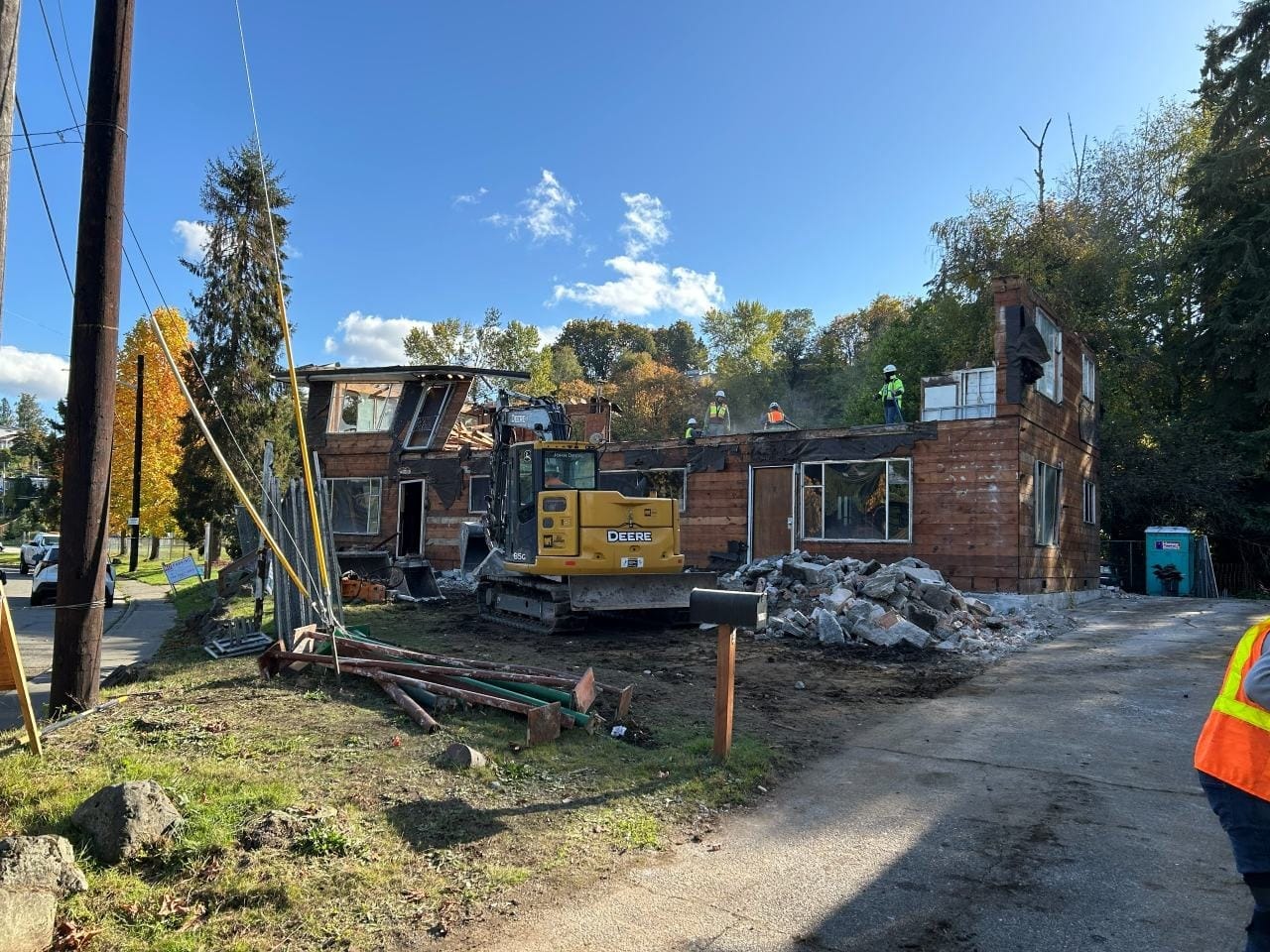
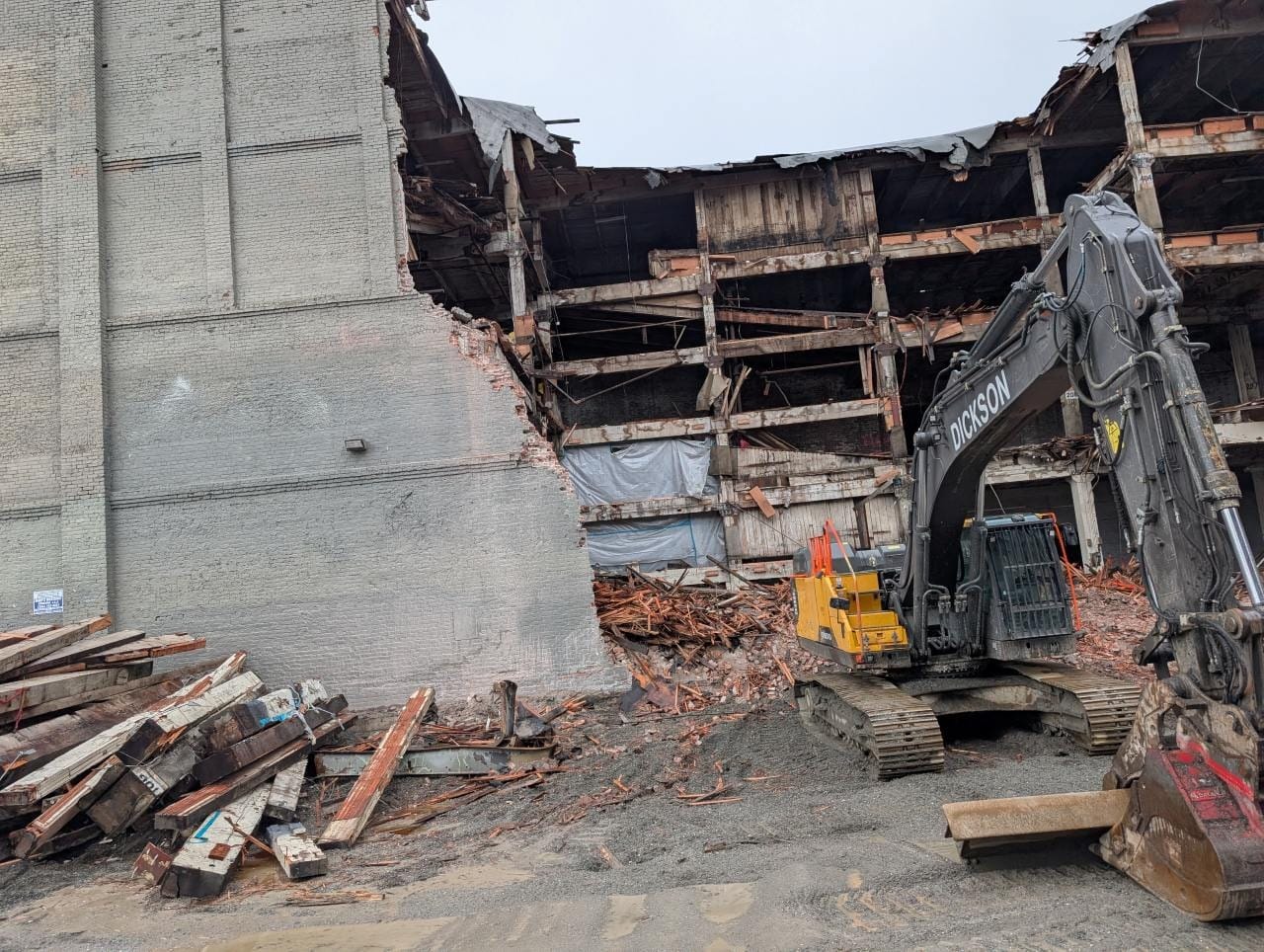
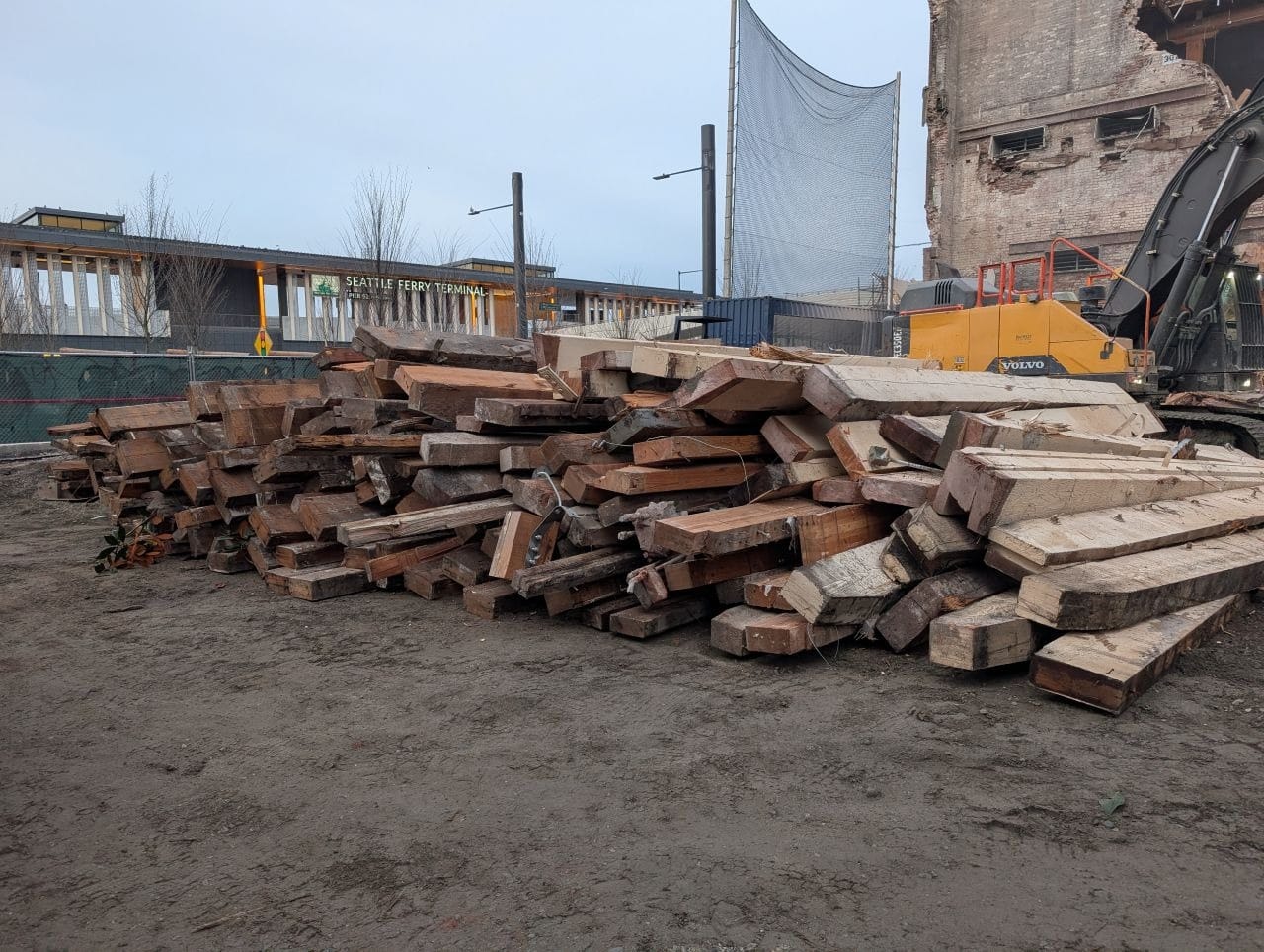
Aaron Blanchard recalls taking a tour through the broken-open guts of a building across from the downtown ferry terminal with a crew from Dixon Demolition as they prepared to take the building down. Crawling through holes in the walls to move from section to section, he was struck by all the immense, exposed timbers that framed and supported the structure.
“Normally, there’s all this drywall,” Blanchard said. “There’s all this other stuff you’ve got to deal with.” But in that building, it was nothing but lumber, and Blanchard wanted to make sure none of it went to the landfill.
The Urbanist's Fall Member Drive is in full swing! Support our work, read ad-free, and help us hit our goal for the member drive!
[Note: This article is a follow up to a three-part series on Seattle’s Climate Action Plan. Part One: The history of climate action in Seattle. Part Two: The current state of climate action in Seattle. Part Three: Climate action for a resilient Seattle.]
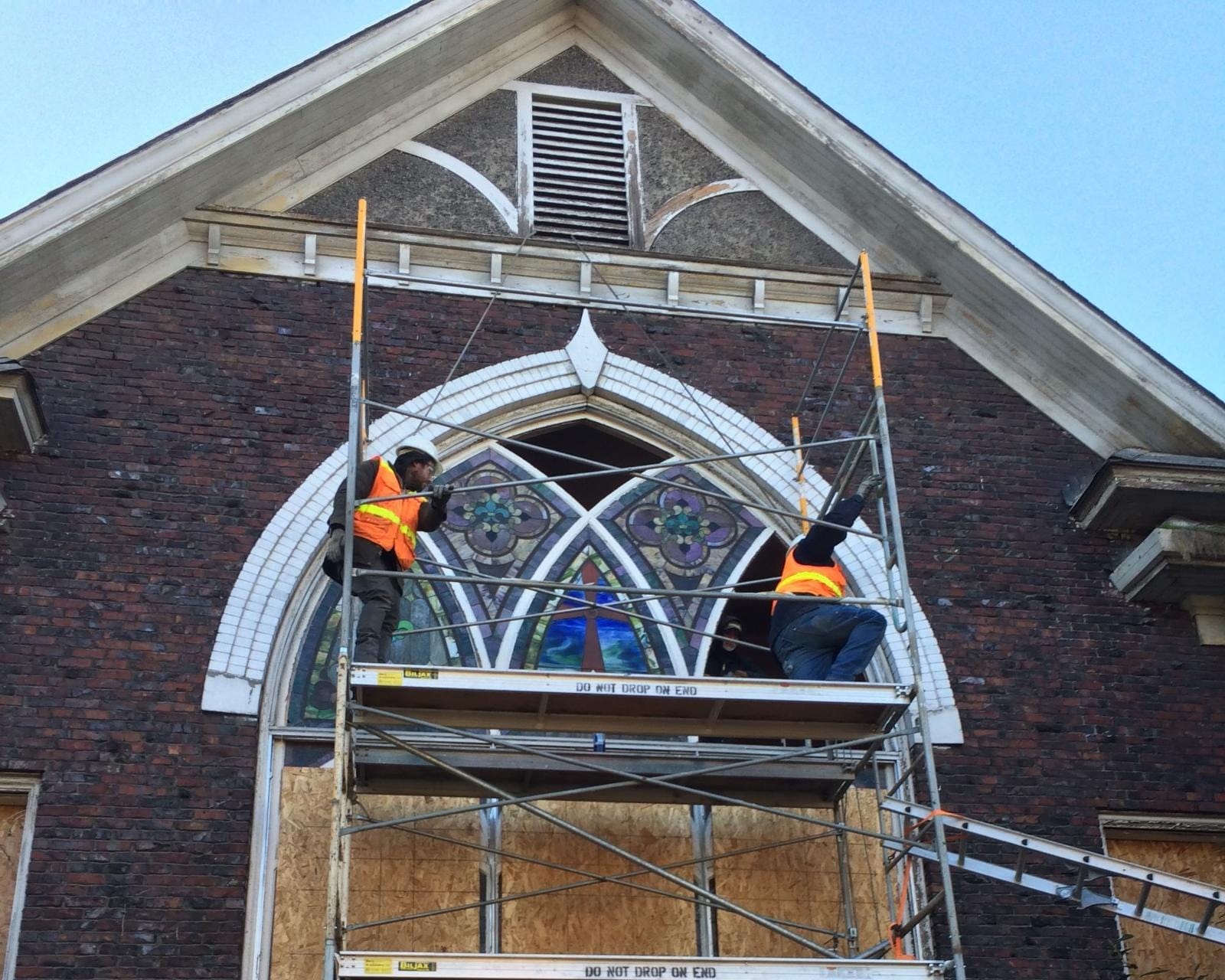
Salvage assessments like that are required in Seattle before any building comes down or undergoes a substantial alteration. As director of operations and part-owner of Earthwise Architectural Salvage — a company with 35 years in the salvaging business — Blanchard has supported plenty of these assessments, looking for anything worth saving that he can either resell as is or remanufacture for sale. Cabinets, doors, windows, and the like are all that’s worth prying out of most prospective demolitions for Earthwise. Other than that, it’s just loads of drywall and two-by-four lumber.
But when Blanchard walked through this particular building along Alaskan Way, he saw little that wasn’t worth saving. He turned to the demolition contractor and said: “You guys know this is going to be a deconstruction, right? You’re gonna save so much of this wood, and we’re gonna buy it from you.”
To dangle an extra carrot, Blanchard told them about Seattle Public Utilities’ (SPU’s) deconstruction incentive, which provides contractors with $6,000 per commercial project when the building is taken down board by board and beam by beam. That incentive typically only covers a slim, single digit percentage of a project’s cost, but deconstruction offers its own ways for contractors to cut costs and recoup expenses. Crews don’t need to pay the tonnage fee of shipping waste to the landfill, and they can get some additional cash back when they sell salvaged materials to a company like Earthwise.
This incentive is one of several bids on the part of SPU to promote a circular economy in Seattle. Creating pathways that divert materials from the landfill and instead cycle through the economy in different forms has recently gained increased attention inside the City. Late last year, the Office of Sustainability and Environment (OSE) began the process to revamp the citywide climate action plan. That effort means more than simply updating goals and timelines; they’re incorporating new areas of focus into the plan as well. They presented the action areas for public discussion during a July forum. One area looked squarely at how the City can “reuse more, waste less.”
The motivation for this comes from a simple fact that many within the climate sphere used to overlook. “Climate change is a product not only of greenhouse gas emissions, but the amount of economic activity,” Deric Gruen, a co-founder of the nonprofit Peoples Economy Lab, told The Urbanist
If people repair, reuse, repurpose, and even simply share more, then they not only prevent waste from piling up in landfills already nearing capacity, they also reduce the need to open up more minelands, log more forests, or extract more fossil fuels with all the environmental damages they bring.
In Seattle, circularity gained steam after a 2023 exercise in which OSE and SPU partnered together to consider how the picture of Seattle’s emissions changes when we look beyond transportation, buildings, and municipal waste alone to factor in how eating habits, purchasing patterns, travel plans, and household activities shape global warming, even when the associated carbon enters the atmosphere far outside city limits. This approach is called a consumption-based emissions inventory.
SPU wanted to understand how consumption in Seattle affected the city’s climate footprint and “how our work around waste prevention and changing the way that we think about materials can support the broader global emissions reduction efforts,” said SPU’s circular economy policy advisor Ashima Sukhdev.
“It totally shifts the strategy,” Gruen said. “A consumption-based inventory asks, how are we meeting our needs and what’s our responsibility for that whole supply chain?”
This requires City officials to think about what can be done to lessen the imprint left on the environment by every aspect of a resident’s life. Much of the work that goes into the circular economy thinks about all the things that people engage with and dispose of on a daily basis: food, clothes, dishware, and the like. For instance, since 2022, SPU has led the Reuse Seattle partnership that aims to replace single-use containers across Seattle’s cafes, restaurants, and event venues with reusable alternatives.
This summer, SPU and the Office of Economic Development also helped Seattle Reconomy to open the Reuse Commons in Lake City where nonprofits, businesses, and community organizations can host events, provide mutual support, and work under one roof to make it easy as possible for people in the community to engage with the circular economy. In its final form, the commons would operate as a sort of mall.
“Imagine somebody comes into the reuse commons, drops off their kids' goods, their bike, their tools, their furniture. We take that, we organize it and redistribute it,” Josh Epstein, the executive director of Seattle Reconomy, told The Urbanist. “And on the other side of the reuse commons is our storefront where we're selling fixed, upcycled furniture and art and bikes and tools.”
The commons would also provide a new space for Reconomy’s central offering: sharing libraries where members can borrow tools, dishware, basic appliances, and other common goods.
Epstein believes the Reuse Commons represents a huge opportunity for residents of Lake City and North Seattle, and it also could provide a model for something that Seattle Reconomy and partners like the Furniture Repair Bank could recreate in South Seattle.
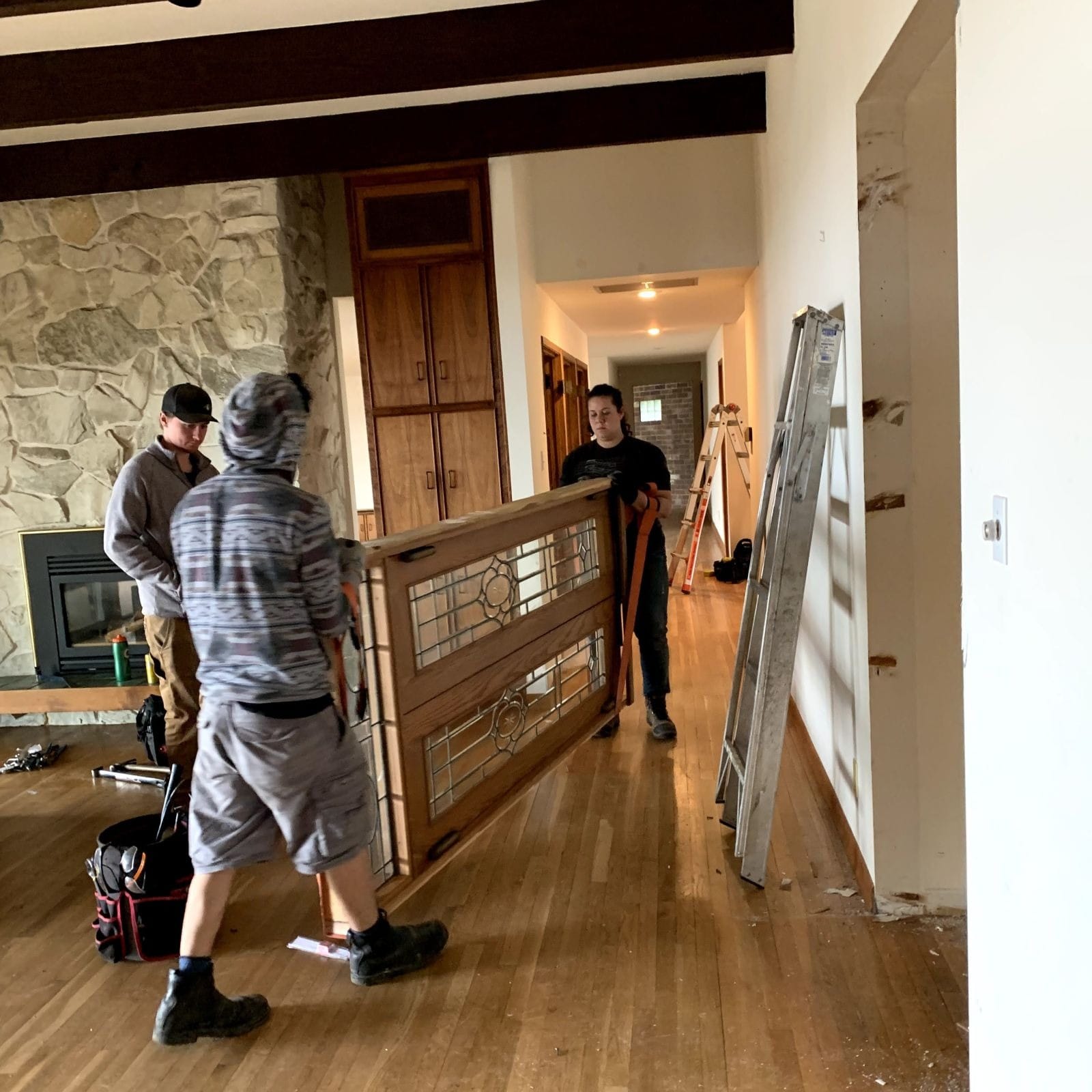
Projects like these with a focus on consumer goods can help, but advocates like Dave Bennink see the biggest potential for reducing waste and society’s burden on the environment as lying in the built environment, in particular by thinking about construction and demolition in new ways—by thinking about deconstruction.
The average American generates 4.9 pounds of trash per day, adding up to around 141,000 pounds in a lifetime. It’s a staggering number that numerous organizations in the city, state, and country are working to drive down. But as Bennink, the director of the Building Deconstruction Institute, pointed out in a conversation with The Urbanist, the average home in America weighs between 80,000 and 160,000 pounds. So, demolishing a home is a great way to speed-run the waste budget of your life.
“It doesn't matter how many bottles you recycle and how many newspapers you recycle,” said Bennink, “if you choose to demolish your building, then you have wasted an entire lifetime's worth of materials.” To solve the issue, his company has helped prove out a workable alternative: “We don't demolish [buildings]. We disassemble them.”
As a national expert in deconstruction, Bennink has helped train contractors across 45 states, five provinces, and nine countries, and he has advised at least 22 municipalities — including Portland, Seattle, and King County — considering policies and programs to grow local deconstruction industries. The collective impact he and his team have accomplished since Bennink started this work in 1993 has been immense: Across more than 5,000 projects, Bennink’s team has diverted more than 100 million pounds from the landfill and reclaimed wood and lumber equivalent to 10,000 acres of standing forest. But his work advising policies and helping entrepreneurs start their own circular businesses has the potential to multiply that impact.
Of course, it’s all well and good to reclaim wood, but the real impact comes when that wood is reused, both Bennink and Blanchard pointed out. For someone like Bennink who has been in the business for decades and helped foster an ecosystem around him of people bought into reclaiming and reusing lumber, it’s easy enough to find a new building to take whatever is extracted from an old one.
“If we remove some wood flooring from one home,” Bennink said, “then we have someone in our group of businesses now that will reinstall it in somebody else's home.”
But creating that kind of ecosystem requires a lot of capacity that many contractors may not have. “If your model is selling the wood to make up the difference between demolition and deconstruction,” Blanchard said, “well, now you also have to have a lumber company.”
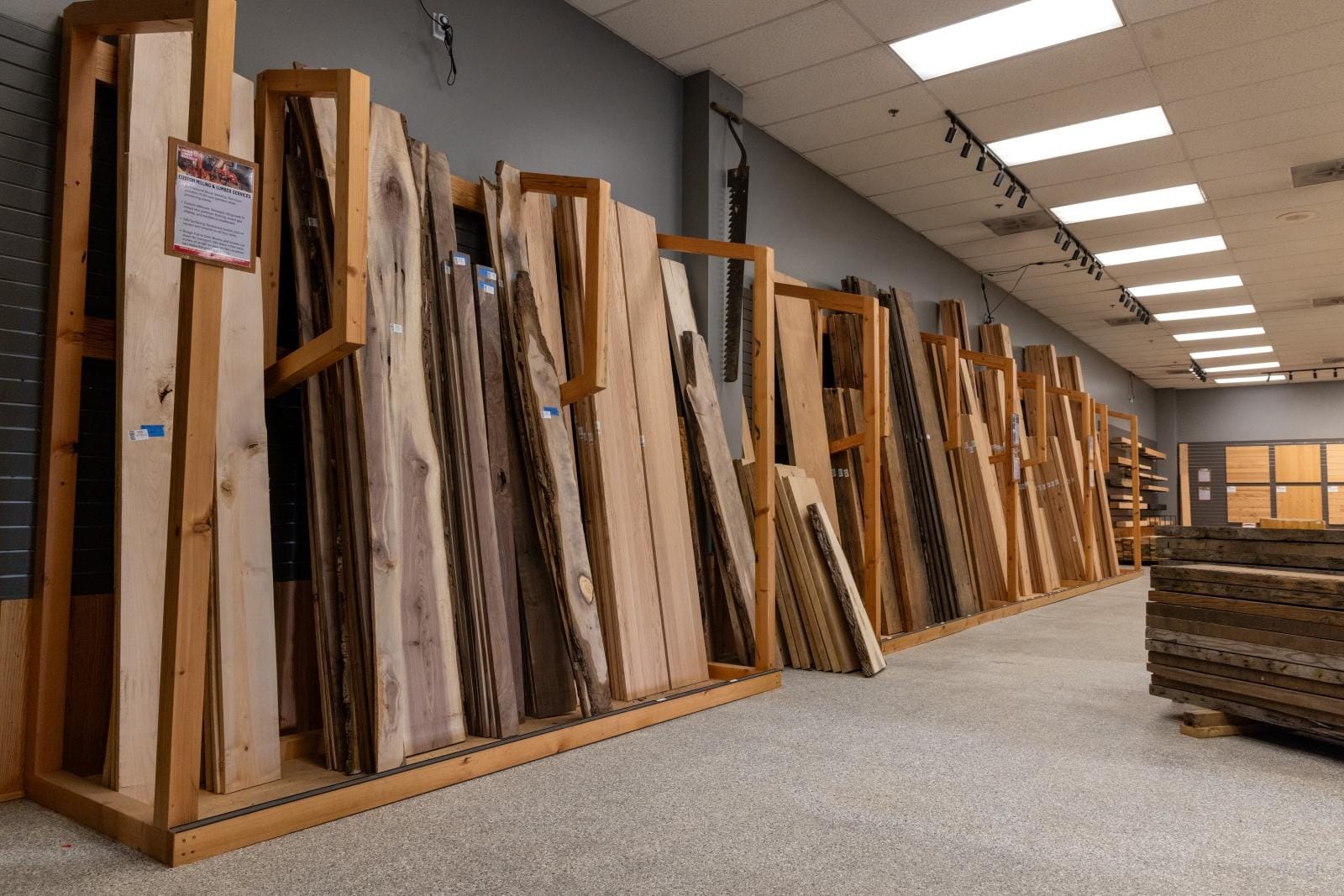
That’s why the City of Seattle, with the support of a $4 million grant from the Environmental Protection Agency, partnered with Earthwise to open a new Salvage Lumber Warehouse in SoDo earlier this year. It provides a simple destination for contractors to sell what wood they save, and then it’s up to Earthwise to find a customer for it. Most of those customers are homeowners and business owners working on smaller projects.
With all the benefits that come from deconstruction, some environmentalists have argued it should be a requirement, and some cities have taken the plunge with their own versions of such mandates. In 2016, Portland became the first city in the nation to establish an ordinance requiring deconstruction, specifically on all buildings built before 1940.
Since then, cities like Boulder, Colorado; Palo Alto, California; San Antonio, Texas; and Baltimore, Maryland, have instituted their own versions of such an ordinance. In contrast, Seattle still relies on an incentive, which has been used sparingly thus far. Just 45 projects have used that incentive since it launched, according to SPU. In that same time, SPU has issued 750 demolition permits for single family homes alone.
While having just 6% of homes deconstructed instead of demolished feels low given the potential impact that this can bring, Blanchard pointed out that not every building has materials that are worth saving, which can make an ordinance with mandatory salvage rates tricky to implement. It could easily mean you’re saving heaps of wood that no one wants to buy, so they just end up languishing in a warehouse instead of the landfill.
“You need to balance the new supply that you will be creating of reclaimed materials with a new demand,” Bennink added.
Integrating reclaimed lumber into other projects, whether new construction or renovation, is where the real environmental benefits of this practice shows up. According to one study, when reclaimed wood is used in a project instead of virgin timber, the net demand for energy is 13 times lower and the total emissions are five times lower as well.
Ensuring there is demand for those materials, however, means that a city must ease its way into any sort of mandate. That’s why when Portland was first considering its ordinance, Bennink recommended they start with an incentive. An incentive period gives all parties involved in the built environment time to understand what deconstruction means for properties around the city and what it takes to be successful in that project. More importantly, it helps the industry to levelize costs and timing with traditional demolitions.
Because deconstruction can require more labor power and specialized skills, some firms feel justified in charging extra to dismantle a building in that way — even when they have opportunities to cut other costs and gain additional incomes. But Bennink’s vision is for deconstruction costs to be less than traditional demolition.
“We don't want it to cost more,” he said. “We don't want it to take more time. We don't want to adversely affect people's projects.”
Bennink has spent three decades refining his methods to ensure deconstruction can be done economically, and when he trains local workforces, as he has done in Portland and King County, he tries to impart those skills onto others. When The Urbanist spoke with Bennink, he was in the middle of taking apart a pole barn.
“We were half the price of demolition,” he said. “For other buildings, we might be 25% more than the price of demolition, and on lots of buildings we are equal to the price.”
So with a relatively new deconstruction trade emerging in Seattle, costs might currently be higher than demolition in many cases, but if the City increases use of its incentive or begins to transition to a mandate on some projects, those cost disparities should narrow in the coming years. Boosting the use of deconstruction and salvage across the city’s building stock could end up being an important part of Seattle’s climate strategy, and potentially the City’s upcoming update to its climate action plan.
Disclosure: Reporting for this story was funded by the Seattle Office of Sustainability and Environment, with the understanding that Syris Valentine and The Urbanist will be allowed editorial independence on the contents and language of the published story.
 Syris Valentine