A three-bill package intended to improve Seattle's response to increasing rates of deaths and serious injuries on city streets was approved by City Council's transportation committee on Thursday. Introduced by committee chair Rob Saka and dubbed the SAFER Streets Act, the proposal largely empowers officials at the Seattle Department of Transportation (SDOT) with explicit authority that they already have the ability to wield. But it also sets up future legislation around post-crash responses and safety upgrades to vehicles used by city contractors.
The Urbanist's Fall Member Drive is in full swing! Support our work, read ad-free, and help us hit our goal for the member drive!
The committee approved a raft of amendments before a final vote, tweaks needed in part due to the package's rushed process to get advanced before the council's fall budget work.
Most of these were technical changes that didn't have big policy impacts, but one major amendment, put forward by Alexis Mercedes Rinck and approved on a 3-2 vote, proved contentious. It added a provision explicitly beefing up SDOT's authority to make changes to roadways within the city's historic districts, letting them sidestep an oftentimes lengthy historic board or commission approval process on certain safety-related changes.
Traffic safety advocates had been pushing for the city to receive that authority, in the wake of several high-profile incidents where city projects have met resistance at preservation boards in recent years. This spring, SDOT had to walk back a plan to deploy bike and scooter corrals across Pioneer Square to both keep sidewalks clear of micromobility devices but also to keep intersections clear of parked cars, a treatment known as intersection daylighting. Business owners in the district had raised concerns about aesthetics and lost parking, despite the original plan only involving the removal of one or two legal spots.
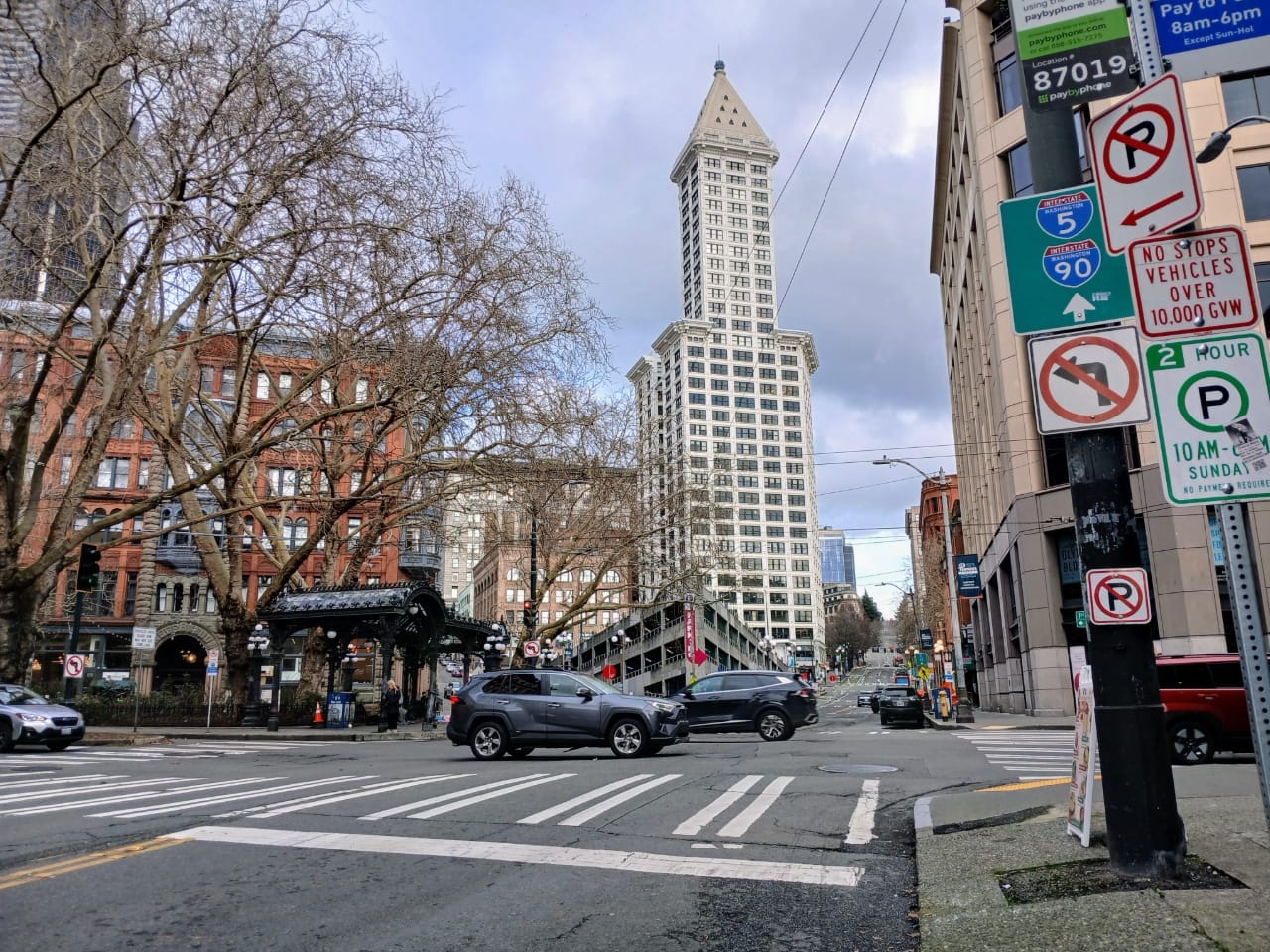
Under the amendment, "traffic control devices and spot design changes" in historic districts wouldn't be subject to landmark designation, nor would the city need to receive a Certificate of Approval (which can be appealed) to advance adjustments within Seattle's eight historic districts when it comes to that narrow range of adjustments.
"This amendment focuses on the Traffic Engineer's authority specifically over traffic control devices," Amanda Allen, a legislative analyst at the City, told councilmembers. "It does not include bollards, which may be of interest to folks, it is really focused on signs, signals, and markings."
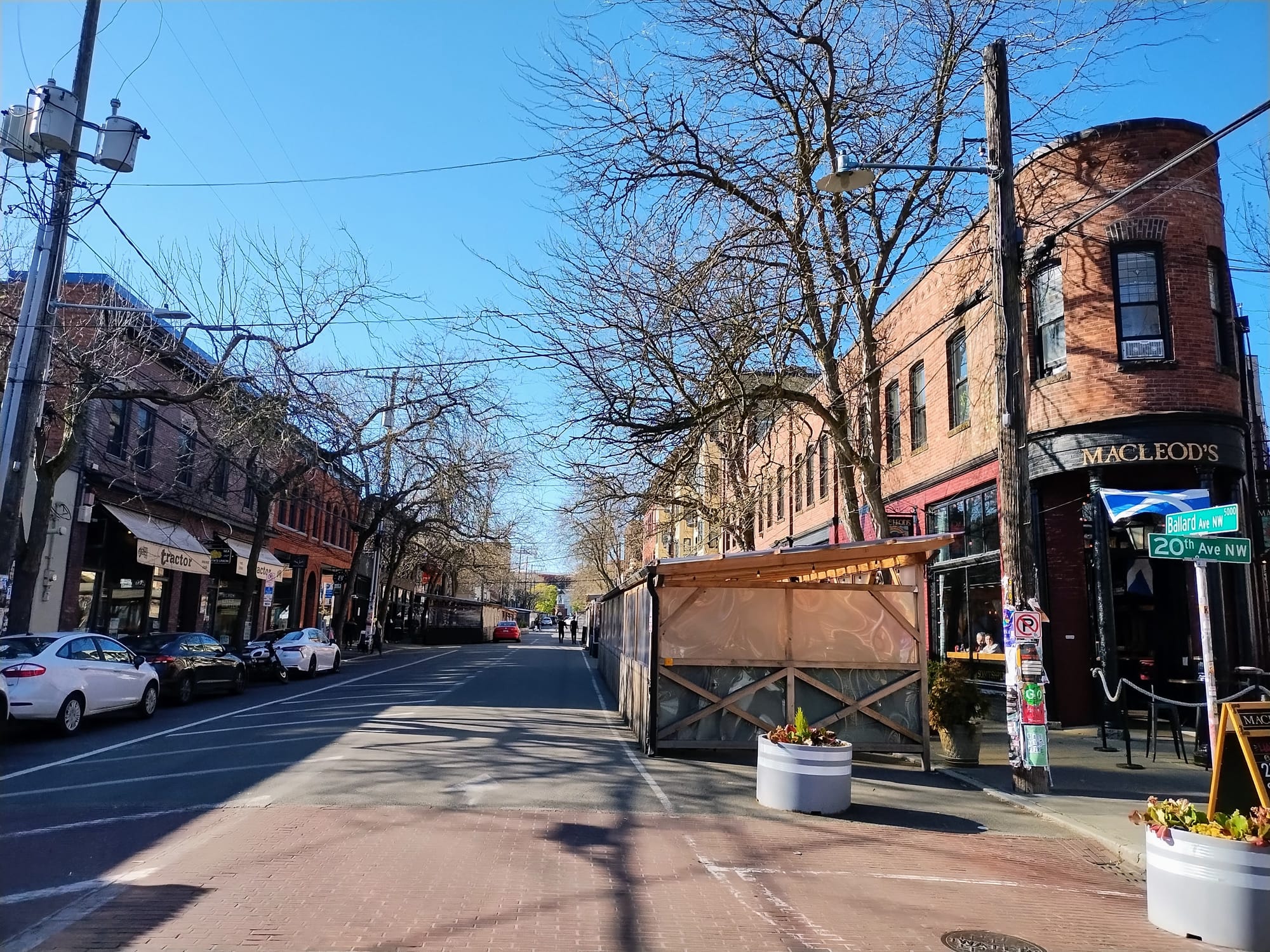
Ahead of the vote, advocates of historic districts across the city showed up to testify at city hall in opposition to the change. Comments regarding Pioneer Square and Pike Place were the most prevalent, but they also included concerns about Ballard Avenue and Chinatown-International District.
"We believe safety and preservation are not in conflict, and they have not been historically," Alliance for Pioneer Square Executive Director Lisa Howard said during public comment, suggesting that this move had been put forward in response to the scooter corral incident alone. "We can make our streets safer without eliminating meaningful review in our historic districts."
Advocates have argued the corral debacle is far from an isolated incident. In 2024, SDOT was forced to negotiate with the Pioneer Square Preservation Board over a two-block protected bike connection along Yesler Way between Occidental Avenue and Western Avenue, the only direct bike lane planned between the waterfront and central downtown. An initial presentation noted construction could have started as soon as July of that year, but the department was forced to come back for a second meeting in the fall, after potential issues were raised about driver access to I-5 from the neighborhood.
In the end, the connection did not go in until early 2026, and with a last-minute adjustment to retain a potentially dangerous left turn in response to "community feedback."
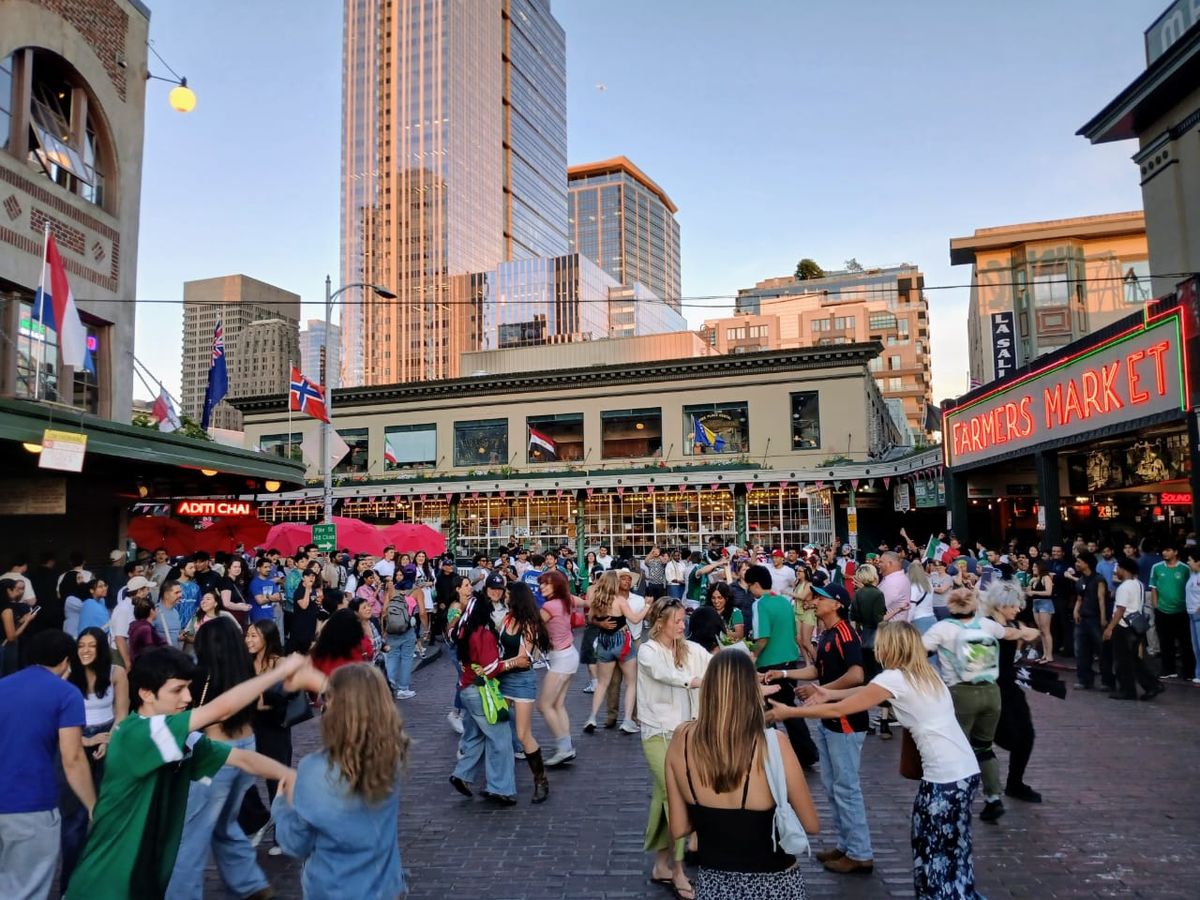
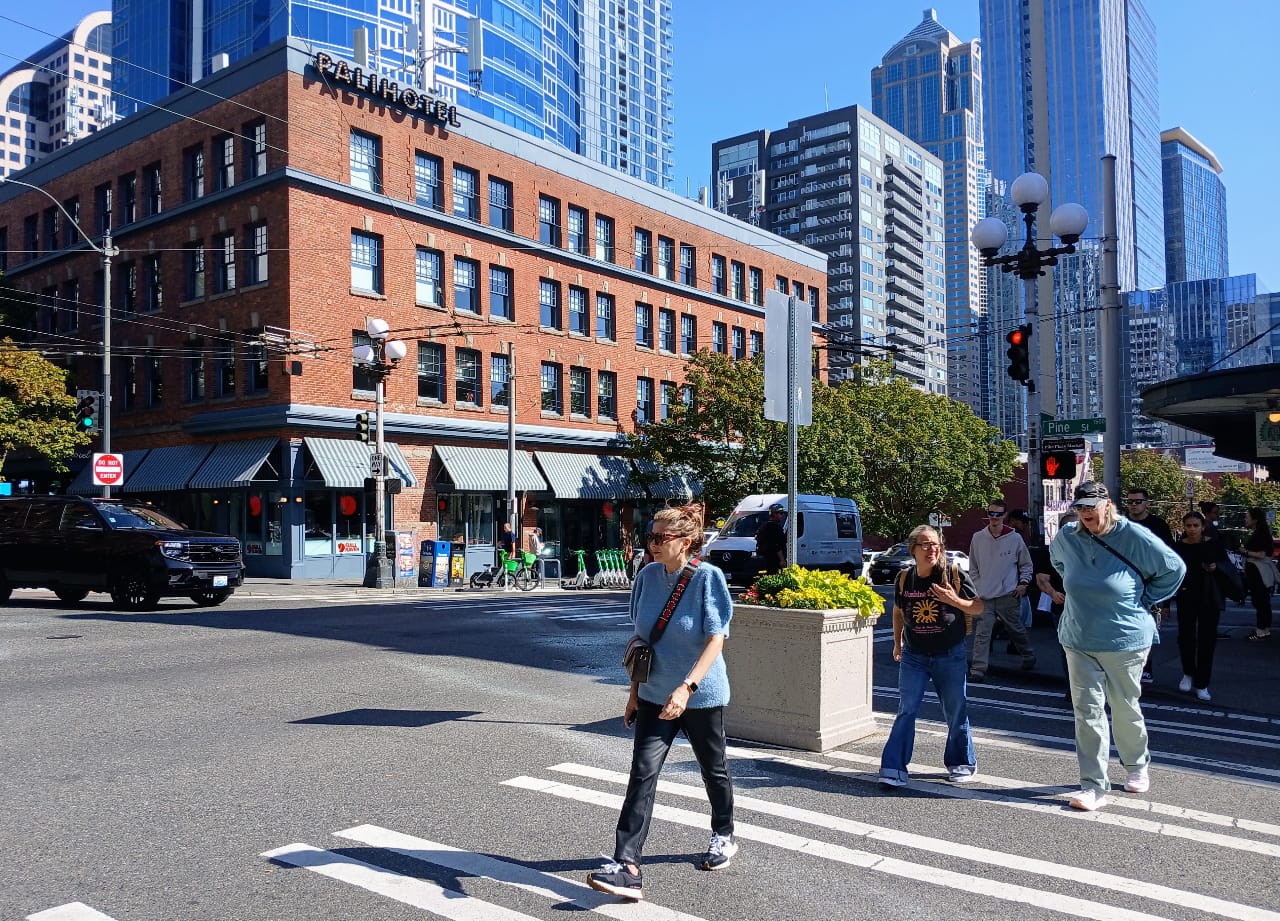
Inside Pike Place Market, this adjustment would likely not give SDOT unilateral authority to keep vehicle traffic out of the Market, in the wake of recent historical commission approval of three-day "soft closures" every week through the winter, ramping down a successful Pike Place pedestrianization pilot. But it would give the department more tools than it has currently.
In putting forward her amendment, Rinck expressed support for the city's historic districts, but spelled out the need to elevate safety issues above other changes within those districts.
"I hope we can agree that some things are just too important to subject to the Seattle Process, and I believe traffic safety meets that bar," Rinck said. "I've been told this amendment goes too far, but I dare to say the city has not gone far enough when it comes to preventing traffic deaths and injuries. So I hope people hear today that my bringing this amendment forward is in response to the calls for decisive action that I've heard from families who have lost loved ones on our streets, our transit advocates, and everyone who has had too close of a call."
While Rinck's amendment did pass, there are outstanding questions about whether it is fully implementable as written. It does not make any changes to the section of city code directly governing historic districts, and it would take a completely different bill with a different subject to make those updates. In addition, District 2 Councilmember Eddie Lin suggested an additional carveout might be necessary for Chinatown-International District, which was included on a list of the 11 most endangered historic places in the U.S. in 2023.
But Lin, along with amendment co-sponsor Dionne Foster, voted to give the amendment the green light for now.
"I do think there's a way to to do historic preservation and achieve public safety, but I do think at the end of the day, the authority needs to lie with with who is responsible, and that is, in my opinion, the traffic engineer," Lin said. "The traffic engineer should, whenever possible, take into consideration any recommendations and feedback so that it's consistent with the historic preservation. At the end of the day, the traffic engineer is responsible for traffic safety, and we have seen in in polling, how traffic safety in recent years has been the number one public safety concern, and there's good reason behind that."
Bob Kettle, who represents the district that includes Pike Place Market, raised issues with the process to review the amendment, as well as a lack of outreach to the specific districts that would be impacted in voting against the amendment.
"As it relates to the legislative process, I am a little bit astonished that we're looking at an amendment that was not seen by our in-house legal counsel until this morning. There was issues in the city attorney's office with its review. There was no consideration of the state pieces, state law, and the like," Kettle said. "And as it relates to stakeholdering, I don't think obviously – Pike Place Market wasn't stakeholdered, Pioneer Square wasn't stakeholdered. I tend to doubt that Chinatown International District was stakeholdered on this."
Saka, who also voted no, said that this potential tweak had come up during the development of the overall package, and had been suggested directly by SDOT as a potential reform. But he did state that he could support a more narrowly tailored amendment that didn't treat all of the eight historic districts the same.
"I declined to accept it for a reason," Saka said. "I do appreciate the the intent [or] spirit here behind this, and we need to have tough policy conversations and be willing to do things up to and including this at some point, I just don't think we've done the the work and stakeholdering to do that. I know my constituents in Pioneer Square don't like this, even though I know they strongly support safety."
It is likely that the proposal sees some modifications ahead of a vote of the full council set for mid-October, including potential changes that involve notification of the historic boards on projects that may no longer require direct approval.
"It's critical that we have clarity around the role of the City Traffic Engineer and their authority to make decisions around safety, so that we can work towards the goals that we all share when it comes to traffic safety, public safety, and Vision Zero," Dionne Foster said. "I intend to bring an amendment to full council that commits SDOT to providing notification to the historic boards of significant changes to traffic control devices within the historic districts. I believe in this way we can ensure that we have clarity on the decision making as well as clarity on the information sharing."
 Ryan Packer