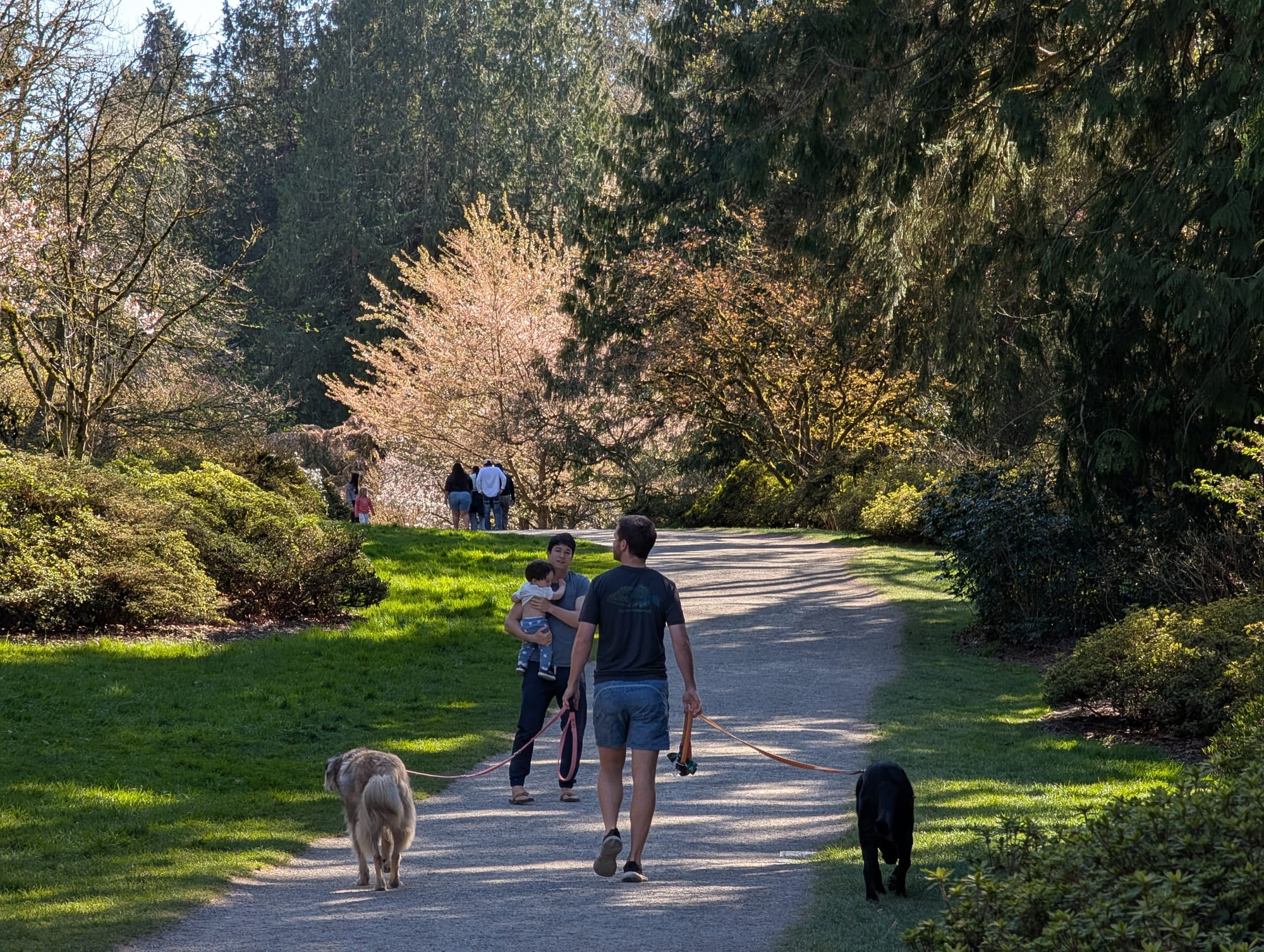
Seattle is nationally and internationally recognized for its park system. By one widely cited metric, nearly 99% of residents live within a 10-minute walk or roll to a park. That achievement deserves recognition; ensuring that almost everyone lives near green space is an important planning goal, and one the City should continue to prioritize.
But proximity is only part of the story.
As Seattle plans for significant population growth under the Comprehensive Plan, we should ask a harder question: Is park space equitable, accessible, or equipped to serve kids and families who rely on it?
The Urbanist's Fall Member Drive is in full swing! Support our work, read ad-free, and help us hit our goal for the member drive!
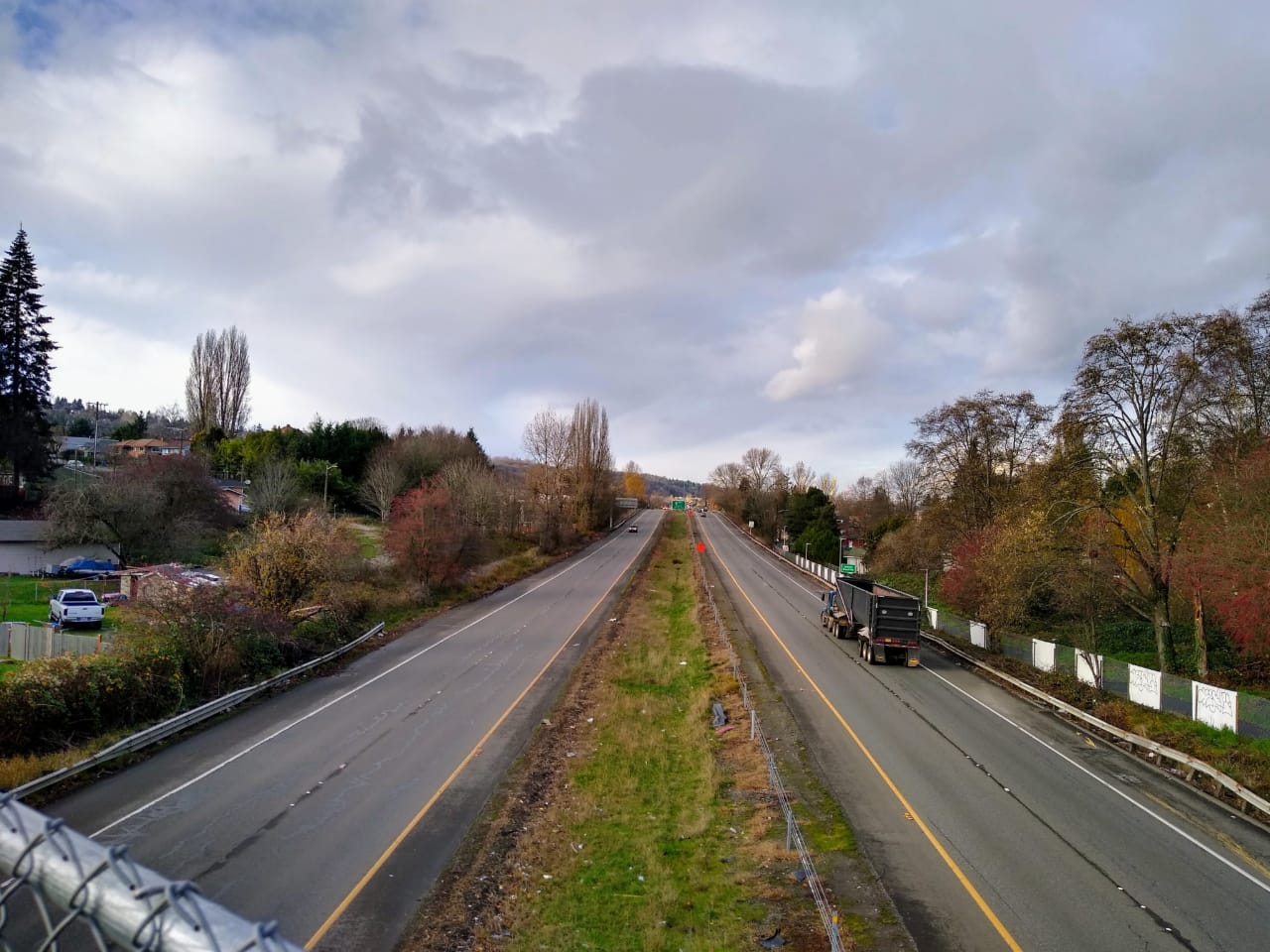
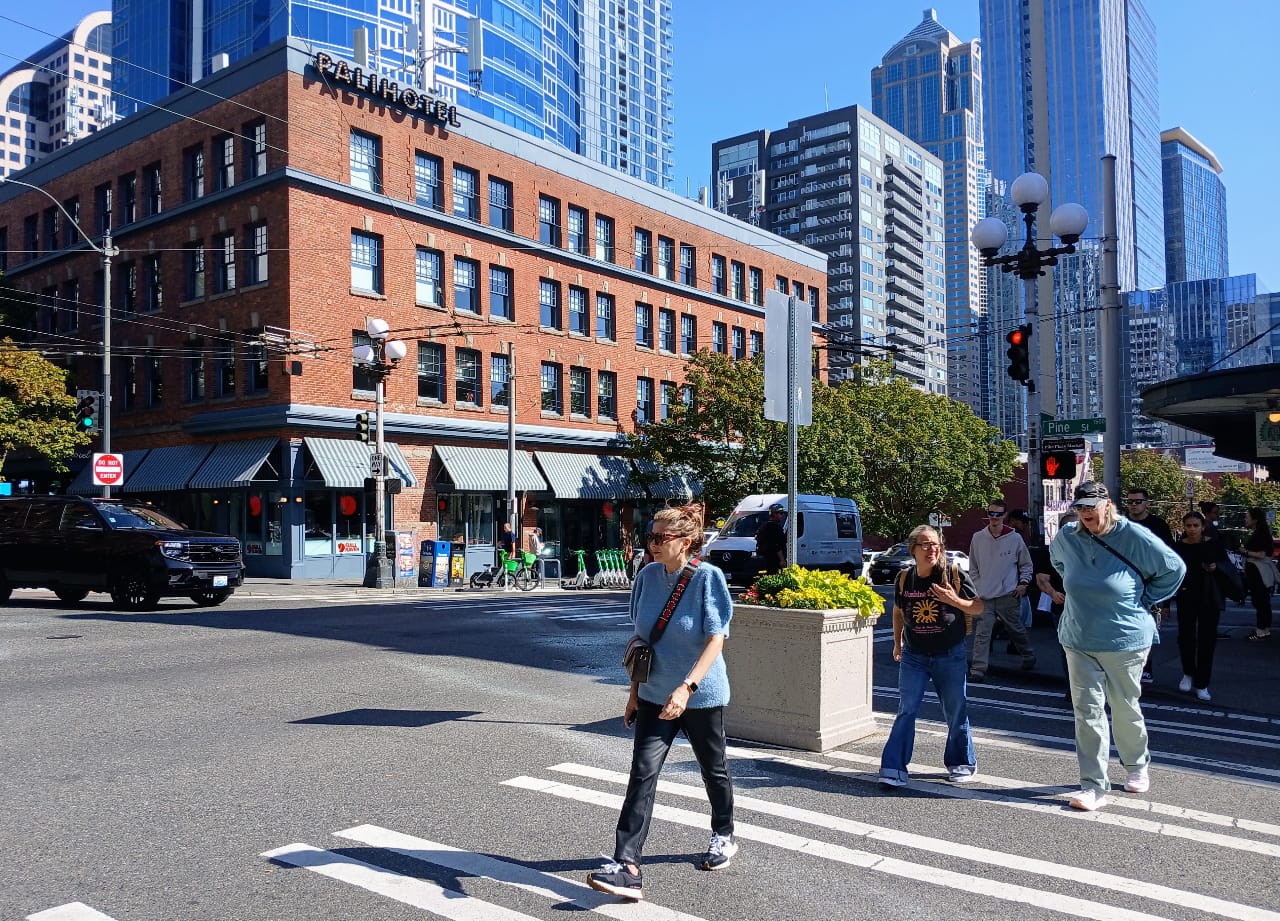
A park can be within a 10-minute walk or roll and still be difficult or unsafe to reach because of dangerous intersections, steep terrain, missing sidewalks, or barriers created by major roads and industrial corridors. This is especially important in the Duwamish Valley, where highways, freight routes, rail lines, and industrial land uses can separate neighborhoods from nearby open space.
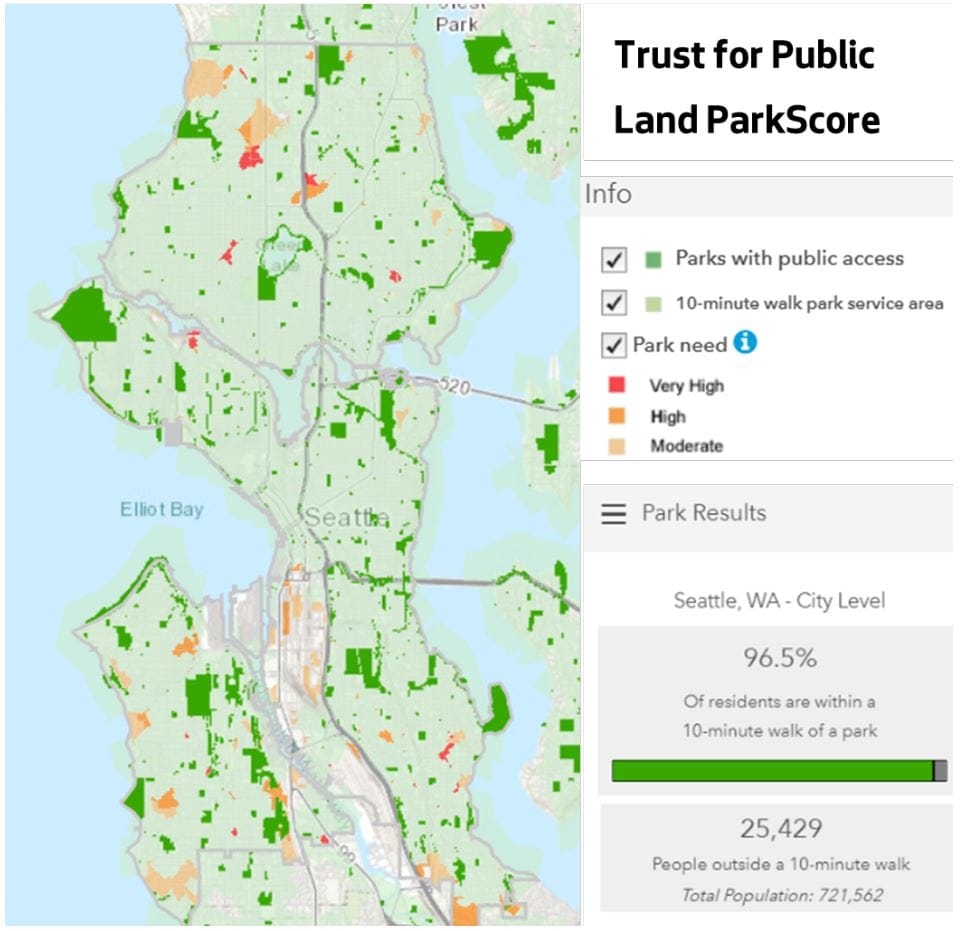
Seattle’s parks can also be overcrowded, inaccessible to people with disabilities, culturally unwelcoming, or lacking in basic amenities like bathrooms, sports fields, shade/tree canopy, playgrounds, barbecues, benches, and tables. Under today's standard, these parks still count in the walk score even if they fall short of meeting the needs of the surrounding neighborhood.
The same report that highlights Seattle’s high number of residents living within a 10-minute walk or roll to a park also shows that access to parks is not distributed equally.
Residents in neighborhoods of color have 32% less park space per person than residents in predominantly White neighborhoods. Residents in low-income neighborhoods have 51% less park space per person than those in higher-income neighborhoods. Meanwhile, Seattle ranks near the bottom among the nation's 100 largest cities for several park amenities, including sports fields, recreation centers, bathrooms, and basketball courts.
None of these shortcomings are captured by that 10-minute walk measurement. Seattle should ask whether residents can safely reach parks, whether those parks provide the amenities families need, and whether investments are reaching neighborhoods that have historically had fewer high-quality recreational opportunities.
Take the South Park Community Center, which requires crossing the highway on one of the few footpaths to reach the area and offers an opportunity for additional tree shade around the turf field and playground. The metric also fails to tell us whether the park system is keeping pace with population growth. Seattle currently provides about 8.3 acres of parkland for every 1,000 residents. Other growing, high-density cities provide substantially more. Denver offers approximately 9.9 acres per 1,000 residents, Washington, D.C. provides 11.8, and Minneapolis offers 12.3.
As Seattle welcomes more neighbors, existing parks will serve more people. That is good for city life, but only if our public spaces are resourced and growing alongside our housing.
Fortunately, this is not an either-or choice.
The City should pair the existing metric with measures that answer different, equally important questions. How much park space is available for the people who live nearby? Are parks accessible to
people of all ages and abilities? Are they in good condition? Is there access to natural features like trees or water? Do they have the amenities communities actually need? Are they becoming overcrowded and run down as neighborhoods grow?
Together, these measures would give policymakers a much clearer picture of where investments are needed most.
This approach is especially important because Seattle's Comprehensive Plan is designed to accommodate substantial housing growth over the coming decades. New housing should be accompanied by investments in parks and public spaces so that growth improves quality of life rather than putting additional strain on the places where residents already live.
Housing and green space should not compete with one another. They should be planned together. Communities deserve both!
A growing city needs more homes AND more places for children to play, neighbors to gather, seniors to exercise, and families to find respite from summer heat or Seattle rain. These experiences are not luxuries; they are part of the infrastructure that makes urban living healthy, resilient, and equitable.
Seattle has every reason to celebrate that nearly every resident lives within a 10-minute walk or roll to a park. But we can’t stop there. The next step is making sure all neighborhoods have parks that are large enough, welcoming enough, and well-equipped enough to serve the city we are becoming.
We need to measure not only whether a park is nearby, but also if it is truly thriving, both for itself and the community it serves. Park access is an issue of environmental justice, public health, and who gets to thrive in Seattle. As the city grows, we have an opportunity to make sure that growth does not deepen existing disparities, but instead helps repair them. Every neighborhood deserves not just a park within a 10-minute walk, but a park that is safe, accessible, welcoming, well-maintained, and truly worthy of the community it serves.
 Ryan Packer