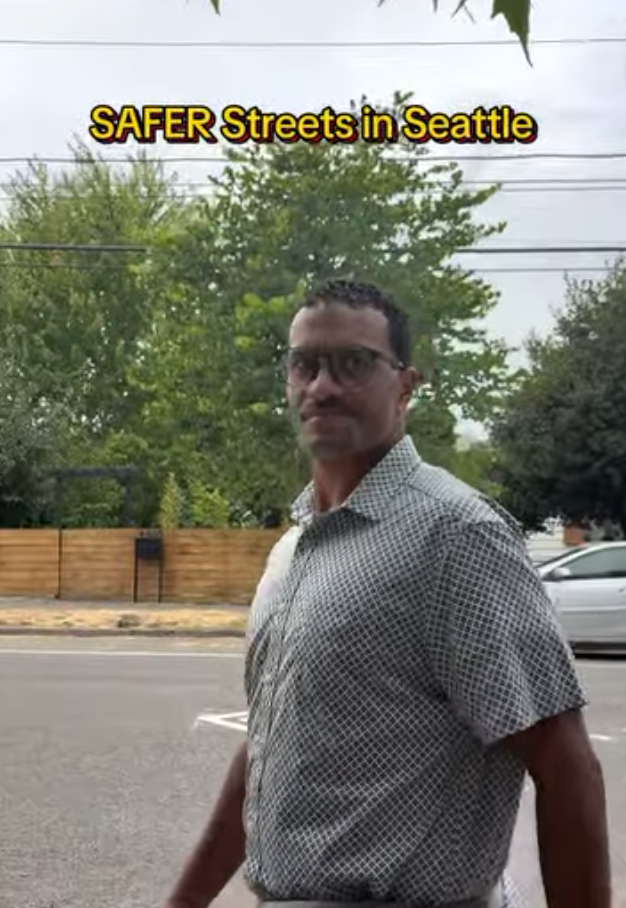
Seattle Council transportation committee chair Rob Saka has been rushing forward a set of bills intended to improve traffic safety outcomes on city streets, hoping to beat a legislative deadline before this fall's budget season. The package, which consists of three separate bills, purports to give the Seattle Department of Transportation (SDOT) additional tools to implement safety upgrades, asks for recommendations around timelines to remediate city streets following fatal crashes, and sets the City up to be able to mandate side guards on vehicles used by city contractors.
However, SDOT has confirmed with The Urbanist that the department was not fully looped in on the package's development, with Saka moving things forward on a very compressed timeline.
The Urbanist's Fall Member Drive is in full swing! Support our work, read ad-free, and help us hit our goal for the member drive!
Saka rolled out his proposal, which he is calling the Seattle SAFER (Safe Accountable Flexible Equitable Responsive) Streets Act, two days before Mayor Katie Wilson signed an executive order that deals with many of the same topics. Saka, due to his role as committee chair, had reportedly received a briefing on the contents of that executive order, but did not appear at Wilson's press event to roll it out in Beacon Hill on August 21.
The overlap between the new executive order and Saka's legislative proposal is particularly pronounced when it comes to potential regulations around side guards and other vehicle safety retrofits.
"I suppose great minds can arrive at some of the same intersections as we appear to have done and aligned on from a legislative and executive perspective, and that's a good thing," Saka said last week, at the second committee meeting held to discuss the bills. "The two efforts are complementary, but distinct. Executive action can move quickly, [and] initiate changes today. Legislation, by comparison, can establish durable requirements that survive changes in administrations, department leadership, or priorities."
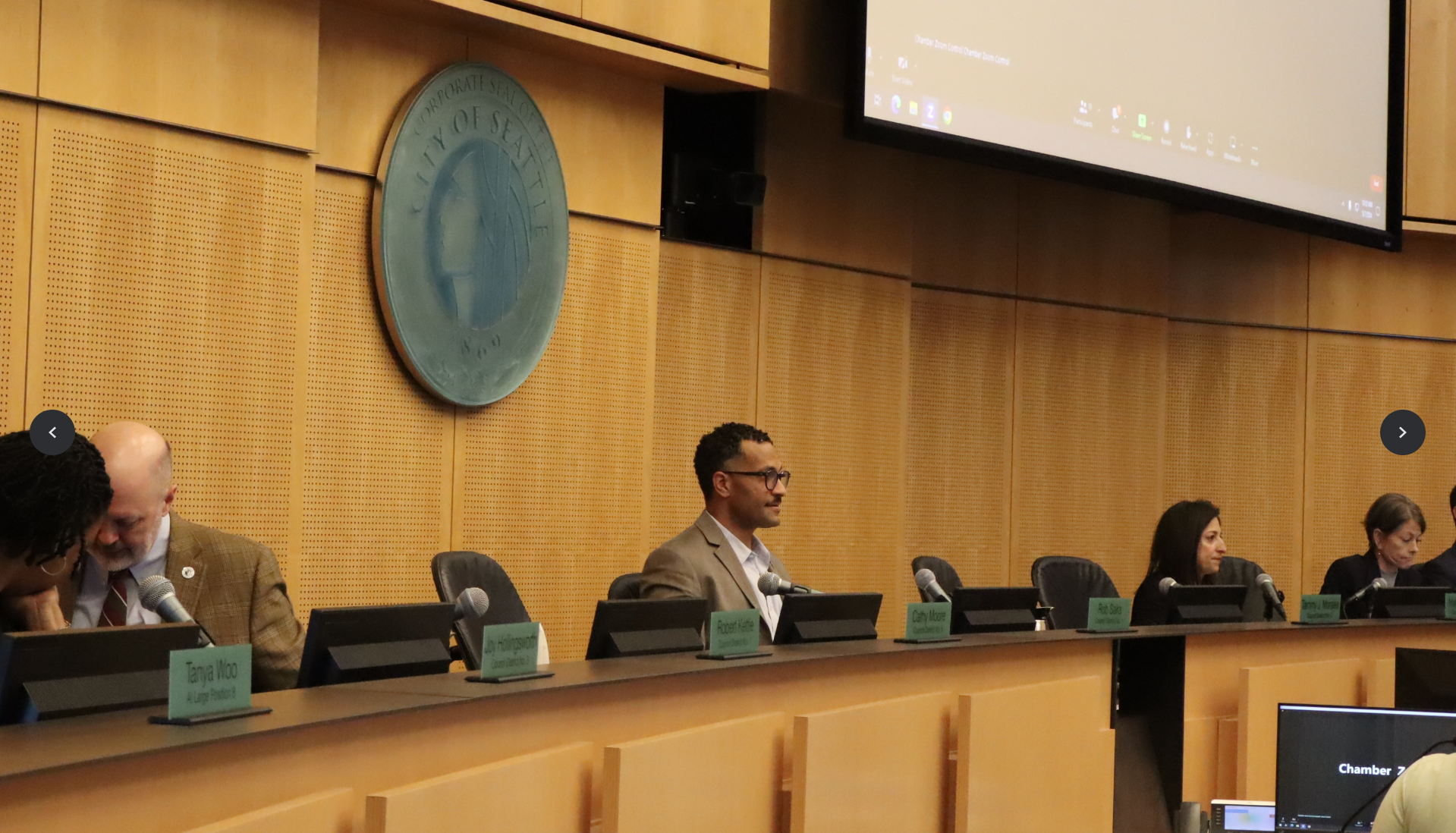
When Saka made those comments, all three of the bills remained in draft form, having missed a prior deadline for introduction and referral before the Council's August recess. Holding a committee discussion, much less two, around a draft version of a bill is unusual, and during last week's meeting several issues surfaced that conveyed how rushed the process has been thus far, including the fact that modifications recommended by the City's law department had been made between the August 20 and September 8 meeting.
So what would the SAFER Streets Act actually do?
The first bill in the package adjusts the authority of the SDOT Director, giving that position explicit authority to do many things that are already under their control. That includes the authorization (not requirement) "to ensure capital project reviews are informed by safety needs identified in a Vision Zero Plan when changes to the configuration or operations of an intersection are proposed and when geography and budget allow." It would codify a requirement that the Vision Zero Plan (which appears to be the same as a Vision Zero Action Plan) be updated every three years.
It would also ask SDOT for a report, to be delivered by next June, that considers options for "improving the Department's existing response following a qualifying fatal crash." That work would build on an internal SDOT policy, adopted in May, that codifies expectations around how the department reviews fatal crashes on city right-of-way, with a two to four-week review after SDOT receives a crash report from the Seattle Police Department and a 90-day timeframe for "remediation or maintenance activities."
That internal policy also includes a twice-yearly review of all crashes involving people who were walking, rolling, biking, or using a scooter or motorcycle. That data is used to inform Vision Zero investments with a goal of making safety upgrades within two years of that review.
Saka's bill asks for at least three "progressively more stringent options" for post fatal crash review, including a requirement to evaluate what it would look like to conduct a review within 72 hours of receiving a crash report, and the potential for remediation to take place within two weeks. Presumably this report would be used to inform future legislation, but the bill ultimately doesn't make any direct changes to city policies around post-crash review.
That bill also includes a section dealing with the amount of time that the Washington State Department of Transportation (WSDOT) spends reviewing potential modifications to highway on and off-ramps within the city, requesting design feedback be returned "within a reasonable amount of time, but in no case more than 180 days." But the City of Seattle has no legal standing to require any specific timelines from another level of government, turning the section into a pretty please.
The second bill in the package addresses the city position of City Traffic Engineer, a position that has been held by Venu Nemani since 2021. Nemani also holds the title of Chief Transportation Safety Officer, after being "elevated" to that role in 2023 following the release of a "top to bottom" review of the department's Vision Zero program.
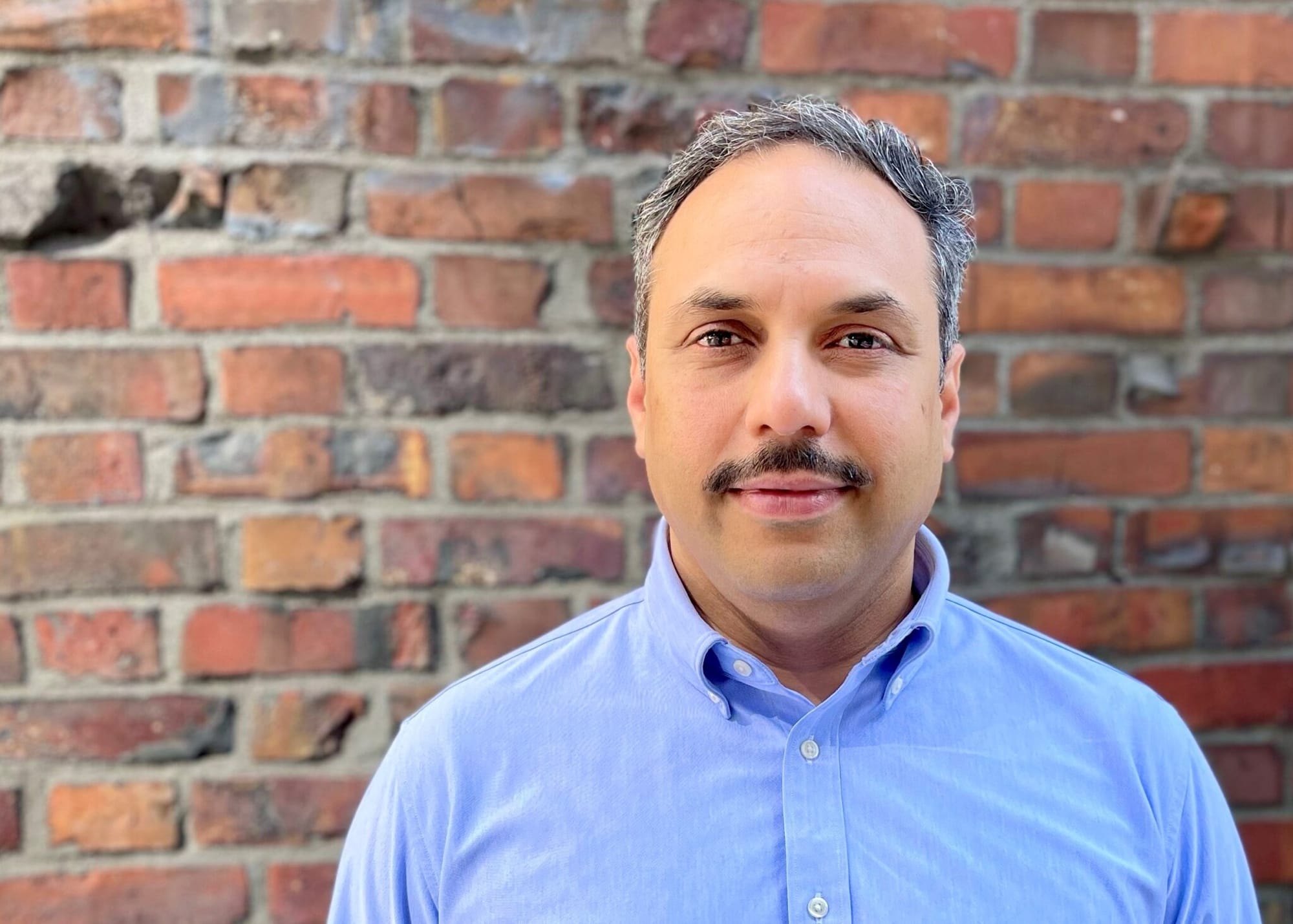
The bill would not codify that Chief Transportation Safety Officer position, but rather give the City Traffic Engineer explicit authority to do things that are already commonplace, like the ability to "review and provide recommendations to enhance the safety of roadways and transportation infrastructure." It's not clear that a lack of these specific authorities is inhibiting the department from being able to make safety interventions now, and nothing in the bill would require the City Traffic Engineer to do anything differently.
The third bill, which was only discussed conceptually at the August 20 transportation committee meeting, would request requirements for vehicles operated by city contractors to have "truck lateral protective devices," commonly referred to as truck side guards. Placed along the undercarriage of a vehicle, side guards can prevent people who are walking or rolling from being pulled under the vehicle in the event of a crash.
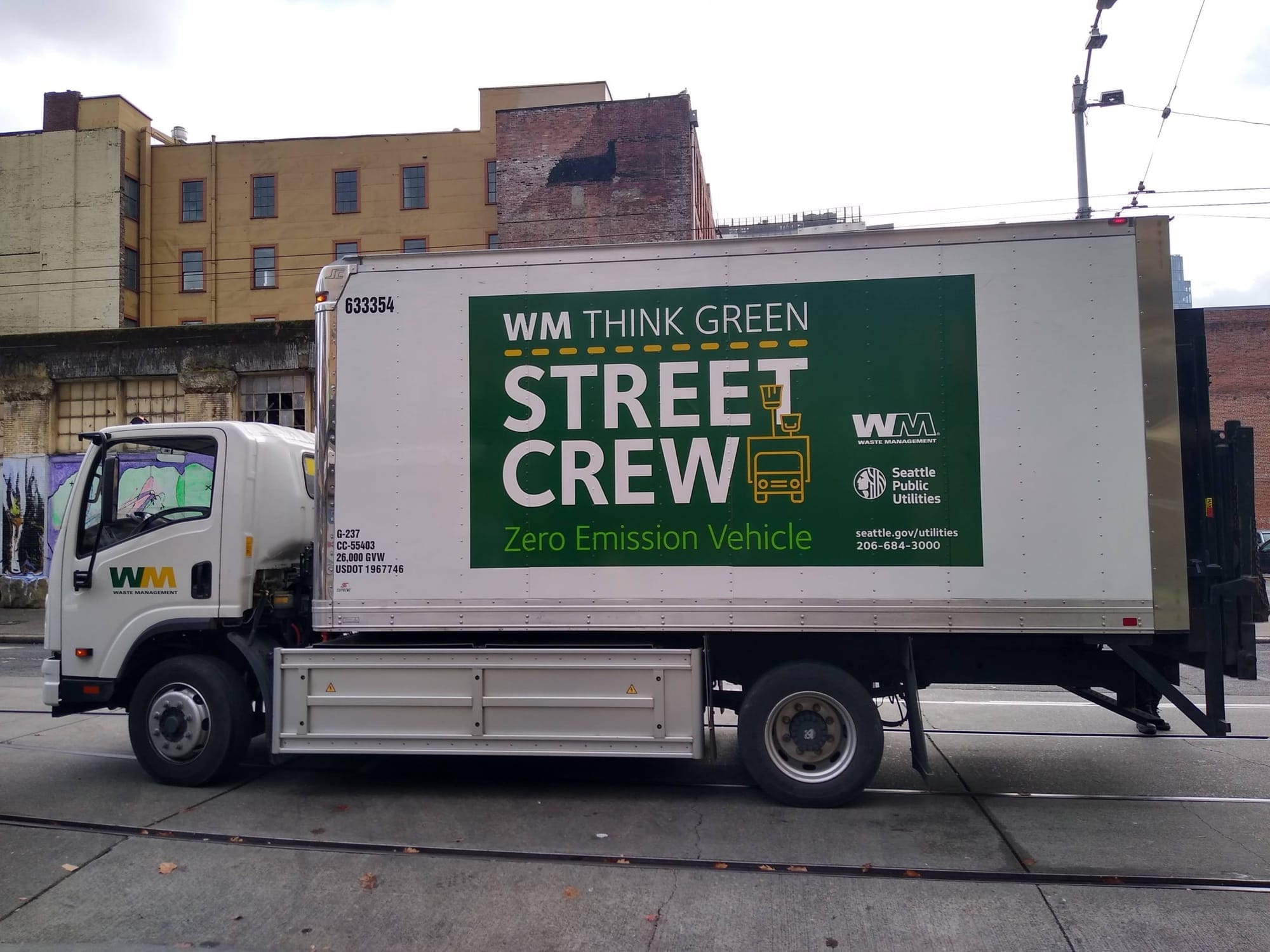
The bill specifically calls out Boston, which codified truck side guard requirements into city code in 2014, and asks for recommendations by May 1 of next year.
During last week's meeting, members of the council's independent central staff raised issues that came from the Department of Finance and Administrative Services (FAS), which would be tasked with implementing the bill – noting that department wasn't looped in until early September.
"We were able to speak with FAS about this bill last week. Very grateful to them for jumping in and providing their analysis," legislative analyst Ann Gorman said. "They raised a couple issues which we have flagged as policy considerations. FAS may require additional resources to develop the requested recommendations. For instance, FAS does not have mechanical engineering capacity, and FAS may not have capacity to perform and/or oversee the requested body of work by the date that is currently in the ordinance."
Wilson's executive order also directed FAS to work on side guards and other potential safety enhancements for contracted vehicles, but instead asks for a report on opportunities and impacts by next January.
"The executive order is very much in a similar subject area, but it is asking for another thing," Gorman said. "It seems reasonable to expect that after the requested report is delivered [...] the mayor's office might consider developing actual requirements about what it has heard based on the opportunity and impact analysis, but that is not what it is doing."
Other members of the transportation committee, including Alexis Mercedes Rinck and Eddie Lin, have raised concerns about the fact that SDOT has not been at the table at any of the committee meetings so far.
"I would be interested in hearing SDOT's feedback, and just want to make sure that – not that we have to adopt what they say – but I do just want to make sure that this is going to work for them as well, and if there are potential concerns or tweaking of anything, that I'd like to have the time to bring those forward for discussion," Lin said.
SDOT press secretary Ethan Bergerson confirmed via email late last week that the department was only looped in on Saka's package on August 19, the day before the first committee discussion was held. SDOT did provide feedback on the bill on September 4, Bergerson said, but no changes were incorporated by the September 8 meeting when Saka assured his colleagues that no further changes would be made. The Urbanist has not yet confirmed the substance of SDOT's feedback.
Councilmembers raised other process concerns. Because the bills aren't set to be formally introduced until September 15, two days before a final committee vote, the deadline to submit amendments was last week. That means councilmembers will have not seen a final version of the bill when being asked to submit potential changes.
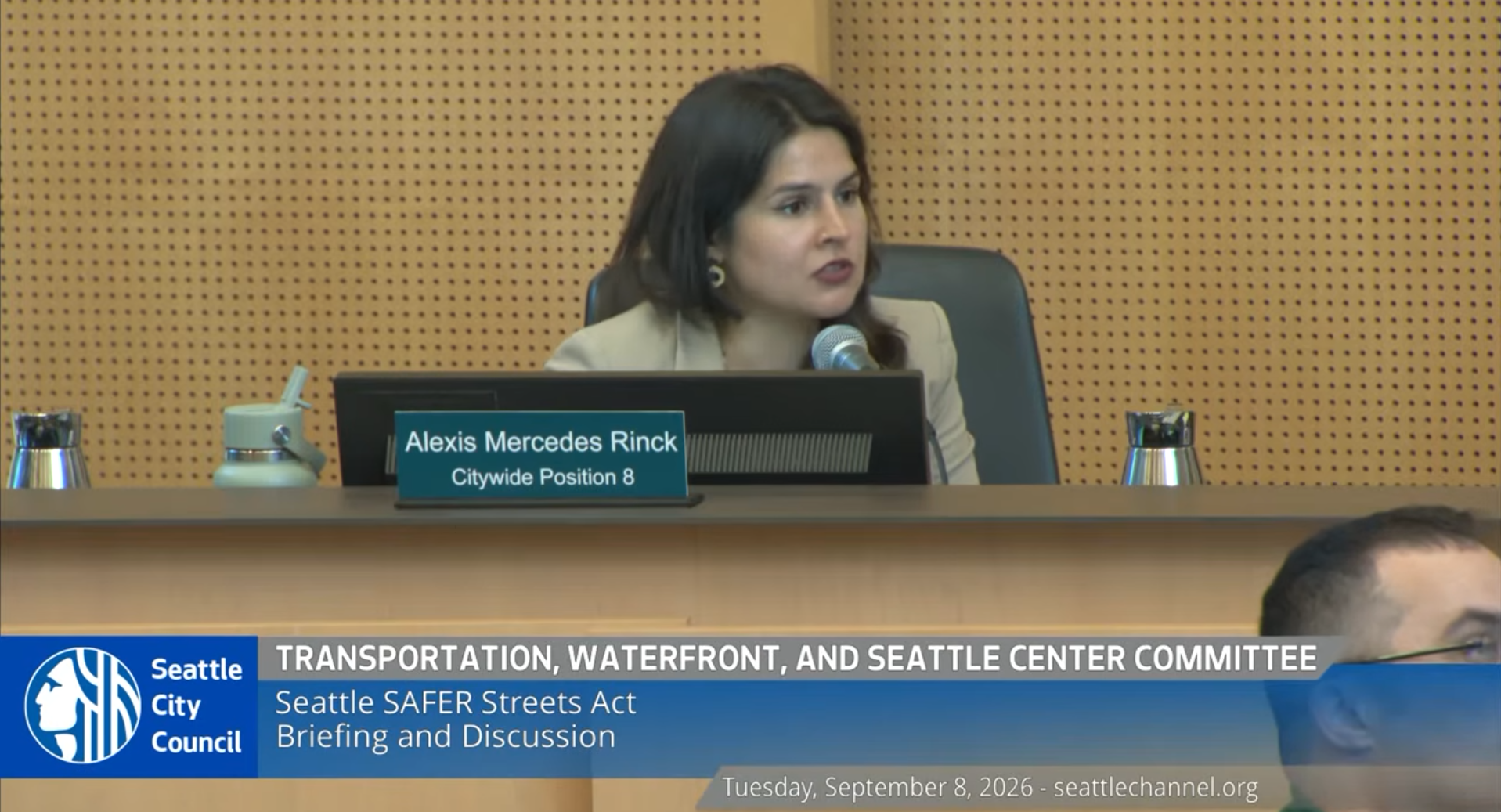
"I've never seen an amendment deadline for a piece of legislation that has not formally been introduced yet. How is that possible?" Rinck, the committee's vice chair, asked staff last week.
"I can only tell you that we've been working out how to make all of the pieces fit, and this is the timeline that we've developed to achieve this vote date," was the reply from analyst Amanda Allen.
Saka defended the process to develop the package, and the fact that SDOT has not been at the table for committee discussions, stating that it is common for departments to not be directly involved in meetings on proposals that originate from the legislative branch.
"My office has been working closely with SDOT on this, especially [over] the last six weeks plus, even before that, on various higher-level aspects of this," Saka said. "They have reviewed and provided my office with extensive feedback, and my office has met directly with the department, and the executive, the mayor's office, on our complimentary efforts numerous times. And I would encourage you, Councilmember Lin, vice chair [Rinck] as well, anyone, to meet directly with the department yourselves."
A final committee vote is tentatively scheduled for this Thursday, September 17. If that vote isn't taken, the package would likely be held until the council wraps up its budget work around Thanksgiving.
 Ryan Packer
 Ryan Packer