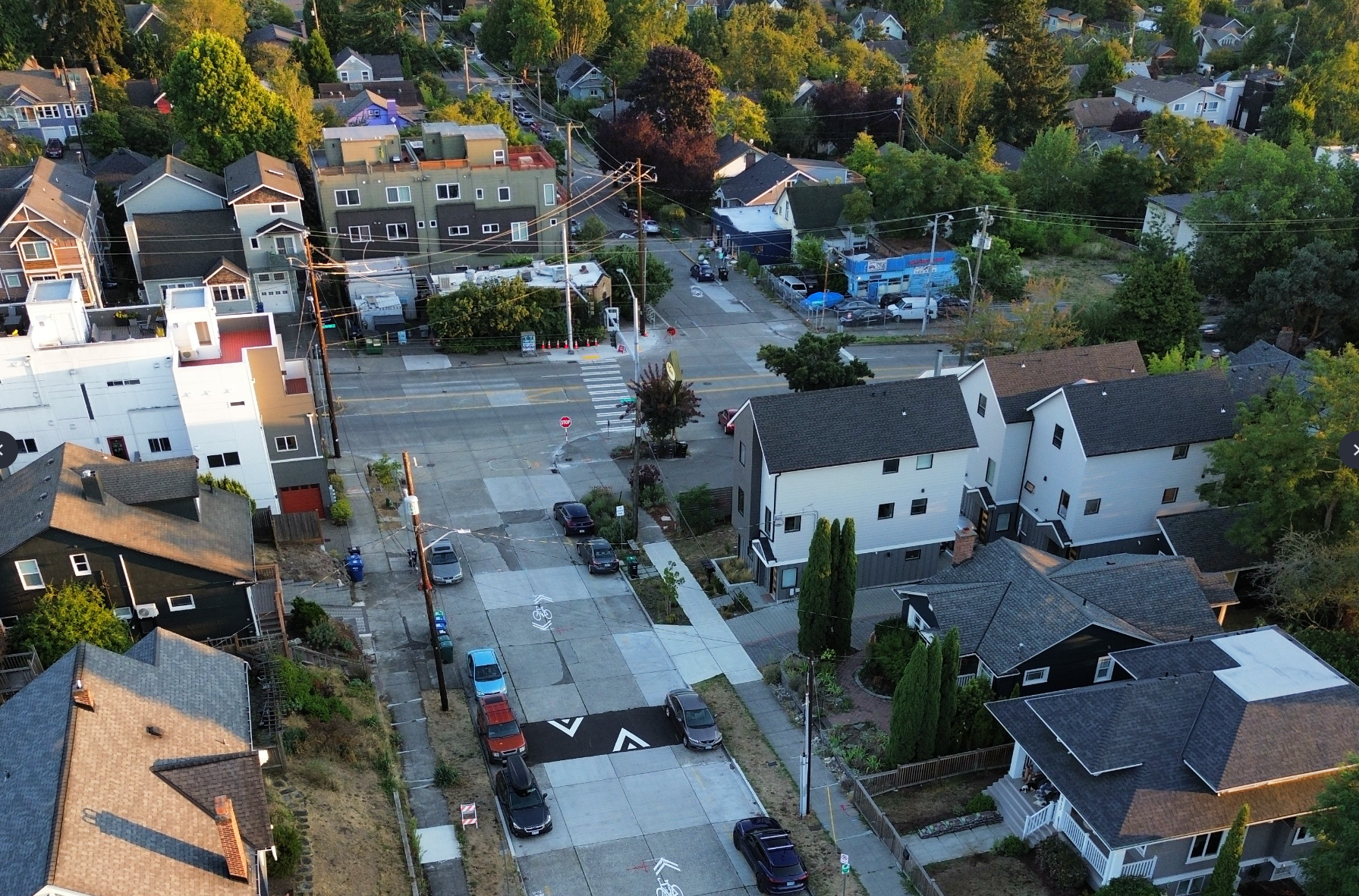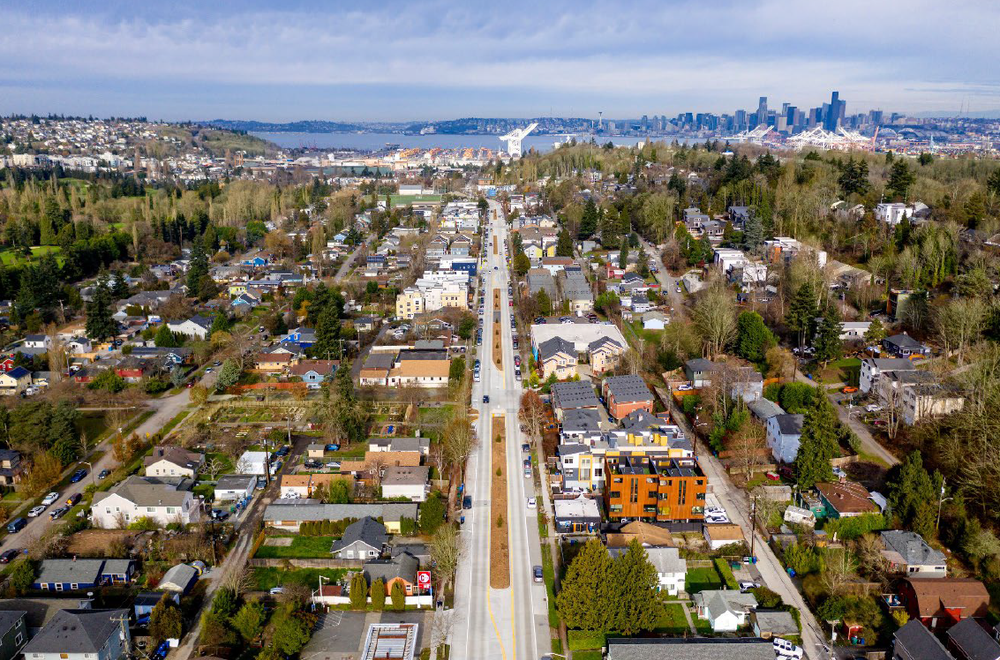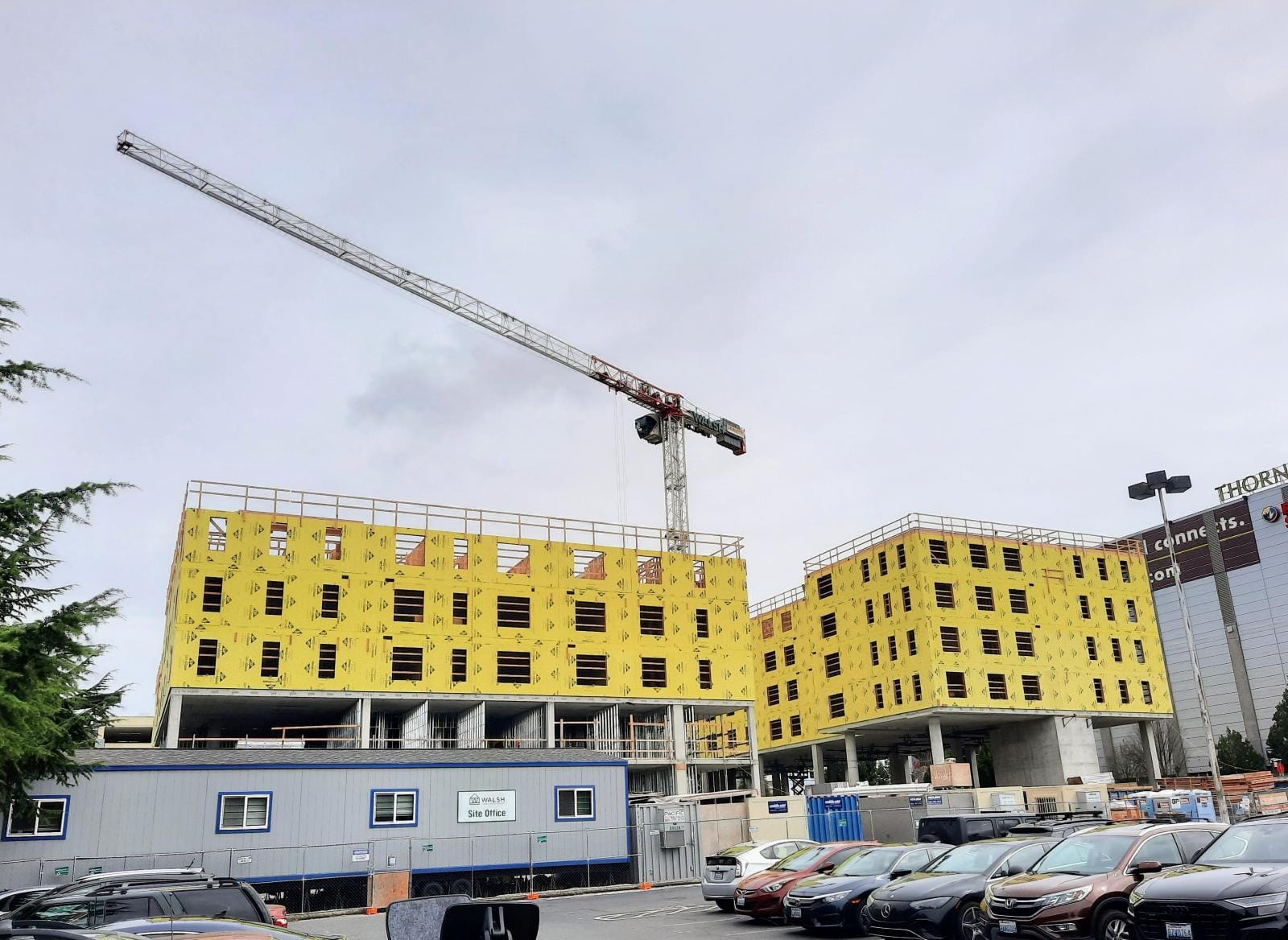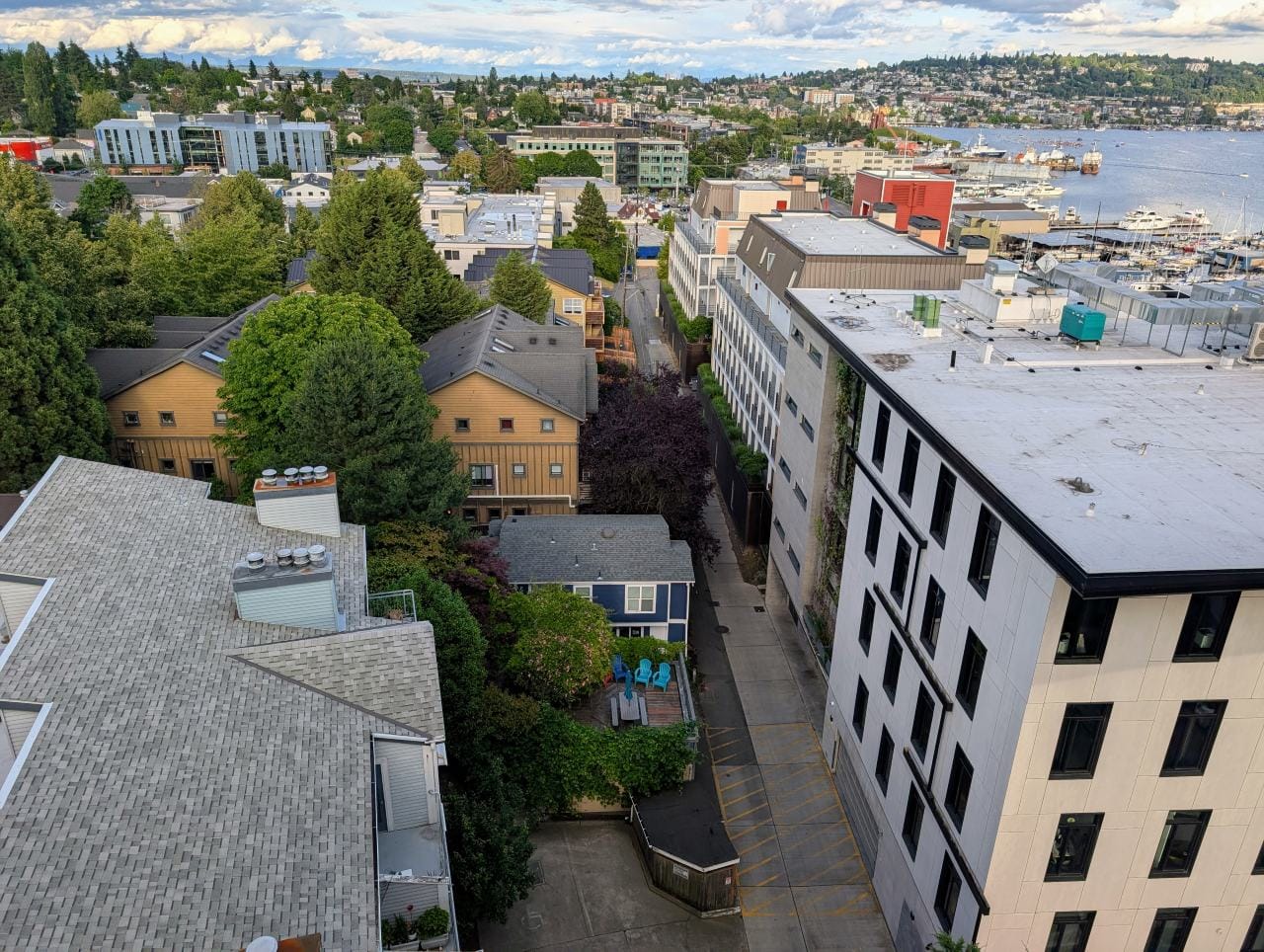
There’s a reason Seattle is called the Emerald City in the Evergreen State: our trees help make Seattle the vibrant city that it is. But preserving that vision doesn’t mean we have to choose between protecting them and building the housing we need. We can – and must – do both.
The Urbanist's Fall Member Drive is in full swing! Support our work, read ad-free, and help us hit our goal for the member drive!
In 2007, Seattle established a goal to reach 30% tree canopy coverage by 2037. At the time, the city’s canopy stood at 18%, according to the City’s Urban Forestry Management Plan. To reach their goal, the City of Seattle Urban Forestry Coalition – consisting of an interdepartmental team of staff from Seattle Parks and Recreation, the Seattle Department of Transportation (SDOT), the Office of Sustainability and the Environment, and more – put forth a list of short and long-term actions, including improving planting and maintenance of City-managed trees, strengthening incentives and regulations to encourage tree preservation on private property, and exploring new financing mechanisms to fund City-operated urban forestry programs.
Seattle has made strong progress toward that goal: the most recent tree canopy study, using data from 2021, has Seattle at 28.1% canopy coverage, an increase of 10 percentage points in 14 years – even as the city’s population grew by nearly 150,000 people and added more than 100,000 new units of housing. As the city prepares for more growth, we have an opportunity to develop new policies and investments to close the remaining gap and meet or even exceed the City’s 30% goal.
And while we continue to care for trees and our environment, Seattle is also grappling with a serious housing shortage. Under the One Seattle Plan’s adopted growth targets, Seattle must plan for 120,000 new housing units by 2044, or roughly 6,000 homes per year.
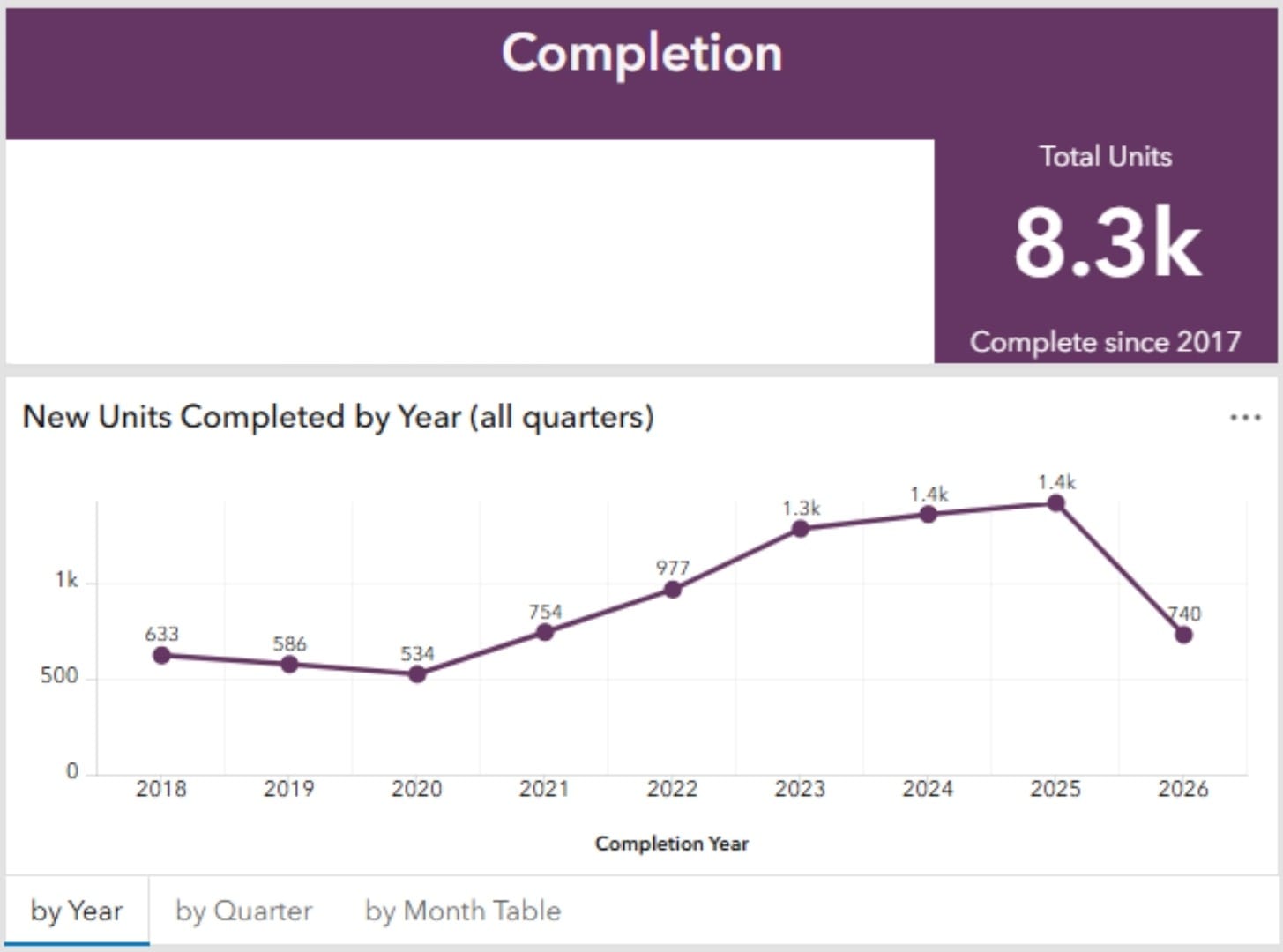
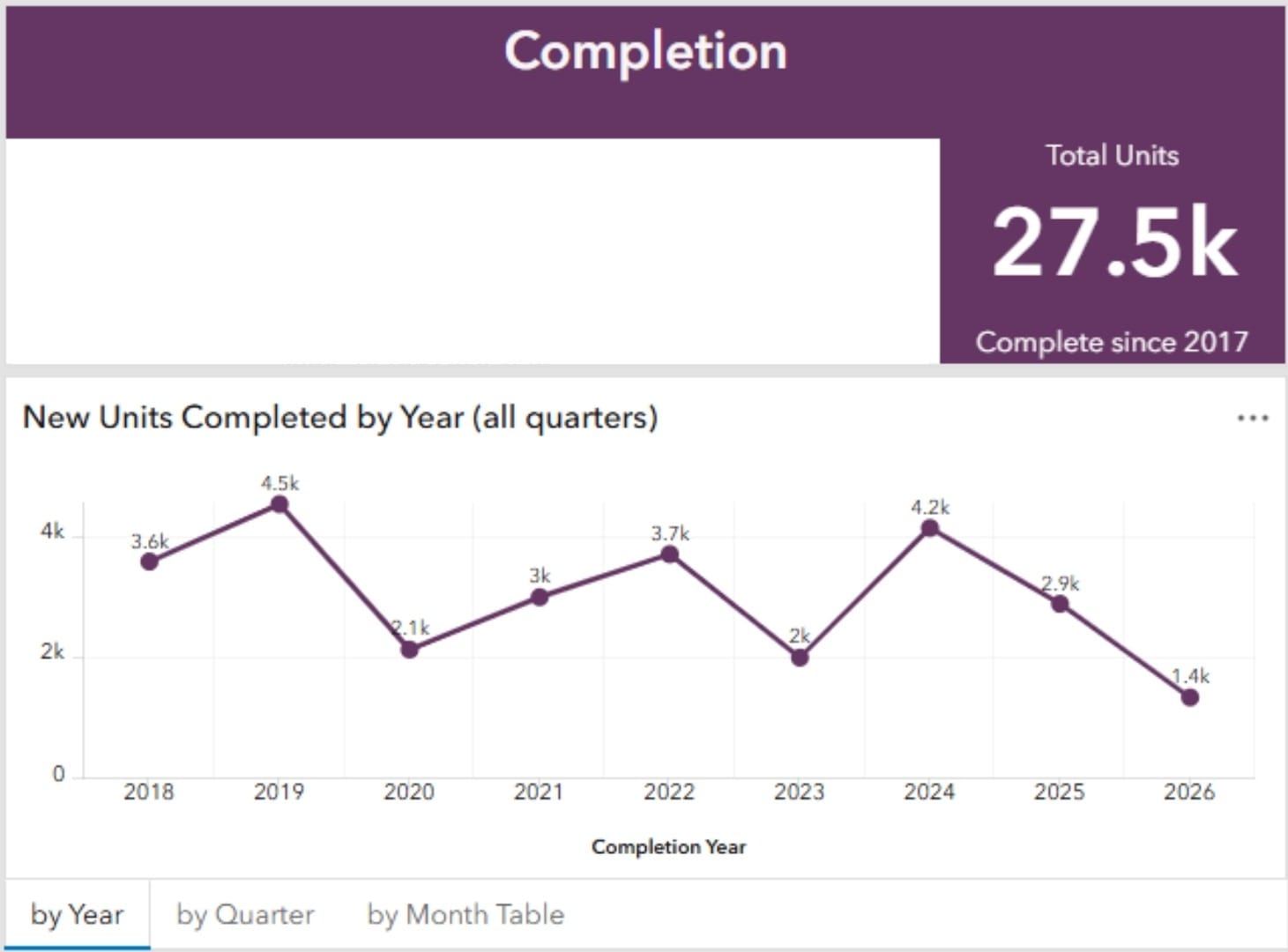
Since 2017, Seattle added 8,300 new homes in the Neighborhood Residential (formerly Single Family) zone, typically where detached, ADUs, and moderate middle housing products are built. In lowrise, midrise, highrise, and downtown zones, where apartments are more prevalent, 27,500 units were added. However, data shows a significant downturn in permits in 2025 and 2026, which is a concerning reality for what’s to come, considering new housing takes years to move from permit to construction to occupancy.
The slowing production of housing will only further place strain on homeowners and renters in the city. Seattle homebuyers spent 54.1% of their income on housing costs in 2024, making it one of the least affordable housing markets in the country. And nearly 50% of renter households in the region are cost burdened, meaning they're paying more than 30% of their income on rent.
So, how are we, as a city and region, responding to this pressure? Well, the answer is two-fold. The One Seattle Plan is both Seattle’s Comprehensive Plan – the 20-year vision and roadmap for the city’s growth, required under Washington’s Growth Management Act (GMA) – and the vehicle through which Seattle adopted middle housing: duplexes, triplexes, fourplexes, and other “missing middle” housing types mandated statewide by House Bill 1110. In other words, the same document that guides how Seattle grows responsibly is also the one legalizing more homes in more neighborhoods.
However, the GMA doesn’t just require cities like Seattle to develop comprehensive plans and regulations to guide their growth. It requires local governments to treat housing, transportation, the environment, and more as coequal goals, not competing ones.
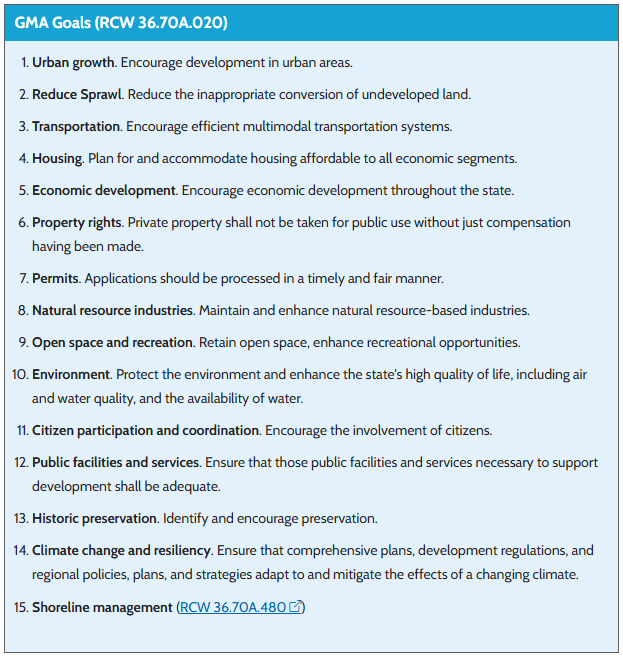
Despite this requirement, in public debates at City Hall, goals like more housing and the environment are seemingly – and incorrectly so – pitted against each other. Seattle’s own Urban Forestry Commission has pushed back on the notion that urban density and tree canopy cannot coexist, noting that “what we need to do is better understand how we balance one and the other, while acknowledging that both are necessary.”
Why does the conversation then so often fall into a choice between the two? And instead of asking whether we can have housing or trees, maybe it’s worth asking: what policy choices let us have both? That starts with recognizing Seattle’s role in the broader region and building on the approaches already showing that density and canopy can grow together.
When cities enact policies that limit opportunities for new housing, that new development doesn't stop – it just moves elsewhere. And that prevents people who want to live and work in a city like Seattle from accessing homes in the transit-oriented, walkable neighborhoods Seattleites and our local government have spent years investing in. Pushing people further out into car-dependent areas results in longer commutes, more vehicle miles traveled, and more emissions. It also means more roads and parking lots replacing permeable land, sending stormwater runoff into local waterways, and further harming our salmon and orca populations.
Furthermore, building new housing in the city can make our current urban environment better. According to a recent King County study of Lake Washington, from 2000 to 2020, the population of the watershed grew by 34% while developed land area grew by less than 5% and forest cover remained steady. Rather than clearing intact forest to accommodate growth, the population grew in place by converting from lower-density to higher-density housing. This new development likely prompted stormwater upgrades, septic-to-sewer transitions, and other changes that helped improve the lake’s water quality.
Not only have we seen improvements in the lake’s water quality, but we’ve also seen new construction lead to planting and protecting trees on site at a rate 325% higher than tree removals are occurring. Since July 2023, when Seattle’s Tree Protection Ordinance went into effect, more than 14,100 trees have been planted and protected during the construction of new homes compared to roughly 4,300 trees removed.
Of those trees removed during construction, nearly 88% were a Tier 3, Tier 4, or below category. The majority of the older, larger tree loss is happening entirely outside of construction: nearly 71% of all Tier 2 tree removals are non-construction-related (Tier 2 trees include trees 24 inches or greater, tree groves, and specific tree species as provided by a Director’s Rule).
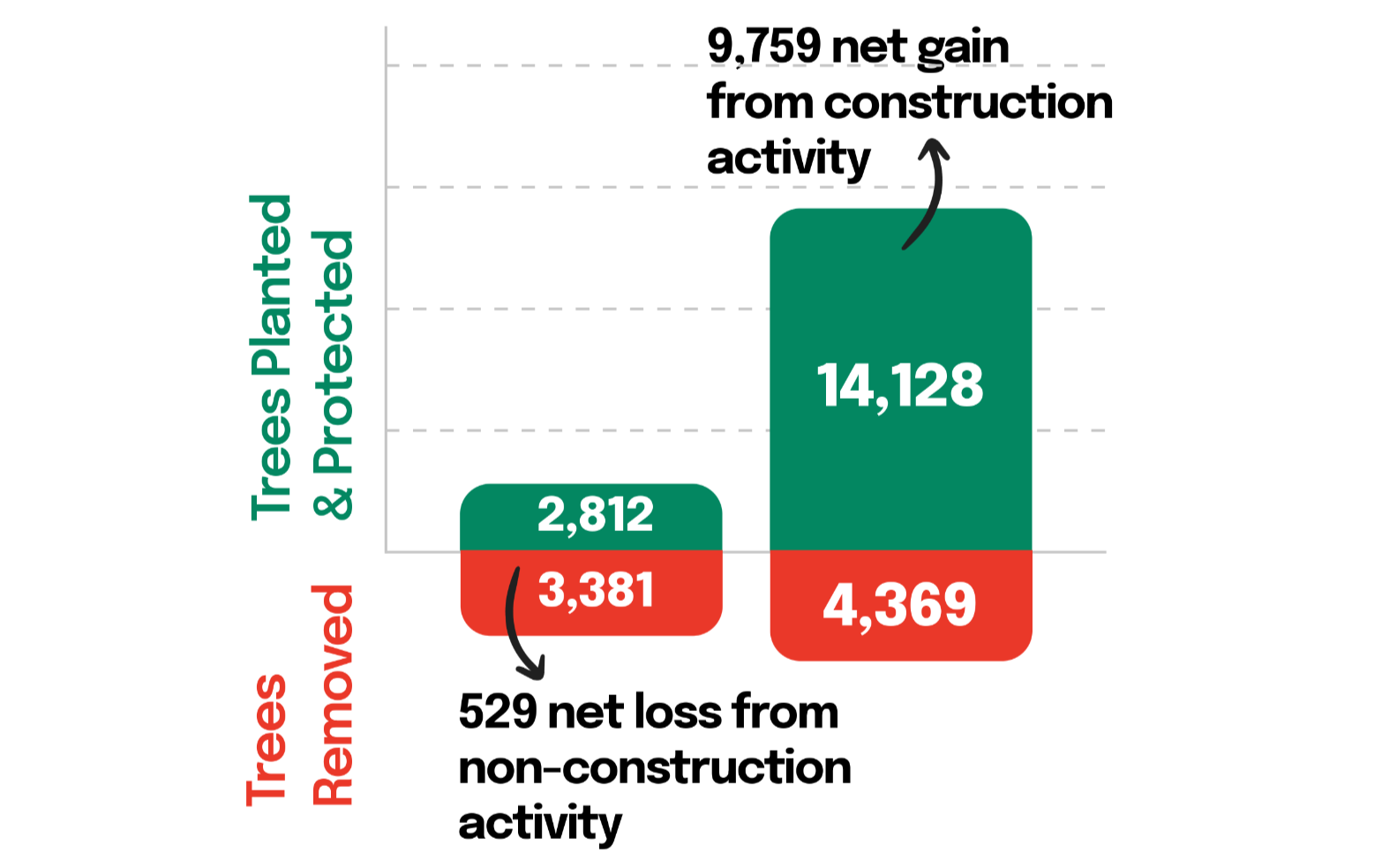
We continue to be interested in finding more ways to preserve and add trees alongside the construction of new housing. However, if protecting Seattle’s most significant trees is the goal, the data points toward paying more attention to the far larger share of removals occurring with no new housing to show for it.
Even worse, and not accounted for in the data above, the largest net change in Seattle’s canopy coverage between 2016 and 2021 occurred in publicly owned parks (“Parks Natural Areas”). Seattle’s parks saw a 5.1% canopy loss, accounting for nearly half of the city’s overall canopy loss (111 of the 255 acres lost) across all management types (neighborhood residential, right-of-way, etc.).
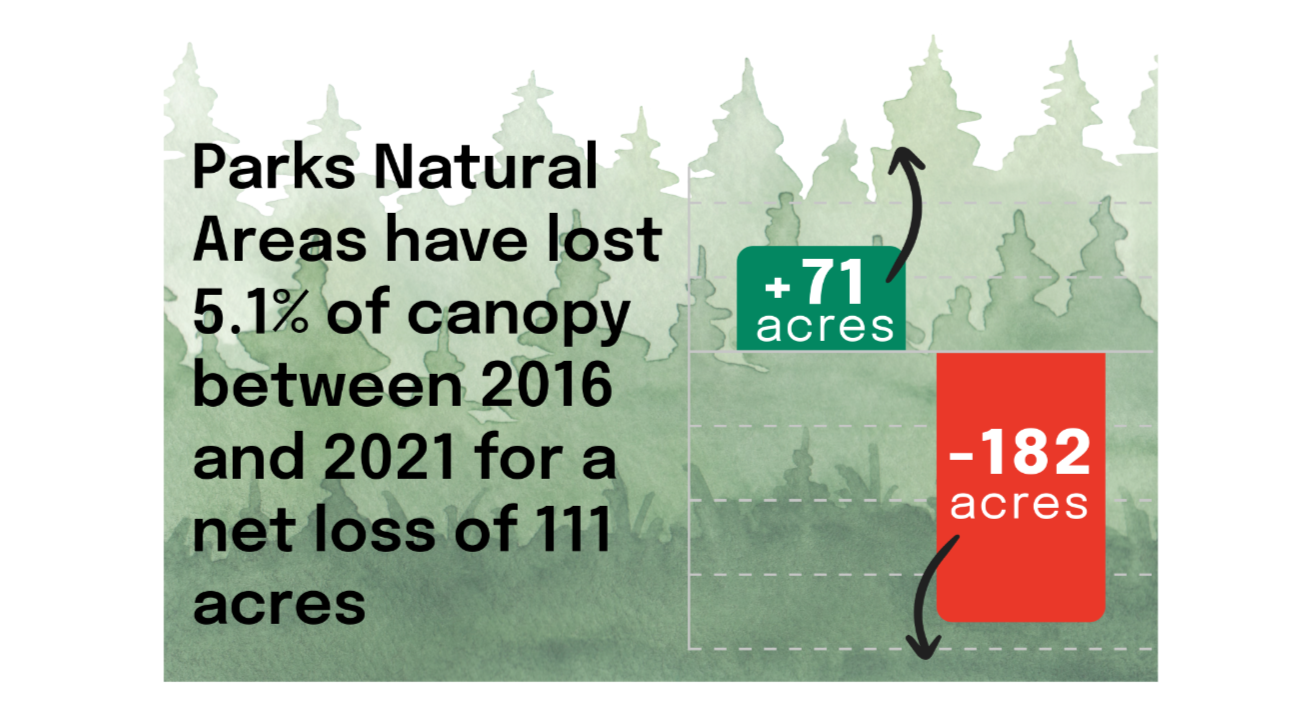
The public right-of-way didn’t fare much better. Over that same period, the city lost 10 acres of canopy in the right-of-way alone – land the city already owns and controls, and the same land that makes up 27% of Seattle’s total area. This points exactly to where the opportunity is: parks and the public right-of-way represent the few places the city can take action on to impact canopy growth directly.
Everyone who cares about housing and trees needs to continue to work on creative solutions for both. Many of our members continue to do that and we look forward to hearing new ideas. In the meantime, we already have solutions we can start implementing now. If new housing isn’t the leading culprit for Seattle’s canopy loss, then we should be putting less energy into pitting homebuilding against trees amidst a regional housing shortage. Rather, it’s time to get serious about growing canopy everywhere. Seattle’s already set the target: 30% canopy by 2037. Getting there means treating tree planting like the public priority it actually is.
Here’s are strategies we can start implementing now:
- Start with the streets: The public right-of-way makes up more than a quarter of the entire city but holds less than a quarter of its canopy. That gap is the single biggest opportunity we’re leaving on the table, and closing it starts with SDOT planting and maintaining more street trees.
- Double down on what’s already working: Seattle’s Trees for Neighborhoods program has helped plant more than 16,400 trees at homes, schools, businesses, and gathering places since 2009. We need to invest more in this program.
- Incentivize preservation and planting: Density and height bonuses, or eliminating setback requirements, for projects that preserve mature trees or commit to new planting would bring builders’ incentives and the city’s canopy goals into alignment. A new “courtyard block” bonus would further this goal by clustering new housing around shared open space that leaves room for trees.
- Fix the tree code itself: Builders, homeowners, and city staff all deserve rules that are clear and predictable – not case-by-case guesswork that slows projects down and chips away at public trust in the process.
- And put green space where it’s been missing: Build more pocket parks, especially in low-canopy, environmental-justice priority neighborhoods. This would extend access to green space and provide cooling to areas that bear the brunt of urban heat islands.
None of this requires choosing between a growing city and a green one – the data backs that up, and the Complete Communities Coalition laid out the case in more detail in their fact sheet, Right Tree, Right Place: A Greener, Housing-Abundant Seattle.
Logan Schmidt (he/him) is the Seattle Government Affairs Manager for the Master Builders Association of King and Snohomish Counties, a proud D5 resident, and a policy nerd whose experience spans from Washington, D.C. to Seattle.
Jesse Simpson (he/him) is the Director of Government Relations and Policy for the Housing Development Consortium. Jesse grew up in West Seattle and has lived in Capitol Hill since 2018.
Jeff Paul (they/he) is Co-Executive Director of House Our Neighbors, an organization dedicated to housing affordability and climate action that advocates and mobilizes to realize social housing for the residents of Seattle and beyond.
 Ryan Packer