Sound Transit has blamed a "misaligned pantograph" – the steel arm that draws power from overhead wire – for causing a "voltage spike" that stalled a crowded 2 Line train for several hours on Sunday evening.
Following a heavily attended Apple Cup college football game at Husky Stadium, a packed train headed north from the University District stalled in the tunnel south of Roosevelt Station, causing a service disruption that lasted more than two hours. Riders reported that lighting and air conditioning went out intermittently on the stalled train, which was crammed full of rowdy college football fans leaving a Huskies victory.
The Urbanist's Fall Member Drive is in full swing! Support our work, read ad-free, and help us hit our goal for the member drive!
With an uncomfortable wait of undetermined length, some opened train doors and poured into the tunnel to get a little breathing room and cooler air. Confusion abounded onboard the stalled train and at stations up and down the line as the blockage forced delays that rippled across the system.

Sound Transit spokesperson Henry Bendon said the agency swept into action to deploy rescue trains and mobilize staff to direct riders to buses or alternate means of transport.
"On Sunday evening at about 5:50, a northbound 2 Line train experienced a mechanical issue and became stranded between U District and Roosevelt stations," Bendon told The Urbanist. "We deployed rescue trains to retrieve passengers from the disabled train, and our fare ambassadors and security staff directed passengers to alternate bus service. Normal operations resumed at about 8:20 p.m."
For some, Metro bus service was not a viable replacement for light rail, forcing them to utilize other options, like ridehailing.
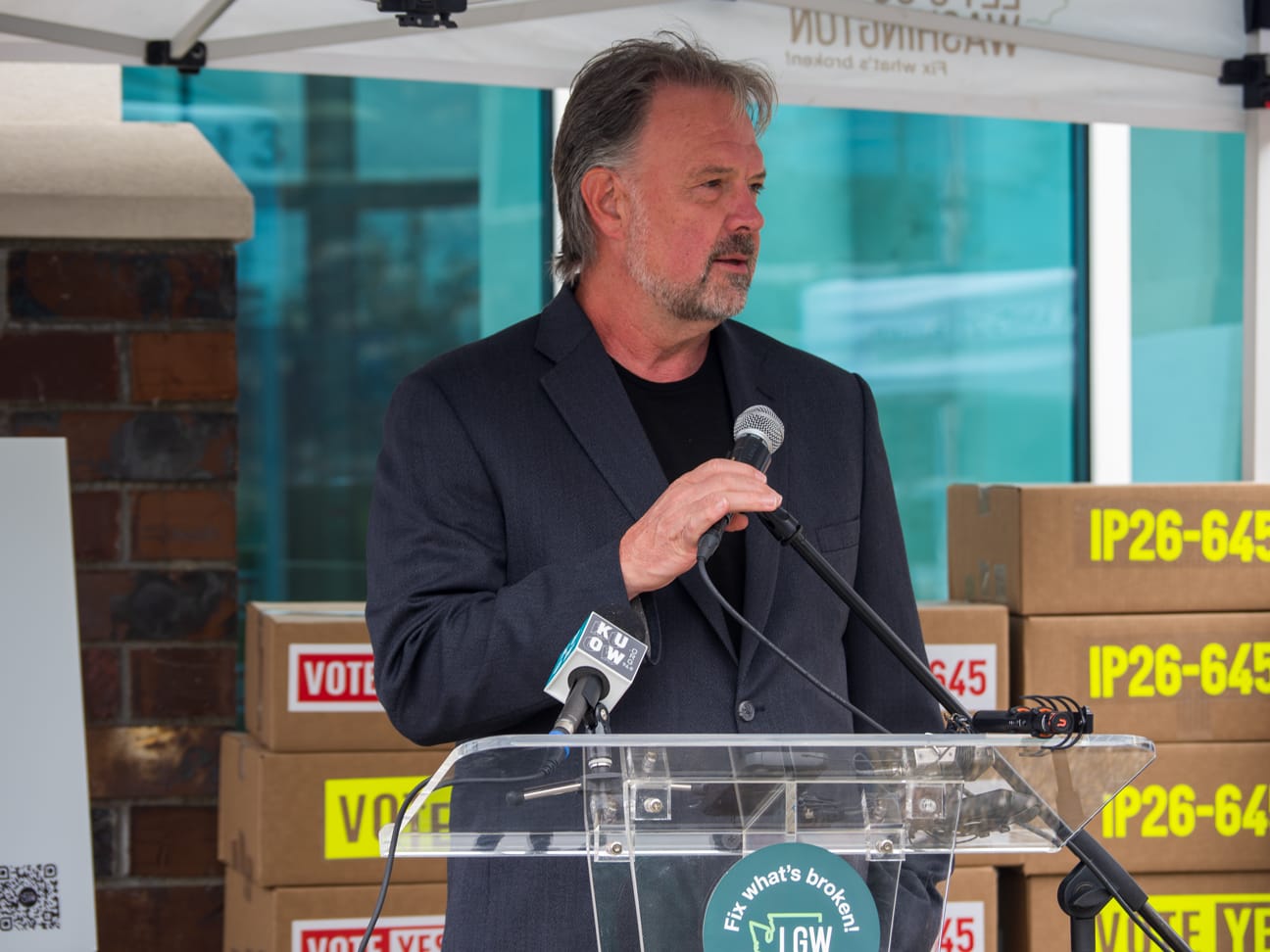
Sound Transit CEO Dow Constantine promised an investigation and a full report back to the agency's board of directors at a System Expansion committee briefing on Thursday afternoon.
"A full investigation into the root cause is underway, but it appears to be related to the pantograph, the arm that extends from the train's roof that draws power from the overhead line," Constantine said. "Our maintenance team found that it was misaligned and causing a voltage spike. The pantograph has, of course, been repaired and successfully tested on the mainline."
Sunday's snafu adds another blemish on a rocky two-month span with fairly frequent light rail service disruptions, many of an unplanned nature. The highest profile was a train derailment on August 1, though mechanical issues and a power outage caused three separate disruptions in July, after a miraculous disruption-free FIFA Men's World Cup.
It also marked the second time such a train stall has occurred during the Apple Cup, when the University of Washington Huskies football team squares off with the Washington State Cougars. The last Apple Cup hiccup was in 2021, though that incident had a different cause, and occurred shortly after Sound Transit opened the segment of the 1 Line between University of Washington station and Northgate.
"The problem appears entirely different from the 2021 Apple Cup stall, when the weight of a packed train caused it to squat lower than usual, and a power cable on the train’s underside was sliced by protruding bolts on the tunnel floor, near UW Station," Seattle Times' Mike Lindblom reported Thursday. "Those were identified by front-line workers earlier in the year but didn’t get trimmed down, a Sound Transit investigation revealed."
Lindblom noted that members of the agency’s Citizen Oversight Panel were not pleased about how the incident was communicated to riders, and they shared their frustration with CEO Dow Constantine at the panel's online meeting Wednesday.
"The panel’s chair, Charlotte Murry of Snohomish County, said she was aboard a stopped train, despite having waited an hour after the football game in hopes crowds were thinning out," Lindlom wrote. "She used the word 'unprofessional' to describe what seemed like a disorganized response."
Sound Transit said when disruptions occur, the agency prioritizes swift restoration of service and prompt rider communications. Sunday's chaos shows the message might not always be getting through clearly on the ground to exasperated riders.
"We know this was a major inconvenience and stressful situation for our passengers," Bendon said in an email. "Our focus remains on proactively minimizing the risk of disruptions. When they do occur, we work to respond and restore service as quickly as possible. We also prioritize rider communications during disruptions and incident response, including digital alerts, in-station messaging, and in-person support from staff and contracted security."
Constantine echoed that sentiment and pledged to report back to the board for an in-depth look at passenger communications and responsiveness to service disruptions.
"We understand how frustrating this type of disruption can be to our passengers, and I have ordered full internal review of the incident, including a focus on understanding our passenger communications and our overall agency responsiveness, and I plan to bring those findings back to this committee or to the board for an in-depth discussion."
Even before this latest incident, many observers (including Sound Transit board member Claudia Balducci) had called on the agency to fine tune its approach to rider communications during disruptions.
 Doug Trumm