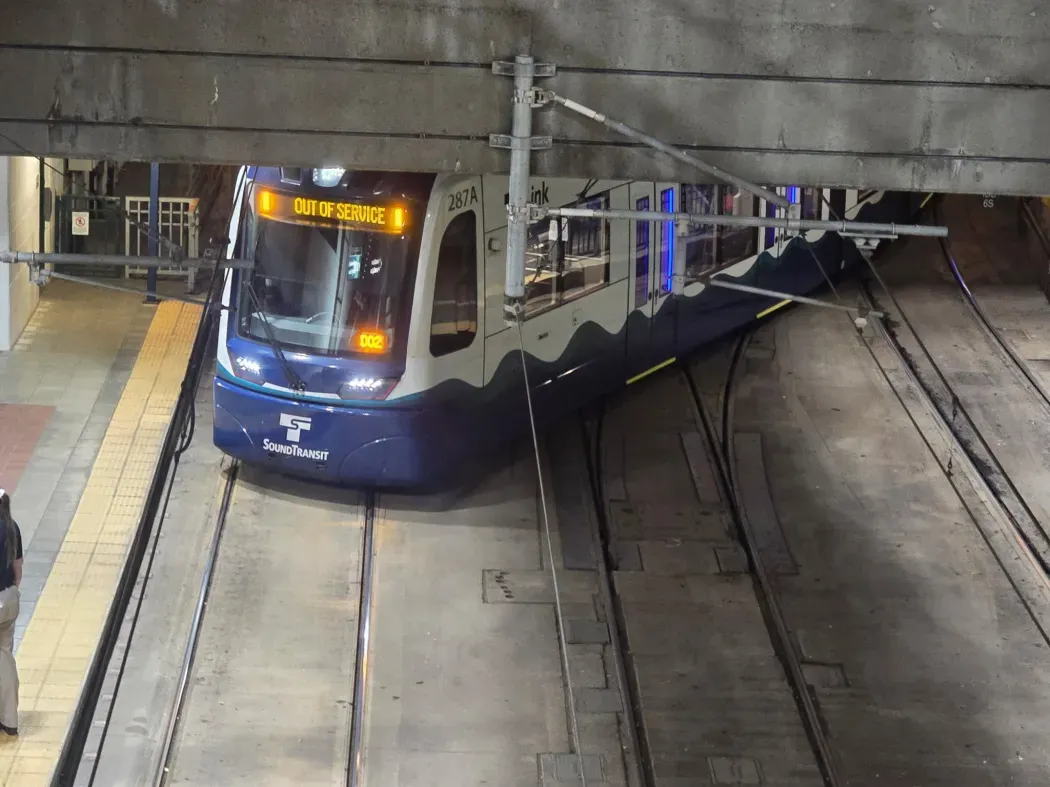
After a snag-free stretch setting ridership records during the World Cup, Sound Transit has had a few big service hiccups in the past month and a half, with a derailment on August 1 topping the list.
A roof hatch issue on July 9 also caused a major service disruption that lasted 15 hours, after the malfunctioning hatch took out an overhead wire between the University of Washington and U District stations.
"Mechanical issues disrupted trains on July 10th and again on July 20th, when brakes on a train wouldn’t release," Seattle Transit Blog's Sherwin Lee recounted.
"Then the following day on July 21st, a power outage resulted in a temporary suspension of service between Beacon Hill and Tukwila International Blvd stations."
However, the agency has said that overall service reliability is trending up, and emphasized they have no reason to expect the derailment or roof hatch issue to repeat.
The derailment on Saturday, August 1 happened at low speed in the Chinatown-International District (CID) station just before midnight. It caused no injuries, as the train was not yet in service and empty, other than the operator.
The derailment did, however, shut down light rail service in the downtown tunnel until 2:15pm Sunday, August 2. A full restoration of service waited while Sound Transit investigated the incident. During the disruption, Sound Transit truncated service, operating a bus bridge to replace the shuttered downtown tunnel.
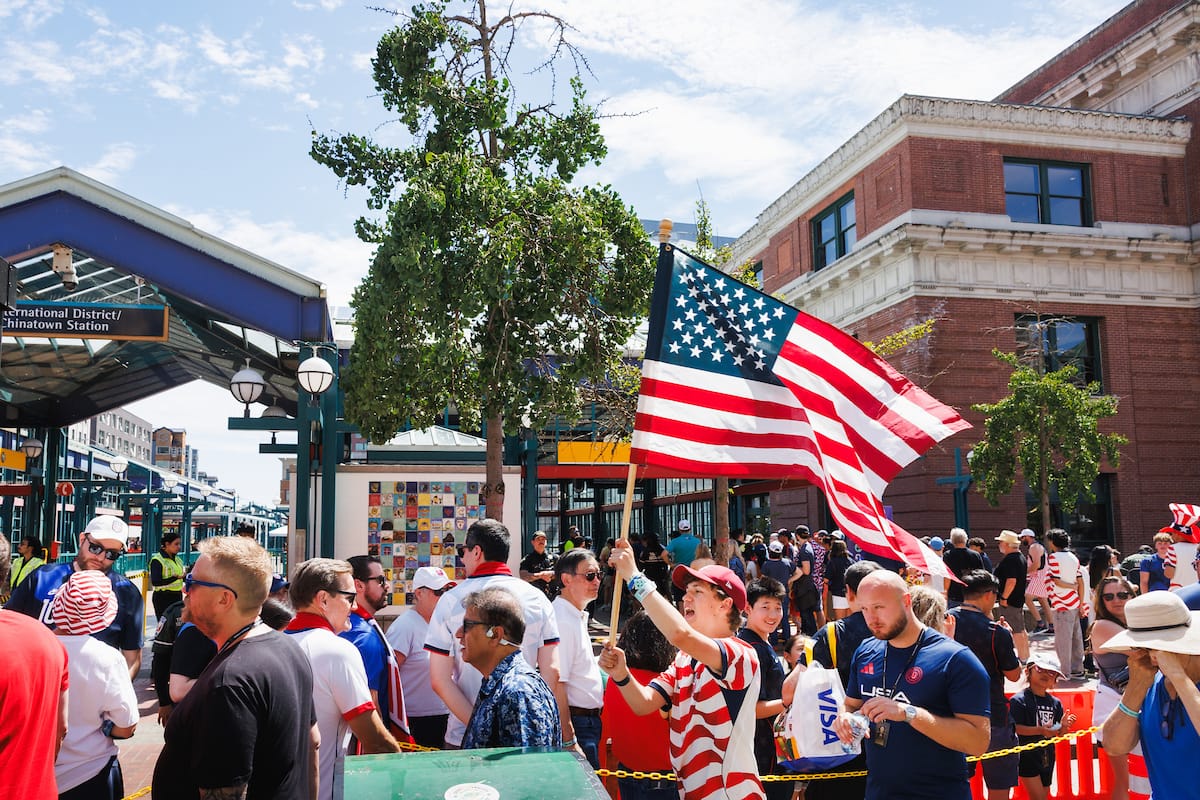
Because no crossover tracks exist within the downtown tunnel, any blockage or system disruption within the tunnel typically shuts the entire downtown section from SoDo to Capitol Hill. Sound Transit has raised the idea of adding crossover tracks, but the proposal remains unfunded and yet to be queued up. Such crossover tracks would allow Sound Transit more service pattern options in the tunnel, such as bypassing a particular platform or set of platforms in emergencies or maintenance situations.
Public information about what caused the derailment was scant, other than a paywalled Seattle Times article from Mike Lindblom on Sunday morning.
King County Councilmember Claudia Balducci, who serves as one of 18 members of the Sound Transit Board of Directors, brought up the issue at the Rider Experience and Operations (REO) Committee on August 6.
"On the derailment, can I just say it's been a few days: I think we should have some more information about the cause, to be honest, because a derailment is a life-threatening situation," Balducci said. "So, I'm really interested to know that we know what happened so that it's not going to happen with a train with people on it. That's very concerning."
At Balducci's prodding, Sound Transit CEO Dow Constantine expanded on the brief summary of the derailment in his CEO report to start the meeting, which treated the incident as handled and in the rearview mirror.
"This is a section of the track that veers off and goes into a pocket track," Constantine said. "So, that is a track that is not for passengers between the north and south tracks in the International District Station. As this non-passenger train was being repositioned from the south end in order to add capacity there."
Sound Transit had been storing extra trains at the station to help handle traffic leaving the Ed Sheeran concert at Lumen Field.
"[The train] was taken onto that side track, and this is where we know the two bolts sheared off bolts that were holding that curved track that goes to the pocket track. We don't know why they sheared off, however, and so Ed [Cobean], could you talk a little bit about the investigation that's being done on those two bolts, and then on the other fasteners that are similar, and there are few of them in the rest of the system."
Ed Cobean, Sound Transit's Deputy CEO, Chief Transit Operations, pointed to steps the agency was taking to prevent another derailment on pocket tracks.
"There is only one other switch in our system – this is special track work – that has anything that resembles it." Cobean said. "So, we've already done a full inspection on the other switch. Have put the existing switch bolts back into place. It's been repaired. We are also sending those bolts out for metallurgy testing to see if they can come back to us [with improvements]. We do know that it was the original construction, original bolts from when that was built 20 years ago, and we are going to do additional testing and inspections across the entire system for other switches, not just these two alone."
The Urbanist reached out to Sound Transit this week to see how the investigation was progressing into how the bolts were sheared off without the agency's track inspection team noticing, but no new details were offered.
"We have confirmed that the shearing of the two bolts caused the track to become misaligned, resulting in the derailment," Sound Transit spokesperson Henry Bendon said in an email. "The incident occurred on a section of special track work that is unique in our system to access the pocket track at International District/Chinatown Station - although it is used in many other systems. That track was inspected, repaired, and returned to service the next day, and we have no reason to believe this will happen again."
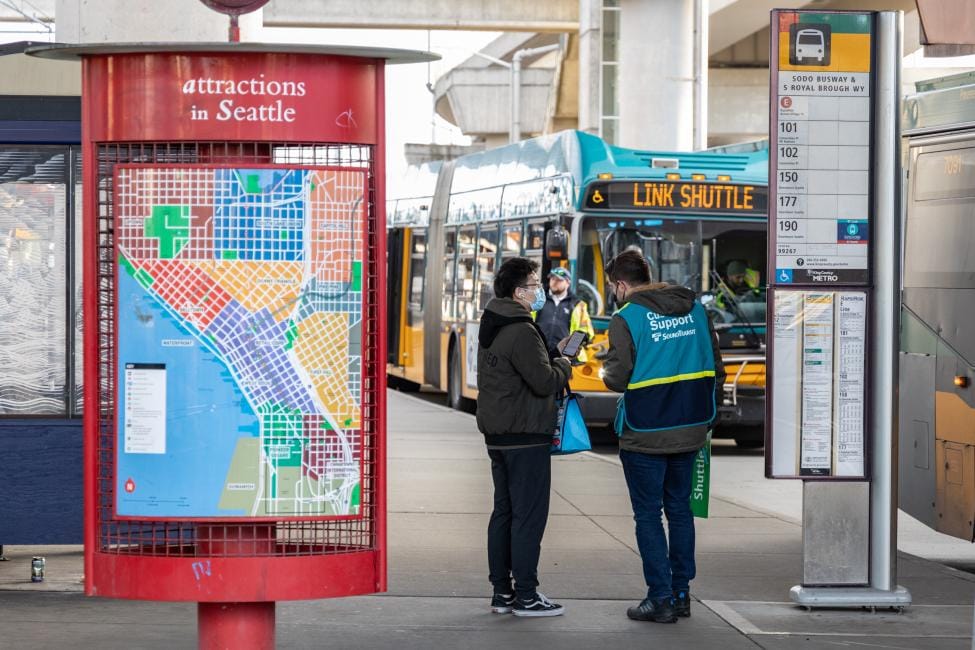
At the REO Committee, Balducci did bring up that rider communication could have been better during the unexpected outage, noting many had reached out to her to share their confusion when the downtown tunnel closed unexpectedly.
"I just wanted to share that I personally got a whole bunch of feedback about wayfinding in the aftermath of a major unplanned disruption like that," Balducci said. "People not knowing how to get to the shuttles, and so I would love to hear some more here today, if possible, about what happened and sort of how we can upgrade our standards for making sure we have immediate announcements of delays, how long they're going to be, if we know what the cause is, and then how to get to a shuttle easily."
Constantine did acknowledge some room for improvement on that front.
"We are quite rigorous in our processing of lessons learned," Constantine said. "And we are continuing to build the agency's capacity for continuous improvement, so that each time we have something that arises that's unusual, we can learn from it, and we can make the experience better for our passengers. And this is certainly one of those events where we have opportunities to learn more and improve."
Derailments are very rare in Sound Transit's system. Lindblom reported the incident earlier this month was only the second known derailment that disrupted passenger trips since service began in 2009.
Another incident on August 10 in Rainier Beach was initially reported on social media as a derailment, but turned out to be a track switch issue that did not result in a derailment. The issue led to a comparatively short service disruption while the switch was investigated.
Sound Transit does periodically run staff through simulations to prepare them for emergency situations, including derailments. Andrea Trepadean, Chief Safety Officer at Sound Transit, described such training exercises at a REO Committee meeting in December.
"We do emergency preparedness drills and exercises, and part of those drills and exercises we do simulate self evacuation of passengers," Trepadean said at the time. "When we have those drills and exercise and there is a self evacuation, what we're focused on is the communication and the recovery of the scene and the safety of the passengers. Referencing the event on Sunday where the Sounder passengers self evacuated, the safety of the passengers was the conductor's focus. The conductor immediately pivoted to protect those passengers by making sure we had all train traffic stopped and the tracks were protected with a track block, and we had personnel activated responding to assist with a large-scale self evacuation of passengers."
Sound Transit simulated a derailment as part of preparation to launch the Federal Way Link Extension in December.
"We recently did an exercise on our Federal Way Link Extension," Trepadean said in December. "It was a full-scale exercise that we performed on October 25 and this was part of that simulation. The first responders involved in that exercise knew the general theme of the exercise, which was a simulated train derailment."
Of course, running a simulation or two does not always mean that the agency's entire apparatus is ready to seamlessly pick up the slack when a derailment happens... say near midnight on Saturday with droves of Ed Sheeran fans emptying out of a stadium to find the light rail station is suddenly shut down.
One theory for the spate of outages is that the agency was pushing the system so hard (including temporarily suspending its monthly maintenance program to squeeze out more capacity) during a ridership-heavy month buoyed by the local World Cup matches that maintenance issues piled up. According to the agency, World Cup traffic wear and tear did not relate to any of the recent service disruptions.
A draft agency service plan does look at expanding maintenance windows across the light rail network by shortening service spans at certain times.
"To your questions about maintenance windows, we are currently in the early stages of developing the 2027 service plan, and are seeking public feedback on the possibility of additional time for maintenance," Bendon said. "This would build on the success we’ve been seeing with our monthly maintenance program, but is entirely unrelated to your question about World Cup ridership."
 Doug Trumm
 Stephen Fesler