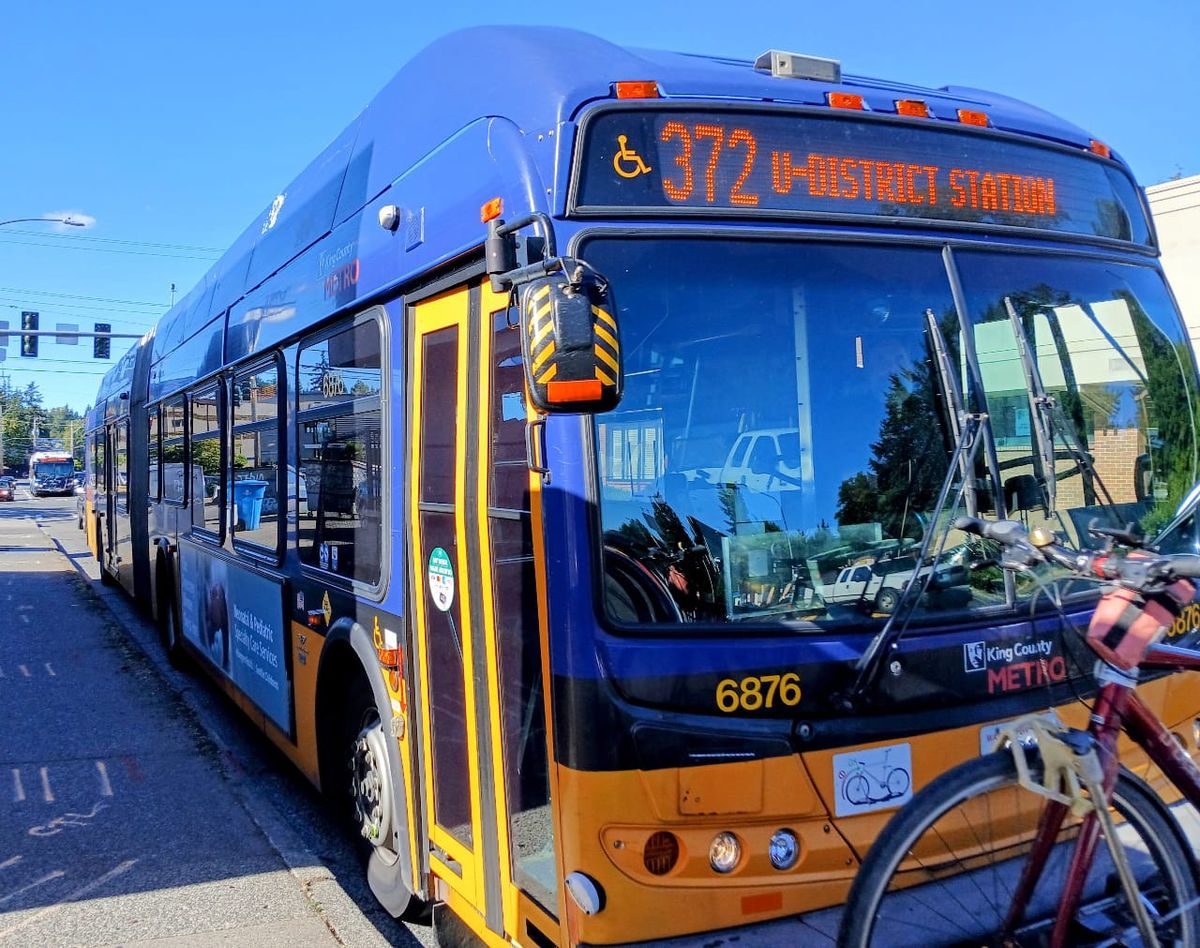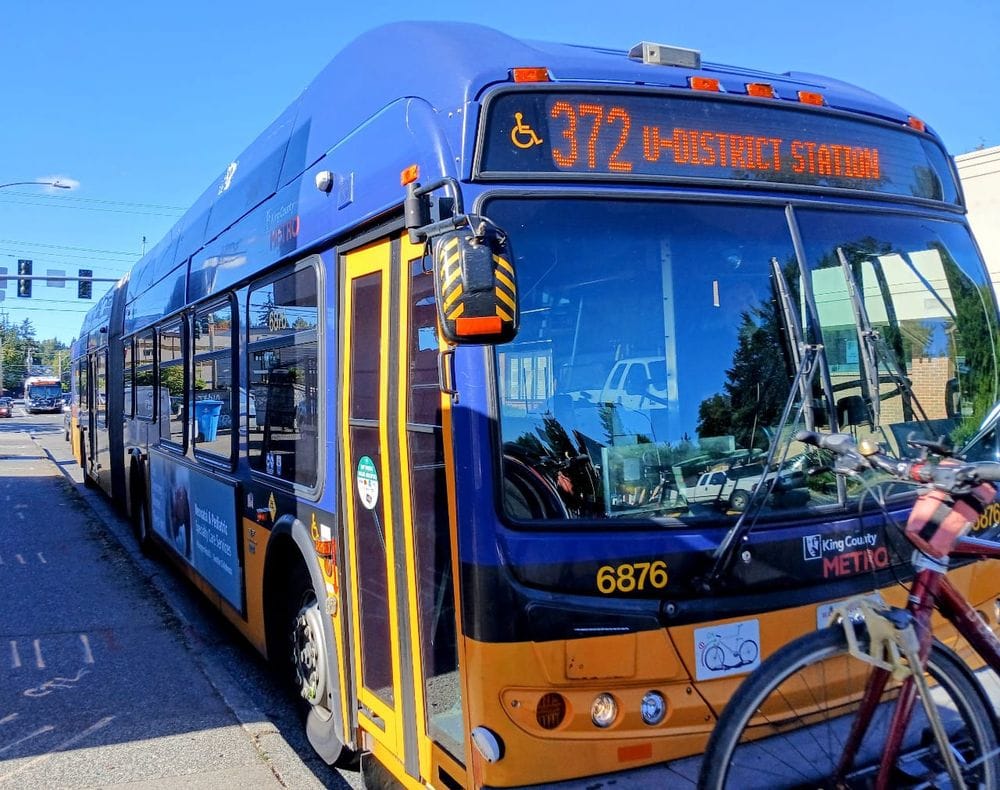
The King County Council ultimately did not consider an emergency ordinance put forward this week to retain King County Metro's Route 372 between the University of Washington and Bothell, a move made in response to rider concerns around degraded transit service if the route is retired as planned next Saturday. The ordinance, put forward by Councilmember Rod Dembowski, will instead be sent to committee for additional deliberation.
Advancing legislation directing changes to a specific bus route just 11 days before Metro's major fall service change was an extraordinary step for Dembowski to take, unprecedented in recent memory. If the ordinance had been adopted as written, it likely would have forced the state's largest transit agency to upend plans that had been in place for months, diverting operators from new routes that are planned to be launched in Northeast Seattle on August 29 back to 372 service – a very long and expensive route for Metro to operate.
Dembowski was responding to calls for a rethinking of the 372's retirement that have come from a broad array of groups, including the city councils in Bothell, Kenmore, and Lake Forest Park. The 372 is a highly used route, but most of the ridership occurs south of Lake Forest Park's city boundary at NE 145th Street, with riders in Lake City able to use the new Route 72 and 77 to access more destinations than they could previously.
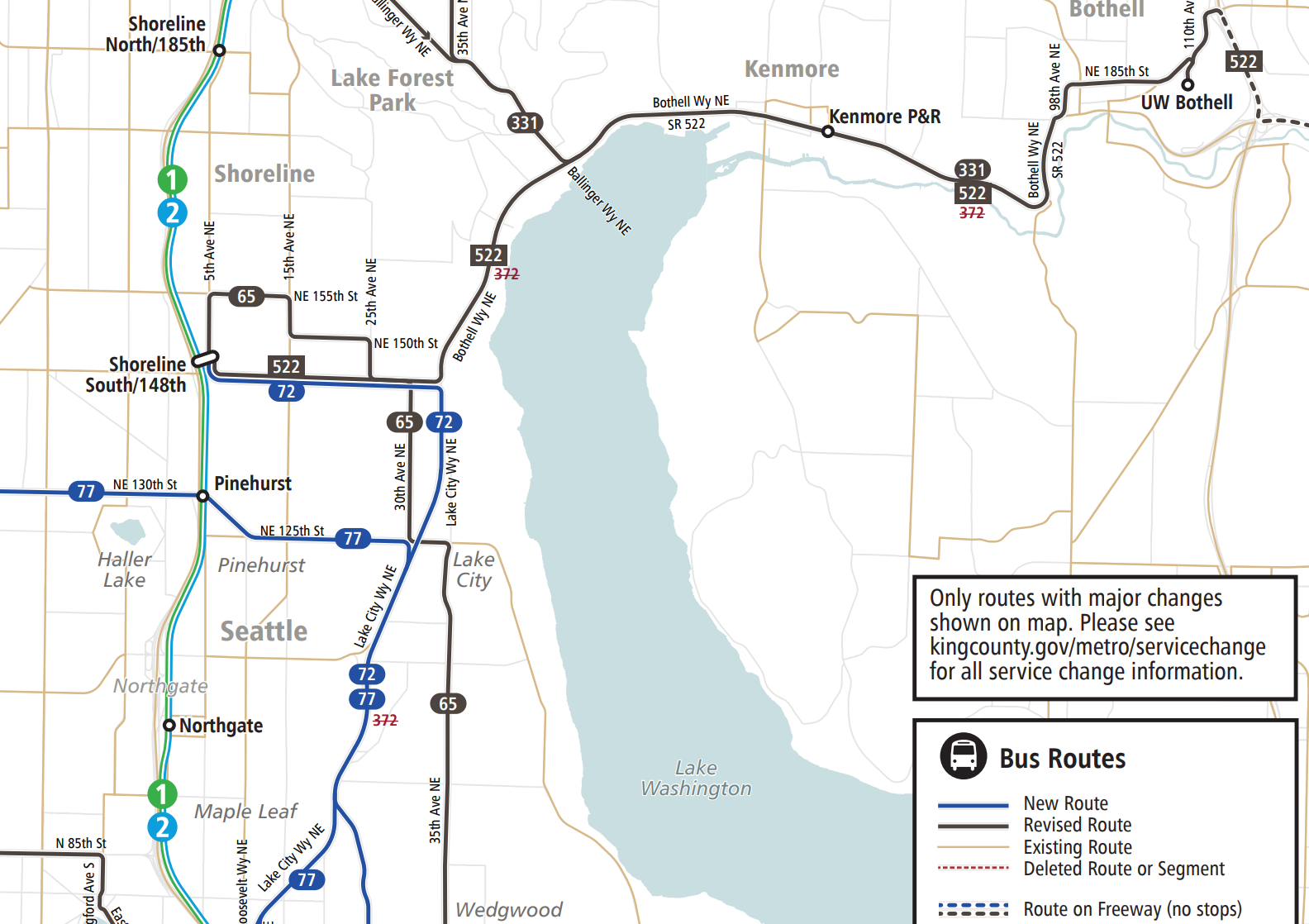
The new routes comes at the cost of losing a one-seat-ride directly to the heart of the UW campus from Lake Forest Park, Kenmore and Bothell. In addition, issues have been raised about the loss of bus frequencies along Bothell Way north of NE 145th Street, and the transfer environment for riders changing buses at that specific intersection.
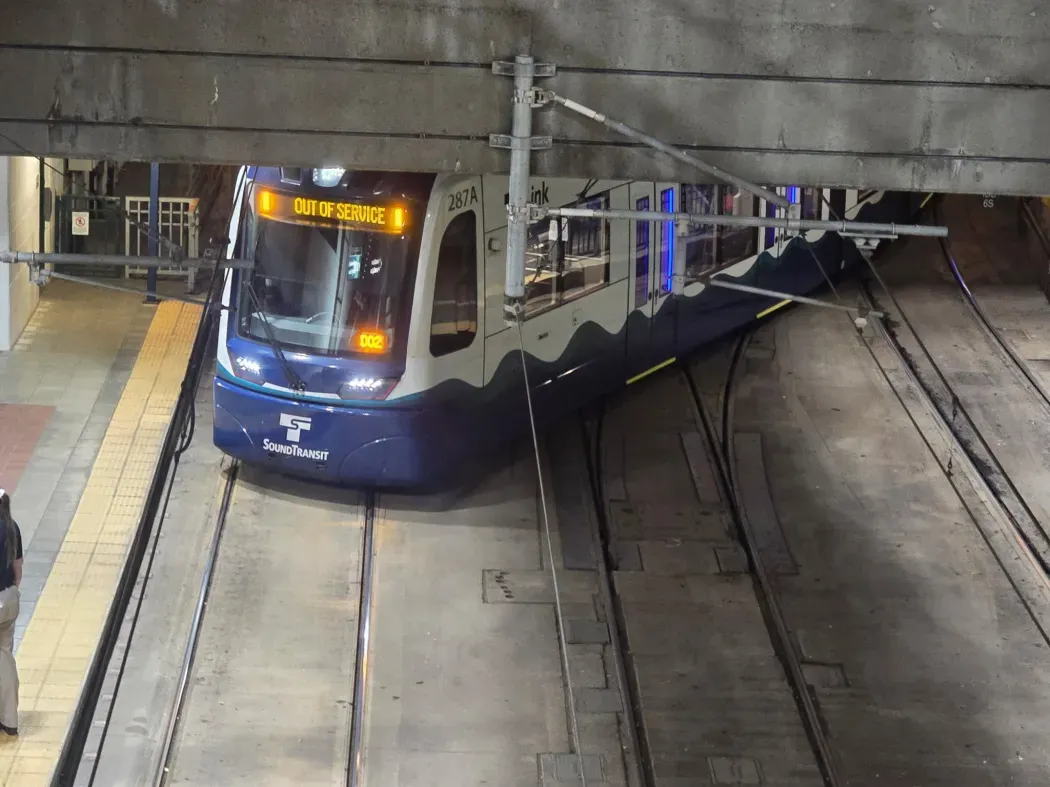
Anyone trying to switch between the new Metro Route 72 and Sound Transit's 522 – now set to terminate at the Shoreline South light rail station rather than Roosevelt – will have to cross the wide and dangerous state highway, or add time to their trip by transferring at the light rail station itself.
"I've done a lot of service changes, and when you eliminate a route, it's usually not very popular. People don't like to see their routes go away, and sometimes it's hard to see the replacement routes. But this one has caused quite a bit of challenges," Dembowski said in explaining the ordinance's impetus Tuesday. "I thought perhaps there might be, given the great interest in the route, a pause, an administrative pause, and they might need a legislative companion to endorse that."
A spokesperson for King County Metro told The Urbanist that an administrative pause was not planned.
"Metro is moving forward with the planned route changes on Aug. 29. We are focused on helping riders and communities navigate the new changes including with updated customer information, rider alerts, street teams, and customer information sessions," Metro's Jeff Switzer said. "There is no lost coverage as new routes replace Route 372, and there will be more service provided where the majority of ridership on the current Route 372 occurs."
Switzer provided screenshots of a travel time estimate provided by Google Maps, showing that a trip from UW Bothell to Stevens Way on the UW Seattle campus would actually be quicker with the new routing of the 522, going from around an hour exactly to 56 minutes.
Ultimately, Dembowski's ordinance looked to be more of a symbolic move than a real proposal.
"I'm not asking for a vote here today because it's not practical the way we run routes. You know, routes are picked by our drivers. You've got to have the equipment to run it. There's a lot that goes into a service change, but I did want to take a few moments to just acknowledge that this is a difficult change for the community," Dembowski said.
Direct interventions by county councilmembers into routing decisions at Metro used to be much more common, but in recent years the council has largely deferred to the agency's planners, making decisions based on a set of adopted service guidelines. That technocratic shift cuts both ways. Some councilmembers have appeared frustrated when Metro officials point to the fact that route restructures are council-approved as a reason why their options to mitigate negative impacts are limited.
"Changes to the 372 and associated routes went through years of community engagement, and the project’s Mobility Board - a group of residents who live, work, or travel in the project area – twice evaluated this route change at different phases of the planning and engagement process, selecting both times to replace Route 372 by creating the new 72 and combined service provided by Sound Transit Route 522/Stride, in order to use available public transit resources to address priority needs in these communities," Switzer said.
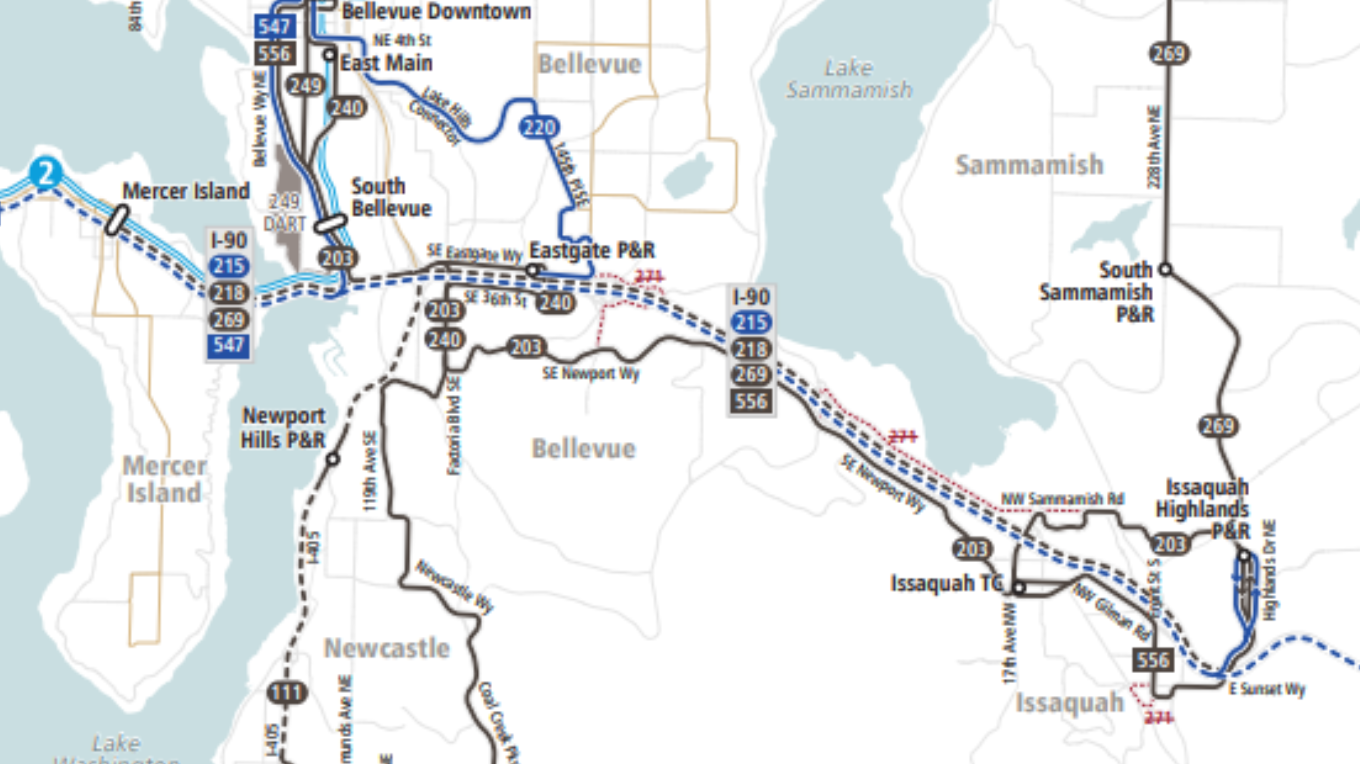
Riders in Lake Forest Park and Kenmore aren't the only ones that are set to see less transit service than they currently do after this month's restructure. On the Eastside, the problem may actually be more acute, with several areas no longer included in Metro's fixed route network in the wake of the full East Link Connections project, the second phase of which goes into effect next Saturday.
Hours before Dembowski's ordinance had been queued up, the county council's transportation committee discussed the receipt of a new report outlining the gaps created by that restructure, which reoriented bus service around new light rail stations in Mercer Island, Bellevue, and Redmond. The report, requested by Claudia Balducci via the county budget and delivered in April, ultimately confirmed that riders in the Woodridge, Crossroads, and BelRed areas of Bellevue have been shortchanged by the bus routing changes.
Next week, riders around Eastgate who are able to catch buses to Downtown Bellevue or Eastgate Park and Ride will also be included in that list with the elimination of the Route 271.
"What [East Link Connections] ultimately did [...] is dramatically improved frequencies around and to the light rail in certain corridors, increased service geography. It spread out service to new areas that hadn't received service before. But what we also did was we unintentionally created several new transit deserts, mostly in East Bellevue, which is one of the highest equity score areas in all of East King County, and that can't be what this was about," Balducci said this week. "This was about the introduction of major new transit service and how we were going to make that work best for the riders in that area."
The common thread between Lake Forest Park and Bellevue is a transit agency dealing with resource constraints when designing route restructures. This can cause a negative feedback loop where Metro isn't able to fully provide transit access or proper frequencies, depressing ridership and leading to decisions to reallocate service elsewhere.
While the pending network changes will add frequency and create new direct connections that will help countless riders access their destinations, the gaps that are being created also deserves attention – but probably not in the form of an ordinance blowing up a network restructure a week-and-a-half before it's set to be implemented.
 Ryan Packer