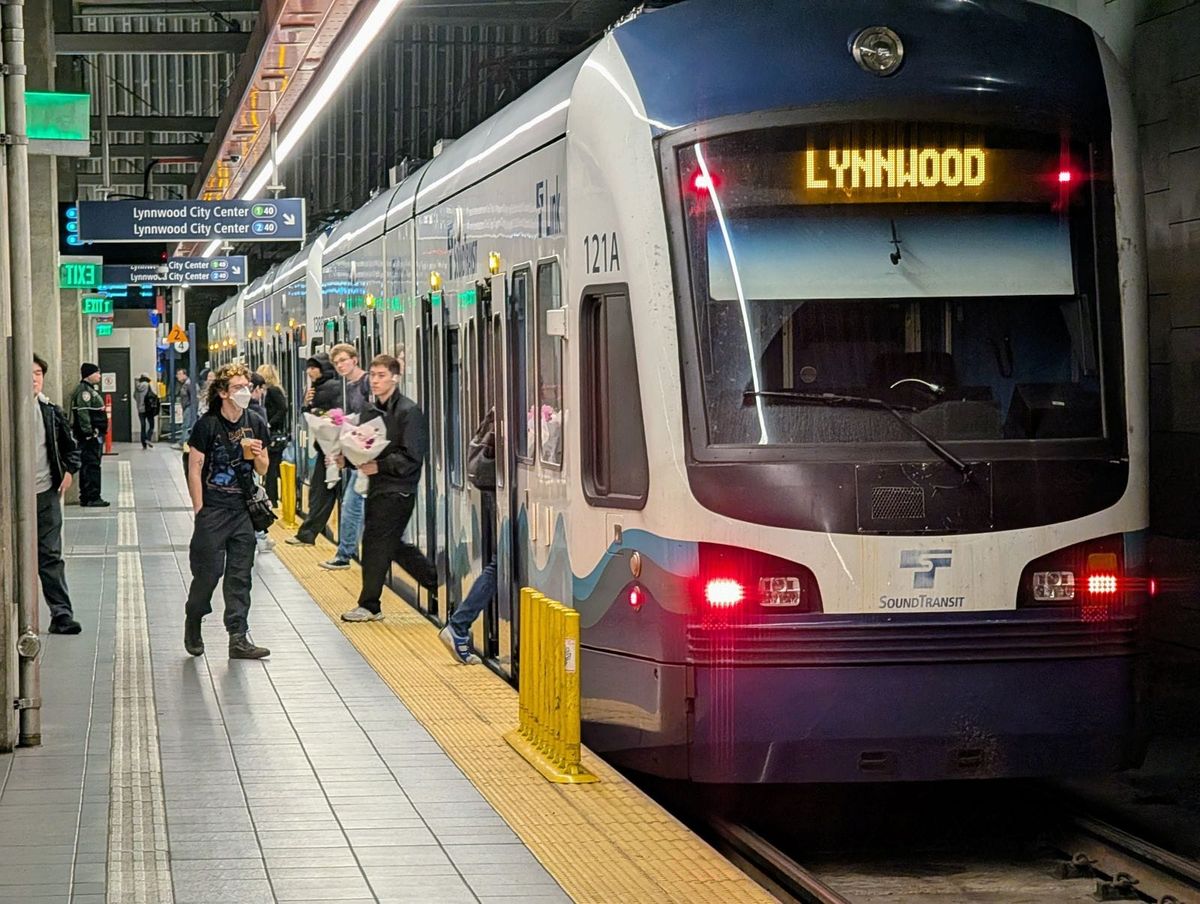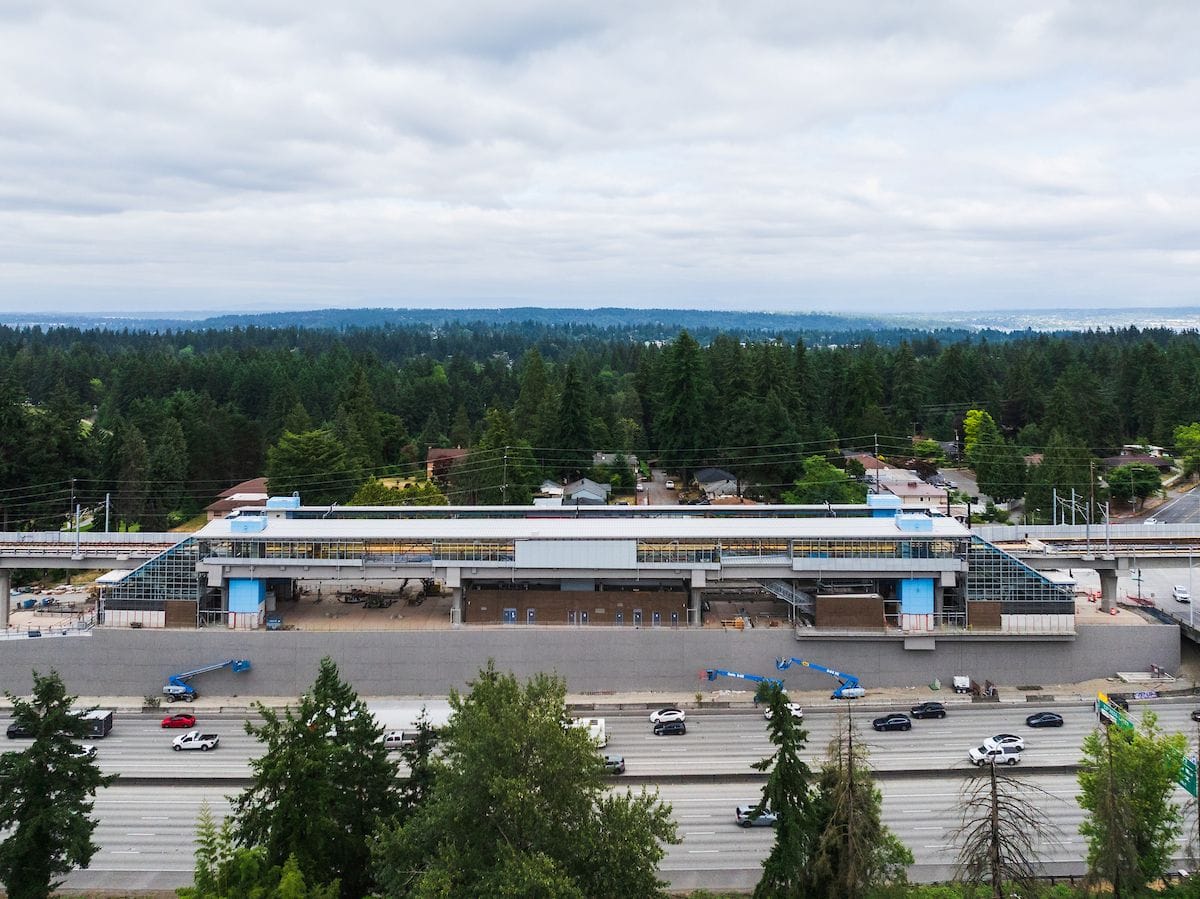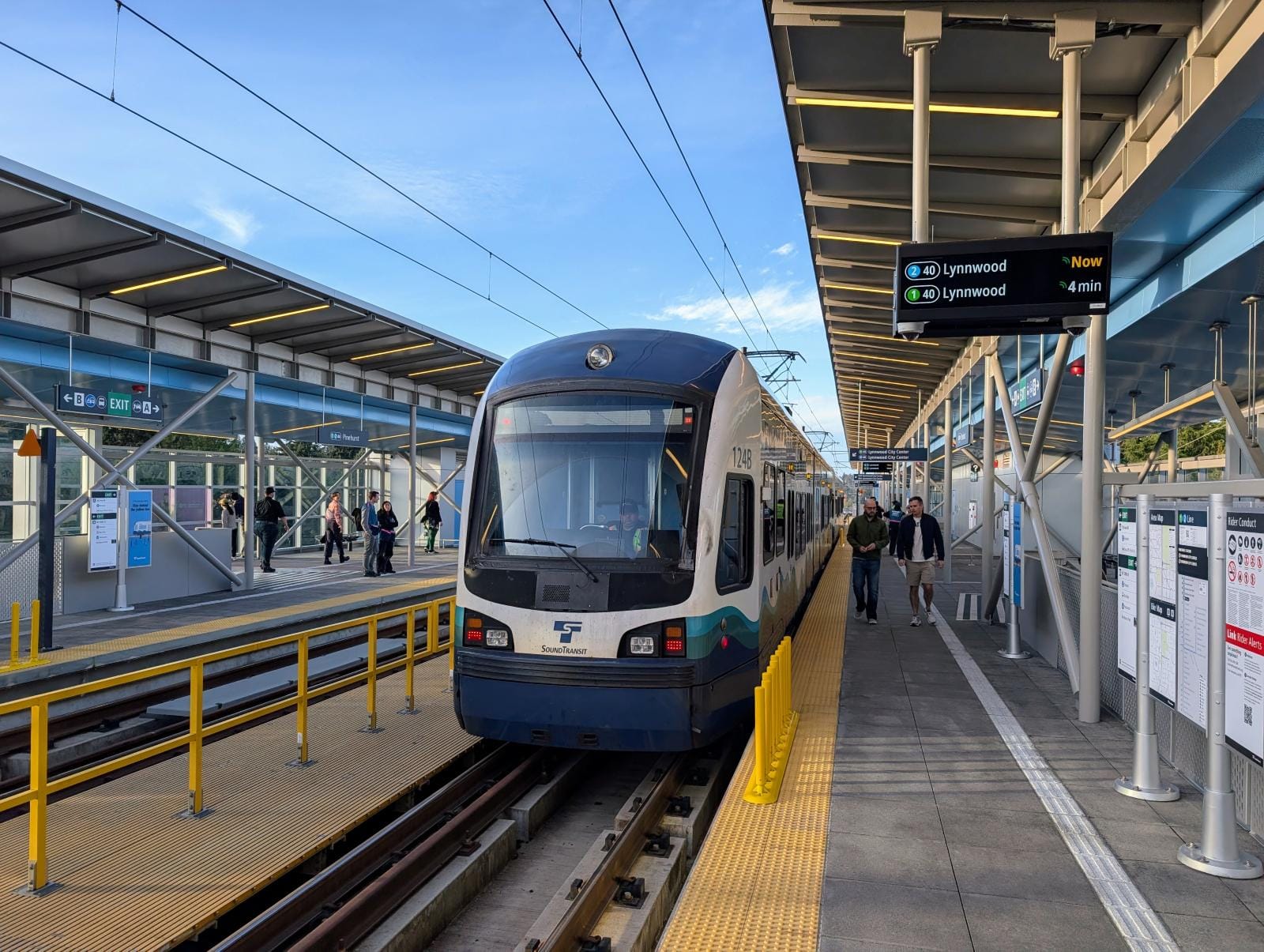
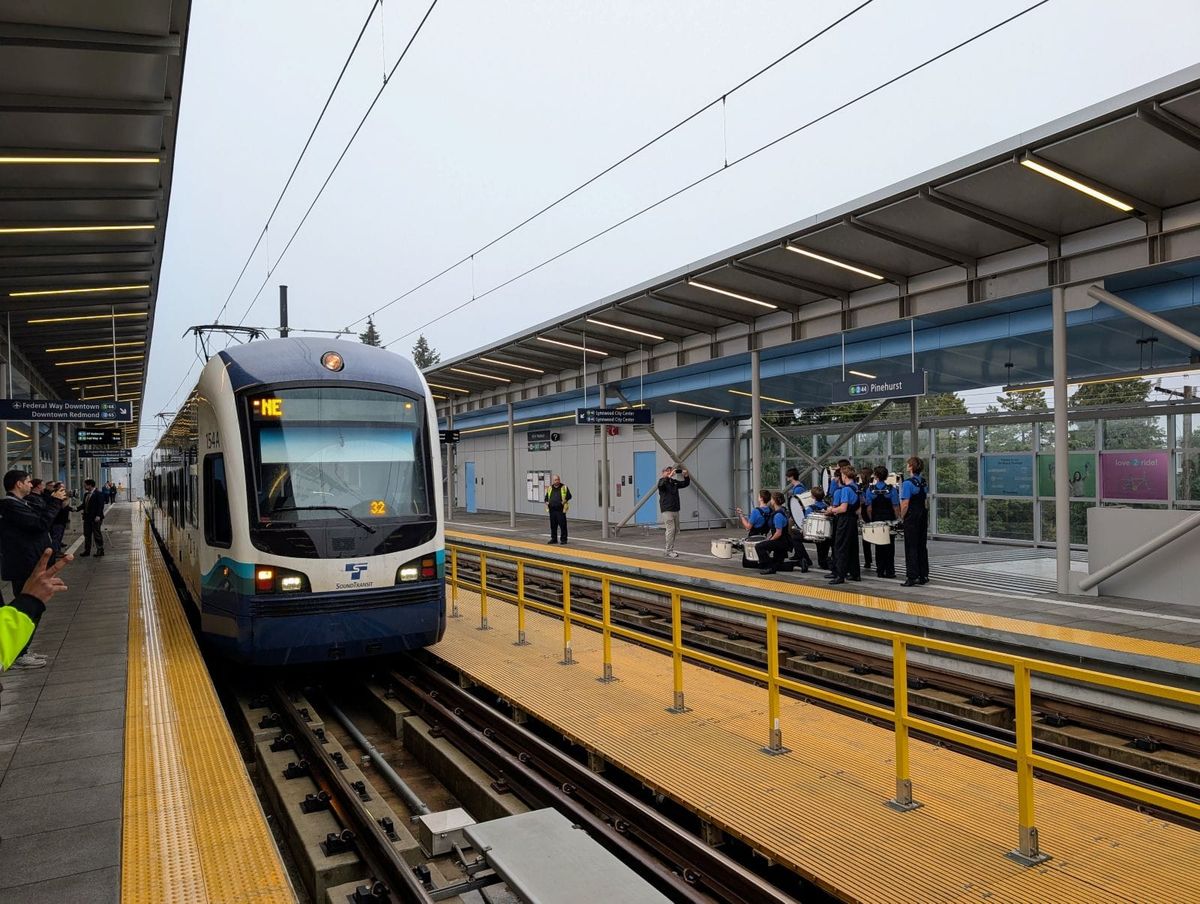
After Sound Transit inaugurated service on September 30, the Pinehurst infill light rail station in North Seattle averaged a measly 1,034 daily boardings in October, according to the agency's ridership dashboard. That makes it the least used station in the entire 1 Line corridor.
The initial figure is below even the low-end ridership modeling that Sound Transit produced, which showed Pinehurst would attract 2,600 to 4,200 boardings daily by the year 2040. Granted, Pinehurst has 14 years to hit its 2040 projection, but it does have a long way to go.
The busiest station, Westlake, averaged more than 17,000 daily boardings in October, and the entire corridor saw just over 155,000 daily boardings across 27 stations. The median 1 Line station has averaged about 4,000 daily boardings.
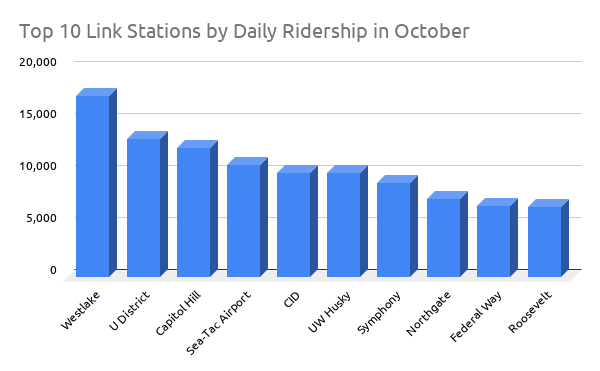
Pinehurst's October ridership did exceed seven of the 12 stations that serve only the 2 Line, which has also struggled to build ridership momentum on the Eastside. Bellevue's East Main is the least used light rail station in the entire system, with just 487 daily boardings last month.
Pinehurst is sandwiched between two far more popular stations. Northgate averaged nearly 7,500 daily boardings in October, while Shoreline South (just north of Pinehurst) averaged more than 3,600 daily boardings.
Pinehurst is last among 27 stations on the 1 Line – at least so far. A number of transit advocates warned the station's ridership potential was at risk, as the Harrell administration dragged its feet and ran into legal appeal hurdles as it attempted to rezone the neighborhood surrounding the station.
Rezoning the golf-course-oriented, largely single family neighborhood to encourage apartment development has been part of the pitch for Pinehurst Station from the inception of the grassroots campaign that willed the station into existence. While the station has been funded since the 2016 Sound Transit 3 (ST3) ballot measure, the rezones have been mired in the Seattle Process.
Sound Transit CEO recently appeared on KUOW's Soundside program and was interviewed by David Kroman and Libby Denkmann. They brought up the issue of low ridership at Pinehurst Station.
"Both Libby and I actually ride past the station a few times a week. I have to admit we have made a little bit of a game of counting how many people actually get on and off there," Kroman said. "I think we would both agree that it has been pretty sparse, as far as we can tell. You know, when you look out [from the train], all you really see is I-5, a few single-family homes, a golf course. Do you think more could have been done here, both by the City of Seattle and Sound Transit, to prepare for that station to open?"
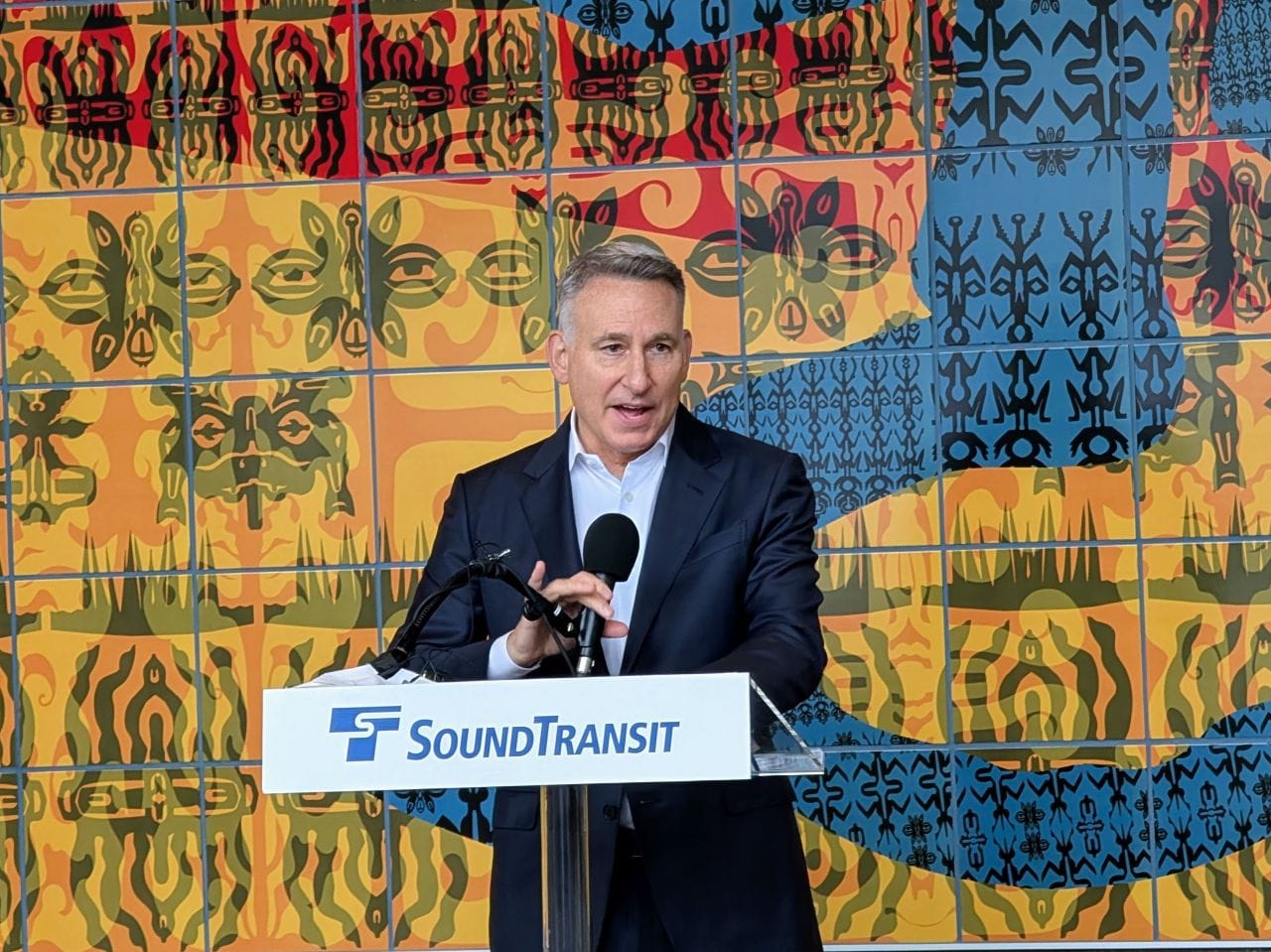
Constantine did not take the bait, hewing to a 'if you build it, they will come' line for the station, which carried a budget of $240 million.
"Well, I think, along the way, there are stations with a lot of built-in ridership and stations with less ridership that are about mobility for the people who live close," Constantine said. "And some of those stations with less ridership become centers for growth later, right? And I think this is going to be one of those stations."
The agency CEO alluded to the Pinehurst rezone plan working its way through the process, as he noted some other station areas have transitioned from sparsely populated to dense and bustling.
"The City of Seattle is looking at their growth plans around there, their zoning around there, the incentives they can provide around there for people to create housing," Constantine said. "If you look at our stations up and down the line, our new stations, you see apartment buildings, condominiums going up all over the place by the thousands, and that will happen at Pinehurst as well. So I'm absolutely confident that we're going to see increased ridership at that and other similarly situated stations over time."

At the ribbon-cutting ceremony for Pinehurst, Seattle Mayor Katie Wilson echoed Constantine's optimism, which acknowledging the delay and expressing resolve to see the rezones though, which she has also sought to augment with her Taller Faster Denser Plan.
"This is not just a station; it is a spark – a spark for long-term transformation in the newly designated Pinehurst-Haller Lake Urban Center, where we will see more homes, shops, services, parks, and walkable streets, all connected to great transit. That's what it's all about," Wilson said. "Sometimes we build transit where lots of density already exists, and sometimes we build transit, and we're able to welcome people around them."
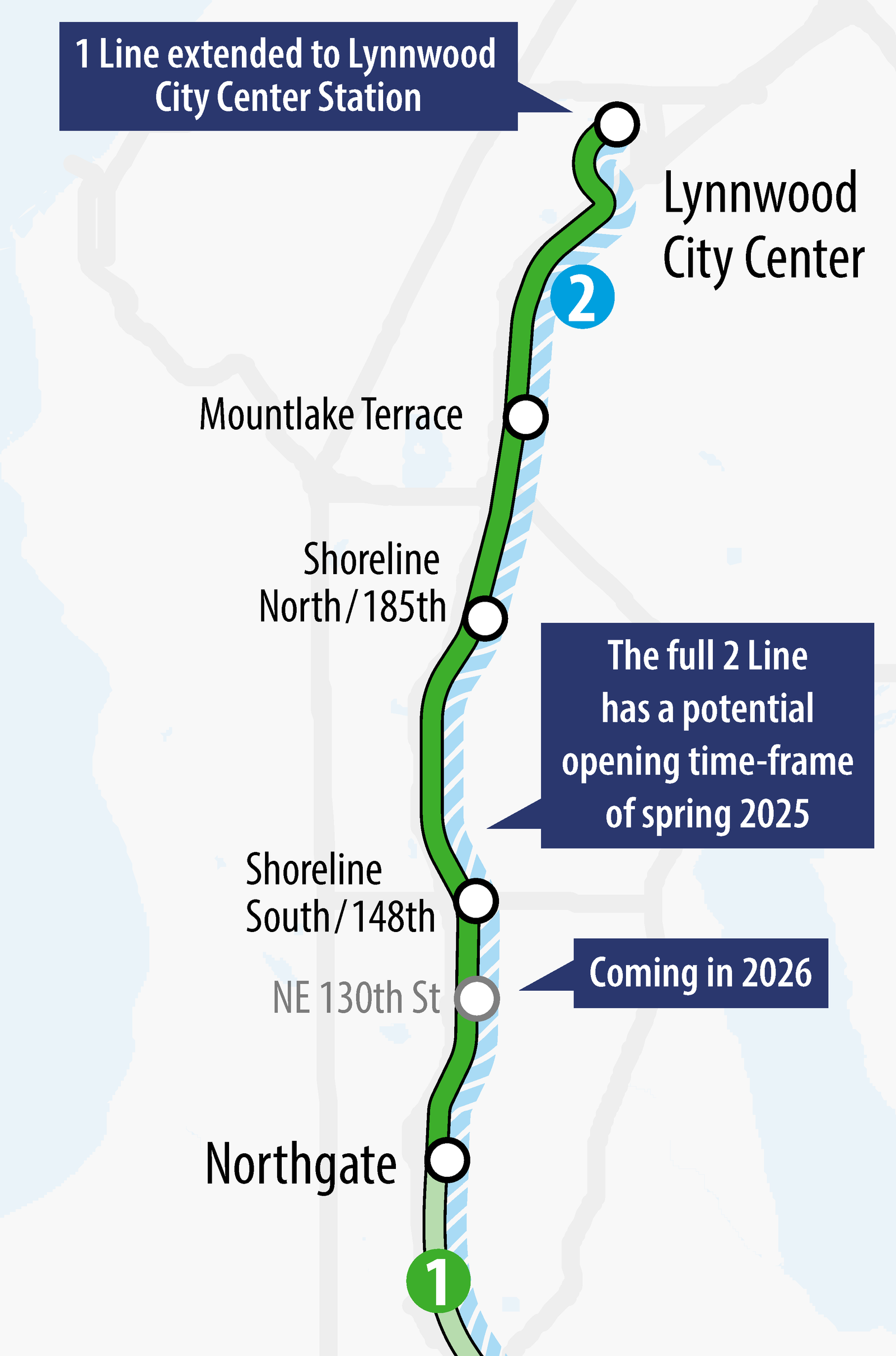
Constantine and Wilson could have a point based on the path some other stations took. Shoreline South managed just 1,020 daily boardings in its first full month of service – very similar to Pinehurst – but it's more than tripled ridership in the two years since. Shoreline North and Mountlake Terrace took a similar course of steady ridership growth. (On the other hand, Lynnwood City Center's ridership has fluctuated widely, but its level is now similar to when it launched, hovering around the 4,000 daily riders mark.)
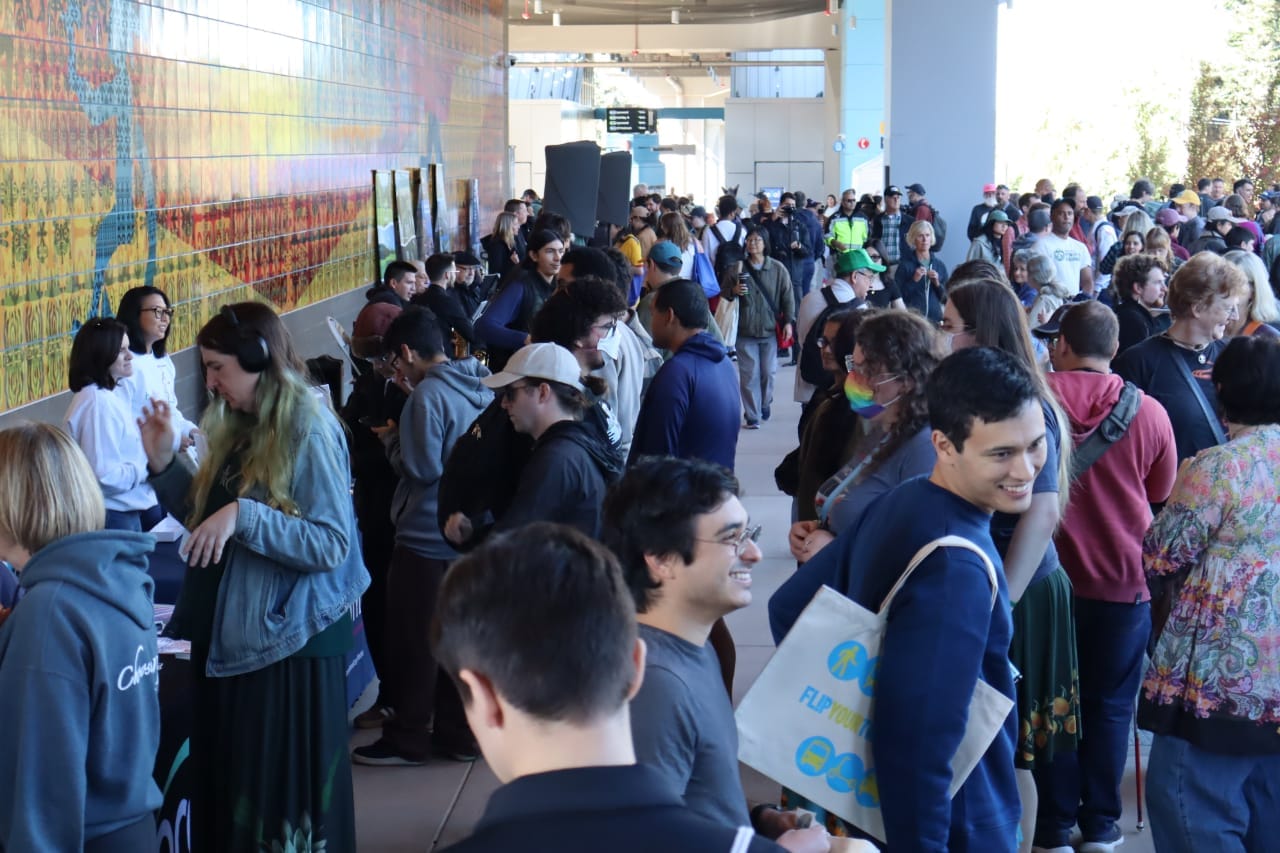
That said, ridership growth at each of those locations was buoyed by fairly ambitious upzones that had been put in place before the stations opened, which allowed large apartment complexes to come online near the station opening date. Seattle, on the other hand, is playing catch up after pushing the agency to accelerate the infill station opening, while failing to keep rezone plans on course, despite facing some pressure to do so.
In 2023, former Kenmore Councilmember and Sound Transit Board Member Dave Baker criticized Seattle for not rezoning the Pinehurst neighborhood sooner as Mayor Bruce Harrell and other City officials pushed the agency to accelerate the station's opening.
“I’m sorry Mayor Harrell, I’m not trying to throw stones, but it’s just reality that they’ve had the opportunity to increase zoning in the area to make it more transit-friendly, but it’s still not done,” Baker said. “They’ve had since 2015 to fix the zoning, and it’s now 2023 and the zoning has still not been fixed. I would love to see a successful station… and the system to be as functional as it can. Everything else seems to be happening except this one.”
Harrell brushed off the comment and spent the next few years failing to keep his growth plan on schedule or to insulate it from legal appeals, while undercutting his planning department's more ambitious vision.
After kicking around more meager concepts, the City ultimately queued up a rezone for the Pinehurst-Haller Lake Urban Center allowing five- to eight-story apartment buildings and ground-floor retail in several swaths of Pinehurst and some more limited areas of Haller Lake, replacing some broad areas of low-density Neighborhood Residential (NR) zoning. Other NR areas are set to become Lowrise 1 or 2, which would likely be most enticing to townhome builders, based on recent development patterns.
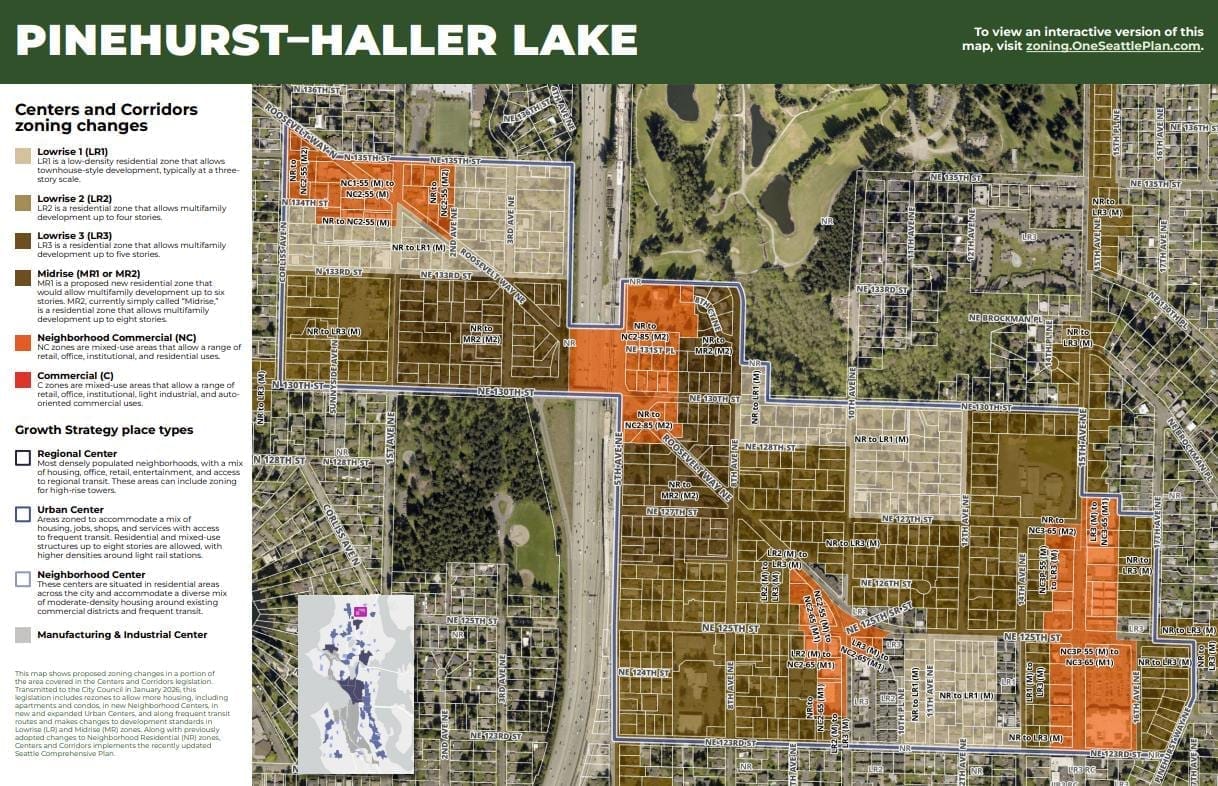
Across the new urban center, OPCD projected its boldest "Alternative 5" rezone would generate about 2,700 additional homes over 20 years. Meanwhile, the City has projected anemic growth without zoning changes, with just 840 additional homes expected over two decades.
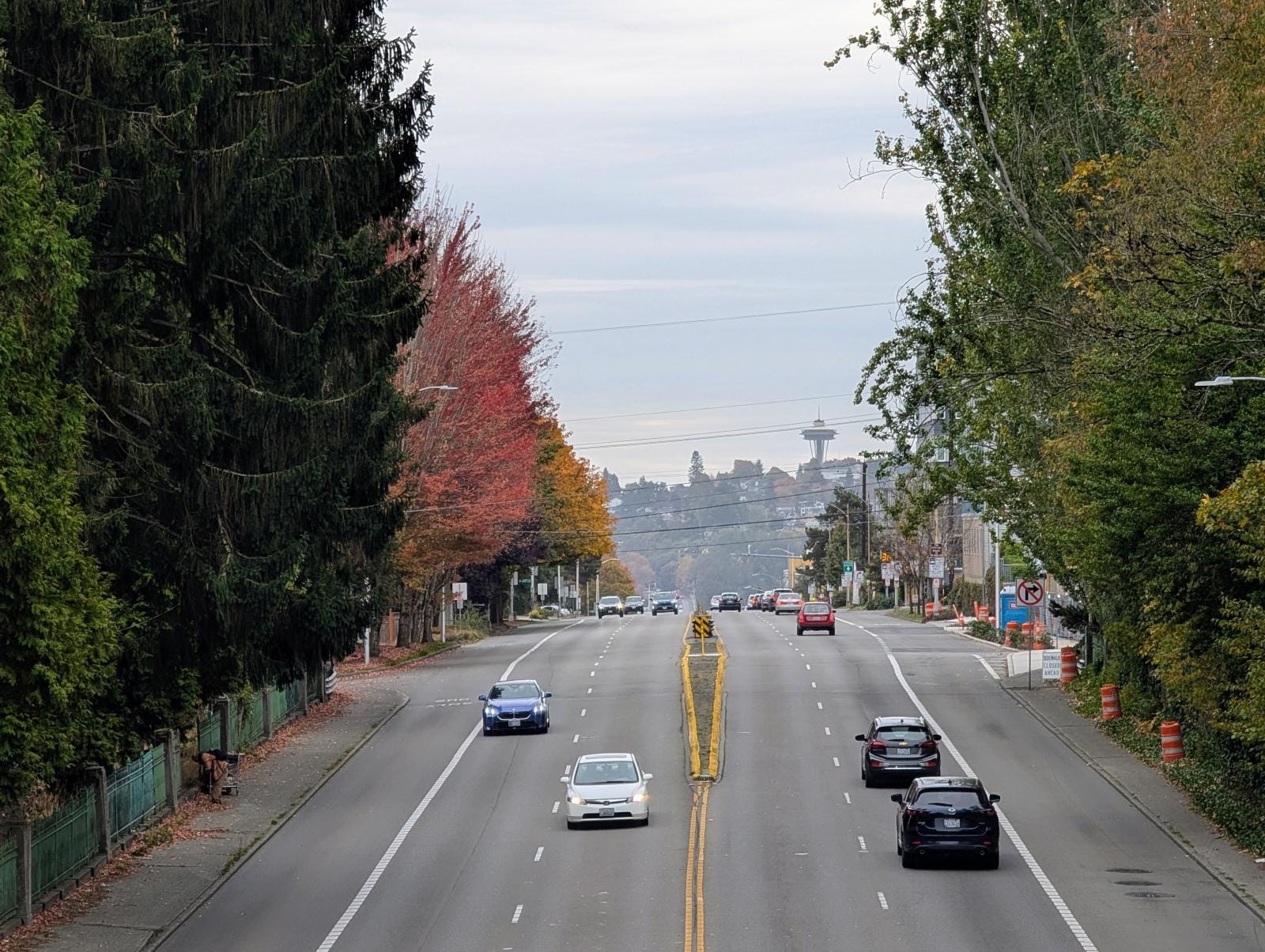
Harrell and his predecessor Jenny Durkan also opposed changes to publicly-owned Jackson Park Golf Course, which advocates had proposed could attract more usage if it incorporated other park uses (or even housing) – instead of remaining exclusively a fenced, fee-for-entry 27-hole golf course. As it stands, the golf course consumes 160 acres next door to the station, interrupting more direct walking routes to reach it.
If the Pinehurst rezone had not been yoked to the City's broader once-per-decade Comprehensive Plan major update, it might have already happened. However, at the time, City officials seemed to deem it expeditious and convenient to piggyback on the outreach and feedback process for the citywide plan, which they originally set out to pass by the end of 2024 to meet state deadlines.
Pinehurst-based organizer Renee Staton, who fought to add the infill station in the first place, said support for rezones has long been strong in the neighborhood.
"There is substantial community support for a rezone and unlike other communities in Seattle, there is no formal opposition effort to rezoning. In fact, many residents are frustrated with how long the station area planning process is taking, considering it started in 2015," Staton wrote in a guest piece in The Urbanist in September.
Staton has pushed Seattle political leaders and officials at the City's Office of Planning and Community Development (OPCD) to complete the rezone work as soon as possible. Alas, 2028 might be the best case scenario.
"I spoke with OPCD on Monday and they are very optimistic that the One Seattle rezone process will start again in mid-2027 (which I hear as early 2028 given budget season and elections). Pinehurst rezone 2028," Staton added in a social media post last week.
Even if zoning were to be put into place, large apartment complexes often take three years or more to go from a permit application to a completed building, assuming builder interest is immediate – which isn't always guaranteed in a neighborhood more or less starting from scratch on urban development. The broader One Seattle rezones will include opening up many other areas of the city, with some more amenity-rich areas likely more attractive to builders.
In other words, significant amounts of development likely won't be arriving in Pinehurst until the 2030s. A botched neighborhood growth plan can be rectified, but it does take time.
 Ryan Packer
 Doug Trumm
 Doug Trumm