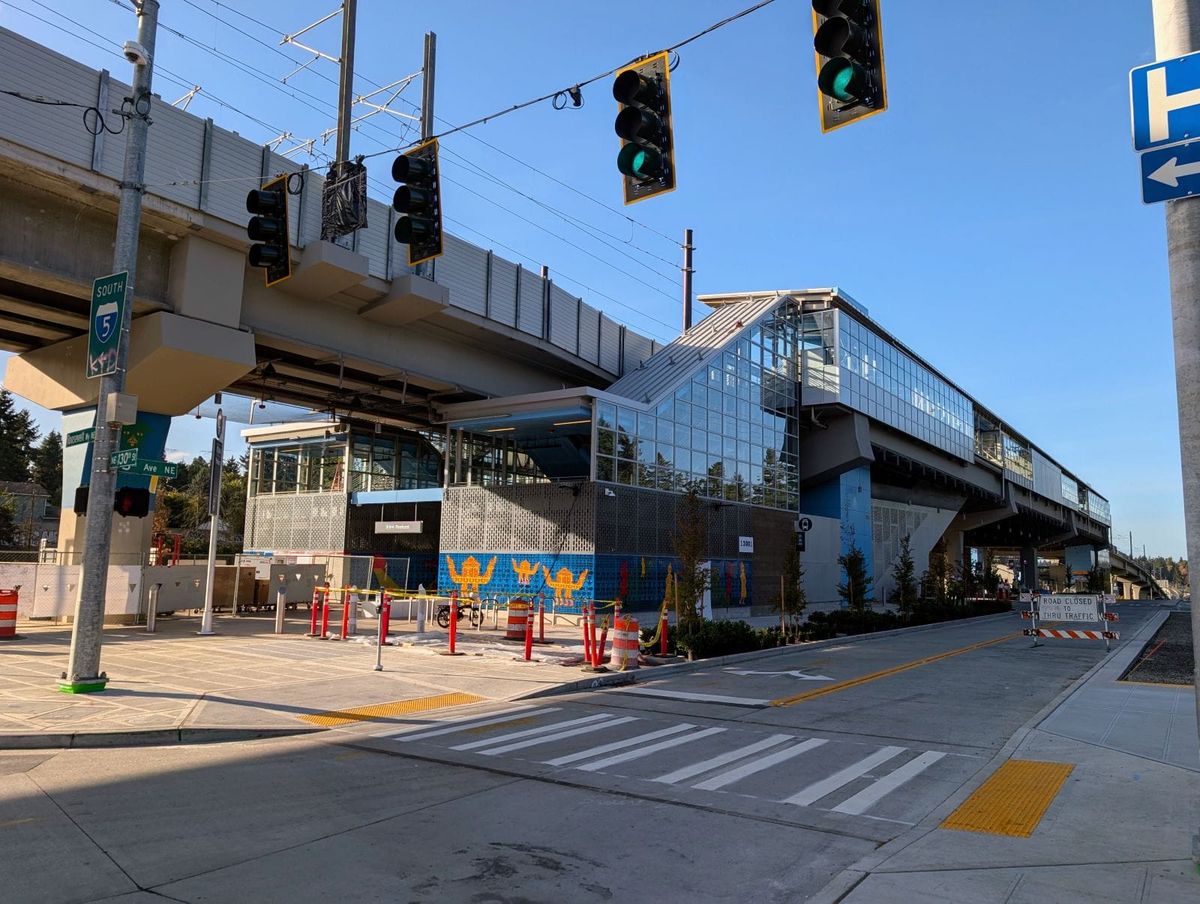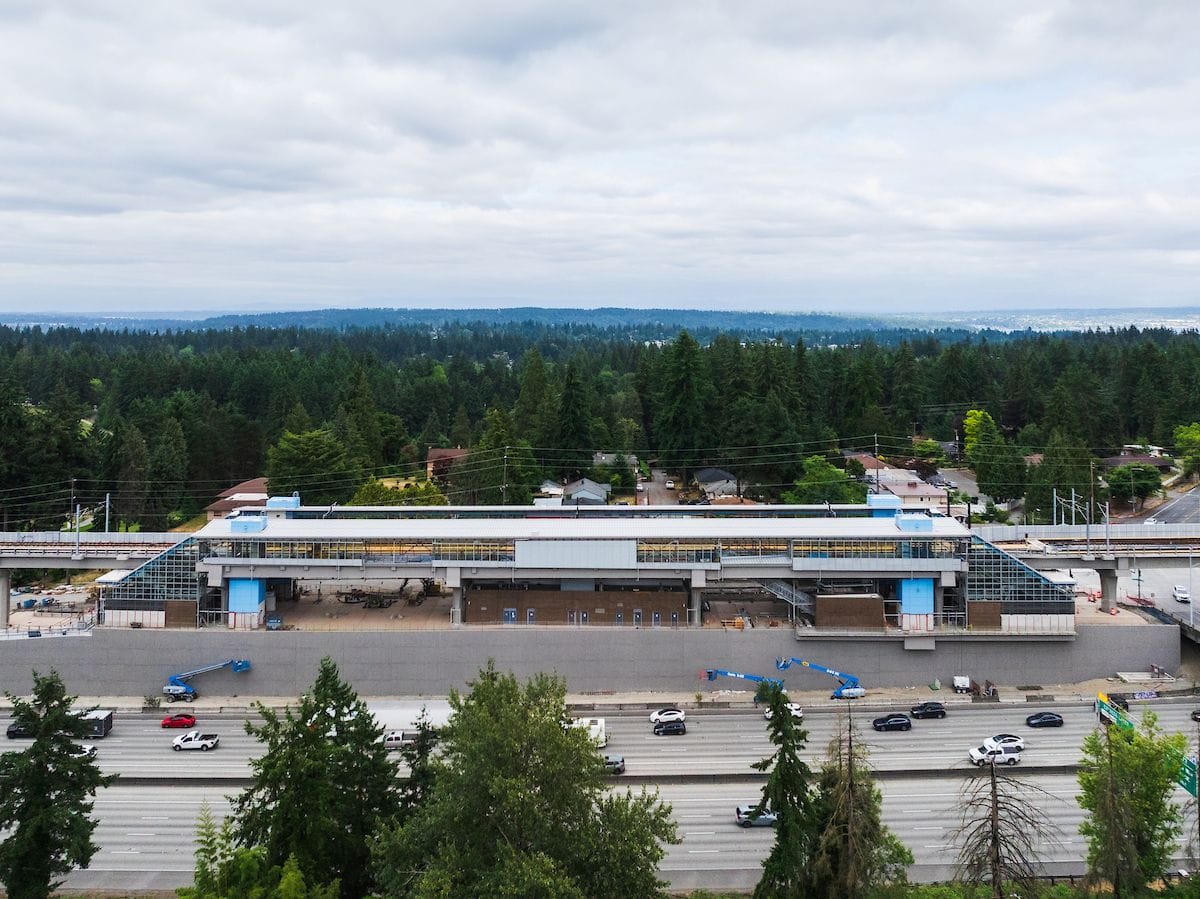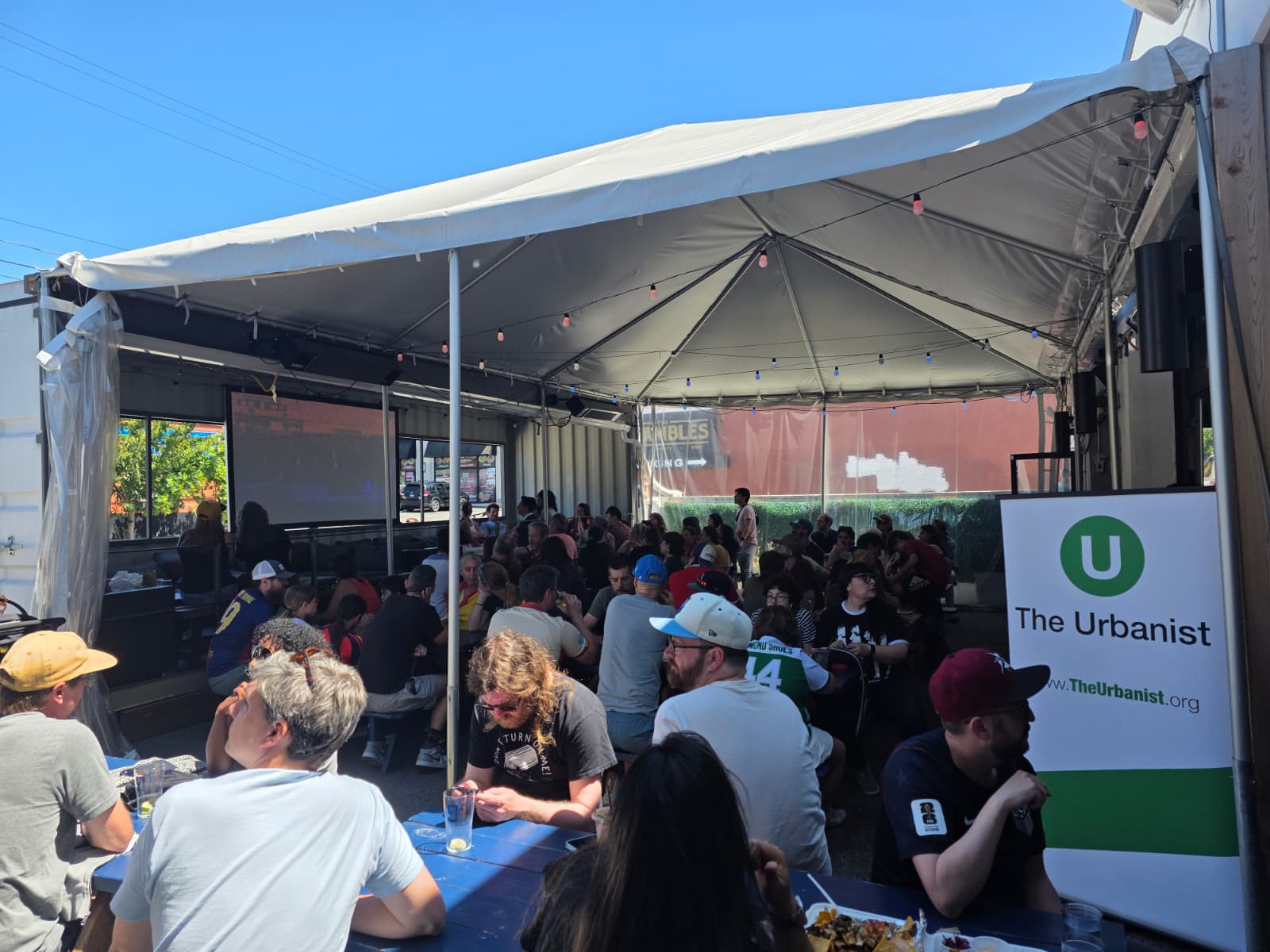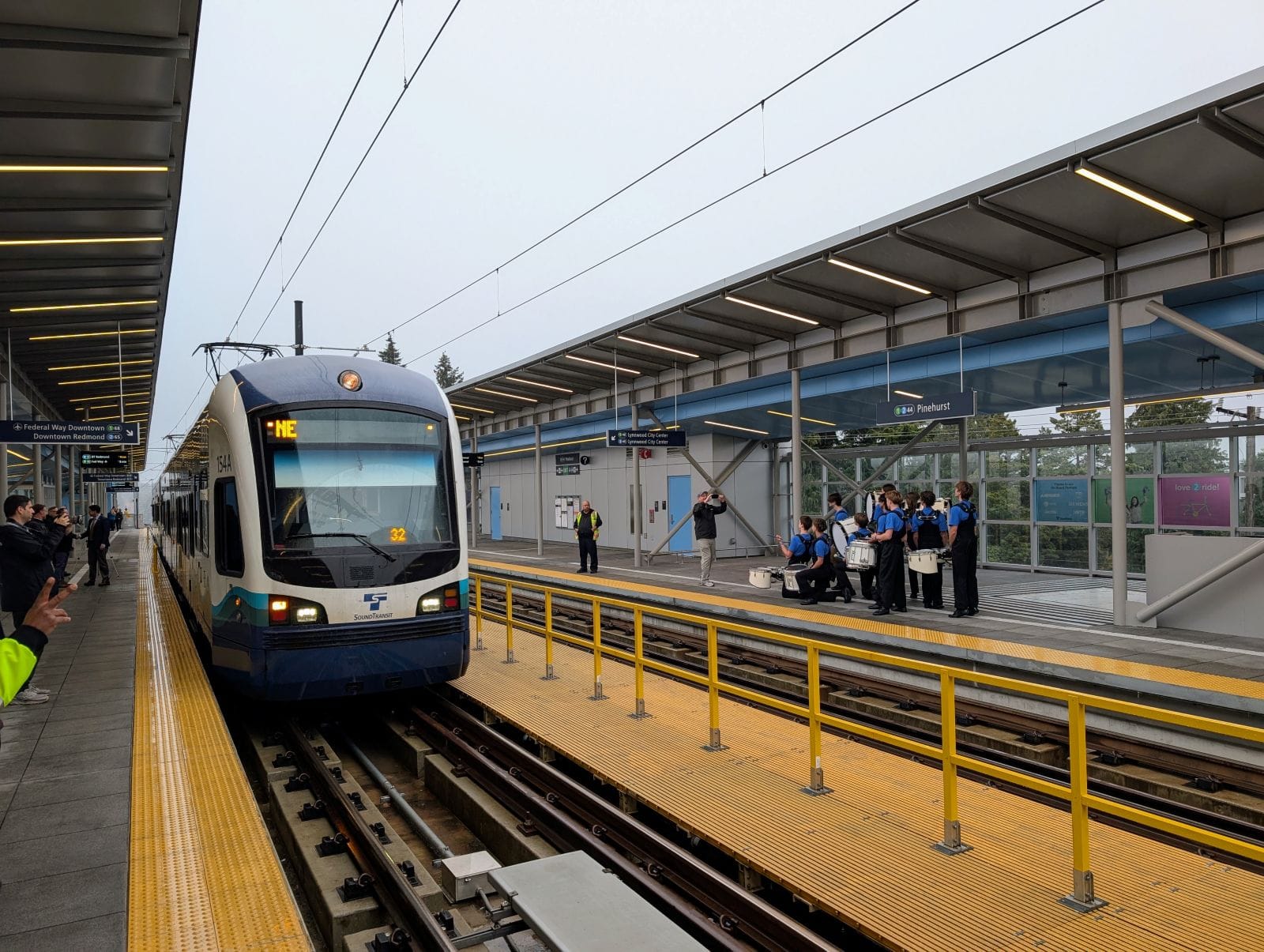
Today, Pinehurst Station is officially a stop on both the 1 Line and 2 Line, bringing another Seattle neighborhood into the fold of the region's growing light rail system. Trains began stopping at Pinehurst bright and early at the start of service: 4:57am to be exact.
The Urbanist's Fall Member Drive is in final stretch! Support our work, read ad-free, and help us blow past our goal!
Pinehurst's opening day arrived five years sooner than the Sound Transit 3 (ST3) ballot measure pledged in 2016. The station's arrival and accelerated timeline is thanks to a concerted push from Seattle activists and leaders. Local organizer Renee Staton recounted that journey in a recent guest piece in The Urbanist.
The infill light rail station had been left on the cutting room floor as ST2 plans were formulated in 2008, but ST3 secured funding for the project with a 2031 opening targeted. Pinehurst ended up coming in at a cost of $240 million.
"Now, 2016, the region approved this station as part of Sound Transit 3, and we, at that time, operated 21 stations across 22 miles of track," Constantine said Tuesday. "Well, this station will be the 30th station we have opened since then. While almost tripling the track mileage, we'll now have 51 stations and 63 miles of track. That is a phenomenal pace of growth, and this is a system that our region has embraced wholeheartedly."
Sound Transit board members were convinced of the wisdom of opening the station shortly after the Lynnwood Link extension grand opening, voting to accelerate the timeline in 2020 and finalizing that decision a year later. Beyond simply wanting to deliver the station to North Seattle communities sooner, a practicality and cost-effectiveness argument swayed some votes. Construction costs tend to only climb with time, while fitting in construction windows becomes more difficult as ridership grows.
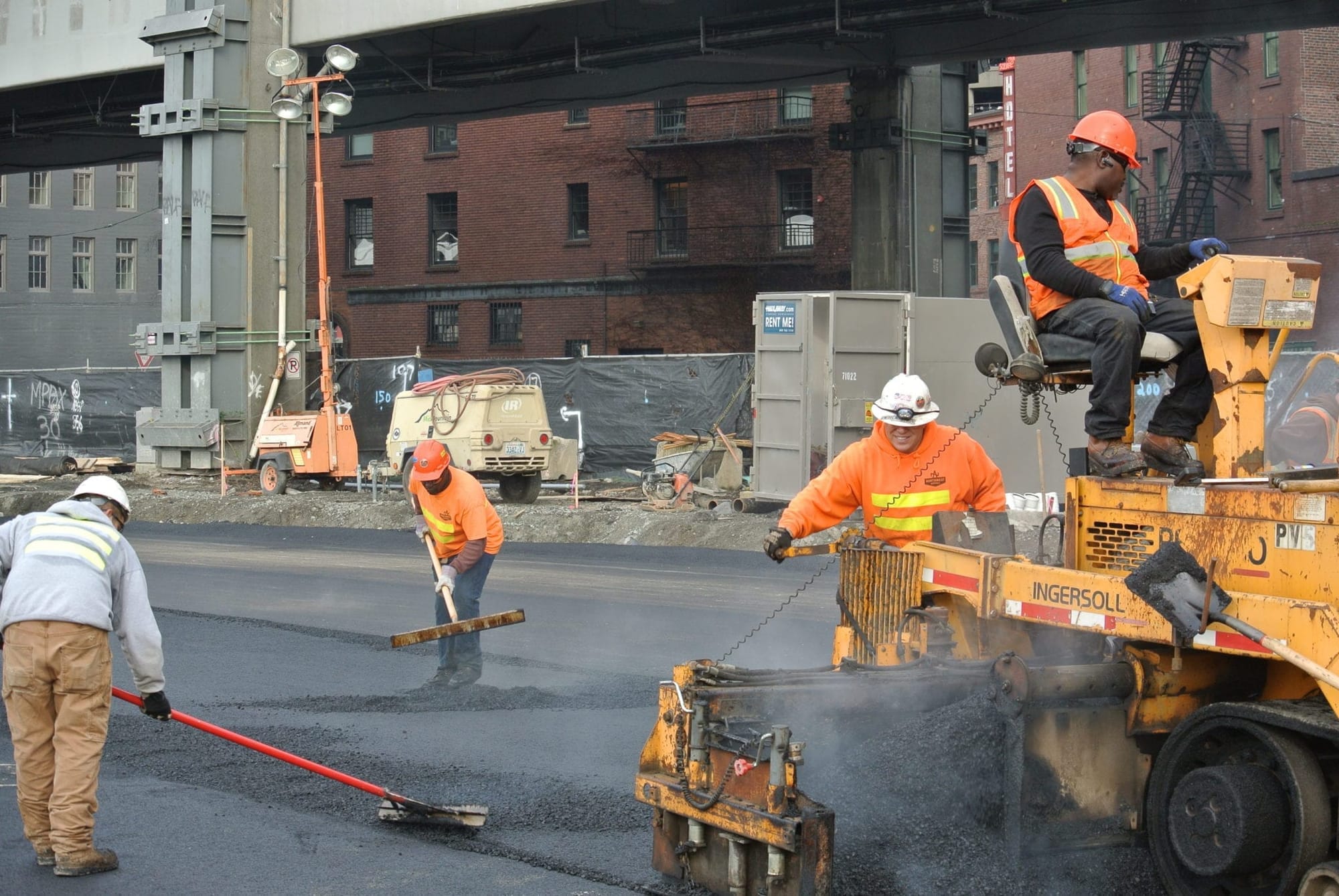
Lynnwood Link construction laid the track and the basic structure of the station, and some additional work happened before Lynnwood Link officially opened, though there were also significant disruptions to existing riders to get the station fully built after service commenced.
With the extension of the 2 Line across Lake Washington in March, regional light rail ridership has taken a big leap. Daily ridership exceeded 160,000 in April and continued to grow over the summer, spiking at a one-day record of 309,000 during Seattle's last World Cup match in July. This growth appears to have made Sound Transit the most-ridden light rail system in America – though several heavy rail metros have higher ridership.
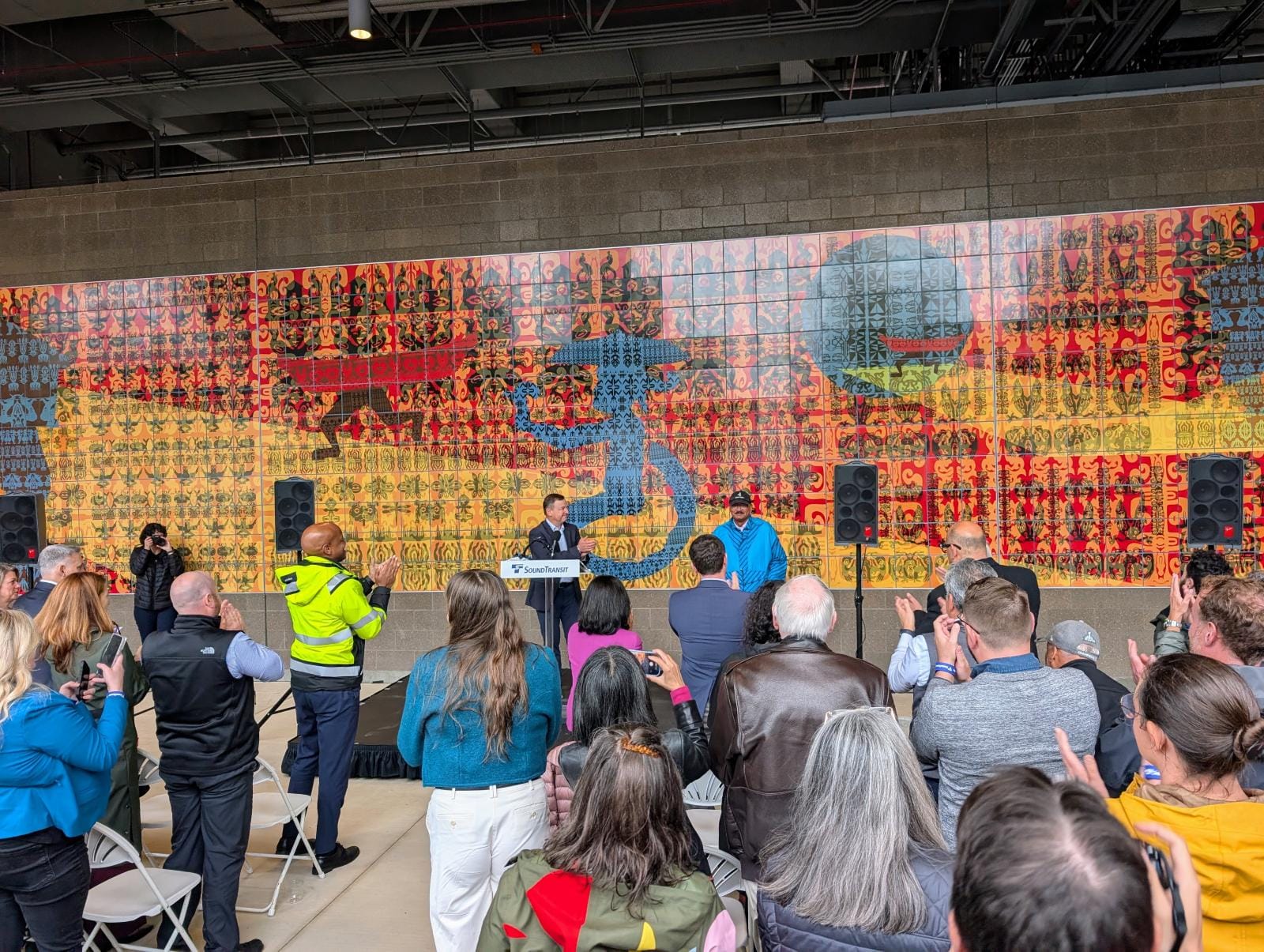
The agency hosted a ribbon-cutting ceremony for its new infill station Tuesday afternoon, featuring a smorgasbord of speeches from local officials. Seattle Mayor Katie Wilson gave a nod to the leadership from transit advocates and Councilmember Debora Juarez (who wasn't in attendance) to make the station happen, and to the work ahead to make Graham Street infill station happen in Southeast Seattle.
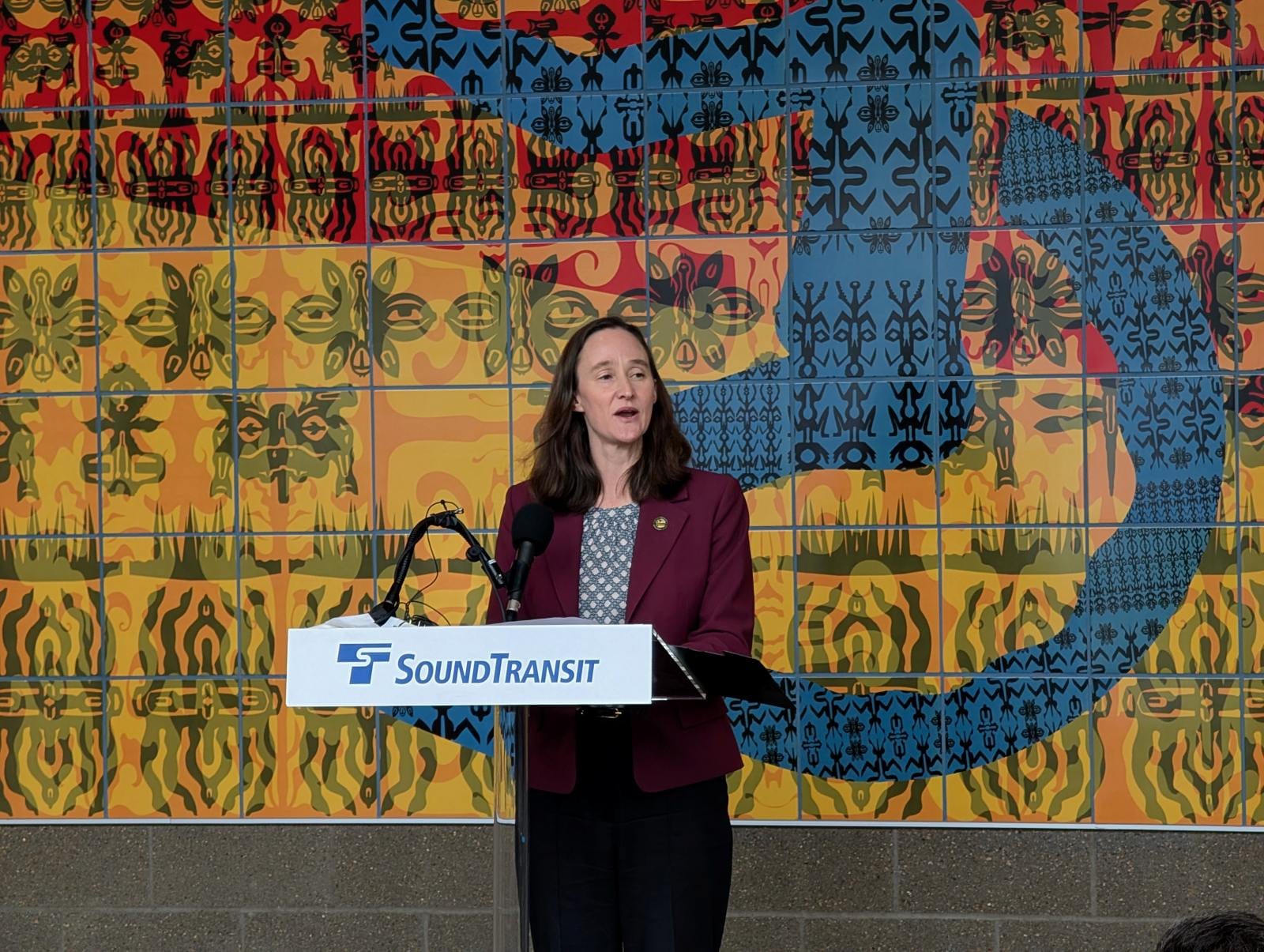
"This is South Transit's first infill station, but it certainly will not be the last, and it happens because the people fought for it," Wilson said. "So thank you to Councilmember Juarez and all of the community advocates who made sure that Pinehurst did not get left behind. And thank you to the Sound Transit Board and agency for listening and delivering."
To the south in the Rainier Valley, Graham Street very nearly did not survive Sound Transit's "Enterprise Initiative" expansion plan overhaul in May. Board Chair Dave Somers proposed tabling the project indefinitely, but Wilson spearheaded a push to keep it on track to open around 2031. It ended up taking the pledge of $30 million in last-in funding from the City of Seattle to avoid the chopping block.
Located between Northgate and South Shoreline, Pinehurst Station is projected to attract 2,600 to 4,200 boardings daily boardings – at least once the system and surrounding neighborhood matures. That ridership would be on par with Mountlake Terrace (also near a golf course) and Beacon Hill. The late September opening coincides with the start of classes at the University of Washington and meets the agency's goal of opening the station in the third quarter of the year.
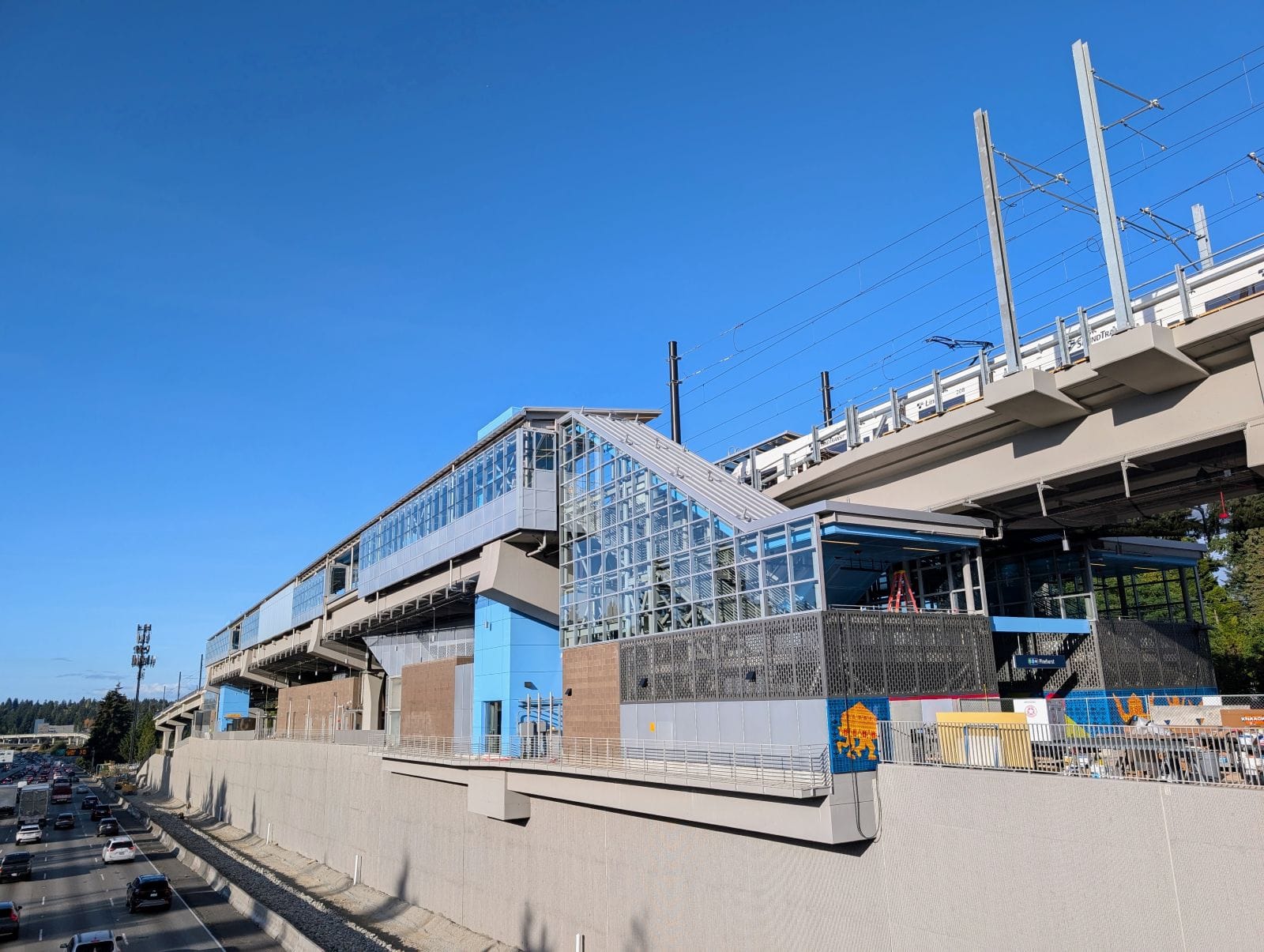
The station happened on a faster timeline than Seattle's rezoning process for the surrounding neighborhoods. The city had almost looked ready to advance its overdue Comprehensive Plan update until legal appeals derailed the process, forcing additional analysis on top of an environmental study that was already 1,300 pages long.
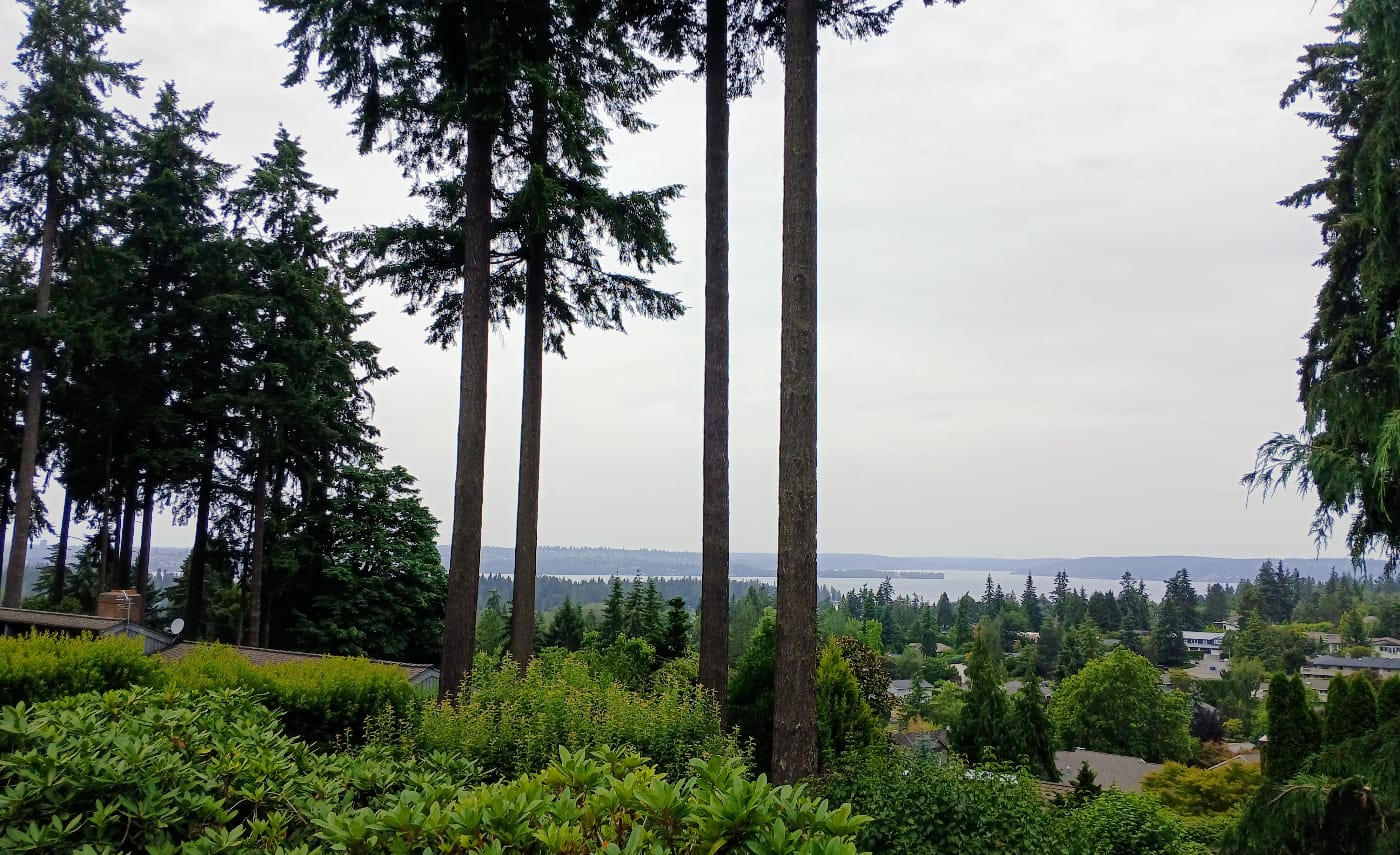
As a result, Pinehurst Station is surrounded by single family homes, a fenced-off City-owned golf course, and of course an obligatory gaping freeway trench spewing noise and pollution in the general vicinity. While the Comprehensive Plan declined to tackle the latter two issues, it had queued up rezones allowing five- to eight-story apartment buildings and ground-floor retail in several swaths of Pinehurst and some more limited areas of Haller Lake, replacing some broad areas of low-density Neighborhood Residential zoning.
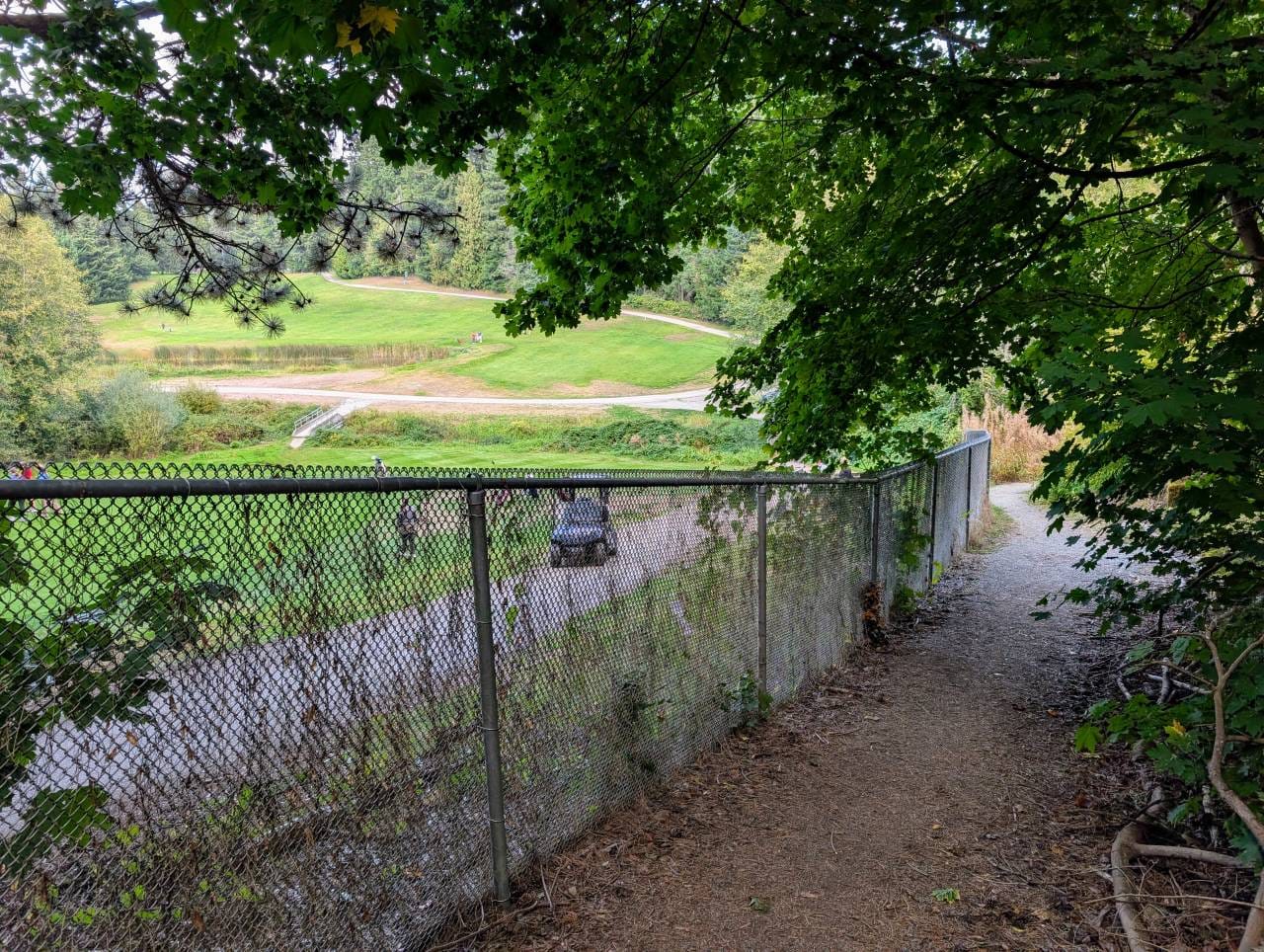
Wilson acknowledged the delay and her resolve to see the rezones though, which she has also sought to augment with her Taller Faster Denser Plan.
"This is not just a station; it is a spark – a spark for long-term transformation in the newly designated Pinehurst-Haller Lake Urban Center, where we will see more homes, shops, services, parks, and walkable streets, all connected to great transit. That's what it's all about," Wilson said. "Sometimes we build transit where lots of density already exists, and sometimes we build transit, and we're able to welcome people around them."
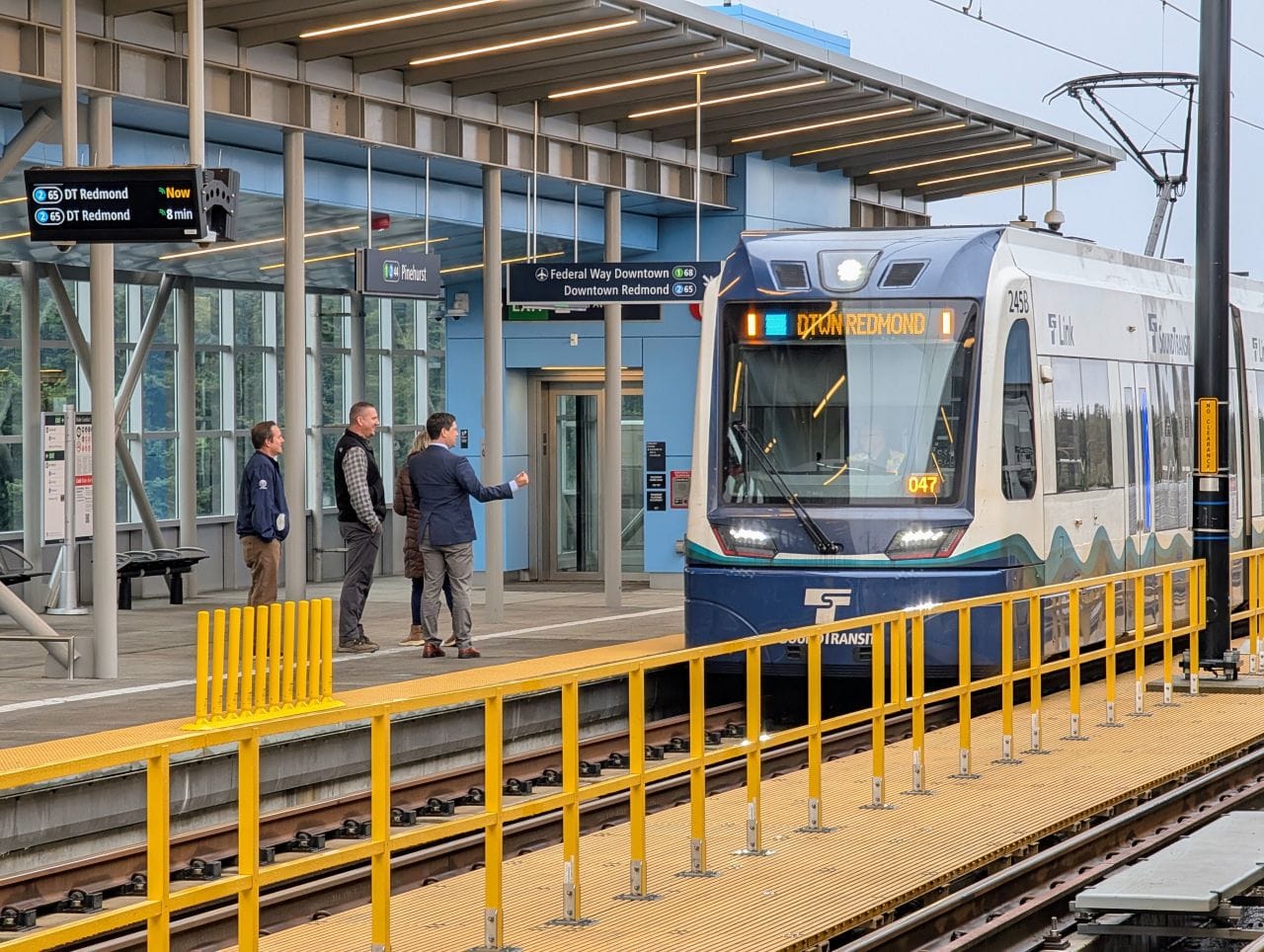
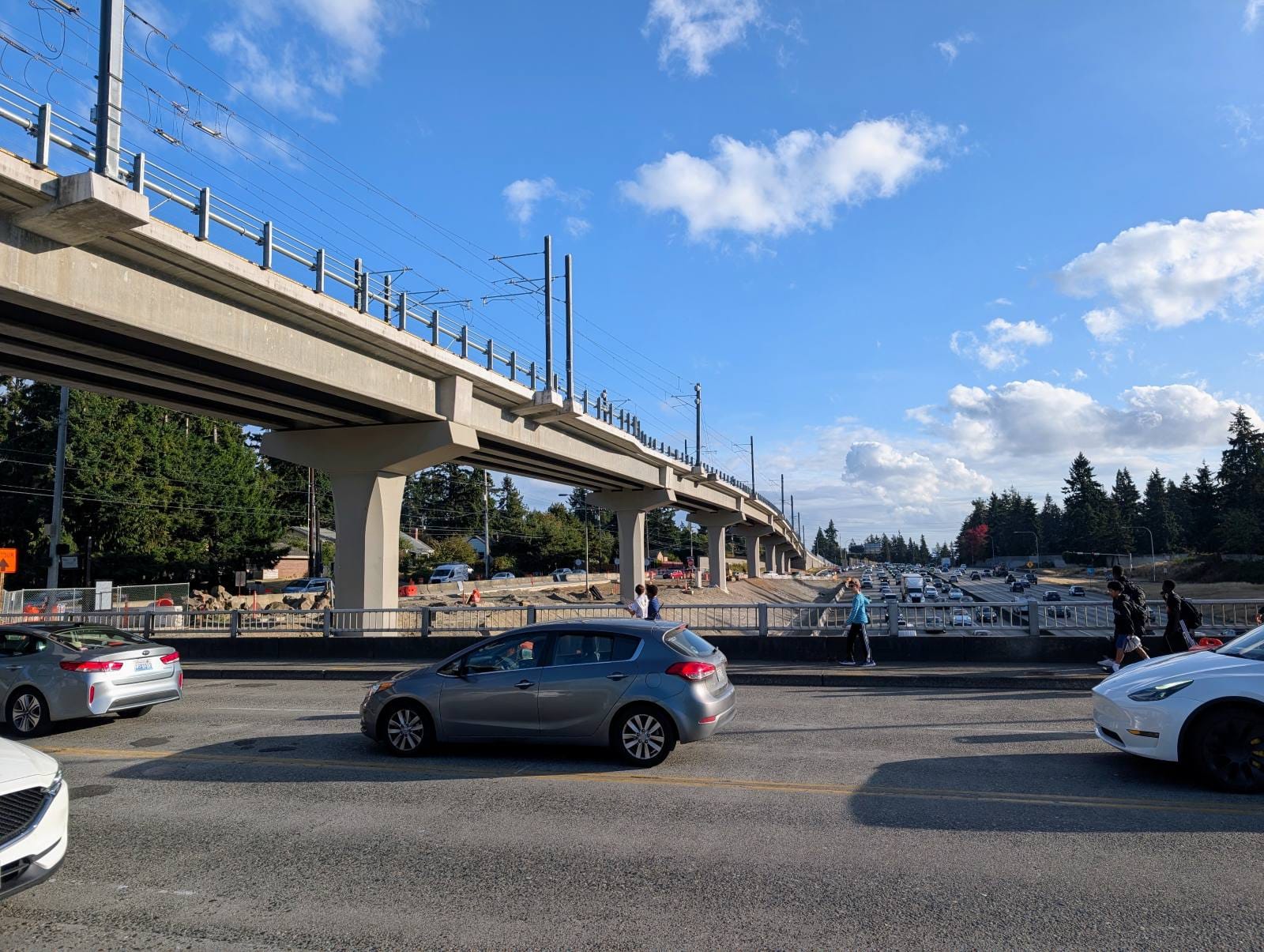
Councilmember Dan Strauss – who like Wilson sits on the Sound Transit Board – upped the ante and declared Pinehurst a prime candidate for a freeway lid to create more developable land near the station and reconnect the street grid. As it stands, the west side of the station is cut off by I-5, with no safe bike facility and an unpleasant experience for those walking and rolling. Shoreline is building a pedestrian bridge at its 148th Street Station, but Seattle has no such facility planned.
"As we pass the Comprehensive Plan, there is more density. And when we are looking to reconnect across I-5, I talked today with Office of Planning and Community Development about the needing to lid I-5," Strauss said. "We can do so without any public funds. It recreates the grid. It increases the property tax that King County and Seattle has, and we had it done in Washington D.C. for zero public financing. This is a perfect candidate, and I'll tell you, it would not have the oomph if it weren't for this station."
Councilmember Eddie Lin, who chairs the land use committee, told the Seattle Times that he thinks it might be 2028 before the council is fully able to enact zoning changes, due to the need for additional time-consuming environmental studies to resolve the legal challenges.
While the Growth Management Hearings Board threw out the environmental complaints levied against Seattle's waylaid growth plan, it did find that the document failed to sufficiently study a higher growth scenario than the 120,000 new housing units over 20 years that was the upper echelon of Harrell's proposal. This is much to the chagrin of housing advocates who specifically pushed the Harrell administration to include a higher growth scenario in the plan. Over the last decade, Seattle has often exceeded the 6,000 homes per year production pace in the growth plan.
The upshot of this planning snafu is that Pinehurst likely waits a few more years for the blanket ban on new apartments to be lifted across much of its walkshed. At that point, perhaps an infusion of new housing will happen if interest from builders is there.
The Seattle Department of Transportation did deliver a number of street upgrades in time for the opening, including a new roundabout, protected bike lanes connecting Lake City to the station, new greenways, and a shared-use path to James Baldwin Elementary. The roundabout at Roosevelt and 125th is the first full-sized roundabout ever built inside city limits.
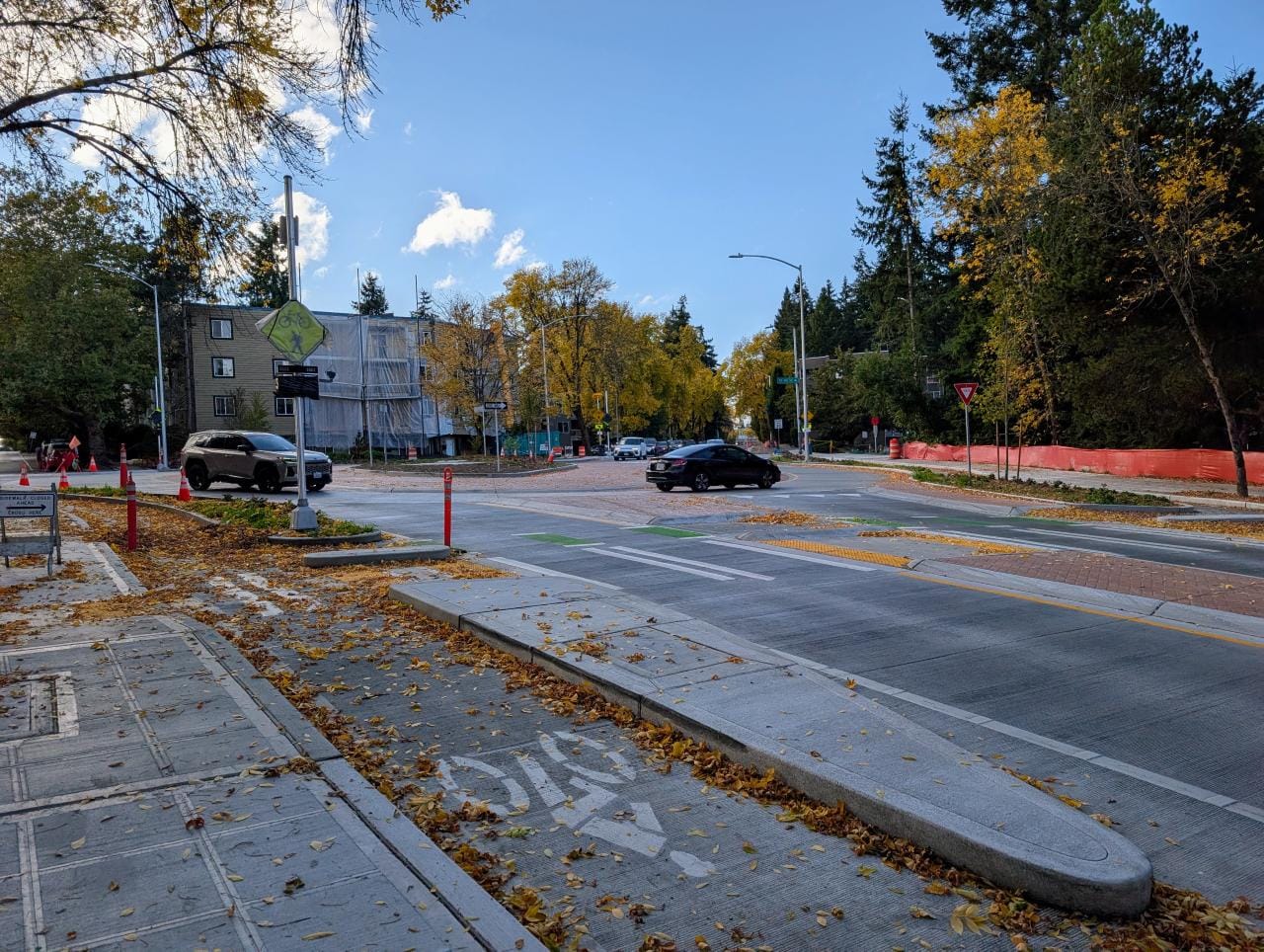
"About 90% of riders are expected to arrive without a car," Wilson said. "That is remarkable, and it's exactly why we have been investing in safer streets, new sidewalks, protected bike lanes, upgraded bus stops, and better buses. And for the real transportation wonks out there, we are excited to open the first roundabout in Seattle at Roosevelt Way NE and NE 125th Street."
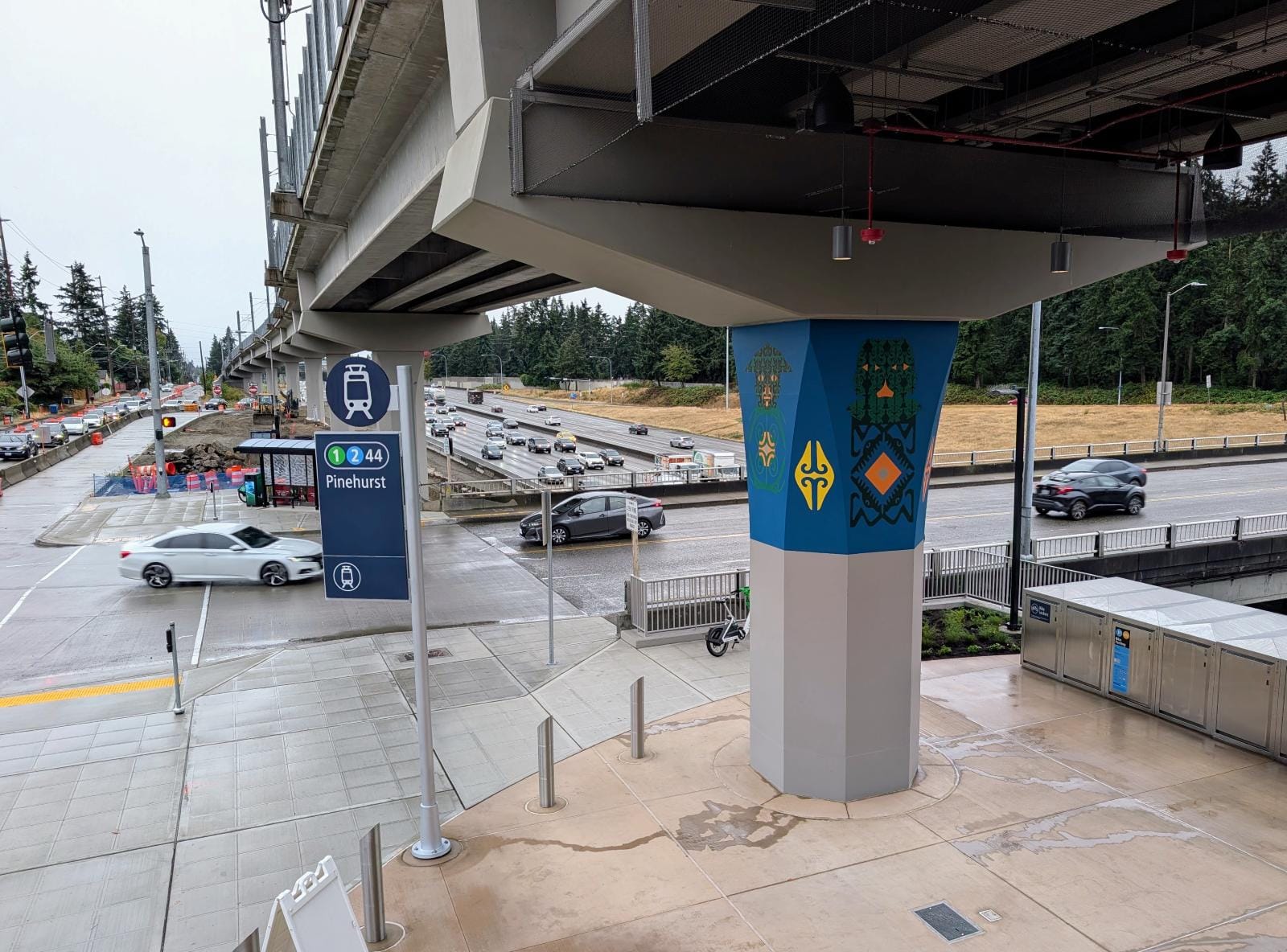
King County Metro added Route 77 in its last service change providing a feeder route for the station that finally offers a direct bus connection between Lake City and Bitter Lake. Route 77 features 15-minute frequencies from 7am to 8pm, before dropping to half-hour headways thereafter. Other neighborhoods are feeling shortchanged by the adjustments Metro has been making around light rail openings, after losing direct connections that they once had.
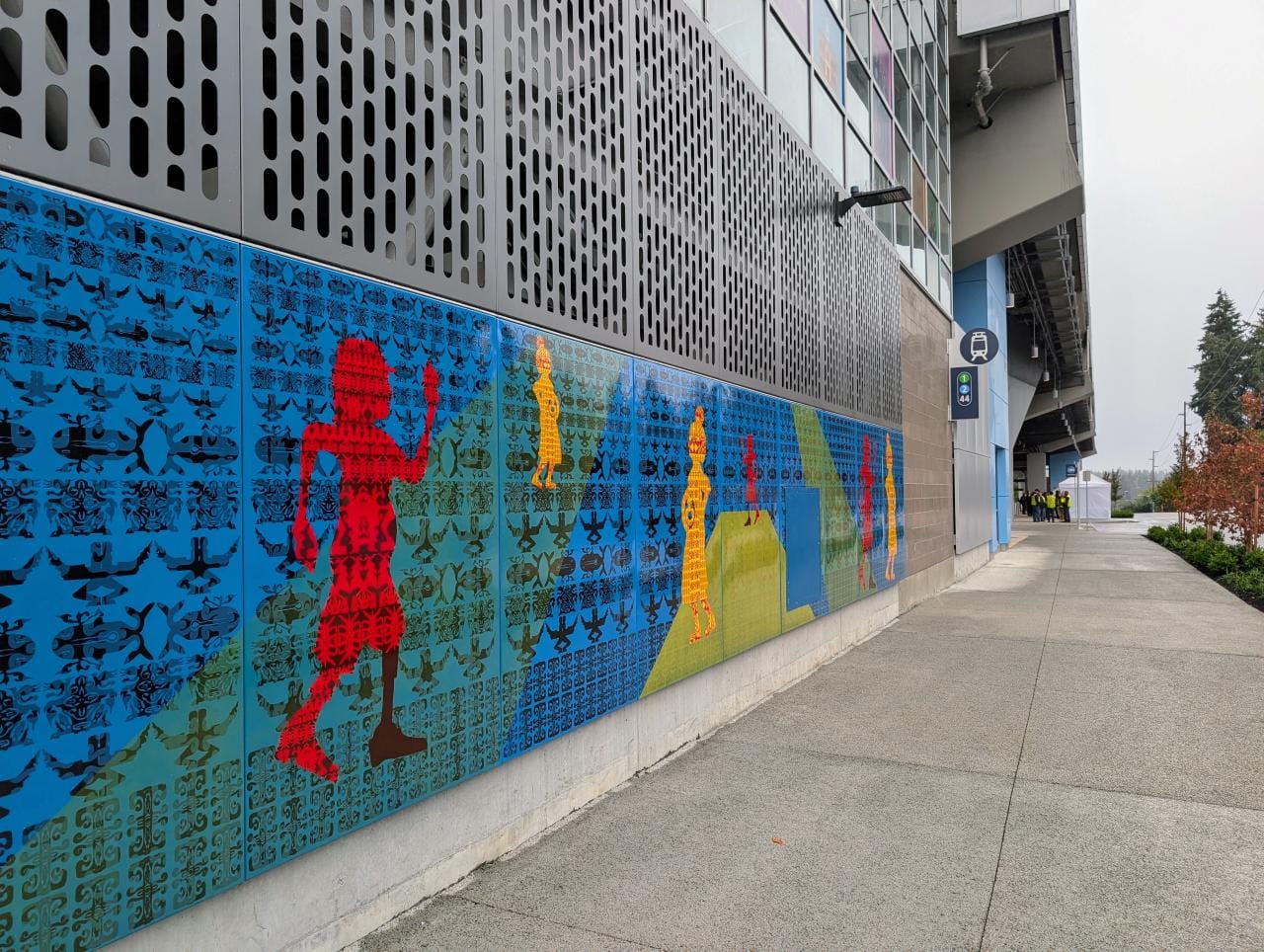
Similar to other Sound Transit stations, artwork has been a major focus when it comes to potential placemaking. Pinehurst's prominent station art was designed by Seattle-based artist Romson Bustillo, who was born on the island of Mindanao in the Philippines. Human and animal figures brightly patterned in red, yellow, and green give the station a South Pacific vibe.
The station opening today will mark the last light rail opening in the region for quite some time. Sound Transit will roll out its Stride bus rapid transit network in 2028 and 2029. For light rail openings, Graham Street is next on deck in 2031. West Seattle Link has slipped to 2035, which is also when Sound Transit is expecting to open Tacoma Dome Link. The agency is hoping to launch the first leg of the Everett Link extension (as far as Paine Field) in 2037.
Ballard Link, meanwhile, has considerable uncertainty, with 2042 for the whole line the best case scenario, which would require closing a huge budget gap of around $8 billion. The less-rosy scenario would be opening only the downtown portion in the 2040s and delaying the Interbay and Ballard section to the 2060s, pending enough funding accruing in Sound Transit coffers.
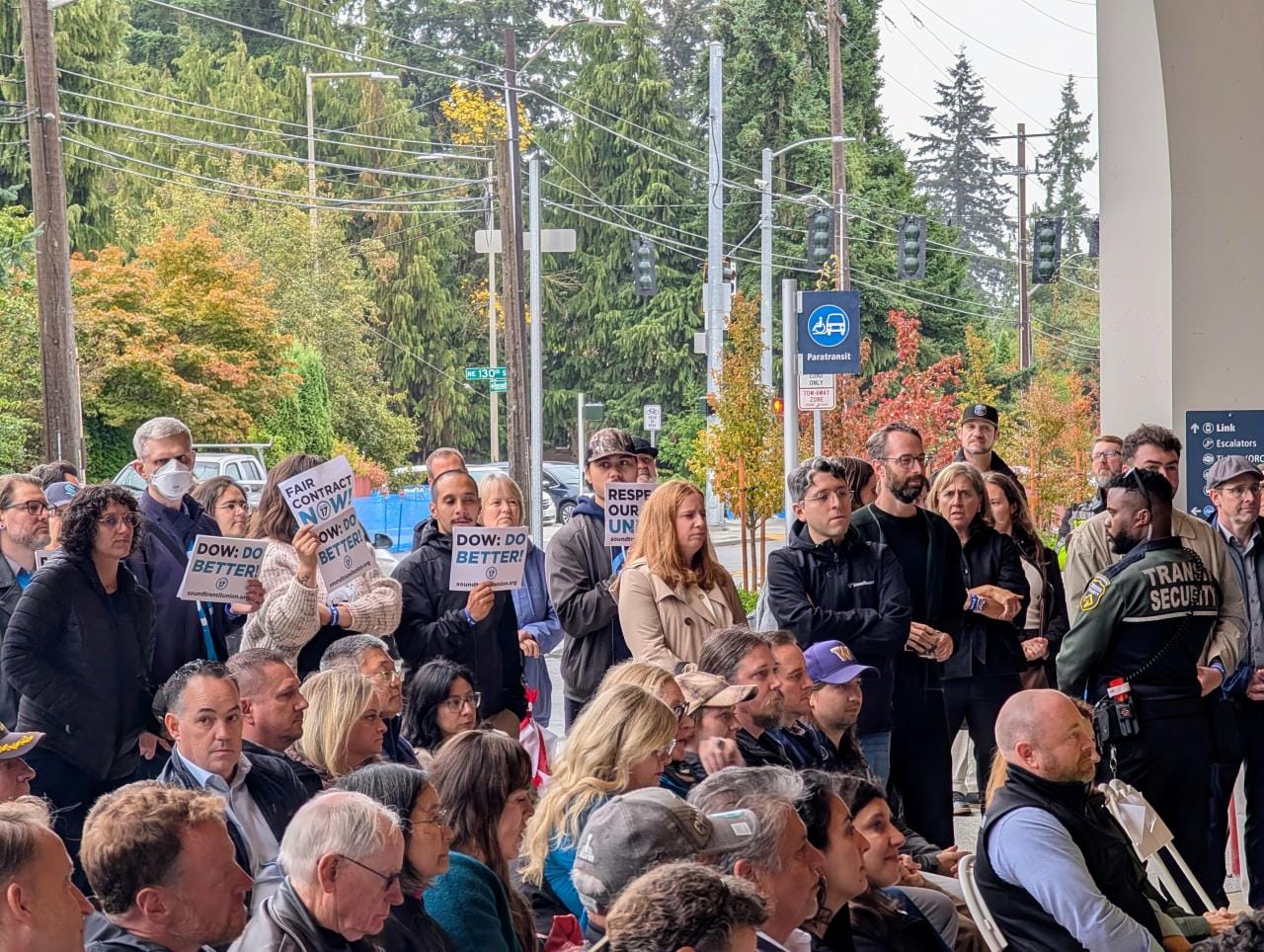
Another looming cloud on the horizon is labor strife. A half dozen picketers turned out to the ribbon-cutting with signs demanding a fair labor deal. One of those picketing Sound Transit workers, Brian Vierela, said a group currently exempt from collecting bargaining and working in project control, environmental permitting, community outreach, and systems engineering are seeking to unionize under Protec17, but they say they are being given the run around from a CEO that just got a lucrative extension himself.
"We're very happy that [Pinehurst] is opening," Vierela told The Urbanist. "We want to come here and show support for all of the workers that made this possible. But we're also very frustrated at the negotiating table with Dow. Recently Dow was able to have his contract renewed in about you know a handful of hours of the board deliberating. We have been at the negotiating table for over 18 months at this point, and we're here to essentially ask Dow to get us a deal and respect our union, and let's just move forward."
Ballard Congratulates Golf Course on Its New Light Rail Station: tinyurl.com/yncw9jep
— The Needling (@theneedling.com) September 29, 2026 at 10:12 PM
[image or embed]
The struggle to get light rail to Ballard while many less populous and popular destinations are added to the system led the satire site The Needling to write the headline "Ballard Congratulates Golf Course on Its New Light Rail Station."
While rezones bringing density are inbound eventually, for now the satirical headline isn't far off. Mike Lindblom's station opening preview in the Seattle Times wasn't much more sanguine, framing the station as a potential boondoggle. Lindblom noted that if the land use around the station isn't able to improve by leaps and bounds, ridership could skew toward the low end of Sound Transit's projections – with as few as 1,100 daily riders hopping on trains.
King County Councilmember Rod Dembowski took the opportunity to respond directly to those claims Tuesday.
"I know, Mr. Lindblom, that you know based on your reporting, there are some doubts about ridership, whether this should have been built, whether the investment was worth it," Dembowski said. "I'm here to tell you, we are here, and it was worth it. This station is going to deliver on riders. It's going to deliver on housing. It's going to deliver for Lake City that needed this investment, and I encourage everyone to do what I did: take the 77, a beautiful, brand new bus that adds east-west connections to this part of the city."
 Renee Staton