The King County Office of the Ombuds released a report earlier in May that takes a deeper look at a 2025 audit performed on a narrow range of contracts overseen by the King County Department of Community and Human Services (DCHS). This report comes after the King County Auditor’s Office said that DCHS has made “significant progress” on audit recommendations to increase accountability and oversight.
The ombuds will refer observations from the new report that indicate “possible fraud, forgery, or attempted theft of funds” to law enforcement and send the report to the Washington State Auditor’s Office for an additional layer of review.
However, while the review process has taken about a year and a half so far, neither the original audit nor the ombuds’ report have proven that any fraud has taken place – although several vendors failed to fulfill contractual obligations to document their activities.
The original audit looked at 36 contracts from four youth programs, including Restorative Community Pathways, within DCHS’s wide portfolio of programs and services. Three of the four programs receive funding from the Best Starts for Kids levy. The programs selected primarily support Black and brown youth in underserved communities by contracting with small community-based organizations. Of the 36 contracts reviewed, 19 contracts were flagged for potential issues.
DCHS continued to investigate the 19 contracts, eventually referring the matter to the ombuds for impartial review. The ombuds hired forensic accounting consultant Clark Nuber to test compliance concerns and create a report.
According to reporting from the Seattle Times, one DCHS program manager, Yolanda McGhee, was fired by the County in January after it came to light that she oversaw grants totaling $800,000 paid to companies owned by five different family members.
While DCHS acted slowly in this case, the county’s weak ethics code contributed to the problem. In March, the King County Auditor’s Office and the ombuds released a joint report that found that the County’s ethics code “lacks clarity on appropriate conduct.” In the above case, only one of McGhee’s family members met the county’s definition of “immediate family” that required disclosure, and McGhee did fill out disclosures for that family member.
The County’s Ethics Program only employs one part-time employee to oversee ethics for the entire county government, which encompasses more than 18,000 employees.
The Seattle Times reported on several other issues with DCHS contracts, including missing and potentially altered documentation.
The Nuber report did find some examples of possible misuse of funds, although there is disagreement on exactly how much. The report cites $446,000, while DCHS requested a correction for accuracy to $320,000, which the Ombuds-Director chose not to honor.
A spokesperson for DCHS told The Urbanist that the majority of these payments simply need more documentation, as opposed to being indicators of fraud. The DCHS’s $320,000 figure represents 2.6% of the total expenditures reviewed by the audit. By comparison, the County paid Clark Nuber more than $300,000 to produce the ombuds report.
The rapid growth of DCHS
To understand where DCHS is today, we have to go back to 2020, when King County faced three major crises in short succession: the Covid-19 pandemic, the racial reckoning prompted by Minneapolis police murdering George Floyd, and the beginning of the fentanyl crisis.
At the beginning of the pandemic, businesses were shutting down, people were losing their jobs, and housing precarity was rapidly increasing while people were struggling with both their physical and mental health. At the same time, substance use increased, with a growing number of opioid-involved deaths, with Washington State having a later peak in deaths caused by opioid-related overdoses than most other states.
Meanwhile, in June of 2020, the King County Board of Health declared that racism was a public health crisis. The county government, led by then-Executive Dow Constantine, moved to reform the criminal legal system and shift resources to upstream programs aligned with racial justice.
“King County staff developed anti-racist policy agendas and biennial budget priorities based on demands from Black, brown and indigenous people of color,” read a news release from the county in November 2020.
DCHS was tapped to lead much of the work related to both pandemic response and racial justice initiatives, including running the county’s emergency rental assistance program.
“The need was enormous and increasing, and [...] there were really significant disparities in communities, and so we wanted to get the money into the communities that were experiencing the most harm and disparities and greatest need,” Susan McLaughlin, the new director of DCHS, told The Urbanist. “Many of those community-based organizations did not have a lot of experience with contracting with government and managing government funding at the level of accountability and reporting requirements and expectations, and so it created this perfect storm for mistakes to happen and things to get missed as we were moving very, very quickly to respond to the growing need.”
While DCHS gave out $922 million in grant funding in 2019 and 2020, its awards increased to more than $1.8 billion in 2023 and 2024.
“DCHS more than doubled in size and in our budget with the pandemic, and then also some additional local levy resources that came in,” McLaughlin said. “We became responsible for a substantially larger sum of money. At the same time, we were not given a parallel increase in our staffing and infrastructure to manage that money.”
The pressure on DCHS to get money out the door as quickly as possible continued even when the emergency pandemic dollars waned. In the fall of 2024, the King County Council included a proviso in the 2025 county budget that required DCHS to report on a plan “to improve processing times for all awards of grant moneys for housing providers and payment for contracted services performed by human service providers within the department of community and human services.”
In the subsequent DCHS presentation to the council’s Health, Housing, and Human Services committee in April of 2025, then-director Kelly Rider warned that speeding up payments wasn’t sufficient by itself.
“We need to be timely, we need to be efficient, and we need to be reliable, and so we at the department [...] are continuing to work both on making sure that we are making timely payments, but also that those payments are quality, that we are paying for the things that we are supposed to be paying for and being accountable for the funds that you have charged us with being accountable for,” Rider said.
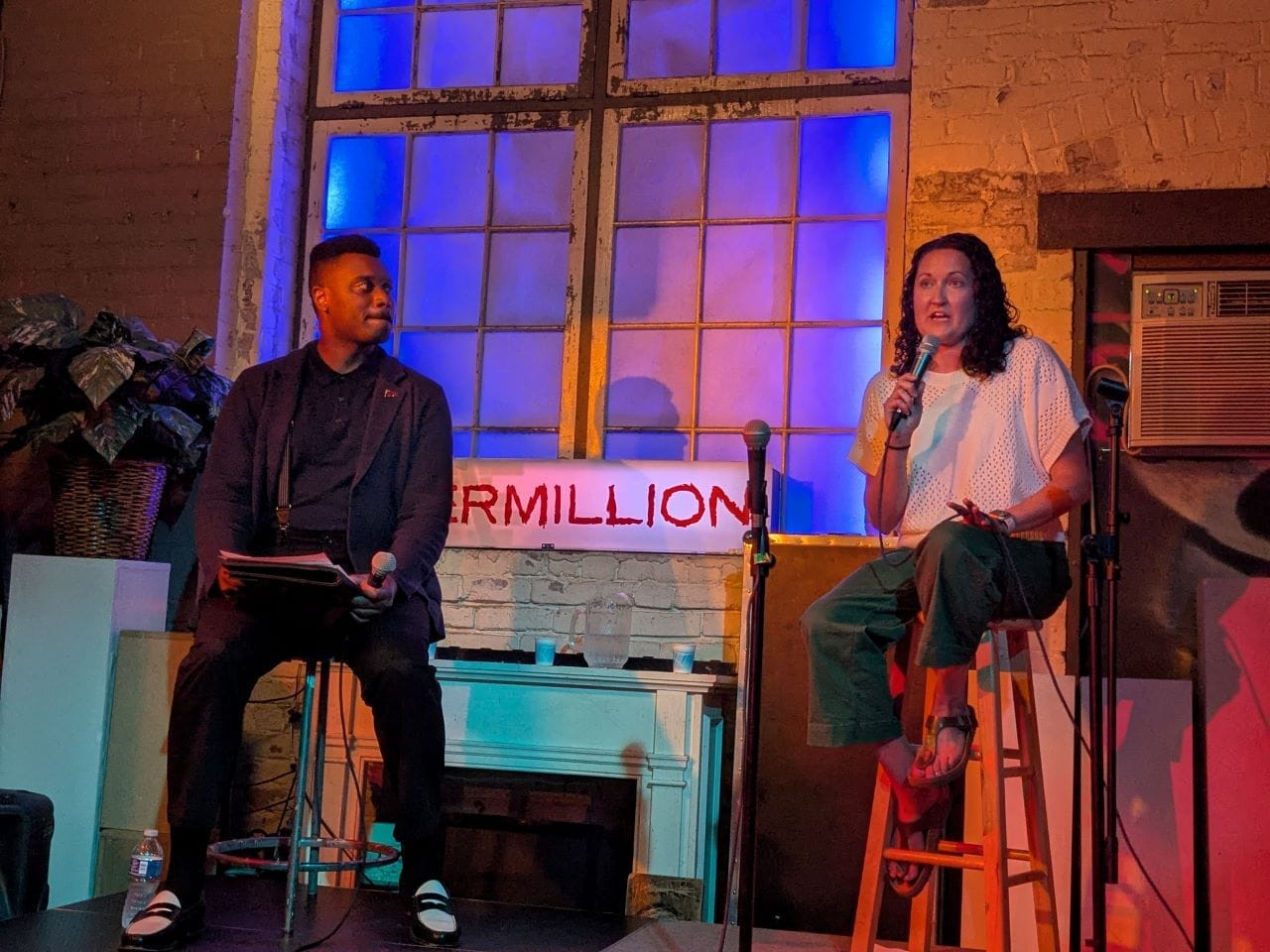
In reporting by The Seattle Times last fall, then-Executive Shannon Braddock laid the decision to rapidly deploy money at the King County Council’s feet.
“We did conscientiously take some risks to get money out the door quickly and in particular to get money out the door to some community organizations who aren’t traditionally in the system to get those dollars,” Braddock said. “The County Council made that choice.”
McLaughlin said the findings of the audit don’t represent a department-wide problem, but rather a lack of consistent standards across the department.
“We have a lot of divisions that manage large sums of federal and state funding and go through audits on an annual basis, and actually audit their agencies on a much more frequent basis, because we're required by state and federal law to do that,” McLaughlin said.
Steps taken to strengthen oversight
Since the audit’s release last August, DCHS has taken a number of steps to address its recommendations and strengthen departmental oversight.
The department has developed nine new policies and procedures related to oversight, all of which have been implemented. Contract management staff are finishing their trainings on these new policies now.
DCHS has developed three new provider trainings to help the smaller, community-based organizations with which it works to comply with the standards and requirements that come with a government contract.
In addition, the department has instituted a department-wide anti-fraud training for staff. A DCHS spokesperson said that departments across the county are going to be using this new training as well.
A new contract compliance monitoring policy is now in place to foster collaboration and communication between programmatic and fiscal compliance staff at DCHS. The policy includes a concerns escalation protocol to use if a staff member suspects a misuse of funds.
In order to work with more small organizations, DCHS had been experimenting with a hybrid payment model, which allows for increased flexibility and provides more resources on the front end to help organizations without large financial reserves pay their staff on time. The department is taking a closer look at this model, including when to use it and a new process for approvals and review in order to maintain stricter controls. They’ve completed an analysis of all their contracted agencies that received payments in this manner and made adjustments as necessary.
In addition, DCHS has adopted the use of a new contract management system that will allow for greater accountability. The main functions of the new data system should be built out by the end of 2027.
Another key piece to improving accountability is staffing. Braddock added additional DCHS positions in her 2026-2027 budget, and DCHS will be asking for more positions to be added this fall.
Suffering from heavy workloads and burnout, DCHS’s compliance team currently has 6 of 9 positions filled. McLaughlin plans to eventually grow the team to 20 positions, including a chief compliance officer for which the department is currently recruiting.
“As we strengthen our contract management standards on the front end, and as we train providers and orient them better into having contracts with us, the ultimate goal is that we will have way less compliance issues in the future, and so that team will have a much more manageable workload, even though we still need to increase staff,” said Amber Green, the deputy director of DCHS.
Increased staffing will also allow for more in-person site reviews, which completely stopped due to the pandemic and haven’t recovered. In response to the audit, the King County Council passed legislation laying out controls, targets, and reporting requirements for DCHS, including conducting on-site visits to multi-year contract agencies at least once every three years.
The King County Auditor’s Office performed their first follow-up on the DCHS audit and released their results in April, saying the department “made significant progress on audit recommendations, improving training and awareness.”
The King County Council also amended the auditor’s office’s work plan to include a joint review between the auditor and DCHS of all its locally-funded contracts by the end of 2027.
Continuing the work
In a letter to the Council and Executive last October, the King County Children and Youth Advisory Board expressed its concerns about both the focus of the audit and the rhetoric being used after its release causing harm to marginalized communities.
“Terms such as waste, abuse, high risk, and fraud were included in the audit, despite no confirmation that fraud had occurred,” the advisory board wrote. “Similarly, several council members used inflammatory language to describe the audit. When credible officials use this language, it can misrepresent reality, harm the reputation of community organizations, and it erodes trust in critical services and public investments.”
The advisory board also objected to the “disproportionate focus on a small subset of prevention programs,” saying oversight should strengthen communities rather than undermine them.
Since his assumption of office, County Executive Girmay Zahilay has been focused on improving the county’s financial stewardship and accountability. Central to his efforts is his hiring of a new internal auditor.
Last fall, Zahilay, then still a county councilmember making his closing pitch in the executive election, expressed frustration that the internal fraud investigation had taken so long.
“Only one word comes to mind regarding the failure of DCHS to meet their own deadline to conduct an internal fraud investigation: unacceptable. King County residents pay taxes in good faith, expecting our government to protect their money and make their lives better,” Zahilay said in a statement. “In January, I voted to approve the auditor’s 2025 work program that launched this audit, and I have pressed the executive branch to act on every recommendation without delay.”
Meanwhile, King County Councilmembers Rod Dembowski, Reagan Dunn, Sarah Perry, and Pete von Reichbauer sponsored legislation in April that would establish an Inspector General division within the Office of Public Complaints and Tax Advisor. This new division would investigate reports of financial fraud and abuse, with the authority to issue subpoenas and pursue recovery of misspent funds.
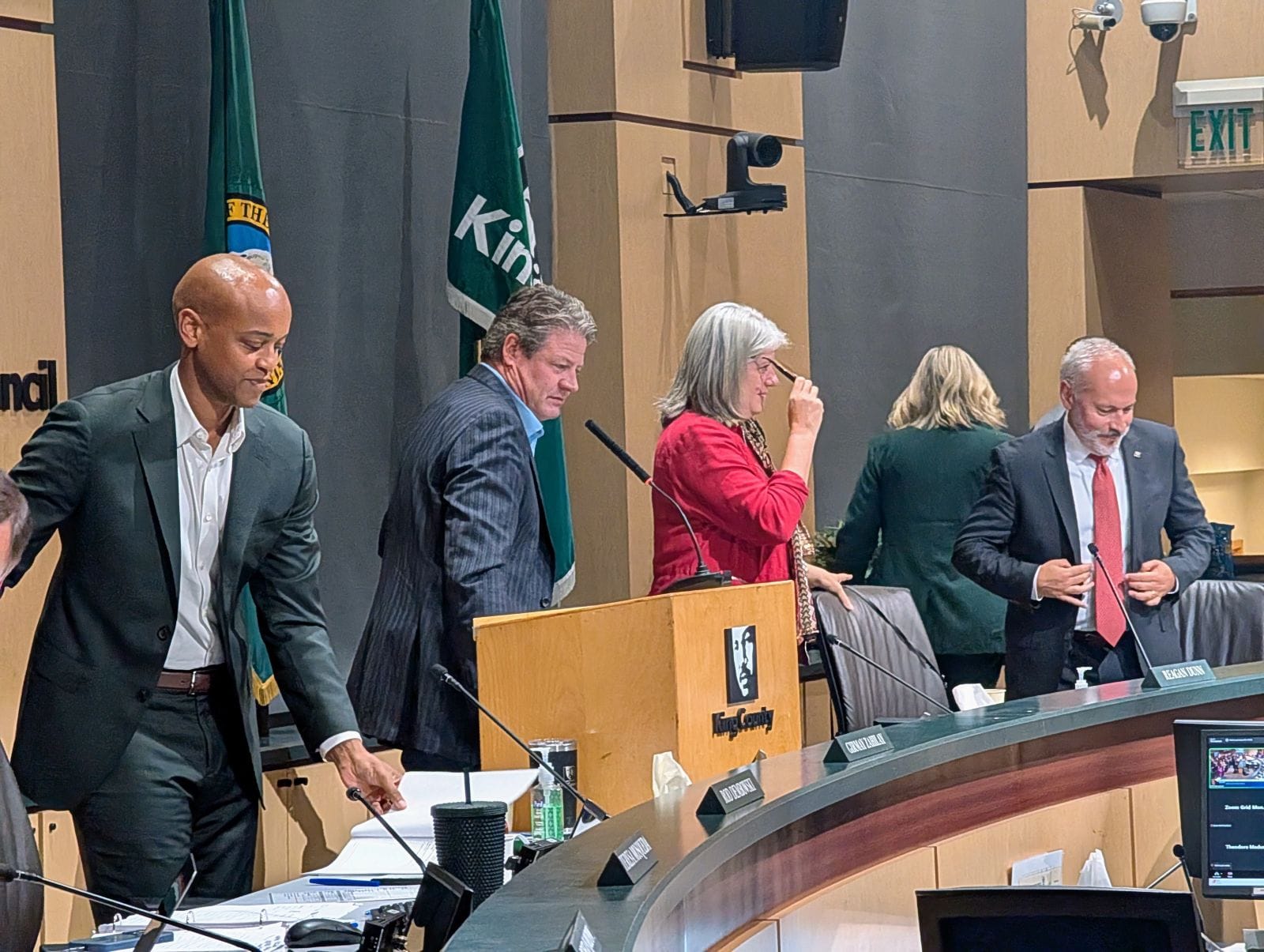
“Restoring transparency and rebuilding public trust in the face of misused resources, conflicts of interest, and other serious issues demands immediate, coordinated County leadership and urgent action,” King County Councilmember Claudia Balducci said in a statement. “I will work closely with my Council colleagues to convene a committee that will take the reins on these issues and hold those inside and outside of County government accountable.”
County Councilmember Teresa Mosqueda also expressed concern about the potential fraud, waste, or abuse.
“The challenges that marginalized communities face, which DCHS’s contractors are tasked with addressing, demand careful, efficient, and transparent deployment of funds to ensure the programs our taxpayers have voted to fund are achieving their stated goals,” Mosqueda said.
Mosqueda went on to express her consistent support for increasing staffing for DCHS to provide community organizations with more support.
“I am also vigilant for the potential of over-correcting – I support the conscious decisions that have been made over the years to contract with community organizations who may not have been awarded previous governmental contracts,” Mosqueda said. “Though they may be identified technically as ‘higher risk’ contractors by oversight bodies, in my view and in the view of many at the county, it is our responsibility to help the providers scale up capacity while also mitigating the risk level through appropriate technical assistance.”
DCHS will be asking for additional staff positions in the county’s second omnibus budget this fall.
“DCHS does some of the most important and impactful work in King County, and the vast majority of that work is done effectively and responsibly. We hold really high standards for ourselves, and when we fall short, like in the audit report that highlighted some of the gaps, we take that very seriously, and we're working hard to do better and be stronger stewards of public funds,” McLaughlin said. “It's our responsibility as an agency, moving forward, to make sure we do what we're doing right now, which is strengthening our systems, so we can deliver the services with the accountability, transparency, and trust that the public deserves.”
 Amy Sundberg