With new permit applications streaming in following a major upzone in Bellevue's underdeveloped Wilburton neighborhood last year, the Bellevue City Council is poised to bring an incentive program geared at spurring apartment construction to more neighborhoods, including Eastgate, Factoria, and Crossroads. But the move is temporary, with affordable housing advocates still pushing to contain the program to gain more subsidized units.
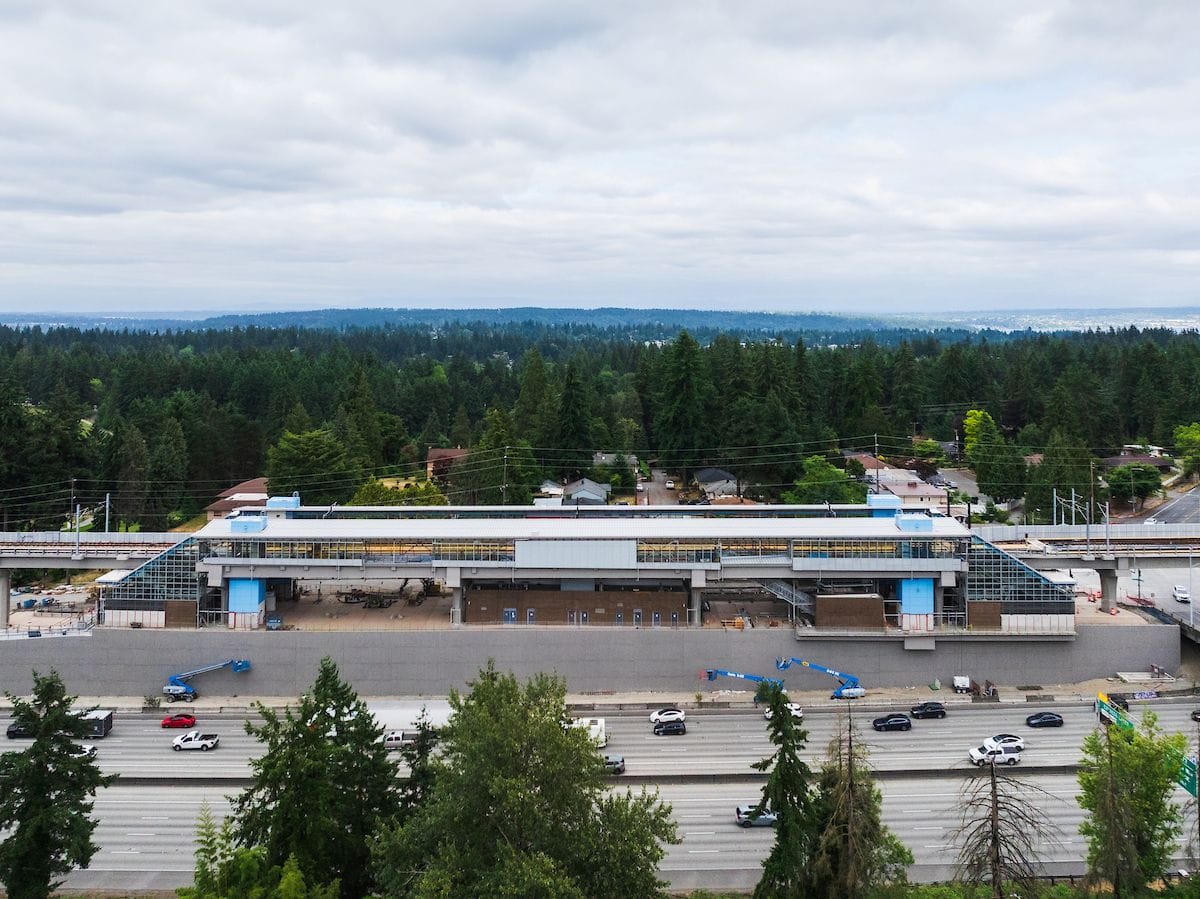
Wilburton's 2025 zoning overhaul unleashed a significant amount of new zoning capacity close to regional amenities like Sound Transit 2's Line and Eastrail, but were intensely negotiated to make redevelopment in the area pencil. With so many large lots, builders had to contend with additional costs for new road connections, among other required amenities. Included in that mix was a special allowance when it comes to the provision of affordable housing – what became known as the "Wilburton supercharger."
The supercharger allows developers to combine Bellevue's requirements for on-site affordable housing with participation in the voluntary Multifamily Tax Exemption (MFTE) program, unlocking a tax benefit for providing the mandated units. Without the supercharger, builders participating in MFTE would have to set aside 10% of new units to households making at or below 65% of King County's area median income (AMI) compared to 80% AMI with the supercharger – the difference between rents affordable to a family of two making around $80,000 per year versus $97,000.
Tying an affordability mandate to a property tax exemption is a novelty in places like Bellevue, but the idea is spreading, and some housing advocates view it as a best practice. Earlier this year, the Oregon legislature went so far as to ban cities from imposing affordability mandates that aren't offset by tax exemptions, a move referred to as "funded inclusionary zoning."
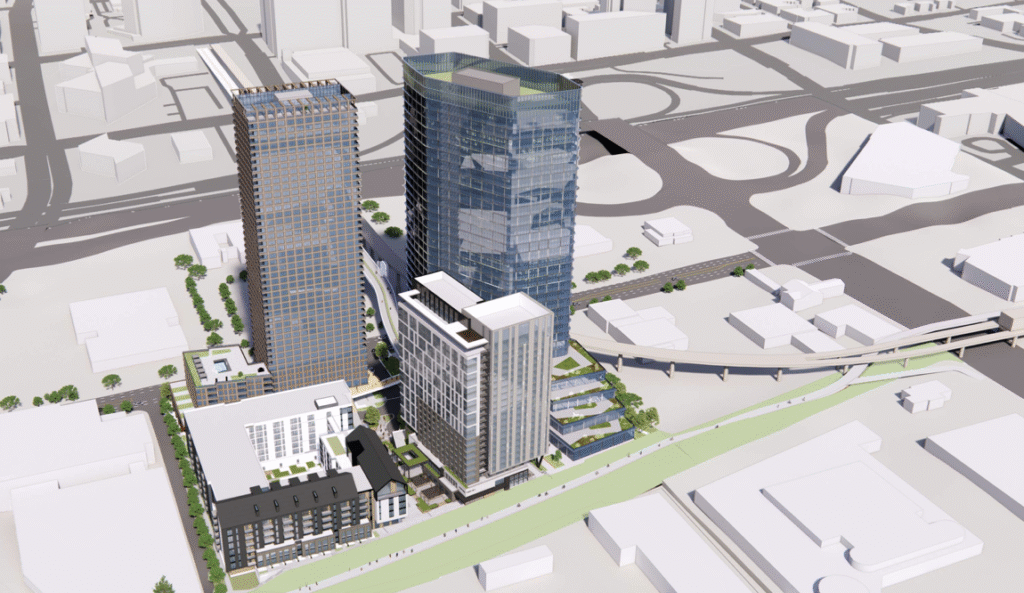
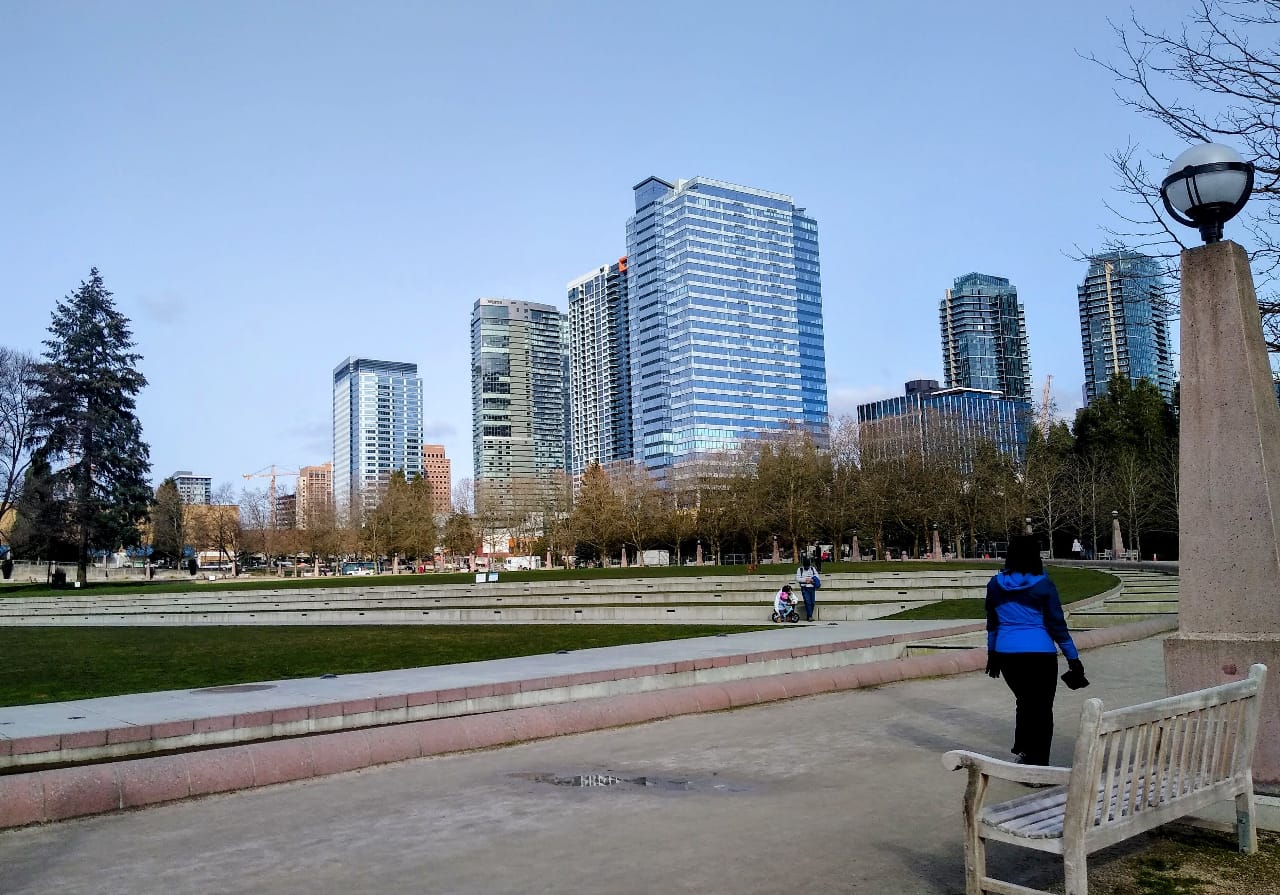
So far, property owners in Wilburton are biting, a fact that stands as a major counterweight to anemic housing permit activity across the region more broadly. According to City of Bellevue permit data, applications for more than 2,300 units have entered the pipeline, including several major phased development projects featuring highrises. Along 116th Avenue NE, a 6.3-acre site is set to be transformed into four separate buildings totaling nearly 1,400 units if the project comes to full fruition. Though virtually nothing has broken ground, that success has caused Bellevue's leaders to sit up and take notice.
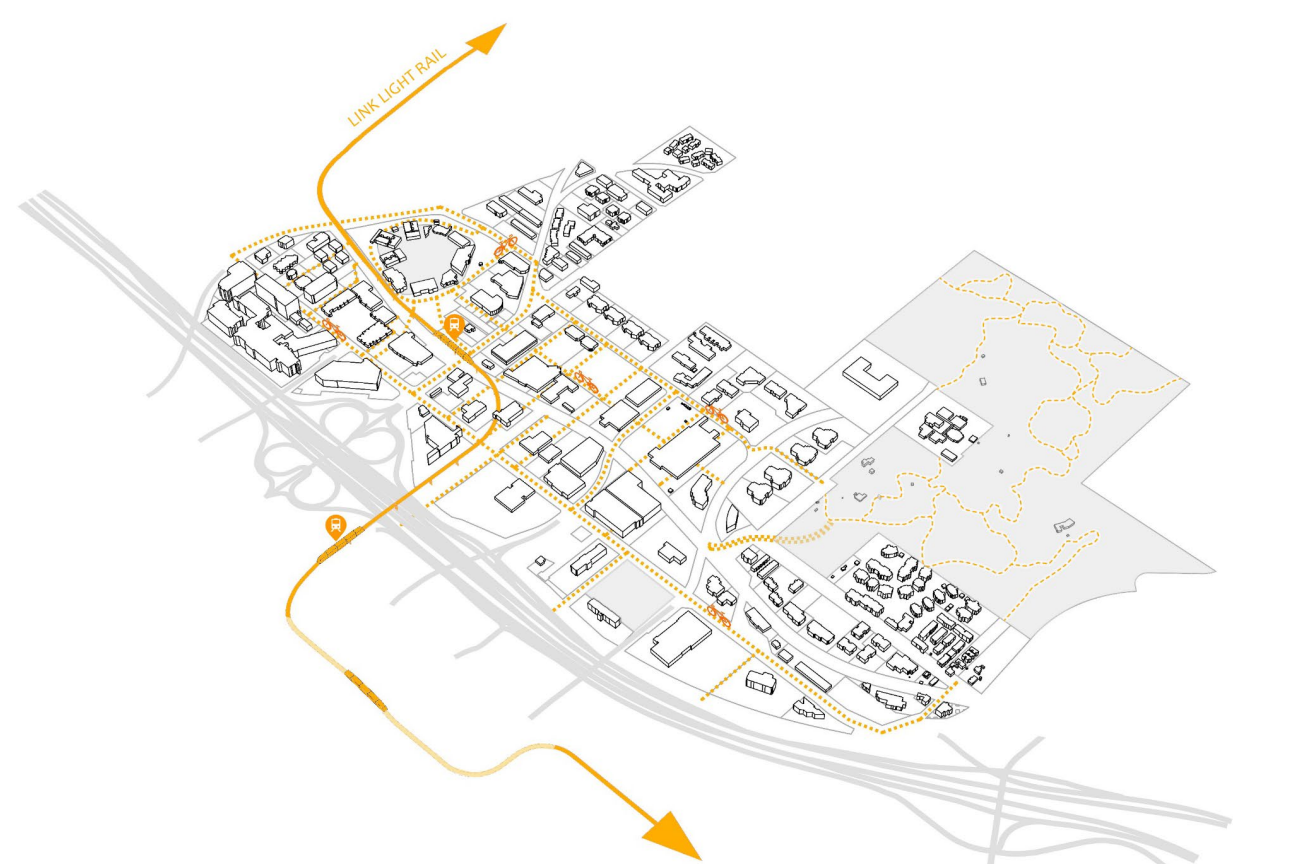
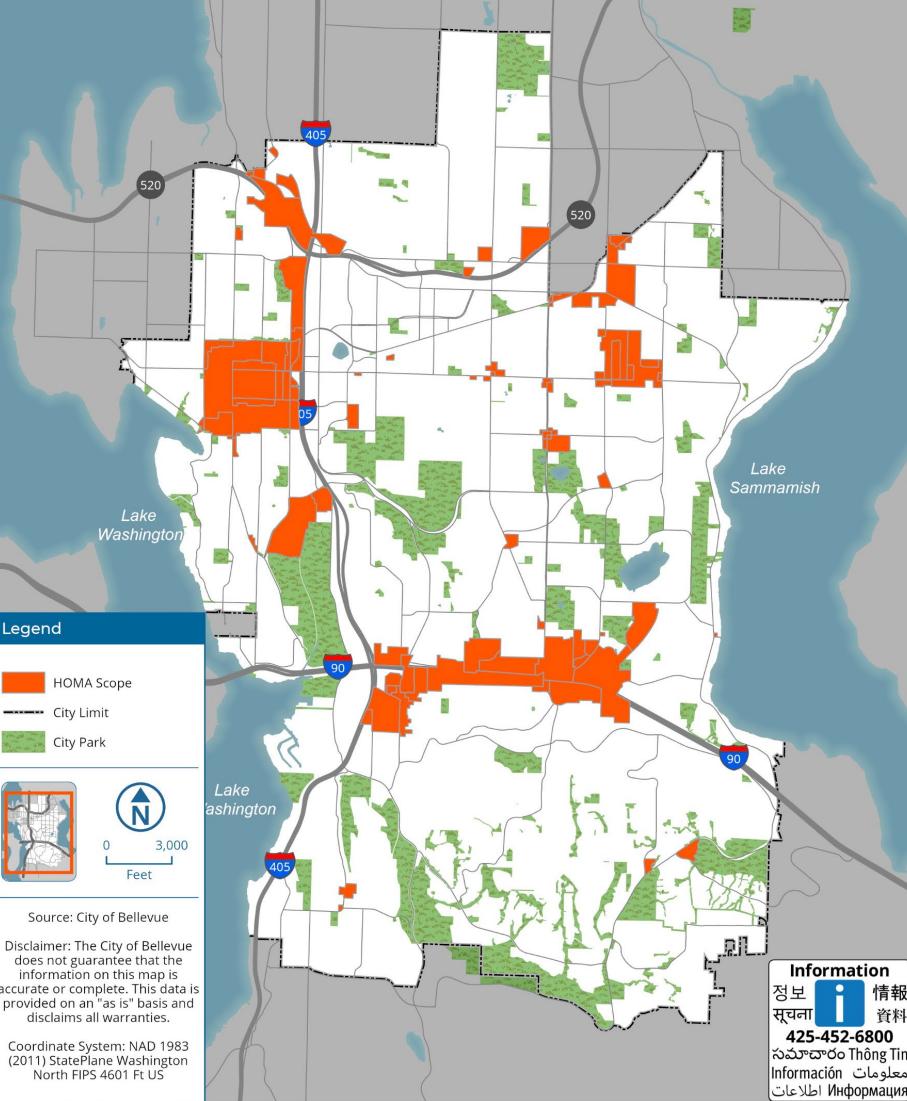
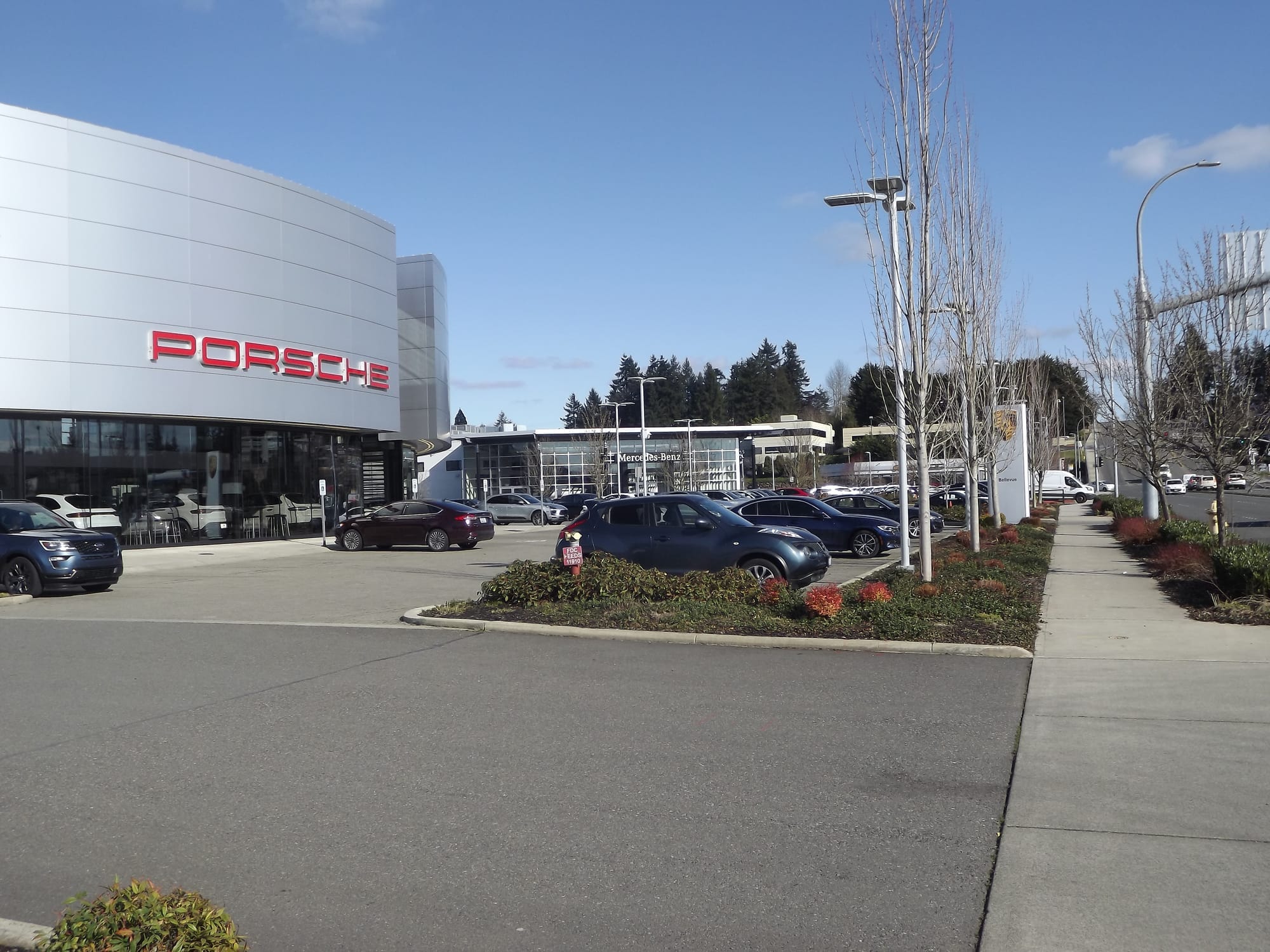
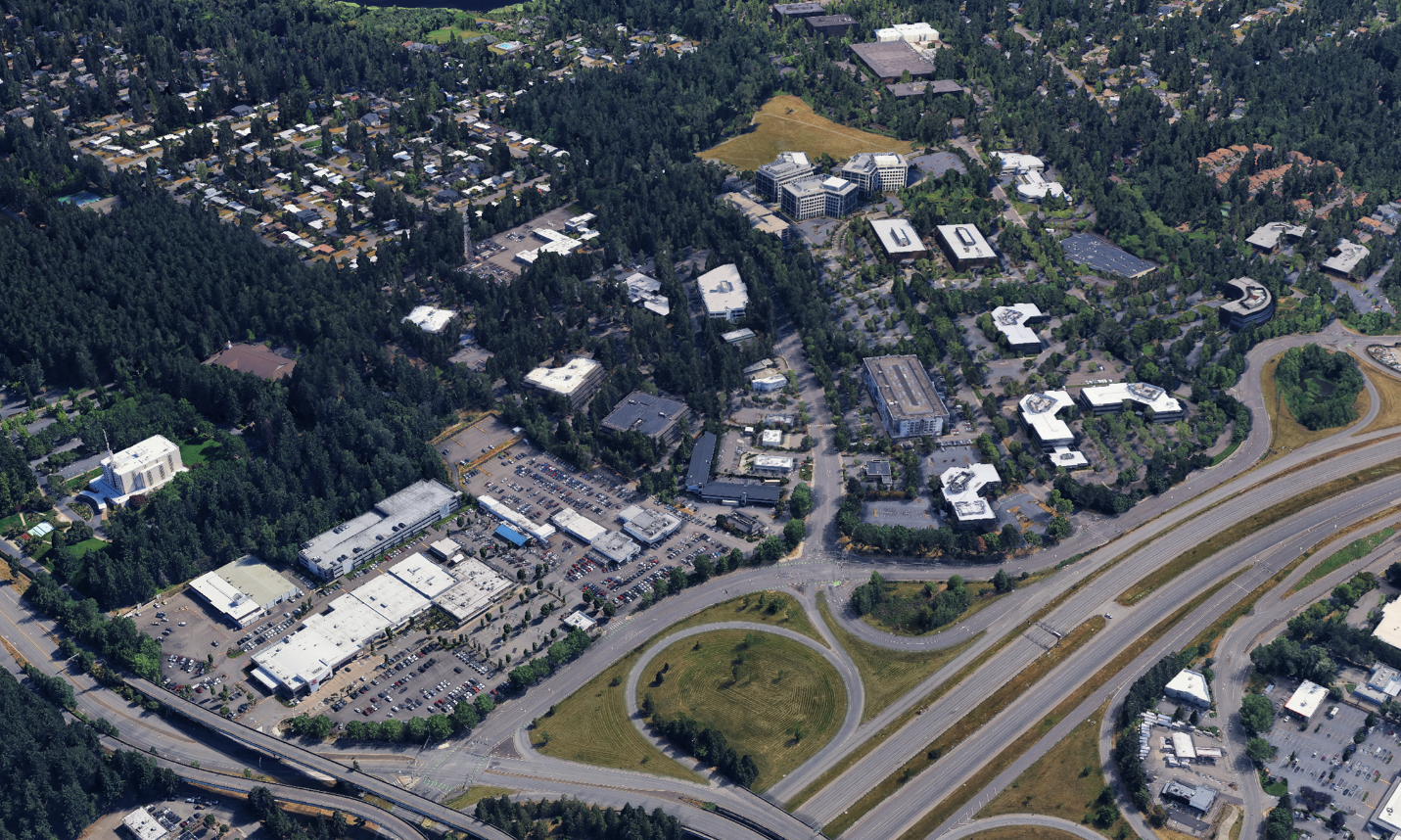
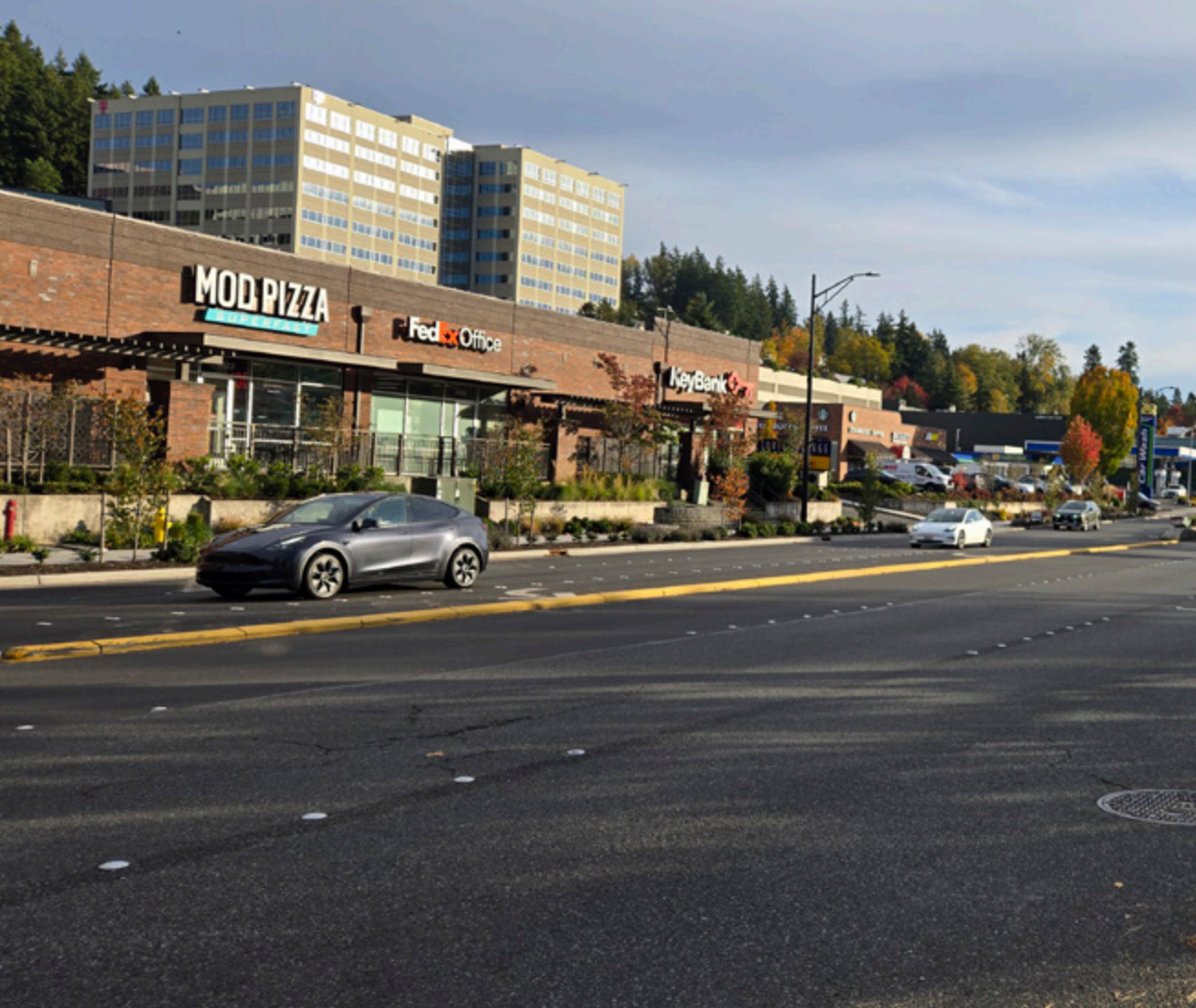
Earlier this spring, when the Bellevue Council approved the city's next major zoning update targeting existing commercial districts around town, councilmembers expressed interest in letting the supercharger out of its cage in Wilburton. Known as the Housing Opportunities in Mixed-Use Areas (HOMA) land use code amendment, the upzone was intended to allow additional infill development in areas with existing infrastructure including the Eastgate and Factoria growth centers as well as smaller commercial nodes.
An important note about HOMA: while Downtown Bellevue was included within HOMA, that high-demand area was ultimately left out of the conversation around potential tweaks to affordability requirements.
Bellevue City staff initially came out against the idea of applying any supercharger requirements to HOMA areas, arguing that the upzones and floor-area ratio (FAR) increases in themselves would offset the cost of the mandated affordable housing.
"While certain mixed-use areas are not slated to undergo the level of height and FAR increases as adopted in Wilburton, the value of the upzone remains sufficient to cover the additional cost of mandatory affordable housing," a staff analysis from March stated. "Outside of density increases, however, several elements of HOMA remain more favorable compared to Wilburton. Due to these elements, staff does not observe a greater need to pair the Wilburton Supercharger with HOMA."
To some advocates, however, the numbers coming out of Wilburton were undeniable, and the Bellevue Chamber of Commerce started a push for a six-year supercharger intended to catalyze development in HOMA areas.
Meanwhile, the Housing Development Consortium (HDC), the region's leading voice for the affordable housing industry, tried to hold the line against any supercharger, arguing Bellevue could lose out on units reserved for households making less than 65% of AMI, which represents a more pressing need within Bellevue. City analysis determined with a six-year supercharger, 76 more units would be created, but at a higher price point, costing renters $368 per month, on average.
In contrast, the Bellevue chamber and market-rate builders have pointed out that if affordability requirements cause a project to stall out or never get started in the first place, no units get built at all for new residents at any income level.
Across the lake in Seattle, recent reforms to the MFTE program heavily leaned toward providing incentives to builders, with much more flexible income requirements that will ultimately mean higher rents than under the city's last iteration of the program. But developers still have to contend with the Seattle's Mandatory Housing Affordability (MHA) program, which builders and advocates have been arguing is stifling growth in the very areas where the city should be encouraging it. A builder coalition called the Seattle Housing Roundtable is asking for a temporary discount on MHA fees, dubbed the "housing accelerator," which would act much like Bellevue's supercharger in Wilburton.
Just hours before a May 18 Council discussion on the issue, the Eastside Housing Roundtable – a group made up of both business advocates and affordable housing nonprofit leaders including the Bellevue Chamber, HDC, and Futurewise – came to an agreement around a four-year supercharger.
"Given today's market conditions, it is incredibly difficult to secure financing and advance projects. While Bellevue is still a strong long-term market, proactive steps are essential to keeping projects workable and moving forward in the near-term while balancing the need for affordable housing," the group wrote in a brief letter that also asked for the Council to consider creating an expedited permitting process for the first 1,500 units to move forward in HOMA areas.
Most councilmembers jumped at the idea of a four-year compromise letting the supercharger take effect in HOMA areas.
"We need and want more housing now, so our approach has to work in the market conditions as they currently exist," Dave Hamilton, Bellevue's Deputy Mayor, said. "I think what we're considering here will be just what many projects need to be able to move forward, and considering how difficult the market is and how many housing units we want to produce, we need to continue to be bold and reasonable in support of housing production, we need to keep our foot on the gas, and we need to continue to add to our housing pipeline."
Councilmember Lynne Robinson, who served as Bellevue's Mayor from 2020 to 2025, was more skeptical of the idea of bringing the supercharger to HOMA areas. Robinson noted that development in Wilburton is being primed specifically to get the city's signature infrastructure project – the Grand Connection Crossing – funded via a tax increment financing (TIF) program. TIF programs sets aside future gains in property tax revenue generated by development to finance infrastructure projects. Elsewhere in the city, there's less urgency to be found in trading away affordability requirements to get projects moving, she said.
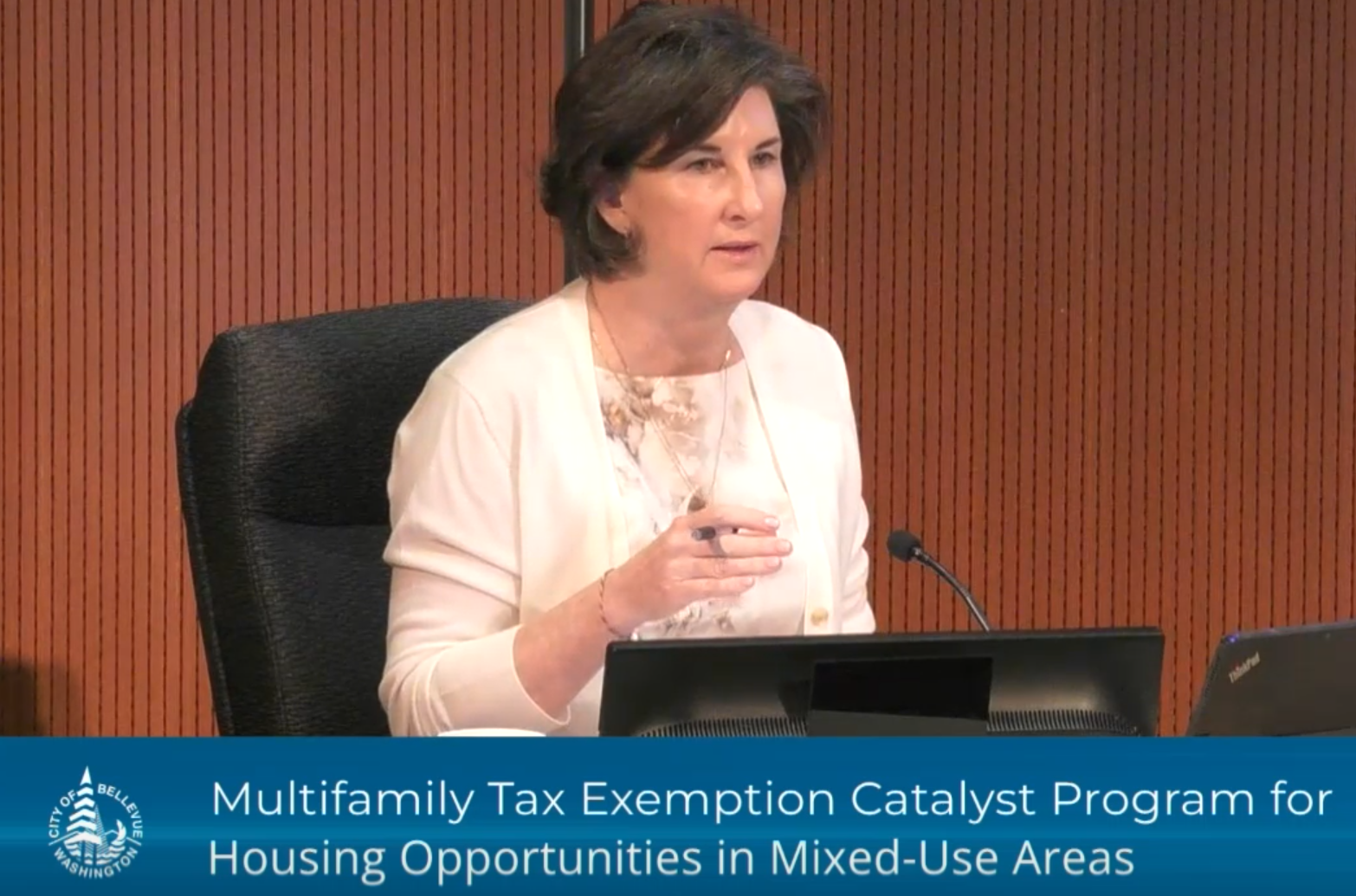
"I've heard that people think that these HOMA areas are the same as Wilburton, and I will argue that they're not at all. We had our TIF tied to Wilburton, we had to have development there. I think a catalyst really made sense there. I don't see that same need in the other areas of Bellevue," Robinson said. "Losing those tax revenues really concerns me, we have incentives to development. We did a huge recent upzone. I really don't have concerns about people wanting to redevelop at this point, and we do have the MFTE already."
Despite Robinson's reticence, the motion to advance a four-year supercharger passed unanimously, with a final vote expected in the coming weeks. But a major question coming down the pike will be whether to include the supercharger with the next major upzone planned in Bellevue, in the light-rail adjacent BelRed neighborhood. And that's what the Housing Development Consortium is clearly wary of.
"We continue to believe that the 'Wilburton supercharger' — which trades deeper affordability levels in the existing MFTE program for a stronger development incentive — should remain permanently limited to Wilburton. Economic conditions continue to create significant headwinds for housing production. In that context, we worked closely with private sector partners to support a temporary use of the 'Wilburton MFTE supercharger' in HOMA areas as a catalyst intended to create urgency and advance projects that otherwise may not move forward," HDC Executive Director Patience Malaba told The Urbanist via email.

"Council’s MFTE decision in Bellevue’s mixed-use areas is a positive step forward as the City expands its new mandatory affordable housing framework, Malaba said. "We continue to encourage the City to rely on neighborhood-specific analysis as it evaluates policy tradeoffs in BelRed. The City has an opportunity to expand public benefit by pairing growth with affordability requirements that both preserve project feasibility and create housing opportunities for households earning below 80% AMI."
The four-year supercharger is set to include a "lookback" after two years to see how the program is performing. For now, Wilburton is already being touted as a major success story even before shovels hit the ground. Whether towers do indeed rise will serve as the proving ground for Bellevue's affordability incentives.
 Ryan Packer
 Ryan Packer