The Maple Valley City Council voted Monday night to scrap a tax incentive program intended to encourage the production of affordable housing, following a cavalcade of public opposition to the proposal over the past few weeks. Despite already voting to create a Multifamily Tax Exemption (MFTE) program earlier this spring, a 5-2 vote fully repealed the program, with the council turning down a separate ordinance that had been drafted to implement it.
MFTE is a common tool used across Washington State to incentivize below-market-rate units as part of new housing developments. Builders setting aside a certain percentage of new units to lower-income households receive a property tax break, and are only charged property taxes on the land itself and any non-residential improvements made like ground-floor commercial spaces. Under Maple Valley's proposed program, the threshold to meet would have been 20% of units affordable to households making 70% of King County's area median income – around $90,000 for a family of two. After the length of the program – in this case 12 years – the entire property goes back onto the tax rolls.
Rather than making local governments take the hit from those reduced property tax revenues, under MFTE the tax rates "shift" across all of the districts providing the exemption, slightly bumping up rates during the term of the MFTE program – at least compared to the alternate reality where building was still constructed without the tax break. This has been one of the most contentious parts of the Maple Valley proposal, despite the fact that MFTE programs are currently active in nearby Covington and Enumclaw among major cities like Seattle, Bellevue, and Tacoma.
Because Maple Valley's city limits make up only a portion of the larger Fire Prevention District #43 and Tahoma School District boundaries, where taxes would also shift following potential participation in an MFTE program, residents in unincorporated King County have protested the proposal as "taxation without representation." But this type of tax shift isn't unique to MFTE, and occurs whenever local governments buy property or new churches open and receive tax-exempt status.
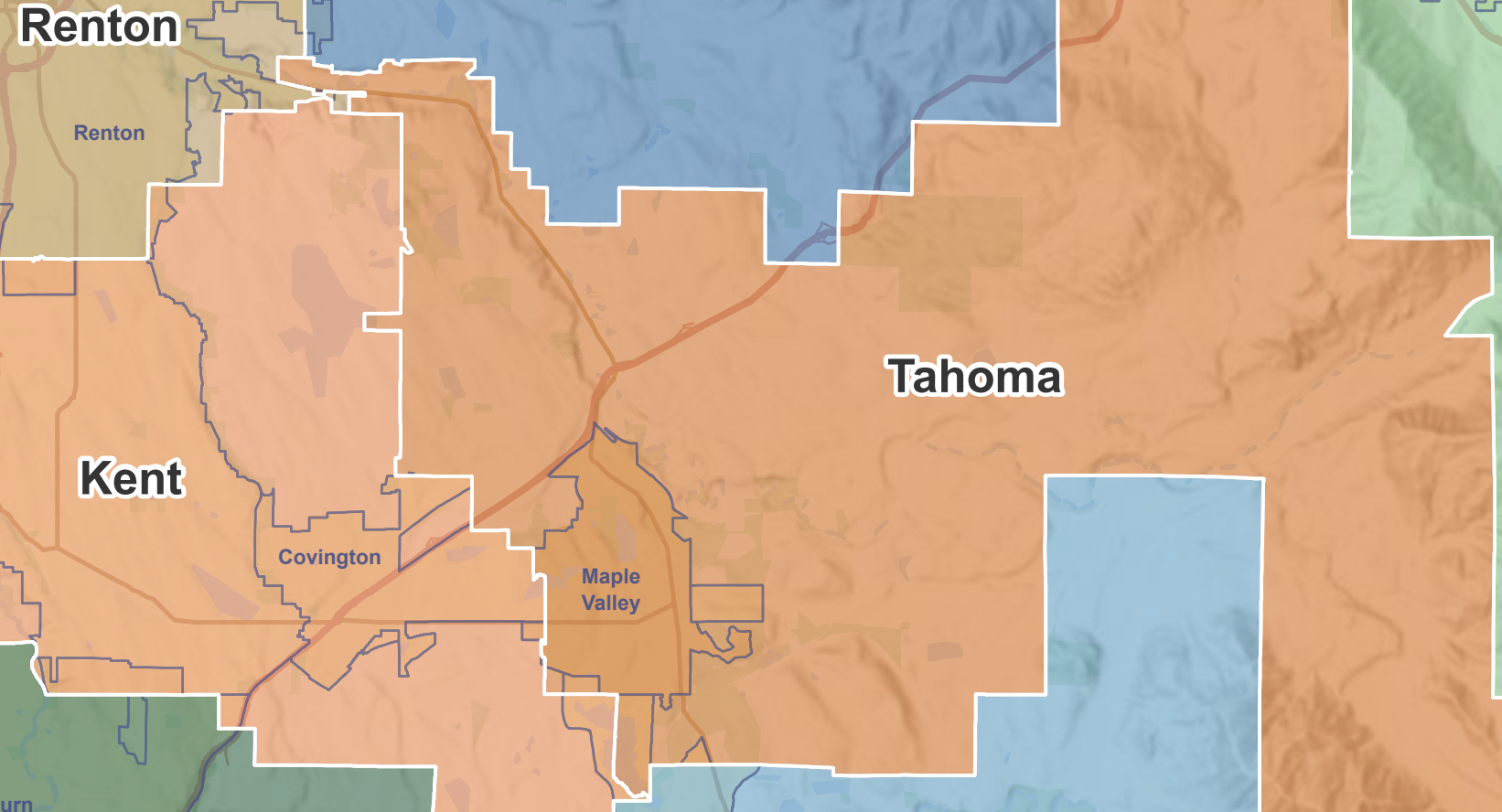
But even apart from residents of unincorporated areas like Hobart and Ravensdale, opposition from within Maple Valley has also been considerable, and has included overall opposition to the idea of ramping up the production of affordable housing within the city. Since 2000, the population of Maple Valley has roughly doubled to nearly 30,000 residents, but most of the new housing built has been detached single-family homes, with a typical home value increasing by approximately 67% over the same timeframe. According to data from King County, just 15% of housing units in Maple Valley are available to renters.
"I didn't move to Maple Valley 'til 10 years ago. I couldn't afford it, and so the deal is, we shouldn't have to pay for the people who can't afford it," Maple Valley resident Kelly Bowen told the Council Monday night. "I'm sorry, but the thing is, my taxes are $25,000 a year on my property, and I go, it's not my responsibility to pay for somebody else. If they can't afford to live here, they don't get to live here."
According to analysis conducted by the City of Maple Valley, the average impact to a homeowner with a median-value home from the "tax shift" is expected to be around $50 per year, assuming robust participation rates in the program.
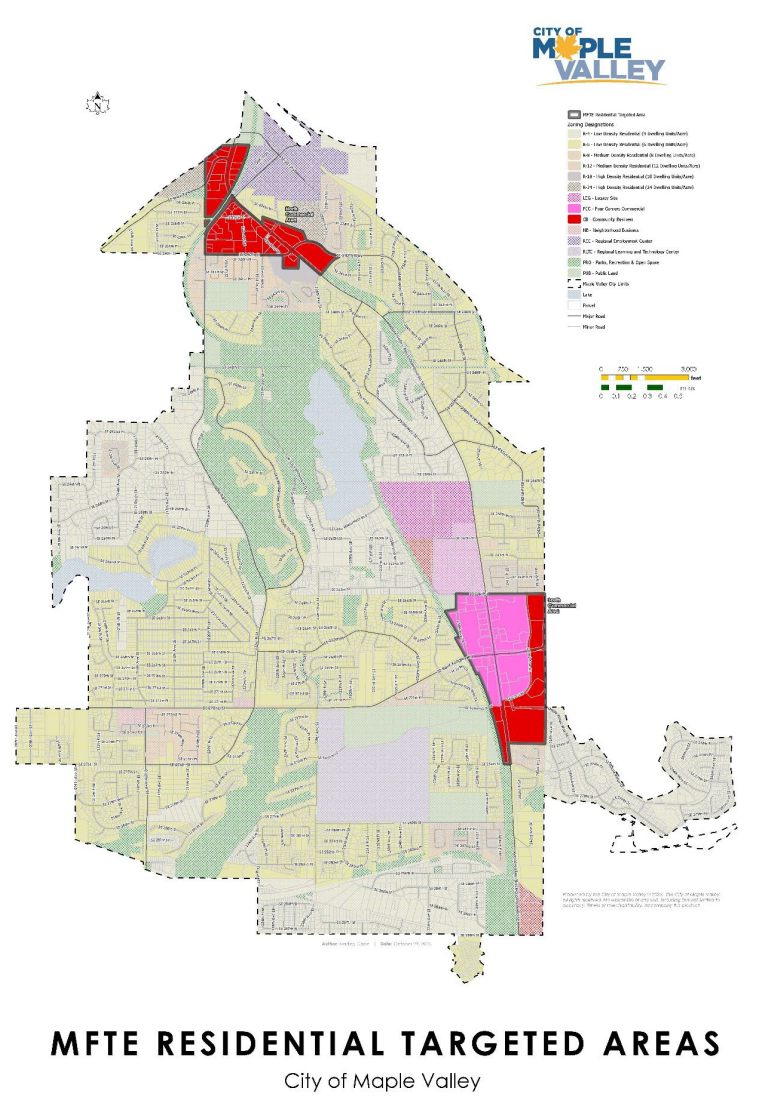
The idea of implementing an MFTE program has been moving forward in Maple Valley since late 2024, but only advanced over the finish line in March by a single vote at Council. The City still needed to adopt a map showing where developers could utilize MFTE within the city. That draft map had included only two limited areas of the city where multifamily zoning is allowed, clustered along State Route 169.
In 2024, when the King County Affordable Housing Committee reviewed Maple Valley's proposed Comprehensive Plan for compliance with countywide planning policies, citing new housing close to the state highway was called out as an issue, with the committee noting residents in those areas would have more "exposure to heavy automobile traffic, air pollutants, and noise" than those elsewhere in Maple Valley.
While the Council held a public hearing on the proposed map on April 27, City officials pushed councilmembers to consider making a decision at their next meeting, after discussing potential repercussions from the vote with legal counsel.
City Attorney Jeff Taraday cited a new state law that requires all cities to "make adequate provisions" for future residents across different income levels, with MFTE one potential tool to encourage the creation of new homes for residents with lower incomes. Recent rulings at the state's Growth Management Hearings Board, including against the City of Mercer Island, have tested that law, making it clear that cities have to take a more active role in accommodating affordable housing.
"Back in the old days, under the Growth Management Act, it was enough to simply zone for the properties like, 'oh, well, we have multifamily zoning, so we're good. We don't have to do anything else.' And that's just not the law anymore. And Mercer Island found out about that the hard way," Taraday told the Council at the April meeting. "It doesn't have to be through MFTE, but somehow, some way, you're going to have to find a way to build those units, and if you don't, I fear that the consequences to your taxpayers are going to be much graver than the consequences of tax shift from a few hundred units of affordable housing."

But the majority of the Maple Valley Council wasn't swayed by the threat of potential legal risks. After considering a motion to adopt the draft map but repeal the MFTE program in order to give the city more time to consider its future, the Council ultimately moved to full adoption. Councilmember Victoria Schroff who voted against full repeal along with John Herbert, addressed residents of unincorporated areas who came out to oppose the program.
"You've all told us how you shop in Maple Valley, and you do all of your business here, and we appreciate that. But then, in the next vein, you tell us you're not going to benefit from the improvements we make to our city, the city that you will be shopping in, the city that you will benefit from its roads that are being well maintained," Schroff said. "And although I heard a number of you say, 'Oh, we want affordable housing, there have to be other issues,' I don't see anybody standing up and giving us a solution."
Schroff did make a motion to adopt the proposed map, a move that would have fully implemented MFTE in Maple Valley, but she couldn't get any of her colleagues to even second that motion.
Councilmember Didem Pierson, who had also voted against the creation of the program in March, portrayed the impacts on existing residents as outweighing the benefits to future ones.
"We are creating affordable housing through MFTE for the people that we don't know, that are yet to come. However, we are putting burdens on the people who we already know, our neighbors, our friends, our community. We can't – I can't do that. That doesn't feel good for me and there has to be another way to meet our goals."
The Maple Valley Council is set to discuss the issue of affordable housing at meetings in June, with the creation of a housing taskforce put on the table Monday night. With Monday's vote, that conversation is set to move forward without a commonly used tool in the toolbox.
 Ryan Packer
 Doug Trumm