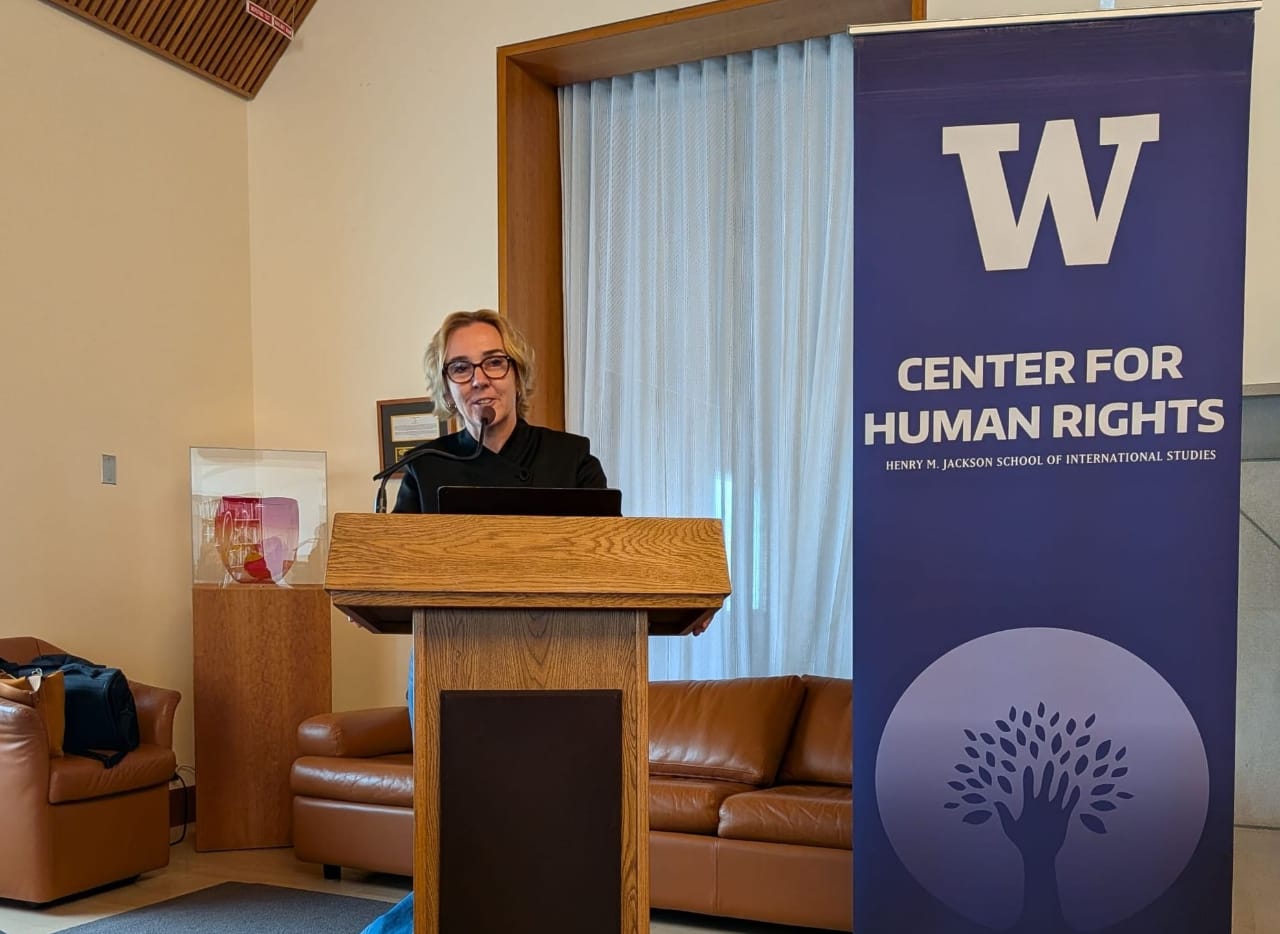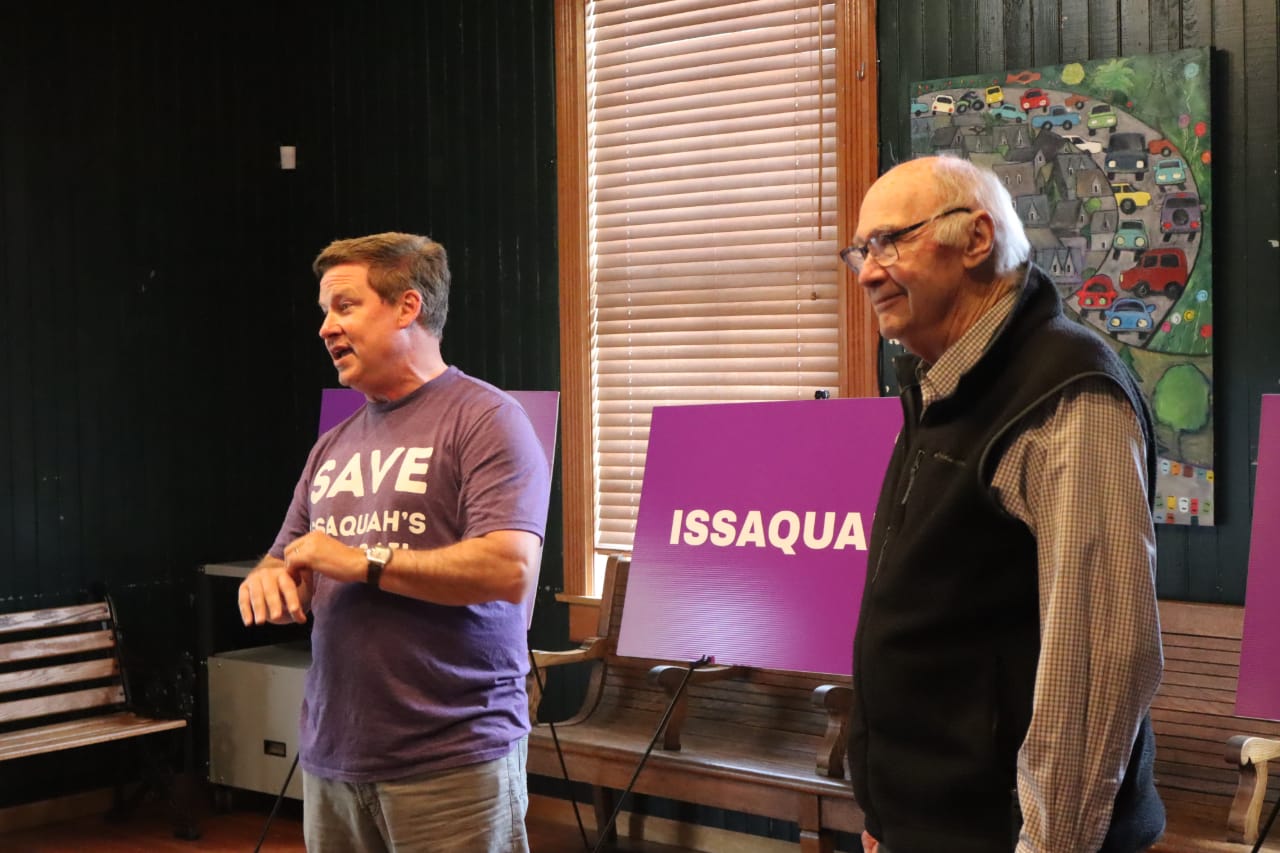
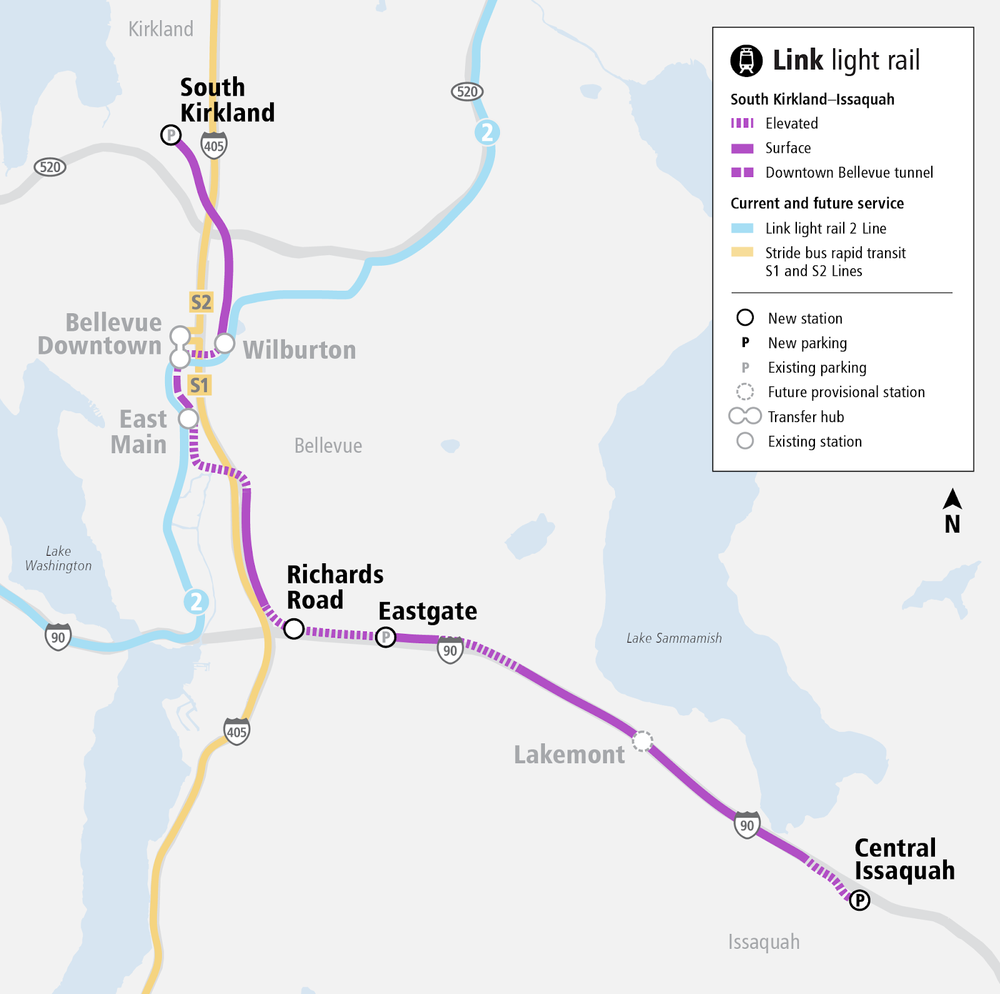
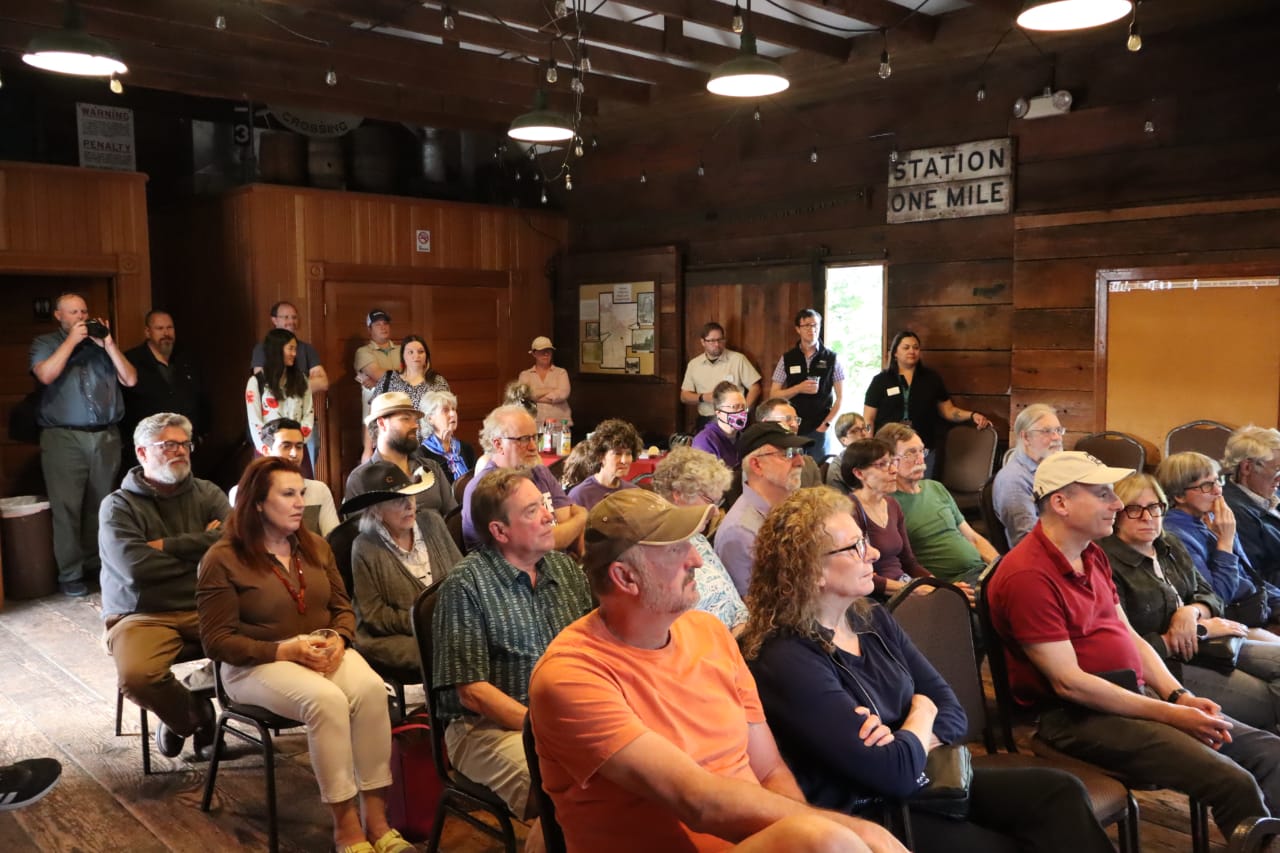
The mood was celebratory at Issaquah's historic train depot this past Monday night for a community meeting, a fact that seemed to disguise the fact that just a few days earlier the Sound Transit board had voted to delay the city's planned light rail line by more than half a decade. Issaquah Mayor Mark Mullet, who has thrown himself headlong into advocacy for the proposed 4 Line between South Kirkland and Issaquah since being elected last year, framed the outcome as a big win.
The 4 Line's delay to 2050 – after initially being scheduled for 2041 when voters approved the Sound Transit 3 (ST3) package – came as part of a larger rebalancing of Sound Transit's system expansion plans. A project dubbed the Enterprise Initiative, spun up in response to a budget shortfall that threatened project timelines by the early 2030s, forced the Sound Transit board to reckon with some tough choices.
By Thursday's vote, the agency had shrunk a projected $34.5 billion shortfall to around $10 billion in unfunded projects, Issaquah's light rail line not among them.
"We can change our purple shirts from 'Save Issaquah Light Rail' to 'Saved Issaquah Light Rail,'" Mullet said. "After the mayoral election, everybody I met with said, 'Prepare to be cut out of the light rail path,' because they were like Sound Transit has this $35 billion deficit, the Issaquah line is going to get cut and you guys are screwed and you have to wait until ST4."
Other areas of the region weren't as lucky as Issaquah. Sound Transit remains without a timeline to reach Ballard, with the eponymous Ballard Link Extension now truncated at Seattle Center unless additional cost savings can be unlocked or additional revenue found. The long-promised 1 Line infill station in North Tukwila at Boeing Access Road also remains in limbo, along with a Sounder S Line extension to DuPont. Tacoma's planned streetcar extension to Tacoma Community College was pushed from 2039 to 2043.
Meanwhile, the prospect of an ST4 anytime soon looks like a long shot, though individual areas of the Sound Transit taxing district (like Seattle) may ultimately have to decide to go it alone to finish their own projects.
After months of advocacy, Monday's meeting was a clear victory lap of sorts. Following a packed rally in Issaquah City Hall in February, the Issaquah delegation became a frequent sight at Sound Transit board meetings. The purple shirts were even seen as far away as Tacoma, where the board held its retreat in March to get down to brass tacks when it came to the different potential paths forward. The City of Issaquah also chartered a shuttle to carry riders to Union Station to provide public comment to the board.
"I'll be honest, if the community hadn't stepped up, I think we would have been just like the people were in Ballard, saying, 'This is ridiculous. How did you let us out?' And so this community deserves a lot of credit," Mullet said.
Mullet also detailed considerable behind-the-scenes wrangling of Sound Transit board members, including a flight to Scottsdale, Arizona where King County Councilmember Pete von Reichbauer has a second home. The flight to Reichbauer's St. Patrick's day party, paid for on his own dime, was the furthest Mullet said he traveled to woo a board member.
"I called him up, said, 'Hey, I want to meet about Issaquah light rail, and he's like, 'Well, I'm in Scottsdale, you can come talk to me at my St. Patrick's Day party. So I looked at my wife, I said, 'What about going to Scottsdale?'"
The special guest of the night Monday was Fred Butler, who served as Issaquah's Mayor from 2014 to 2017, after being a member of the Issaquah City Council for 14 years. He also served on the Sound Transit board for 12 years, and is widely credited for the city's inclusion in the ST3 light rail plan approved in 2016. Now retired, Butler has been following the saga of the 4 Line with considerable interest, and told the crowd he watched the entire marathon board meeting last week.
"I could not be happier with our mayor, our city council, our citizens, and how you all came together to make this happen," Butler said. "It's going to happen not as soon as we would like, but we're in the plan. And we're in the plan for a number of reasons. Number one, the one-on-one meetings that Mark had, the town transit board meeting, board members, other members, the time he spent, and the creativity that he showed with our city council and others made a believer out of a lot of people, and the willingness of our community to take a look and ask the question: what do we need to do to make sure that Issaquah stays as a part of the plan, and we get light rail to Issaquah. [It] would not have happened without the entire community."
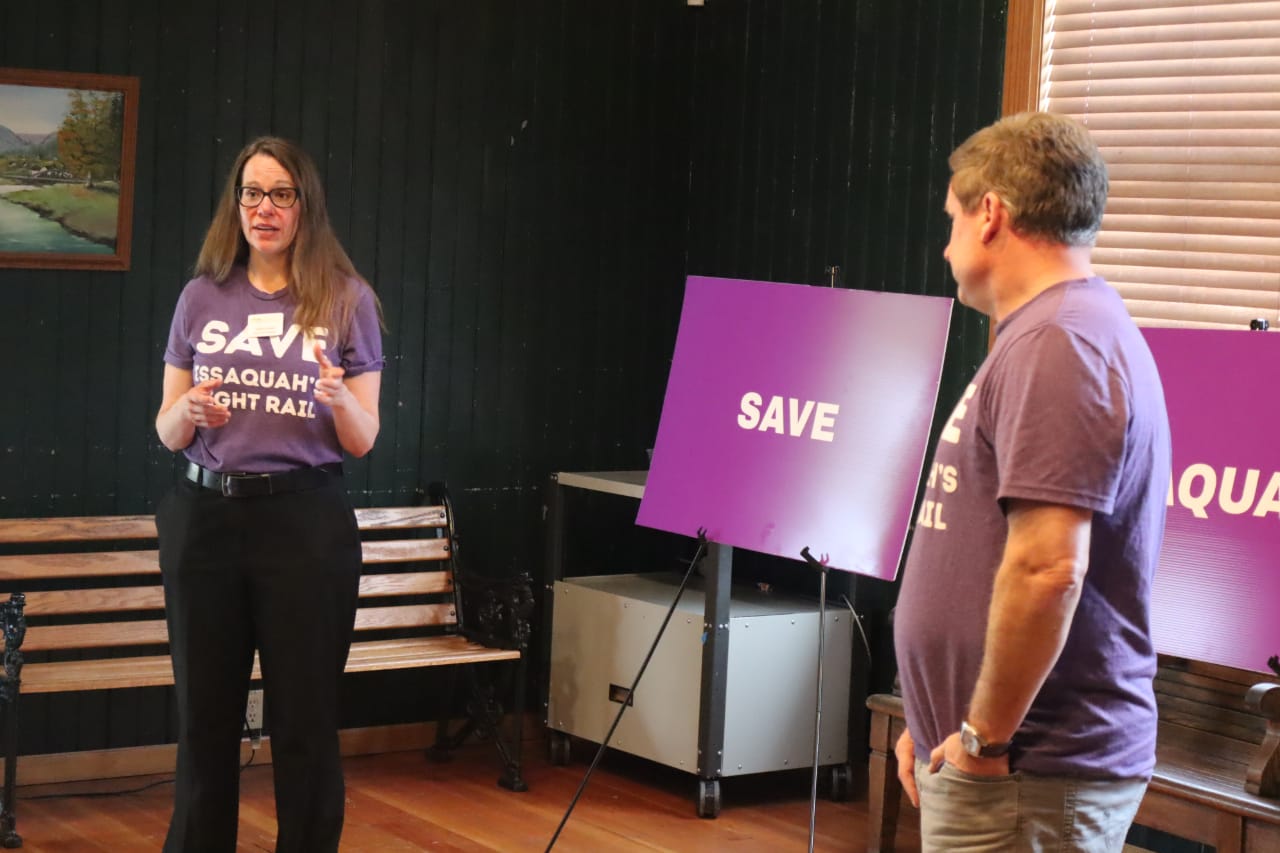
To Mullet, being on the calendar is everything, and he likened the status of the 4 Line to a highway project that he worked on in the State Senate, where he served from 2012 to 2025. The I-90 and SR 18 interchange opened last summer as the second diverging diamond interchange in the entire state, and had been a major priority for local elected leaders in East King County for many years.
"I got it into the 2015 transportation package, and it cost $175 million bucks at the time, and then everyone said, 'Well, Mark, we're not going to finish it until 2033, I won't be alive in 2033.' And I tried to explain, first you've got to be on the map. If you're on the map, then you have a lot of options of how you move things up."
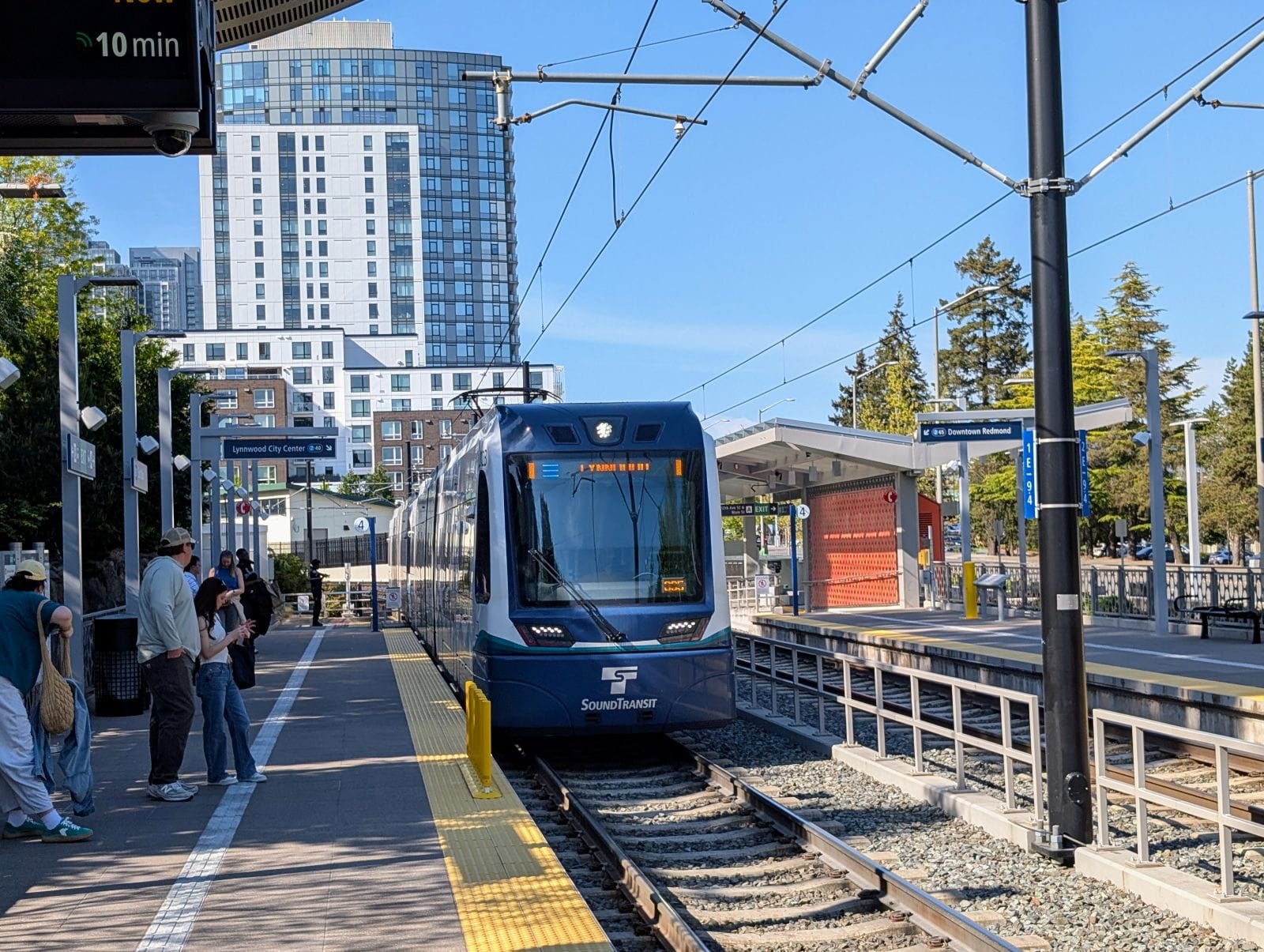
Mullet has been advocating for the 4 Line to be advanced in planning, so that Sound Transit staff can start looking at potential options to save money that have been suggested by city leaders. Those options include building primarily in state right-of-way, and potentially connecting into the existing 2 Line at a different location closer to South Bellevue Station, or having the line head to Mercer Island, allowing quicker trips to Seattle, but requiring transfer for Bellevue trips.
Issaquah leaders had also proposed to skip building a parking garage near their station, but an amendment adopted last week actually banks on the idea that a parking garage would have been built, moving those funds to a new parking garage in South Renton instead. Renton leaders including Mayor Armondo Pavone had made saving that garage their main priority over the past few months.
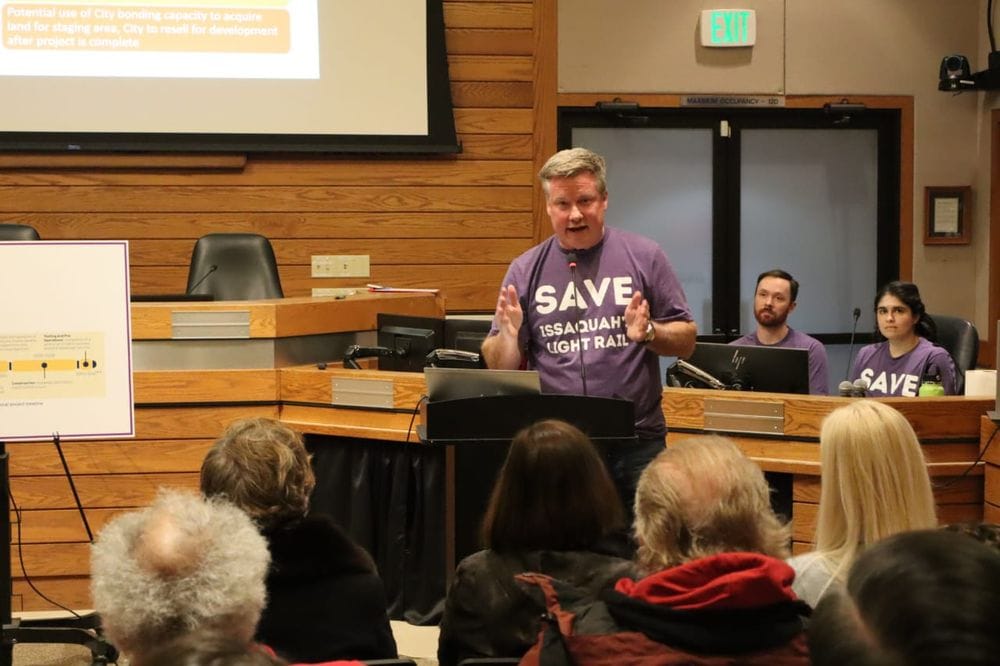
Mullet has also been promoting the idea that Sound Transit should consider going to the voters to raise its own debt limit, currently capped at 1.5% of the assets that it owns.
"There's never been a jurisdiction in the state of Washington that's ever had a problem or ever wanted to borrow more than that amount of money," Mullet said. "And so for the first time we actually have an organization that's hitting up against that cap, but the reality is the tax revenue that's currently generated for Sound Transit could actually afford to borrow probably $30 billion. So, the debt limit is restricting how quickly and how cheaply we can actually build this next wave of light rail projects, and this is where the real work begins."
During the meeting, an attendee asked Mullet when Issaquah might be able to secure another representative on the Sound Transit board, regaining Butler's influence. Mullet expressed clear interest, but that may prove to be a tall order. Redmond Mayor Angela Birney recently secured another four-year term, with only two other seats on the board representing the East King subarea. One of them belongs to longtime board member (and King County Councilmember) Claudia Balducci, and the other to Renton Councilmember Ed Prince. Snagging one of those seats would be a major coup for Issaquah.
But either on the board or off, Issaquah's involvement in the future of ST3 clearly isn't going to be ramping down any time soon.
"We'll let you know as we reach points where we're trying to get more community involvement," Mullet told the crowd. "We will make sure we raise the purple 4 Line signal in the sky."
 Ryan Packer
 Doug Trumm