On Tuesday, the Seattle City Council approved mayor-backed legislation banning junk fees imposed on renters in a 8-0 vote. Rental junk fees include administrative service fees, pet rent, and package fees.
Councilmember Dionne Foster was the lead sponsor of the bill, which was a priority for Mayor Katie Wilson and a part of the affordability agenda that carried her into office in last November's election. Backers say the legislation requires clear, upfront pricing for tenants and strengthens enforcement to support a "predictable and equitable rental market." Wilson made it clear she will sign the bill.
“I'm happy to celebrate the elimination of junk fees, creating greater transparency and fairness in the market,” Wilson said in a statement. “This is a major step forward in making Seattle an affordable city for working families and their pets. I am grateful to Councilmember Foster and her team for her partnership on this important step forward for renters.”
As chair of the Housing, Arts, and Civil Rights Committee, Foster shepherded the bill through without running into major obstacles. The bill passed 8-0, with District 4 Councilmember Maritza Rivera recusing herself from the vote because she owns a rental property.
"This important legislation advances consumer protections for renters in our city by making Seattle’s rental market more transparent and affordable," Foster said in a statement. “We know that transparency creates a better housing market. This legislation gives renters the ability to compare rental options based on their actual cost, not an artificially low advertised price followed by a list of surprise charges. I want to thank the Mayor and her team for advancing this vital work.”
Foster pointed to an Urban Institute study that shows rental junk fees can balloon housing costs by up to 30% in some cases, and lamented that the burden falls hardest on Black residents and those on fixed incomes.
"Research from the Urban Institute shows that junk fees can increase renters' total housing costs by 10 to 30%, making it harder for people to budget and harder for people to stay housed," Foster said. "Those added costs hit hardest for seniors on fixed incomes, for young people entering the workforce, working families, and communities that are most likely to rent. As we heard earlier today, in Washington, Black residents are about twice as likely to rent than own, meaning these practices can disproportionately burden households already facing barriers to housing stability."

District 7 Councilmember Bob Kettle proposed two amendments that would have watered down the bill, both rejected. One would have allowed pet rent for dogs, but capped such fees. The other would have jettisoned the term "junk fee" which Kettle posited was pejorative. Kettle still voted yes on the underlying bill after his amendments failed.
If landlords violate the junk fee ban, the City Attorney's Office may take them to court and recover three times the amount of the illegal fees, the Mayor's Office noted. The new regulations go into effect July 1, 2027.
City Attorney Erika Evans issued a statement in support of the effort, which suggests her office does intend to put resources into enforcement.
"This is a significant step forward in making Seattle a more affordable place to live and work, and giving renters the clarity and confidence they deserve," Evans said. "Good landlords who play by the rules will benefit, too, as we hold bad actors accountable by making the housing market fairer and more transparent for everyone."
Renters turn out at public comment
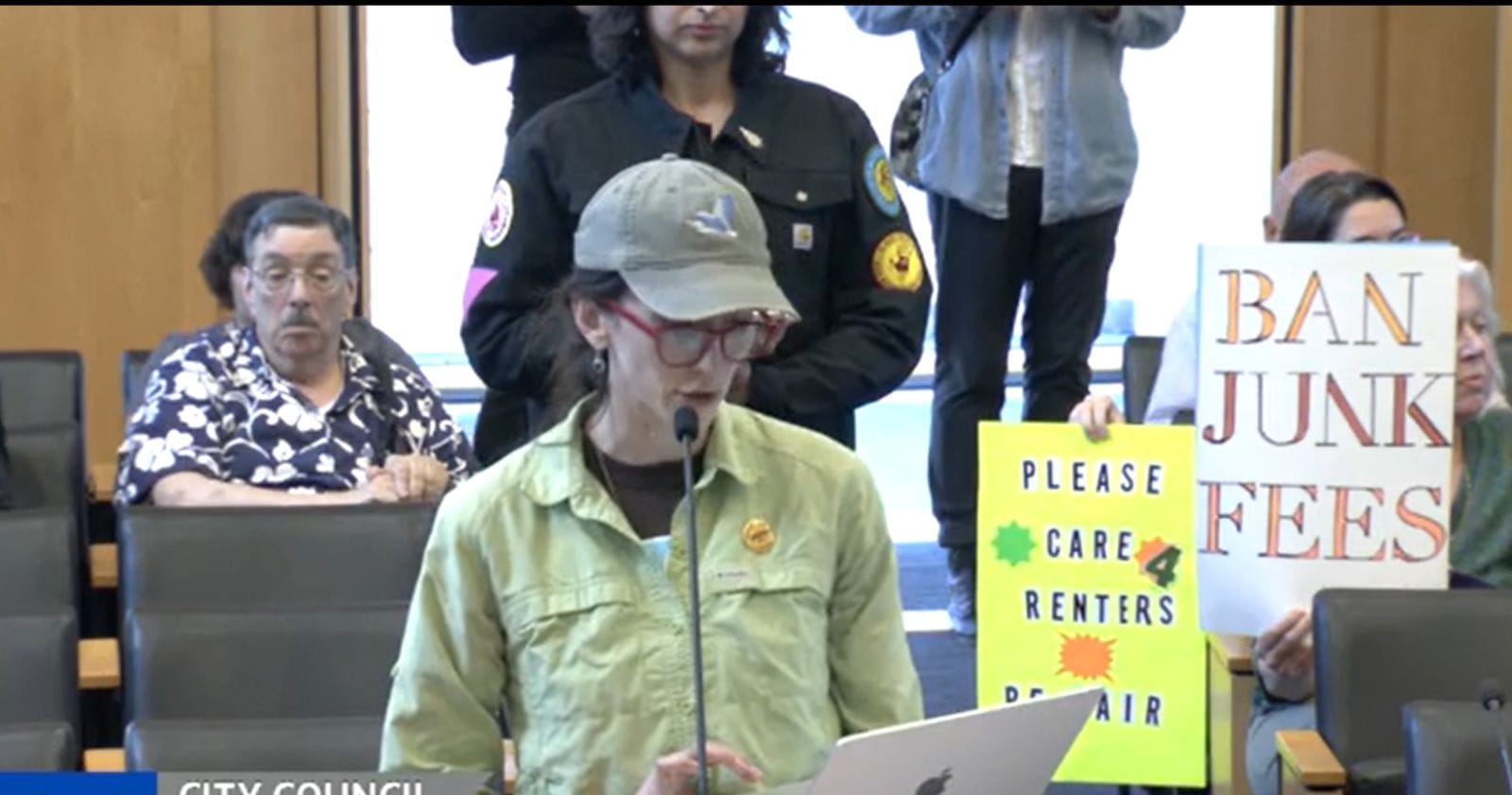
Public comment on Tuesday was weighted heavily in favor of the junk fee ban, with the Stay Housed, Stay Healthy Coalition turning out dozens of renters in favor of the bill. Transit Riders Union (which Wilson formerly led) and labor groups including SEIU 6, UAW 4121, Teamsters 117, and UFCW 3000 also voiced support.

The Rental Housing Association, which represents smaller landlords, opposed the legislation and unsuccessfully pushed for a carveout exempting small landlords. Kevin Schilling, a lobbyist for the Rental Housing Association and a Burien City Councilmember, testified against the bill, arguing banning fees would lead landlords to raise rents to make up the difference or to ban pets altogether.
“If you want to use a service, you have to pay for it,” Schilling said. “And if we just take away the fee for a service, what's going to happen is either the costs to offer that service are going to be baked into somewhere else or the service is not going to be allowed.”
While pet rent will be banned by July 2027, the legislation allows landlords to continue to collect pet deposits, which should help allay concerns that landlords would have no recourse if a pet inflicts significant damage on a rental unit.
Supporters argued that the junk fee ban won't just save renters money, it will also save them time. Danica Noble, who is running for the state House in the 32nd Legislative District, made this point in her comment, noting she has extensive experience on the topic through her work at the Federal Trade Commission and as the chair of the state bar association's antitrust consumer protection and unfair business practices section.
"I am in favor of the junk fee ban, and it's more than a question of just an extra fee," Noble said. "It's more than the invisible tax raising prices across the economy. It's more than all the convenience fees that we've all paid and have never found convenient. It asks a question about whether our markets can be fair in an increasingly digital world, and it's something that we absolutely need. The digital markets promise transparency for consumers. Junk fees hide those and prevent that. Chair Khan at the Federal Trade Commission assumed 54 million hours would be saved by a nationwide junk fee ban. The other problem is it incentivizes dishonest business and punishes those that would make those transparent. So, if consumers should pay it, they should see it before they decide to buy. That's how we make this not deceptive."
Alexia Sattler, a college student who rents in South Lake Union, echoed this sentiment, saying she had experienced those burdensome time costs firsthand.
"When I lived in Eastlake, I was charged a $15 administration fee and $50 technology fee on top of the advertised rent, and these charges may seem small, but housing is already very expensive for a lot of people, a lot of my friends, my coworkers, too," Sattler said. "For every single apartment I rented in Seattle, I found myself going back and forth with property managers, trying to negotiate or question what these charges were, only to be told that there was nothing they could do about it. I'm a college student with two jobs. This is really unfair. Renters should not have to fight their landlords just to understand or challenge the true cost of their housing."
Looking forward
While narratives of Wilson struggling to find her footing and build a rapport with councilmembers have been prevalent among Seattle media outlets, the junk fee ban illustrates that her agenda is moving forward. It could be a signal of momentum, as Wilson queues up more policy initiatives and prepares for a tough budget season, with the City facing a large shortfall last estimated at $175 million.
The Mayor's Office expressed hope that the junk fee ban could be a model for other cities nationwide to follow. "The work across city leadership continues to advance the strong tenant protections Seattle is known for and positions the city to keep leading the nation."
 Doug Trumm