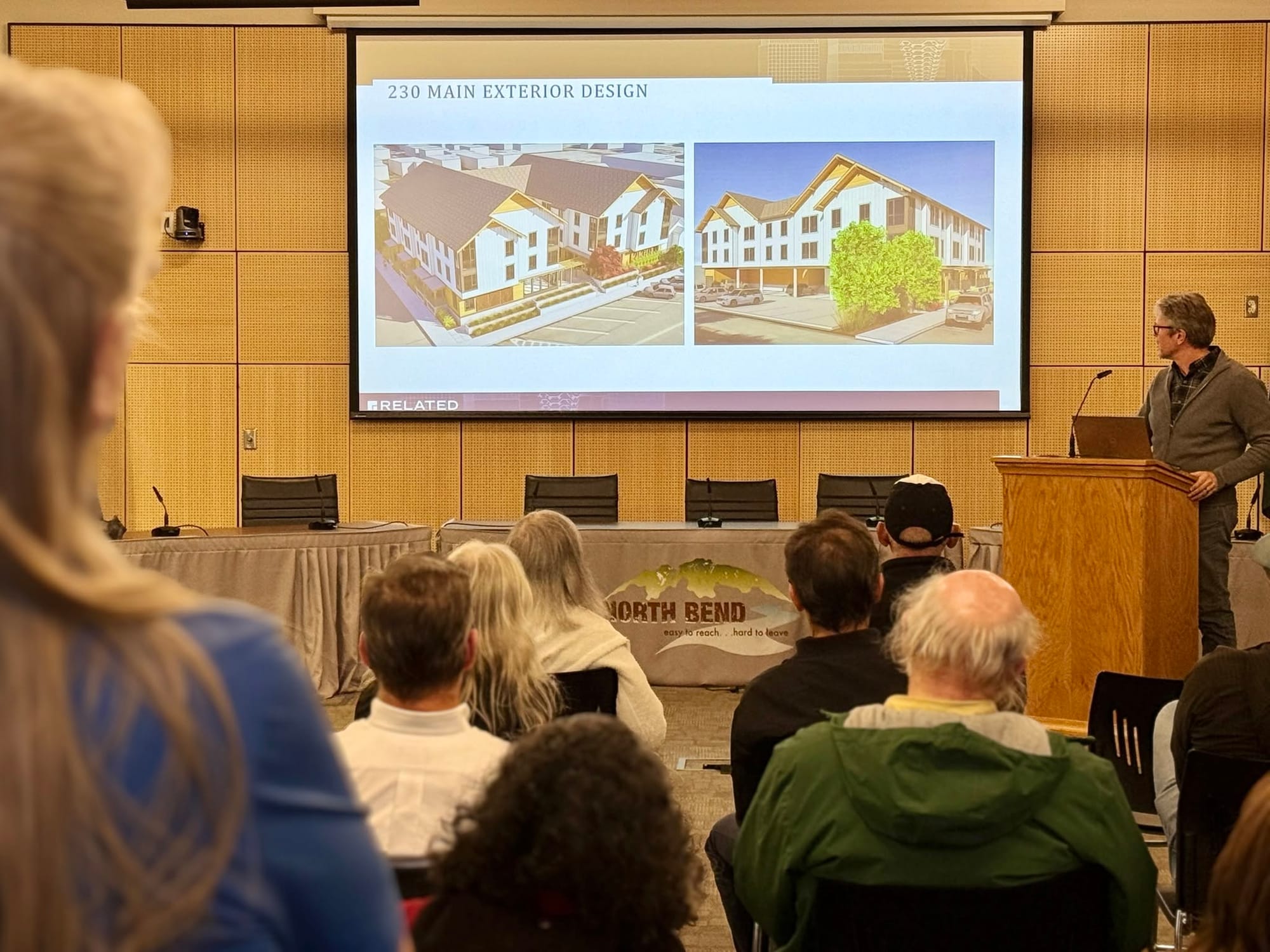
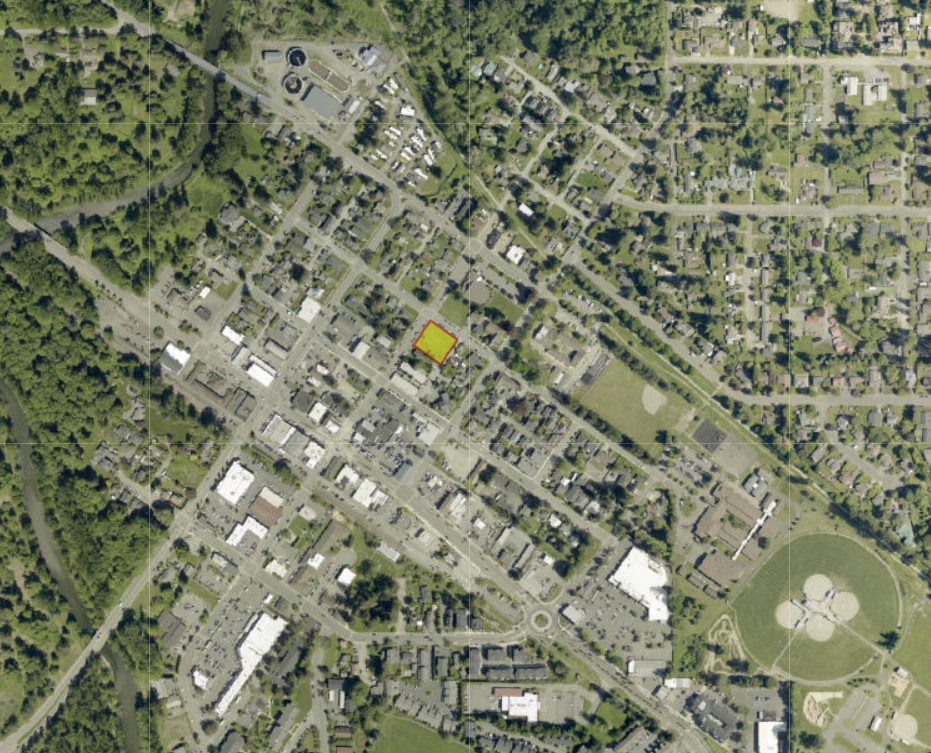
On a Tuesday evening a few days before last Halloween, the City of North Bend held a community meeting at the North Bend branch of the King County Library System. The event's purpose: introducing community members to Related Northwest, the developer that had been selected to partner with the City on a 40-unit affordable housing project directly across the street from the library building, at 230 Main Avenue.
The project was to be the city's first foray into creating workforce housing, intended for households making up to 60% of King County's annual median income, or around $72,000 for a family of two – a subset of the population that are not well served in the current North Bend housing market.
Currently, 44% of the households of North Bend earn more than $200,000, a fact that stands in stark contrast against the fact that 73% of the jobs inside the city belong to modestly-paid employees in the retail and service sectors. As of 2022, City data showed that just 11.4% of the city's workforce lives in the city, a problem that the 230 Main Avenue project was intended to start to combat.
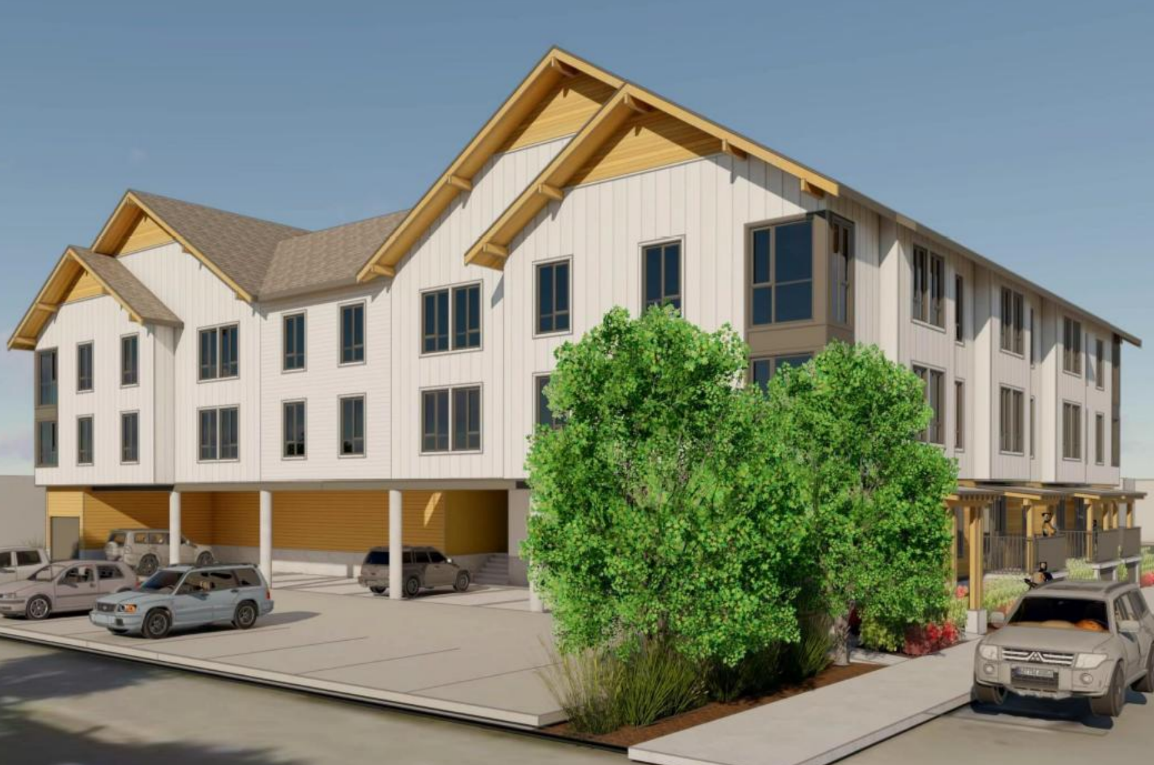
"As a highly livable, hardworking community here in the Snoqualmie Valley, North Bend is continuing in its effort to ensure a diverse array of home options that meet the needs of all residents, from local schoolteachers and retail workers, to seniors and veterans," the City's announcement for that October meeting stated. Attendees were shown renderings of the three-story building with twin pitched roofs, a design that mirrors two single-family homes.
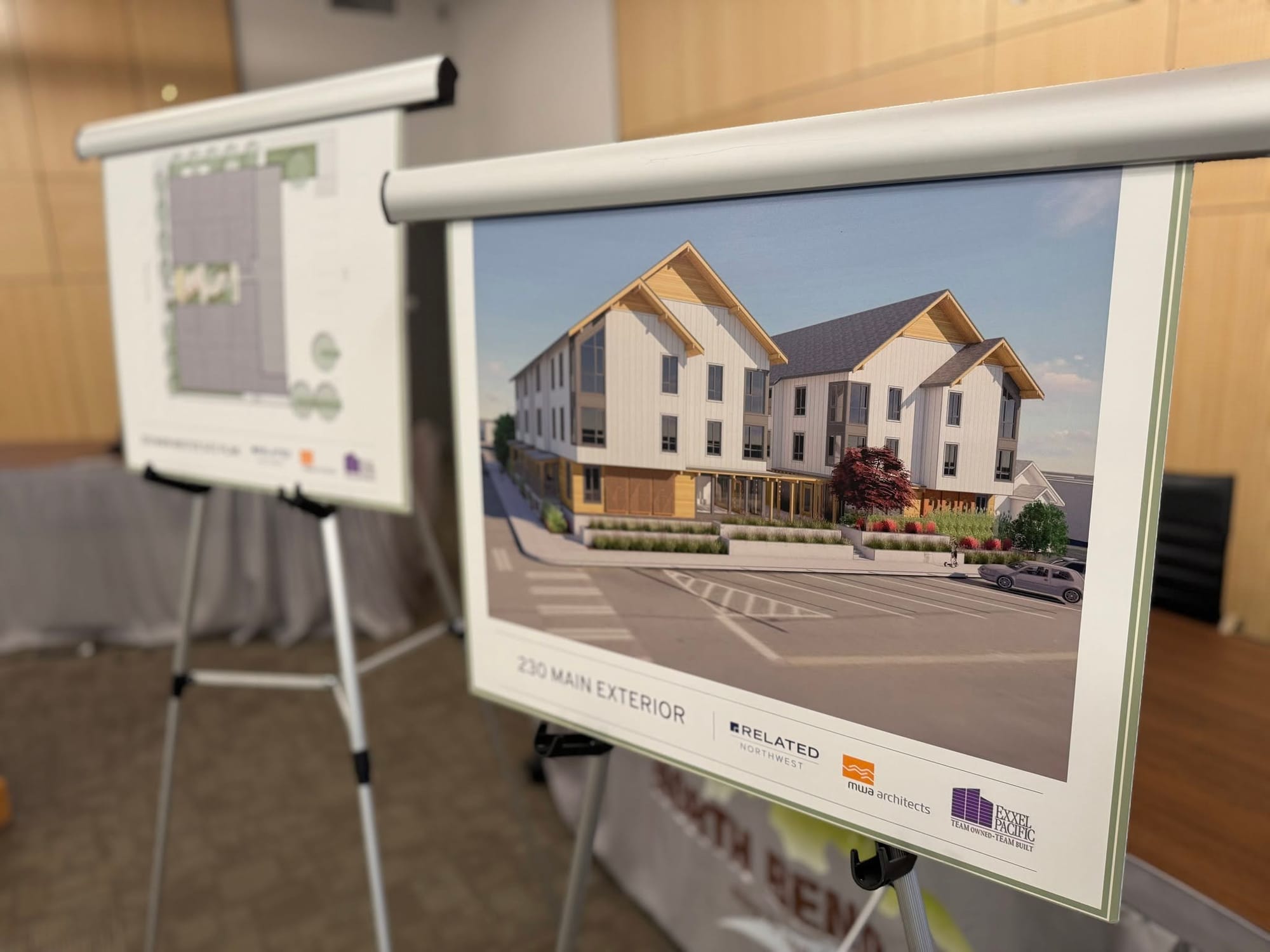
But within just a few months, the 230 Main Avenue project would fall apart, with the City setting aside the idea of using the site for affordable housing, and potentially eyeing other uses. On April 22, the city terminated its agreement with Related Northwest, refunding the company $250,000 for its pre-development costs, including the creation of those renderings shown in October.
So what happened over the course of a few short months, with 230 Main Avenue going from being touted by the city to being completely dead? North Bend's leaders have attempted to paint the episode as an illustration of the headwinds small cities like theirs face when trying to do their part in advancing affordable housing. But public records show there were many other factors at play, including the highly charged issues of density and parking.
"We are not a complete community unless we all can afford to live here. North Bend must be a city where working people can work, raise a family, and eventually retire," North Bend Mayor Mary Miller said in a 2025 State of the City speech, just weeks after the North Bend Council unanimously approved the selection of Related Northwest as the development partner on the project.
"The gist of it was this could be our very first opportunity to showcase affordability, affordable housing done well, or I'll say excellently. That was the hope, the grand hope," Miller told The Urbanist.
The Problem with Parking
A few days after last fall's open house, on November 5, the North Bend Planning Commission voted 4-1 to recommend approval of Related Northwest's Disposition and Development Agreement (DDA) for 230 Main. Before taking the vote, the commission held a public hearing on the action, with numerous North Bend residents raising concerns around elements of the project, including its bulk and scale – and the amount of parking spaces planned on the lot.
In order to accommodate the 40 one-bedroom units and studios, the City proposed to reduce the number of planned parking stalls from the 48 called for in city code to 32, with 12 of those stalls located on the street adjacent to the building.
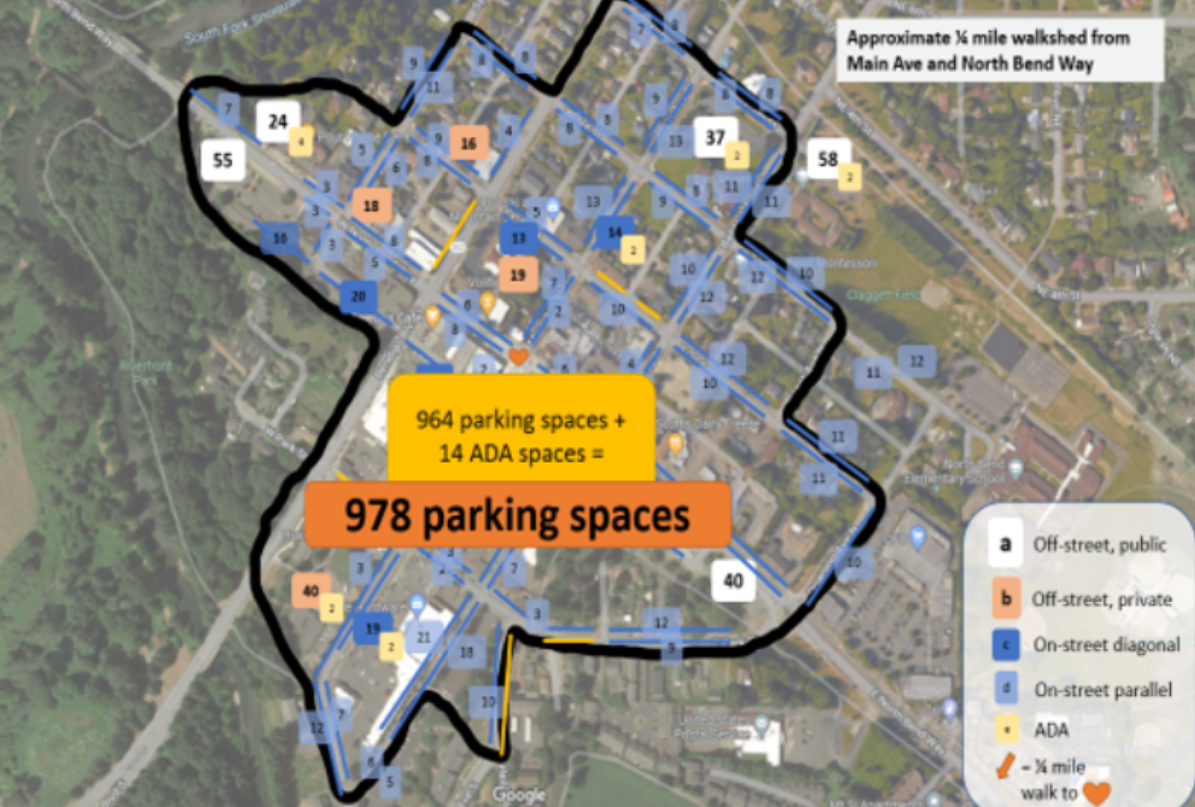
City officials had argued that there were nearly 1,000 parking spaces on streets within a quarter-mile walk of the site, and that there were other options the city could pursue to mitigate the parking variance. But the issue of a perceived reduction in parking spaces continued to be a flashpoint for the project. And while the building's three-story height would have been allowed by-right in downtown North Bend, the City did need a variance when it came to the roofline, otherwise required to be broken every 50 feet.
With critics of the project raising concerns around the its bulk and scale, that variance became politically fraught.
"Our community recognizes the importance of creating affordable housing, but this particular project, as currently proposed, is not a good fit for its location," North Bend resident Jenny Hennessy said at the hearing. "A three-story building would obstruct our mountain views, which is integral to North Bend's identity as a small town. This development risks transforming our unique character into something that resembles Issaquah or Redmond, and not in line with our community's vision."
Last year, the Washington legislature approved a bill that bans large and medium-sized cities from requiring any off-street parking for affordable housing projects, intended to reduce barriers that stand in the way of permitting subsidized housing – of which there is a shortage statewide. But the bill doesn't apply to cities with fewer than 30,000 residents, even though that need can be just as acute in cities like North Bend (pop. 8,700).
"We are stealing, borrowing, from Peter to pay Paul in parking in this community," North Bend resident Michelle Shadel said at the hearing. "And while affordable housing is incredible, a need that we all really want to see happening, let's find a bigger postage stamp to put it on than downtown, where so many of us are going to be impacted."
The Financing Piece
With concerns mounting around the project's DDA, 230 Main Avenue suffered another major blow earlier this year, when the Washington Department of Commerce declined to award either of two grants that the city had been eyeing as part of the funding package. Both a $1 million CHIP grant and a $5 million grant from the state's Housing Trust Fund were awarded to projects elsewhere in the state, a fact that meant the city would likely be forced to wait another year to reapply. The total cost for the project was an expected $19.5 million, with the City of North Bend expecting to contribute $3.1 million including the cost of the land.
"It is really the crux of the financing, where we fell down the path in the viability of the project," Amber Emery, North Bend's City Administrator, told The Urbanist. "When we lost that ability this year to get that state funding, council's concern is when are we going to get this? Is it really going to be viable with us competing with other King County cities for shovel-ready projects that are on the transit, that have more social services, wraparound [services], availability that can support more people?"
James Henderson, North Bend's Economic Development Manager, pointed to changes in state prioritization of affordable housing projects, away from workforce housing developments and toward those geared at a lower end of the income spectrum.
"They were beginning to focus more on affordable housing that met the requirements of like 0 to 30% AMI," Henderson told The Urbanist. "So supportive permanent supportive housing, which made it more difficult for us because as a small community here in Eastern King County, we don't have a lot of those human or social services around that meet the needs of permanent or supportive housing."
With numerous concerns already raised by community members over the project's scale at 40 units, the City looked to be trapped between a rock and a hard place given the prioritization of grant dollars toward larger projects.
"We heard a number start to be thrown around that the baseline was 75 units," Emery said. "Well, we're never going to get 75 units on that piece of property. Excitement around [230 Main], I think for all of us, it started to be a really big reality check that we're probably not going to be able to get this across the finish line."
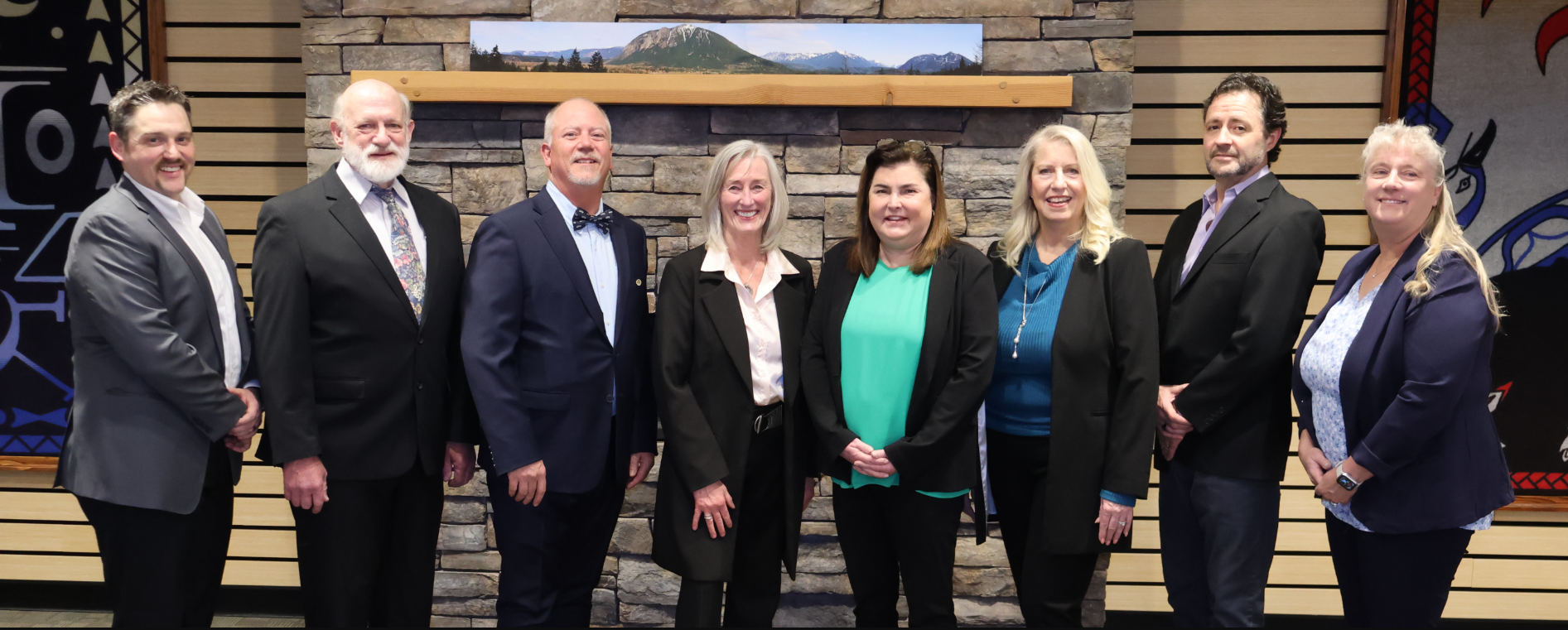
It was at a late February work study session where the North Bend Council clearly signaled its lack of interest in moving forward, though no formal vote was taken. But records show that negotiations continued to take place behind the scenes until that meeting. A February 9 email from Henderson to both Miller and Emery listed concerns raised by two councilmembers, intended as background information for Related Northwest and their continued conversations with electeds around the DDA. Those communications make clear that financing was far from the only piece of the puzzle when it came to getting 230 Main Avenue across the finish line.
Councilmember Christina Rustik, Henderson wrote, was "[g]enerally concerned with the use of development agreements as a vehicle to support a project and whether it is the right vehicle to support 230 Main" Rustik also "[c]ould be concerned about the proposed height (although i[t] meets code), parking, and bulk of dimensions of the project and how that could affect neighborhood character."
Meanwhile Councilmember Errol Tremolada, Henderson wrote, "[q]uestions the pro-forma for the project and whether the funding structure from the private sector and the government can deliver the project. Given his real estate background the funding structure for 230 Main differs from other real estate deals."
Going Bigger...Away from Downtown
With 230 Main Avenue not moving forward, North Bend officials aren't giving up on the idea of affordable housing, but they are set to change tactics. That includes considering potential sites that might hold more units... and fewer fights over parking and density.
"We debriefed Related Northwest, and their recommendation to us is basically: minimum 100 units, like two and a half to three acres," Henderson said. "I think that that puts us in a realm where we would be more competitive for not only state funding but low income housing tax credit funding as well. So I think if you kind of reflect back on this project, it was probably just too small to begin with, and we need to scale up."
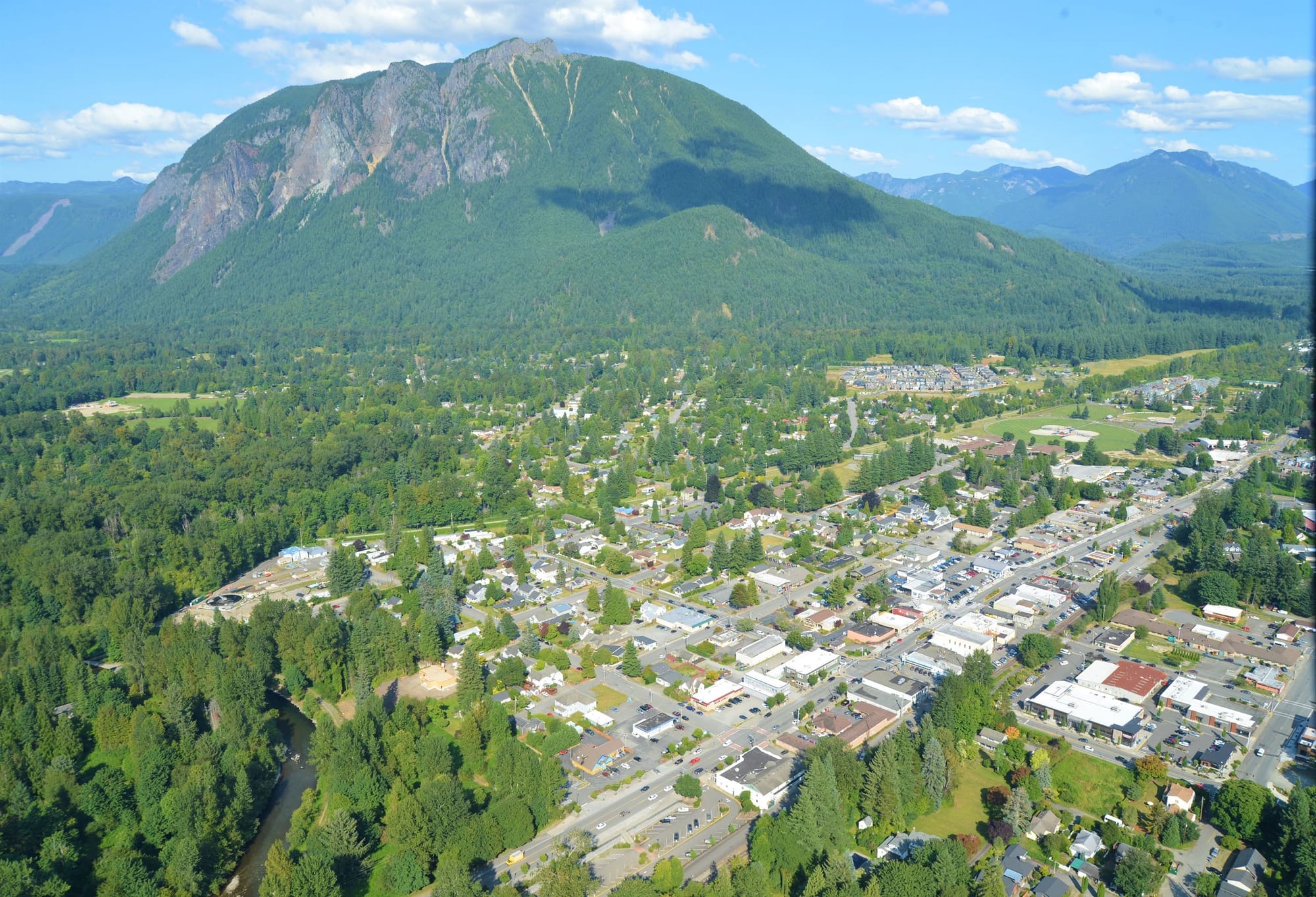
With larger sites will come more flexibility, but also fewer benefits when it comes the amenities that come from being right in Downtown North Bend, with the ability to walk and bike to more destinations. Meanwhile, the City will have to start over, while 128 families remain on a waitlist for affordable housing in nearby Snoqualmie, operated by King County Housing Authority.
"Our current council and the mayor are committed because there [are] different portions of the city. So, where the outlet mall is, that's closer to transit. There's [options] closer to the freeway," Emery said. "You know, could there be something, maybe 70 units out there, and then maybe we could do a smaller boutique? Is there room for more cottage [housing]? We have a Habitat for Humanity project that was done here. So, is there room for more cottage-like homes that are more affordable? I think that mixture is key."
Mayor Miller told The Urbanist that she's optimistic that the city will be able to make inroads when it comes to adding more affordable housing stock, in spite of the significant setback that is 230 Main.
"It's one of the most important reasons why I'm in this position," Miller said. "I ran on that, so seeing it through, in a great way potentially, is still where I'm at, and that takes time, it takes effort, and the right fit. So we almost had it – almost – but we can start and look for something new and fresh, and build those partnerships along the way. Because I think the bigger picture is getting the entire [Snoqualmie] Valley on board with understanding how necessary this is to all of our most of our cities."
 Ryan Packer