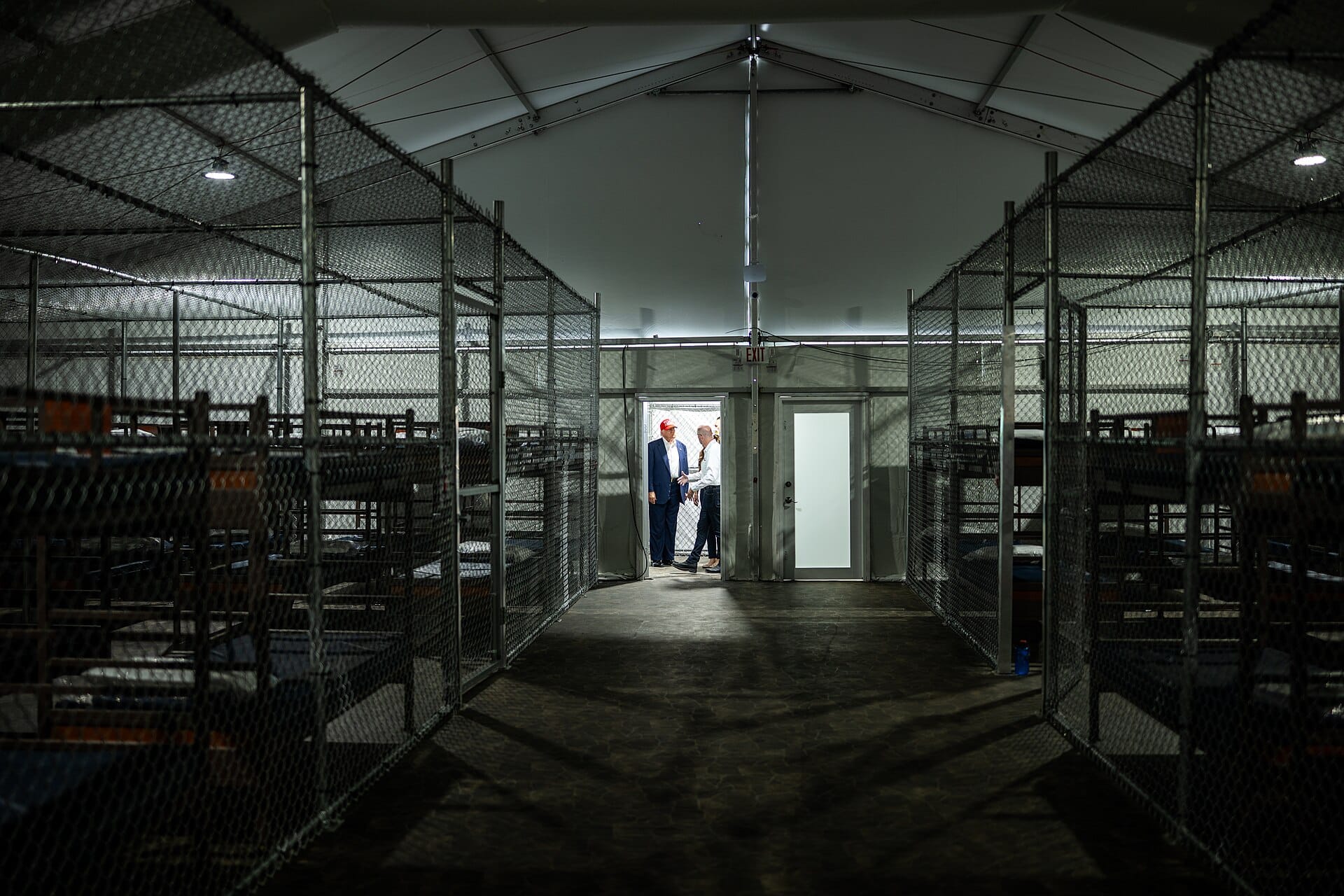
As federal immigration enforcement in Washington State surges and news of continued acts of mistreatment filter out of the Northwest ICE Processing Center in Tacoma, local elected officials have been acting to temporarily ban the expansion or establishment of immigration detention centers in their jurisdictions.
A new report from the University of Washington Center for Human Rights (UWCHR) released on Wednesday analyzes data that shows a “powerful surge” in immigration enforcement in the Pacific Northwest from October to December of 2025. In Washington state, the largest increases were in King, Yakima, and Clark counties.
The Center for Human Rights determined that the surge was due to increasing numbers of “non-custodial arrests,” which included street arrests. This was one of the signature tactics that the U.S. Immigration and Customs Enforcement (ICE) used in Minneapolis.
“UWCHR researchers found repeated occurrences of the same pattern [in Washington], in which federal agents, often including ICE and CBP officers working in combined arrest teams, observed individuals while driving, obtained their name by querying their license plate number, and then ran that name through their own databases to determine whether that person’s immigration status,” the report read.
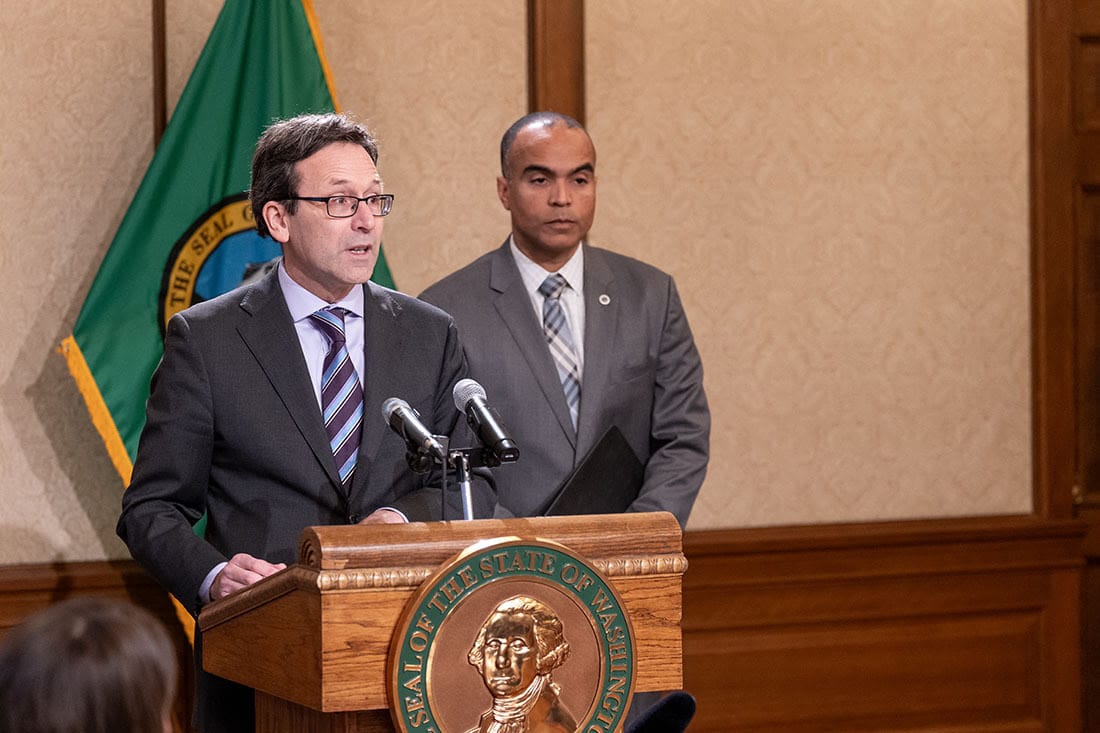
UWCHR observed a similar pattern when their researchers determined that ICE and U.S. Customs and Border Patrol (CBP) were accessing the state’s drivers license data from the Department of Licensing (DOL), a practice that is still continuing today. Activist groups have been pressuring Governor Bob Ferguson to halt this data sharing practice, but haven’t yet succeeded.
Muslims in Northwest Detention Center prevented from religious observance
Meanwhile, the Washington State Chapter of the Council on American-Islamic Relations (CAIR-WA) has received reports of the mistreatment of Muslim detainees in the Northwest Detention Center in Tacoma.
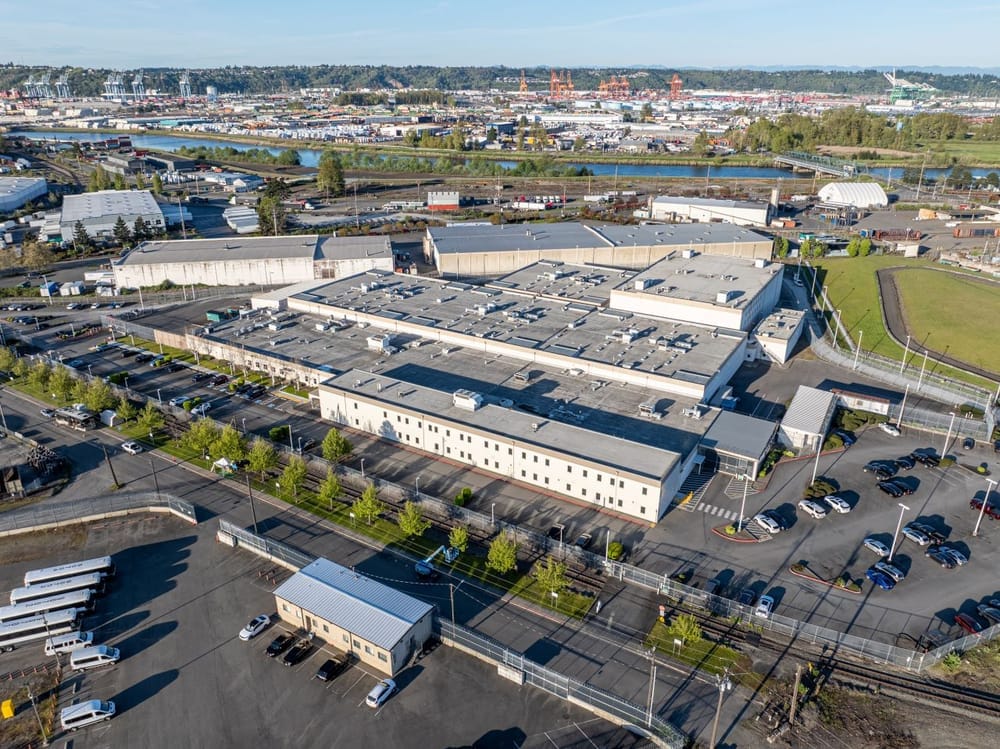
In early February, CAIR-WA wrote a letter to ICE Seattle Field Director Drew Bostock and Northwest Detention Center Warden and Facility Administrator Bruce Scott reminding them of the upcoming holy month of Ramadan, which is from February 18 to March 19 this year. The letter contains reminders of the accommodations needed for Muslim detainees to observe Ramadan, including scheduling meals around fasting schedules, providing halal meals, and facilitating access to communal prayer at set times.
Unfortunately, CAIR-WA has received reports of Muslim detainees not being allowed to freely practice their religion during Ramadan. In particular, a detainee told CAIR-WA that there were worms and/or insects in his halal meal, rendering it inedible, and that detainees were told that in order to receive Ramadan meals, they would have to change units. Changing units within the Northwest Detention Center can be considered akin to punishment, as detainees develop community relationships within their units that they are then forced to leave.
CAIR-WA received another report that detainees are not allowed to gather for the Jummah prayer on Friday afternoons. Instead, they are only being given times on Friday mornings, which don’t fulfill their religious observances.
It is important for Muslims to be able to practice their religion during Ramadan because it is considered to be the most religious and devout month. Some Muslims may not closely observe religious practices the rest of the year, but do strive to adhere during Ramadan, since it’s the holiest month.
The Urbanist's Spring Member Drive is in full swing, now with a website redesign offering ad-free reading for donors! Take advantage and support local journalism with a monthly donation.
CAIR-WA has documented previous issues with Muslim detainees being unable to observe Ramadan in 2024 and 2025, and suspects this may be a problem of long standing. CAIR-WA began their legal program in 2022 with a narrow scope, but as they have been able to expand their reach, they have been receiving more reports via word of mouth about conditions in the detention center in the past few years.
Faiza Duale, CAIR-WA’s deputy legal director, told The Urbanist that the organization doesn’t currently have data as to how many Muslims are detained at the Northwest Detention Center. Right now they have a very limited client base, but they hope to be able to collect more data in the future.
“What a lot of people don't understand about the immigration detention is that many people, people who came through the border, they don't have family members here that they can speak with,” Duale said. “A lot of people don't have anybody who's visiting them, and they don't have access to organizations like CAIR-WA that does this type of advocacy.”
People have a legal right to seek asylum, as they flee persecution and possible torture in their home countires. Once people seeking asylum are detained, Duale said that they are sometimes held for years on end. Sometimes, problems arise presenting their cases, which can lead them to be deported to a third country where they don’t know anyone.
“We have statistics that once they get to these countries, they're being sent back to their home countries,” Duale said.
CAIR-WA has reached out to U.S. Representatives Pramila Jayapal and Emily Randall and to U.S. Senators Patty Murray and Maria Cantwell to advocate for the Muslim detainees. Jayapal has not yet been able to arrange a visit to the Northwest Detention Center to look into this matter, although she did encounter difficulties during a recent oversight visit on February 20th. Jayapal did conduct an oversight visit on February 20th.
“While we waited, we also spoke to a number of attorneys who were visiting their clients,” Jayapal wrote in the aforementioned release. “We heard that they often are made to wait four or five hours to see their clients; that there are only seven attorney rooms for its current population of about 1,300 detainees and even then the attorneys are made to wait even when the rooms are empty; and we heard numerous complaints of inadequate medical treatment, overcrowding, and inedible food.”
In consultation with CAIR-WA, Cantwell’s office mentioned not being able to get feedback about a specific detainee’s case due to the current partial government shutdown regarding funding for the Department of Homeland Security.
“This is civil detention, it's not criminal detention. These people are not criminals,” Duale said. “They're being treated worse than criminals who are in prison for criminal activities. [...] The fact that Muslims are not being allowed to practice their religion while being confined and being treated worse than criminals when they should not be, again, it's civil detention. It's just outrageous, and the detention facility should at the very least allow them to practice their religion in a more dignified manner.”
The new U.S.-Israeli war against Iran may lead to an even larger increase of Islamophobia in the U.S., which could further deteriorate conditions for Muslim detainees in the Northwest Detention Center.
Detention center moratoriums
Local cities are aware of the great increase in federal immigration enforcement in King County, the continued documentation of inhumane conditions in detention centers, and the federal government’s attempt to rapidly build a network of detention warehouses. In order to respond with urgency, elected officials are using zoning requirements to pass one-year moratoriums on new or expanded detention facilities.
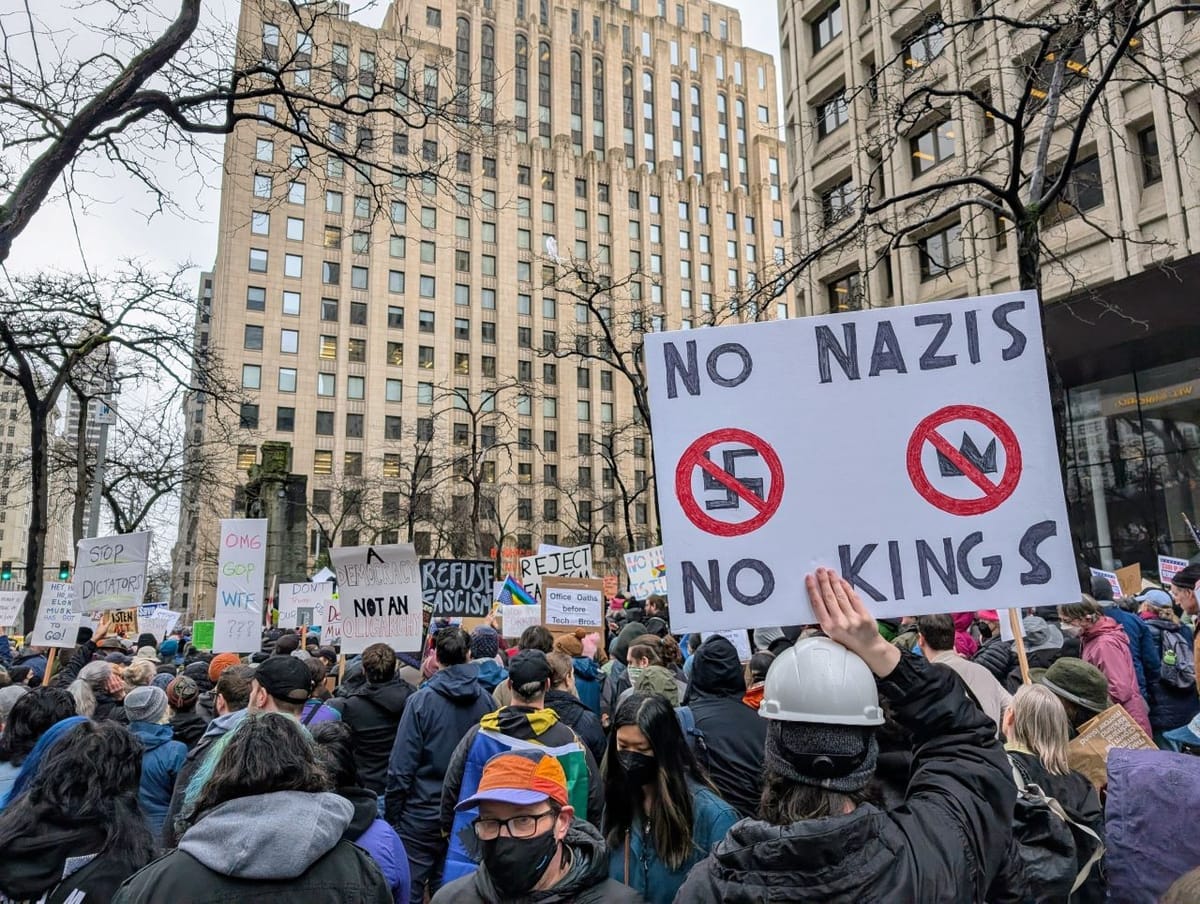
King County, Seattle, Tukwila, Seatac, the Port of Seattle, and Kent have all passed these types of moratoriums, with Renton just passing similar legislation on Tuesday. Note that moratoriums passed at the county level apply only in unincorporated areas where County lawmakers have the authority to set zoning and land use policy.
Seatac Councilmember James Lovell spoke during the City of Seattle’s public comment period before passage of Seattle’s detention center moratorium.
“From our perspective in SeaTac, we are part of a closely connected regional system of cities,” Lovell said. “Decisions made in one jurisdiction inevitably affect our neighbors, especially when it comes to facilities that operate at a regional or national scale. For that reason, interjurisdictional cohesion matters.”
King County passed a moratorium on expanding or building all new detention centers (including jails) in unincorporated King County on March 3 in a 7-2 vote, with King County Councilmembers Reagan Dunn and Pete von Reichbauer opposed.
“There’s not an emergency here,” Dunn said.
King County Councilmember Teresa Mosqueda, who sponsored the legislation, had explained the urgency of the measure earlier in that same meeting.
“The reason that this is being walked on today is because we have seen massive expansions of detention facilities across the country, and often communities find out about the new facilities that are being sited in their neighborhoods when it's too late to do anything about it,” Mosqueda said.
King County Councilmember Rod Dembowski talked about the humanitarian and ecological disaster caused by Alligator Alcatraz, the now infamous detention facility in the Florida Everglades.
“The other dynamic here that's different is the federal government appears to be undertaking an effort to acquire, maybe sometimes build, just general warehouses, which has, to my knowledge, really never been done on a large scale to incarcerate humans,” Dembowski said. “We ought to take a look at that. We ought to understand our power and ability as a local government to regulate that.”
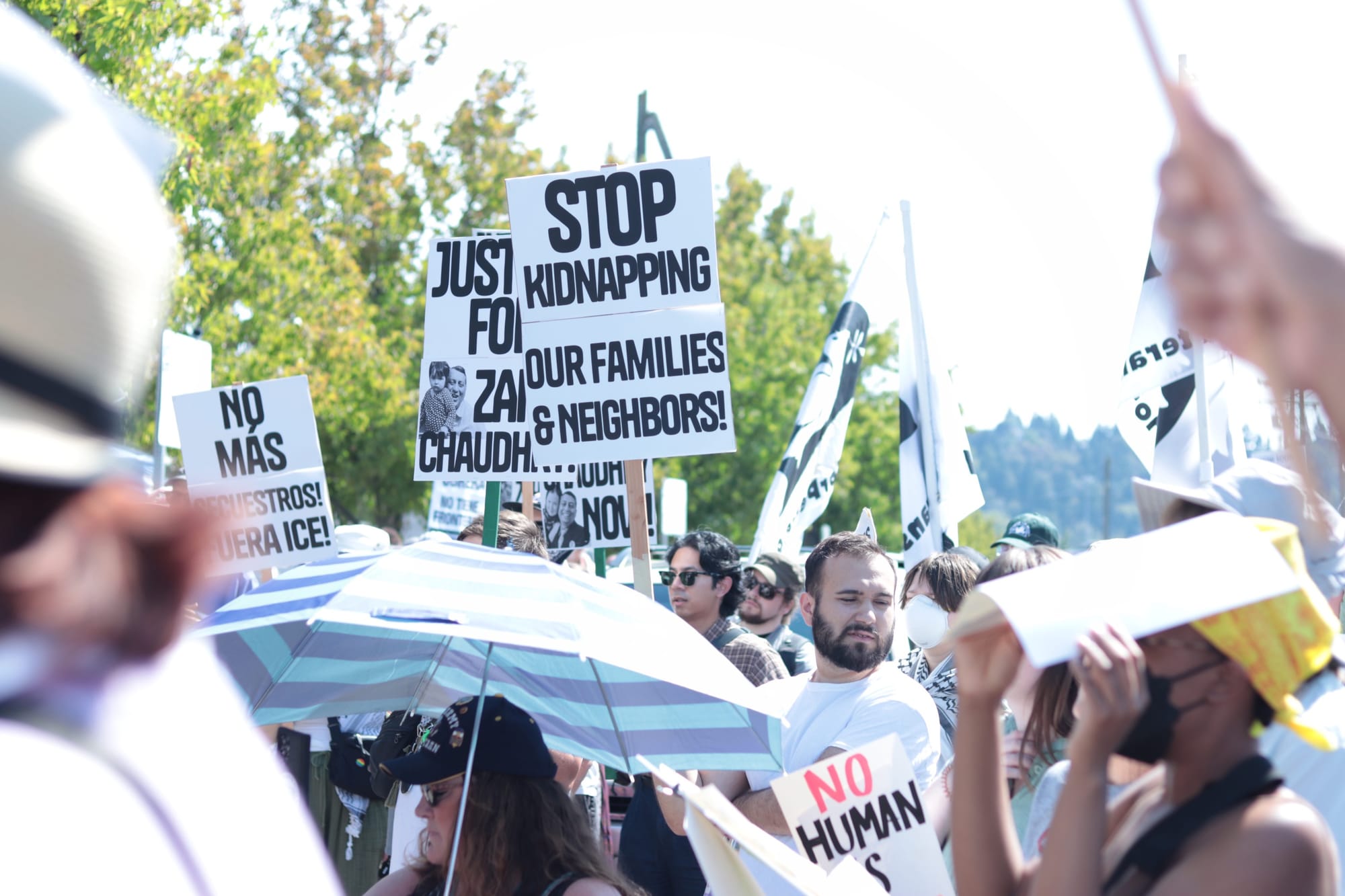
Seattle’s legislation, sponsored by Councilmember Alexis Mercedes Rinck, took a bit longer to pass. The original legislation included a one-year moratorium on new and expanded detention facilities and jails. For the Seattle City Council, the jail portion of the legislation appeared to be a sticking point, causing Councilmember Martiza Rivera to develop new legislation that omitted any mention of jails.
Councilmembers deemed this change necessary even though the City of Seattle has not publicly stated it has any intentions of building or expanding jails during the next year.
After this change, the council voted unanimously in support of the bill on March 10.
“We are declaring a public emergency and establishing a work plan to consider permanent regulations by early next year,” Rinck said. “We know that detention centers are sites of serious harm, and any expansion of them will only enable this federal regime to ramp up their inhumane, and in many cases, illegal enforcement actions. This impacts all of us, regardless of immigration status. I refuse to be complicit in letting human rights violations happen within our city under our watch.”
Councilmember Bob Kettle took the opportunity to tout other related bills and resolutions either passed or being considered by the Seattle City Council, including a bill passed out of the Public Safety Committee earlier that day that would prohibit civil immigration enforcement staging on all properties owned or controlled by the City.
“[These bills] need to be thought of as a package, and they need to be thought of as a comprehensive approach by our city government to deal with this propaganda war that's being waged on America,” Kettle said.
Once signed by Mayor Katie Wilson, Seattle’s detention center moratorium will go into effect immediately. A public hearing will be held within the next 60 days and the council will need to develop and enact permanent regulations to extend the moratorium indefinitely – otherwise extending the emergency ordinance in six-month increments beyond the initial year is also an option.
 Amy Sundberg