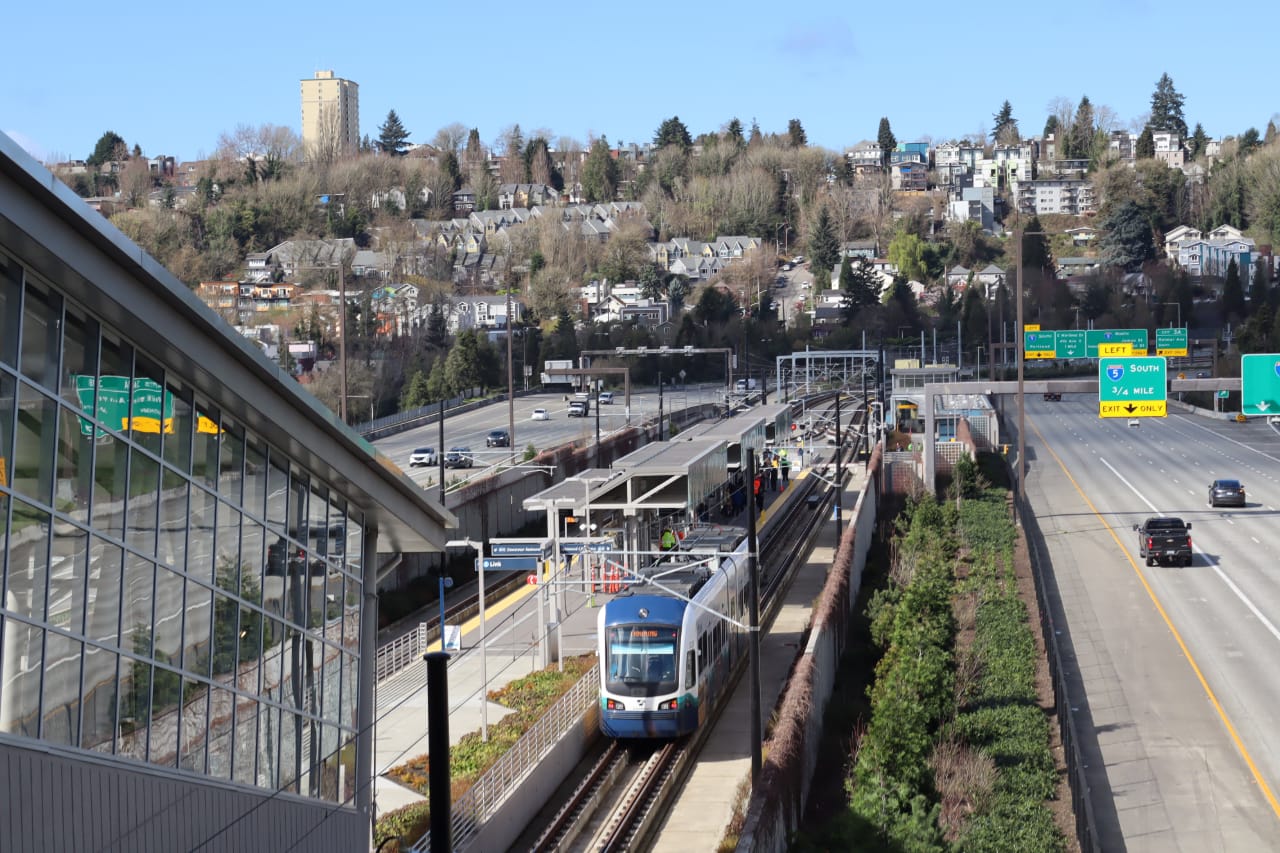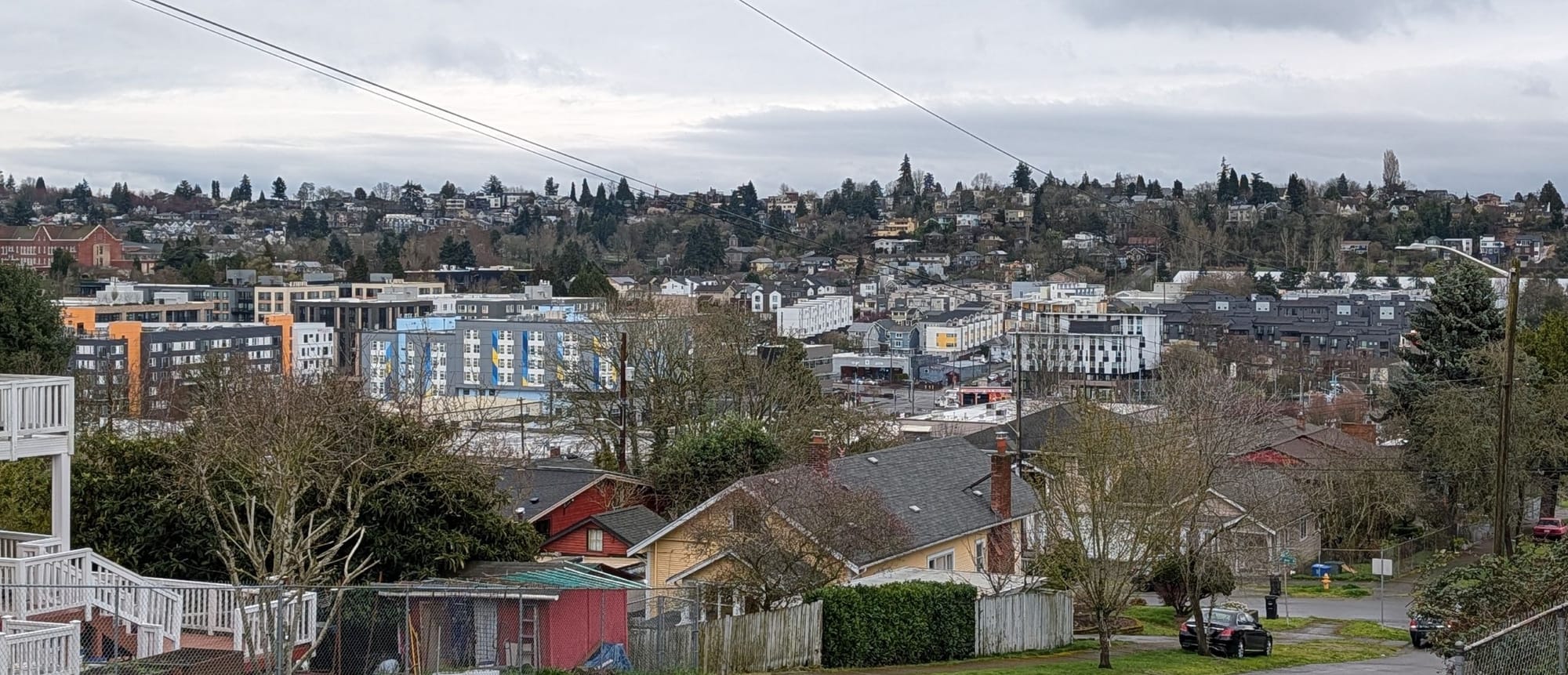
Built in a highway median and at the edge of two fledgling urban centers and one of Seattle’s deadliest roads, Judkins Park Station was not designed to thrive. Despite its challenging conditions, more than 2,000 units of housing have been constructed around the soon-to-open 2 Line station in the past eight years, with another 900 or so in the pipeline.
Most of this housing comes from major multifamily development along the Rainier Avenue corridor, with the rest being townhomes peppered across the neighborhoods surrounding the station. This housing followed land use planning decisions by the City of Seattle, predominantly through the “Urban Village Strategy” enacted in 1994, which limited multifamily housing to select areas with the “urban village” designation. Judkins Park Station is located where the 23rd & Jackson and North Rainier urban villages meet.
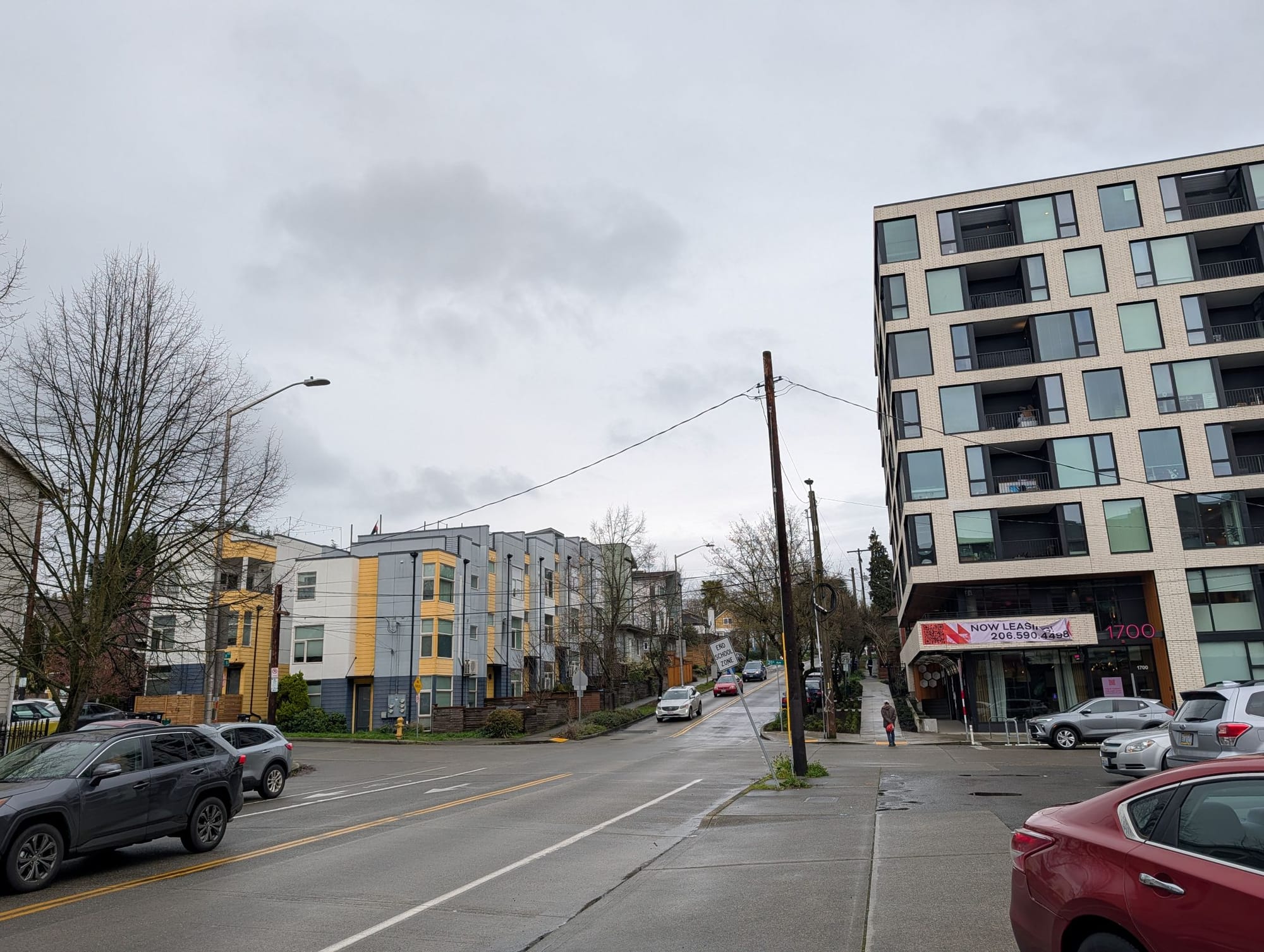
In the two urban villages, large-scale multifamily zoning by the station is only available along Rainier Avenue. In the rest of the urban village area by the station, only small-scale multifamily is allowed, contributing to the area’s townhome boom.
The station’s western exit is closest to the dense housing corridor near the station. That exit is also one of the most unpleasant exits in the whole light rail system, as it dumps riders under the I-90 underpass over Rainer Avenue. After weaving under a highway offramp northward, riders will reach a pocket of multifamily housing in the 23rd & Jackson urban center.
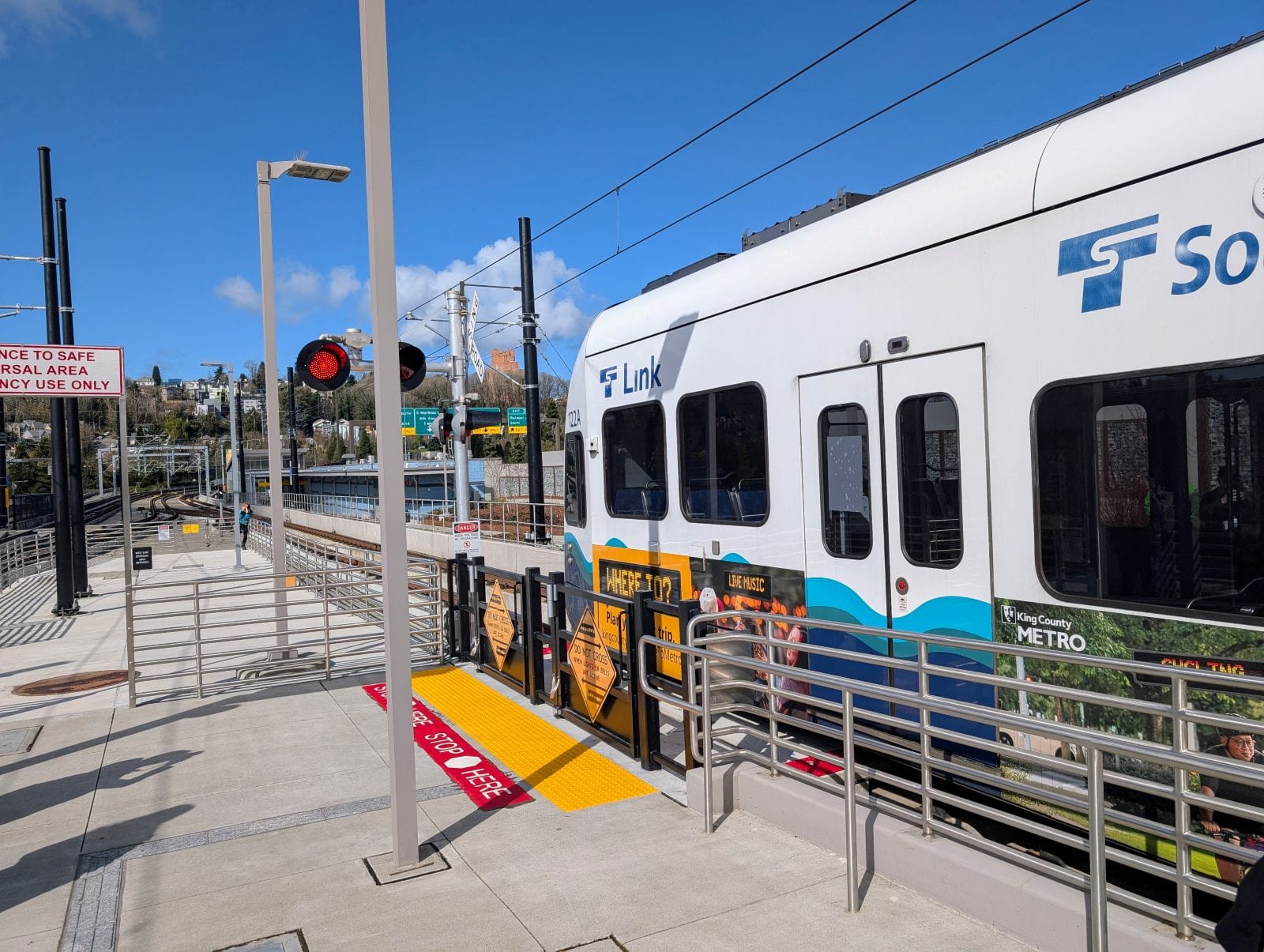
Even before reaching that unpleasant exit in a car-choked underpass, riders have a long, noisy walk from the station platform, which includes crossing the light rail tracks at grade. The gated rail crossing adds a delay if a train is passing, letting riders enjoy the din of I-90 a bit longer.
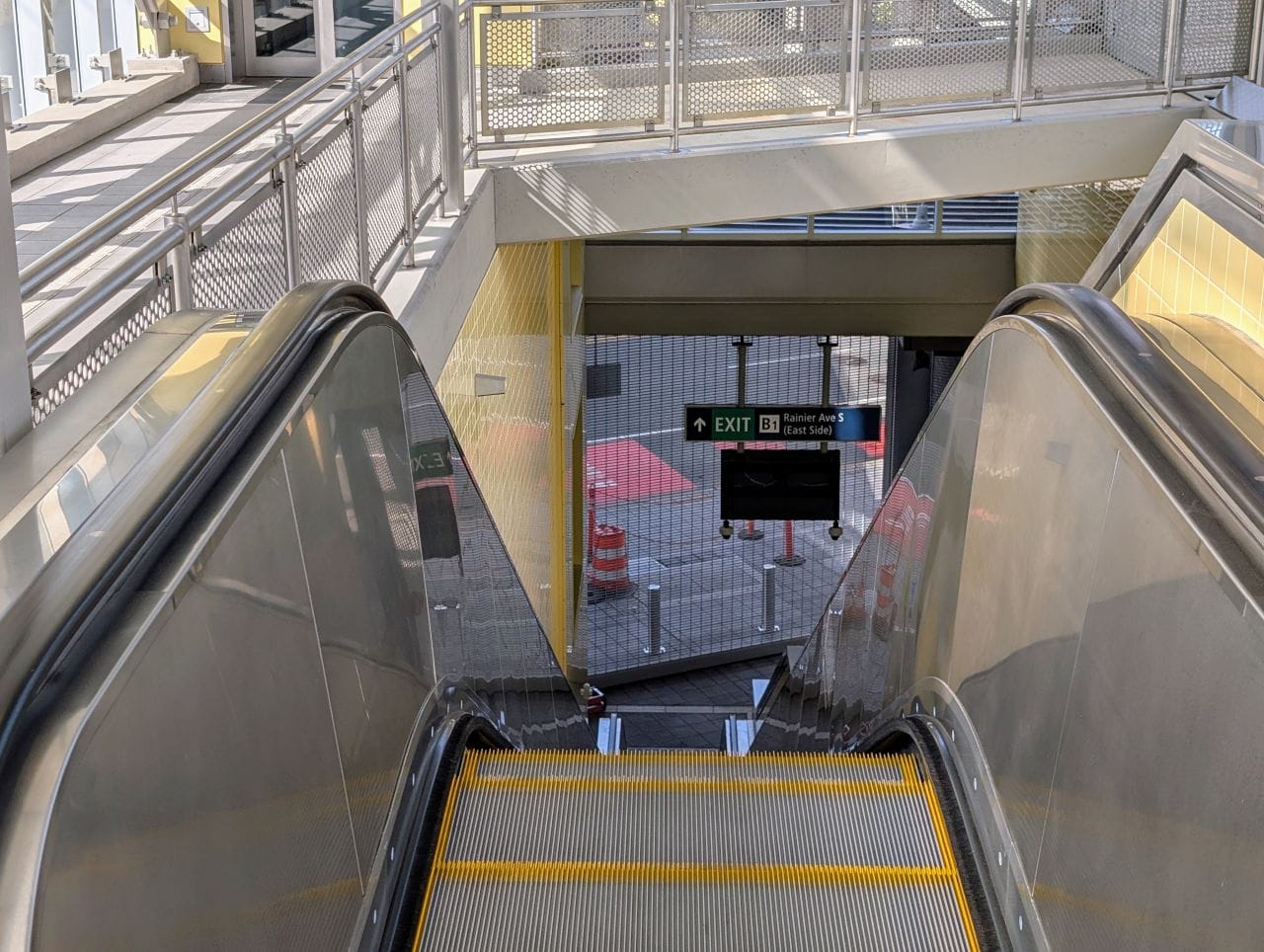
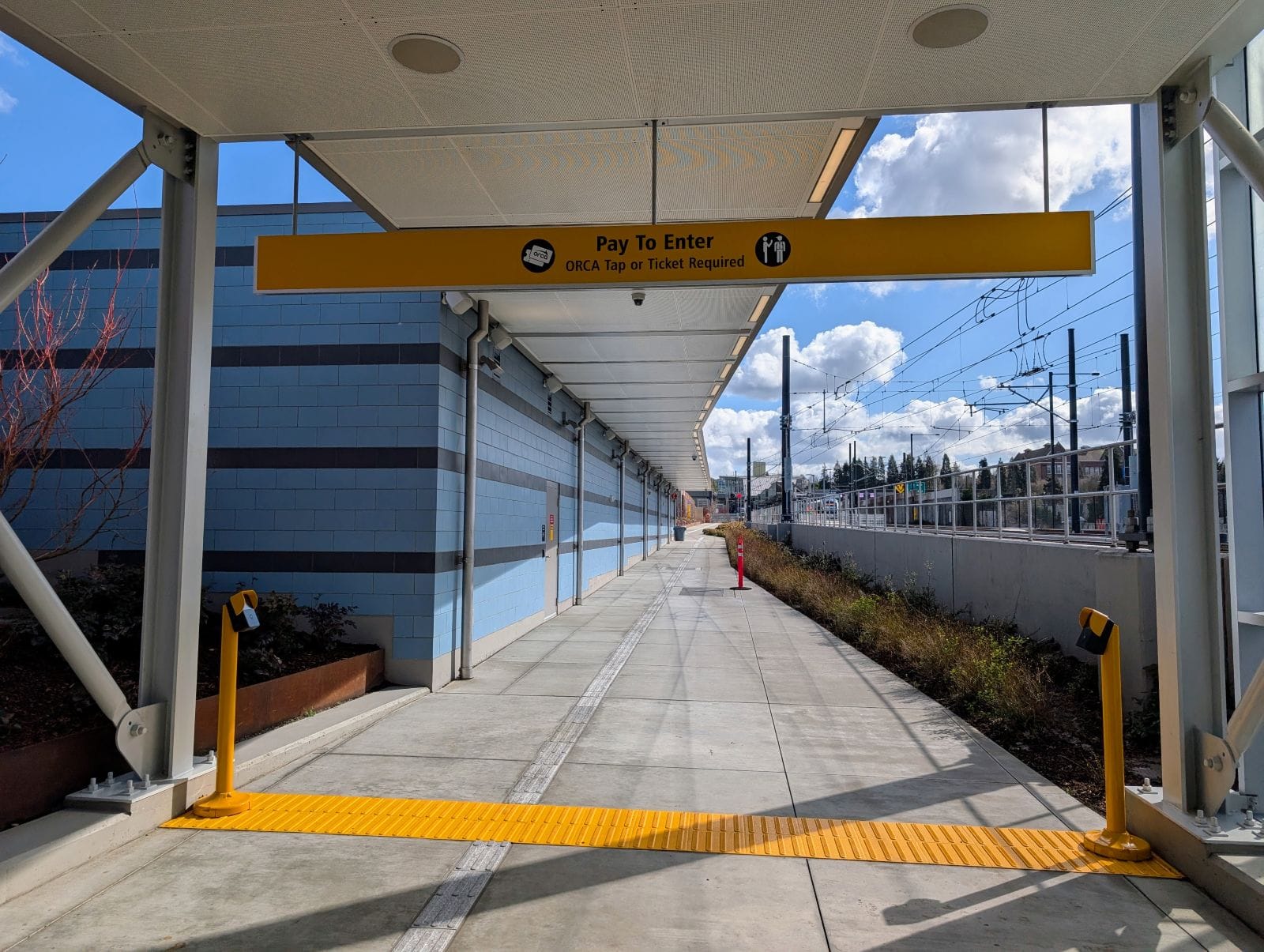
Riders have to navigate I-90 ramps with speeding cars to get to the Rainier entrance to Judkins Park Station, with a long walk and railroad crossing still awaiting them inside. (Doug Trumm)
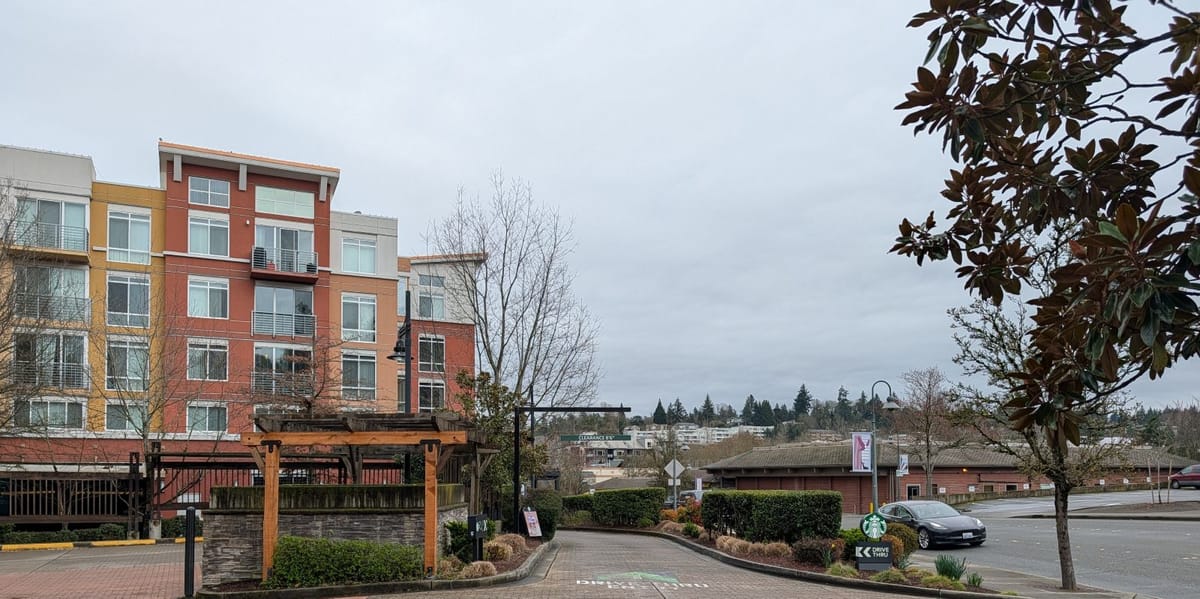
In that area bordered by I-90, Little Saigon, and newer townhomes, the latest and largest completion in the station area can be found in 900 Rainier. In 2025, the eight-story, 396-unit mixed-use building was completed with 2,032 square feet of commercial space, and 130 parking stalls. 110 of the building’s units are income-restricted.
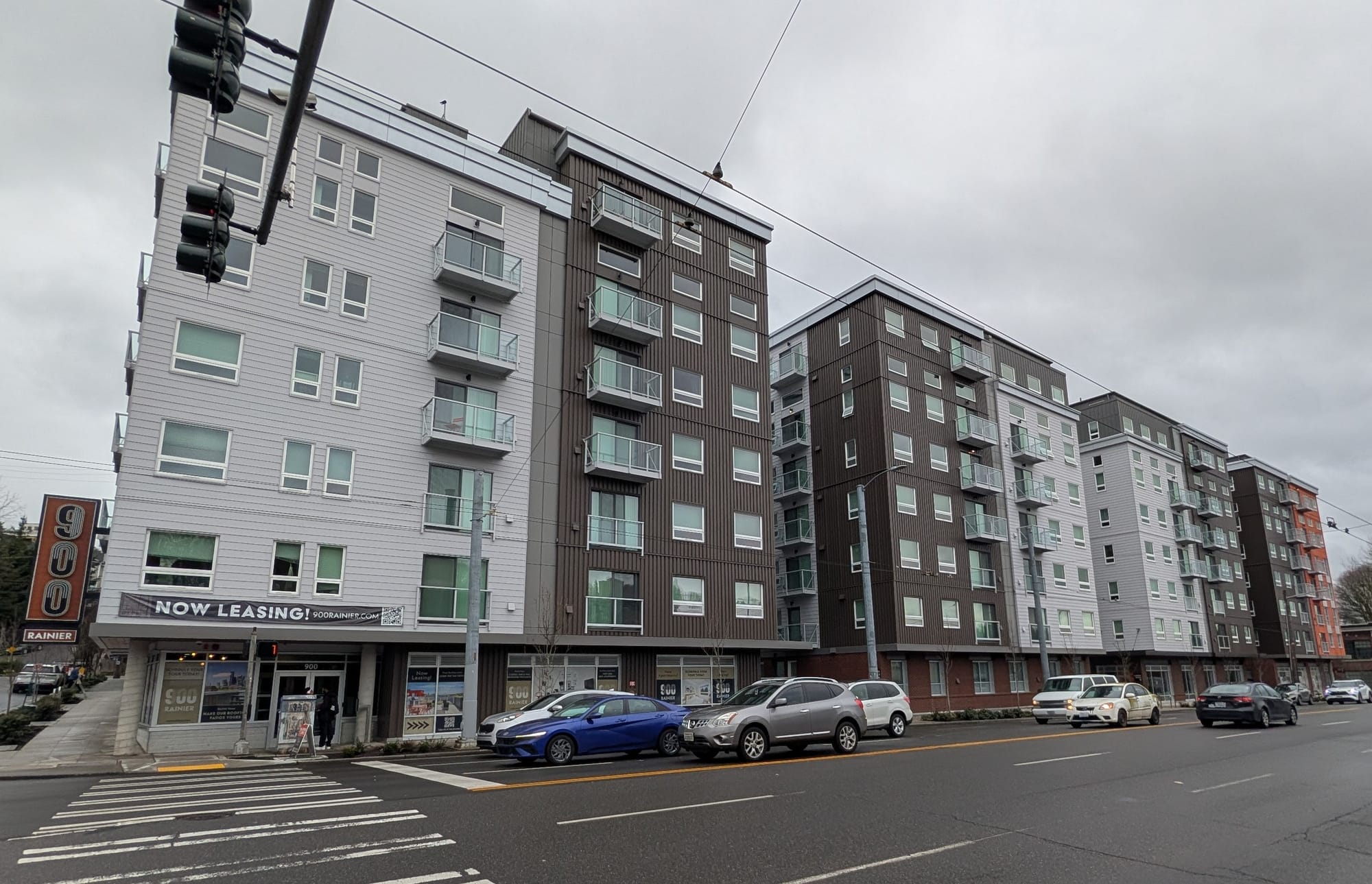
Next door, The Roost is a 33-unit, three-story co-living building with zero parking. It was completed in 2018.
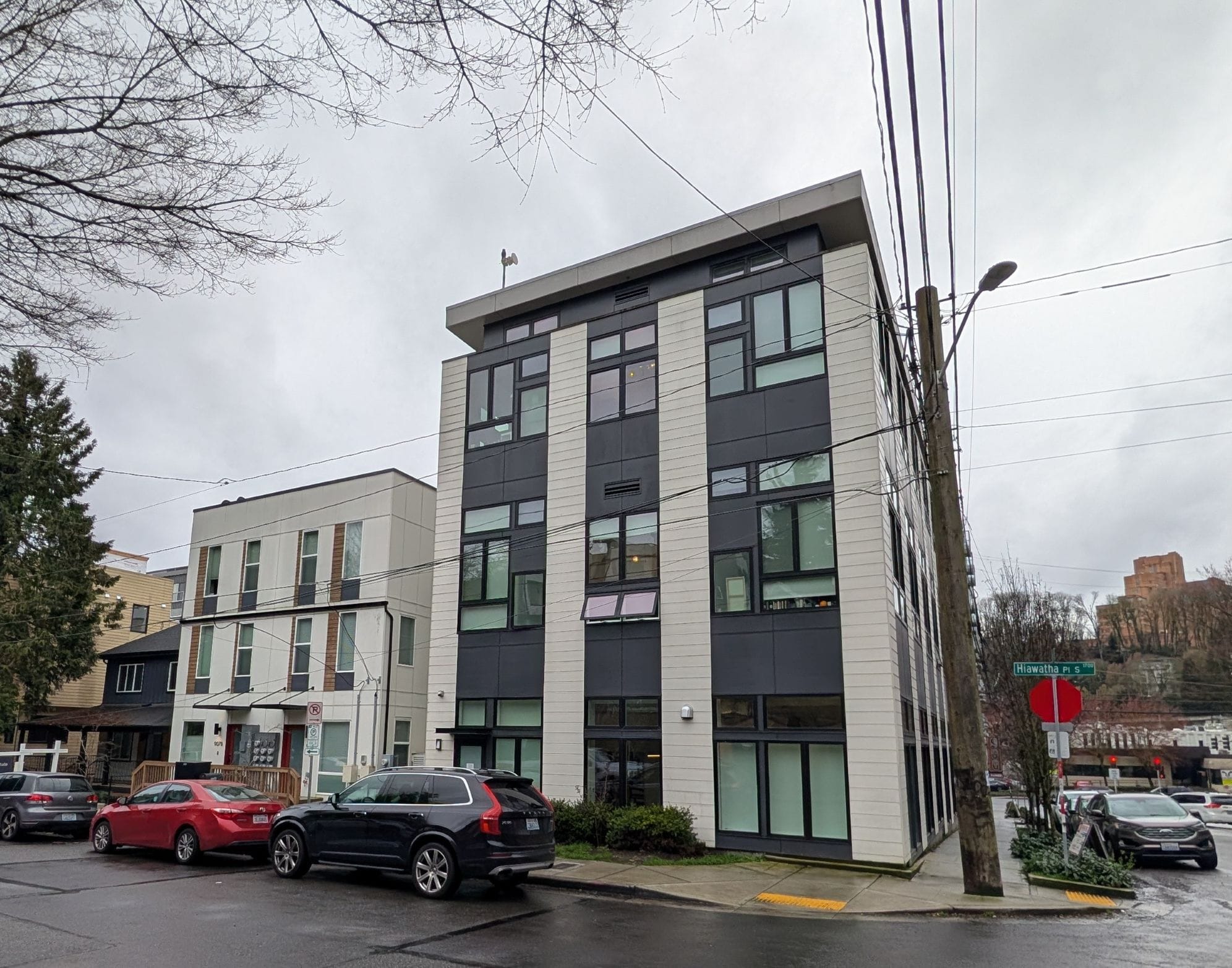
Meanwhile, south of I-90 in North Rainier Valley/Central District, more than 10 new multi-family and commercial buildings have popped up in the last eight years with more in the pipeline. The section of the corridor is anchored by the Grand Street Commons. The project was completed in 2024 and remediated three contaminated brownfield sites to complete three mixed-used buildings, Grand Street Commons East and West and Tahoma Valley Apartments.
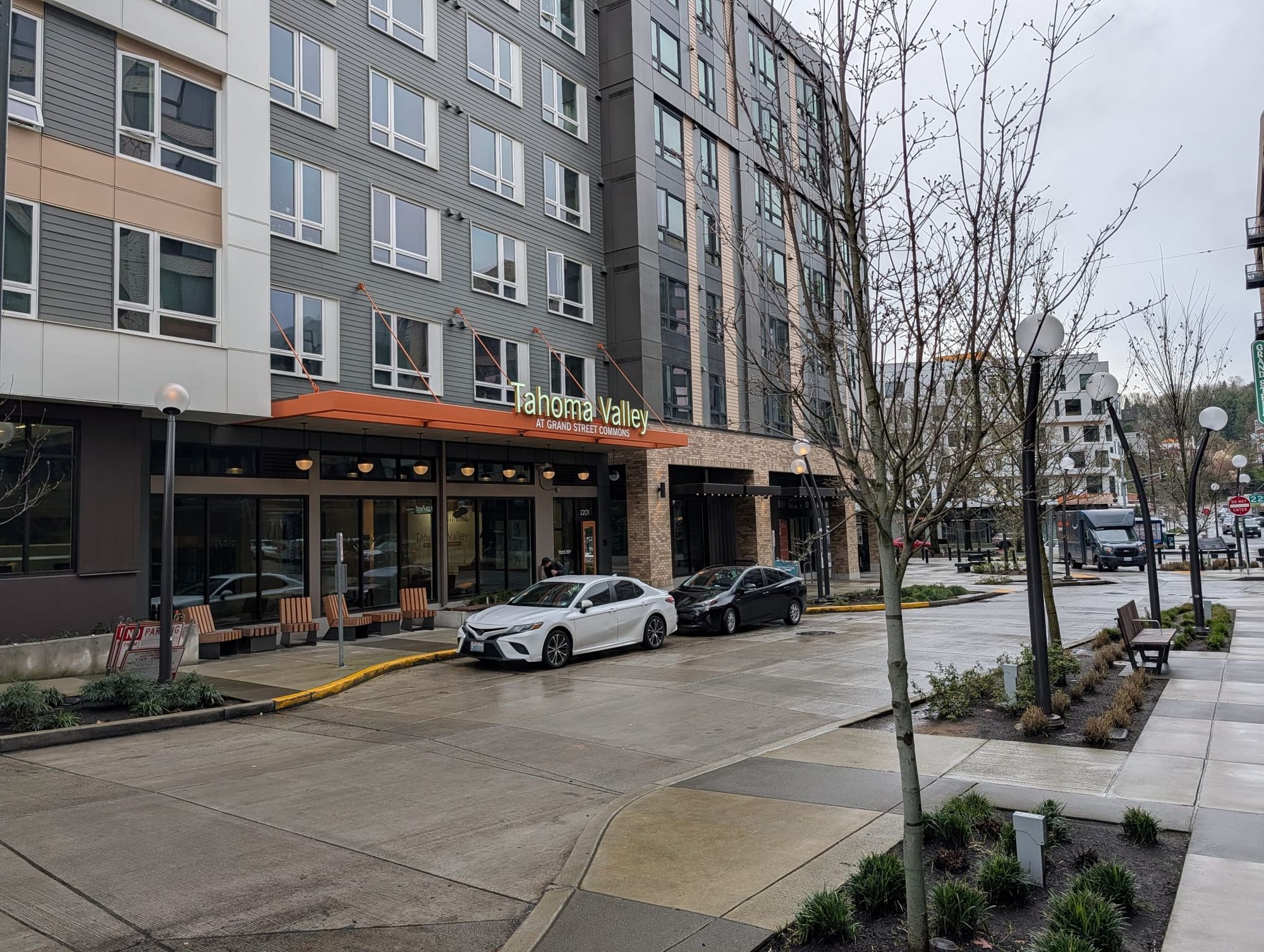
Together, the three buildings include 771 housing units, of which 361 are income-restricted. They also include over 60,000 square feet of commercial space and over 300 parking stalls. Grand Street Commons East is an eight-story building, with the other two at seven-stories each.
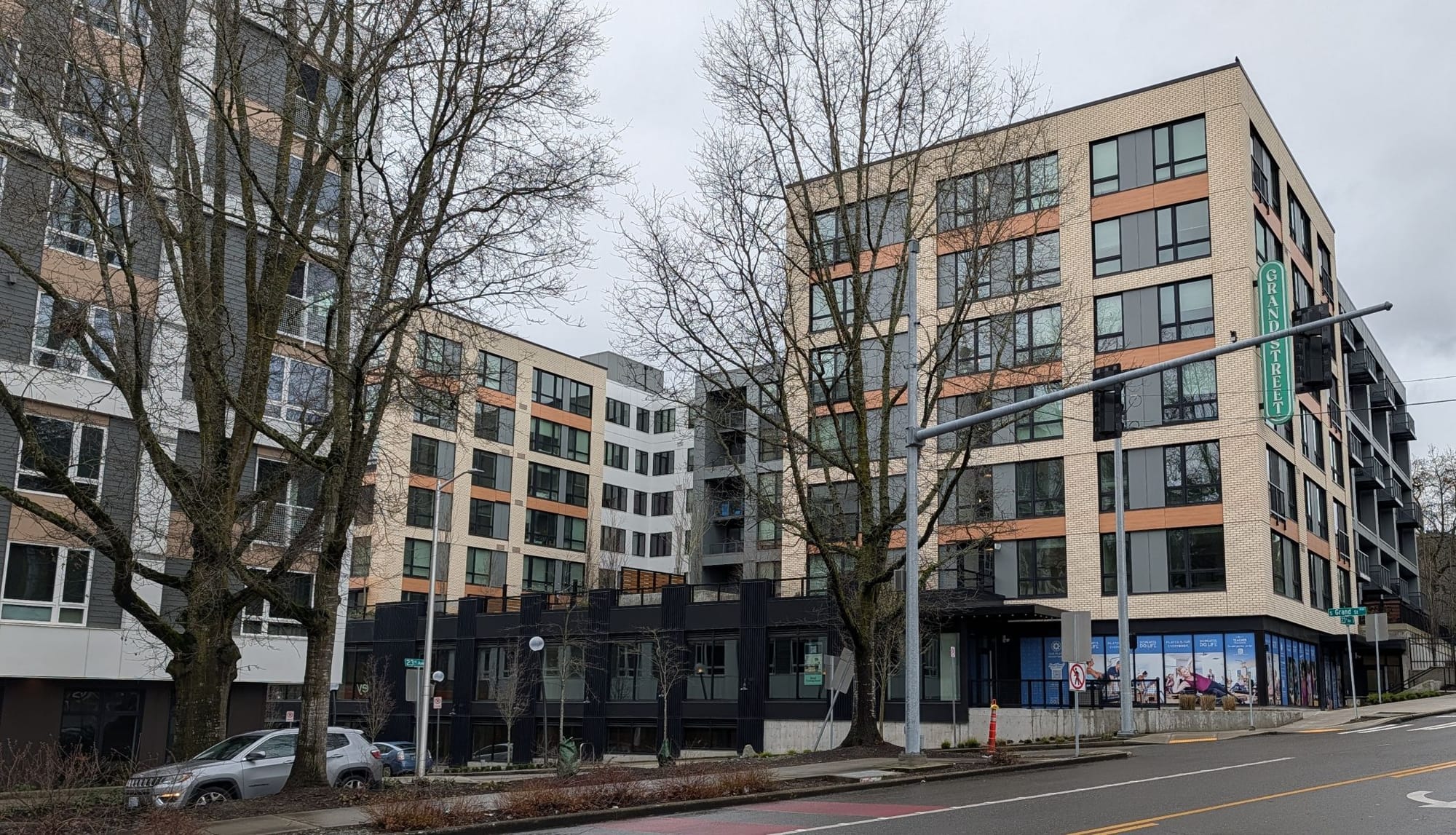
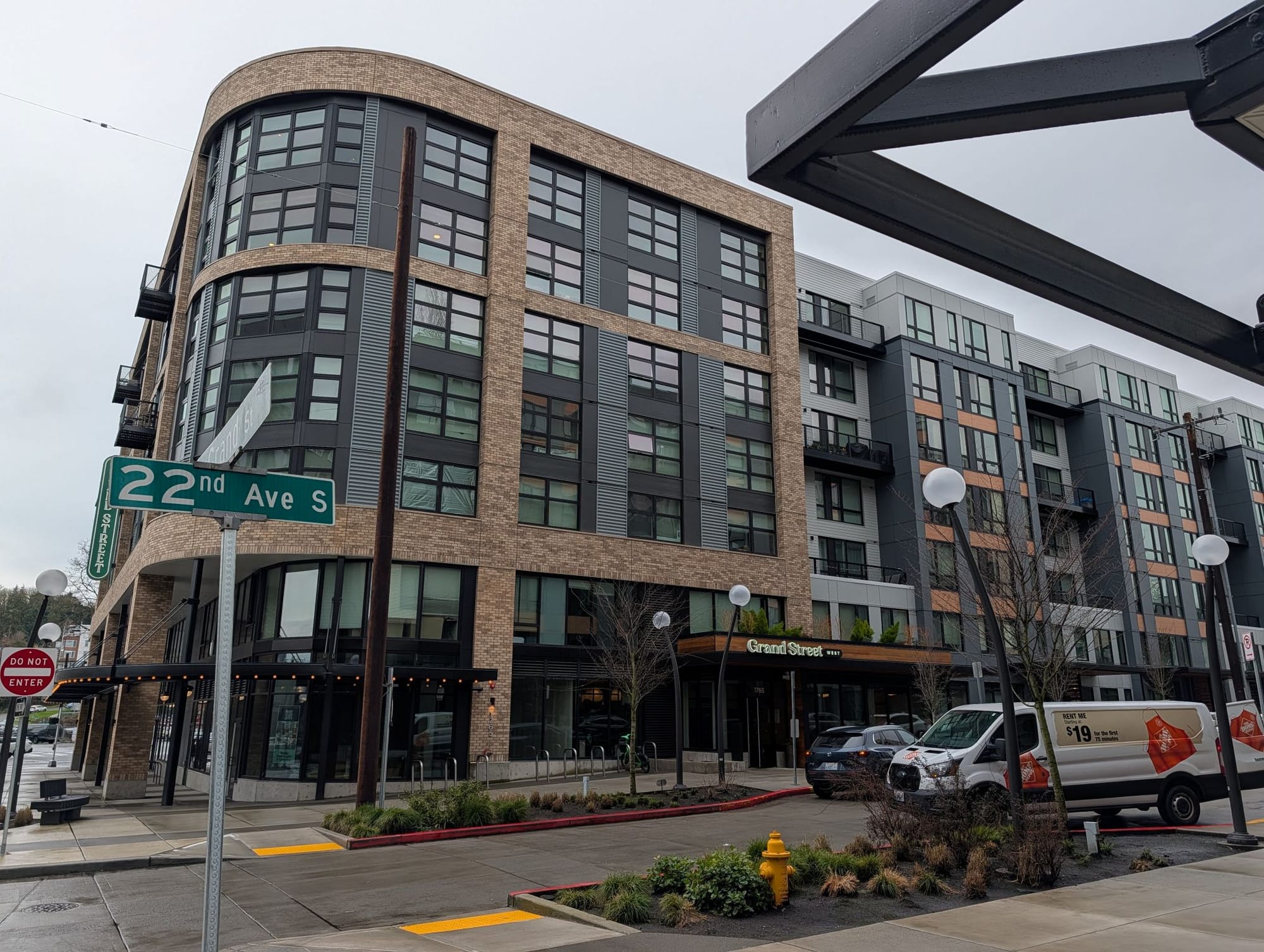
Grand Street Common East and West, left to right. (The Urbanist)
For a sense of scale, Grand Street Commons, as a single project, includes more housing that Mercer Island has added near its station in the last 16 years.
Other multifamily buildings on the corridor south of Judkins Park include...
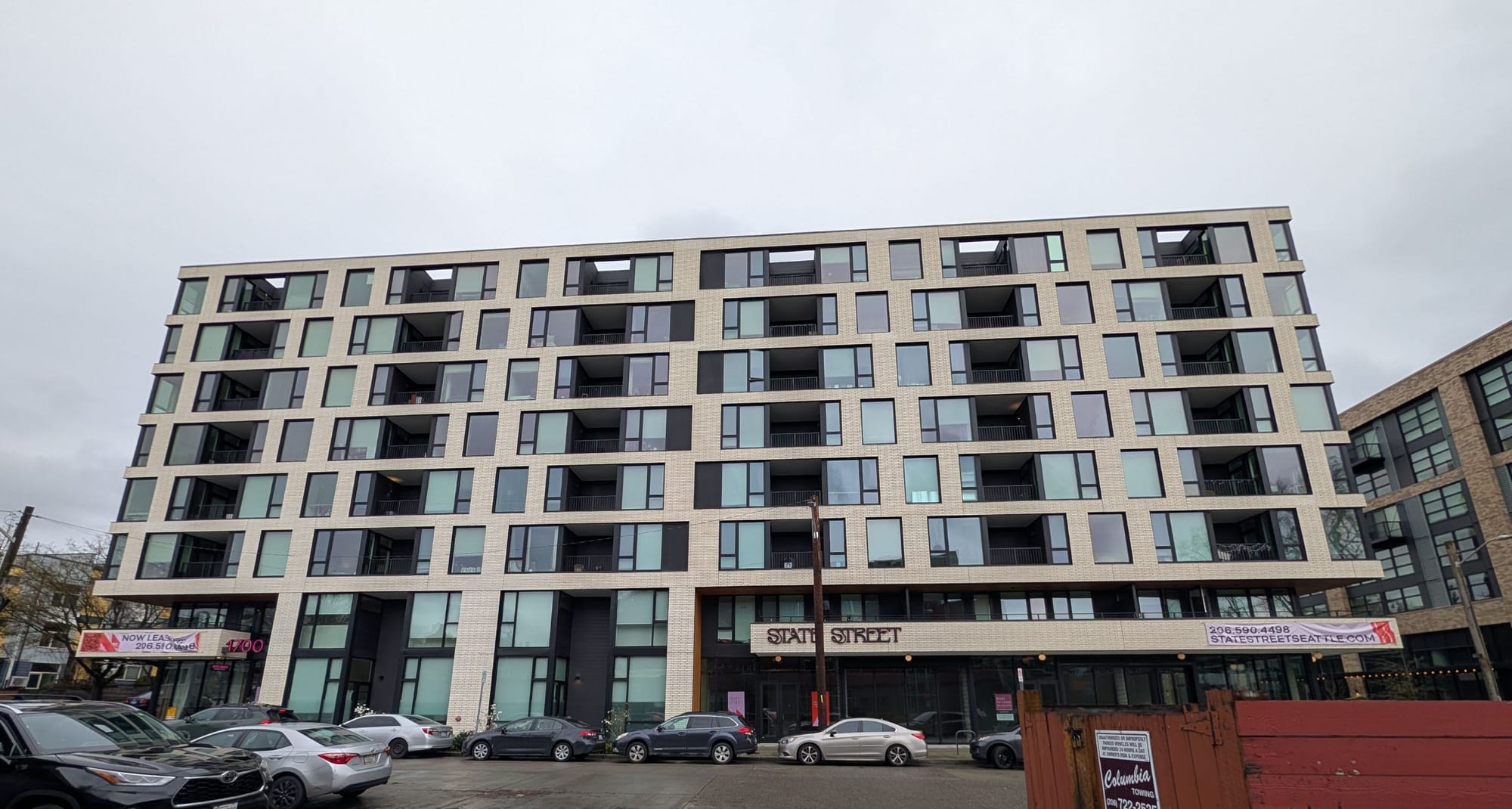
- State Street Lofts at 1700 21st Ave S
- An eight-story, 158-unit mixed used building with around 4,000 square feet of commercial space and 64 parking stalls. Around 40 of the housing units are income-restricted.
- This project was completed in 2024.
- Homebody II at 1531 18th Ave S
- A three-story, 12 small efficiency dwelling unit (SEDU) apartment with no parking.
- This project was completed in 2023.
- Melody Jabooda Apartments at 2101 S Grand Street
- A six-story, 186-unit apartment building with around 70 parking stalls. Over 40 of its housing units are income-restricted.
- The project was completed in 2022.
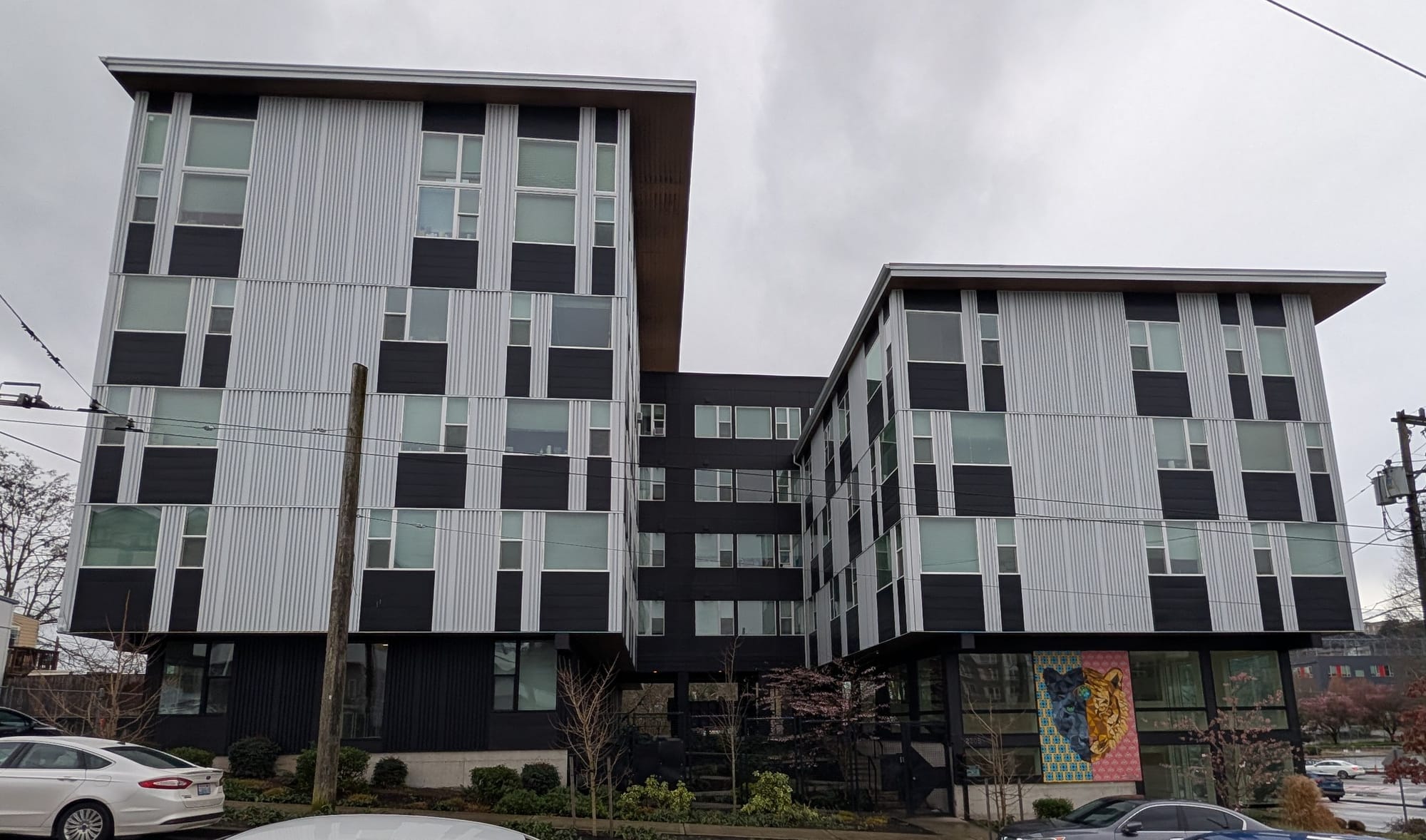
- Genoa at 2305 S Plum Street
- A six-story, 136 micro-apartment building with no parking.
- The project was completed in 2020.
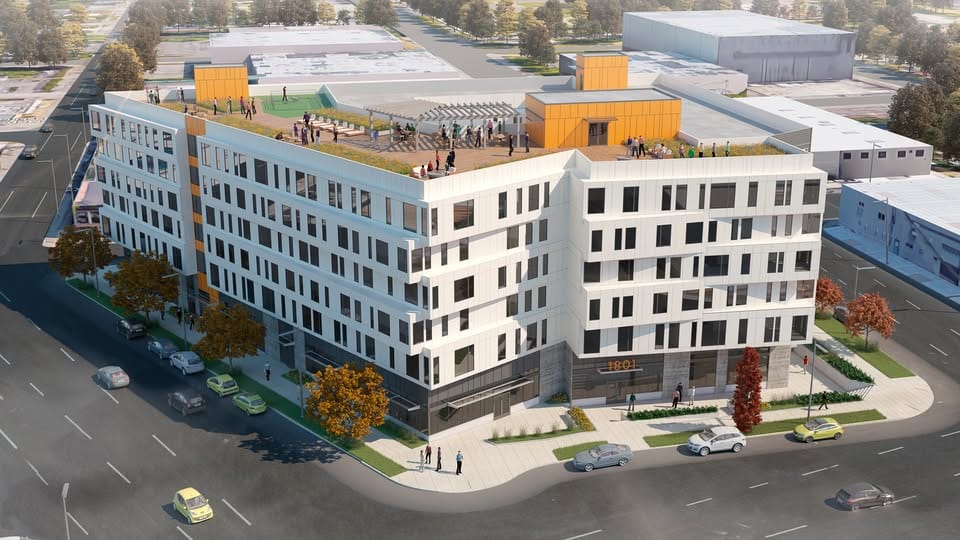
- Hobson Place at 1911 22nd Avenue S
- A six-story, 177-unit permanent supportive housing building with a 7,096 square foot community center and 27 parking stalls. Operated by DESC.
- The project was completed in 2019.
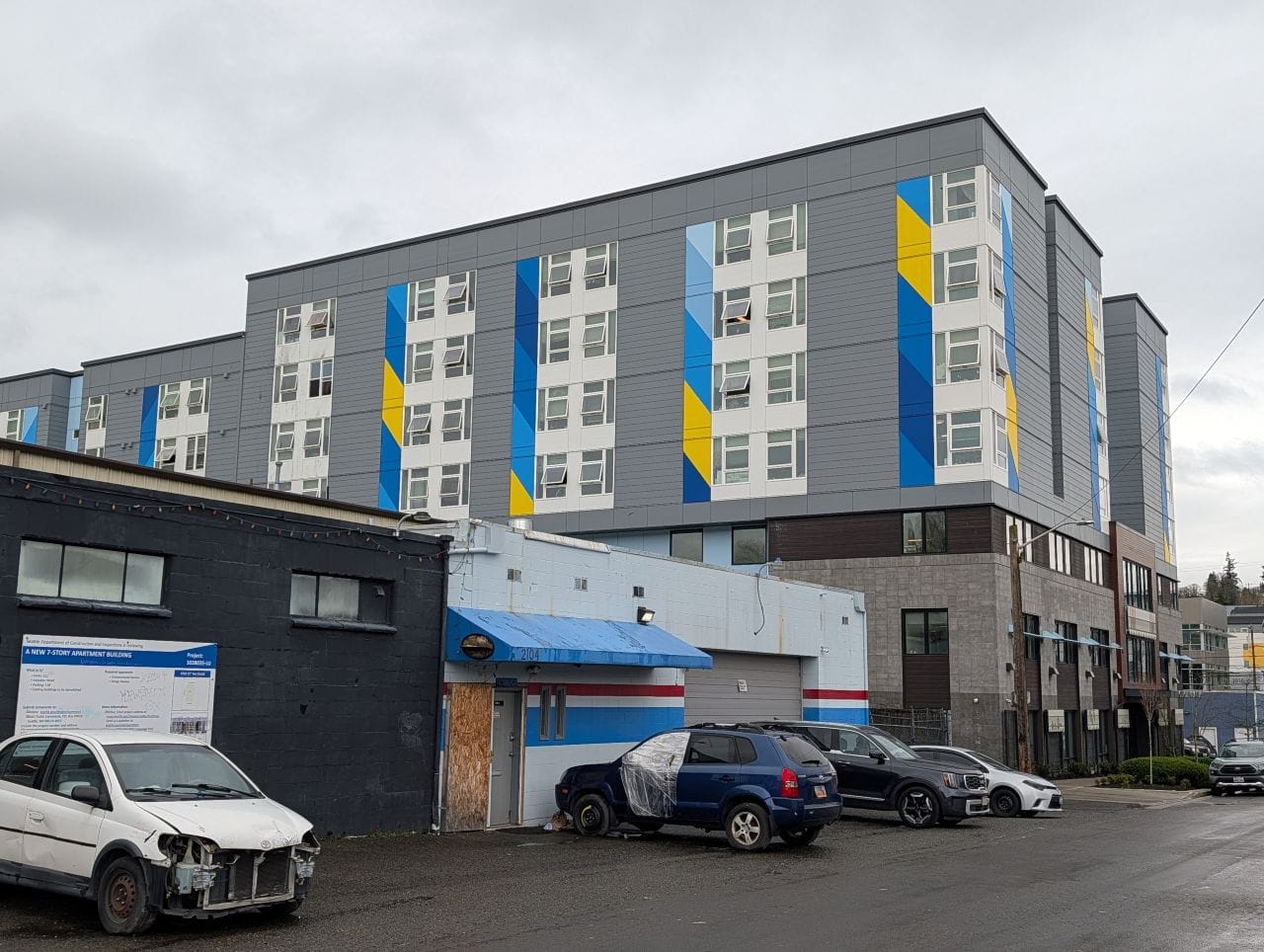
This North Rainier Valley area is also seeing new schools built and planned. In 2019 and 2022, the Giddens School and Hamlin Robinson School’s new building were completed. In the pipeline is the new location for the French American School of Puget Sound, which is currently in the permitting process.
The Urbanist's Spring Member Drive is in its final stretch, now with a website redesign offering ad-free reading for donors! Take advantage of this membership perk and support local journalism with a monthly donation.
A pipeline of residential and mixed-use buildings also developed in the station area. Projects in the permitting process include...
- 2029 24th Avenue S
- A planned seven-story, 96-unit building with no parking.
- The project received its construction permit in 2025.
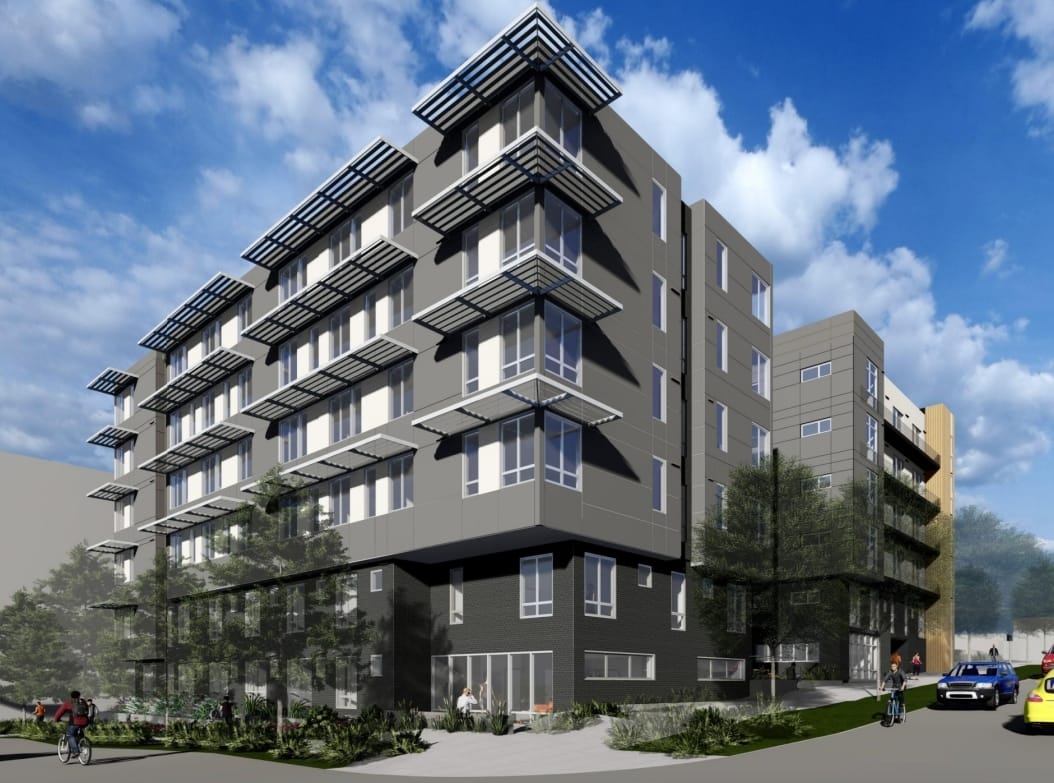
- 1906 20th Avenue S
- A planned eight-story, 203-unit apartment building with 80 parking stalls.
- The project received its construction permit in 2023.
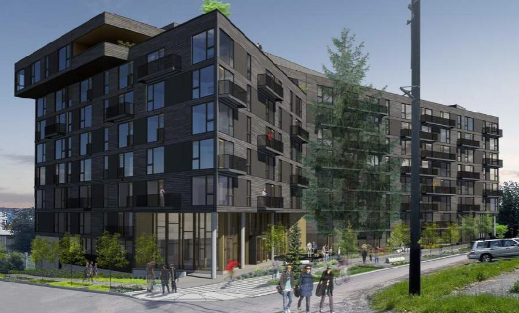
- 2007 S State Street
- A planned six-story, 58-unit mixed-use building with 3,532 square feet of commercial space and no parking.
- The project received its construction permit in 2024.
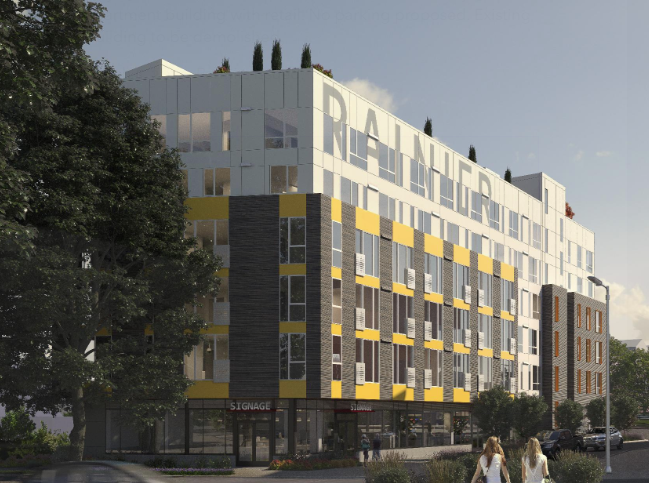
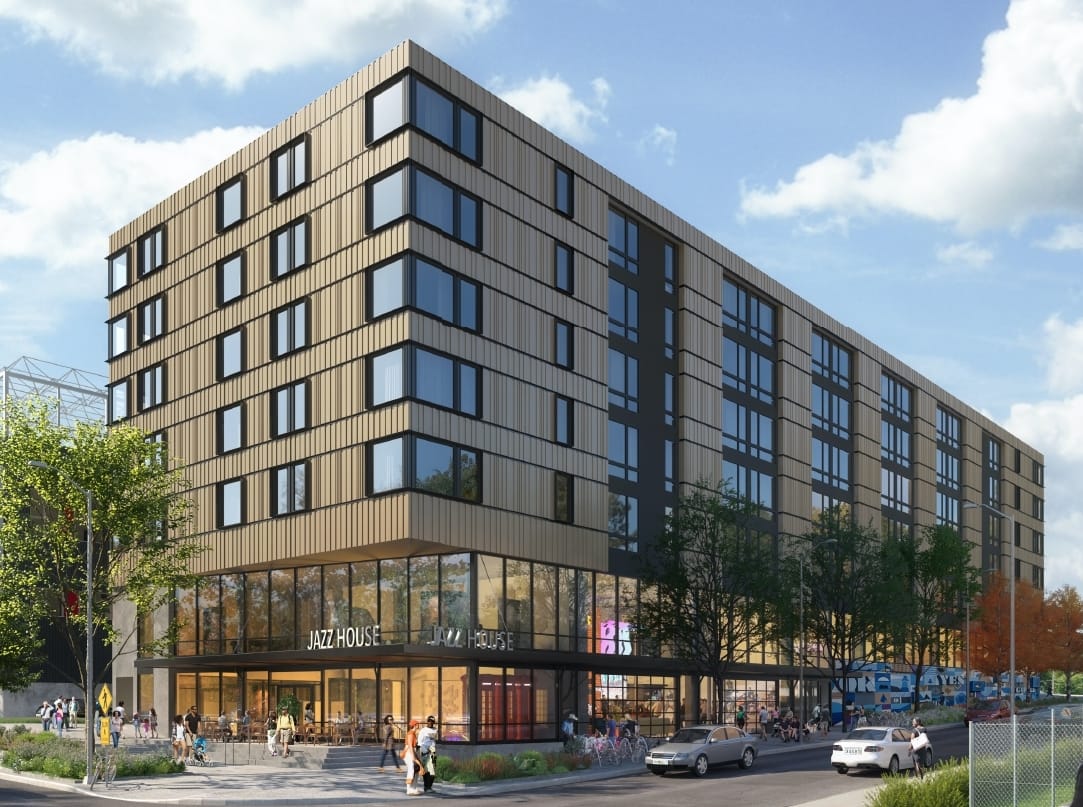
- Jazz House at 2101 22nd Avenue S
- A planned seven-story, 128-unit mixed-use building with some retail and potentially a performance space and no parking.
- The project received its construction permit in 2023, but plans have since shifted.
- Community Roots Housing is set to operate the apartments as income-restricted affordable housing, and JazzED had been queued up to operate the jazz school and performance space until they pulled out in 2025, the Daily Journal of Commerce reports.
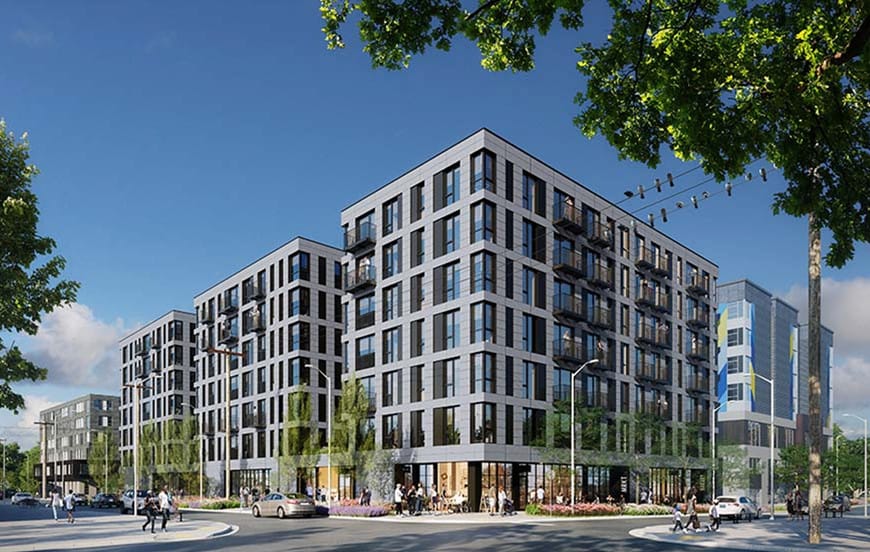
- 1910 21st Avenue S
- A seven-story, 212-unit apartment proposal with 118 parking stalls.
- The project is in the permitting process, but was last active in 2024.
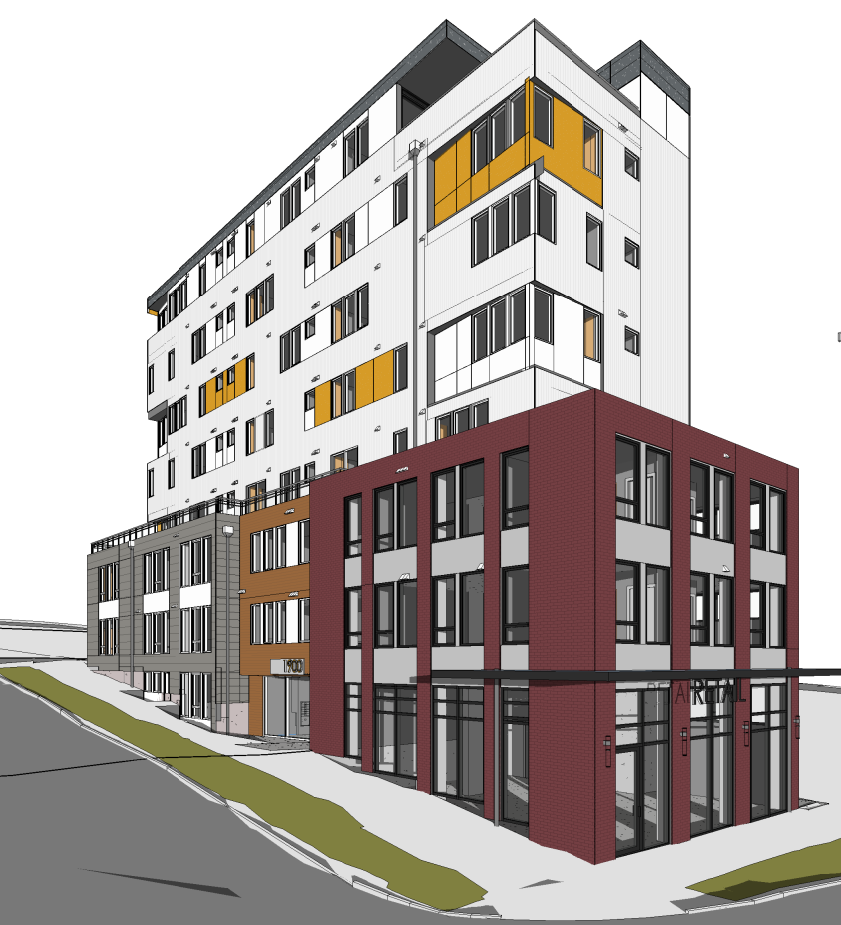
- 1900 23rd Avenue S
- An eight-story, 40-unit mixed-use proposal with over 1,000 square feet of commercial space and no parking.
- The project is in the permitting process, but was last active in 2024.
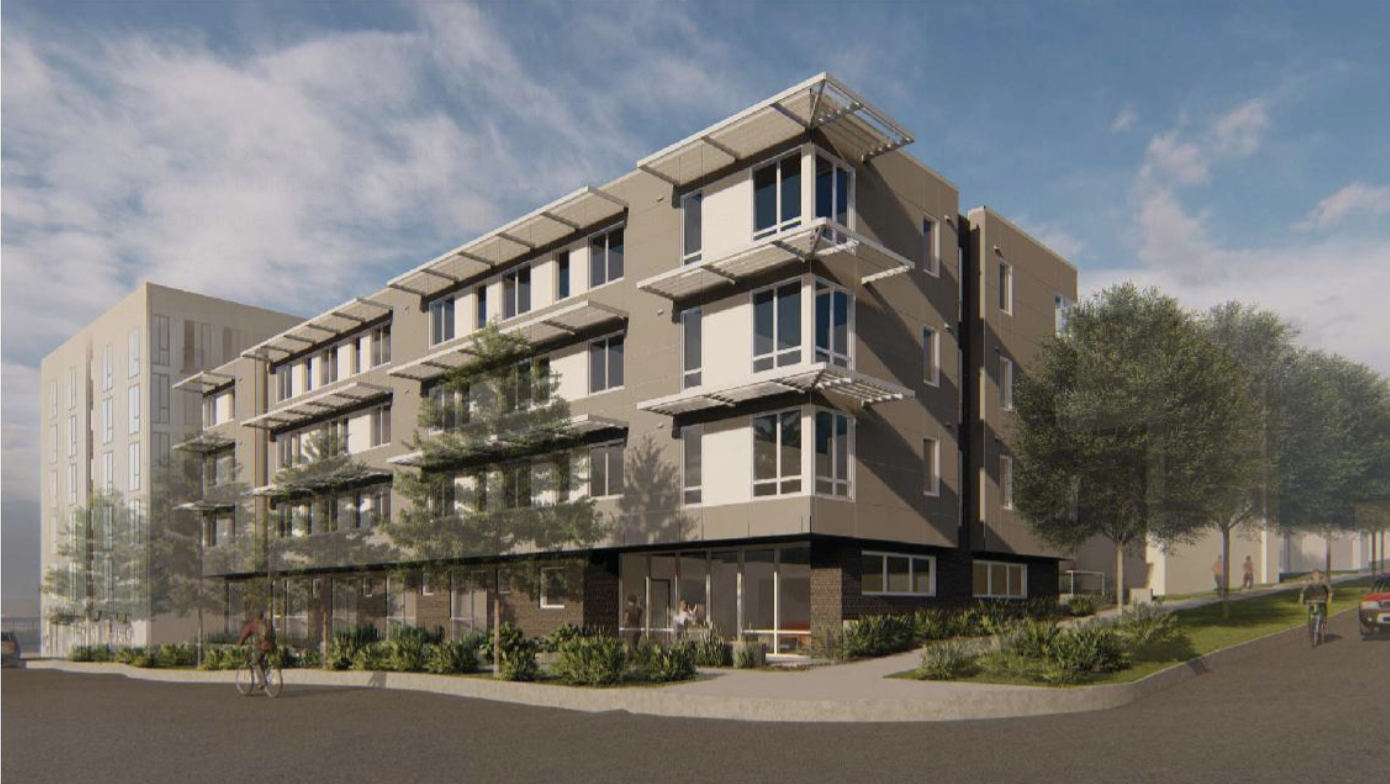
- 2019 24th Ave S
- A seven-story, 94-unit apartment proposal with no parking.
- The project is in the permitting process, but was last active in 2024.
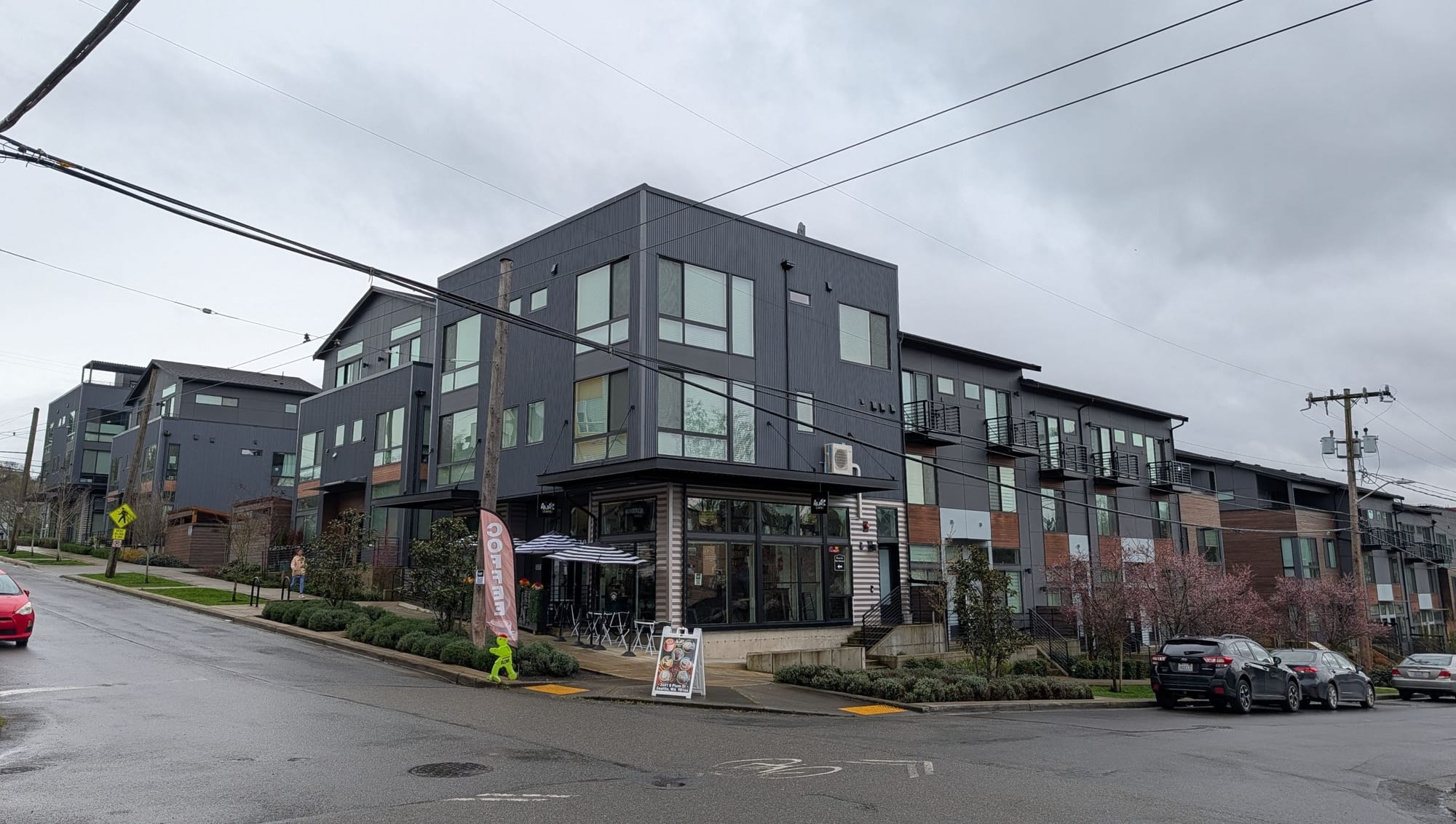
Outside of these larger buildings, townhomes have proliferated across the station area. They’re the predominant housing type by the eastern exit of the Judkins Park Station and are plentiful west of Rainier Avenue as well. Over 600 townhomes have been constructed within a 15-minute walk of the station. The largest townhome project in the area is Joya Townhomes Condominium, 62 townhomes and a retail space that were completed in 2023.
Altogether, over 2,000 housing units, nearly 200,000 square feet for institutional and commercial uses, and over 700 parking stalls have been built since 2018. More than 700 of those homes are affordable income-restricted units. When including projects in the pipeline, numbers shoot up to past 3,000 housing units, over 230,000 square feet for institutional and commercial uses, and more than 1,000 parking stalls built, permitted, and planned in the station area.
With all this housing in place, some major challenges emerge for the station. Namely, how to safely and comfortably navigate to and from the station. Rainier Avenue is notoriously crash-prone and dangerous for people walking, rolling, and biking, especially when factoring in the highway on- and off-ramps.
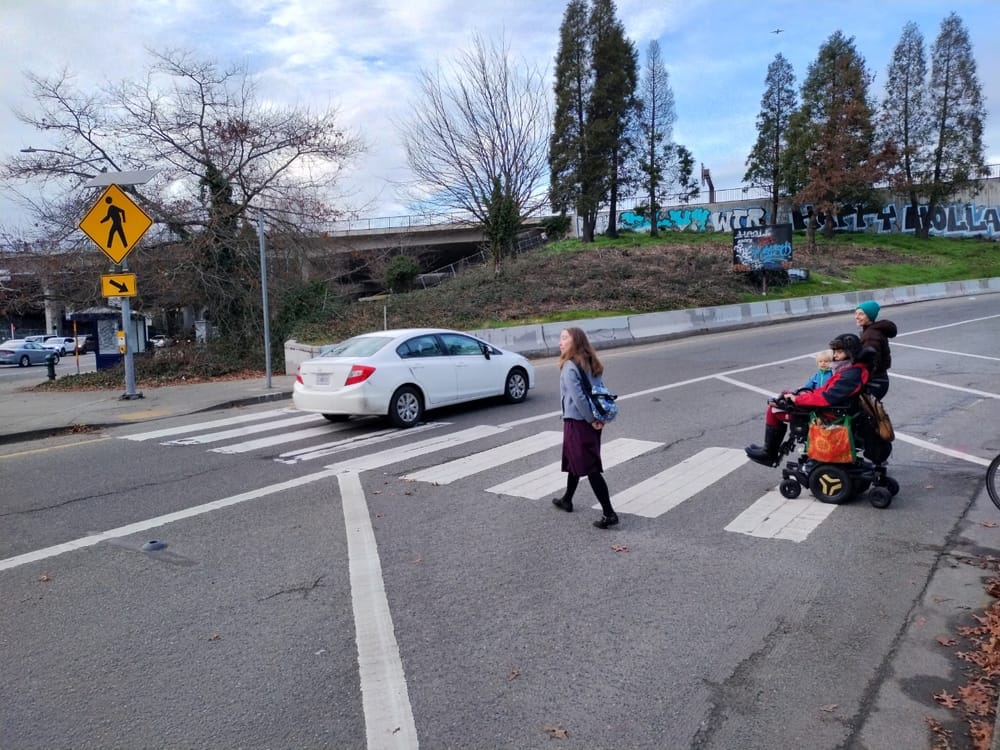
The Washington State Department of Transportation (WSDOT) is advancing a ramp reconfiguration and road redesign that would improve safety, but stop short of a full overhaul that safe streets advocates have demanded. WSDOT's reconfiguration is still in a conceptual phase, and remains several years out.
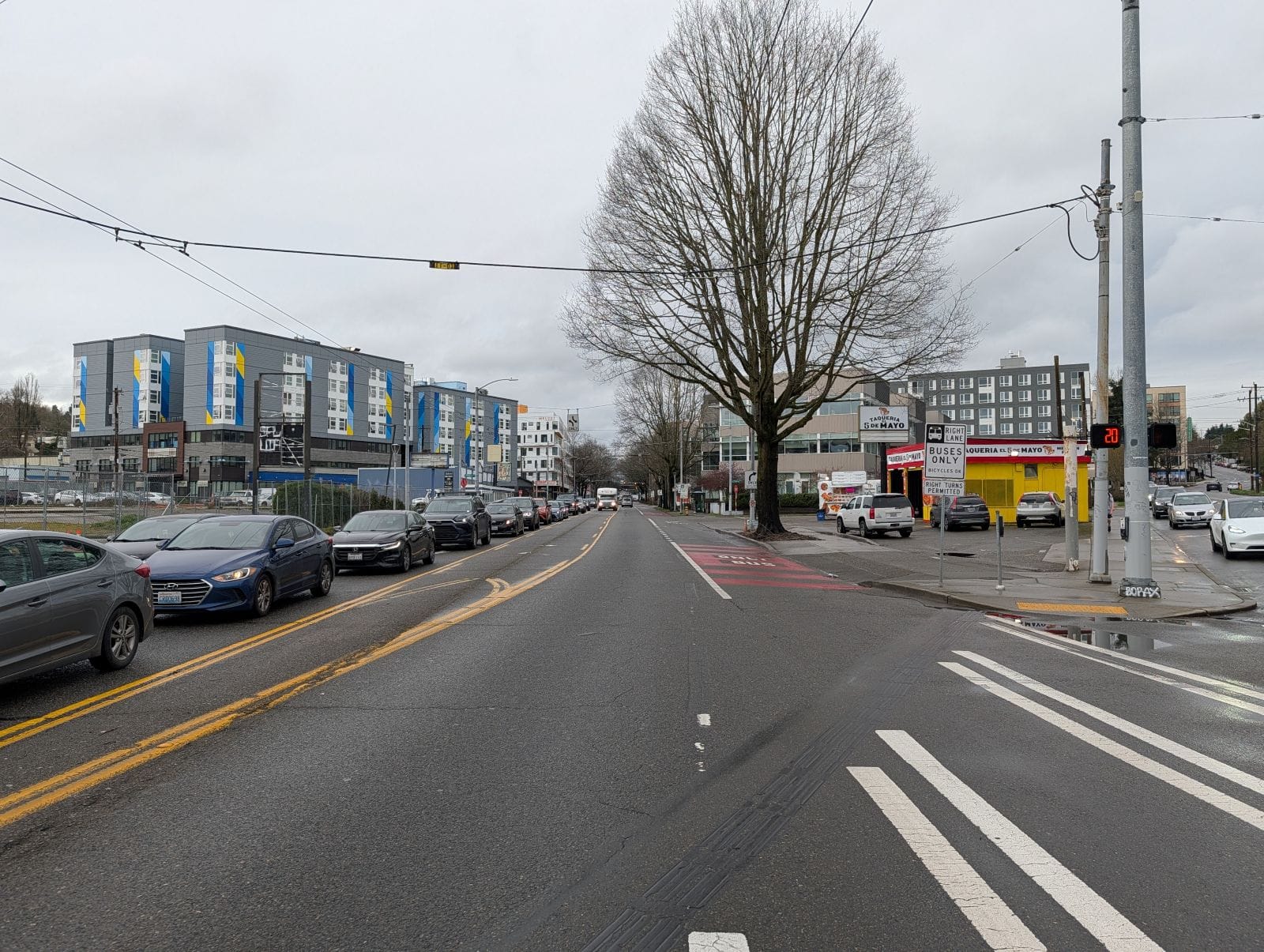
The hostile pedestrian environment on Rainier Avenue and the at-grade rail crossing within the station could end up being a sore spot for a Rainier Valley still dealing with the consequences of building light rail at-grade rail along MLK Jr Way, while most other neighborhoods enjoy safer and more reliable grade-separated light rail. Train-on-pedestrian collisions have killed on numerous occasions, and collisions with cars delay 1 Line trains an average of once every 40 days, the agency reported in 2019.
Even if Rainier Avenue risks can be mitigated, the sidewalk network leaves much to be desired, with significant gaps, such as along 21st Avenue S, and partial plans to address them, due to limited sidewalk funding and huge needs citywide.
There’s also the future challenges around housing capacity to consider. The prevalence of townhomes will restrict where future, new, and large housing developments can be located, as they make property acquisition more difficult with small parcels of land and more owners to deal with. That could lock in townhome land use long into the future, even when denser development makes much more sense.
For now, light rail arrives in a burgeoning intersection of neighborhoods, connecting to a truly regional light rail system. Thousands of new residents, visitors, and students will be able to access homes, businesses, and schools in the Judkins Park station area.
 Urbanist Staff