A move to impose a countywide 0.1% sales tax to bolster spending on unincorporated roads in King County was delayed this week, after disagreement over a provision setting aside a portion of the revenue for local cities. The King County Council, acting as the board of the King County Transportation District, is expected to take up the measure again next month, moving back the expected start date of sales tax collections by six months.
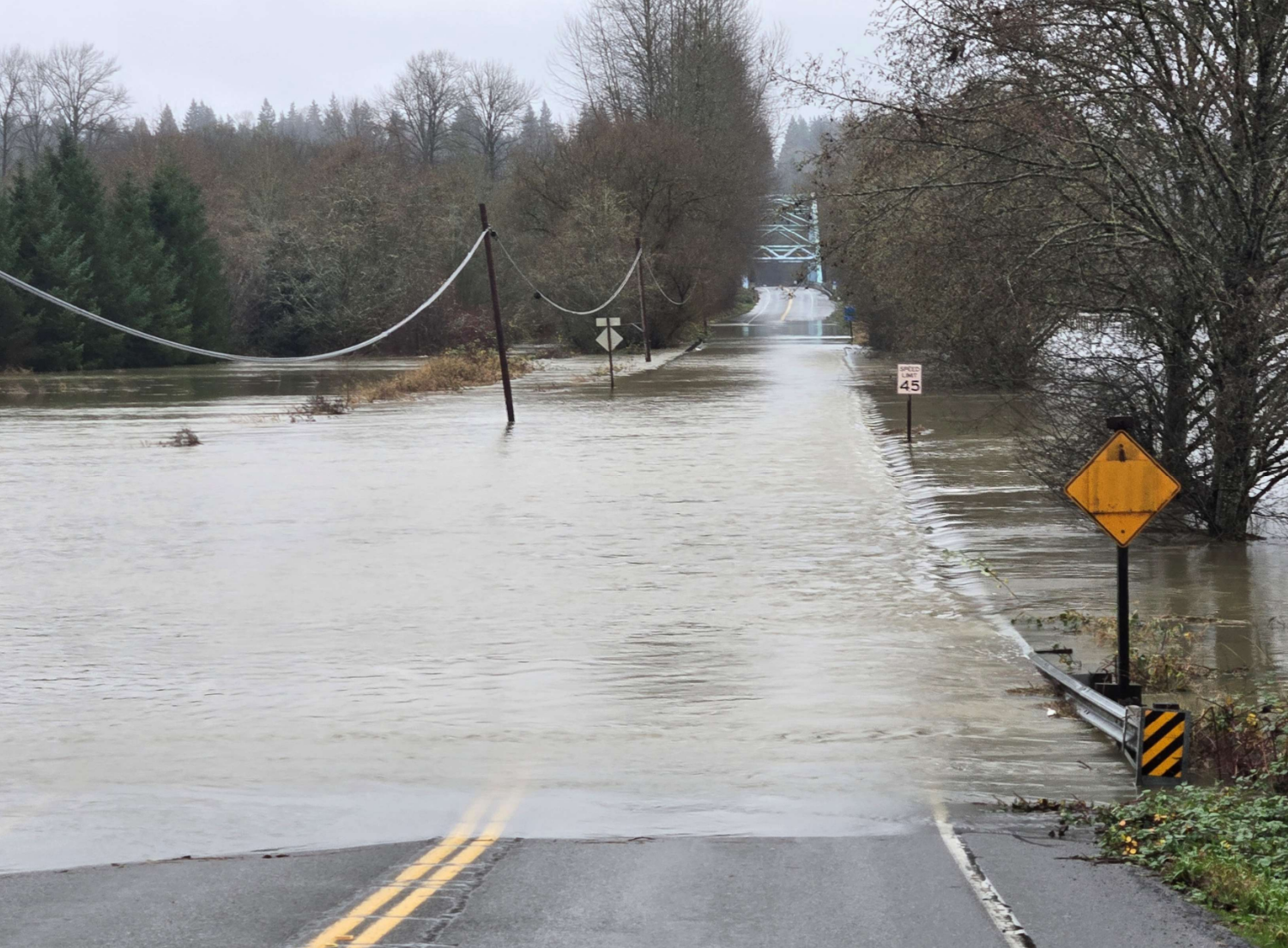
King County's Road Services Division was in a precarious financial position even before last December's major flood event. Providing the division with a sustainable source of funding is seen as a major priority by county leaders.
But the debate over tapping into sales tax authority that has been sitting unused for years ultimately turned into a larger discussion on transportation funding needs across local governments in the region.
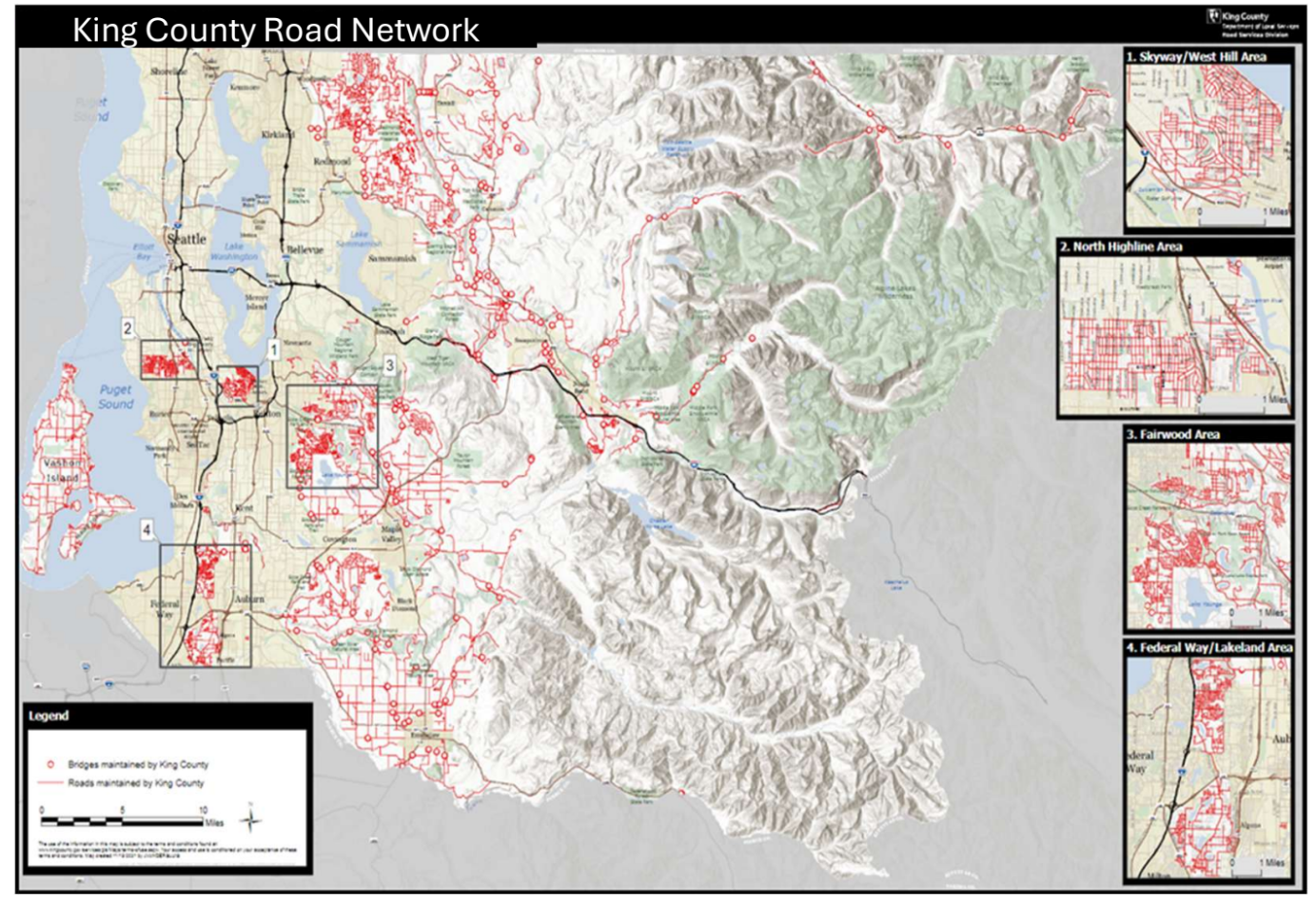
The 0.1% sales tax increase, which would bring the total sales tax rate in Seattle (the city with the highest rate) to 10.65%, is expected to generate around $100 million per year in additional revenue. That's less than half of what King County says is needed to fully maintain its approximately 1,500-mile road network, primarily concentrated in the eastern part of the county but also on Vashon Island and in areas like Skyway, White Center, and Fairwood.
The pass-through amendment, as initially proposed by Steffanie Fain (District 5, Renton and Kent), would have diverted 25% of the new revenue to King County's 39 cities, handed out proportionately based on taxable retail sales. Many of those cities have been clamoring for such a provision, individually and via advocacy through the Sound Cities Association (SCA), which advocates collectively on behalf of all cities in King County except Seattle and Bothell.
The Urbanist is a nonprofit newsroom powered by reader support. Become a member, get perks, and support local journalism.
Last year, the SCA opposed the 0.1% sales tax bump, and then pivoted to advocating for the pass-through.
As written, 39% of any pass-through revenue would ultimately go to the City of Seattle, with Bellevue receiving another 15%. That means that the remaining 37 cities in the county would divvy up less than half of the amount generated.
In some ways, the underfunding of the county's roads department is a product of the success of the 1990 Growth Management Act, which directed growth into cities and towns while encouraging annexation within the urban growth boundary. With a majority of the Roads Services division funded by property taxes on unincorporated areas – capped at 1% growth per year – that tax base has continued to diminish over time.
Even with the rural roads crisis, elected officials inside cities have not been okay with the idea of a new countywide tax intended to benefit the areas outside their borders, as they also face major hurdles funding transportation projects.
"Over 95% of the sales tax revenue generated from a countywide sales tax is generated within cities. We acknowledge that this was intended by the Growth Management Act," Neal Black, Kirkland's Deputy Mayor, told the transportation district board on March 19. "It's fair and reasonable for all city residents and businesses to contribute a portion of any revenue generated to county road investment. It's also fair and reasonable for any city to retain an appropriate share of revenue generated from within its own borders. Thriving cities are good for King County, and King County thrives when cities thrive."
Fain's amendment didn't actually make it to a vote this week, after it became clear that there were not five votes to approve a 25% pass-through. Instead, the County Council – again, acting as the transportation district board of supervisors – took a surprise recess to haggle over a number that could get to five. They ultimately weren't successful.
A motion by Rod Dembowski (D1, Shoreline and NE Seattle) to lower the amount to 20% failed 4-5, while a motion by Reagan Dunn (D9, Maple Valley) to set it at 12.5% also failed 4-5. Only one Councilmember voted yes on both motions – Claudia Balducci (D6, Near Eastside). Balducci called the request for a pass-through "not unreasonable" and seemed happy to go with any amount supported by her colleagues.
"This whole exercise of government is not about dollar in, dollar out. We contribute to the greater good, and there are things that we should contribute to," Balducci said. "All of us, people in Bellevue use those roads, people in Seattle use those roads. So I think it is fair that we today start to move toward having more of a countywide contribution towards the unincorporated roads. The question this amendment raises is, what's the balance?"
On the side of the lower number along with Dunn were Teresa Mosqueda (D8, West Seattle and Vashon) and Sarah Perry (D3, Sammamish). Voting with Dembowski were Fain and Jorge Barón (D4, NW Seattle). Rhonda Lewis (D2, Rainier Valley) and Pete von Reichbauer (D7, Federal Way) opposed both amendments.
"I think that this is an unfortunate amendment, because it sets up a false division between how we're investing in unincorporated areas versus in cities," Teresa Mosqueda said before ultimately supporting the lower number.
Mosqueda brought up the need to make safety improvements on unincorporated roads, many of which lack basic accessibility infrastructure. Currently, King County spends around 0.03% of the amount needed to upgrade its roadways to full Americans with Disabilities Act (ADA) standards, a pace that means full compliance wouldn't come for more than 3,600 years.
"For our community members that have been pushed further and further outside of Seattle to places like White Center and others, they are in need as well, to have a reliable, connected transportation system that not only keeps people connected on roadways, but that it connects their sidewalks and ensures that there is true walkability, rollability and accessibility," Mosqueda continued. "I don't know how much more that we can emphasize that it is our responsibility in King County to invest in unincorporated areas."
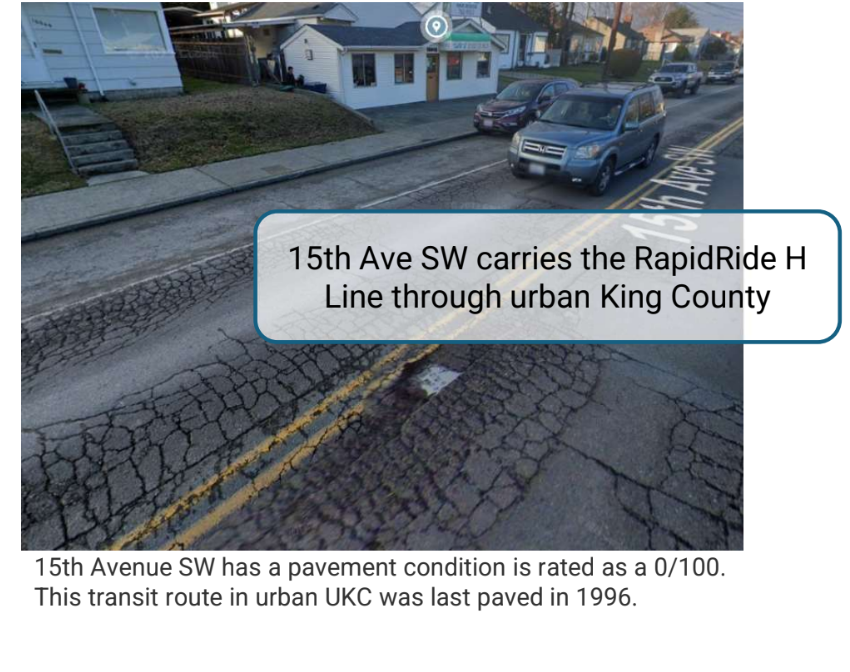
While the county is poised to put all of the new revenue into roads, revenue that gets passed through to cities could be used for a broad array of transportation uses, including transit operations.
The committee also rejected a separate Dembowski that would have diverted 50% of the proceeds of the sales tax to King County Metro, the same proposal that the district board briefly considered last year. Transit advocates had been pushing for King County to consider a broader funding package for Metro, facing its own structural budget issues, but that looks increasingly unlikely in the short term, with the City of Seattle pursuing the renewal of its city-specific transit measure this fall.
Meanwhile Executive Girmay Zahilay is starting to pursue a countywide housing levy, which could end up taking precedent over a transit measure.
The board postponed its vote to another meeting, likely to be held in May. By waiting one month and missing a key deadline to start collecting the additional sales tax revenue on July 1, the county will lose out on six months of revenue. A vote some time this year appears almost certain, due to the dire state of the Road Services division's budget.
"We do not have an emergency fund anymore," King County Local Services Director Leon Richardson said Thursday. "If something emergent were to happen, there is literally no way we can respond. And in addition to that, as we continue on this path, we will continue to need to make reductions, because the cost of doing business continues to go up while our revenue remains flat."
 Ryan Packer