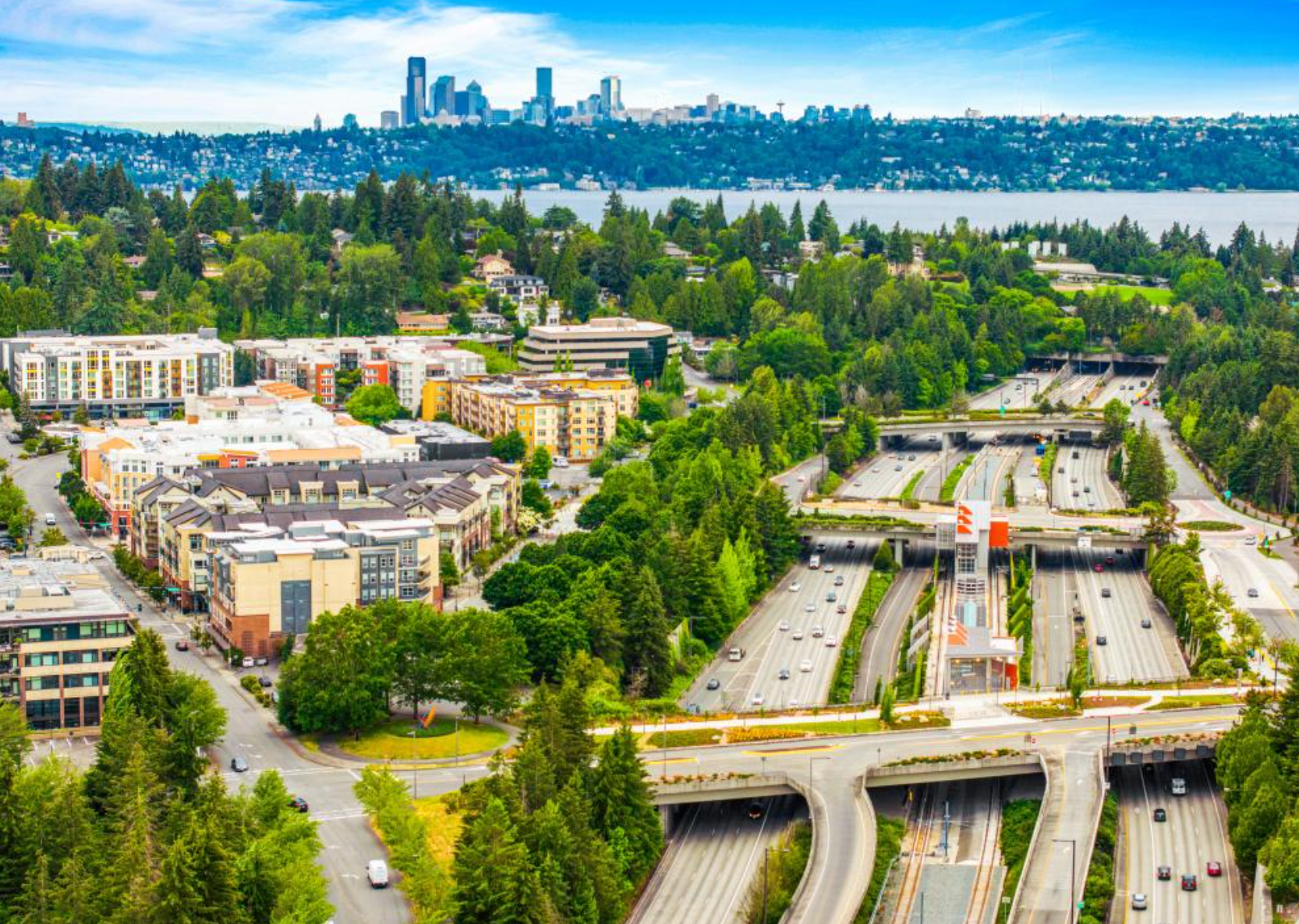
Days before Sound Transit cuts the ribbon on the long-awaited light rail connection across Lake Washington, Mercer Island's leaders are officially advancing steps intended to bring the city's growth plan into compliance with state law.
The affluent island of nearly 26,000 residents has been under scrutiny since early last year, when two Mercer Island residents joined with the land use advocacy nonprofit Futurewise to file an appeal against the City's growth plan at the state growth hearings board. Among other issues, that appeal alleged that Mercer Island wasn't meeting its requirements to plan for future residents across all income levels, a relatively new mandate stemming from a 2021 update to Washington's Growth Management Act (GMA).
In a ruling last August, the board sided against Mercer Island across a range of issues, finding the growth plan out-of-compliance and giving city officials a year to make updates.
While the City did spend months pursuing an appeal of that decision at King County Superior Court, last month that appeal was dropped in the wake of a settlement agreement. Last week, the Mercer Island Council unanimously voted to advance a set of changes intended to get the city into compliance ahead of the July 31 deadline.
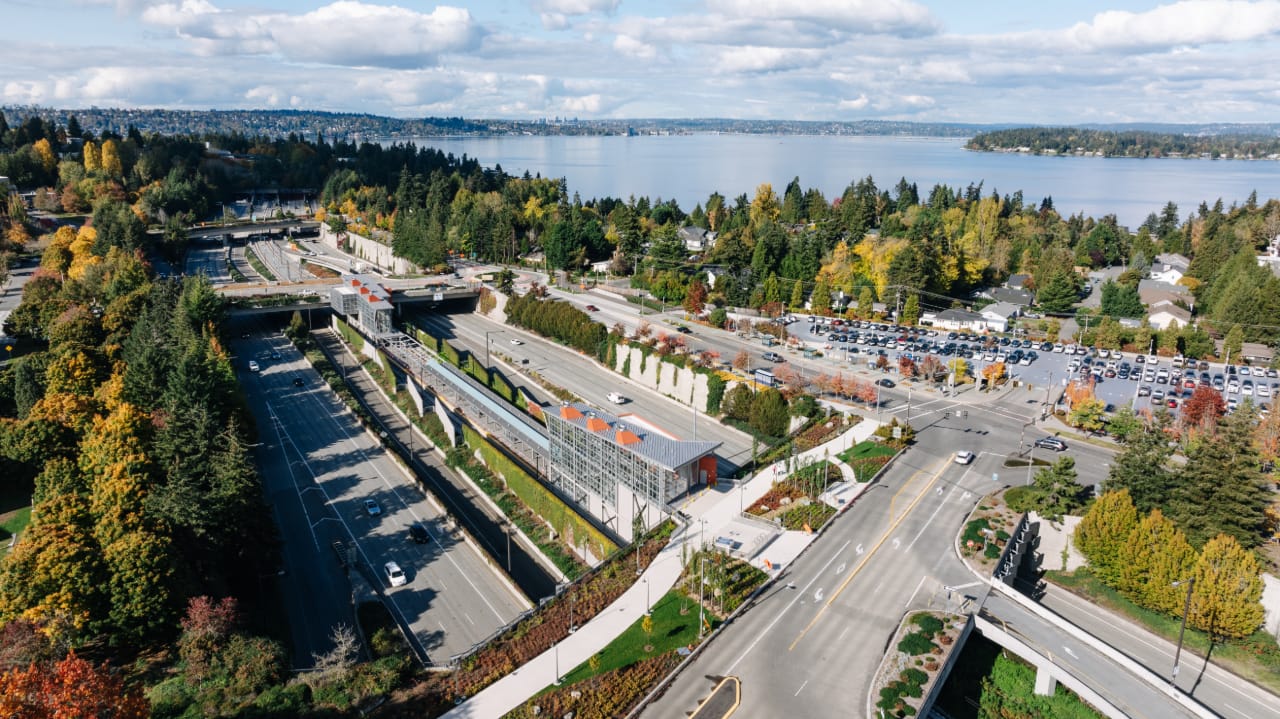
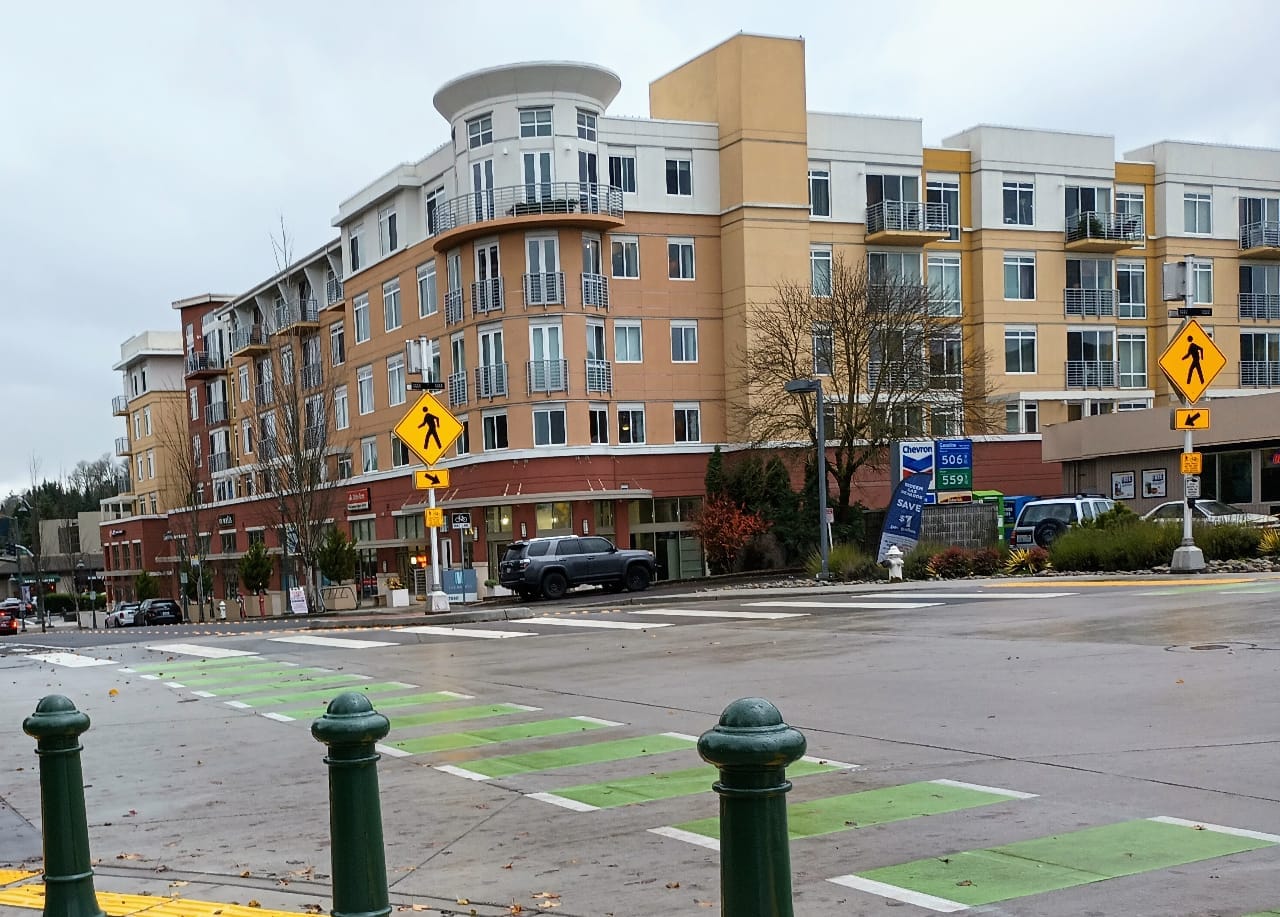
After Saturday, riders at Mercer Island Station will be able to catch a train and arrive at either Seattle's University District or the Microsoft Campus in Redmond in about 20 minutes. But despite the coveted regional access that its new light rail station will provide, Mercer Island is taking only a baby step toward allowing more housing around that station. The City's new plan advances zoning changes within the Town Center neighborhood and a very narrow box just to the south – an area where the island's densest developments are already located.
Thanks to another new state law encouraging transit-oriented development, Mercer Island will have to allow denser housing within a half-mile walking distance of its 2 Line Station by the end of 2029. While the City is already exploring exactly what that will look like, there are no plans to move up that timeline. The "phase 1 subarea" – where the City will make changes this year – only targets the Town Center, which is a fraction of the station's full half-mile walkshed.
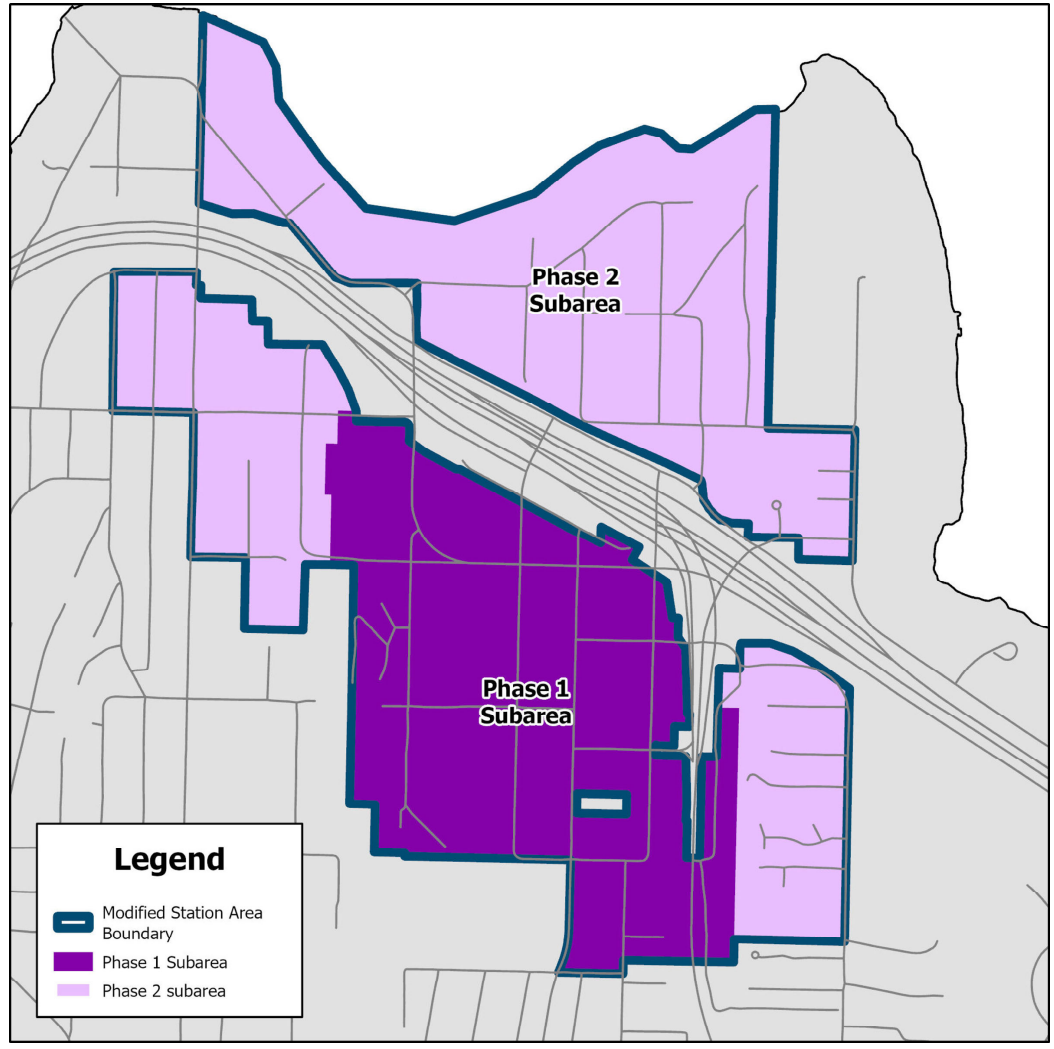
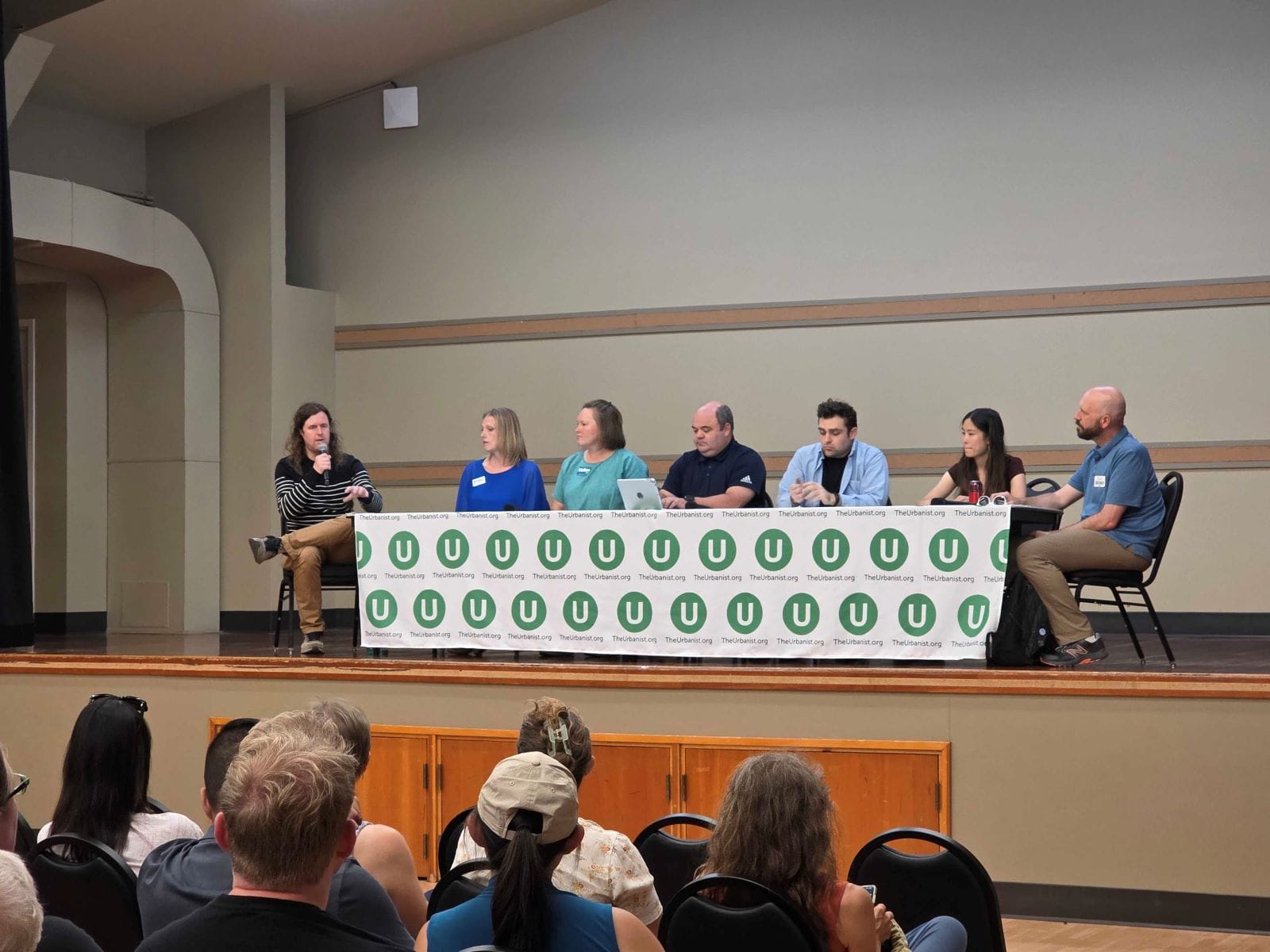
"What you're seeing here is your city council making a policy decision that most of this density and affordable housing requirements will be met in the Town Center and that is what we're planning for right now," Jesse Bon, Mercer Island's City Manager, told community members at an info session on GMA compliance earlier this month. "There's a lot of reasons [for that], but we have the capacity to add additional height in Town Center. We have a little more capacity on the sewer and water side. That's not necessarily true island-wide."
Mercer Island's Town Center currently has a two-story height limit, with any development project able to unlock additional height by providing certain amenities including on-site affordable housing. The maximum height varies across the area, from three stories to seven closest to I-90. As part of its compliance strategy, Mercer Island will upzone to eight stories across the entire neighborhood, with a few adjacent multifamily lots to the east going up to six stories.
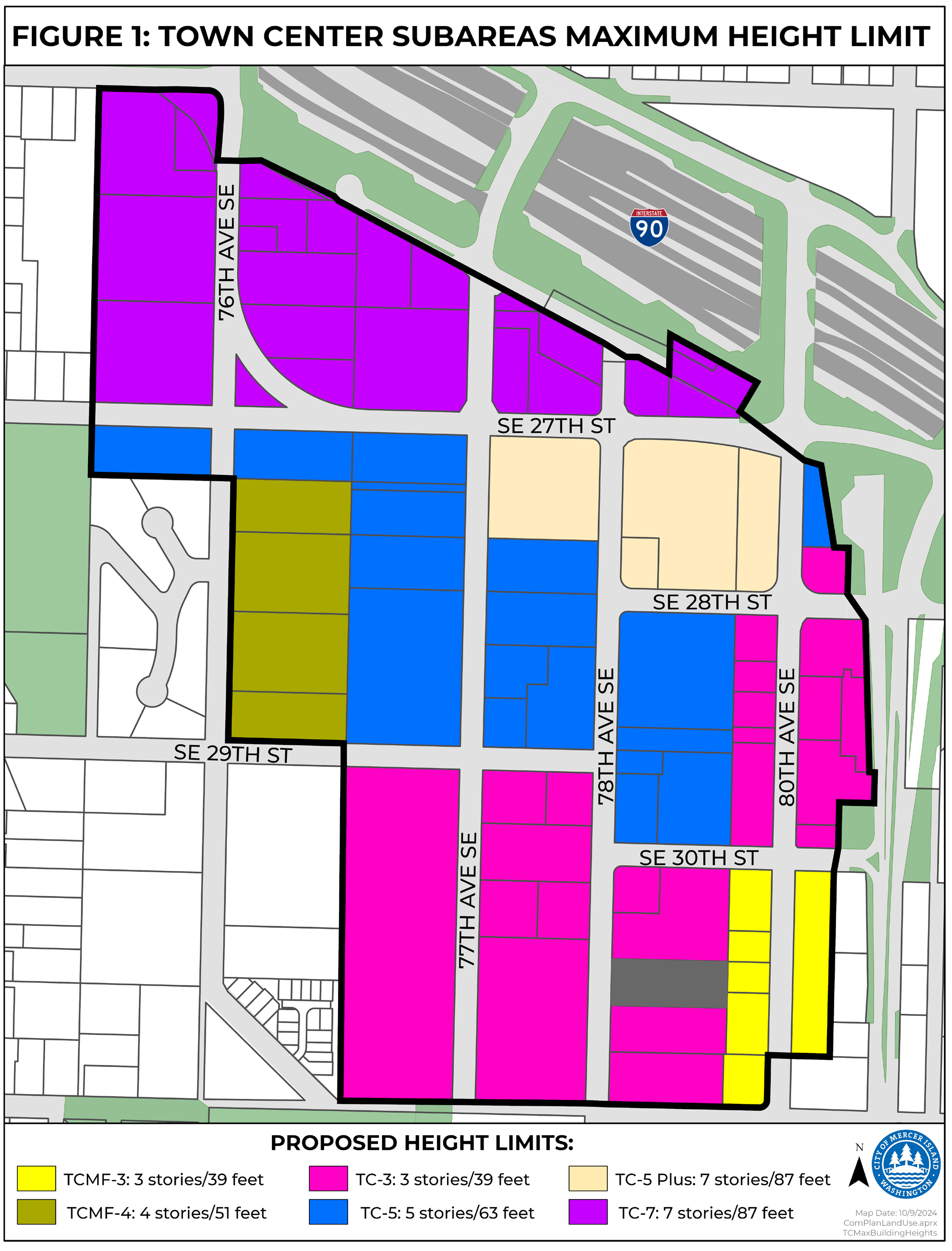
Mercer Island's plan also involves imposing a 10% affordable housing mandate on all properties within the Town Center, aimed at households making between 30% and 80% of King County's median income. This would actually be a backpedal on an existing affordability mandate adopted in 2024, which required 15% of units to be set aside, a requirement that had pushed Mercer Island's affordability requirements to some of the most stringent in the region.
The Urbanist's Spring Member Drive is in full swing, now with a website redesign offering ad-free reading for donors! Take advantage of this membership perk and support local journalism with a monthly donation.
The City will also consider the creation of a "fee in-lieu" program that allows for a cash payment instead of direct construction of affordable units, a concept that has existed within Seattle's Mandatory Housing Affordability program since it was created nearly a decade ago. It's that in-lieu fee program that Mercer Island sees as the main way to enable the construction of deeply affordable housing, aimed at people making 30% of area median income (AMI) or below, or around $37,000 for a household of two.
"The bottom line here is, by upzoning, we're actually going to create more capacity than we need for 50% AMI and above units," Jeff Thomas, Mercer Island's Community Planning & Development Director, said at the info session. "What will happen is, as an alternative to building those units, there will be some development that will opt to do the fee in-lieu approach. That money then will be used to go to help support direct delivery of less than 30% [area median income] units."
There are other issues to be resolved, including the adoption of a growth plan specific to the light rail station area, and anti-displacement measures that are likely to include beefier renter protections. But whether Mercer Island is able to get back into compliance depends heavily on whether the hearings board and the City see eye-to-eye on on what it means to "make adequate provisions" for housing across all income levels.
Mercer Island's view is that those requirements represent an unfunded mandate to set aside funds for affordable housing at a scale that is truly unsustainable for a city of its size, which is causing considerable consternation within city hall. Out of the 1,239 units the City needs to accommodate over the next two decades, just over 500 need to be targeted at households earning 30% of King County's median income or below, and the plan so far only accounts for around 200.
"I can tell you, we're already saying we can't reasonably do this," Bon told community members, in response to a question about a potential change in state direction. "I don't know what that means in terms of long-term planning. I think as other cities start to assemble this data, and we see the numbers that are truly staggering across the state, I'm hopeful there will be a much larger conversation with the State of Washington and the counties about how we actually deliver this. Cities are not going to be able to do this. I count Mercer Island as a smaller city. We don't have the resources to do this."
Mercer Island has been a strong voice against Olympia's biggest housing bills in recent years, opposing both HB 1110, which legalized more types of lower-density "middle housing" in formerly single-family zones, and HB 1491, the transit-oriented development bill that will ultimately force these more dramatic upzones close to the city's light rail station.
Former Mayor Salim Nice, who left office at the end of 2025, had specifically argued that HB 1110 did not do enough to directly enable the production of affordable housing, despite the fact that affordability mandates on low-density development ultimately do little except maintain the status quo.
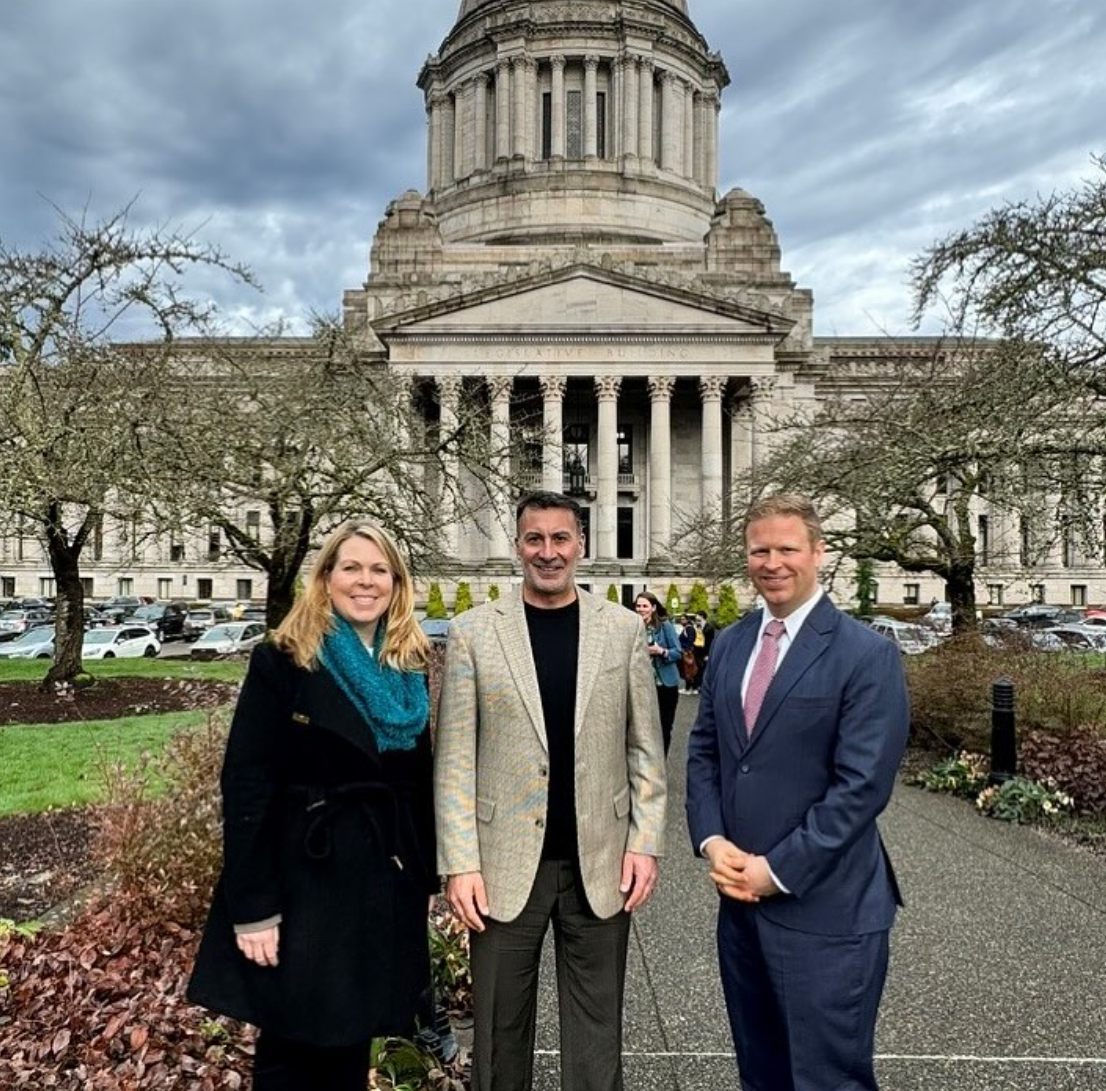
Kian Bradley, one of the two Mercer Island residents who were part of Futurewise's appeal last year, told the Council during a public comment session to look at broader zoning changes that could unlock more types of housing across different income levels. (Bradley was once published in The Urbanist for a guest op-ed he wrote about Mercer Island's surveillance camera policy.)
"It seems a logical path that we'll need to do a larger-scale upzone to comply with this requirement. The first place that comes to my mind is the high school, which is already facing declining enrollment as our population ages," Bradley said. "My concern is that by pushing this off, and just seeing what happens when we don't comply and meet this requirement, is that we will lose control over how we want to handle it. It's better if we do it the way that we think makes sense."
But Mercer Island residents are already pushing back on the idea of the city implementing any state mandate beyond the bare minimum required. At that same council meeting, numerous residents who live north of I-90 showed up to argue that the City was including areas that fell just outside the half-mile walkshed, despite the fact that potential upzones in that area are likely more than three years away.
"Our Comprehensive Plan's vision statement says, 'Mercer Island is principally a low-density single family residential community' and it is one of the Puget Sound's 'most livable residential communities.' Making an area for denser, urban-style development larger than required by law is contrary to that vision statement," resident Adam Ragheb said. "Please do not add a single extra lot to the station area that is not required by state law."
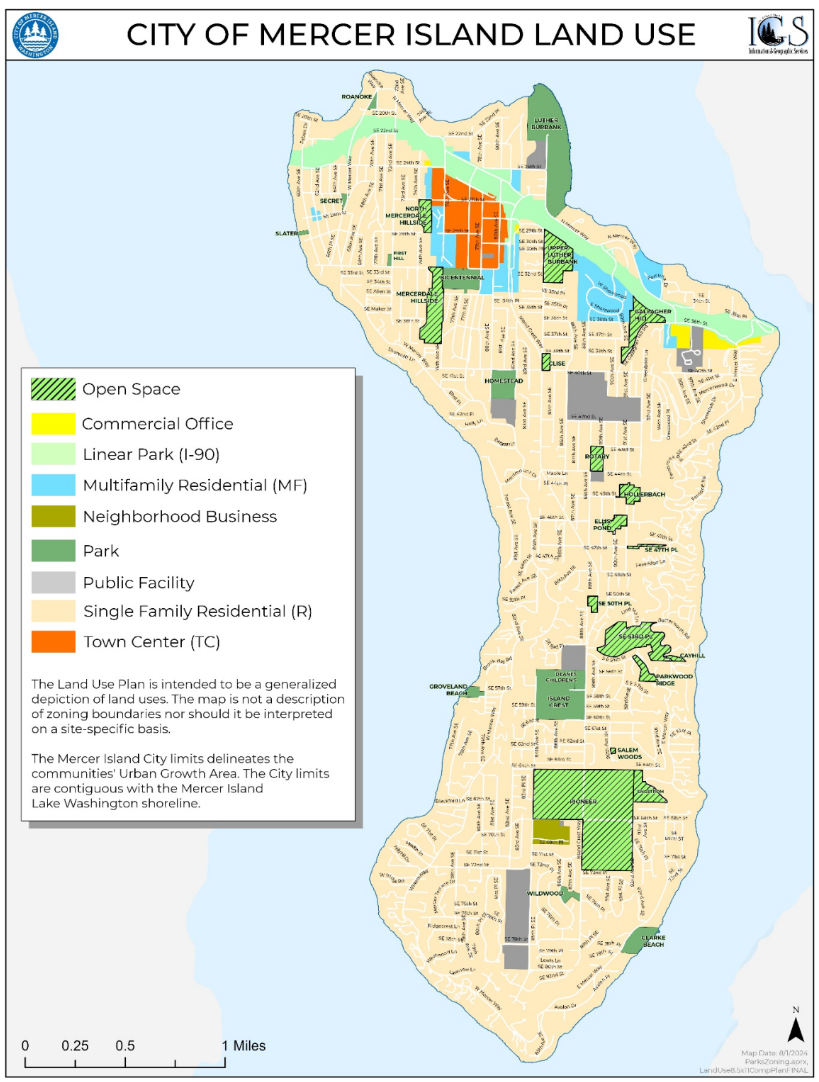
Later in that meeting, Councilmember Craig Reynolds asked City staff whether they could exclude areas north of I-90 from phase 2 of any zoning changes by expanding the catchment area further south, maintaining the status quo for property owners a short walk from the 2 Line station. They couldn't answer that question, deferring to forthcoming state guidance that isn't yet ready.
Zoning changes even further outside the Town Center are likely seen as a political nonstarter. In 2024, when Mercer Island officials were considering how to initially update their growth plan to comply with these requirements, adding a multifamily zone near an existing shopping center on the south end of the island was put forward as an option. Within days, a flood of emails opposing such a move caused that proposal to be taken off the table.
Will these steps, which keep the vast majority of Mercer Island unchanged, be enough to meet the array of state requirements that the city wasn't meeting last year? That will be determined at a compliance hearing in September. Ultimately, if Mercer Island continues to be out-of-compliance, the city could face repercussions that include state grants being pulled back or even city revenue sources being withheld by the state.
Other cities around the region, including some that face state scrutiny of their own questionable growth plans, will be watching the outcome in Mercer Island with bated breath.
 Ryan Packer
 Ryan Packer