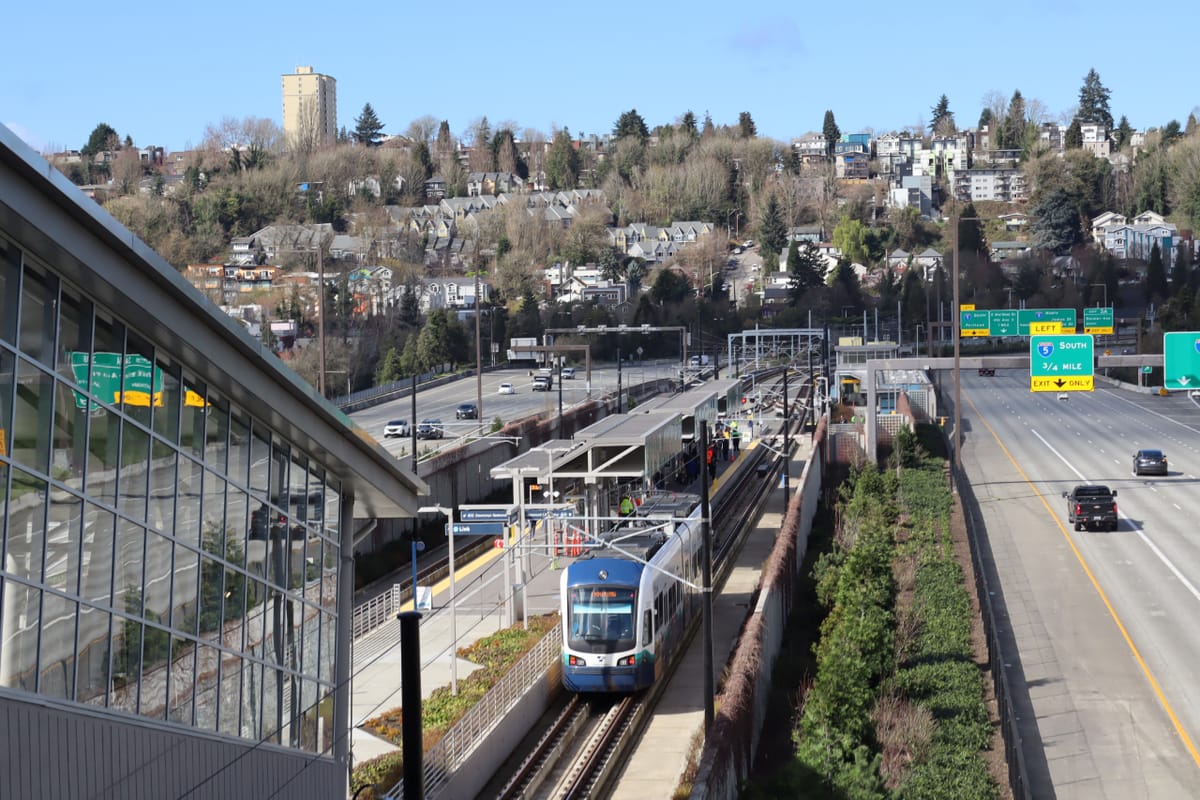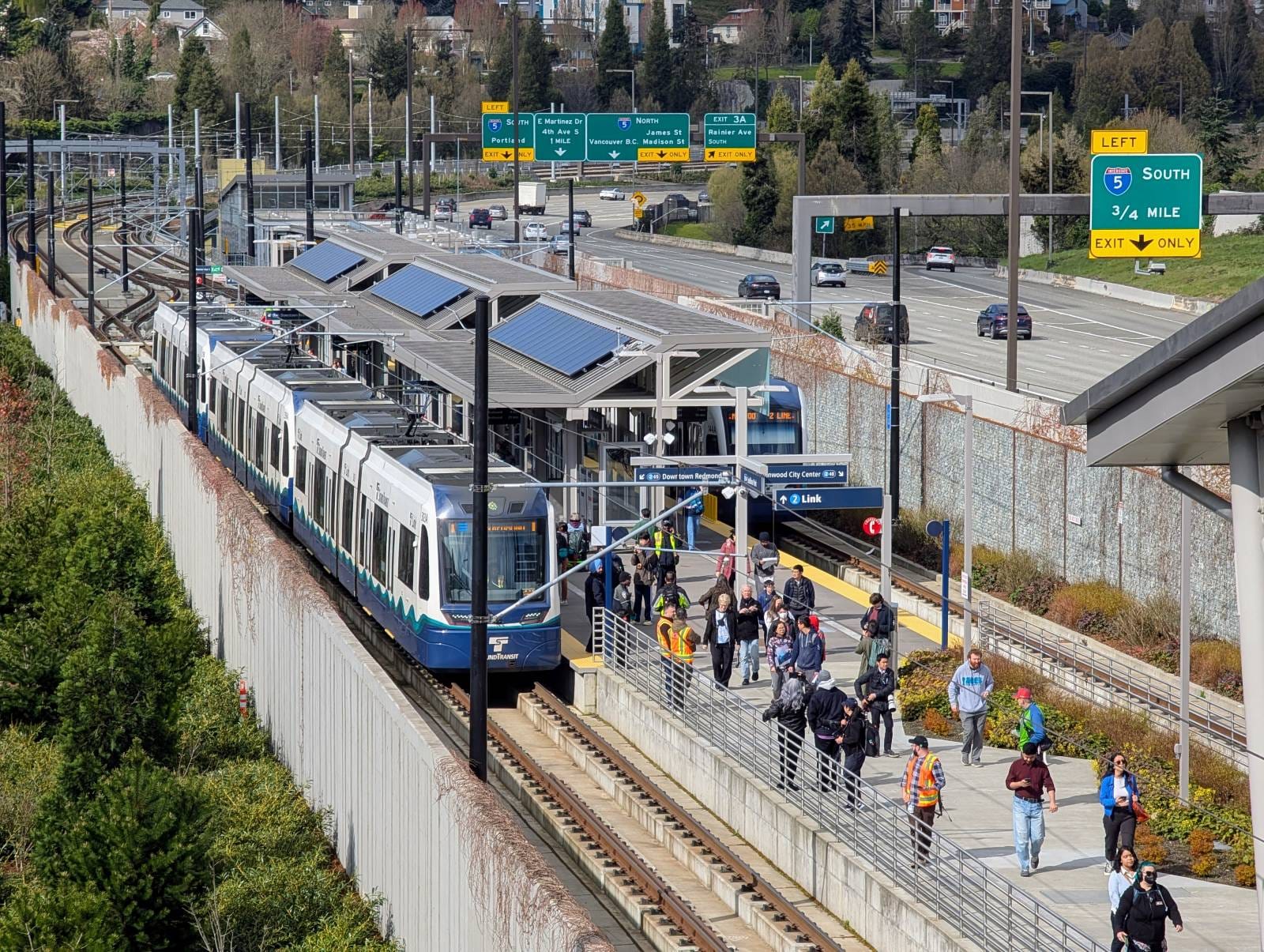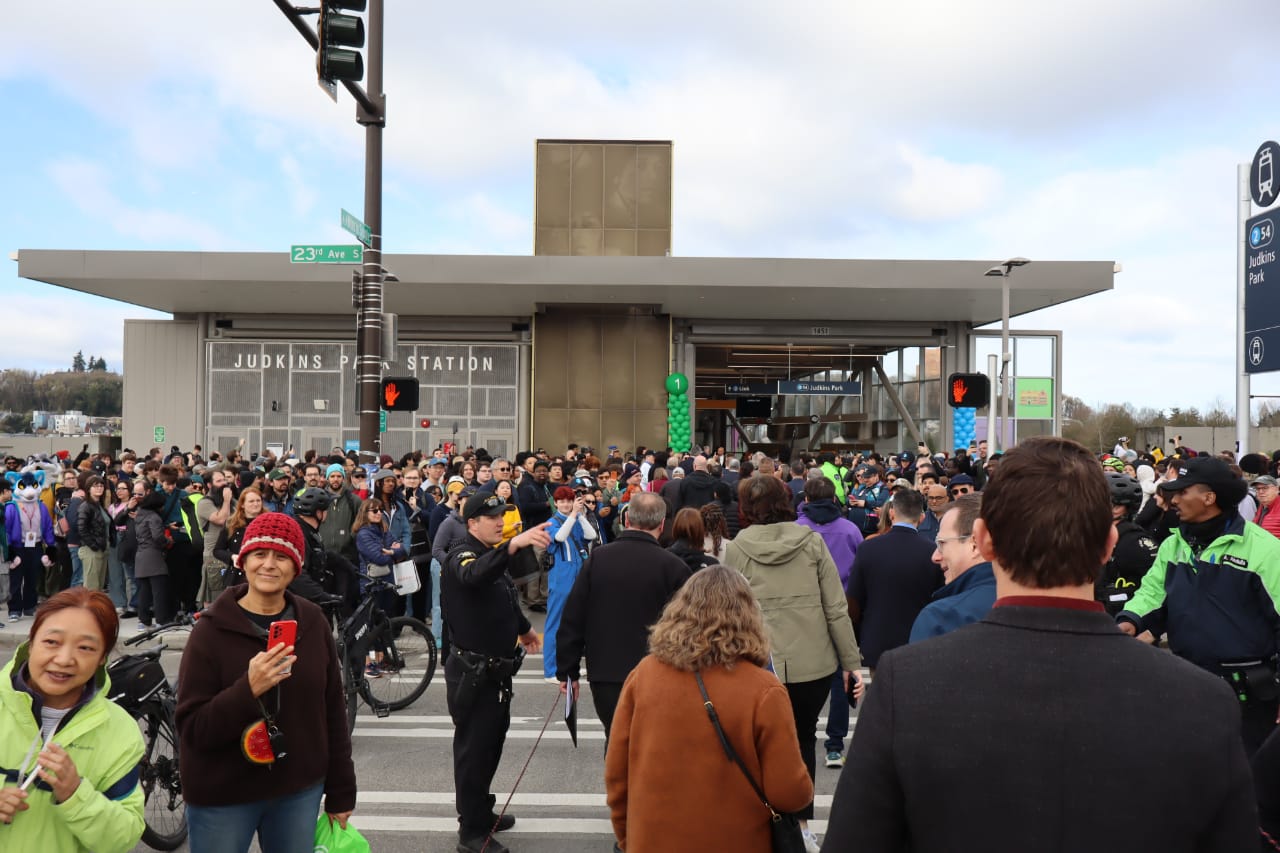
On the first day of full 2 Line service between Seattle and the Eastside, 205,000 transit riders hopped on light rail trains, Sound Transit CEO Dow Constantine announced Thursday. Along with marchers headed to and from a No Kings rally and those headed to several other major events on March 28, transit riders out to experience the first day of crosslake service helped to push ridership to the second highest in Sound Transit history.
The only busier day was the Super Bowl victory parade just a few weeks ago.
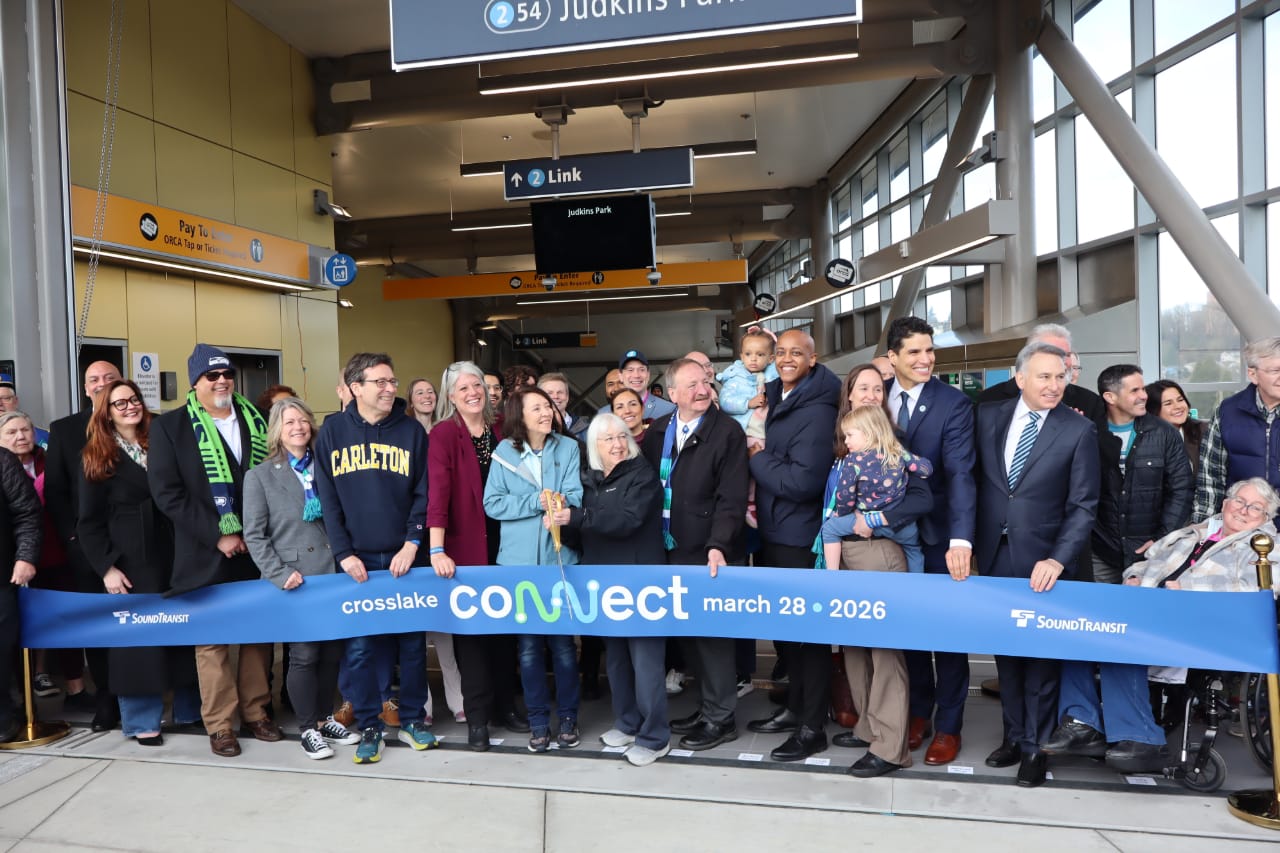
Transit fans who stood in line for hours to get to Judkins Park Station platform on Saturday likely won't be surprised that ridership nearly hit a record that day. As speeches from elected officials delayed Sound Transit's ribbon cutting, pushing out the first train that had been expected shortly after 10am, the numbers of people vying to get a chance to be one of the first to ride a train across the lake only increased.
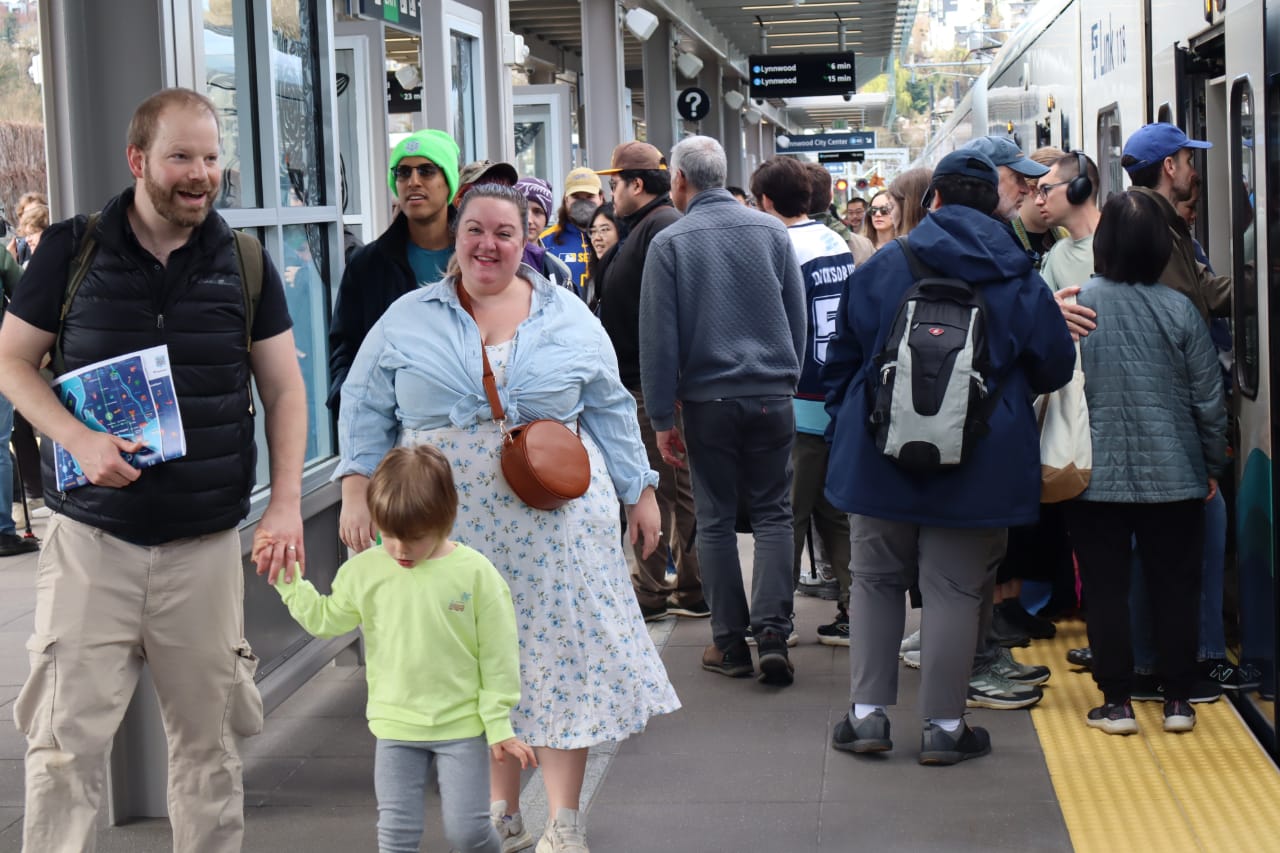
"It was a historic day, and I know we will remember it for years to come," Constantine told the members of the Sound Transit board's executive committee Thursday. "The thousands of community members who came out to celebrate and ride the trains, I think, only reinforce what we've long known – people in our region love transit, and they want more of it."
The success of opening weekend could be a springboard as the agency faces the challenges ahead.
"We also operated the system without any major incidents or disruptions throughout the entire weekend. This accomplishment shows what we can do when we rally around the vision and when we do that, anything is possible," Constantine continued.
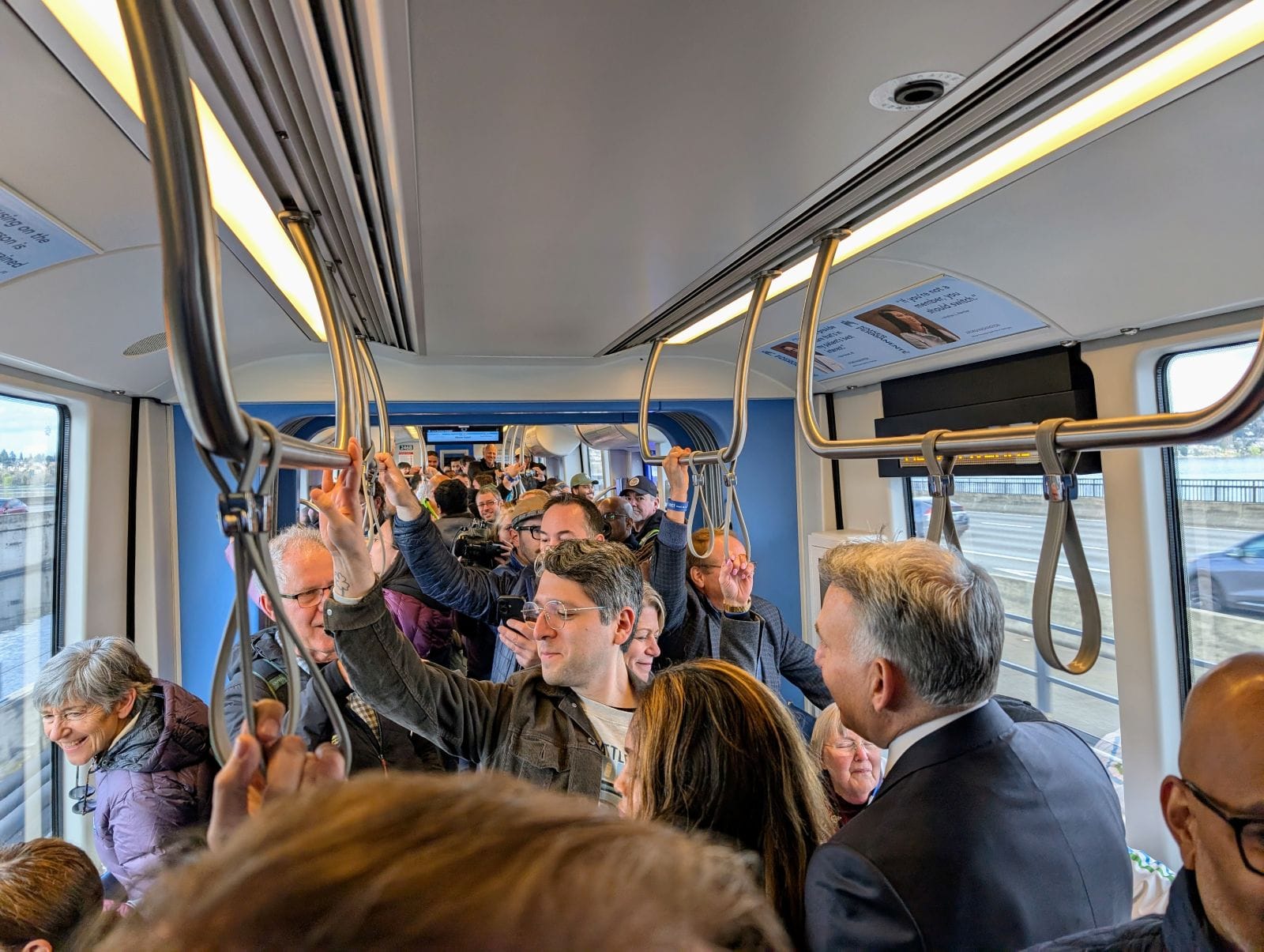
It's too early to say how much overall light rail ridership will increase with this new connection in place. Anecdotally, riders have been reporting very full 2 Line trains since Saturday. Due to the size of Sound Transit's fleet and the number of train cars currently in the shop for maintenance, 2 Line trains have been running with two or three cars, compared to the four-car trains operating on the 1 Line.
Over the coming weeks, Sound Transit may take a look at how to reconfigure its fleet to better match rider demand. If overcrowding on the 2 Line continues, there will likely be some tough questions from board members about fleet availability. Sound Transit's last monthly report on rider experience and operations metrics showed that neither the older Kinkisharyo trains (the vehicles mostly operating on the 2 Line) and the newer Siemens vehicles were meeting their availability benchmarks.
In the medium-term, 10 more Siemens cars are on the way, thanks to proactive board action in 2024 to address potential overcrowding issues just like these. An advance on Sound Transit's next vehicle purchase not expected to start arriving until the early 2030s, these new cars will arrive by early 2028, and potentially even sooner.
While there were no major disruptions on opening weekend, trains on the 1 Line were delayed early in the week by what was described as a "false presence" on the trackway north of Tukwila International Boulevard Station. Sound Transit spokesperson Rachelle Cunningham told the Seattle Times that the source of the disruption, which pushed headways to 20 minutes for half the day, could have been caused by debris.
Some 2 Line riders were also surprised by an announcement from Sound Transit that their trains would be terminating at Northgate through Friday, as the agency works toward its next grand opening. Pinehurst Station, at NE 130th Street in Seattle is set to open this summer, but in the meantime final construction tasks have been requiring single-tracking.
Meanwhile, debate continues at the Sound Transit board over how to close the $34.5 billion shortfall that the agency currently projects through 2046. At Thursday's executive committee meeting, board members came closer to consensus on which projects definitely make sense to defer to an indefinite completion date – a list that largely included parking projects but not yet any planned light rail extensions.
Those decisions are likely to come to a head in May, with some really tough tradeoffs for board members to grapple with.
But with the two biggest ridership days in Sound Transit history getting put on the board in the first few months of 2026, the agency clearly has a lot of momentum right now – a wave that it will likely be riding for some time.
 Ryan Packer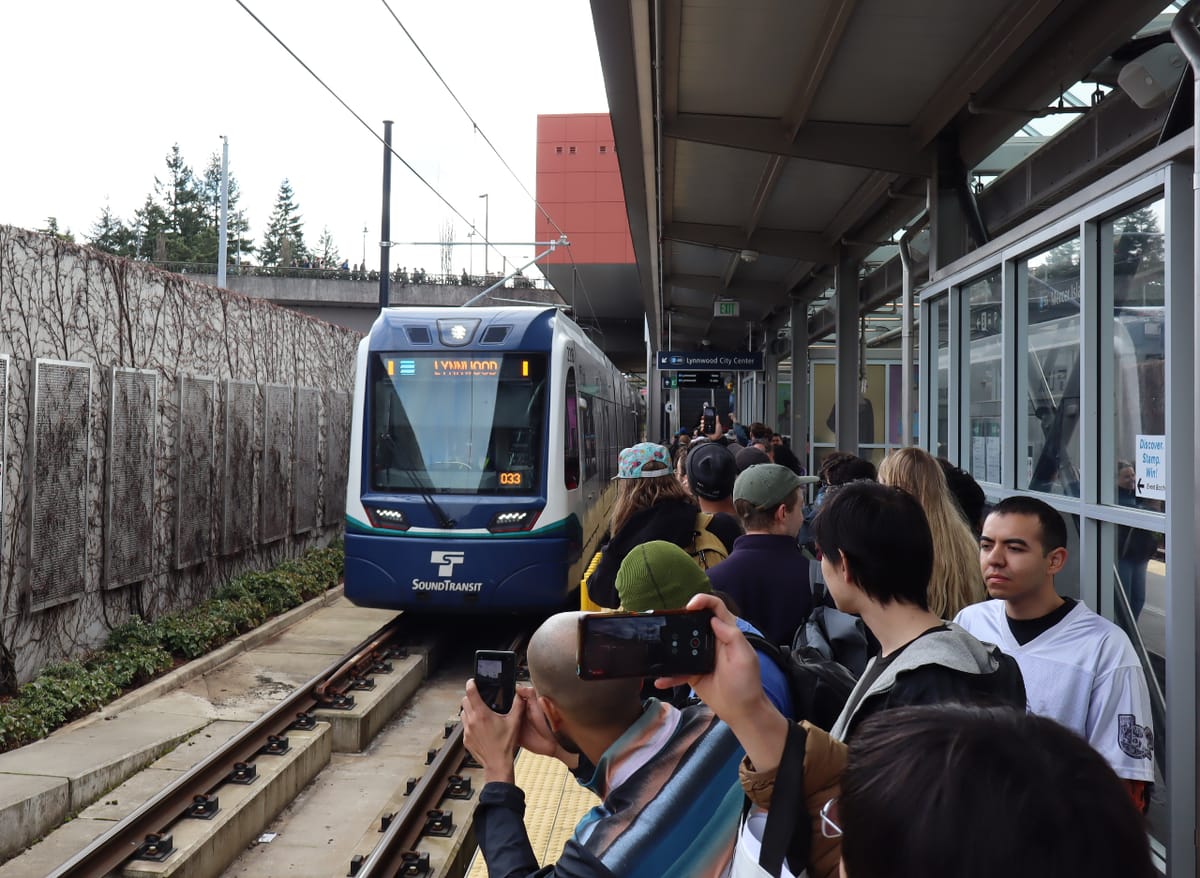
 Doug Trumm