The Seattle Social Housing Developer (SSHD) shepherded its priority bill through the Washington State Legislature, winning new powers to collaborate with state and local government.
House Bill 1687 authorizes the state or a local government to assist a social housing public development authority in the planning, construction, or operation of housing projects under the Housing Cooperation Law.
The new provision clears one obstacle to social housing authorities receiving aid from local government, including public land for construction sites, which SSHD has targeted as one of its potential strategies to curb costs. Newly sanctioned cooperation could also take the form of planning and logistical help, which social housing booster Seattle Mayor Katie Wilson has pledged.
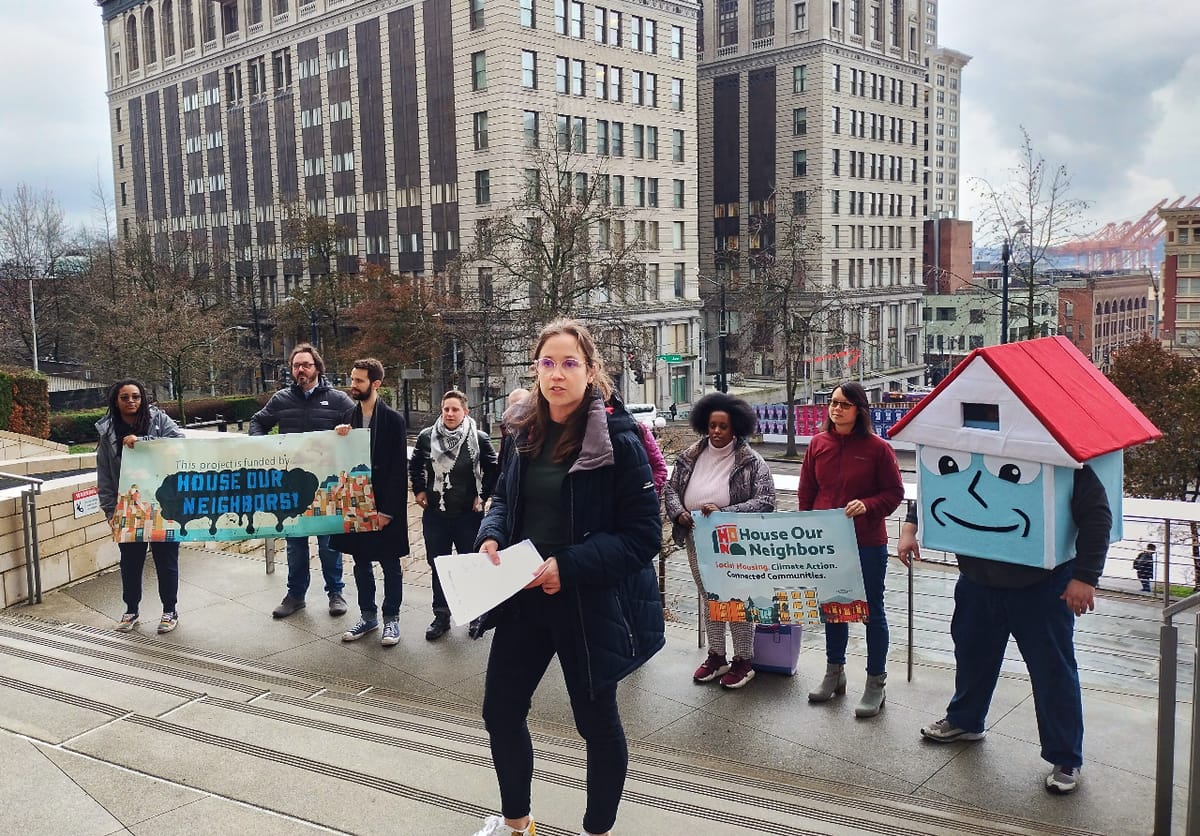
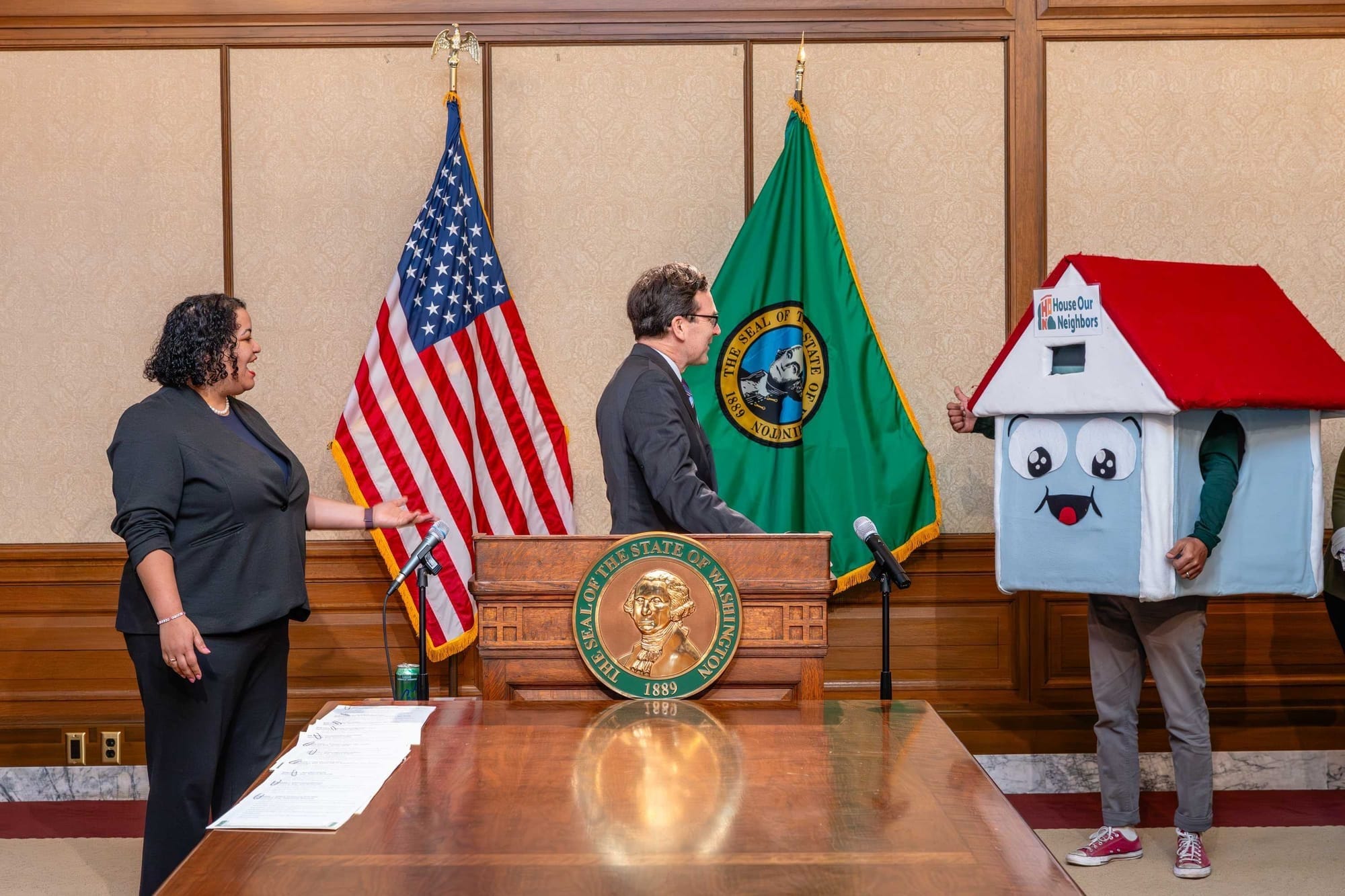
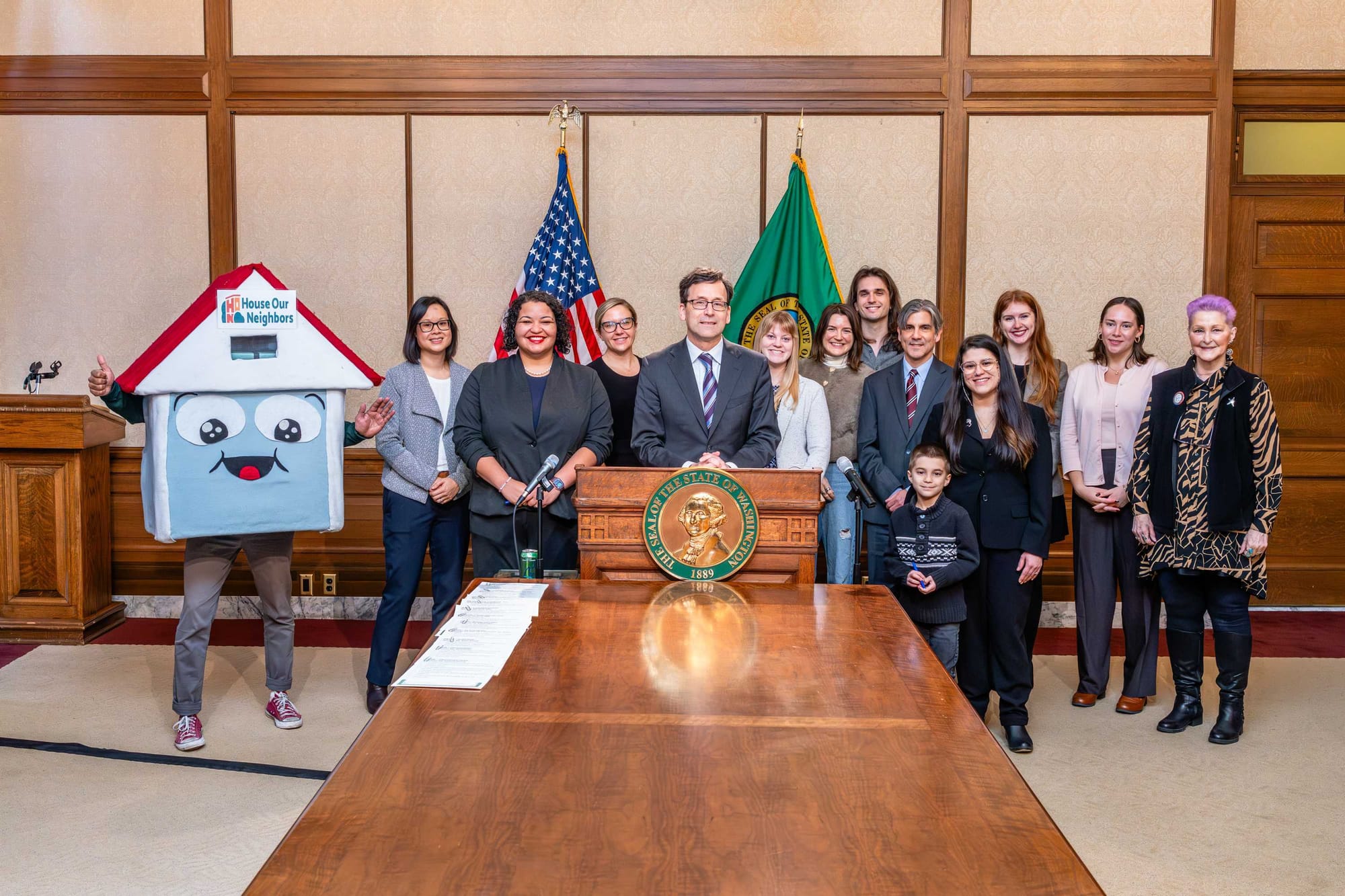
On Monday, Governor Bob Ferguson signed the bill in a ceremony attended by the bill's proponents, including prime sponsor Rep. Julia Reed (D-36th, Seattle) and Housey, the mascot for House Our Neighbors (HON). HON spearheaded both successful ballot measures that first established and later funded the SSHD as an advocacy non-profit, promoting the idea of building social housing in Seattle at every step.
The Urbanist's Spring Member Drive is in full swing, now with a website redesign offering ad-free reading for donors! Take advantage and support local journalism with a monthly donation.
SSHD celebrated the bill's passage, noting it could lower the cost to build social housing.
“We are grateful for the advocacy of House Our Neighbors, Washington state Rep. Julia Reed and other community partners in getting this pro-housing legislation passed,” the authority's interim CEO, Tiffani McCoy, said in a statement. McCoy was brought on earlier this year after the SSHD board fired the previous CEO, Roberto Jimenez, after significant disagreements over strategy.
“Allowing social housing public development authorities to benefit from the Housing Cooperation Law will grant us the ability to legally sidestep restrictive zoning and building regulations, which will lower costs overall and create more permanently affordable housing for Seattle residents across our city,” McCoy said.
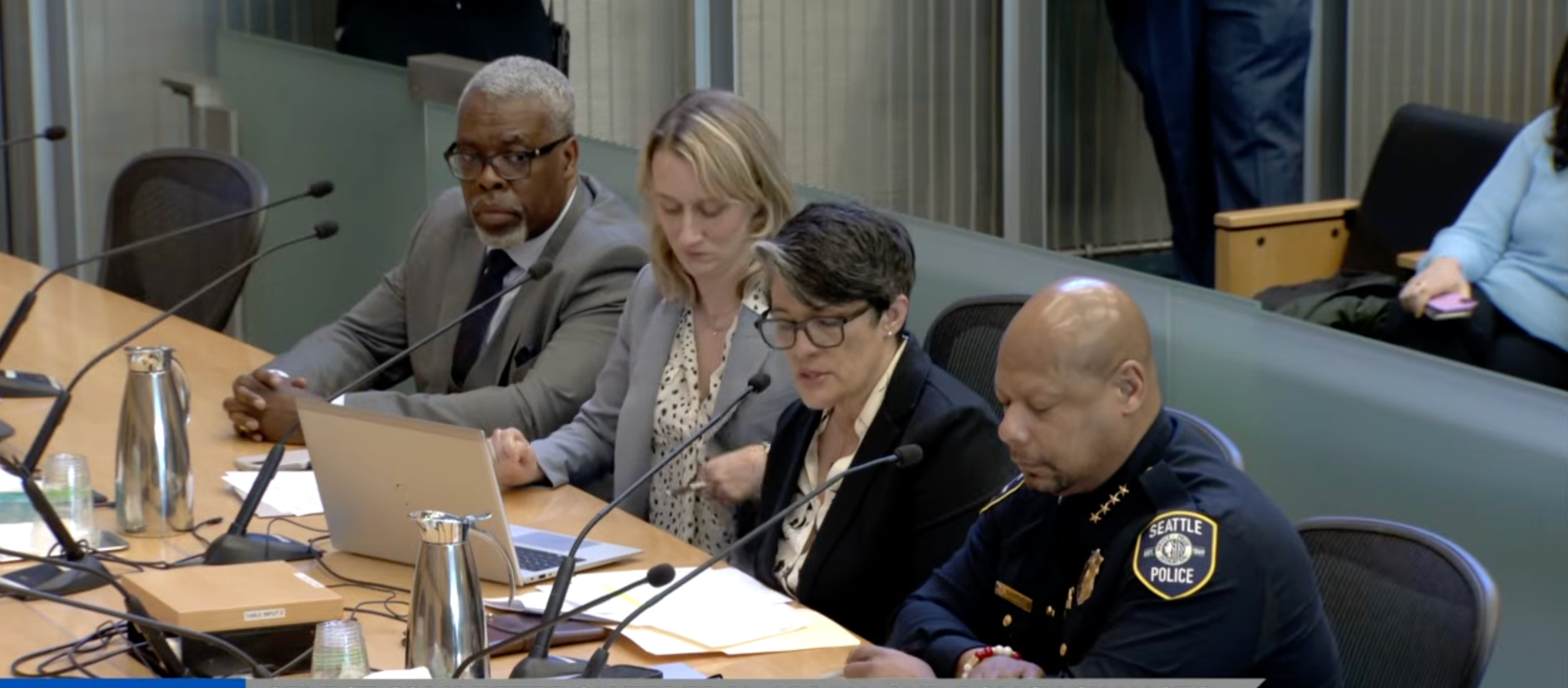
Mike Eliason, a Passive House architect and former Urbanist contributor, who is now SSHD's Director of Design and Policy, testified to the benefits the bill would provide during a hearing in the Senate Housing Committee on February 18.
"This bill would allow social housing providers like us to reduce development costs to increase development capacity," Eliason said. "This will help ensure our projects are not only feasible, that we can also reach deeper levels of affordability. These benefits can also allow us to preserve more open space, bigger trees, more space for nature. We really look forward to delivering a new model of livable and climate-forward mixed-income housing. HB 1687 would facilitate this tremendously, allowing us to provide homes that are desperately needed in Seattle and Washington."
Reed stressed that it's just expanding the toolkit, not obligating any City funds or actions. The law also only applies to Seattle in its current form.
"It's a priority for my city,' Reed told the Senate Housing Committee. "This does not allow the social housing developer to do anything on their own. This simply gives the city a tool that they could use if the executive and the legislative branches both approve of any action taken under this law, and it will help them, kind of expand the toolkit that they have for potentially working with the Social Housing Development Authority."
Senator Emily Alvarado (D-34th, Seattle) said she saw the benefits of the Housing Cooperative Law firsthand during her stint working at the Seattle Office of Housing.
"I, as you know, I worked at the City of Seattle for many years and watched and used the cooperative agreement process to work with the Seattle Housing Authority on several of their redevelopments, and have seen how it's a really pro-supply opportunity to reduce regulatory barriers and increase housing options," Alvarado said. "So think it's a great idea to extend it to social housing. Appreciate you bringing this forward."
Voters approved the SSHD in a 2023 ballot measure, chartering it to produce housing that was publicly owned in perpetuity and permanently affordable, featuring cross-class communities and resident leadership. Unlike conventional "all low-income" affordable housing, social housing often relies on serving tenants with a mix of income levels to drive down overall operating costs and drive up sociological benefits from different types of people living together.
In February 2025, Seattle voters went a step further and dedicated a new revenue stream to the SSHD, a millionaires' tax of sorts, applying at a rate of 5% to companies on the portion of their annual compensation packages exceeding $1 million per employee. Dubbed Proposition 1A, it garnered 63% of the vote and was projected to generate more than $50 million per year.
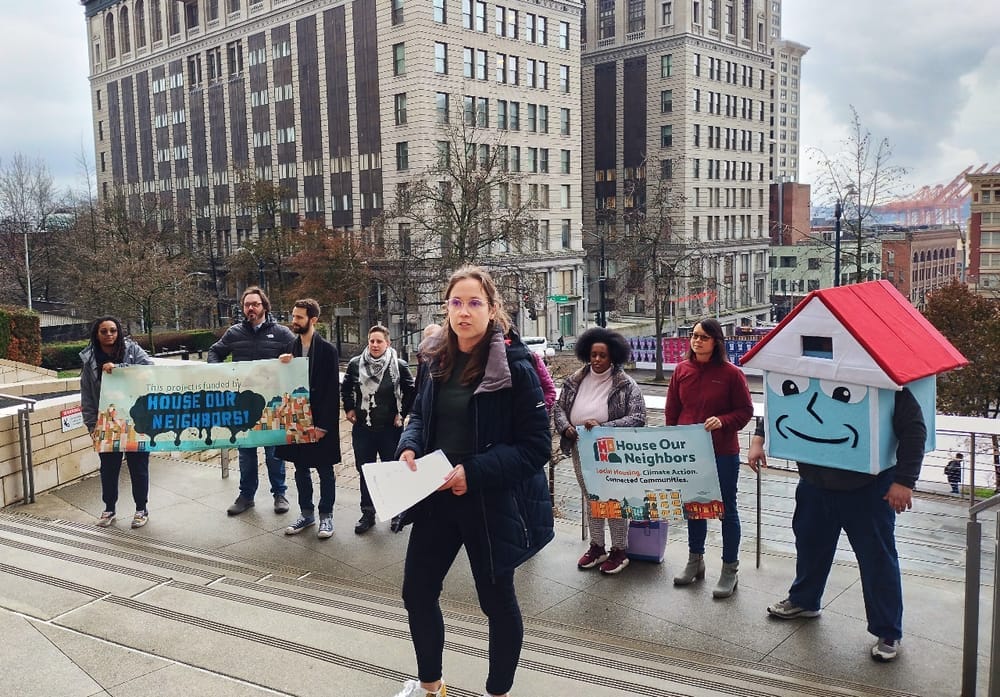
The SSHD recently learned its first year revenue from the excess compensation tax advocates passed at the ballot box far exceeded projections, pulling in $115 million. That windfall has given the public development authority the confidence to pledge it will procure its first property within the next six months, and ramp up from there.
While plenty of urbanist-minded bills died in the 2026 session, HB 1687 had the benefit of not having a direct monetary cost to the state – which would have presented challenges in a year with a major budget deficit that forced serious cuts, particularly to education and child care.
HB 1687 sailed through the legislature, passing the state House on a party line vote on February 10, with all Republicans opposed. On February 28, the final Senate vote was similarly split, but one Republican, Vancouver Senator Paul Harris, did join Democrats in backing the bill.
Harris could be in for a tight election as the 17th Legislative District, has shifted to more favorable terrain for Democrats. Harris won the seat by just 2.3 points in 2024, and could be in for another nailbiter in 2028.
Another bill that would have aided social housing construction, SB 6201, fell short this session. Sponsored by Senator Vandana Slatter (D-48th, Redmond), it would have granted tax exemptions for public agencies building social housing. Despite getting approved by the Senate's Housing Committee, it never made it out of the powerful Ways & Means Committee, and its House companion, sponsored by Rep. Shaun Scott (D-43rd, Capitol Hill), didn't receive a hearing at all.
Lawmakers appear eager to help social housing developers – but not yet at a cost to state or local government budgets.
Time will tell whether governmental cooperation made by possible by HB 1687 will be a key ingredient in rolling out some of the Seattle Social Housing Developer's first projects. So long as cooperative leaders are in power, SSHD's mission to produce the permanently affordable, mixed-income housing has a big opportunity to get a boost.
 Doug Trumm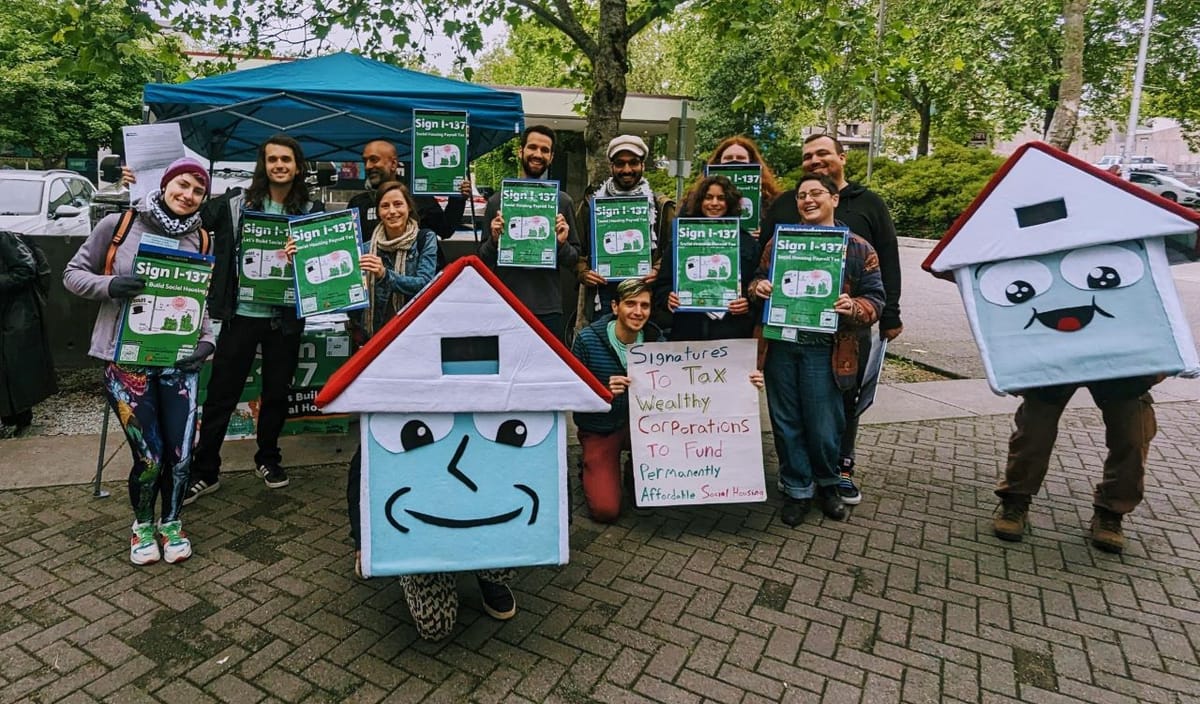
 Doug Trumm