U District neighborhood boosters are trying something new this spring, when it comes to a longtime push to convert The Ave into a pedestrian-oriented urban oasis. On three Saturdays across May and June, one of the street's most central blocks will be turned over to street patios and strolling space, with vehicle traffic diverted elsewhere.
This pilot program will test out how University Way (popularly known as The Ave) would function if it were fully pedestrianized, targeted between NE 42nd Street and NE 43rd Street just south of the U District light rail station.
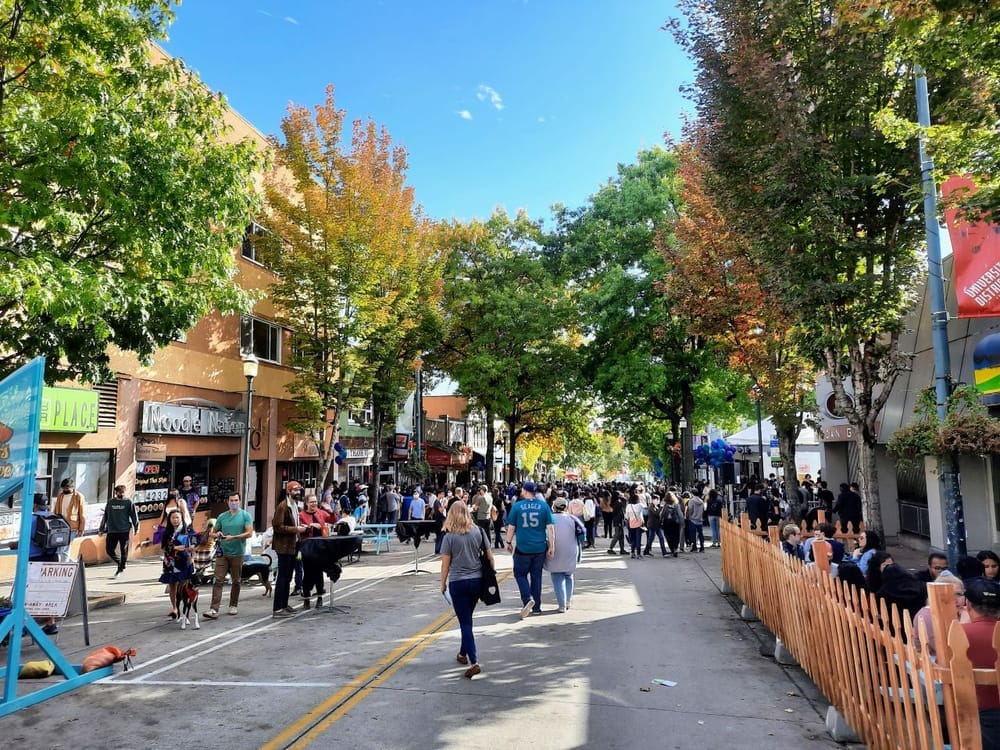
The foot traffic-heavy Ave is no stranger to temporary pedestrianization. North of 50th Street, the U District Farmer's Market takes over the street every Saturday. And once every summer, the entire Ave closes down to vehicles for the U District Street Fair, one of the city's most popular summer festivals.
Rather than a special event, this pilot is intended to try out what it would look like for The Ave to become a pedestrian space all the time. Pedestrians will be taking over this one block of The Ave from 11am until 8pm on Saturday May 30, June 6, and June 13.
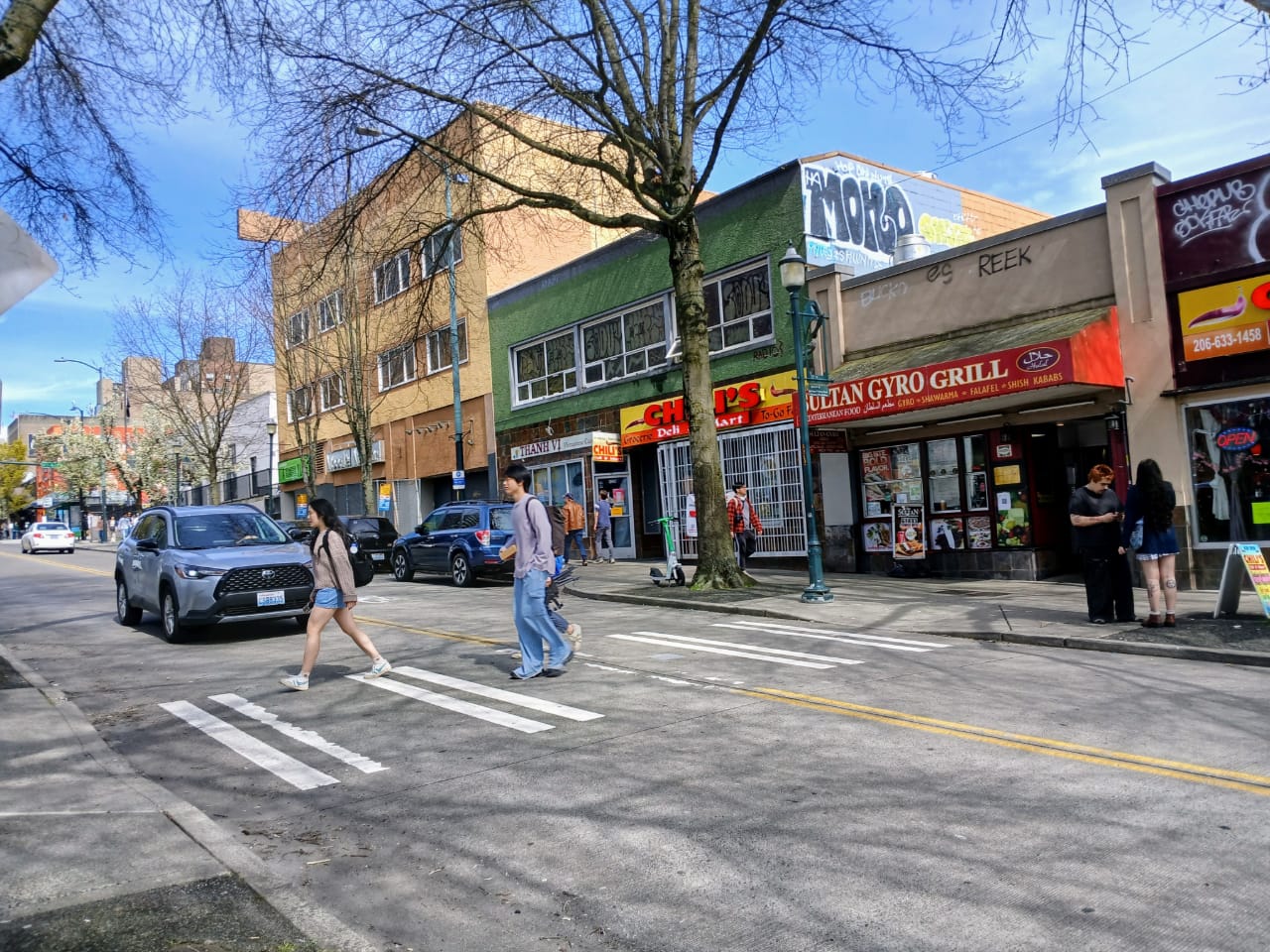
"A lot of people point to the Street Fair as kind of a model for what a long term carfree Ave could be," L. Harrison Jerome of the group U District Advocates told The Urbanist. "But that's not really what it would look like day-to-day. You have all these tents out, the focus is on those vendors, rather than the businesses there. And a lot of them say they are in direct competition with those vendors when they're there. But this is going to have all the benefits of having a pedestrian street while having the focus on the businesses. All these tables and chairs are for them. They are the main, central premise of this project."
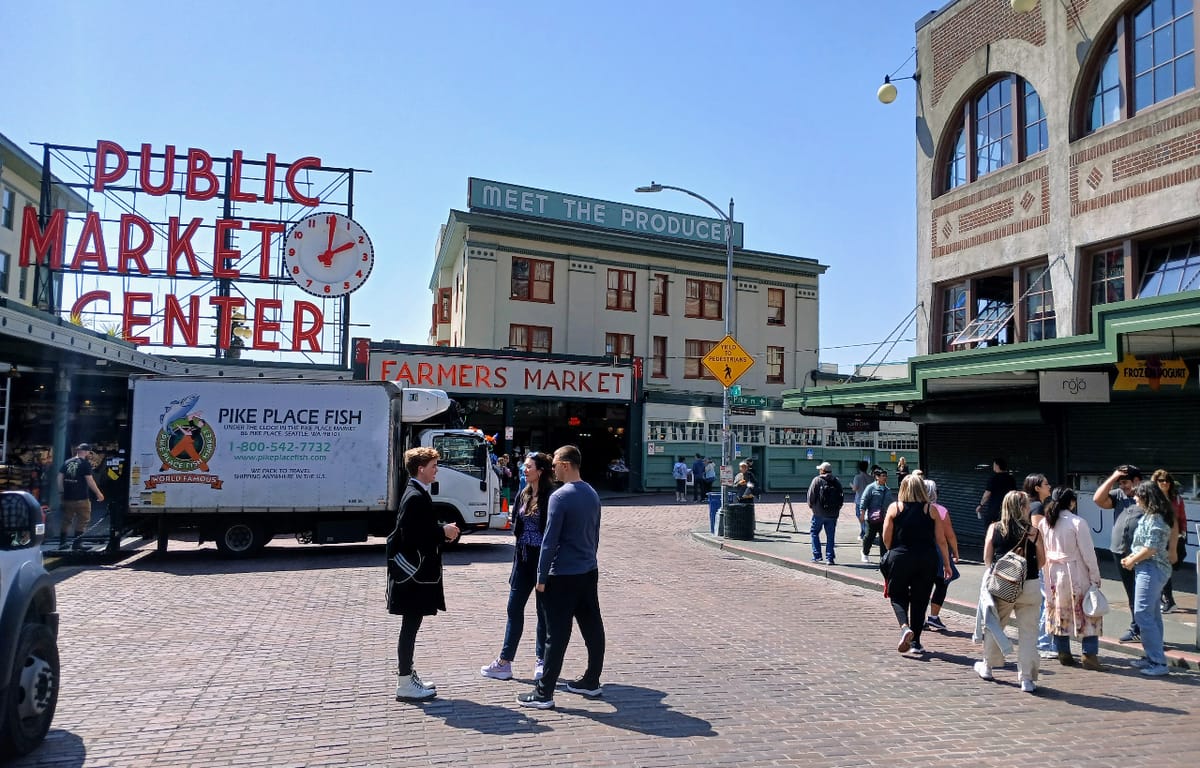
U District Advocates is hoping to build on the recent pedestrianization pilot at Pike Place Market, seen as a major success even as some voices within the Market itself remain eager to return to the car-oriented status quo. As a corridor with an intense concentration of businesses, frequent transit service and a famously car-light residential population nearby, The Ave is a natural candidate to be next in line.
The idea of closing The Ave to car traffic isn't a new idea. University of Washington architecture professor Victor Steinbrueck – famous for his later advocacy to preserve Pike Place Market – put forward the idea of creating a pedestrian mall between Campus Parkway and NE 50th Street in 1955. A direct response to more auto-oriented malls taking off across the U.S., including nearby with the construction of University Village, the idea met resistance from property owners up and down the street.
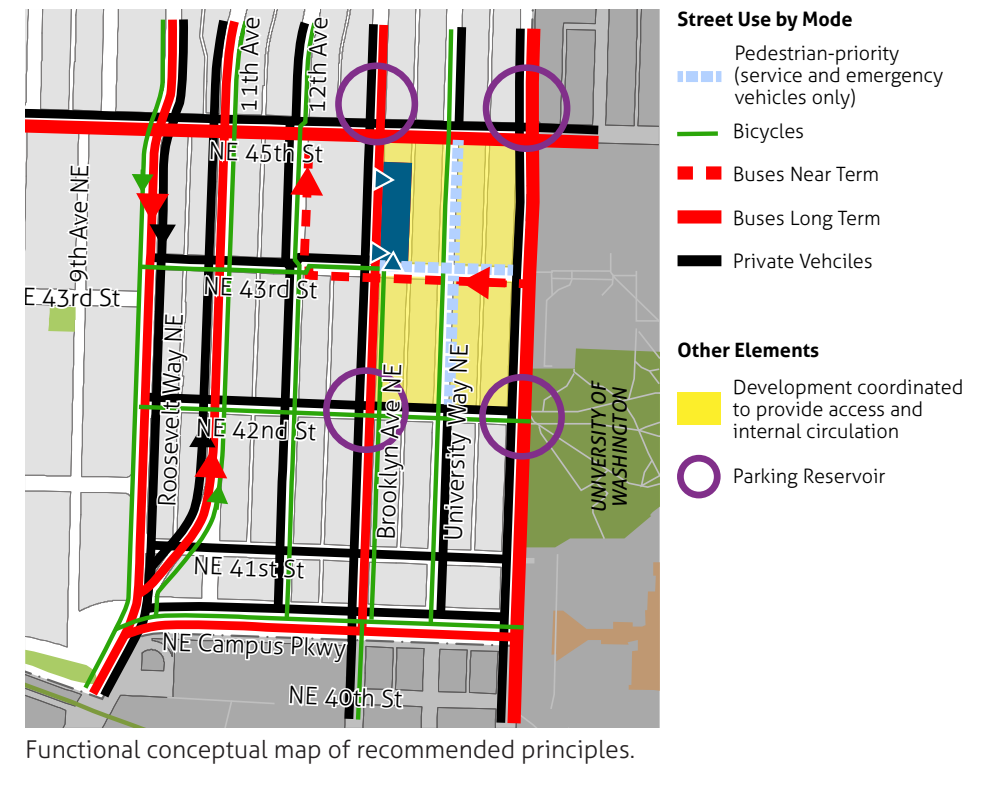
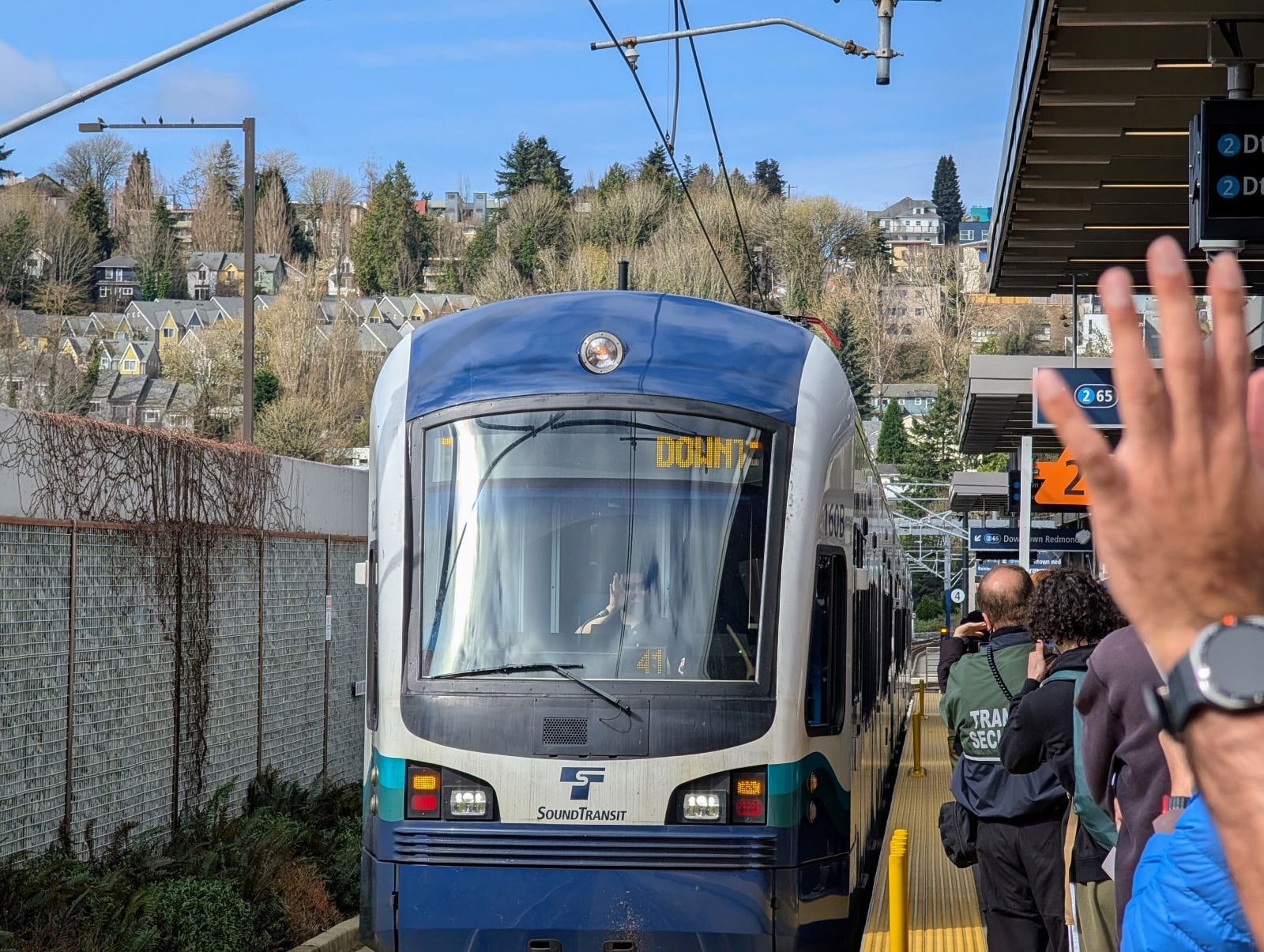
In 2018, the U District Mobility Plan set a long term vision for a pedestrianized Ave between 42nd Street and 45th Street, at the time eyeing the coming Sound Transit light rail station – which has been open since 2021 – as an impetus for major changes. But even when that plan received a stamp of approval from the Seattle City Council in 2019, it was far from clear how it would be implemented without a clear push from motivated residents interested in challenging the status quo.
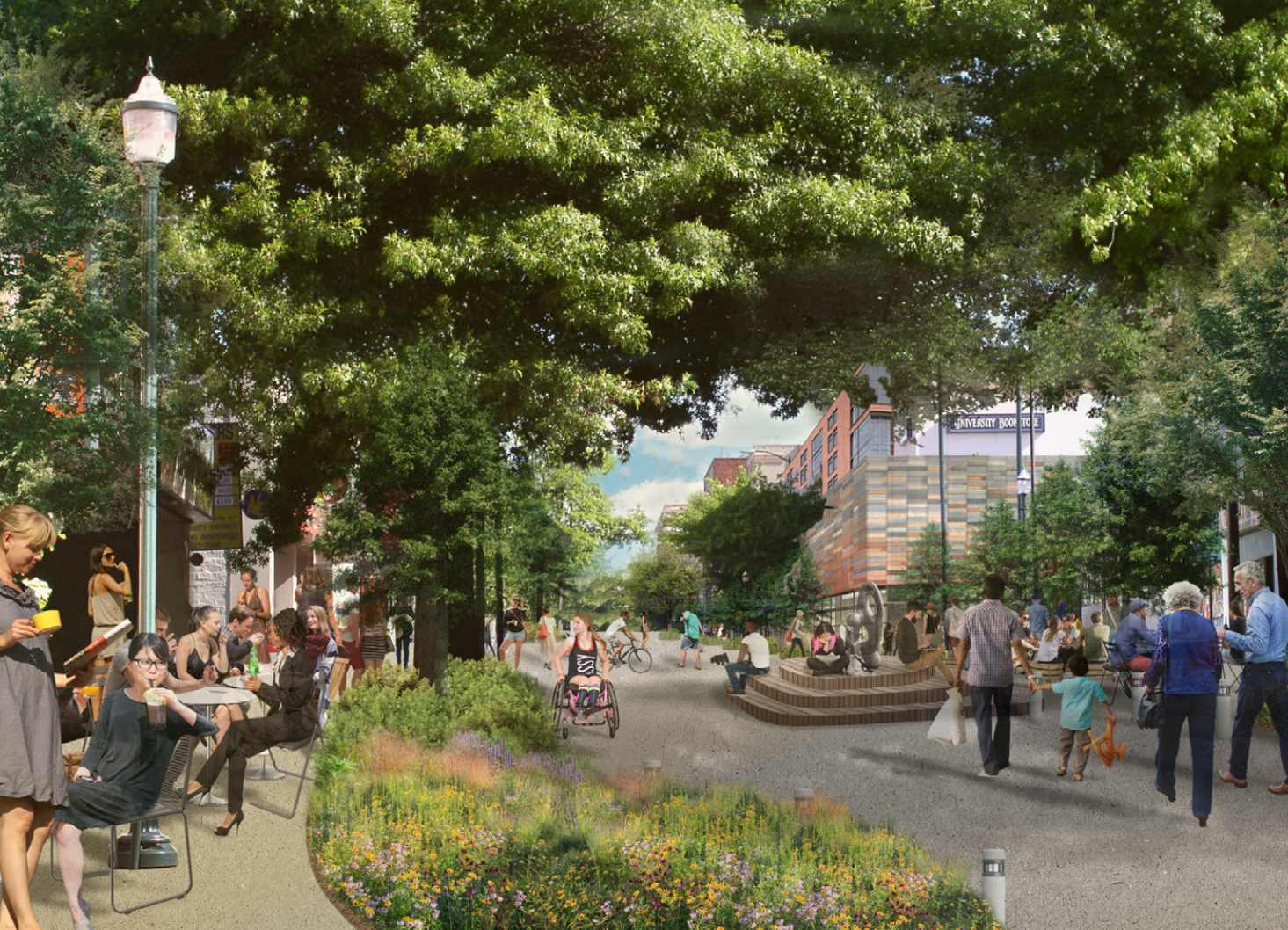
"We think this is a good intermediate step, showing grassroots support for this sort of thing, testing it for just three Saturdays. Maybe it won't work, but we will be able to see how things work just on a small scale or short amount of time, and we think it's going to be a big success," Jerome said. "We've actually had a lot of support for, at least, this pilot. There's a few businesses that have been wanting to actually expand their business – we have this public space that is currently used for a car that delivers two people, that could be a space that could be used for 20 patrons, if you had outdoor seating,"
Signs of progress toward making space for pedestrians are already visible in the neighborhood, with the transformation of NE 43rd Street. Once a nondescript two-way street, 43rd now features public seating along both sides of the street with only one-way bus and bike traffic allowed. A one-way bike lane enables people on bikes to head in the contraflow direction. That redesign has turned it from a place people rush to pass through to one where people want to linger and spend time.
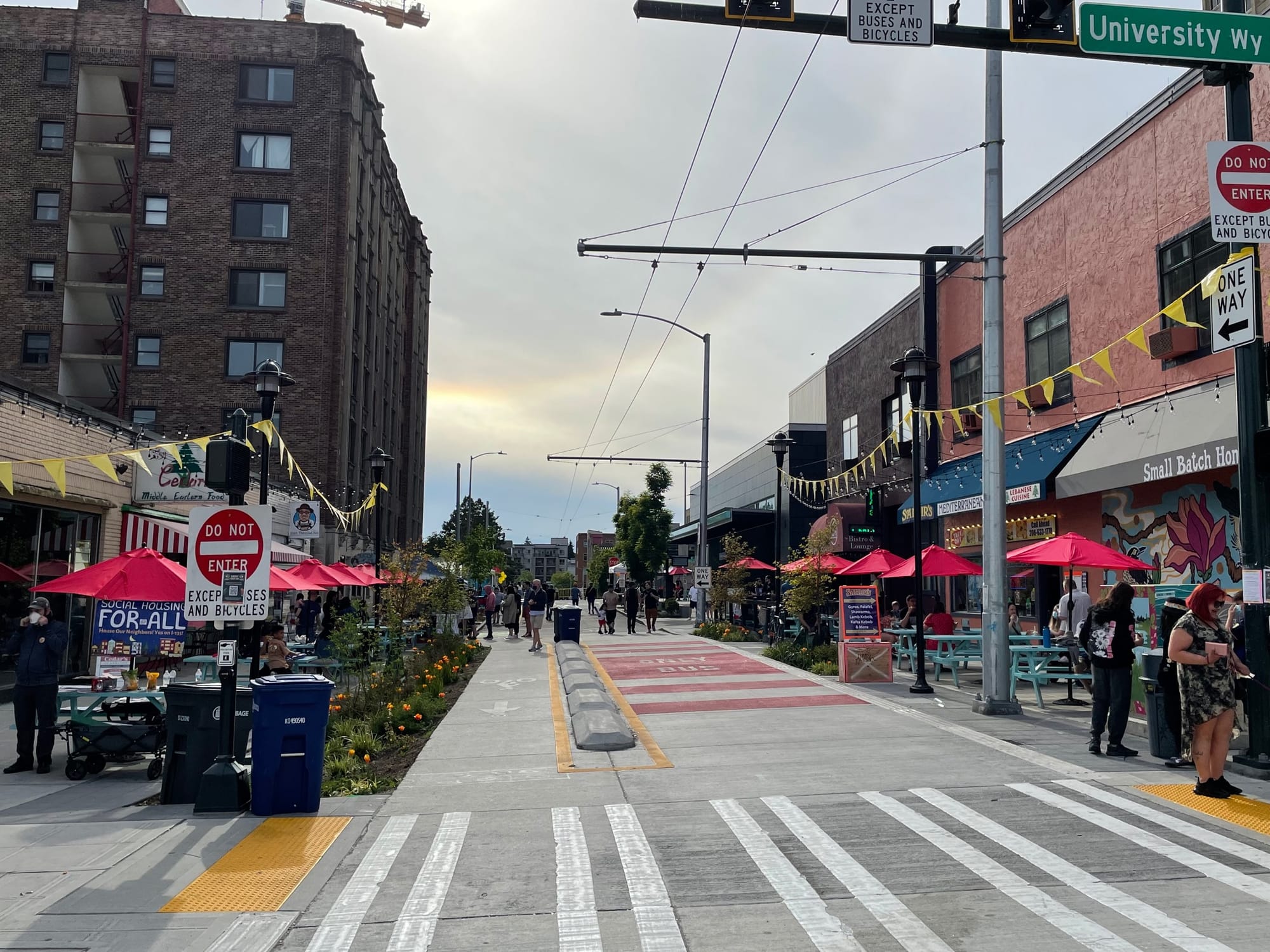
Pedestrian advocates from across the city point to this stretch of 43rd Street as a clear example of how to upgrade a street. While Seattle has taken a few strides, many cities around the world have taken much bigger steps, using the opportunity that the pandemic presented to accelerate pedestrianization efforts.
One block to the south, on NE 42nd Street, the Seattle Department of Transportation (SDOT) is also set to consider changes as part of its new People Streets and Public Spaces program, newly funded by the 2024 Seattle Transportation Levy. As a non-arterial street without buses, bold changes could be even more straightforward to implement, though a timeline for full implementation is likely around five years.
Every year at the U District Street Fair, the U District Advocates ask fair attendees to drop a ping-pong ball into a tube to select a project that they'd like to see come to the neighborhood. In 2024, the idea of creating a car-free Ave garnered a full 50% of the votes, nearly three times more than the runnerup (building a public restroom in the area).
"It's probably never going to be easier than it is right now. We have a sympathetic government and a population that's ready for big change," Jerome said. "Ever since the pandemic, people have been reevaluating how we use our public streets, because they belong to us, and we can choose what they want them to be. It doesn't have to be storage for cars,"
U District advocates is seeking volunteers to make this spring's pilot a success. There's also a petition to sign to signal your support.
 Ryan Packer