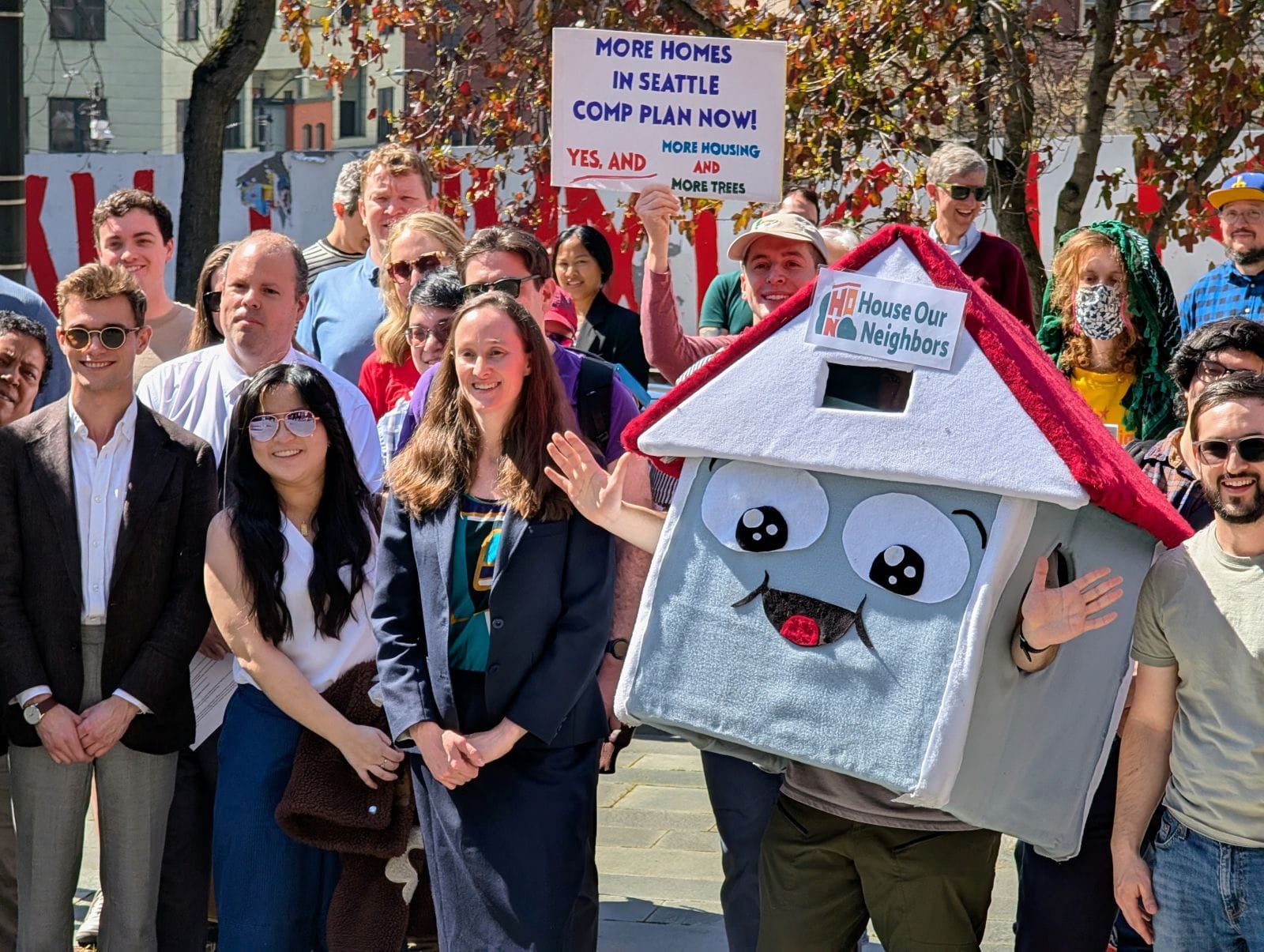
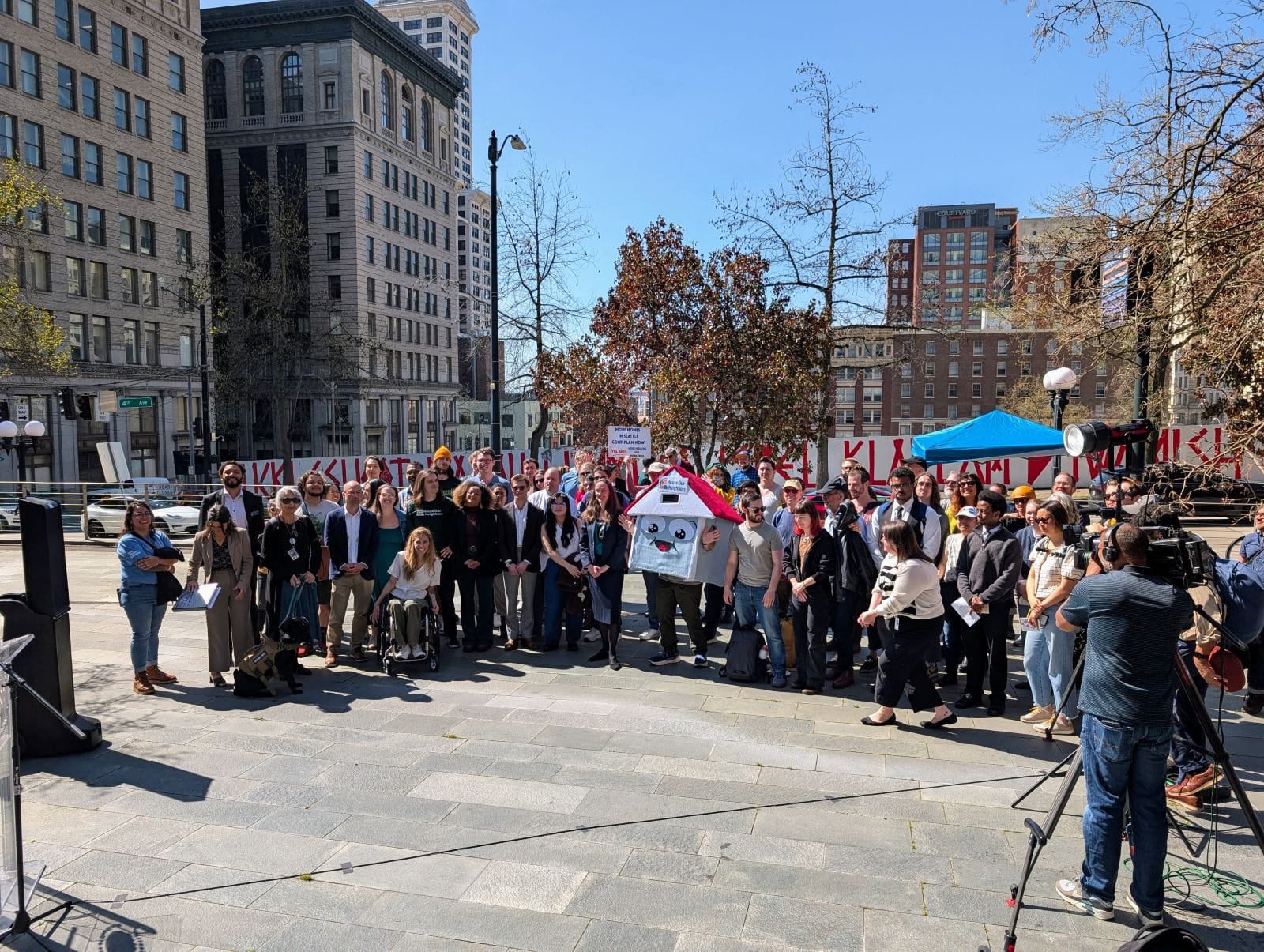
On Monday, housing advocates gathered on the steps of Seattle City Hall to rally support for broader zoning changes in the Seattle Comprehensive Plan. Mayor Katie Wilson spoke and called the City's "Centers and Corridors" plan to allow apartments within a half-block of frequent transit a "stingy" approach. She reiterated her "taller, denser, faster" vision for overhauling Phase 3 of the plan.
"Last week, you heard me announce my administration's taller, denser, faster housing growth plan," Wilson said. "Now what that means is that we are going to start with a more inviting, optimistic assumption of our growth capacity. Seattle is a great place to live, and people are moving here in droves. That adds to the pressures of scarcity, and we are planning for a bright future."
Inside City Hall, the Seattle City Council held its first public hearing Monday on Phase 2 of the Comprehensive Plan or Comp Plan, for short, which will implement the Centers and Corridors plan that was sketched out when the plan itself was approved last December. Seattle's Office of Planning and Community Development (OPCD) already pulled back on rezones that had been on deck for Phase 2, adding to a feeling of disappointment among urbanists.
Housing proponents outnumbered opponents during public comment. Anti-housing activists suddenly seemed like their back was against the wall, after stridently pro-housing candidates swept Seattle elections in 2025. That progressive wave pushed Wilson into office, easily reelected their most outspoken advocate in citywide Councilmember Alexis Mercedes Rinck, and added two strong housing advocates in District 2 Councilmember Eddie Lin and citywide Councilmember Dionne Foster.
The upshot of that election is that Seattle now has a "Yes In My Backyard" (YIMBY) urbanist mayor raising the banner and pushing city councilmembers to go bigger – a YIMBY-in-chief, as House Our Neighbors' co-Executive Director Jeff Paul called her introducing her.
"That increased housing capacity is the foundation to meet the scale of our housing crisis. We are going to plan to allow more housing in every neighborhood, creating an equitable distribution and meaningful housing choices," Wilson said. "Every neighborhood should be an open, welcoming place for people and families to live. I believe that every resident deserves the opportunity to live on peaceful, beautiful streets and places they love."
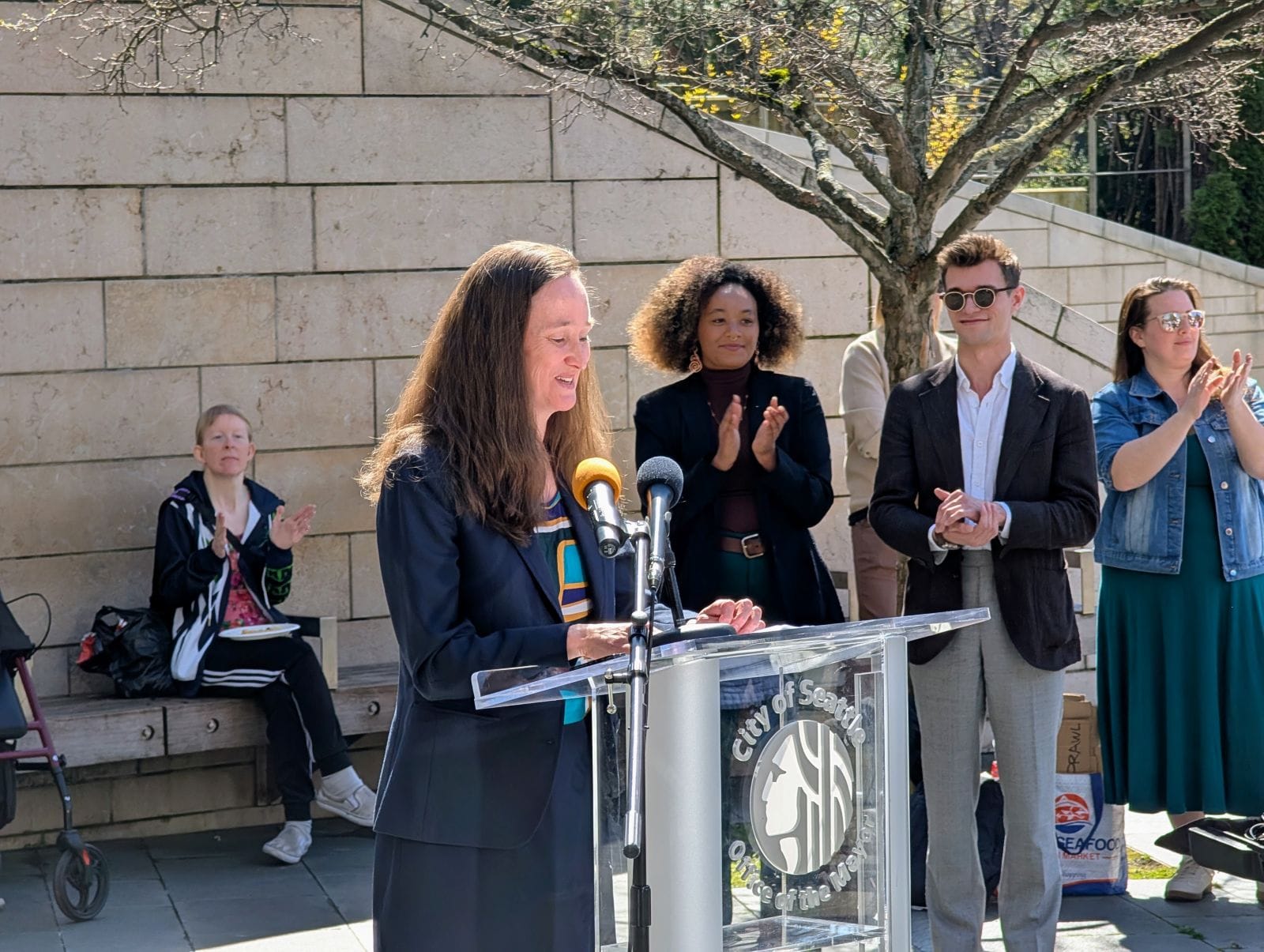
As a renter herself, Wilson continues to highlight the idea that renters deserve a wealth of housing options, not just the scraps wealthy homeowners leave behind.
"Right now, we focus the densest housing on the busiest arterial roads that has the effect of putting housing on the main roads that can have air, noise and safety impacts for residents," Wilson added. "We intend to add more housing options in healthy, walkable neighborhoods with access to transit, parks and open space, not just along the busy corridors."
Wilson set a goal of finishing a greatly expanded Phase 3 of the Comp Plan in 2027, which is much faster and broader in scope than the plan she inherited from predecessor Bruce Harrell. The Harrell administration repeatedly delayed and scaled back the growth plan, which is why the plan had to be split into multiple phases to meet state deadlines and housing requirements – and why Wilson now has to conduct a Supplemental Environmental Impact Statement (SEIS) to go beyond Harrell's limited scope. A 2027 completion date would also put votes close to district council elections, with seven seats across the city potentially up for grabs.
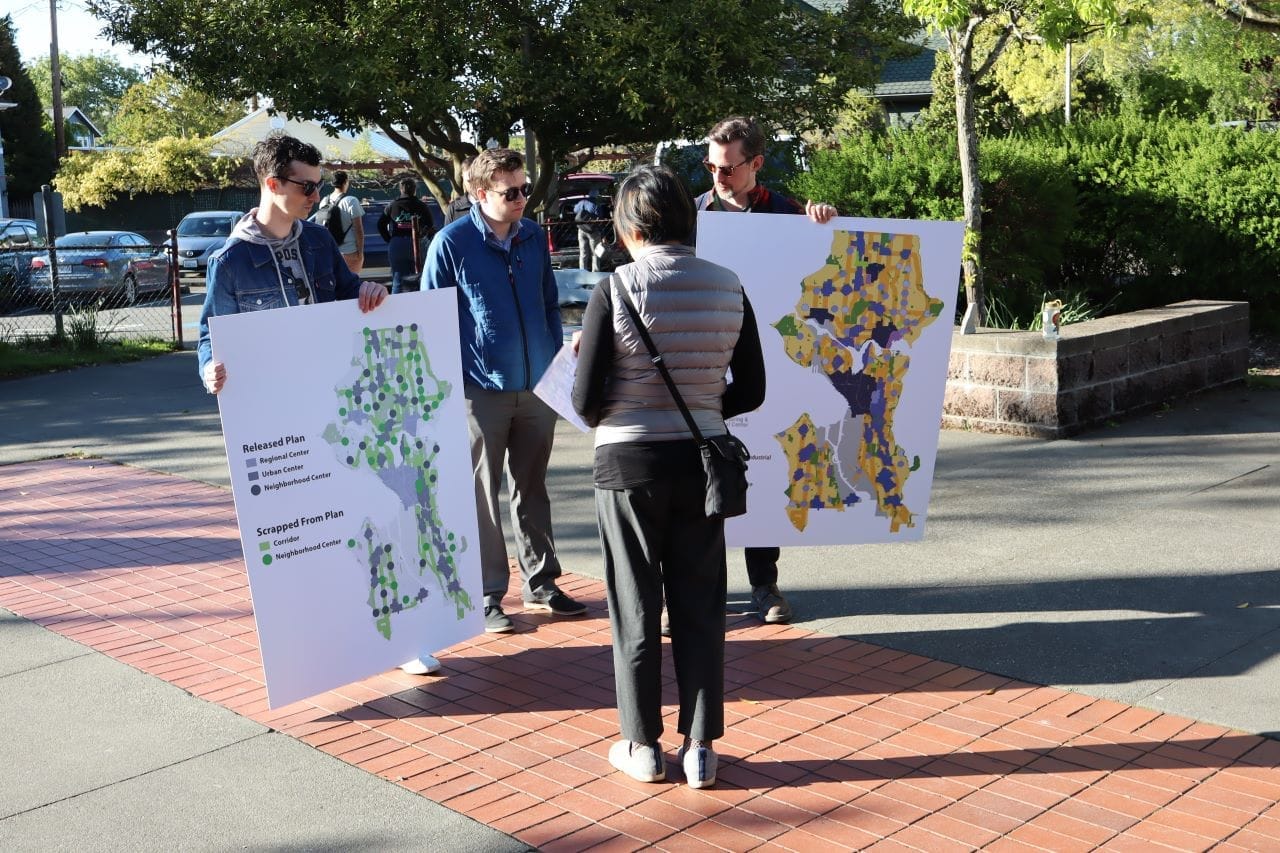
In contrast with Harrell's "stingy" half-block-radius approach, Wilson has expressed interest in expanding transit corridor rezones to within a 10-minute walk of frequent transit, a 10-minute walkshed in planner parlance. Upzoning the 10-minute walkshed along transit is what the broad the Complete Communities Coalition is calling for, too. The Urbanist, through its advocacy arm, is a member of that coalition, along with a broad cross-section of business, labor, builders, environmentalists, and urbanist groups.
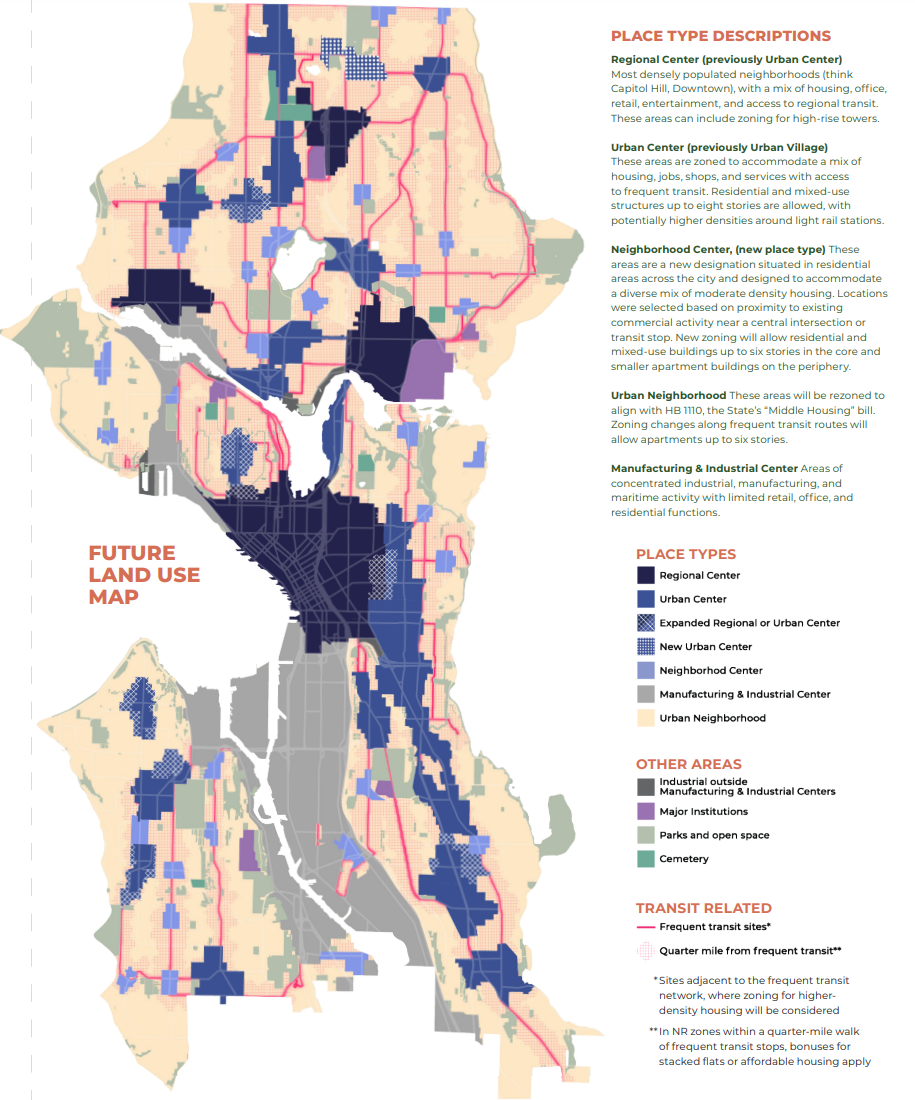
"This is urgent. Seattle's housing crisis cannot wait," Wilson said. "There is no reason to delay providing homes while also protecting our environment, supporting small businesses. So we are acting with that urgency in mind. What was planned to take two or three years and touch only part of the city will not be completed in one year, reaching more neighborhoods. This accelerated timeline means housing and development and density can happen sooner in more places."
The Urbanist is a nonprofit newsroom powered by reader support. Become a member, get perks, and support local journalism.
OPCD has yet to finalize the scope for the new Phase 3 environmental review that will set the upper limit on what Council can consider. OPCD told The Urbanist to expect to the scope to be set by this summer, clearing the way for the SEIS to proceed.
"We're in active conversation about details now," OPCD spokesperson Sarah Graves said. "We'll also be getting input from key stakeholders to help us shape the SEIS. We hope to share updates on scope and timeline later this summer. This is a big shift, a good shift, and there's a lot of work to be done to rescope this work."
For Wilson, more housing also fits together with her vision for the stronger, more inclusive city Seattle could be.
"I believe that every resident deserves the opportunity to find the housing they need in neighborhoods across the city, with easy access by walking, rolling or taking transit to jobs, shops, cultural amenities and open space and to live on peaceful and beautiful streets in the places they love," Wilson said. "We, alongside all of you, intend to deliver on that vision."
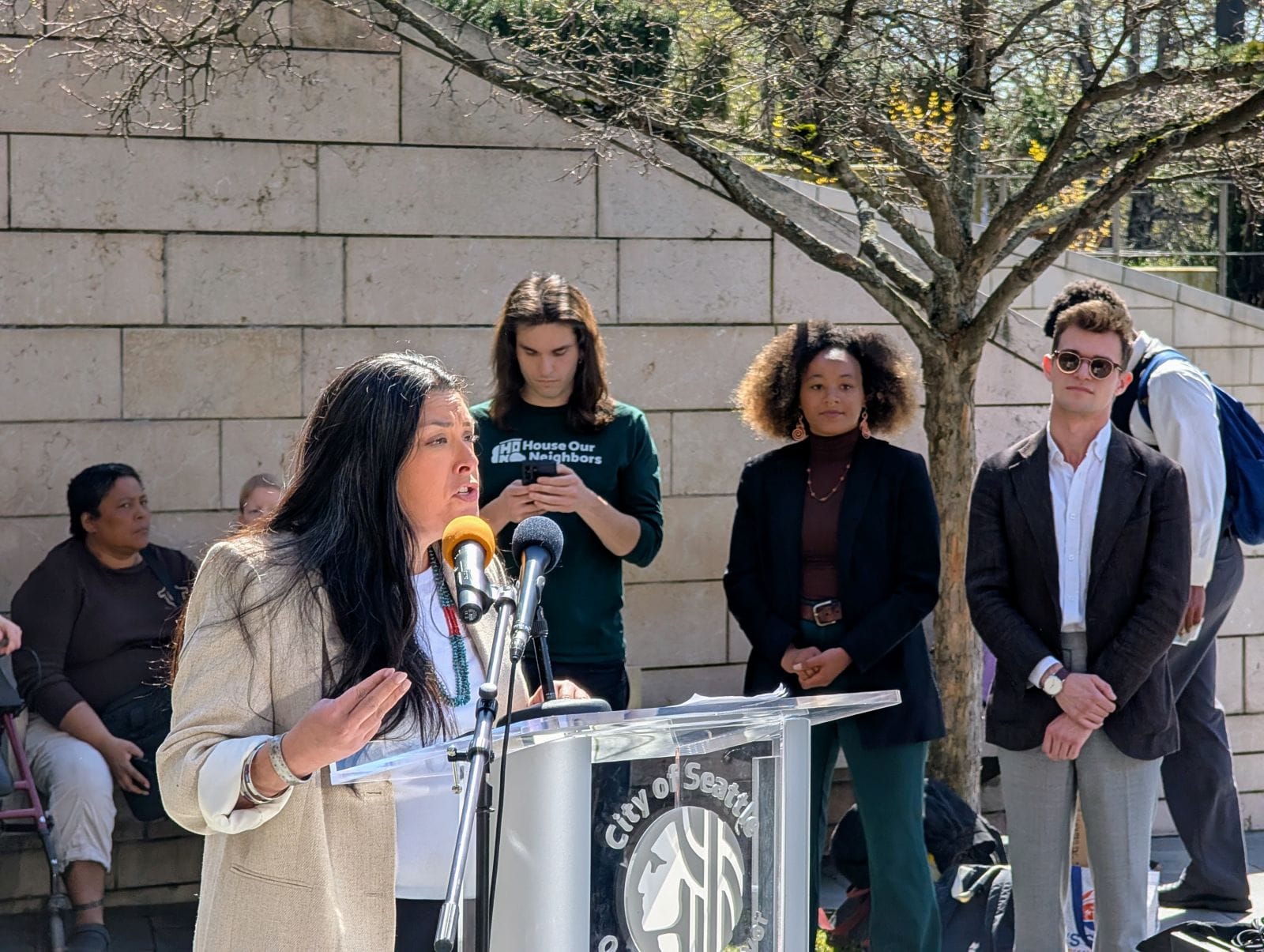
While Wilson referenced racial equity and economic justice, some speakers at Monday's rally hammered that point home, particularly Colleen Echohawk, who ran for Mayor in 2021, earning the endorsement of The Urbanist Elections Committee (on which I serve).
Today, Echohawk is executive director of Community Roots Housing, a nonprofit that runs 2,500 affordable housing units across the city. Echohawk is also an enrolled member of the Kithehaki Band of the Pawnee Nation, and she noted the housing policies of today can either reinforce the racial and economic exclusion of the past or seek to proactively repair those harms.
"In 1865, the City passed an ordinance that displaced Native tribal people, Coast Salish people," Echohawk said. "That was not just one act from the distant past. It set a pattern. It told a story about land, power and belonging. It said that Native people, the first people of this place, could be pushed aside for someone else's vision of the city. And that story did not end there."
The disenfranchisement and sometimes outright expulsion of Coast Salish peoples was expanded to Black and Asian families in other dark periods in Seattle's history.
"Later, redlining and racist housing policies took that same logic and embedded it into neighborhoods, lending, zoning and opportunity, entire communities were locked out," Echohawk added. "Native people, Black families and other communities of color were denied access to home ownership, denied access to wealth, denied access to safe and stable neighborhoods, and denied the chance to stay rooted in a city that they helped build. So when we talk about housing today, we talk about the Comp Plan. We are not just talking about more units. We are talking about repair, healing, reconciliation."
Echohawk flipped the idea of neighborhood character, which is often brandied about by housing opponents, on its head.
"Every time we delay more housing, when we delay density, we are not preserving neighborhood character; we are preserving the outcomes of exclusion," Echohawk said. "Every time we say housing should go somewhere else, we're repeating the old story that some people belong and some people do not. Every time we refuse to build in wealthy neighborhoods, high-opportunity neighborhoods, neighborhoods close to jobs and transit and good schools, we're saying that access should be rationed by race and income. And this is what makes this moment so important."
Speaking to the urgency of the moment, Echohawk voiced strong support for Wilson's plan to accelerate and expand the scope of Phase 3 of the growth plan.
"This is our moment – our moment to break with the history of redlining, our moment to break with the legacy of native displacement. Our moment to say that we will not keep hoarding opportunity behind zoning delay and fear. Our moment is to choose welcome over exclusion. Our moment is to choose courage over comfort. Our moment is to choose justice over delay," Echohawk said. "Let's support this Comp Plan, corridors, centers, everything about this Comp Plan. Let's accelerate it. Let's do it faster. Let's do it with greater intensity and with love for our beloved community. Let's build the housing our people need, and let's build Seattle."
Disability rights advocate Cecilia Black also spoke at the rally, emphasizing the need to allow housing that meets the needs of people with disabilities. She said Harrell's growth plan didn't go far enough to rectify that, with majority of zoning still below threshold to trigger accessibility requirements, such as elevators and accessible units.
"Less than 5% of the housing stock nationwide is accessible," Black said. "We know that people with disabilities face some of the highest levels of housing insecurity. We know that the majority of people that are living on the streets have a disability."
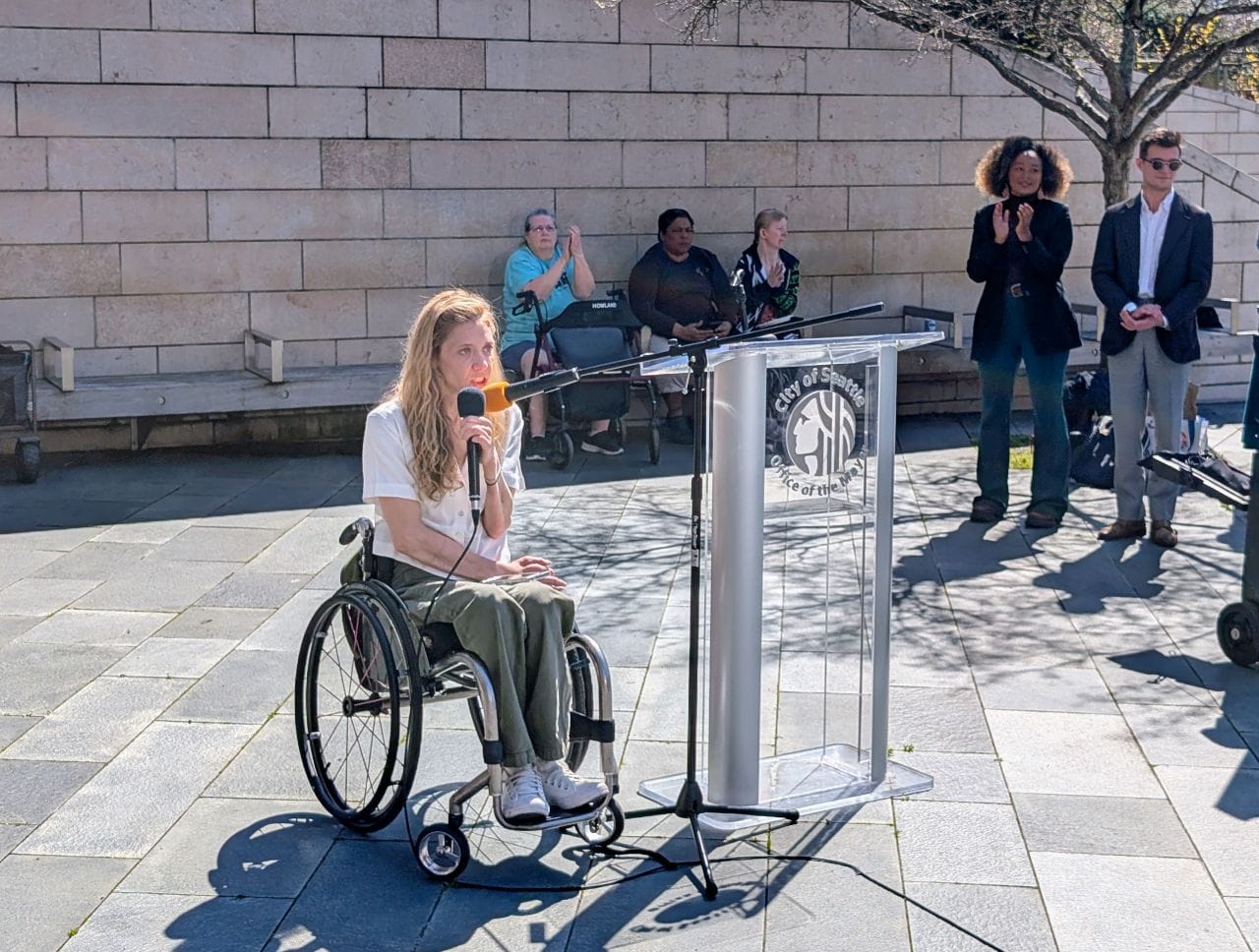
Black emphasized the importance of adding housing density near transit corridors as a means to drive down the cost of housing and meet the needs of people with disabilities.
"So, what can we do right now as City Council considers phase two of the Comp Plan and repairs legislation for Phases 3 and 4, first, we need more density and a vision for complete, walkable communities, not just for the handful blocks in the neighborhood centers, but for the entire city," Black said. "We can start this with our transit corridors by vastly expanding proposed corridor upzones beyond the parcels adjacent to arterials to create 10-minute walksheds."
Closing out the official program, Councilmember Alexis Mercedes Rinck spoke. While much of the discussion had focused on the big changes queued up in Phase 3, Rinck took some time to highlight tweaks that could improve Phase 2 legislation.
"None of that work we were able to accomplish last year in the Phase 1 legislation would have been possible without the Complete Communities Coalition," Rinck said. "And now here we are kicking off Phase 2, and already the Complete Communities Coalition has brought forward a number of amendments to pass this year, to support mass timber, passive house, low-rise commercial and to create a new courtyard block bonus."
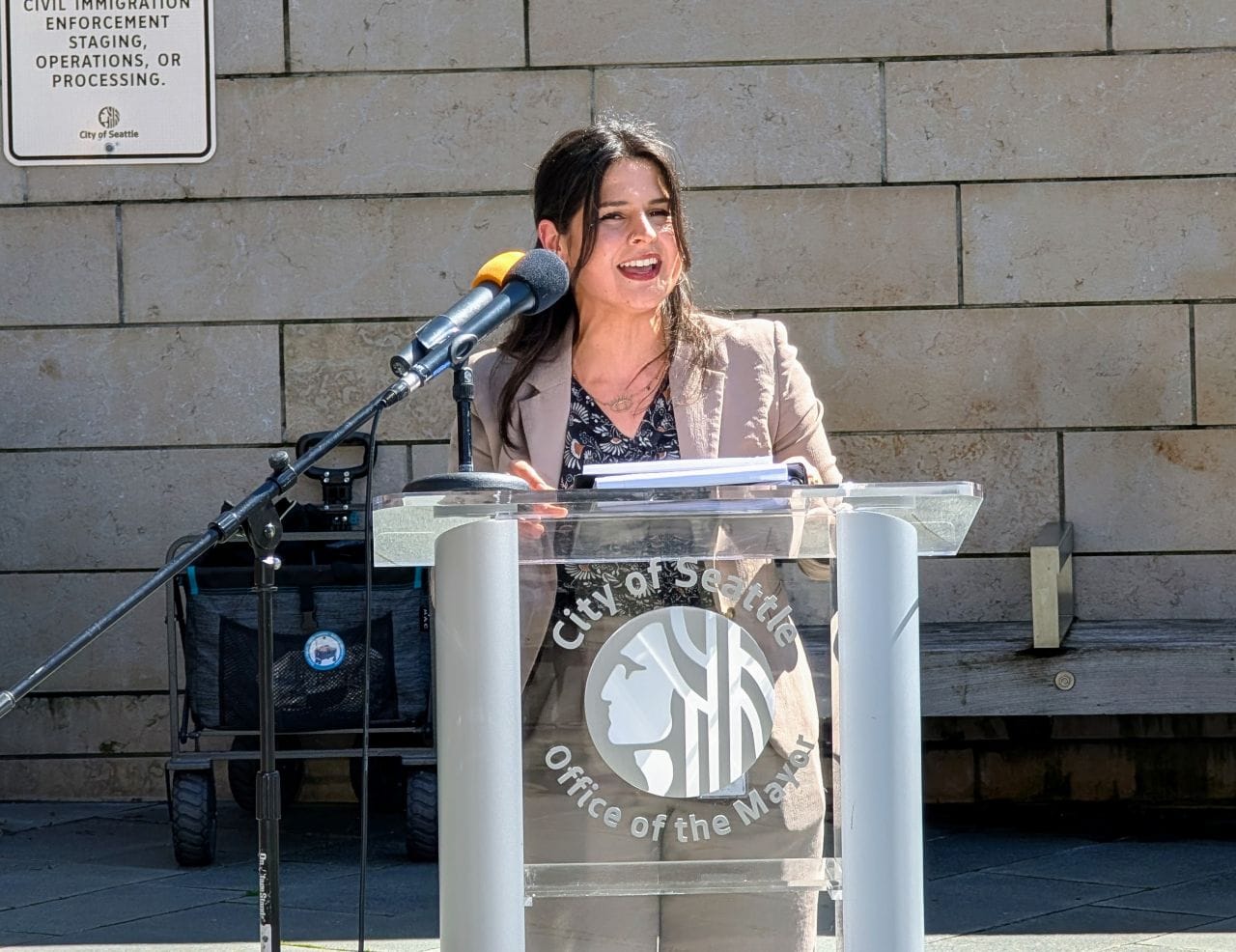
Councilmember Lin, who chairs the Select Committee on the Comprehensive Plan, attended the rally, and told The Urbanist afterward that he supports the mayor's plan to go bigger in Phase 3.
"One of the main reasons I wanted to run [for office] was to address this, our comprehensive plan or zoning," Lin said. "And, you know, I learned so much over the past decade from The Urbanist and it's awesome to see the engagement. This is not going to be a one and done thing, It's been an ongoing endeavor, and it will continue. [...] That's a hopeful thing in my mind, because that means that we can keep making progress on the issue of our time, not just housing, but also climate change."
In her speech, Rinck echoed that sentiment, noting how impactful these changes could in people's lives.
"Underneath all that jargon, we know what this is really about. This is about whether a waitress, a bus driver, a teacher, can live in the city they make run," Rinck said. "This is about confronting our city's racist history of redlining and making a different choice this time. This is about building the housing we need for our unhoused neighbors, our new neighbors, who are fleeing other states right now to come to this welcoming city. But how welcoming are we truly if you can't afford to live here? And this is about taking the climate crisis seriously, and building a city where you don't have to own a car, because you can walk, roll and take transit to your work, your school, and wherever you go to have fun."
 Doug Trumm