A safety project along a harrowing four-lane road in West Seattle is moving forward as a flagship bike connectivity project funded by the Seattle Transportation Levy, but is facing significant opposition from driving advocates. It represents an early test for the Seattle Department of Transportation (SDOT) under Mayor Katie Wilson, who campaigned on expanding the city's multimodal infrastructure.
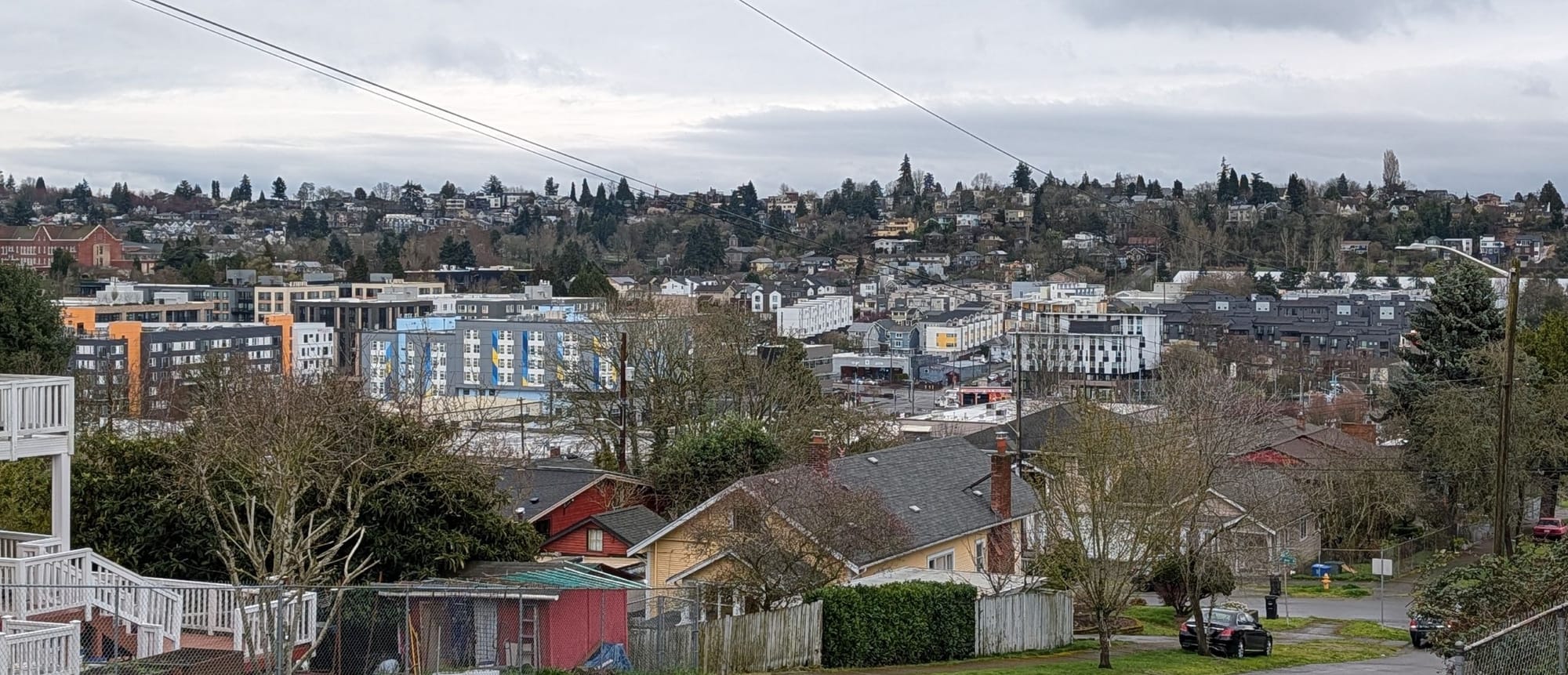
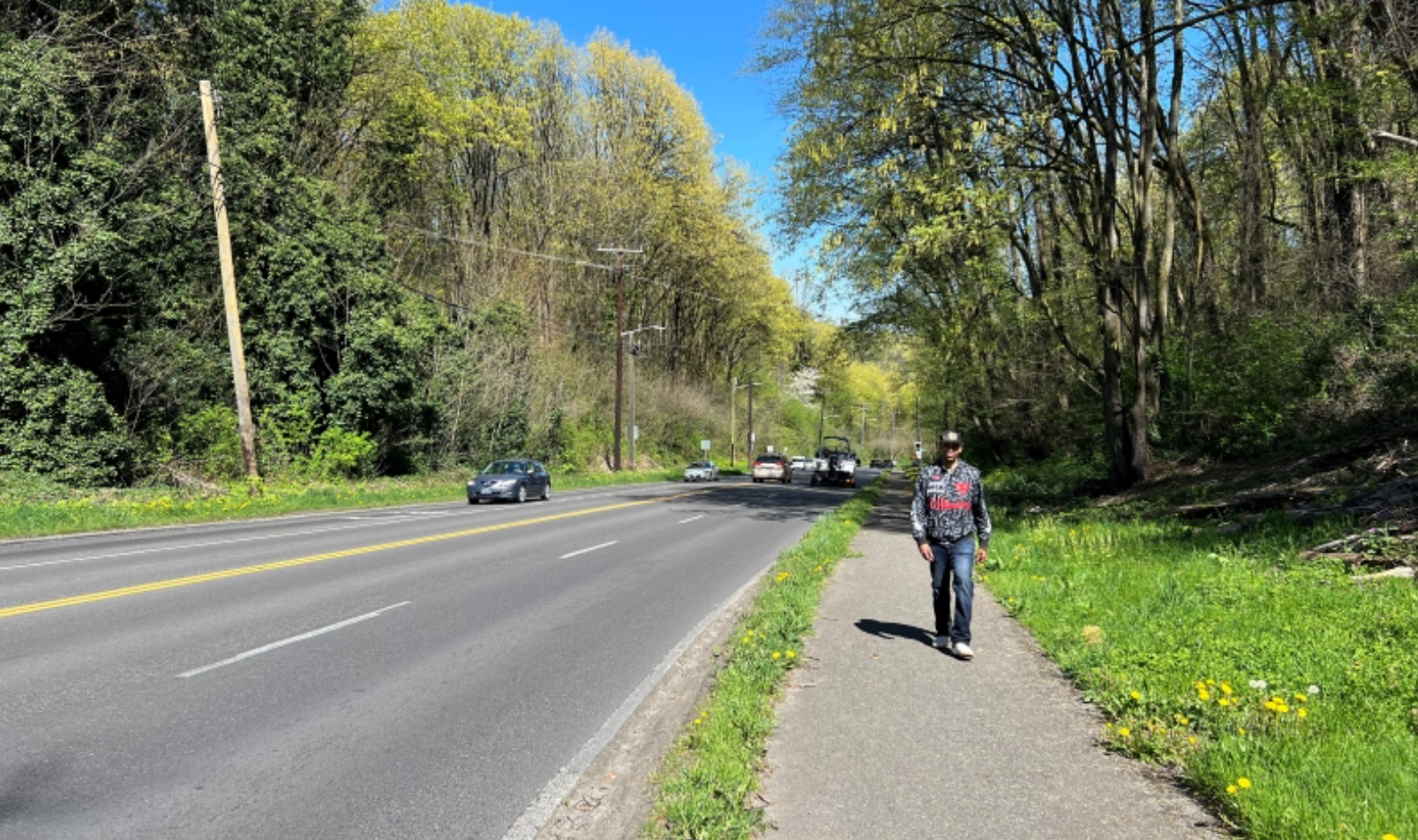
A steep, half-mile connection between the Highland Park neighborhood and the Duwamish Valley, Highland Park Way SW features fast-moving traffic and only a narrow sidewalk on one side of the street. It's an obvious place to connect to the Duwamish River Trail to head either toward downtown or into South Park, but is very unwelcoming to anyone but the most daring cyclists.
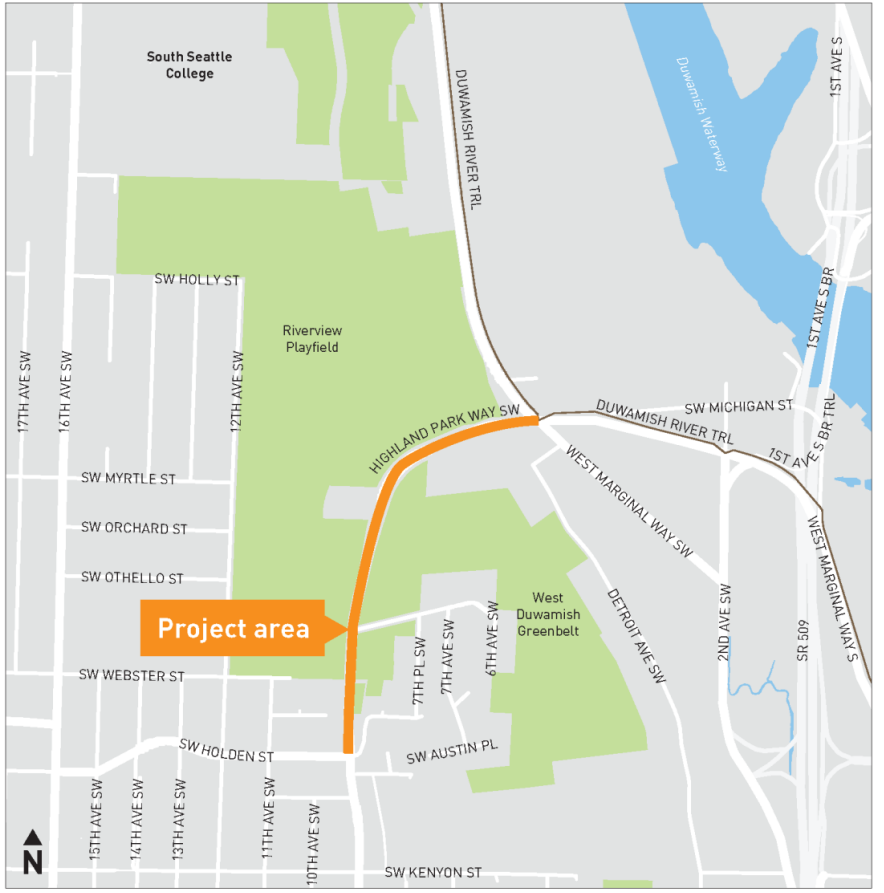
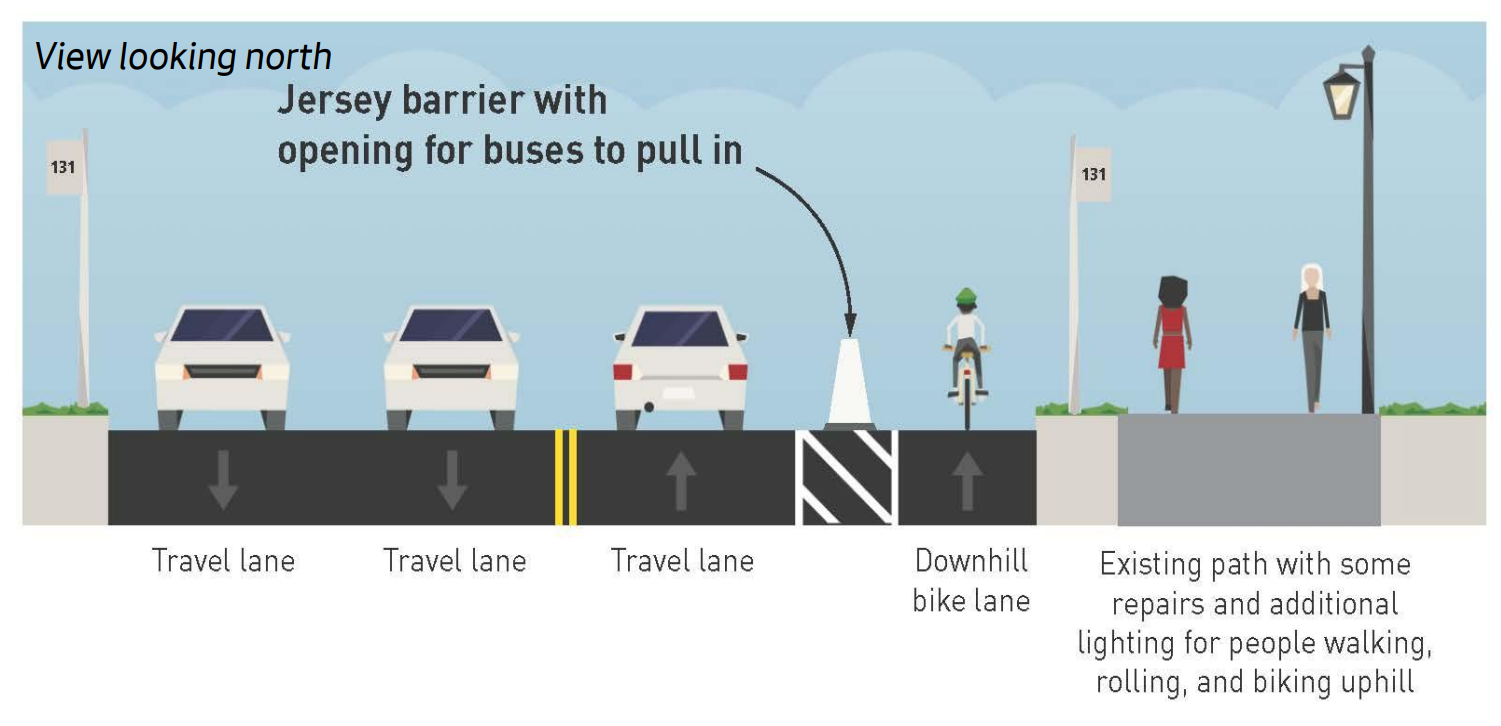
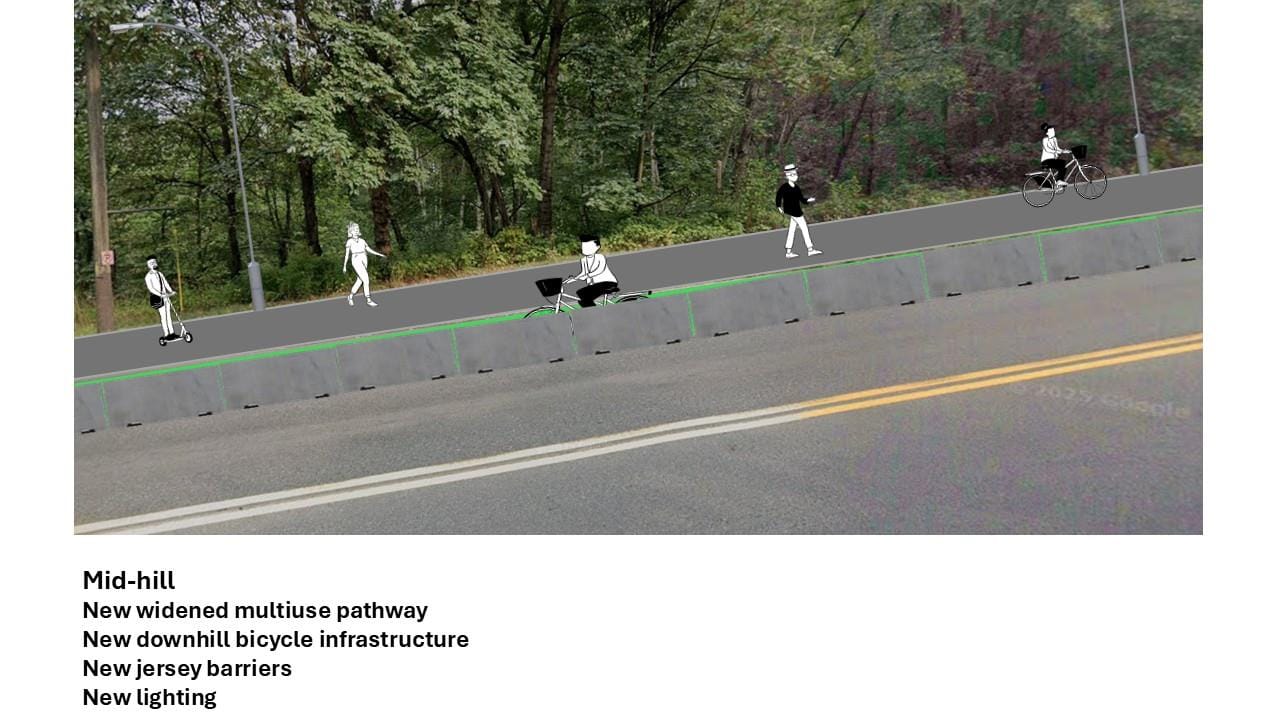
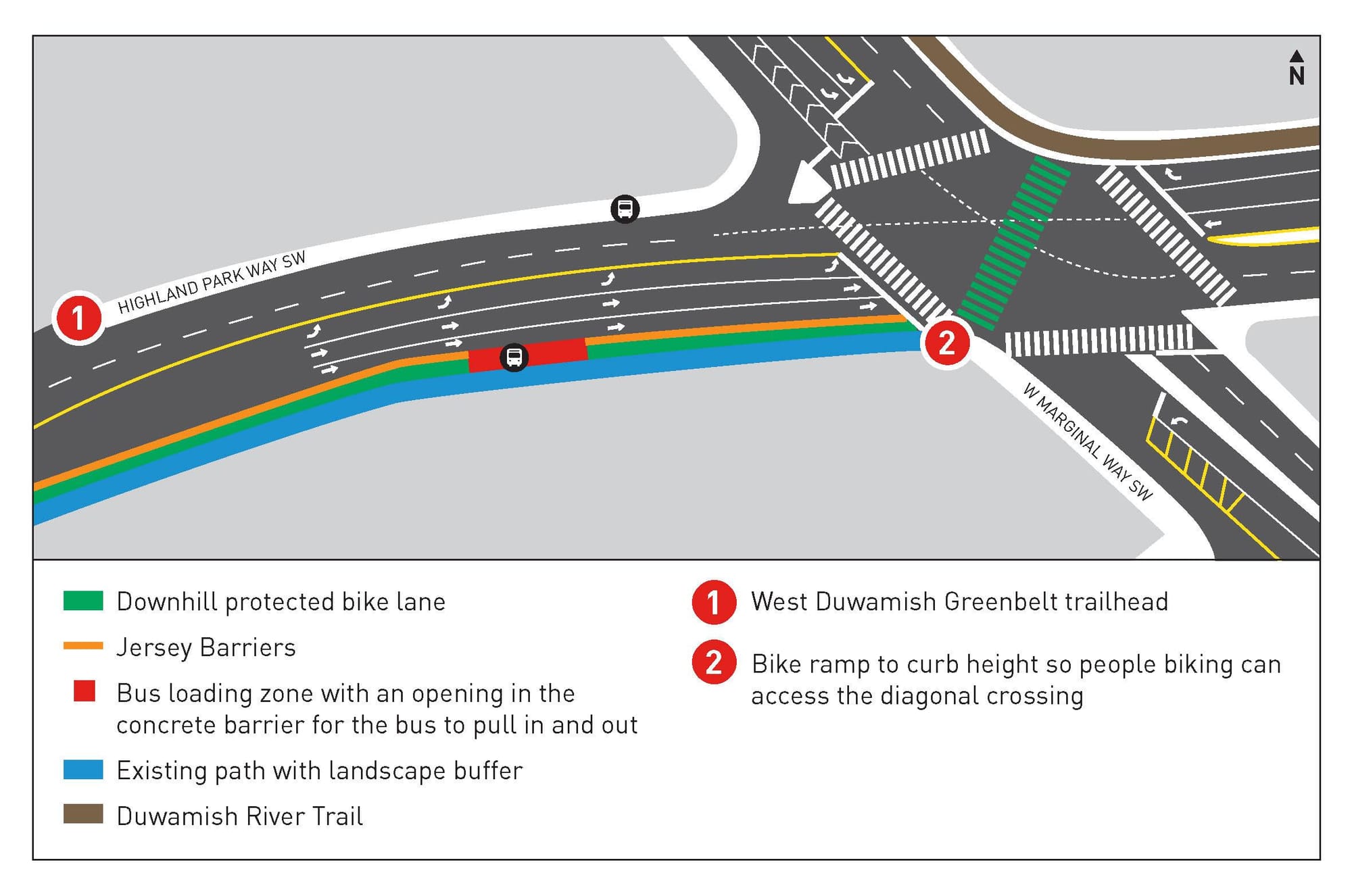
SDOT's proposal, one of only a handful of new bicycle connections specifically written into the eight-year transportation levy voters approved in 2024, would repurpose one downhill lane for a downhill protected bike lane, separated from the rest of the road by Jersey barriers. The narrow path, where riders catch the Route 131 bus, would be widened with overhead lighting added to make it wide enough for uphill cyclists to share space with people walking or rolling.
At SW Holden Street, where the bike lane would start, only one lane of traffic is able to head down the hill toward West Marginal Way SW at any given time, with the other lane reserved for left-turning vehicles. That means traffic congestion is unlikely to materialize with this project. Despite that fact, opposition to the idea of giving up a (largely superfluous) lane has been fierce.
"I think there should be four lanes kept on this road. It may not have a lot in between rush hours, but it will," Highland Park resident Laura said at a community meeting last week organized by the Highland Park Improvement Club (HPIC). "It will, because once the city grows, there's more traffic and there's more backup. On a very steep hill, in the rain, when it's slippery, when you're not going to see a lot of bikes, maybe, but you'll see a lot of cars, and you need to give precedence to the cars over the bikes. I'm sorry!"
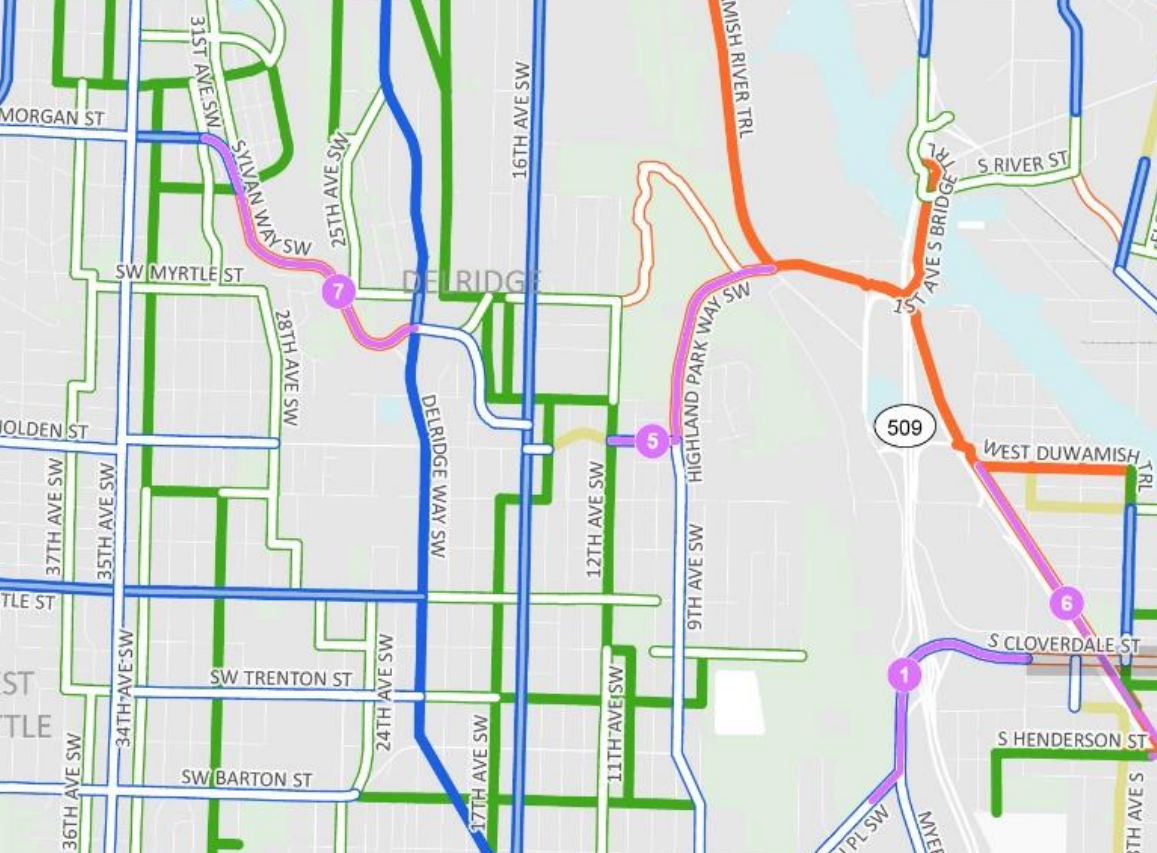
Bike infrastructure in West Seattle is sparse compared to the rest of the city, and a connection here would go a long way toward opening up bike routes that are currently closed to many different types of riders. With the Duwamish Trail more accessible, destinations like Alki, Georgetown, South Park, and the Green River Trail toward South King County would be much more reachable.
For that reason, the Highland Park Way connection was included in the list of Tier 1 "catalyst projects" within the 2024 Seattle Transportation Plan, unanimously approved by the City Council.
Communication about the project hasn't been optimal. At a virtual information session earlier in the month, SDOT reinforced the need to slow down vehicle speeds along Highland Park Way and the positive impact a lane reduction would have in that regard – but this came off as a pivot away from the importance of the bike connection.
This wasn't helped by a headline on a West Seattle Blog story the next day: "It’s not a bike project, it’s a safety project, SDOT insists at online community meeting about Highland Park Way hill lane conversion."
The most constructive opponents of reallocating a lane have pushed SDOT to consider expanding the sidewalk into a full multiuse trail. But with the steep slopes present on the hill, that move would add expensive retaining walls and explode the project's budget. As it stands, the design is set to cost the City around $4 million.
"If any route deserved a full utilization of the existing right of way, this is it," longtime West Seattle neighborhood advocate Deb Barker said at the online info session. "I encourage SDOT to fund this route, to widen the roadway surfaces and add a sidewalk. Take your safety concerns and get them out of the paved area and into the sidewalk area. Putting in a dual, up-down bike lane is a great idea. I hear there's costs. We don't care."
An SDOT survey of around 2,000 residents, most of them in West Seattle, found significant opposition to any lane reallocation on Highland Park Way. That same survey showed that 60% of respondents never utilize the sidewalk along the street at all, with demographic data spelling out the fact that just 2% of the survey's respondents are aged 24 or younger, effectively shutting out the next generation of road users.
Which is not to say that supporters of the project have not also turned out to project meetings.
"I've ridden up Highland Park Way almost 100 times, I've ridden down it once," Puget Ridge resident Max said at last week's HPIC meeting. "You have to do 35 to 40 miles per hour, as a biker to feel like you're riding with traffic. Going down the sidewalk is not an option because it is a sidewalk with bumps and cracks and it's narrow, and people walking up will have conflicts with you. It's not an option for a downhill ride. What I can say is that the bike improvements that we have seen in West Seattle have opened up routes that were unavailable to us before."
Another point of contention has been the planned intersection at West Marginal Way, where people on bikes heading to the Duwamish Trail will get a diagonal bike-only signal to cross the street when they're present. SDOT initially released two different concepts, one of which terminated the bike lane's protection well before the intersection to maintain the number of vehicle lanes. To go through the trouble of reallocating the lane down Highland Park Way and then still not provide continuous protection for people on bikes would probably be the most frustrating outcome imaginable. Thankfully, that doesn't look to be the path forward.
The night before the HPIC meeting, another option (2B) was put on the table that seems to represent a compromise, eliminating a center median between east and westbound traffic to accommodate another lane. Whether that is truly the safest option is much less clear.
"Look at that, a department listening to feedback and creating a new option based on what they heard," the Seattle Bike Blog wrote of the new alternative. "To think there were folks accusing them of being 'jackboots' over this! I am not familiar with the type of jackboot that listens to community feedback while working to improve walking and biking safety and install better street lights."
That type of iterating isn't likely to win over the majority of project opponents, many of whom are wary of giving up any driving space in the wake of the two-and-a-half year closure of the West Seattle Bridge. But so far there are no signs that SDOT is giving up on the larger project, a major win for Seattle's bike network.
Despite significant strides made in recent years building out that network, the gaps that remain to be filled in will likely be tougher wins to notch – as this fight over Highland Park Way clearly illustrates.
 Natalie Bicknell Argerious