“Google says there’s supposed to be a bus.”
I’ve repeated that line many times to my family. Sometimes the bus arrives. Sometimes, as my kid will remind me when we’re waiting anxiously, peering down the street, Google is wrong.
This time, I was pretty sure Google was wrong. We had just gotten off a Riga city bus and were attempting to transfer. It was December 24, which in Latvia is the day Christmas is celebrated. I was surprised that the buses were running at all, and feared being stranded in an unfamiliar place.
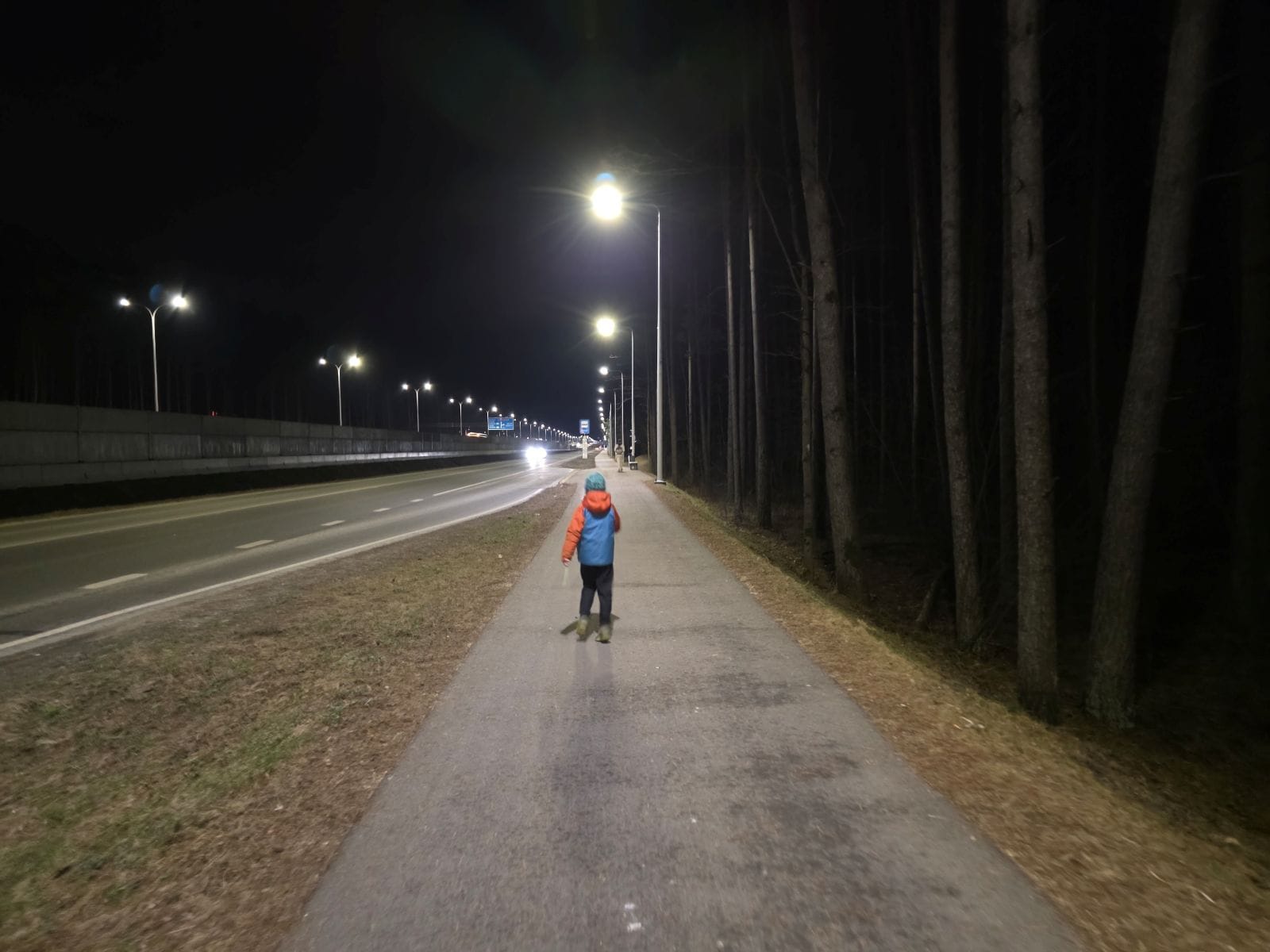
And now we were standing on the edge of a very dark forest, waiting for a bus that was supposed to arrive. There was a bench and a bus stop sign, but at 7 pm it felt like it could be midnight. Cars passed very infrequently.
When my husband’s cousin invited us to spend Christmas with her family, she told us she’d lived on the outskirts of town. I’d pictured an American-style subdivision with sidewalks and shopping centers, especially after I looked up directions and it seemed easy to get there on the bus. But this was no subdivision. We were out in the woods, waiting for a bus to take us even further into the country.
And then we spotted it. It wasn’t a bus exactly, but a large and very modern shuttle van so crowded with passengers that we were lucky to buckle in to the last three open seats. Twenty minutes later, we were dropped off along a stretch of rural highway in total darkness. An older couple got off the bus at the same stop. They were prepared and immediately pulled out a flashlight. Luckily, we were just a three minute walk to my in-laws. Looking up at the stars I couldn’t believe we’d made it there on the bus with such ease. On Christmas.
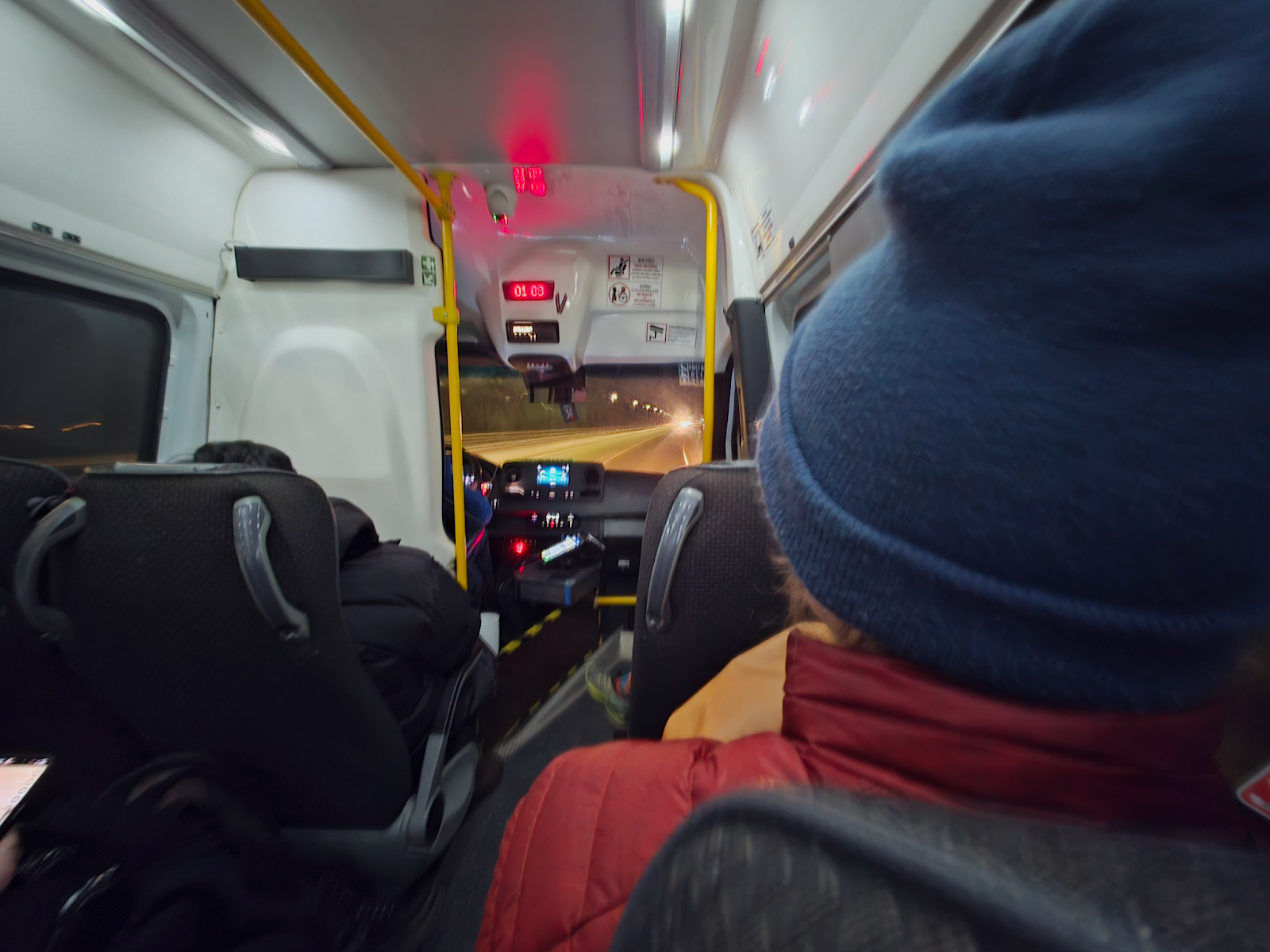
As someone who can’t drive because of a visual impairment I was born with, I’m always attuned to transit access. In the two weeks I spent over the Christmas holidays in Latvia last year, I was consistently surprised and delighted by how easy it was to get places without driving. My camera reel was half photos of family, food and sledding, and the other half of rural bus stops and sidewalk snow ploughs.
We were in Latvia because my partner’s parents grew up there before becoming refugees during World War II, eventually finding a new home in Iowa. Over the course of two weeks, we spent every night with cousins, second cousins, and second cousins once removed -- family that had been separated when Latvia became part of the Soviet Union.
Out came photo albums – pages and pages of snapshots mailed from U.S. family members. Amidst the photos of weddings, babies and funerals were reminders of the splintered material reality between Soviet and American lives: photos of large suburban homes and proudly displayed new American cars. At one point, our Latvian family was warned by local officials to stop communicating so much with their American relatives.
Soviet influence on Latvia's transportation
In Soviet times, few people owned cars. One of our relatives remembers stringing up a tennis net to play in the street in Riga because cars passed so infrequently. I assumed this was due to economics, but as I started to look for data, I came across research by Haverford professor Holland Hunter that suggests it was intentional.
“Instead of competing with the West in finding engineering or city-planning answers to urban traffic problems, Soviet authorities appear to be placing major weight on the drive to suppress the desire for individually-owned passenger automobiles.” Hunter wrote. Compared to the U.S., where there was one car for every three residents, Hunter estimated that in 1965 private car ownership in the USSR was closer to one car per 500 residents.
Instead the state made cars available through municipal rent-a-car services. They also hoped to build “state parks, state summer resorts, and state-provided vacation facilities that will remove any need for private dachas.” In other words, the state discouraged personal vehicle travel by building destinations that could be reached on mass transit.
Not only was Soviet leadership skeptical of private vehicle ownership, they also questioned the efficiency of cars in cities. Hunter reported that what would today be viewed as an urbanist distaste for car dependency was informed by Khrushchev’s 1959 visit to the US: “[San Francisco] Mayor Christopher escorted [Khrushchev] to the airport by way of the great handsome San Francisco freeway. They were bucking the incoming morning rush hour traffic. Khrushchev apparently watched the stream of individual cars go by, with generally one passenger per car and finally exclaimed that it was irrational.”
Latvia regained independence from the Soviet Union in 1991, and since then incomes have grown faster in Latvia than any other European country, apart from Lithuania. According to Morten Hansen, the former head of the economics department at Stockholm School of Economics in Riga, “the average Latvian can buy almost four times as much in 2025 as in 1995.” However, car ownership rates in Latvia remain low compared to the rest of Europe. In 2022, Latvia had 414 passenger cars per 1000 inhabitants – the lowest rate among European countries. (For comparison, the U.S. has 779 cars per 1000 residents).
Why has car ownership in Latvia remained comparatively low? Jānis Brizga, a researcher with the nonprofit organization Green Liberty and the University of Latvia, suggested it was because most of the population in Latvia lives in and around Riga, where transit access is reliable and parking is expensive.
Riga public transit carried 118.5 million passengers in 2025, which is pretty impressive when you compare that to U.S. cities. In the Seattle region, for example, public transit had a 2024 ridership of 151 million, with a population four times as large as metro Riga.
The availability and frequency of transit in Riga was a joy. After finishing a late dinner at a relative’s apartment, I went to request a Bolt pickup (a European competitor to Uber). Out of curiosity, I decided to also look at the transit options and realized, with three different bus routes serving the area, that even at 10 pm it would be just as fast to take the bus. According to a 2020 report from the Technical University of Berlin, “Bus stops are provided within 300 [meters] distance from residential buildings in 83% of the city territory.”
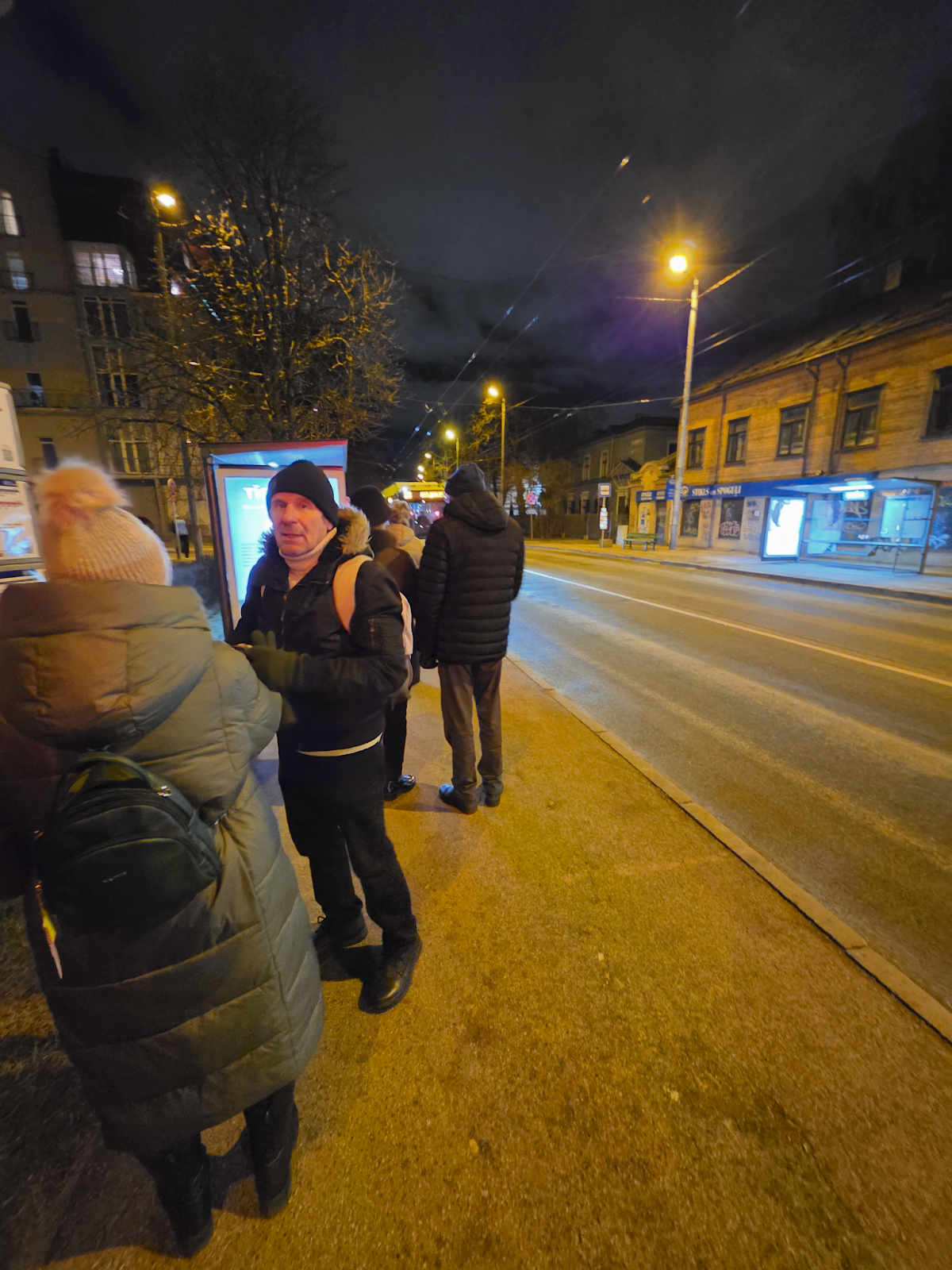
Relatively slower car speeds and very strict speed camera enforcement also make the environment feel more comfortable for people outside of vehicles. Residential streets post speed limits of 30 km/h (18 mph) and automatic speed enforcement cameras are everywhere, at most large intersections in cities as well as junctions in rural areas.
“You will get a ticket if you speed,” a family member warned us. But the automatic beeping of the rental car every time my partner exceeded the speed limit by more than 4 km/h made it relatively reflexive to stay within the limits.
Maintaining clear sidewalks is also a priority -- Riga provides municipal sidewalk snow plowing, something that we can only dream of in the US. Even in small rural communities municipal sidewalk sanding machines were out in force on frosty mornings to ensure that sidewalks remained passable.
Extensive rural transit
This was paired with an extensive network of multi-use paths surrounding small rural towns and villages. Outside of the small town of Cēsis (population 15,000) one morning I decided to go for a jog. In a comparable town in the US, I’d be running along the shoulder of a rural road, side-stepping into the ditch every time a car approached. It was lovely to have a separate, smooth and well-lit space that not only allowed me (and the many older women I saw) to get exercise, it also provided a safe connection to numerous rural bus stops.
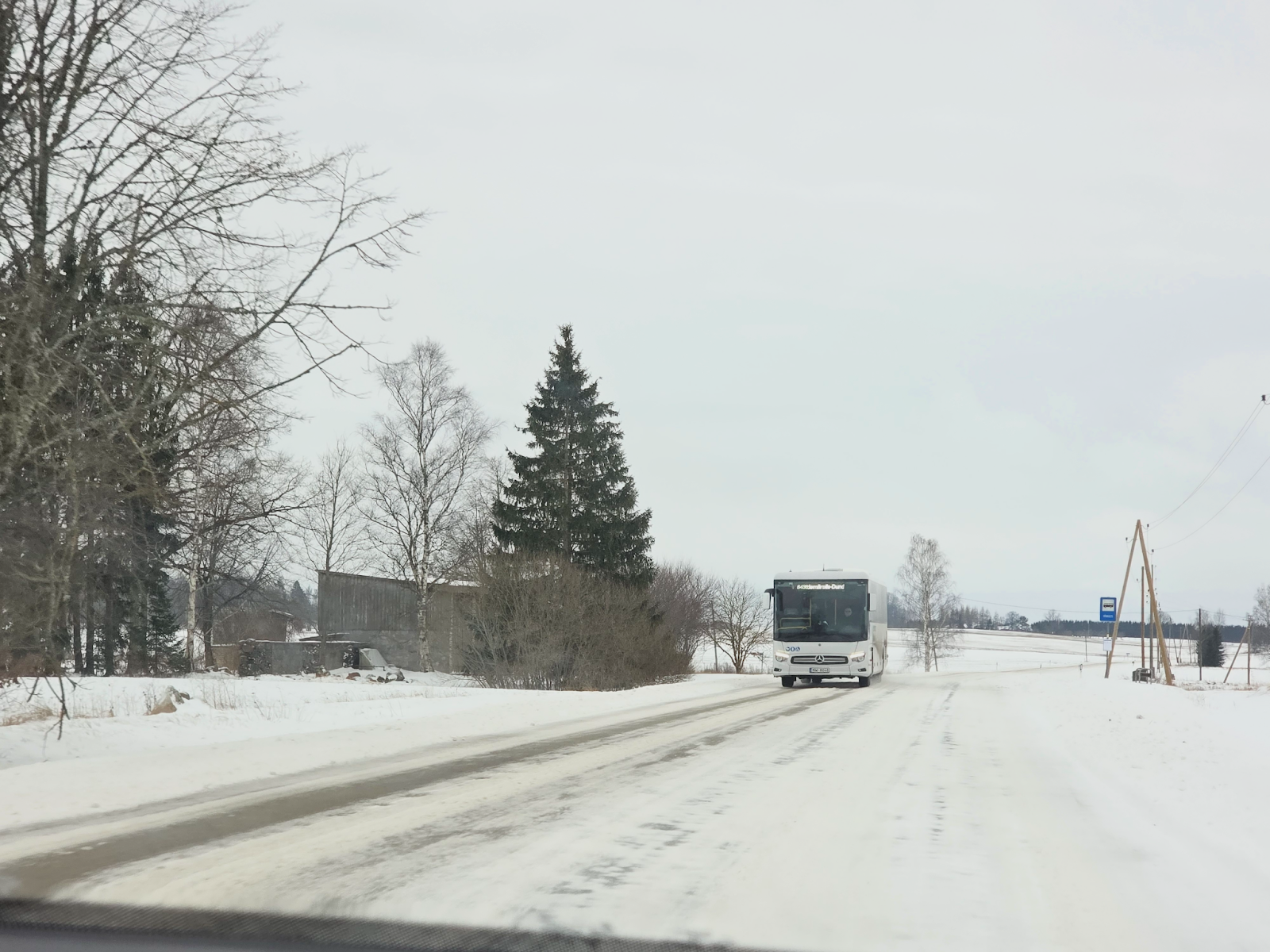
These rural bus stops were a revelation. My partner rented a car for our trip, assuming that we would need it to visit the towns where his parents grew up. But as we headed east towards the coast on a small, two-lane highway, I kept noting rural bus stops: sometimes near a cluster of farmhouses, sometimes near the intersection of rural roads, sometimes in what appeared to be nothing but forest.
Even the piece of land my partner inherited from his mother, in a tiny village on gravel road 200 kilometers from Riga, has two bus routes with daily service. It’s embarrassing when you compare this to my own family’s farm in rural Indiana, which is impossible to reach by bus even though it is on the main highway between St. Louis and Louisville.
While many Latvians use transit by choice, some lack other options. Despite recent income gains, Latvia has the third-highest income inequality in Europe, and 20% of the population lives in poverty. Among those over the age of 65, the poverty rate exceeds 40%. Many low-income older residents in rural areas are wholly dependent on the state-subsidized rural transit network.
However as the rural population declines, these subsidies are in jeopardy. Last fall, as state budgets were stretched to invest more in defense spending, Latvia said it would cut rural transit service by 16%. In response, the transit companies organized a “One Hour Without Public Transport” strike. (That a one-hour rural transit provider strike would have an impact gives you a sense of how frequent rural transit service is compared to the U.S., where Greyhound and other intercity bus or rail transit is often delayed by multiple hours without anyone batting an eye).
As of January, this funding is still being negotiated. Transport providers are insisting the state’s plans to transition to on-demand transit will be unable to meet demand. Supporters of rural transit also argue that cutting service will only lead to further depopulation of rural areas, which is counterproductive in the context of avoiding a Russian invasion.
Countering Russian threat
Since the war in Ukraine began, the threat of Russian invasion underpins every policy discussion in Latvia. During the Soviet occupation, many Russian-speaking Soviet citizens moved into Latvia, and currently a third of the country is Russian speaking. Latvia long permitted some public schools to be taught in Russian, but when Russia invaded Ukraine, that attitude changed; now Latvian is required to be the sole language of instruction.
Latvia’s fight to prevent re-annexation extends beyond language, as the country works to strengthen cultural and transportation connections with Europe. Latvia is currently part of a Rail Baltica project that will connect the Baltic states with the rest of Europe via a high speed passenger and freight network. While Latvia has an extensive rail network, these existing tracks are built to the Soviet gauge and connected to Russian destinations. Now passenger service to Russia has been severed, and many hope that a new European-gauge network will build economic ties with the west.
As part of its defense effort, Latvia is working to reduce dependence on Russian oil and gas through increased renewable energy production, better weatherization, and encouraging more sustainable forms of transportation. As part of the EST2 European carbon credit market, in 2027 Latvia will begin implementing carbon taxes on transportation fuels (currently 65.4% of cars are diesel, 28.2% gas, and less than 3% hybrid or electric).
While some green transportation efforts have focused on vehicle electrification, low-income households cannot afford electric cars even with subsidies. Current policies to encourage private electric vehicle adoption -- like free parking in central Riga and the ability to use transit-only lanes -- could further entrench a political base that advocates for more road capacity.
Like American cities, Riga is surrounded by suburbs where transit is less accessible and less convenient than driving. For people living in these neighborhoods, cars are not only viewed as a middle-class status symbol, but also as a necessity. Political pressure to invest in wider roads comes from these suburban residents who “complain that they are stuck in traffic jams to get to work,” explained Jānis Brizga. As a result, road widening is prioritized over transit investments, leading towards American-style car-dependent, suburban sprawl.
But there are efforts to combat this cycle. The European carbon credit market has established a social climate fund to work towards a just transition. As part of this work, Green Liberty was involved with a project that looked at what investments would best serve low-income, rural communities with high transportation poverty, and recommended continued funding for rural transit routes and fare subsidies. The research also urged support for informal networks (like a friend who can be hired to provide rides), calling for rules that enable these networks to operate more openly.
Green Liberty's Maksis Apinis said one of the most unexpected findings was that rural residents desired more high-quality bike paths in their communities, as many of the destinations they need to reach are within biking distance. This finding was a good reminder of the importance of having services located in rural communities so that residents can walk or cycle there, rather than having to travel into a city, Apinis noted.
Better cycling infrastructure is something that urban residents want as well, and Riga is slowly building out more of a cycle network. Brizga is currently engaged in a project documenting air quality issues around schools in Riga in the hopes that the city can be convinced to implement a low-emission zone, which would encourage more transit use and bring public health benefits. This action is spurred by new European air quality standards that will come into effect in 2027; without action, Riga will be out of compliance.
“I think there’s a significant portion of society that really wants to move around with public transport -- they see car ownership as a burden,” Apinis said. Plus, he noted, the cost of carbon fuels will increase.
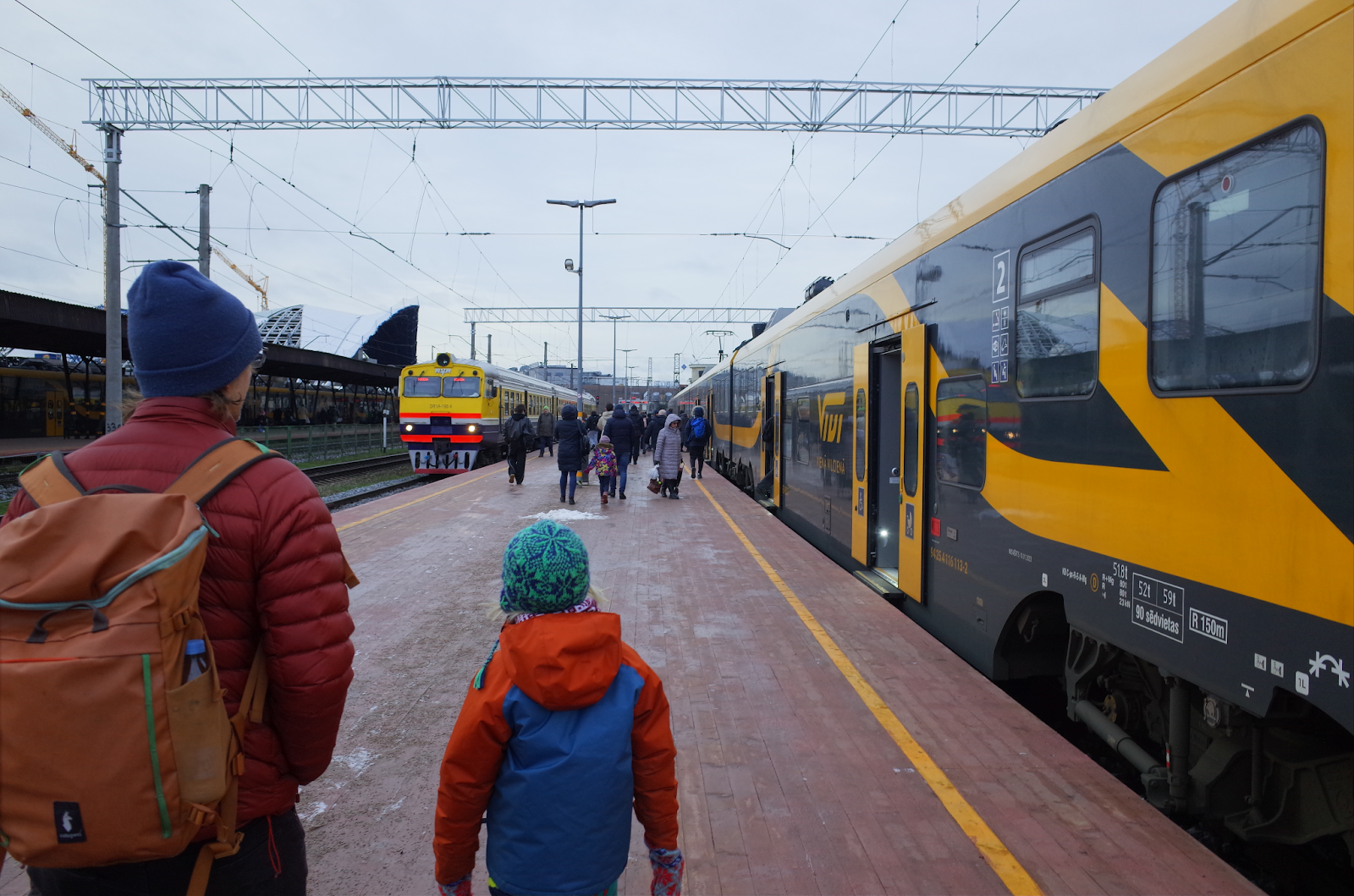
Like in the U.S., a younger generation is less tied to car ownership. Bolt, the ride-hail company, offers not only taxi service and shared e-scooter rentals, but also short-term car rentals, similar to Zipcar. Rather than owning a vehicle, it can make sense to rent one when you want to go out of town for the weekend.
“We could be a country which could skip this phase of very high car dependency and go straight into more independent modes,” Apinis suggested.
I couldn’t help but smile. In its effort to “catch up” after years of Soviet rule, Latvia has rushed to emulate the U.S. and other European countries. In this context, low car-ownership rates may be viewed as a failure. But in reality, this legacy of low car ownership and high transit reliance should be viewed as an asset. Latvia now has the luxury of truly understanding the tradeoffs of car dependency. In the context of climate action and energy independence from Russia, Latvia can choose to take a different path.
Lessons for the U.S.
And there’s much we extrapolate from Latvia’s experience here in the U.S. There are the easy takeaways, like what an expanded rural transit network could offer, or how more comprehensive and lower speed limits improve safety outcomes. But the most important takeaway is what feels possible when a country believes their national security is directly tied to reducing their reliance on oil.
Instead of endless studies and 50-year plans with climate pollution reduction targets we’re never going to meet, in Latvia it feels like there is a political consensus around the urgency to weatherize, electrify, and expand rail, transit and biking networks. We know we need to be making these changes for climate reasons, but without a national security level of immediacy, we fail to build consensus around the sometimes politically unpopular choices that have to be made.
The looming economic wreckage of the current oil price increases is the price we will pay for failing to view investments in transit, walking, rolling, biking, and ultimately decarbonization through the lens of national security and economic wellbeing.
 Anna Zivarts