Let's build a seamless, frequent network of passenger rail and local transit.
Sitting in traffic and being unable to predict how long the trip will take is a fact of Western Washington life.
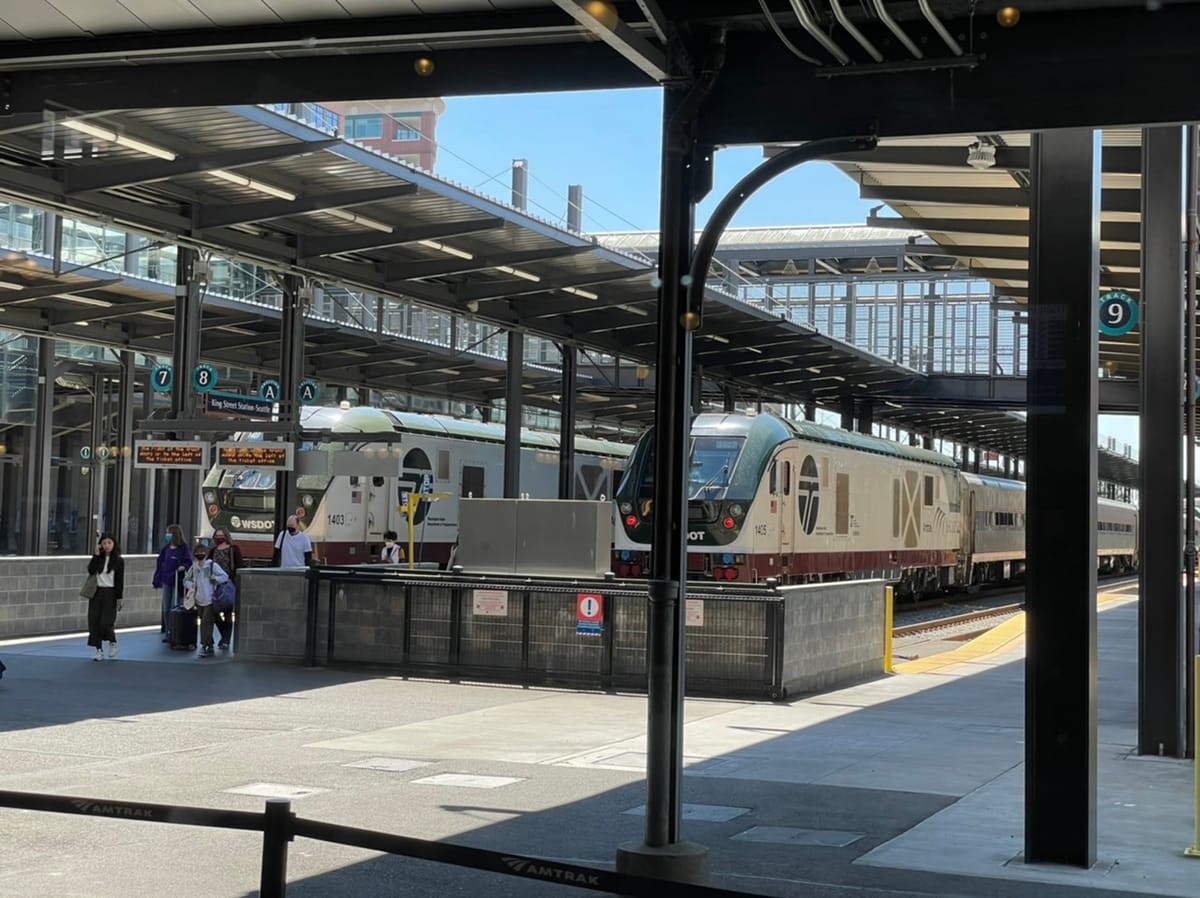
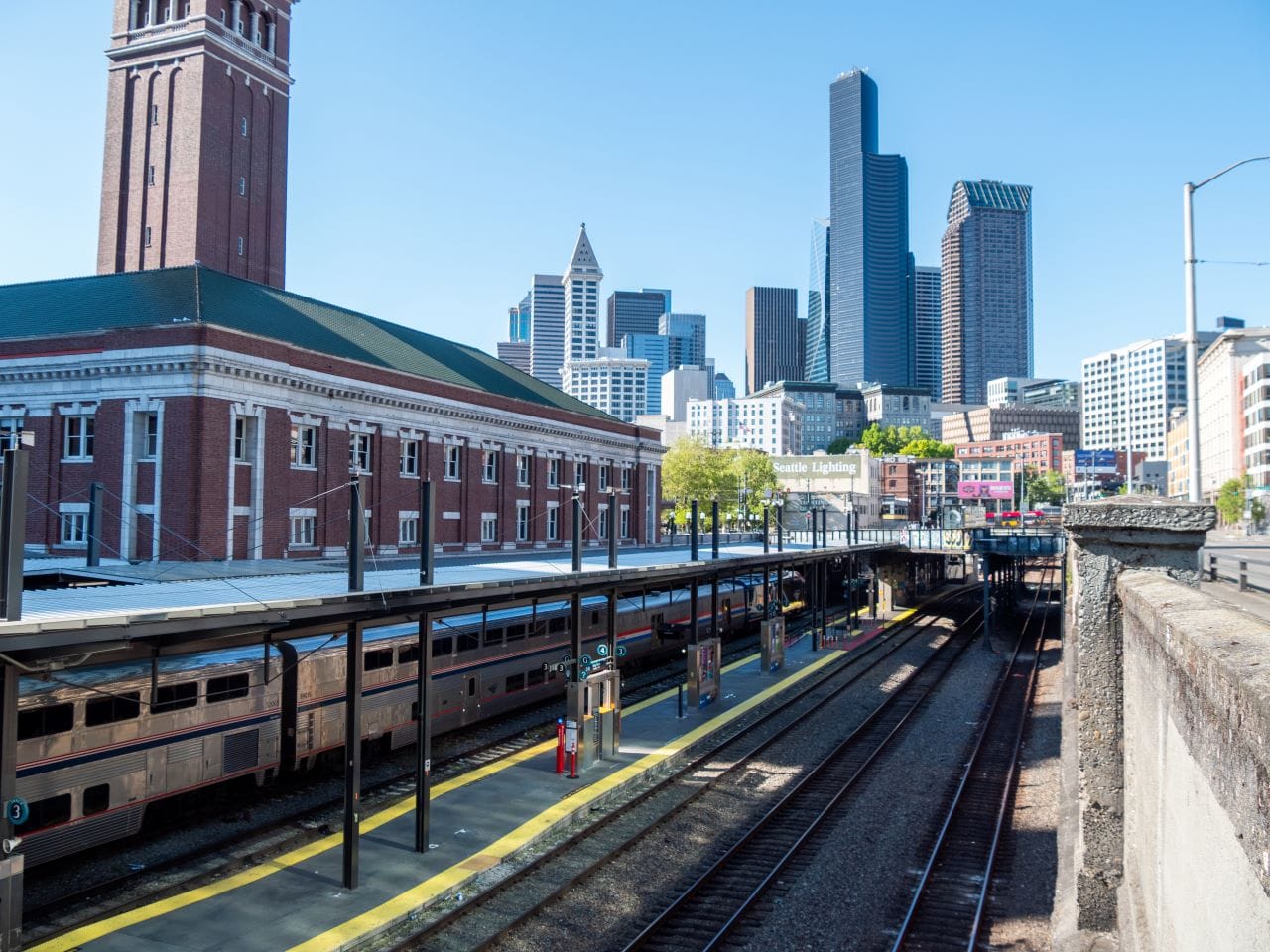
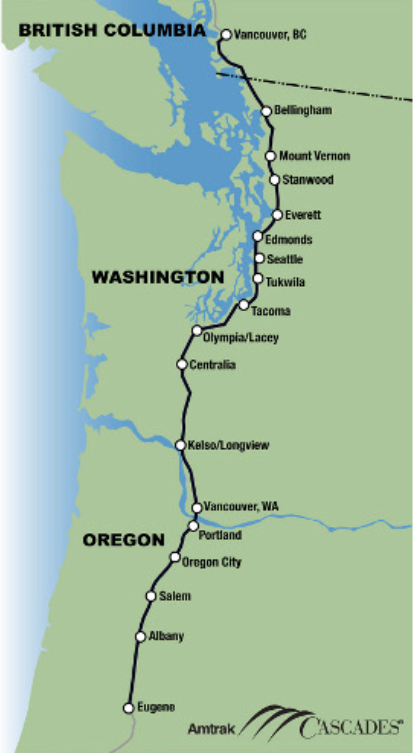
Imagine if we had reliable, frequent intercity passenger rail service along the Amtrak Cascades route serving Vancouver BC, Eugene, Oregon, and the many communities between. Further, imagine all day Sounder service along the entire Everett to Lakewood route.
A reliable, fast, and frequent, intercity regional rail network integrated with local transit would relieve highway and airport congestion for the most densely populated counties – Snohomish, King, Pierce, and Thurston. This would encourage compact, walkable land use patterns, bring economic development to town centers, and provide transportation equity to the 25-30% of Washingtonians who do not drive. Moreover, Sea-Tac International Airport attracts more than 50 million passengers annually, with many regional flights that could be served with passenger rail.
Investments are being made in transit, such as light rail, rapid ride buses and local transit buses. Integrating these systems with a reliable convenient rail system would leverage these considerable investments.
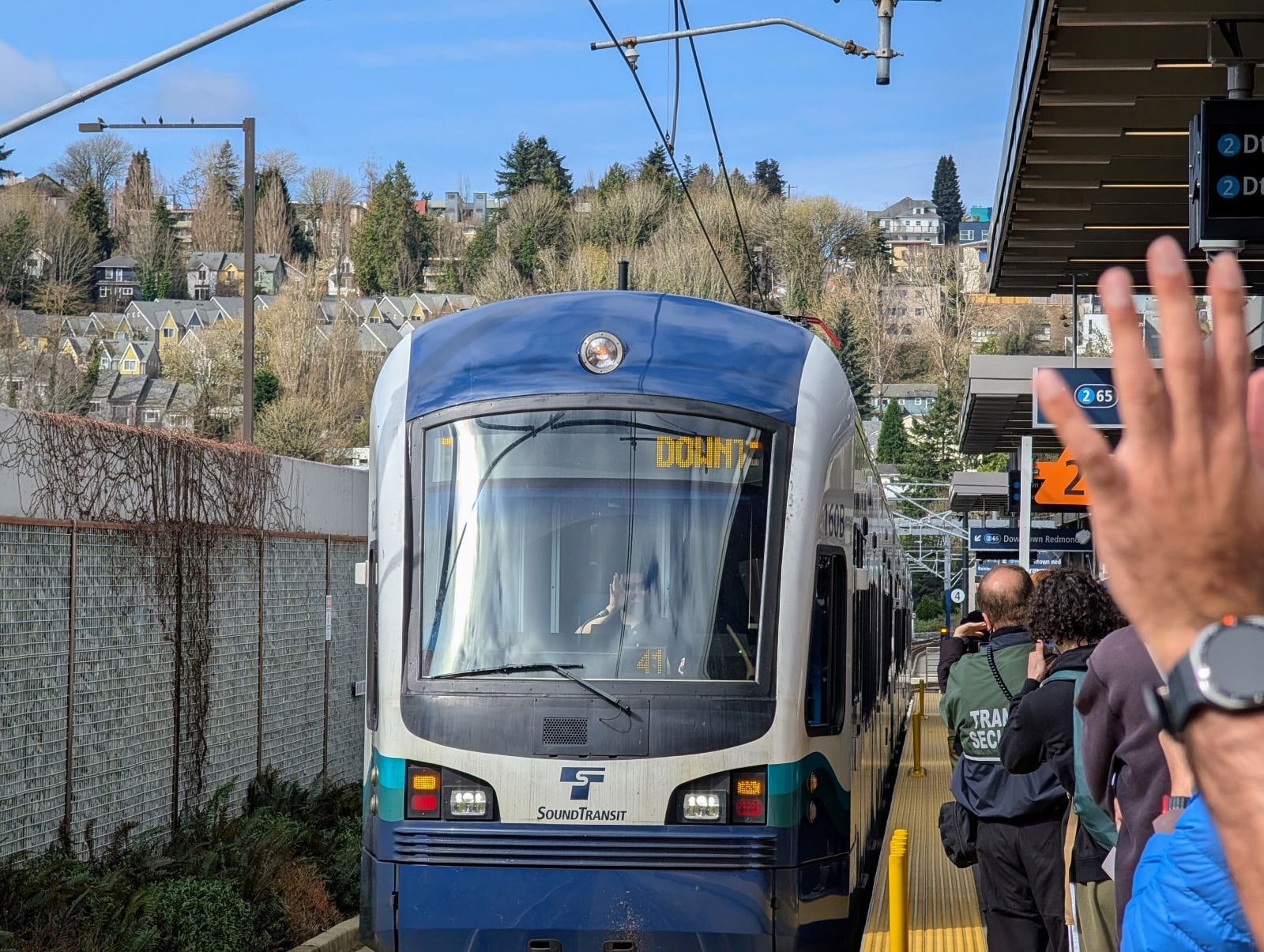
Most traffic still goes in and out of Seattle, with an especially pronounced amount of traffic passing north-south through downtown. Public transportation options for this north-south traffic are not as robust as they should be. Sound Transit’s Link 1 Line and 2 Line light rail provides frequent service between Lynnwood and Federal Way or Redmond, and the agency’s express buses help elsewhere, but options to cross larger distances in the region are limited.
The transfers between these transit services can leave much to be desired, given the limited frequencies on Amtrak and Sounder. All day Sounder trains and more frequent Amtrak service would open up regional rail to many more travelers and connections.
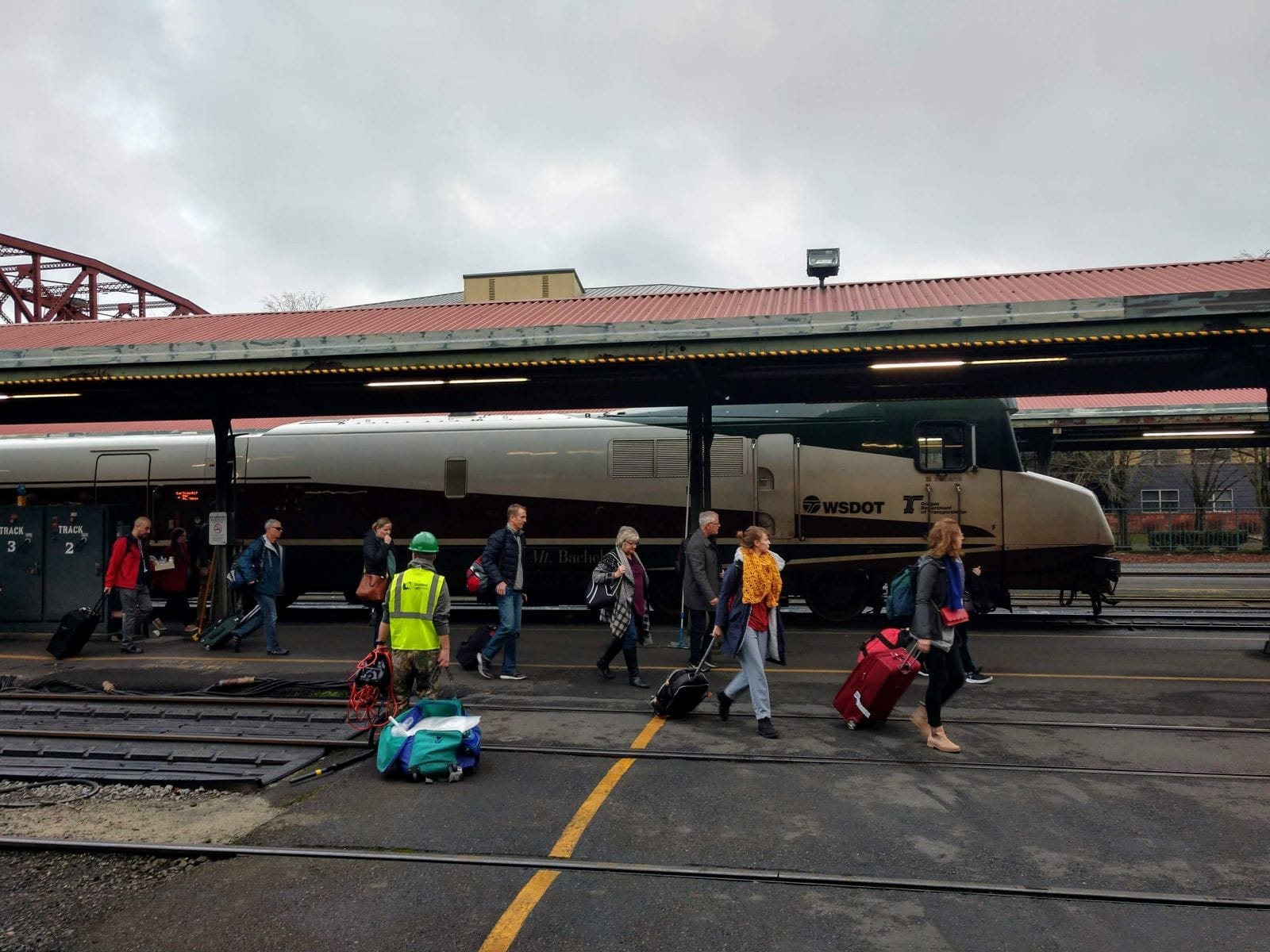
The Washington State Department of Transportation (WSDOT) is currently finalizing the 2025 State Rail Plan which includes some building blocks for an effective intercity rail network. At a March 12th open house WSDOT presented findings from the planning that includes all day Sounder commuter service and improved frequency and reliability for Amtrak Cascades.
Though the Rail Plan mentions these two key elements, it is not specific on projects to achieve goals for on time performance or greater frequency on Amtrak Cascades. The plan also needs to ambitiously emphasize shorter trip times. To achieve the shorter trip times, the state rail plan needs to emphasize decoupling freight and passenger use of shared tracks and include plans for 110 mph passenger only track. Earlier rail plans have included higher speed tracks.
The idea of including long stretches of passenger-only 110 mph track on the right of way poses the question; is it “feasible”? Feasibility is a relative term when thinking about infrastructure projects. Virtually anything can be built if there is a political will and a revenue source.
A feasibility study should detail cost, effort, result, and effects, leaving decision of feasibility to informed decision makers. The rail plan should lay out robust options for maximizing ridership, which requires travel times competitive with highway and air (considering city to city, not airport to airport).
The state of Virginia came to the conclusion that developing their intercity passenger rail system has significant positive economic and social impacts. Colorado is moving in the same direction of building out a passenger rail service.
Washington should also be committing to building excellence in rail as part of its transportation system. That requires a robust rail plan, not a piecemeal vision.
The 2026 legislative session missed opportunities to improve the Amtrak Cascades and enable more trips and greater reliability. State funds for three infrastructure projects ($12.2 million) were omitted from the final transportation budget negotiation. This is an unfortunate setback given the long lead time to seek and obtain federal matching funds and realize the projects. The $12.2 million state appropriation could have potentially resulted in an additional $48.8-$109.8 million in matching federal funds for Washington, under a typical 80% to 90% federal match scenario. Despite the tight budget session, these projects would have provided substantial improvements to both passenger and freight rail for a modest investment.
What can we all do to realize the vision of a robust intercity regional rail network? WSDOT is accepting public comments on the 2025 State Rail Plan until April 24. Take a few moments and write in your comments on the Engage page survey. Support items in the Rail Plan that are building blocks for a more frequent, faster, and reliable Amtrak Cascades service and encourage all day Sounder service that better connects north and south ends of the existing run.
Finally, ask your legislators to fund projects that separate freight trains from passenger trains on the right of way - especially at congested locations. Stress that the State Rail Plan needs to include dedicated “passenger only” track which can support 110 mph passenger trains. Over time, increased ridership will pay for these improvements, the region will have more efficient freight operations and travelers will have an attractive option to lanes and planes.
 Stephen Fesler
 Doug Trumm