After repeatedly speaking of her concerns about Seattle’s CCTV cameras on the campaign trail, Mayor Katie Wilson chose a middle path forward last week, pausing the Seattle Police Department’s (SPD’s) recent surveillance camera expansion pending an audit, but allowing some cameras to stay on.
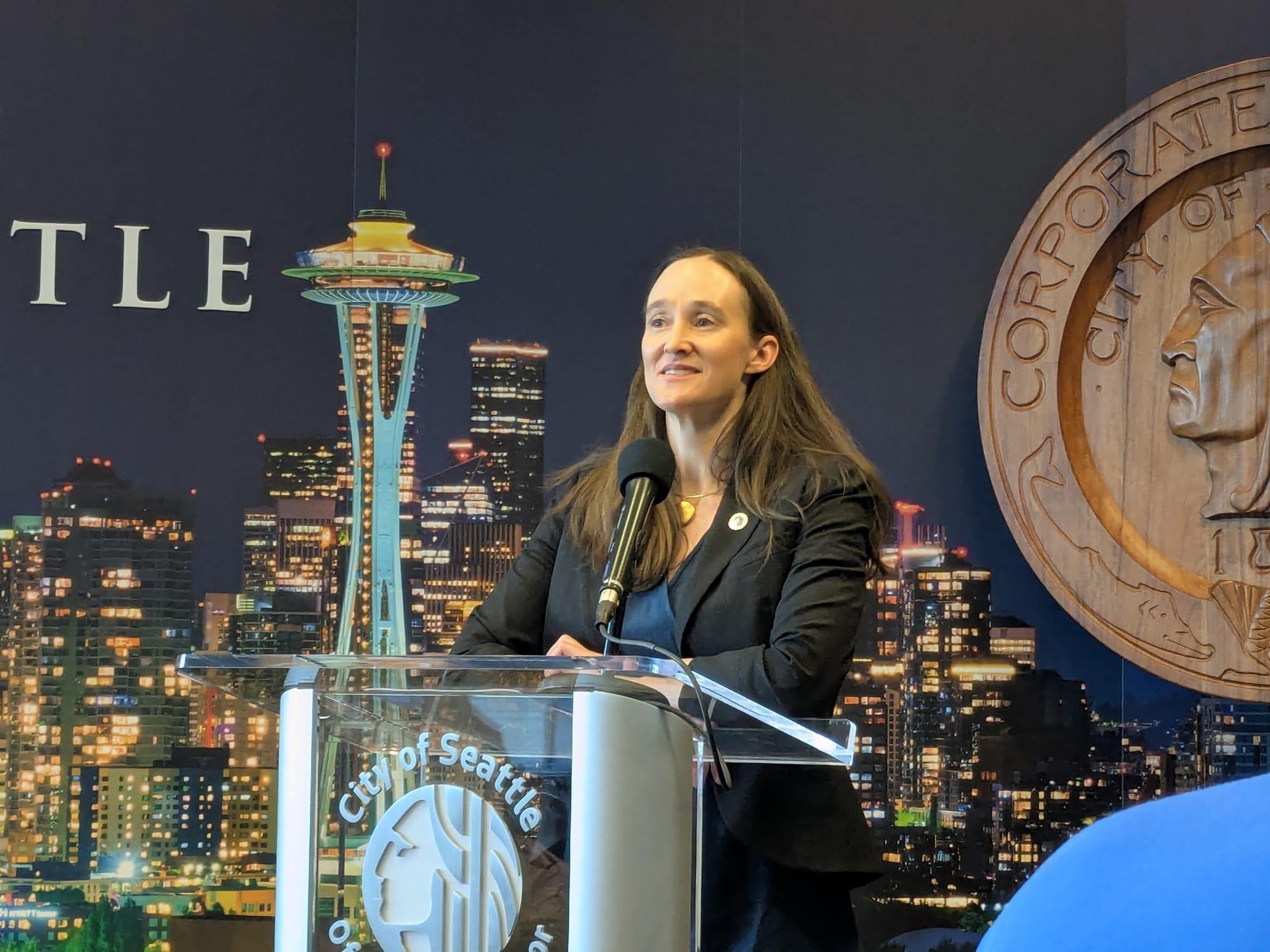
Walking a fine line, Wilson spoke to both the concerns and benefits of police surveillance.
“There’s no doubt that these cameras make it easier to solve some crimes, including serious ones like homicides, but also, cameras are not the one key to making our neighborhoods safe,” Wilson said. “And on the other hand, there are legitimate concerns about privacy, over-surveillance and potential misuse of surveillance technologies. But also, these cameras are not the primary threat to immigrants, trans people or people seeking reproductive health care in our country right now.”
While the cameras themselves may not be the primary threat, a number of immigrants and transgender people have been vocal in asking Wilson to turn off Seattle’s police surveillance network given the dangers they’re facing from the current federal administration. The MLK County Labor Council passed a resolution in February urging the City to turn off CCTV surveillance cameras, and volunteers and staffers from Wilson’s campaign have been circulating a letter demanding she keep her campaign promises regarding surveillance.
The Transit Riders Union, which Wilson co-founded and long led before running for mayor, recently sent a letter asking her to immediately take down Seattle’s surveillance infrastructure.
Supporters of surveillance in Seattle include the Downtown Seattle Association, SPD, and some parents of students at Rainier Beach High School, where two students were tragically shot and killed in January.
Discussion of Seattle’s surveillance pilot program began before Donald Trump won his second term as president, at which time there was still large opposition to the idea. The City’s Office of Civil Rights and the Community Surveillance Working Group both raised serious concerns about civil liberties and worsening racial disparities from using CCTV cameras.
Nevertheless, the Seattle City Council approved 62 CCTV cameras in the fall of 2024, to be placed in three neighborhoods: the downtown 3rd Avenue core, Aurora Avenue North, and the Chinatown-International District. SPD launched the cameras along with their real-time crime center last spring. Wilson will keep these cameras operational, with the exception of one camera with a view of a facility providing reproductive and gender-affirming health care.
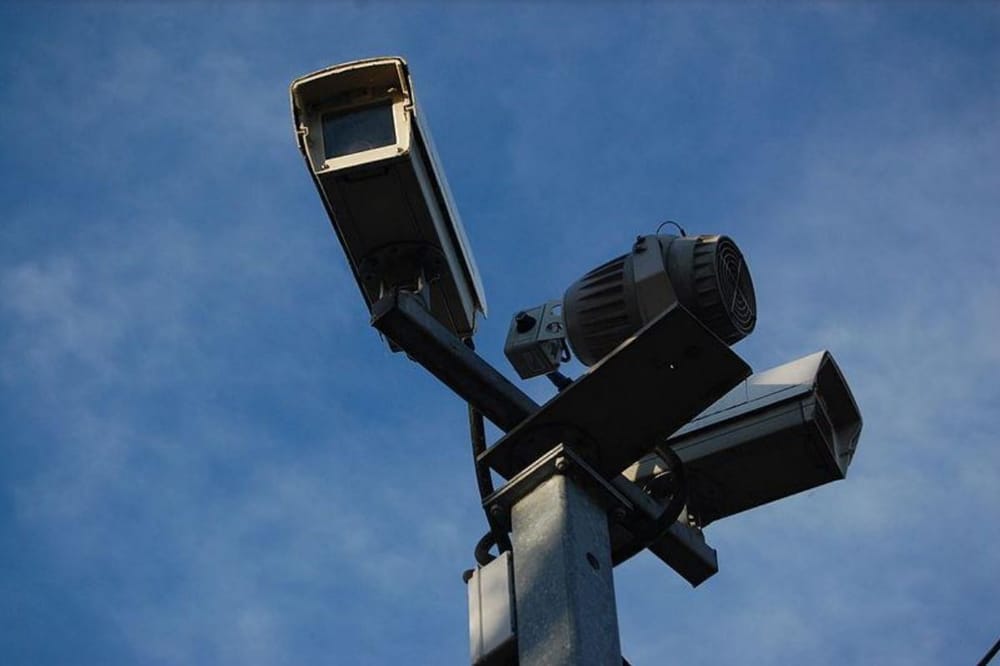
This exception has led some opponents to raise the question of whether there are other cameras currently surveilling locations that would place immigrants and transgender people at increased risk.
Wilson is partially pausing the CCTV expansion passed by council last fall, which was intended to add cameras to the Capitol Hill nightlife district, the Central District around Garfield High School, and the Stadium District in preparation for the World Cup.
All automated license plate readers, which are equipped in SPD patrol cars and a few parking enforcement vehicles, will be immediately turned off until Seattle’s version of the technology can be made compliant with the new state law passed this session.
Wilson’s plan
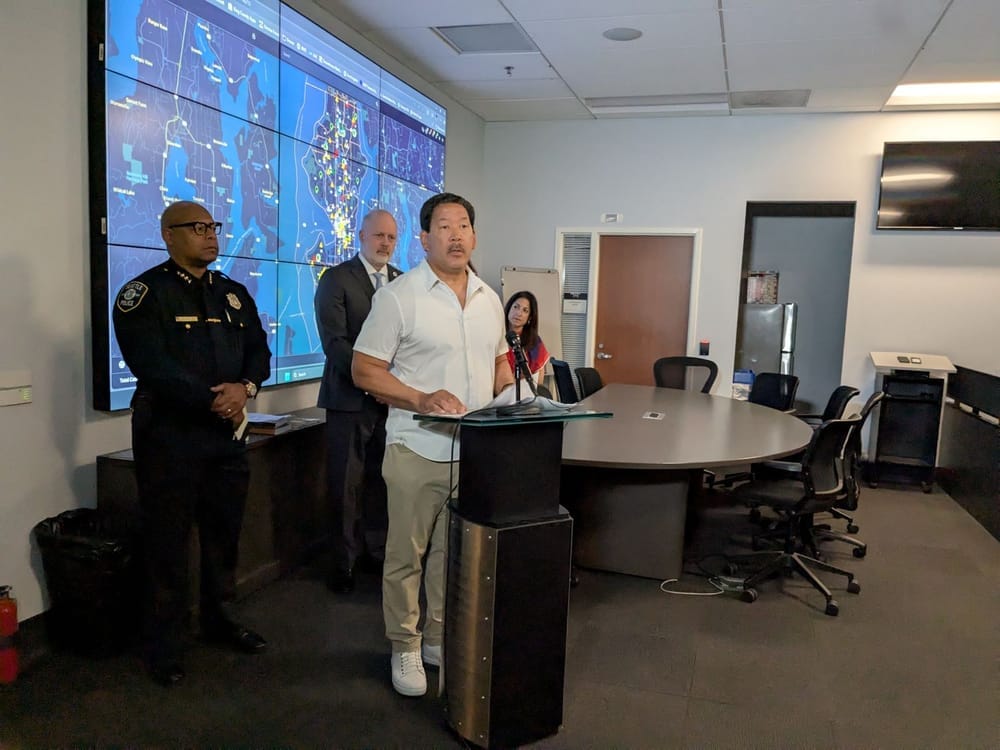
Before moving forward with the full CCTV expansion, Wilson wants to see the data. The City has contracted with New York University’s Policing Project to conduct a data governance and privacy audit focusing on SPD’s surveillance program’s potential harms to civil rights. The City has already contracted with the University of Pennsylvania to conduct an evaluation of the surveillance pilot, but its focus is designed to be on investigative outcomes and police operations.
The proposed audit from NYU’s Policing Project appears to fall short of the rigorous technical forensic audit some privacy advocates have been asking for.
SPD Chief Shon Barnes recently joined the Policing Project’s advisory board, raising questions about the impartiality of the contractor and the selection process. Barnes has been an outspoken proponent of surveillance tech, and he and his team pushed for the latest program expansion.
Potential ethical conflicts go beyond Barnes. Axon is Seattle’s vendor for its CCTV cameras and license plate readers. The Policing Project received money from Axon as recently as 2022, and the Policing Project’s founder and faculty director Barry Friedman served as an original member of Axon’s AI Ethics Board, although he left in 2022 after Axon announced it was developing armed drones.
Former SPD Chief Carmen Best was also a member of the AI Ethics Board at that time, and The Stranger reported that she chose not to resign.
The Policing Project currently receives funding from the right-wing Charles Koch Foundation and the Cato Institute, a libertarian thinktank, among others.
When asked why the City of Seattle was contracting with Axon, which has lucrative contracts with U.S. Immigrations and Customs Enforcement (ICE), Wilson suggested it was impossible for the City to avoid such entanglements given the nature of the military industrial complex.
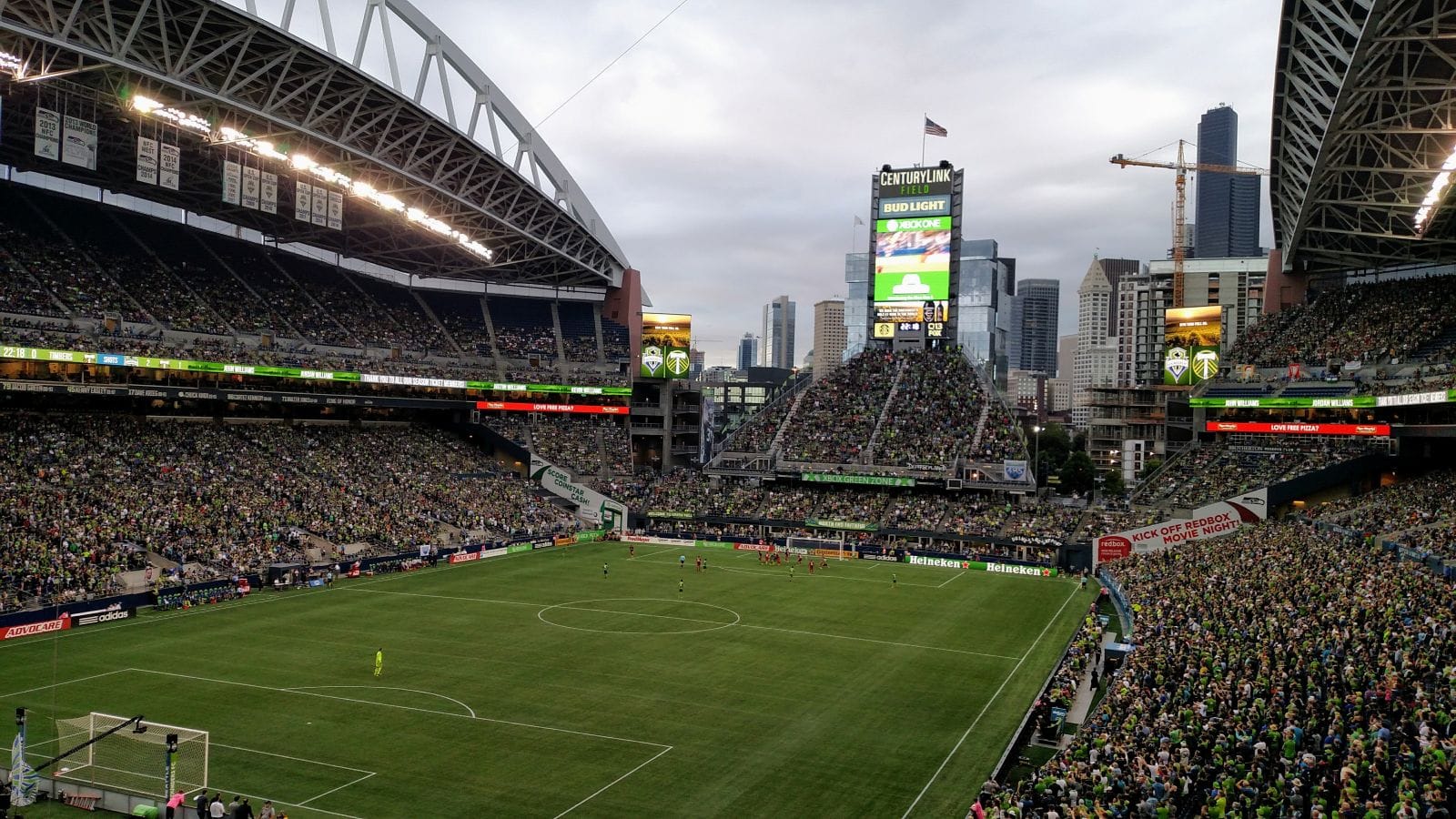
Wilson is still going forward with 26 new cameras in the Stadium District due to the incipient World Cup games being hosted this summer. Wilson says the cameras will remain turned off unless the City decides there is a “credible threat” that warrants turning them on, which is to be determined by SPD.
Real Change reported that In Seattle in 2020, the FBI manufactured a threat in order to justify a certain class of operations, showing a possible weakness in the policy of law enforcement using a “credible threat” to turn on the cameras.
The future of these Stadium District cameras, like those in Capitol Hill and the Central District, will be determined by the findings from the audit and evaluation.
Wilson committed to turning off all of SPD’s cameras should ICE institute an enforcement surge in Seattle similar to that in Minneapolis this winter. A recent University of Washington study found a steady rise in local ICE activity in recent months – albeit not to Minneapolis levels yet.
Both Councilmembers Bob Kettle and Maritza Rivera released statements following Wilson’s announcement emphasizing the importance of completing the data privacy audit prior to the World Cup this summer. Given that Wilson’s plan involves going forward with the installation of the Stadium District cameras, the councilmembers may be hoping the audit provides an all-clear for the cameras such that Wilson might decide to turn them on and be recording 24/7.
Wilson said she expected the audit to be completed within the next few months, which could place its delivery right around the time of the first World Cup game being played in Seattle on June 15.
The license plate reader question
The license plate reader bill passed in Olympia this legislative session did establish some general guardrails and privacy protections, but it fell short of many privacy advocates’ goals.
While the bill originally had a data retention time of 72 hours, known as a “hotlist-only model,” the final bill passed with the significantly longer retention time of 21 days. This higher retention time effectively converts the use of license plate readers from a tool to check license plates against hotlists of vehicles the police are interested in finding because of possible criminal involvement to a dragnet surveillance effort that allows the police to build a clear picture of drivers’ regular routines and go back in time after a crime is committed by retaining the data of presumably innocent people.
The bill closes some data access pathways to ICE and other federal enforcement entities, but some potential backdoors and lenient rules around vendor use of data means license plate reader data in Washington is still far from secure. The bill also passed without additional funding for enforcement.
License plate readers will no longer be allowed to be used near the following sensitive locations: facilities that provide protected health care, facilities conducting immigration matters, elementary and secondary schools, places of worship, courts, and food banks.
The bill exempts license plate reader footage–but not its audit trail data–from public disclosure requests, which takes away a helpful accountability tool while adding further protection to stalking victims. Several Washington cities that temporarily paused their license plate readers because of the public disclosure privacy risk will be considering whether to turn the readers back on.
Searches in license plate reader data are also allowed on vehicle make, model, and color, in spite of the inaccuracy of this data and its ability to be used as a profiling tool or misused by individual officers.
In the House, Rep. Brianna Thomas (D-34th, West Seattle) was the only Democrat to vote against the bill.
“APLRs scan and store data on millions of drivers every day over time that creates a detailed account of where people live, where they work, where they recreate, where they attend houses of worship and seek medical care,” Thomas said on the floor. “When systems operate at that scale, policy choices about retention, about access and sharing become incredibly consequential. What concerns me today is that the safeguards in this bill do not go far enough to match the power of the technology that we are considering. The result is that we risk normalizing operating as people, as Washingtonians, under a surveillance state.”
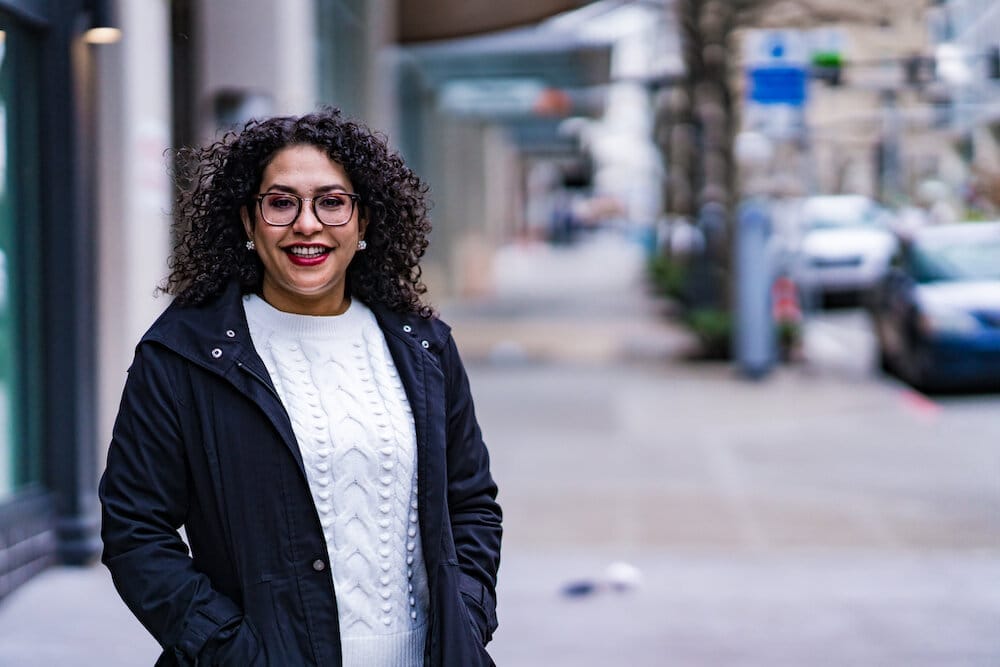
In the Senate, Senator Vandana Slatter (D-48th, Kirkland) was the only Democrat who did not vote for the bill, although she did vote in favor of its concurrence with the House.
With the passage of this bill, cities that have paused their surveillance programs must decide on their next steps
While Redmond Police Department’s Chief Darrell Lowe has recommended the City resume use of its cameras, the Redmond City Council is taking more time to study the issue while the program is on pause. Lynnwood’s City Council voted to end their license plate reader program altogether. Mountlake Terrace terminated its contract before the cameras were even installed.
A motion to turn off the license plate readers in Mount Vernon until the end of their contract this November failed on a close 3-4 vote.
More Washington cities can be expected to take up this matter shortly.
Seattle’s license plate reader issue
Many license plate readers are stationary, being affixed to poles, but Seattle's license plate readers are affixed to SPD vehicles: mostly patrol cars and also six parking enforcement vehicles. The mobile nature of Seattle's license plate readers creates a challenge for complying with the new bill, since license plate readers are no longer allowed to be used near certain sensitive locations.
Lee Hunt, SPD’s Executive Director of Crime and Community Harm Reduction, said SPD is currently working with Axon to develop geo-fencing that causes its license plate readers to turn off when in proximity to the specified sensitive locations. Hunt said SPD would be using business license records to determine which locations qualify.
Hunt did not provide an estimate of when SPD would be able to turn the license plate readers back on.
Wilson seemed convinced that surveillance cameras don’t prevent crimes but that they do help solve them, citing the many anecdotes SPD has shared with her. The impact of cameras on clearance rates hasn’t been widely studied, with those studies that exist showing mixed results.
“I think that if the audit comes back and says everything's totally secure, we're not at all worried about this data getting into the hands of the federal government, I think likely my decision at that point would be to move forward with the expansion of the pilot,” Wilson said.
Wilson will be holding a public forum on surveillance at Town Hall Seattle on Friday, March 27 at 6pm.
 Amy Sundberg