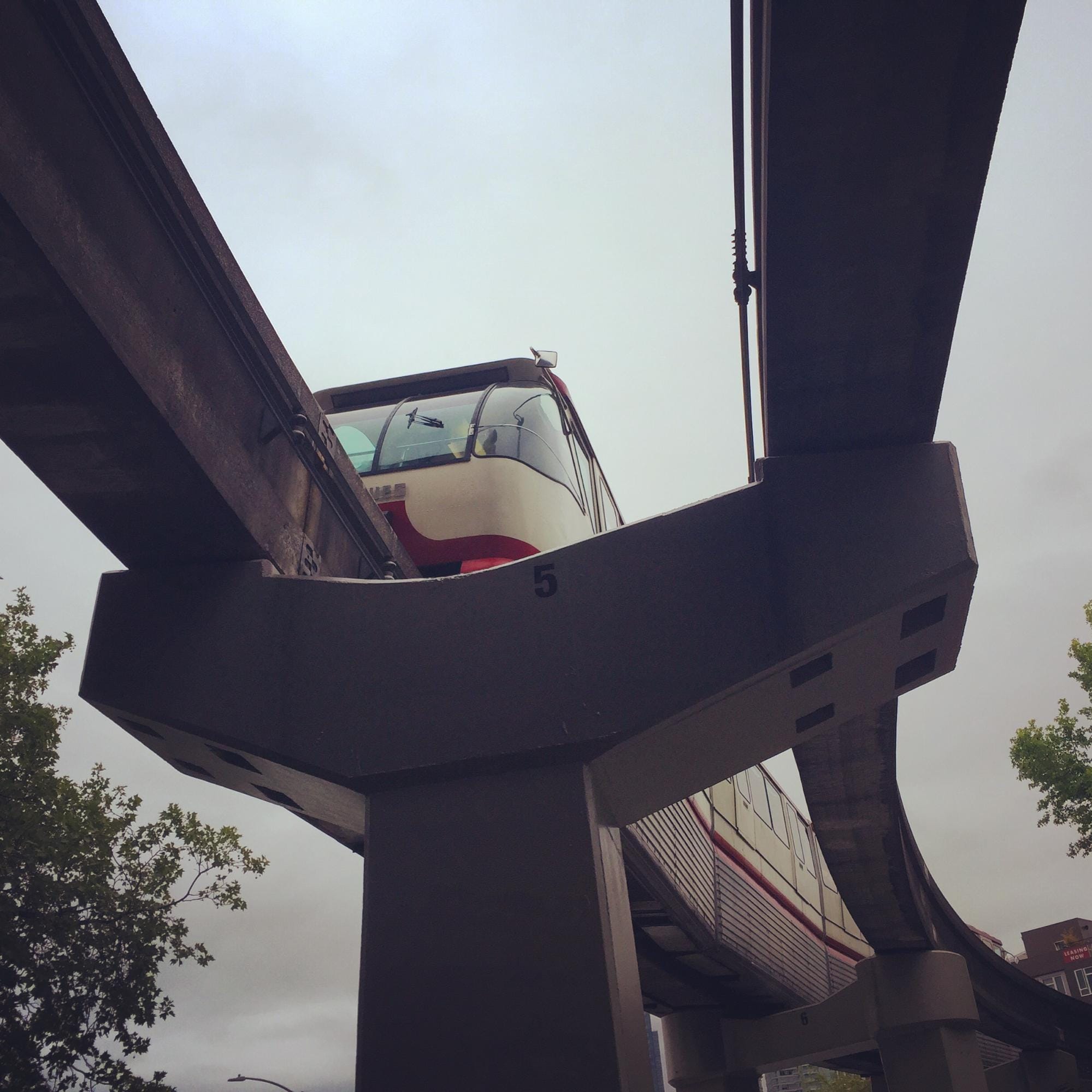
Seattle’s monorail operator is ending free transfers to other transit services for riders who rely upon ORCA E-purse beginning on January 1. Seattle Monorail Services estimates the transfer policy change will affect less than 18% of monorail riders, since most rely on other payment methods or benefit from free-ride promotions tied to event tickets.
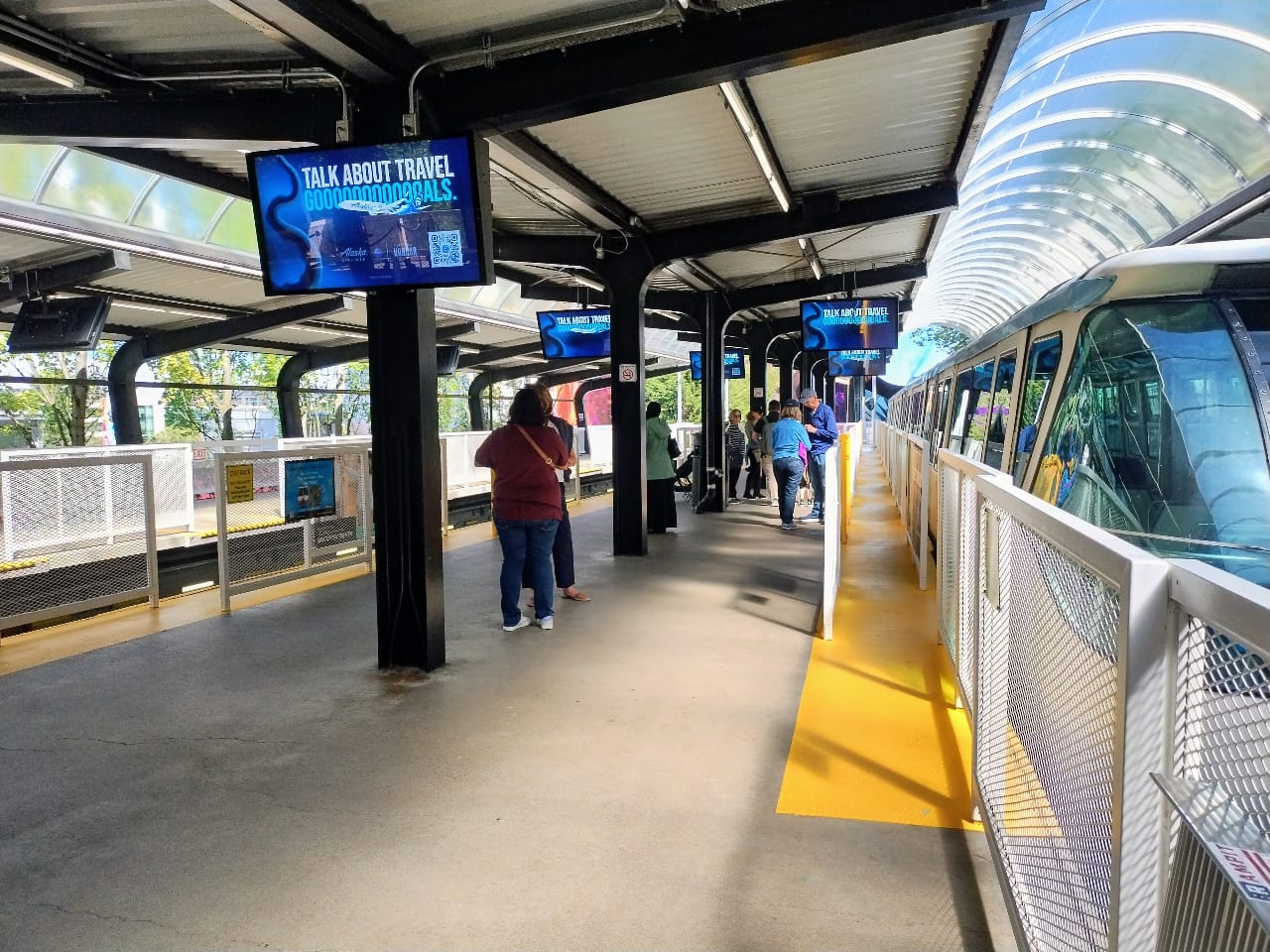
Many monorail trips do involve transfers to other transit services, since Seattle’s monorail line is only 0.9 miles long with just two stops.
Under current policy, the monorail provides transfers between buses and light rail for free within a two-hour window, crediting riders up to the initial fare price paid. So, if a rider paid a regular $3.00 adult fare prior to transferring to the monorail, ORCA readers at monorail stations credit the initial $3.00 fare as a free transfer and then deduct an additional $1.00 from the user’s ORCA E-purse since the standard adult monorail fare is $4.00.
Conversely, the new policy will charge the monorail’s fare separately for most ORCA E-purse users, meaning that a typical combined bus or light rail and monorail trip will cost $7.00 instead of $4.00 for regular adults.
That principle will also apply to ORCA LIFT and Regional Reduced Fare Permit users. Since those pass types are charged $1.00 for most buses and light rail, they will be subject to half the cost of the regular adult fare on the monorail, meaning that they will pay an additional $2.00 to transfer for a total of $3.00. This is similar to Washington State Ferries and Kitsap Transit’s Fast Ferries, which don’t accept free transfers when using ORCA.
The monorail is unique among public transit providers in the region. Owned by the City of Seattle, it is operated by a private contracted company, known as Seattle Monorail Services, LLC, and required by law to operate without direct public subsidy. Therefore, the City generally doesn’t contribute funding to ongoing operations and capital expenses, beyond pass-through grants from third parties, and receives a variety of concessions payments from the company.
As part of contract terms, the company will continue to operate the monorail at least through 2034.
For over 50 years, the monorail principally operated as a tourist attraction and vestige of the 1962 World’s Fair rather than a bona fide part of the regional transit system. Though locals could buy special fare media for monthly passes prior to the monorail joining ORCA.
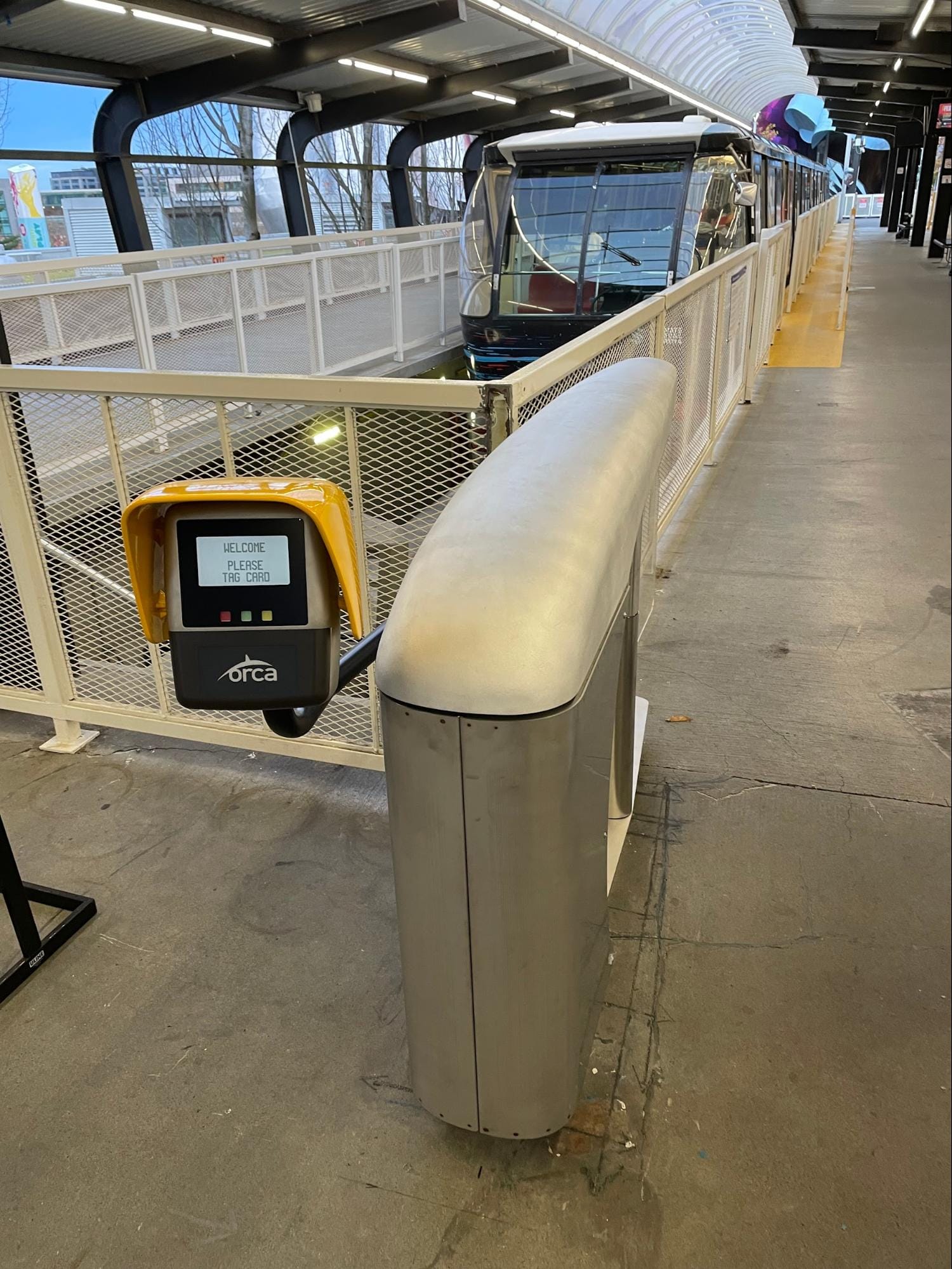
At the behest of Mayor Ed Murray, the Seattle Department of Transportation conducted a year-long evaluation to study potential integration of the monorail with the ORCA pod. In 2017, the department found that doing so would be a net positive by more than doubling ridership to 346,000 rides per year and improve finances such that the monorail could break even or be modestly profitable.
As a result, the Murray Administration moved forward with integration, paving the way for the monorail to accept ORCA as a form of fare payment starting in late 2019.
At the time of Murray’s decision, it wasn’t yet fully guaranteed that the then-Seattle Center Coliseum (formerly Key Arena) would be transformed into the Climate Pledge Arena of today, as a final deal hadn’t yet been inked. But, the arena redevelopment did go forward and open in 2021, and the impact on the monorail has been substantial.
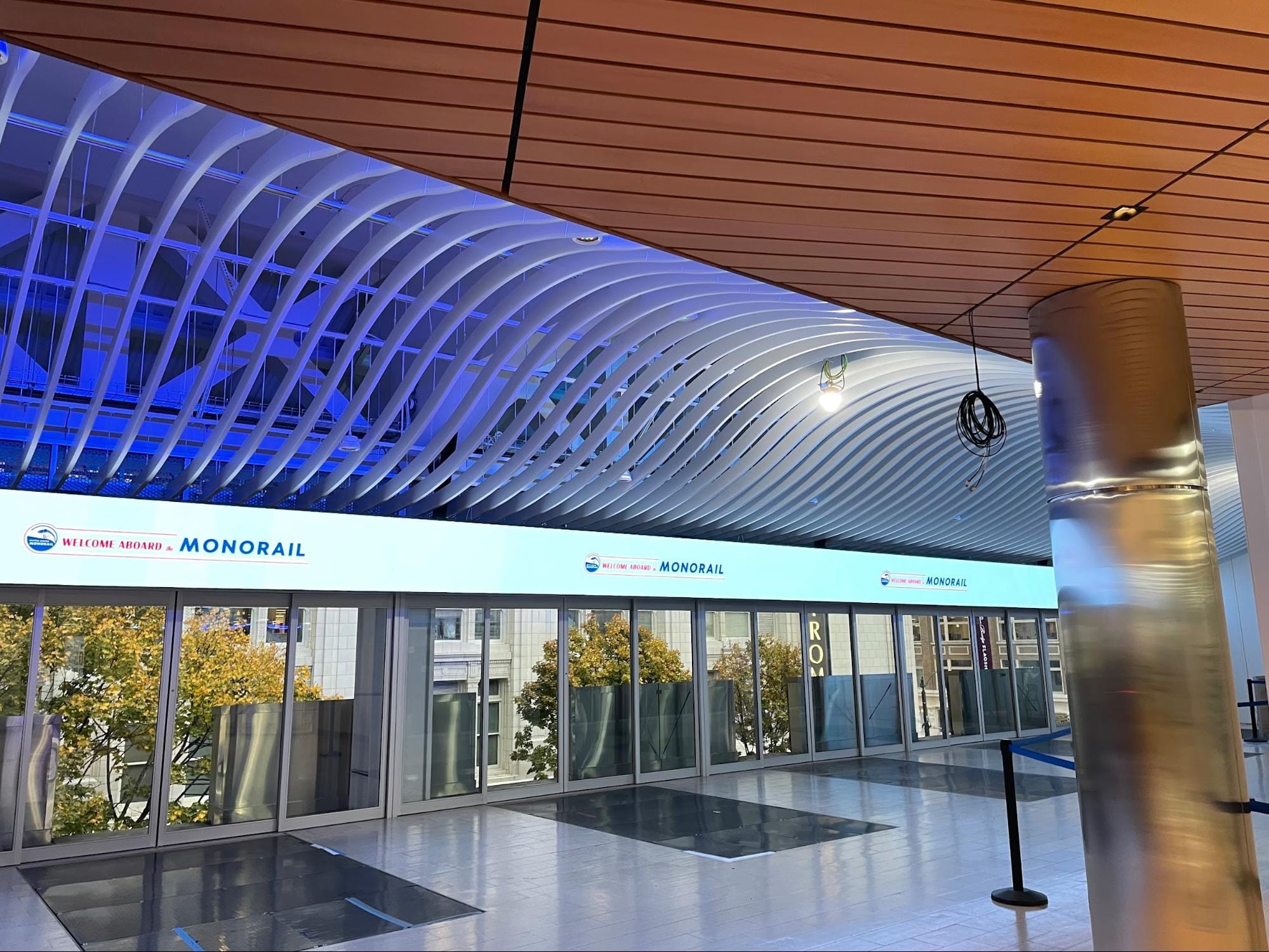
The arena transportation plan delivered station improvements for monorail riders, with a broader Seattle Center Station overhaul in the works thanks to a $15 million federal grant. Plus, many tickets to arena events, such as Kraken hockey games, come with free monorail rides.
The arena boost has helped grow ridership beyond the City’s expectations, with the monorail clocking in with over 2.1 million riders last year, according to the Federal Transit Administration.
Despite that high volume of riders, the monorail still has substantial operating costs, which averaged about $2.80 per rider in 2024. Fares generated about $6.3 million in revenue during the year, while operations costs were slightly above $6.04 million — a delta of about $250,000. That’s a better financial position than in years past, but a relatively narrow surplus for an aging system getting much heavier use.
That’s why free ORCA transfers are a challenge for the monorail. Transfer fares are sliced up between operators based upon a complicated fare-sharing schedule, meaning that only a portion of a base fare at retail prices goes to the monorail operator.
The policy change for ORCA E-purse users is undoubtedly a sticker shock, and could be a bitter pill for regular monorail riders who use that ORCA fare payment option. However, the policy change doesn’t affect ORCA users who have a valid ORCA Youth Card, ORCA Subsidized Annual Pass, ORCA PugetPass, and ORCA Regional Day Pass (which only requires a typical $1.00 ORCA E-purse payment to cover the fare difference) — the latter of which may the best alternative for many riders to only paying by E-purse.
The policy change technically affects ORCA Business Passport, too, but it’s only the sponsors of those passes — usually companies — that may eventually notice a marginal difference in annual bulk costs for the Business Passport product due to monorail fares being charged separately rather than as a free transfer. Business Passport products are offered to businesses at a fraction of the retail price of comparable ORCA PugetPasses and generally cover unlimited free rides to the pass user for nearly all transit services in the region. Ultimately, ORCA Business Passport users will continue to experience free travel on the monorail even if transfers are technically registered on the ORCA pod’s backend system as a standalone fare paying trip for the purposes of reimbursement.
This fare policy change is the second fare adjustment that monorail has made in one year. Last January, fares were increased across the board, in accordance with the City-monorail contract which stipulates inflationary fare increases about every three years. Regular adult fares went up 50 cents to a flat $4.00 while reduced fare and pass categories went up 25 cents, including youth without ORCA Youth Passes.