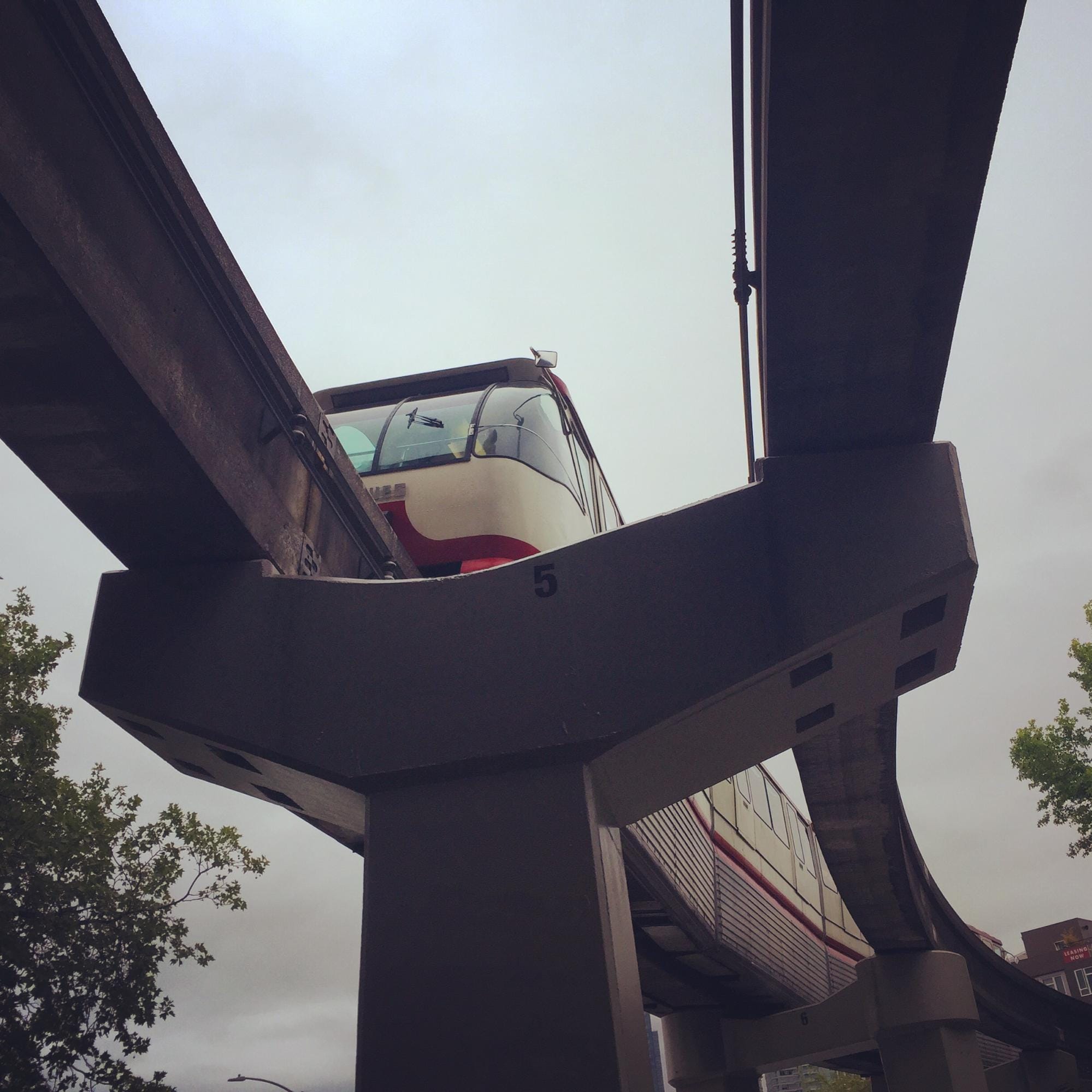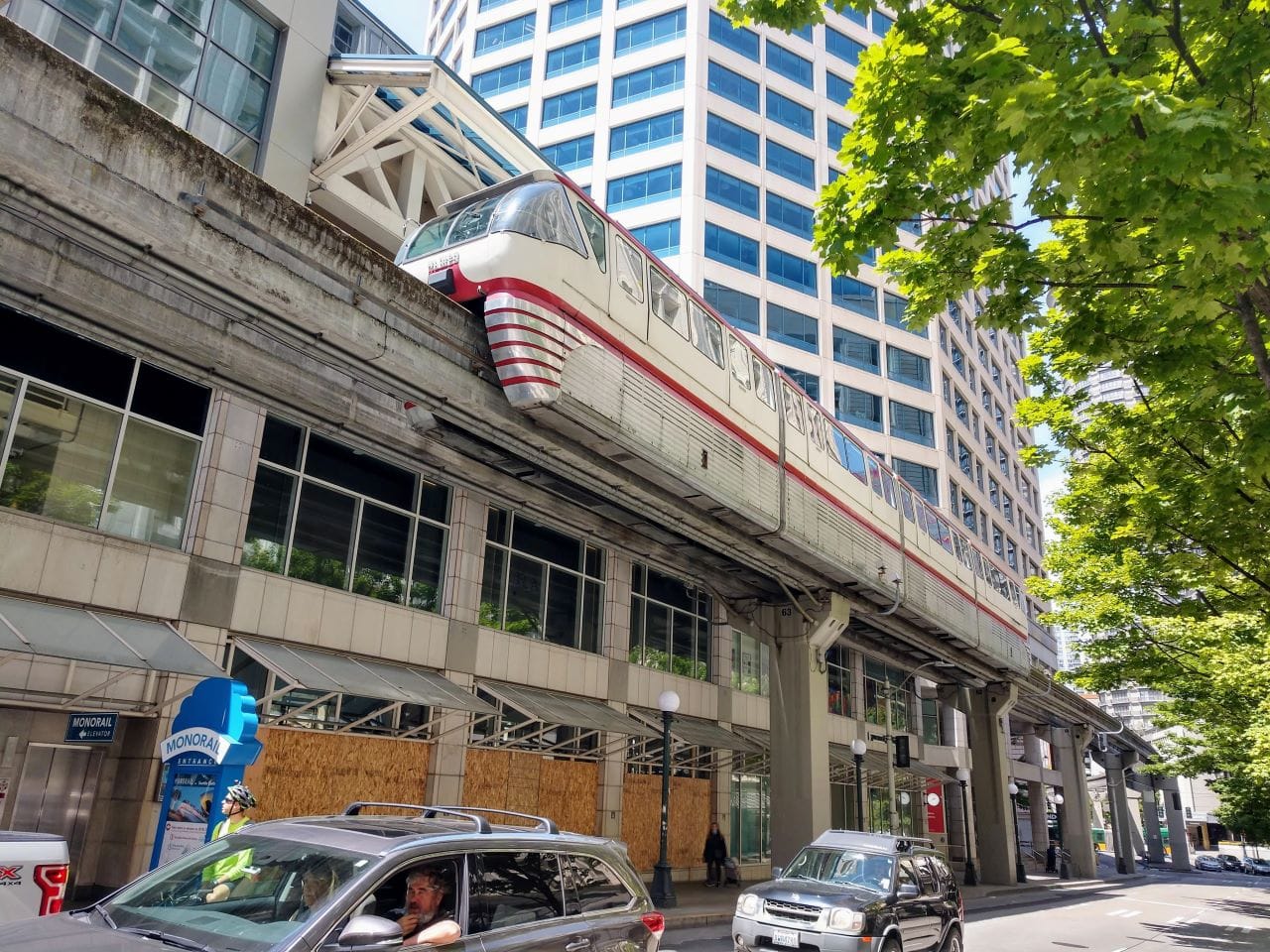
Seattle landmarks are woven into the city’s identity: the Space Needle, Gas Works Park, Pike Place Market, Humpy the Salmon. They’re playful, iconic, and accessible to locals and visitors alike. The monorail should belong in that same category. It is a piece of transportation infrastructure history that helps residents move through the city and remark on times gone by. Instead, it is becoming a premium attraction aimed at visitors, rather than a practical option for everyday riders.
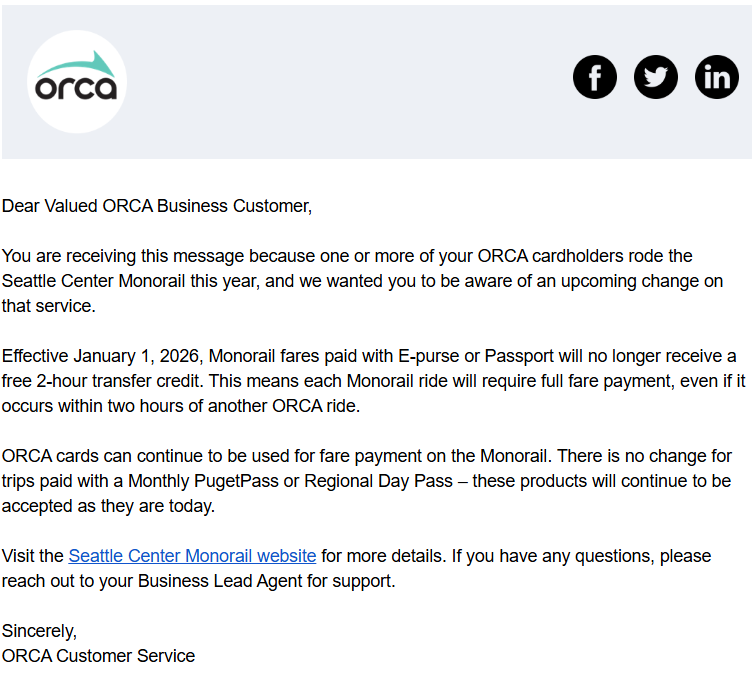
Fresh off hiking fares on the nearly-one-mile-long monorail to $4.00, Seattle Monorail Services is getting rid of transfer credits to other transit services in a blow to riders. In early December, ORCA informed riders that starting January 1, 2026, monorail fares paid with ORCA E-purse will no longer receive the two-hour transfer credit. Every ride will require full payment, even if the rider tapped onto another service minutes earlier.
For transit users who rely on transfers to move through the city, this is a step backward. It is also a policy decision that treats the monorail as an exception to regional transit norms — or perhaps not a service intended for use by locals, at all.
Taking the 1 Line from Lynnwood and transferring to the monorail to attend Pride, Seattle Eats, or any number of other events in Seattle Center just jumped from $4 per person to $7 per person. Fortunately, many Climate Pledge Arena events come with monorail cost bundled in the ticket cost.
History of the Seattle Monorail
Seattle’s monorail began as a showpiece, built in 1962 for the Century 21 World’s Fair. The idea wasn’t to serve commuters, but rather to dazzle visitors and move crowds between downtown and the fairgrounds. For more dazzling during the World’s Fair, Seattle Center had rollercoasters, which I, for one, am in favor of bringing back.
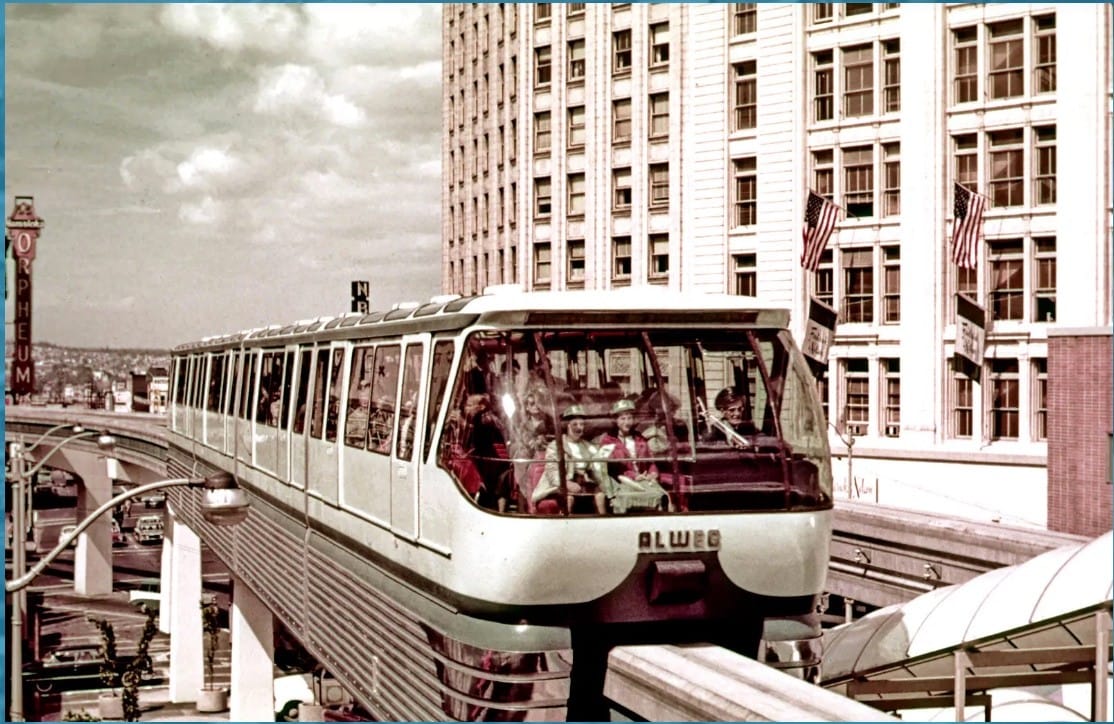
The monorail system worked as millions rode it in its first year, and the sleek elevated trains helped cement the city’s Jet Age identity. But the system was never expanded, and the short two-stop alignment was left behind as a novelty once the fair ended.
Seattle actually tried to scale that vision into real transit. In 1968 and 1970, voters were asked to approve the Forward Thrust plan, a regional rapid transit system combining tunnels, elevated lines, and stations across the city. Both measures earned a majority, but Washington law required 60% voter approval to issue bonds. The transit proposals failed, and the federal funds earmarked for Seattle were redirected to Atlanta (where only a simple 50% majority vote was required), funds that ultimately seeded MARTA.
Meanwhile, Seattle spent decades without rapid transit, and the monorail became a relic of a future that never materialized. Fortunately, Seattle eventually invested in light rail and continues to do so despite financial hurdles.
But before light rail buildout, Seattle made one more attempt to turn the monorail into a network. From the late 1990s through the mid-2000s, voters backed the Seattle Popular Monorail Authority, which pursued the elevated “Green Line” from Ballard through Downtown to West Seattle. The citizen-led program struggled with escalating costs, uncertain financing models, and political backlash.
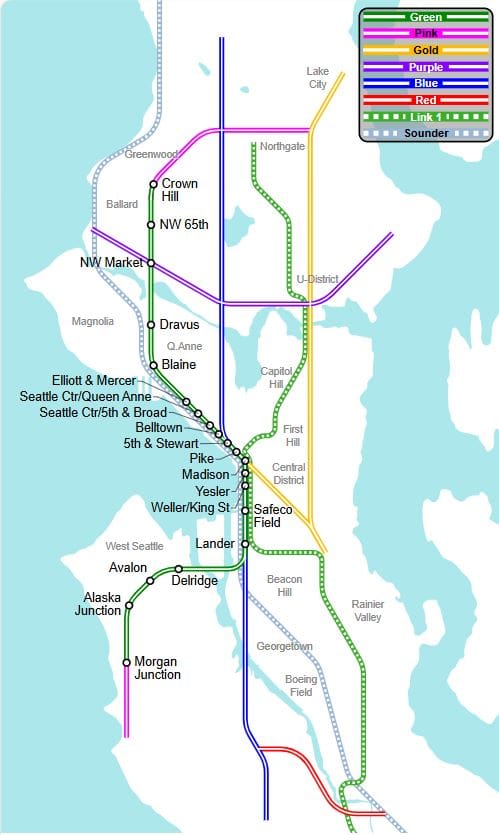
After five public votes, the project was dissolved in 2005 without breaking ground. What remained was the original 0.9-mile segment. Still iconic, still beloved by tourists, but functionally unchanged since the Eisenhower era.
Recent fare hike
In 2024, the City and the contracted operator of the monorail announced another round of fare increases. Adult fares rose from $3.50 to $4.00, a 14% jump in a single adjustment.
The monorail fare hike was much steeper than those on other transit services in the region. King County Metro buses moved from $2.75 to $3.00, a 9% increase. Sound Transit’s Link light rail standardized fares at $3.00 regardless of trip distance, in a win for long-distance commuters. Even in larger cities with higher living costs, like New York and San Francisco, transit fares remain lower at around $2.85–$2.90 for metro service. The monorail is now one of the most expensive local transit rides per mile in the country.
For many riders, fare increases alone would be frustrating but manageable. Seattle transit often requires combining services: a bus from a neighborhood, a train downtown, then the monorail to a shift at Seattle Center or an event at Climate Pledge Arena. The regional ORCA card system has long made this a possibility. Riders are given a two-hour transfer window so multiple trips are counted as part of the same journey rather than priced separately.
That saving grace is about to end with the end of monorail transfer credits in 2026.
The monorail has always been an unusual piece of infrastructure. The city owns the physical system, but operations are handled by a private contractor. That arrangement gives the operator strong incentives to raise revenue, while riders are left without the protections and policies that apply to publicly-run transit service.
The argument for ending transfer credits is that monorail operating costs have risen, and maintenance is essential to preserving a historic system. That is a reasonable concern. Transit infrastructure requires investment, but charging riders twice within two hours, once for a bus or train and again for the monorail, does not preserve the system; it discourages the very people who use it most consistently. The monorail should not be the transfer exception.
Ridership rebound
“But Sam hardly anyone takes the monorail anyway. Why does it matter?” I hear you say. Despite its short route and just two stops, the monorail sees real usage. The Seattle Times reported that the monorail hit its highest ridership in over a decade in early 2023. Buoyed by Seattle Kraken hockey fans, the monorail recorded 533,000 rides in the first quarter of 2023, 150,000 more than during the same period in 2022, and over 100,000 more than in the same four months of 2019. That’s about 4,000 rides per day.
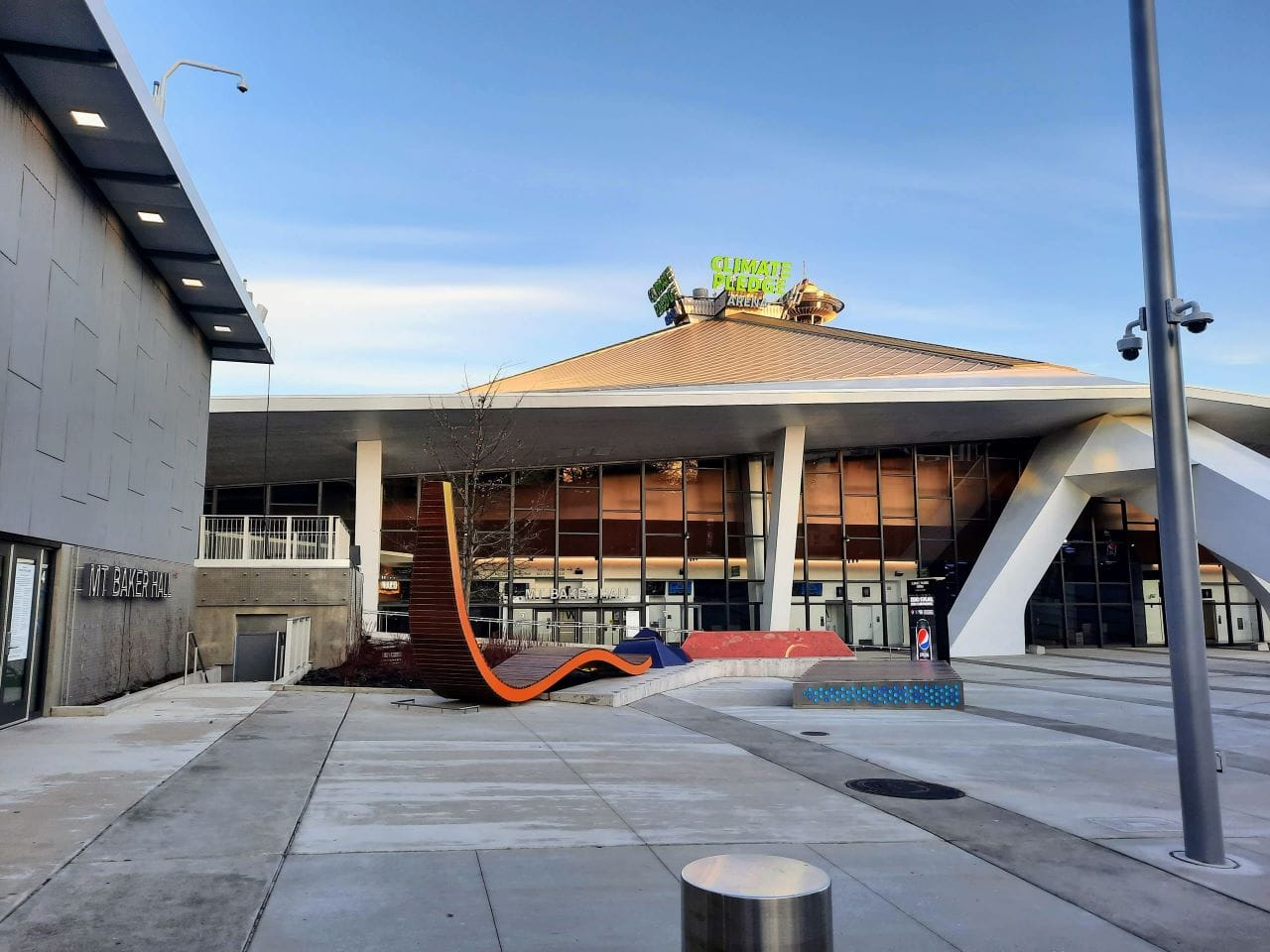
In 2023, the monorail carried nearly 2.1 million passengers and in 2024 approached 2.2 million trips, offering a strong indication that, given the right circumstances, the monorail serves a concrete transit need, not just occasional tourists.
Admittedly, other transit lines get far more ridership. In 2024, the region’s six ORCA transit agencies delivered about 151 million trips, up from roughly 134 million in 2023, a 12% increase. Within that total, Sound Transit alone logged 41.5 million trips in 2024, up by more than 4 million from 2023 (about an 11% year-over-year increase).
The Link light rail system operated by Sound Transit carried 30.8 million passengers in 2024 and averaged about 90,050 weekday riders system-wide. Recent months have seen ridership climb even higher: as of May 2025, Link weekday boardings exceeded 112,000, a 23% increase over May 2024.
For the monorail, much of that boost came from event traffic. With the arrival of the Seattle Kraken hockey franchise and the rebound in concert and arena events at Climate Pledge Arena after the 2020 pandemic, a notable portion of fans used the monorail (or other transit) to avoid heavy traffic and gridlock around Seattle Center. Now, with a new Professional Women’s Hockey League hockey team and the FIFA World Cup on the horizon the entire city’s infrastructure needs to be ready, with transit running at peak efficiency to handle the load. Mega events act as a canary in a coal mine, stress testing our transportation network.
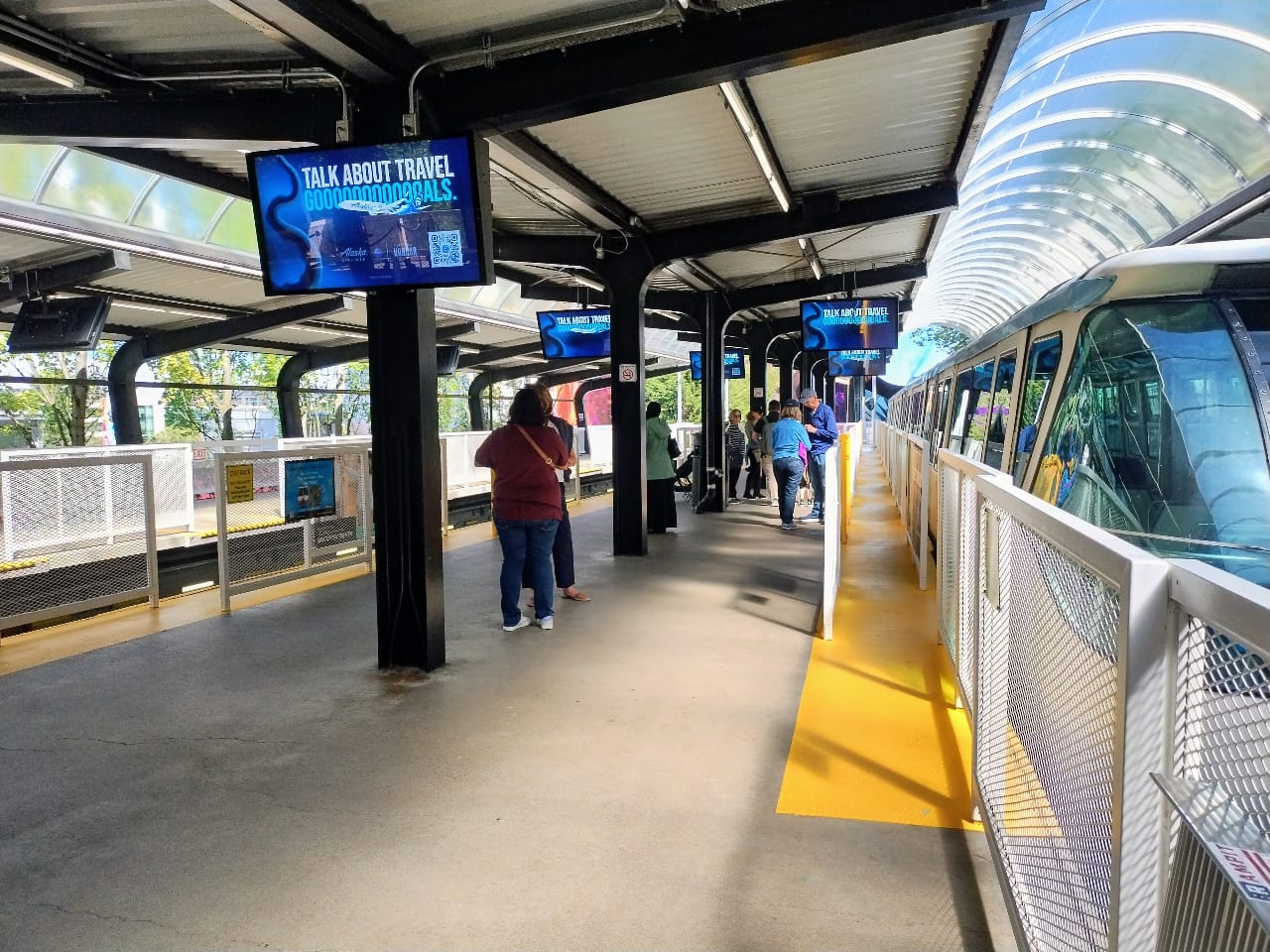
But the monorail’s renewed popularity and potential to help shoulder the load during World Cup games doesn’t mean its pricing should shift even further toward tourists. If anything, high ridership underscores its value as part of a functioning public-transport network.
Possible solutions
Unlike most transit systems in Washington, the Seattle Center Monorail is not a drain on the public purse. The monorail’s operations are uniquely funded through fare revenue rather than taxpayer subsidies, and even returns money to the City of Seattle annually under a concessions agreement. That revenue covers day-to-day operations, and equipment upgrades, an almost unheard-of arrangement in U.S. transit.
But the monorail’s success doesn’t happen in a vacuum. Its elevated track and supporting pylons occupy the public right-of-way along 5th Avenue and Belltown corridors, forming a permanent footprint above some of the city’s most heavily used streets. Riders may not feel it, but the system relies on the city’s public infrastructure and airspace to operate.
Seattle’s broader goals like reducing car dependency, cutting emissions, and encouraging public transit depend on regional coordination. Breaking fare integration works in the opposite direction. If the monorail is truly a civic asset, it should align with the rest of the city’s transportation policies.
There are realistic solutions. The City of Seattle can require that the monorail restore ORCA transfer credit as a condition of its operating agreement. The City can tie future fare increases to best practices other agencies typically follow, such as conducting public outreach, publishing a cost-benefit analysis noting ridership impacts, and providing a public forum to debate the tradeoffs.
Most importantly, Seattle leaders can treat the monorail as part of the transit network rather than an isolated, revenue-dependent attraction. None of these changes require a huge funding infusion or an expansion of the system (even if I think it would be cool if they expanded the monorail). They simply require prioritizing residents over ticket revenue.
I ride the monorail more than most living in Lower Queen Anne/Uptown. It avoids traffic, provides a distinct view of the city, and remains one of Seattle’s most recognizable transit experiences. It should not be reserved for tourists or special occasions. Public transportation should be priced to serve the public. If it brings joy while doing so, that is even better.