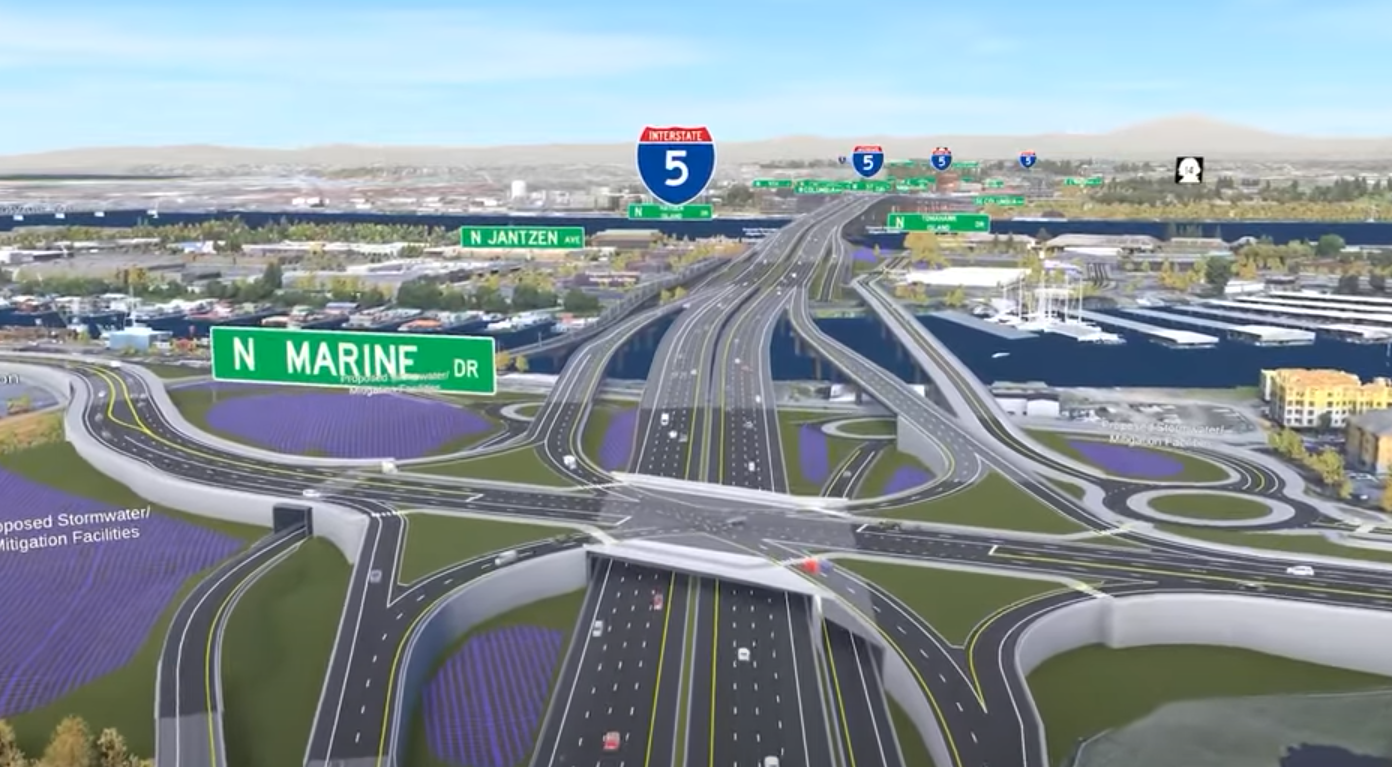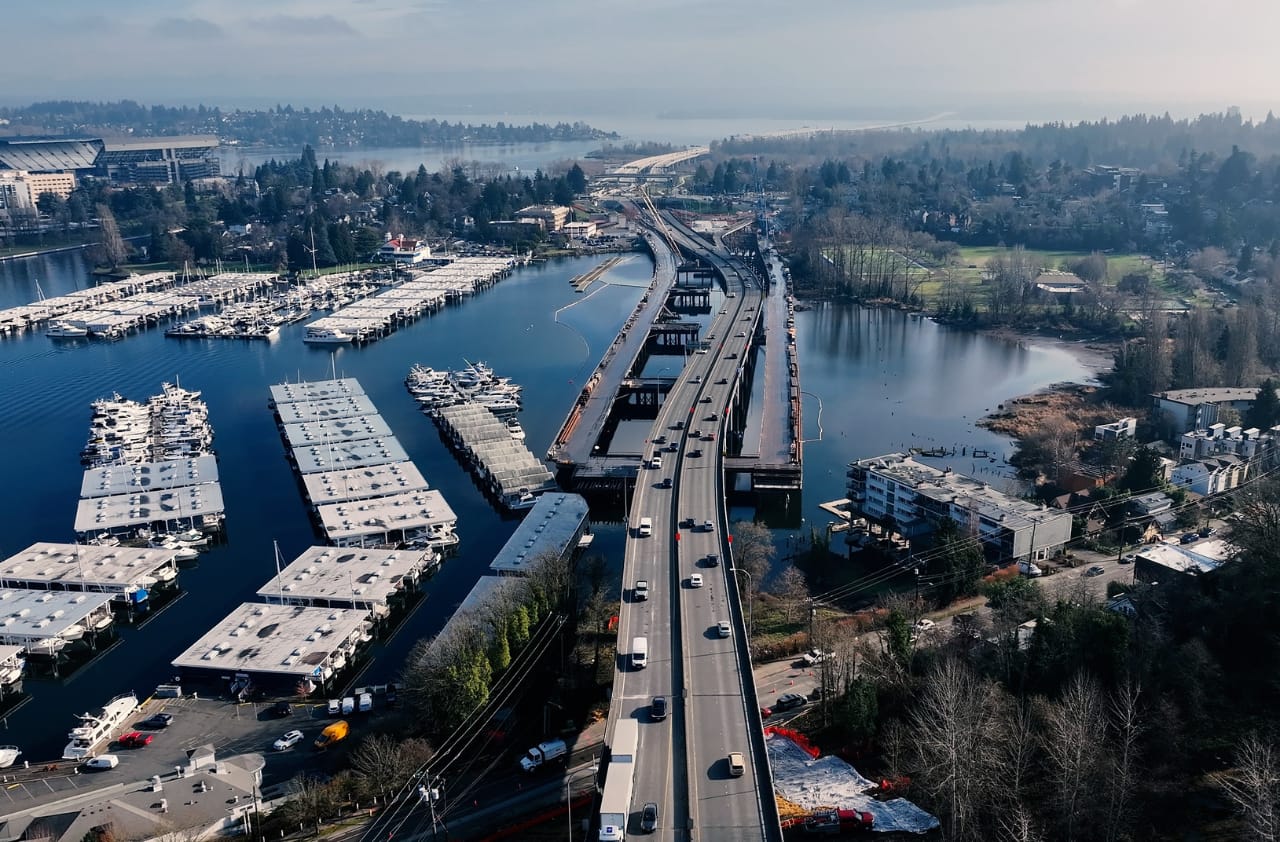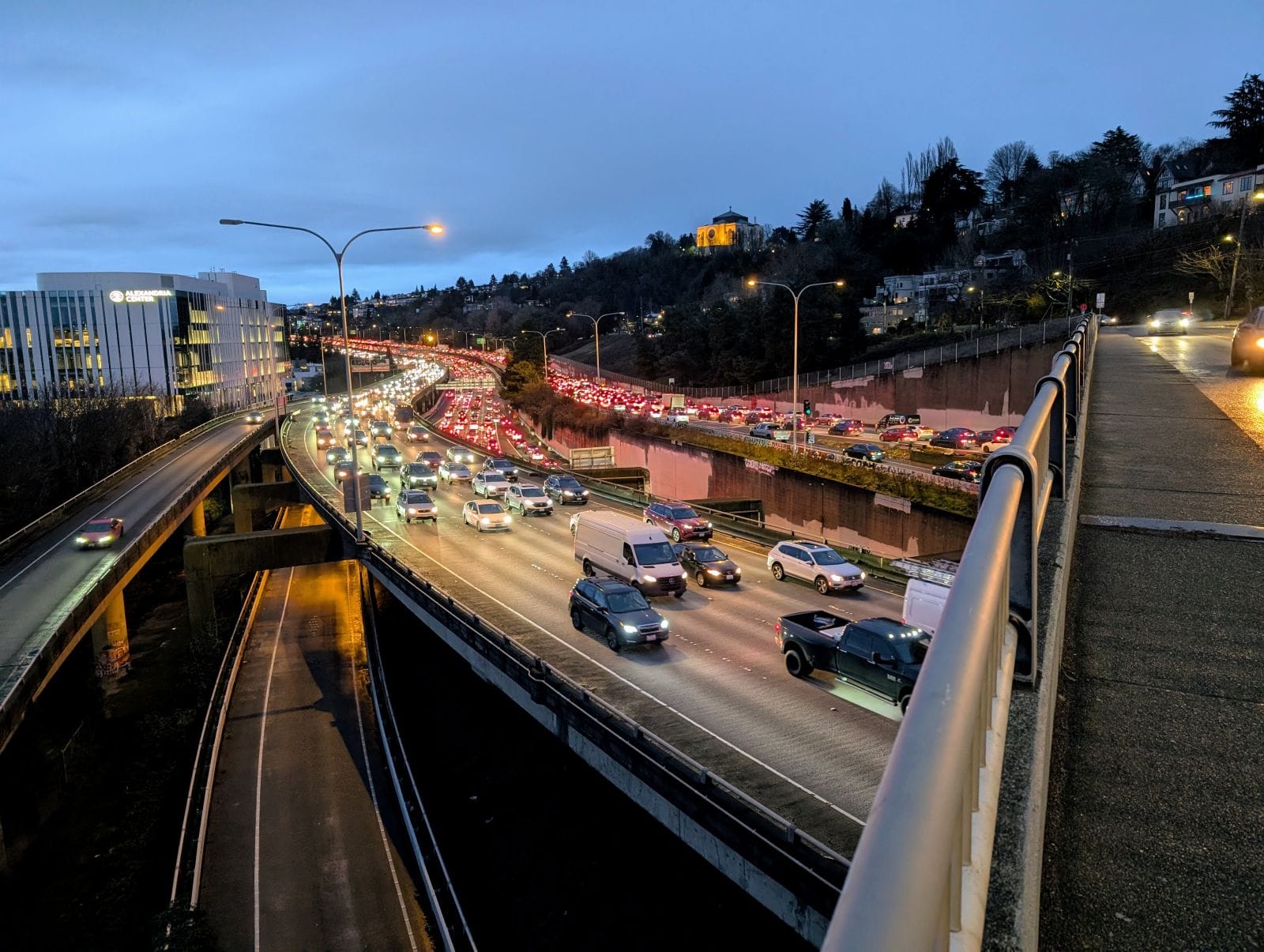
The Washington State Department of Transportation (WSDOT) is in the midst of repairing and resurfacing the I-5 upper bridge deck — replacing aging concrete and expansion joints, improving drainage, and addressing other long-deferred maintenance. With this work has come gridlock, heightened driver stress and aggression, and a collective “grit and bear it” approach to traveling in and through Seattle.
The impacts are everywhere. Travel times on I-5 north and south have ballooned. City streets are clogged with drivers inching toward on-ramps. And that congestion is spilling over into increasingly unhinged motorist behavior: racing through residential neighborhoods, driving into oncoming lanes, forcing their way into the front of lines, running red lights, and speeding to claw back lost time.
But did it have to be this way?
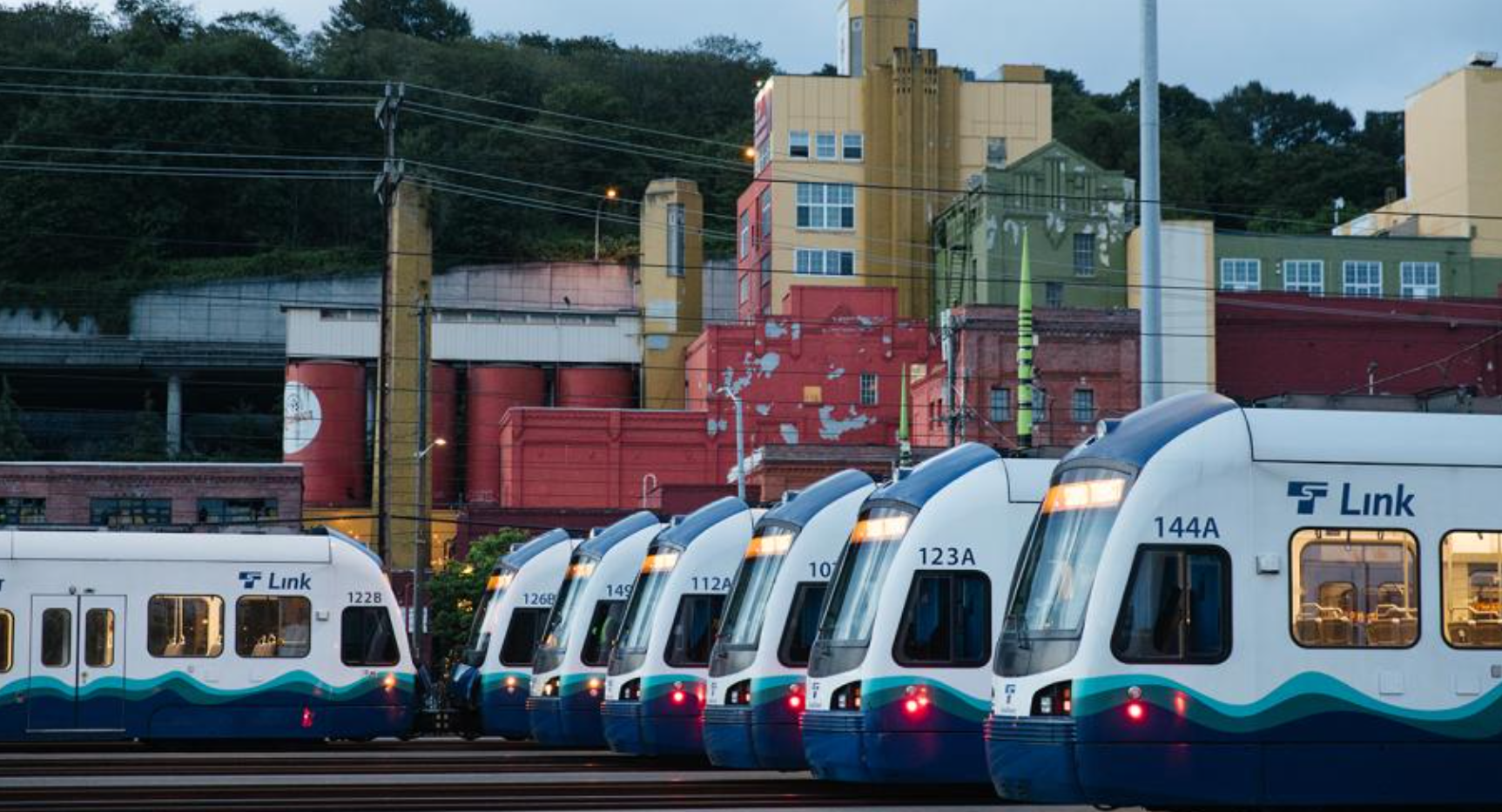
Seattleites overwhelmingly support policies to cut greenhouse gas emissions, reduce traffic violence, and lessen our dependence on cars. The multi-year maintenance project known as Revive I-5 should have been a once-in-a-generation opportunity to shift trips away from single-occupancy vehicles and toward transit, walking, rolling, and biking.
We’ve done this before. During the weekslong Seattle Squeeze — also known as the Period of Maximum Constraint — SDOT ran educational campaigns and offered tools to help commuters “Flip Your Trip” and flatten the commute curve, while capacity was constrained with the Alaskan Way Viaduct closed for dismantling and the SR 99 tunnel yet to open. That educational effort worked because it acknowledged a simple truth: when driving becomes harder, many people will change how they travel — if they’re given clear information and viable alternatives.
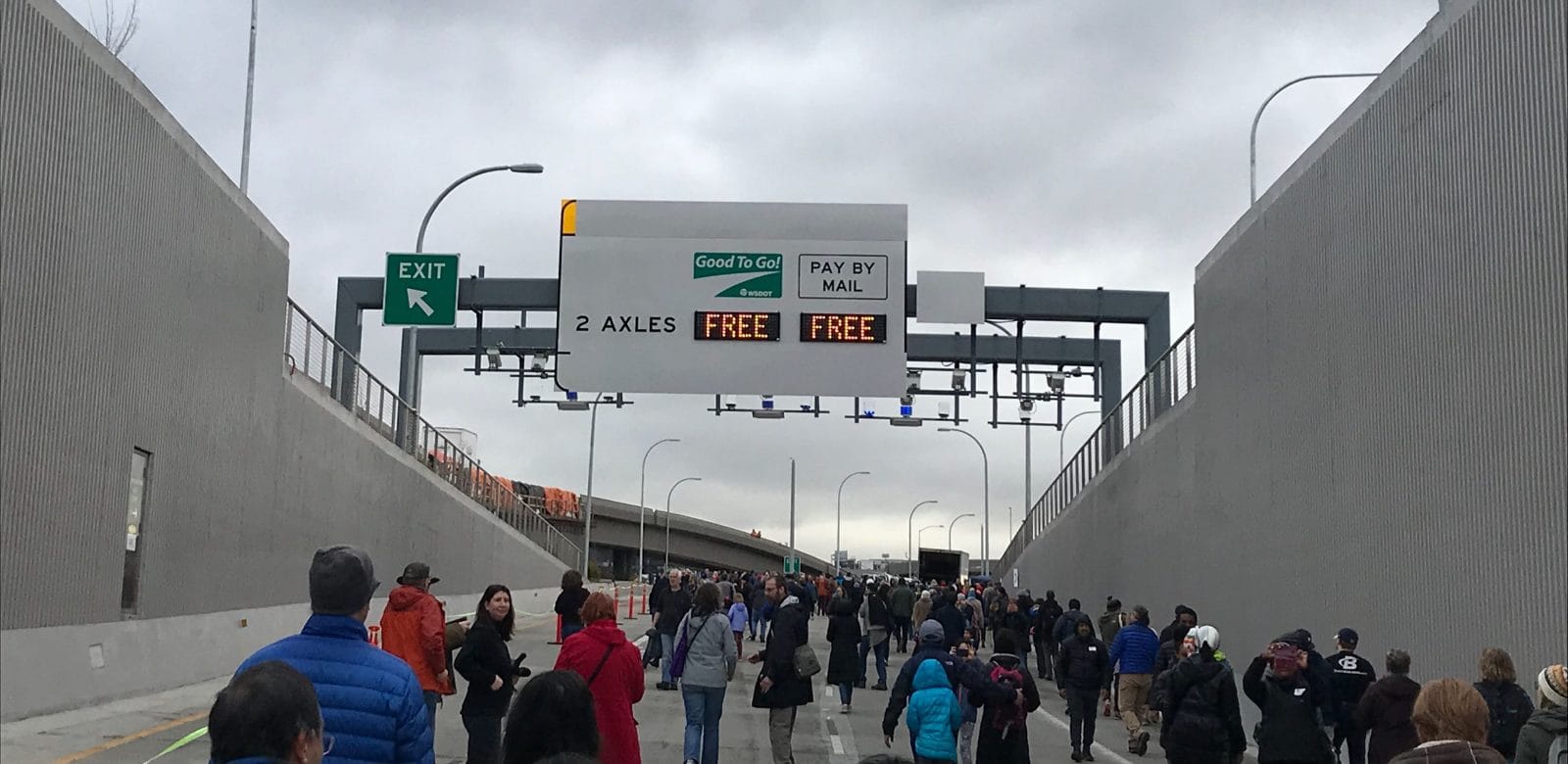
This time, despite months of advance notice from WSDOT, many people returned to their normal routines after the Martin Luther King Jr. holiday weekend only to find themselves stunned by the congestion (a reminder: you’re not in traffic—you are traffic). WSDOT knew Revive I-5 would cause significant spillover effects yet did too little to seize the moment and catalyze lasting change. Strong leadership — and a true partnership with the City of Seattle — could have improved outcomes both immediately and over the long term.
We’re only two weeks in; there is still time to change course. Some opportunities include:
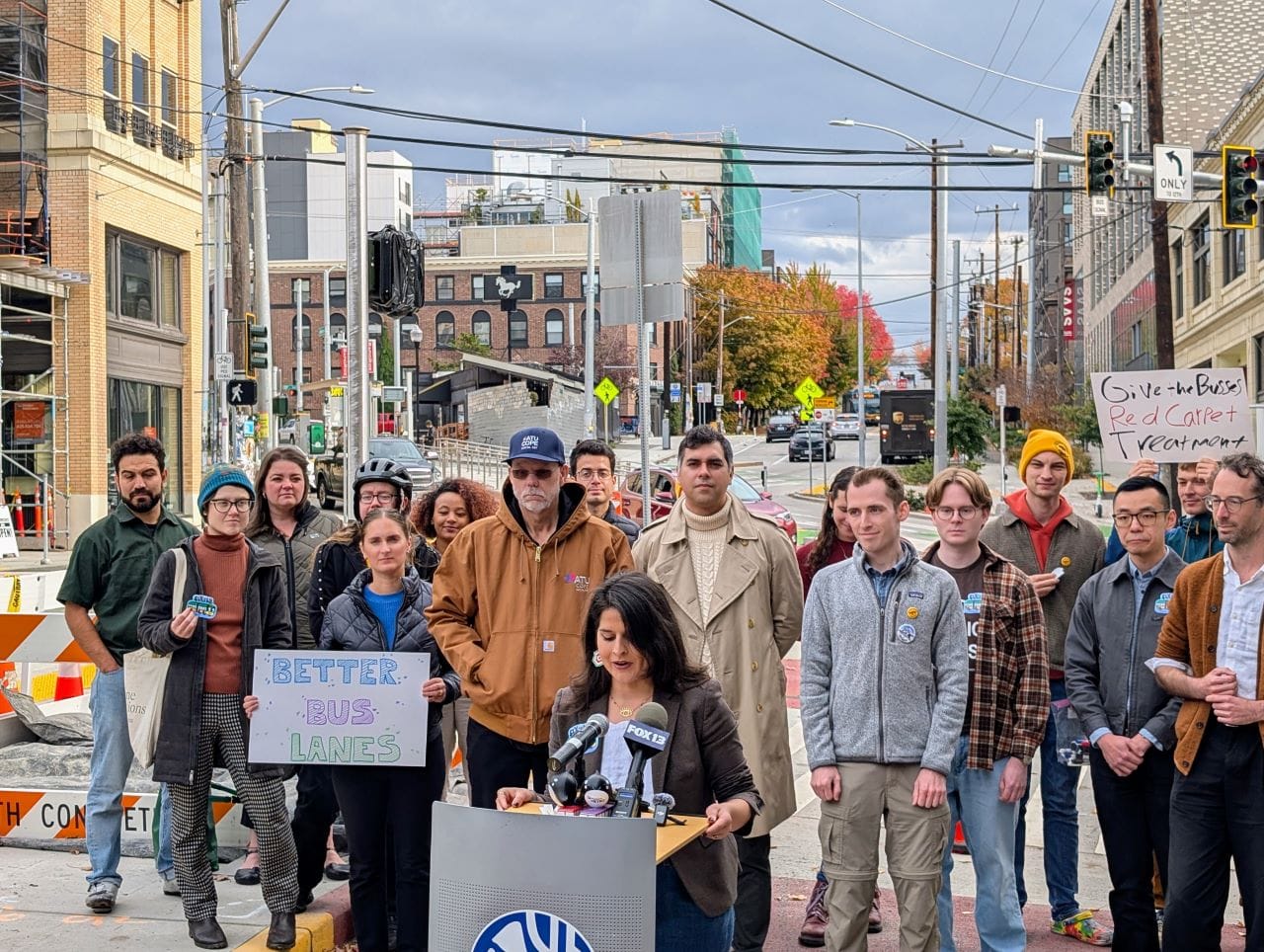
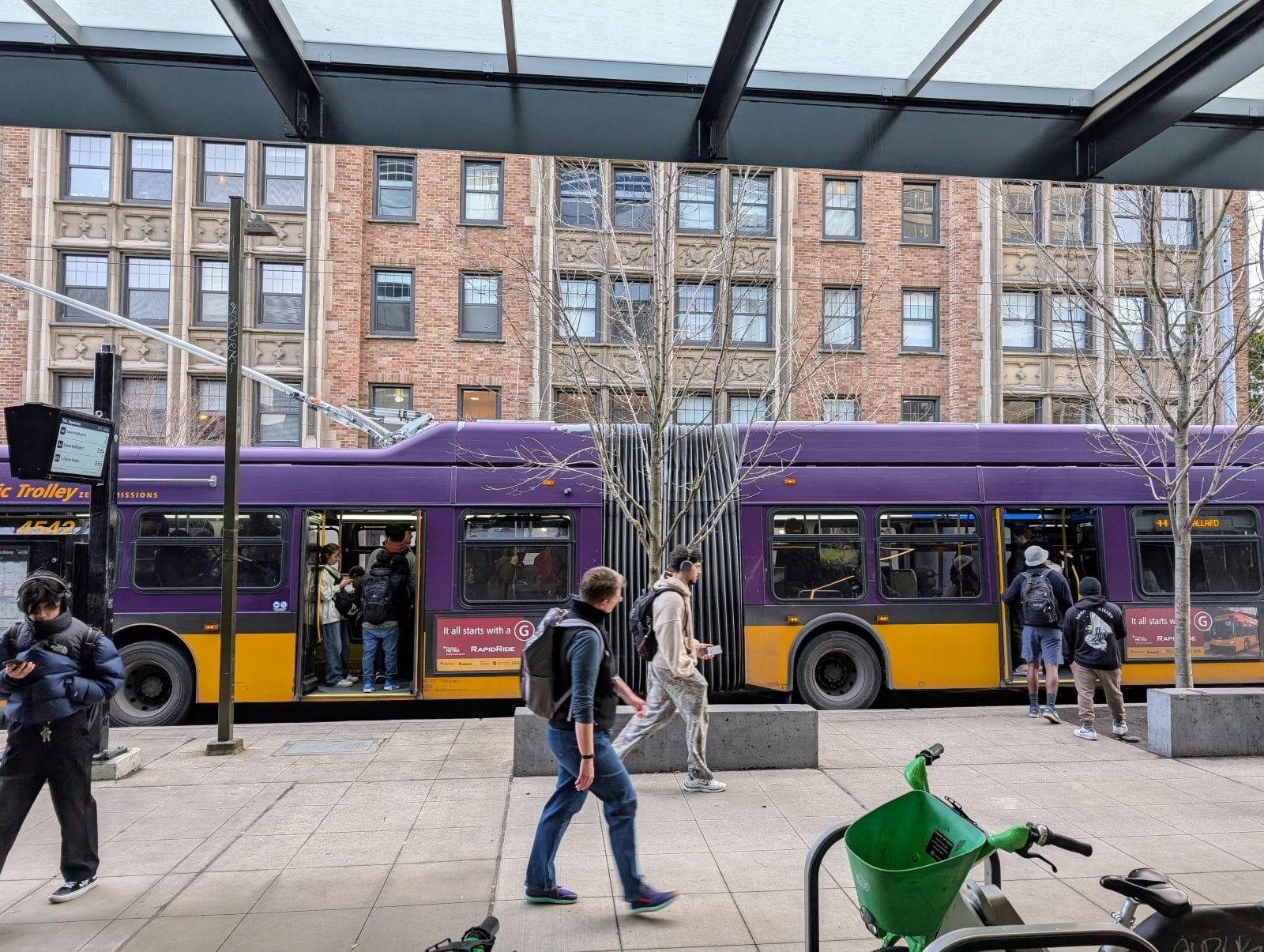
- Improved transit reliability through dedicated, expanded, and enforced transit-only lanes — ensuring buses are not stuck in the same congestion as single-occupancy vehicles.
- An increase in the downtown commercial parking tax as a proxy for congestion pricing.
- A widespread, proactive education campaign encouraging commuters to “Flip Your Trip.”
- Morning-only HOV access at select I-5 entrances, paired with real enforcement.
- Good To Go tolling at select I-5 on-ramps and along State Route 99.
- Widely distributed ORCA transit passes preloaded with a modest fare value.
- E-bike purchase vouchers for commuters who commit to reducing car trips (including cargo bikes for families).
- Large-scale automated enforcement to curb dangerous driving (blocking the box, private vehicles in transit-only lanes, speeding in school zones, etc.)
- Rapid deployment of proven traffic-calming tools—speed cushions, roundabouts, diverters — to slow speeds and keep cut-through traffic out of residential neighborhoods.
- Temporary crossing flags at locations where vehicle queues block sightlines at crosswalks.
- Clear encouragement for employers to expand incentives for transit use, active transportation, and flexible start/end times.
This list isn’t exhaustive, and it’s not meant to be. It’s a starting point — a way to reframe Revive I-5 not just as a construction headache, but as a rare chance to demonstrate what success could look like: fewer cars, safer streets, cleaner air, and a transportation system that works even when driving doesn’t.
The off-ramp from car dependence was right there. We still have two more years to turn this around.