The crosslake connection will be a great leap forward, but more hurdles lie ahead for Sound Transit.
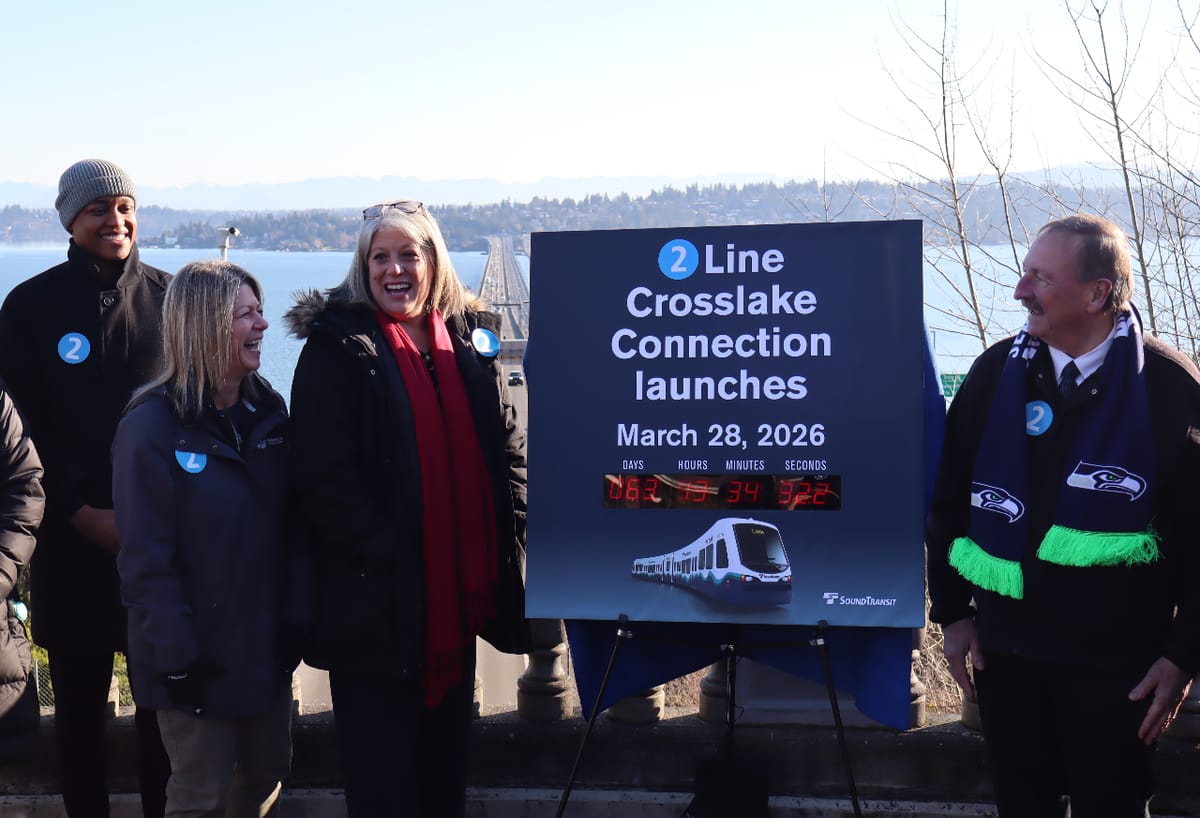
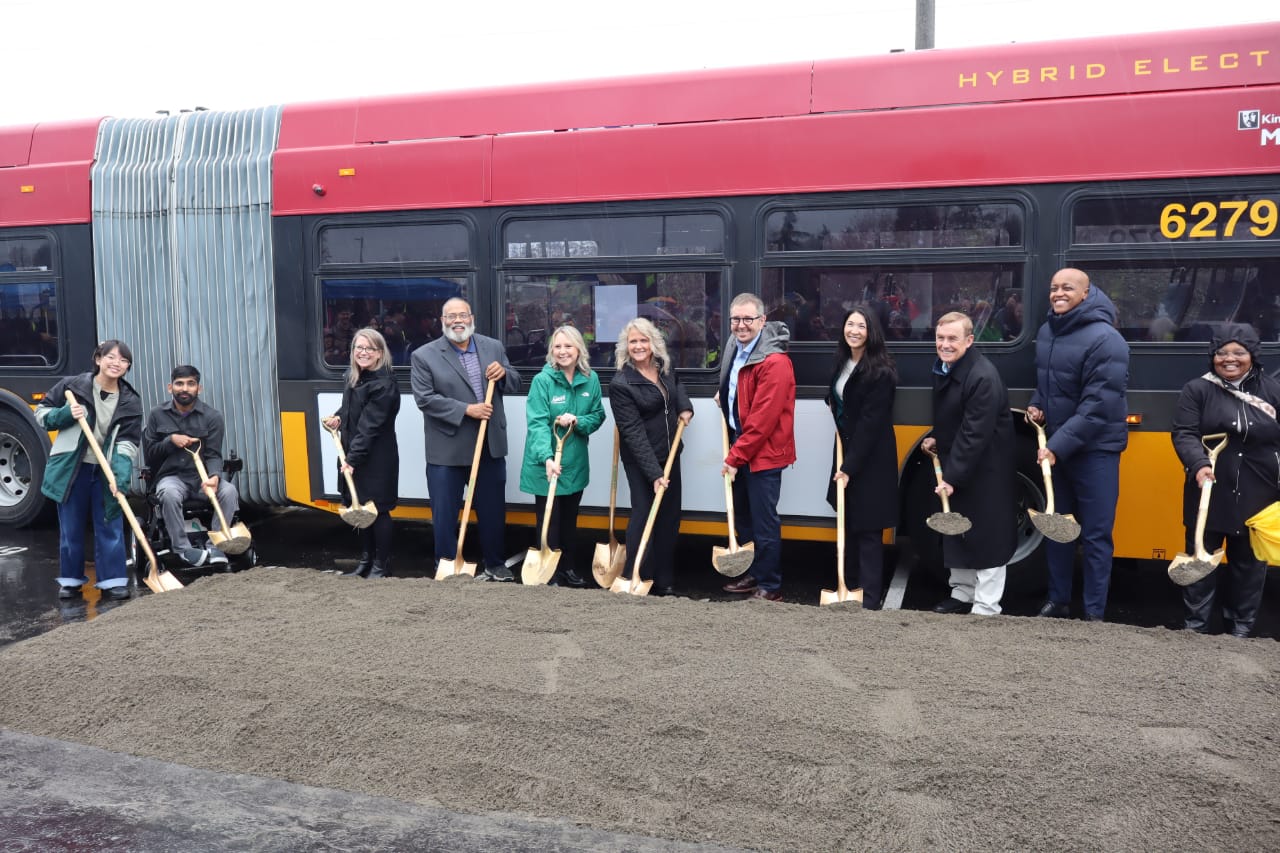
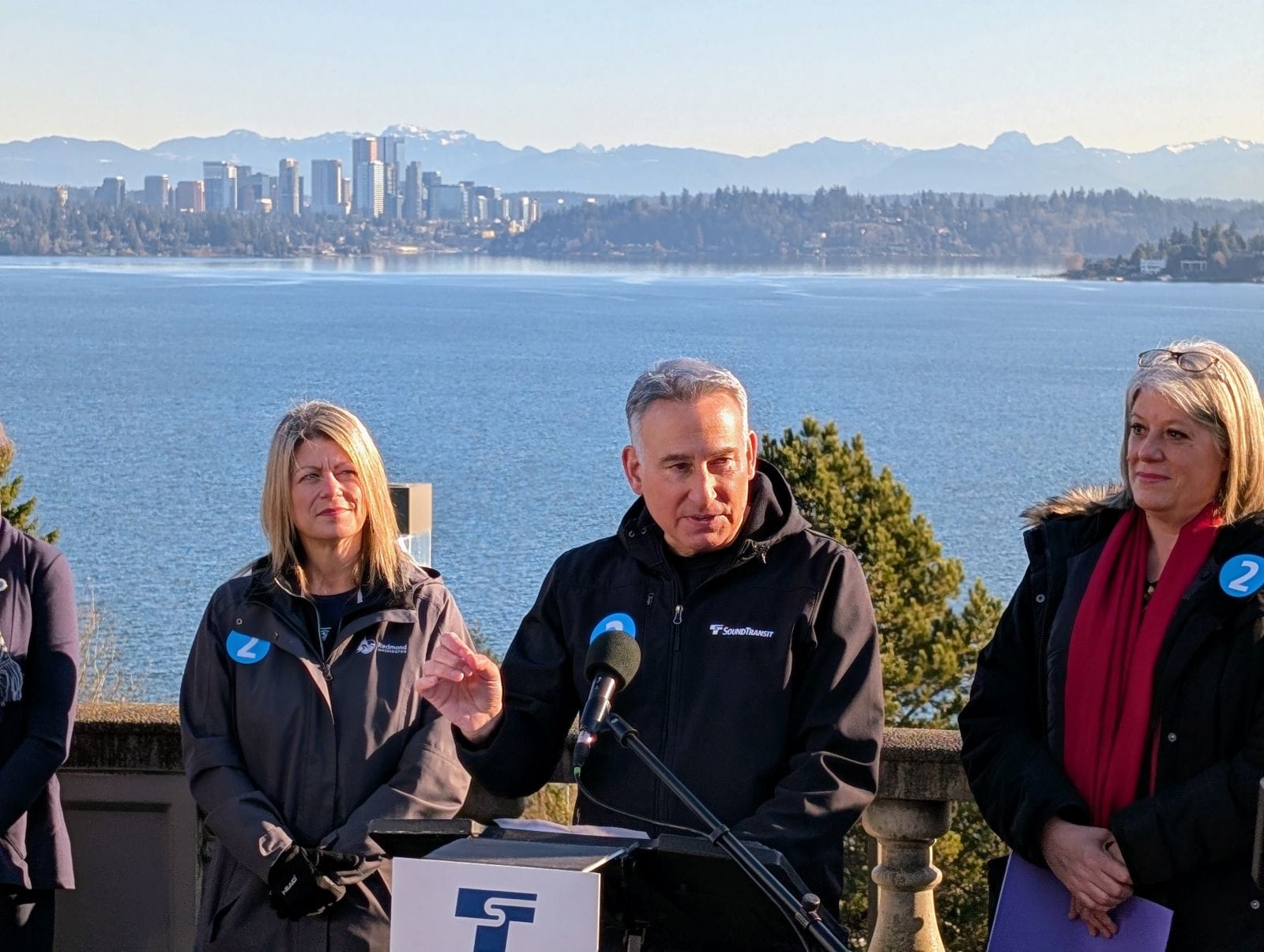
On a frostbitten Friday morning, a gaggle of officials and transit nerds gathered hot with anticipation for the unveiling of the opening day of the 2 Line’s “Crosslake Connection.” By the end of the event, most were glowing with excitement, warmed by the news, the photogenic countdown clock, and the spring-uary sun.
While Sound Transit board chair Dave Somers acknowledged the speeches may be forgotten by history, speaker after speaker gave it a try anyway and waxed poetic about the impact the light rail opening, scheduled for March 28, would have on the region.
“I can’t wait to start revenue service and the opportunity for the people to get out of their cars and take a beautiful rail ride across Lake Washington,” Somers said at the January 23 event. “We’re finally giving Lake Washington’s commute an option that doesn’t involve brake lights. Years from now, people will not remember the speeches. They’ll remember how much easier life became here in our region.”
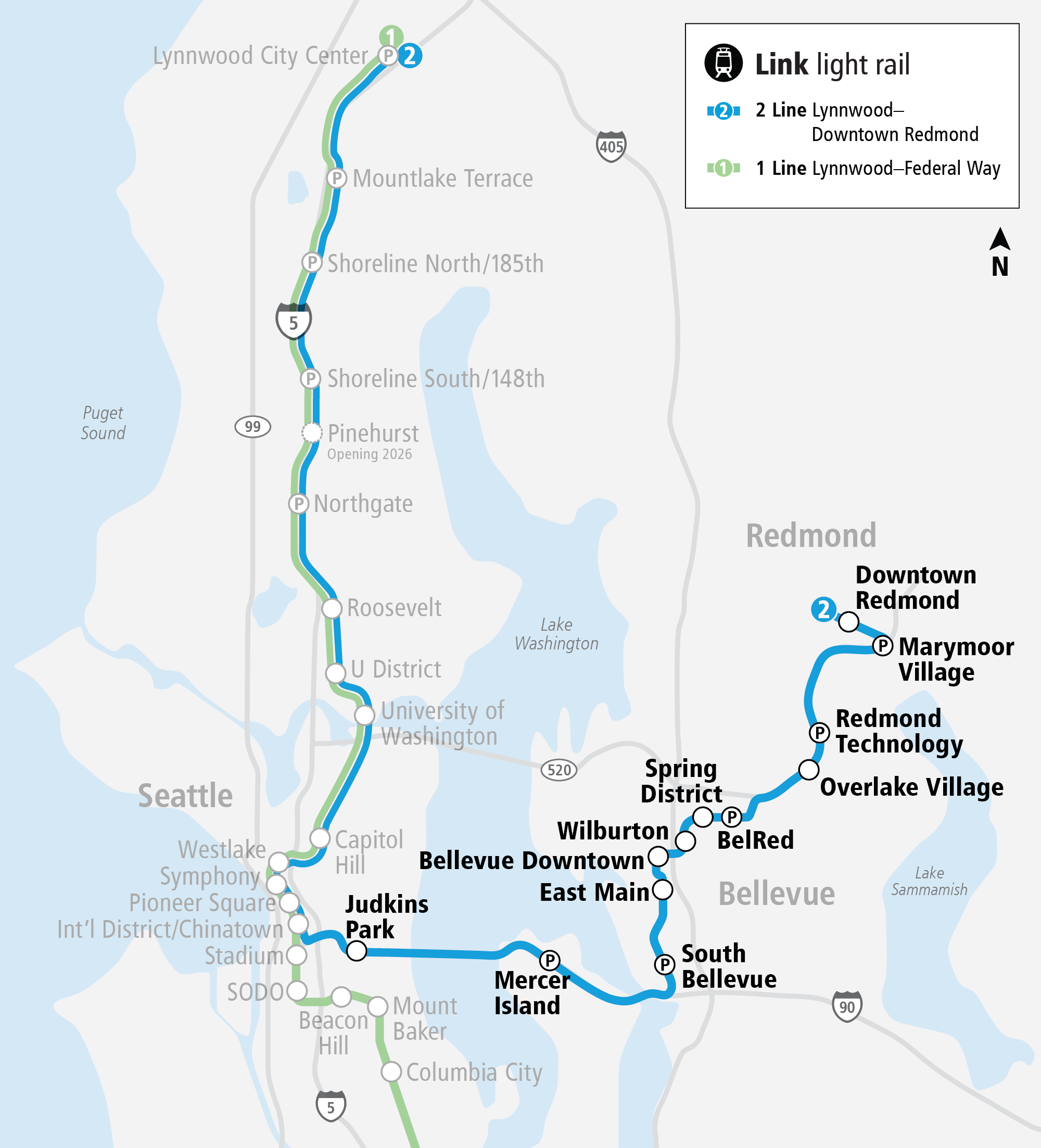
The 2 Line’s crosslake connection will make the International District and Downtown Bellevue just 20 minutes apart. Downtown Redmond and Downtown Seattle will be about 40 minutes apart, shaving at least 10 minutes off the bus trip — more when traffic congestion is bad.
King County Councilmember Claudia Balducci was given the honor of pulling back the veil, but the same week she was summarily removed from two key committees on the Sound Transit board. Balducci had chaired the System Expansion Committee since 2018, and committee assignments were in the middle of their term, rather than wholly up-for-grabs. In their place, Balducci will serve on Rider Experience and Operations, which will also be busy and called upon to help fine tune a system likely to face growing reliability issues as the system grows and ridership swells.
Overcoming obstacles to build 2 Line
First elected to the Bellevue City Council in 2004 and later serving as mayor, Balducci noted she was one of the few attendees who had seen the project through from its inception, given how long it took. Voters across three counties approved the Sound Transit 2 (ST2) package in 2008, funding the expansion of the 2 Line as far east as Overlake, but hardly queuing up a smooth ride to opening day.
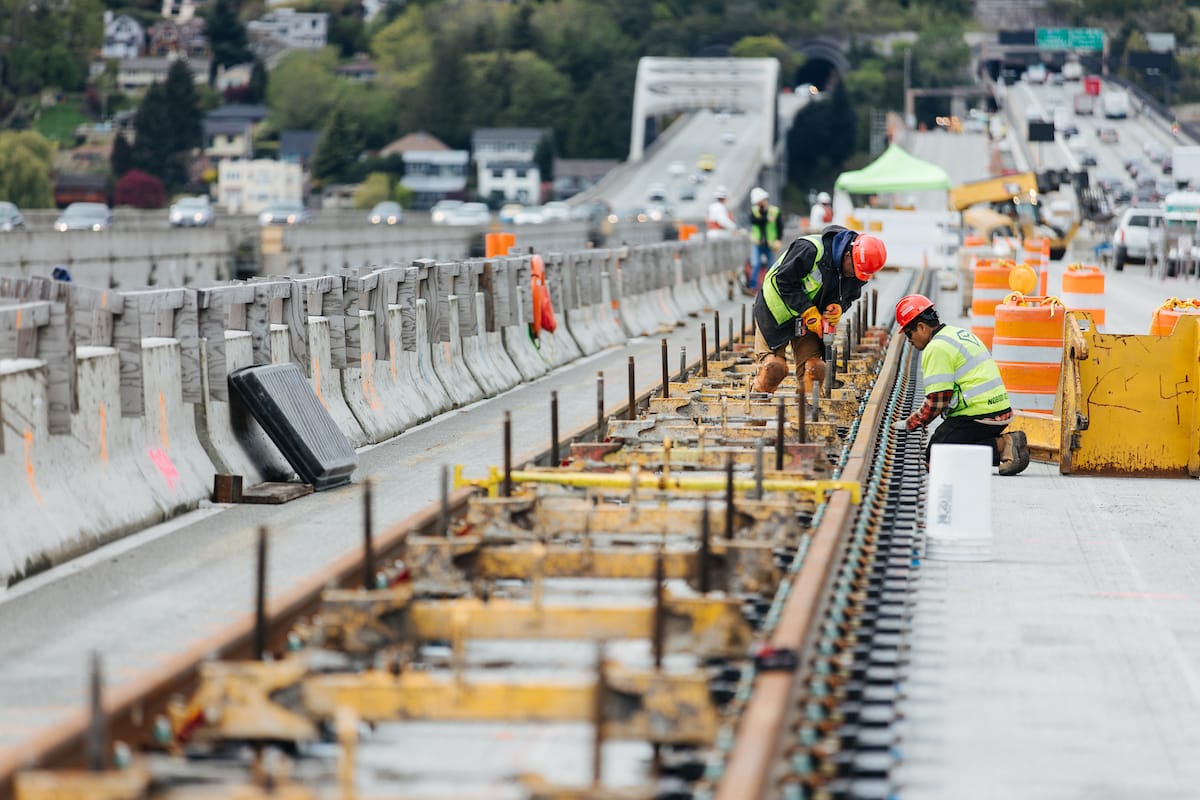
“There have been generations of effort that has gone into making this announcement possible today,” Balducci said just before unveiling the opening date. “We experienced fierce opposition to the very idea of light rail in East King County, two ballot measures, the first one failed — remember roads and transit — local political challenges, getting land use and permitting approvals, court cases, including one that went to the state Supreme Court. Design challenges, how to attach a fixed rail to a floating bridge, being the leading but not the only one, multiple financial cycles with major cost impacts — who here remembers talking about steel prices, it’s a thing — construction challenges (this is the project that taught a new generation the word plinth), a concrete delivery strike, and a worldwide pandemic.”
As she ticked off the lengthy list of obstacles that the agency overcame, it underscored how long the track ahead could be for the next round of Sound Transit 3 (ST3) projects and how important carrying forward institutional knowledge could be. Sound Transit faces a huge budget shortfall estimated at $34 billion through the mid-2040s, as it attempts to nearly double the size of its light rail network to 116 miles with the buildout of ST3.
Is Sound Transit Board ready for storm ahead?
How sidelining a seasoned veteran board member — one of the few to consistently ask probing questions or push staff to consider outside-of-the-box solutions — would help greet those challenges was unclear, but that’s how her board colleagues voted. Those machinations could portend a storm cloud ahead for Sound Transit on an otherwise sunny occasion.
Also opaque was the full explanation behind her removal from those committees. Board chair Somers officially controls committee assignments, but it’s likely that Balducci running against Girmay Zahilay for King County Executive in 2025 (and losing) played a big role in her demotion. Neither Somers nor Zahilay offered much explanation of the committee shakeup.
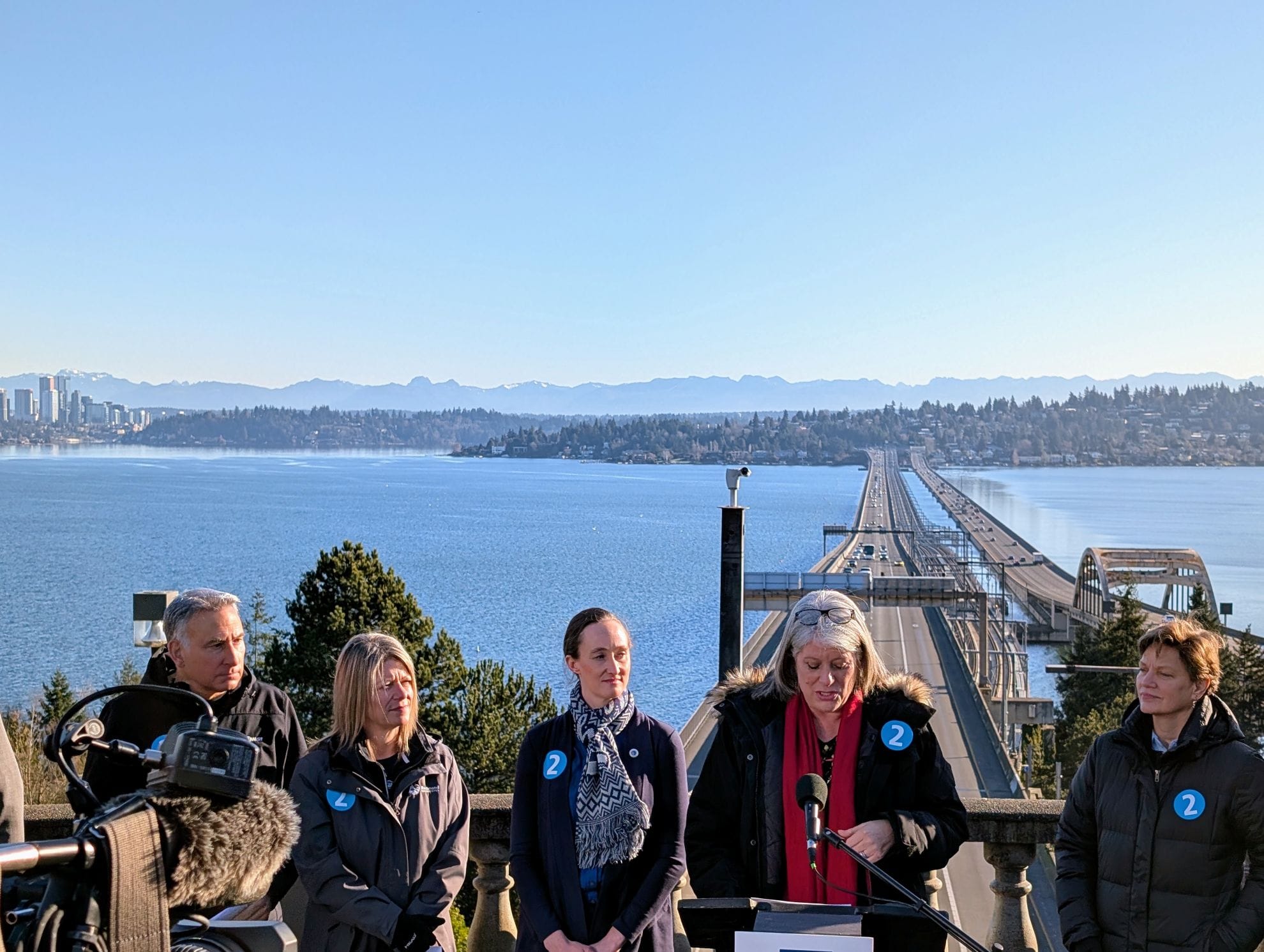
The drama within the board’s ranks did not come to the surface during the January 23 celebration. And speakers emphasized momentum and the need to continue opening light rail expansions as soon as humanly possible.
“It’s a very exciting day to see this, and I think it will build on the momentum that we need to do hard things in our region and continue investing in light rail and transit that works for everyone,” Balducci concluded, with a nod to the battles ahead.
Seattle Mayor Katie Wilson, who also earned a seat on the Sound Transit Board when she won election in November, stressed the importance of making transit a faster, more reliable option. She alluded to the neglect transit long faced as policymakers prioritized car-centric infrastructure, which leaves behind a growing segment of car-free households in Seattle.
“For the 21 years that I’ve lived here, I have been a transit rider, part of the more than one in five Seattle households that do not own a car. And honestly, sometimes being a transit rider can feel like being a second class citizen,” Wilson said. “But our light rail system is rapidly changing that. I know firsthand the way it unlocks worlds of opportunity when you can hop on a fast, frequent, reliable train or bus and get exactly where you want to go.”
After experiencing the transformational power of rapid transit firsthand, Wilson said she hoped more neighborhoods would soon join the party. She noted that the 2 Line would be especially important to Asian American and Pacific Islander communities, which have cultural centers on both sides of the lake that will now be connected.
“I remember 10 years ago when the Link light rail station first opened in my neighborhood, Capitol Hill, there was a palpable sense of excitement in the air as people realized how this was going to change their daily lives. I can’t wait for more people to have that feeling as the light rail comes to their neighborhoods, the neighborhoods where they live and work,” Wilson said, adding. “If you build it, they will come.”
Redmond provides strong anchor for 2 Line
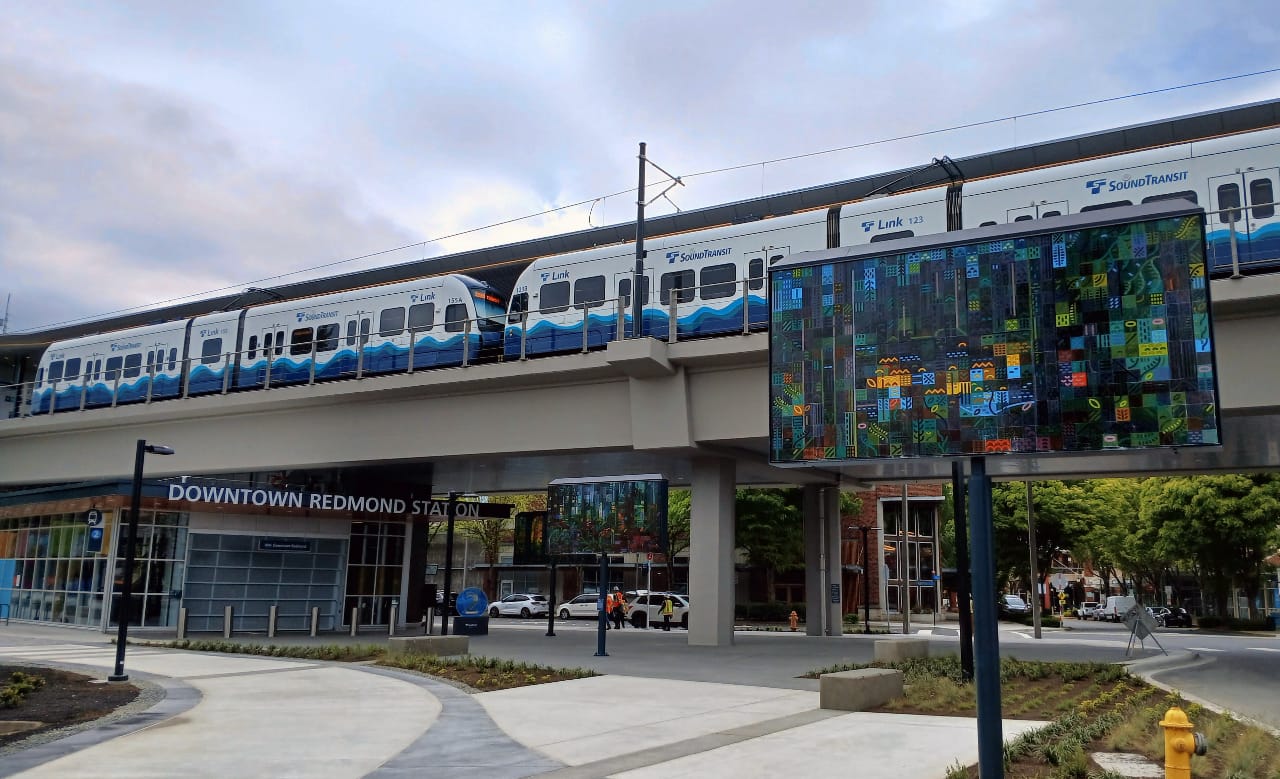
Kelli Refer, executive director of the advocacy group Move Redmond, was on hand for the unveiling of the countdown clock and said she expected Downtown Redmond will continue to lead the Eastside in light rail ridership after the crosslake connection turns the 2 Line into a 30-mile workhorse.
“Redmond is the end of the line, and I think Redmond has some of the best destinations on the 2 Line,” Refer said. “Obviously, I'm a little bit biased here, but you've got Marymoor Park, which is the crown jewel of our King County park system and downtown Redmond. I've been thinking of it as like Capitol Hill too. If you look at a lot of the businesses that are opening up there, they're amazing local establishments that are having their second location in downtown Redmond.”
Redmond is also well integrated into the regional trail network, which gives it an advantage over a number of other stations, including those on the recently opened Federal Way 1 Line extension, where station areas remain more car-oriented and poorly integrated with the bike network.
“[At Downtown Redmond] you've got phenomenal access to the trail system, the East Lake Sammamish Trail, the Redmond Central Connector,” Refer said. “I think it really brings more people to see what Redmond has to offer.”
Redmond has been the busiest light rail station for the Eastside-only “starter line” version of 2 Line, which opened in April 2024 and reached Downtown Redmond in May 2025. That abridged line has beaten agency ridership projections, growing to nearly 11,000 daily riders, with Downtown Redmond leading the way since it opened. The fully built out 2 Line is expected to carry 50,000 daily riders by 2030, according to agency modeling.
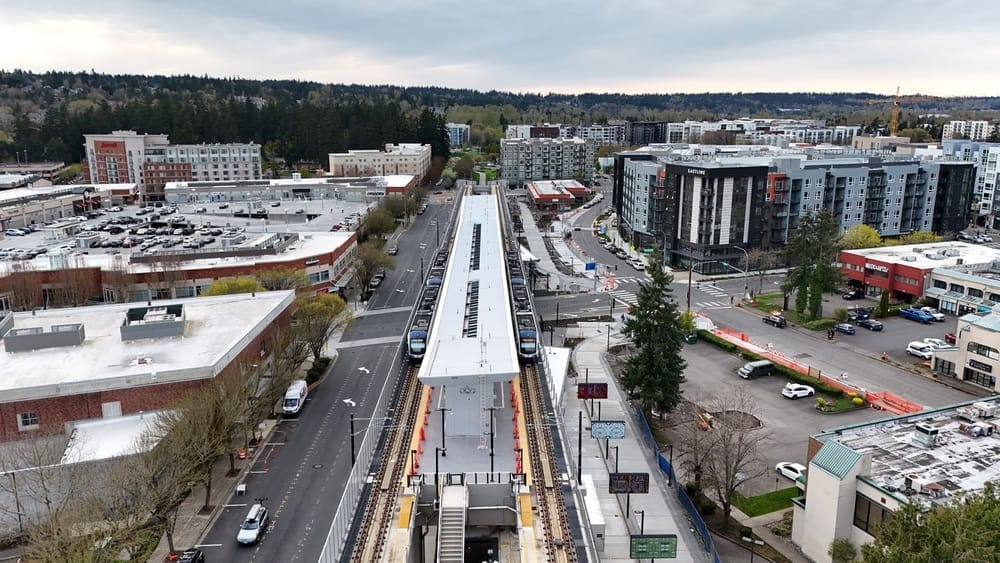
Originally the I-90 section spanning Lake Washington was scheduled at the same time as the starter line -- before construction defects in that section forced Sound Transit to overhaul the plan. Advocacy from groups like Move Redmond and Complete Streets Bellevue helped push the starter line into consideration and fruition -- with Balducci playing the role of board champion.
“Downtown Redmond has made all the right choices in preparing for light rail,” Refer said. “They've been building housing. They've been focusing on the walkability and the bikeability, which, when you have that accessible access to transit, it improves ridership.”
Statewide advocacy group Transportation Choices Coalition also had much of their team in attendance. Executive Director Kirk Hovenkotter also predicted a big ridership bump, and he highlighted that the doubled frequency along the central rail spine from Chinatown-International District north would be a huge draw for riders, providing 4-minute peak frequencies in aggregate with the 1 Line.
“This is the most momentous transit day the region's ever seen,” Hovenkotter said. “Full stop.”
Judkins Park
Beyond spanning the lake, the 2 Line extension will also bring two new stations online: Mercer Island and Judkins Park.
Zahilay’s speech stressed the value of Judkins Park Station, noting the stronger connection for the whole Rainier Valley to jobs and innovation centers.
“We'll see Seattle neighborhoods like Judkins Park become regional transit hubs, with east-west rail service complemented by high frequency bus service on Rainier Avenue South and 23rd Avenue South,” Zahilay said. “We'll see hubs for jobs and innovation and technology on both sides of the lake just a short train ride apart.”
Disability rights and safe streets advocates have been pushing the City of Seattle and Washington State Department of Transportation to upgrade the pedestrian environment near the station, given the increase in walking, rolling, and biking expected due to the draw of the station. The presence of I-90 ramps contribute to an unsafe environment in that area, with a long history of injury collisions. Advocates have also flagged a substandard or completely lacking sidewalk network in significant swaths of the North Rainier and Lower Beacon Hill area.
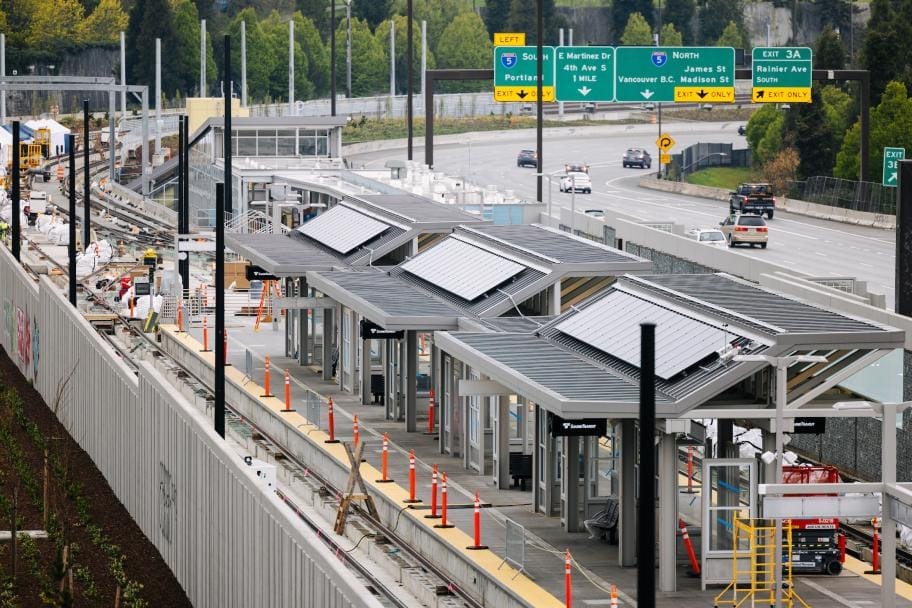
While the presence of I-90 does not make the immediate environment of Judkins Park Station (which is sandwiched in the freeway median) very inviting, the promise of light rail has helped generate a housing boom in the blocks a bit farther out, but still within relatively easy walking distance. The 569-unit Grand Street Commons complex has anchored the apartment boom south of the station.
Mercer Island, in contrast, has seen relatively little homebuilding in its station area, with City policymakers typically providing more in the way of obstacles than aid to prospective builders. As a result, the affluent island has found itself under the microscope for its growth-averse long-range plans. The state Commerce department used new powers granted by the state legislature to review the City’s growth plans and ruled it was “out of compliance” with state law requiring planning for affordable housing and middle-income workforce housing, making an example of the wealthy enclave.
So while Mercer Island’s growth boom may have been stunted and delayed, state intervention seems to indicate that it’s coming eventually.
Getting light rail right and making a successful transit system will require a delicate interplay between the transit agency, the cities it connects, and builders hoping to add housing and other amenities. Ultimately, it will require not just feats of engineering and construction perseverance, but also savvy urban planning to get the most out of new lines – placing stations where plenty of housing has been built or is likely to spring up soon.
With major housing booms in Bellevue, Redmond, and near Judkins Park, it’s clear the 2 Line’s potential is sky high. They have provided an example for other neighborhoods to follow, if Sound Transit is able to overcome financial headwinds and get rapid transit to their doorsteps, too.
 Ryan Packer