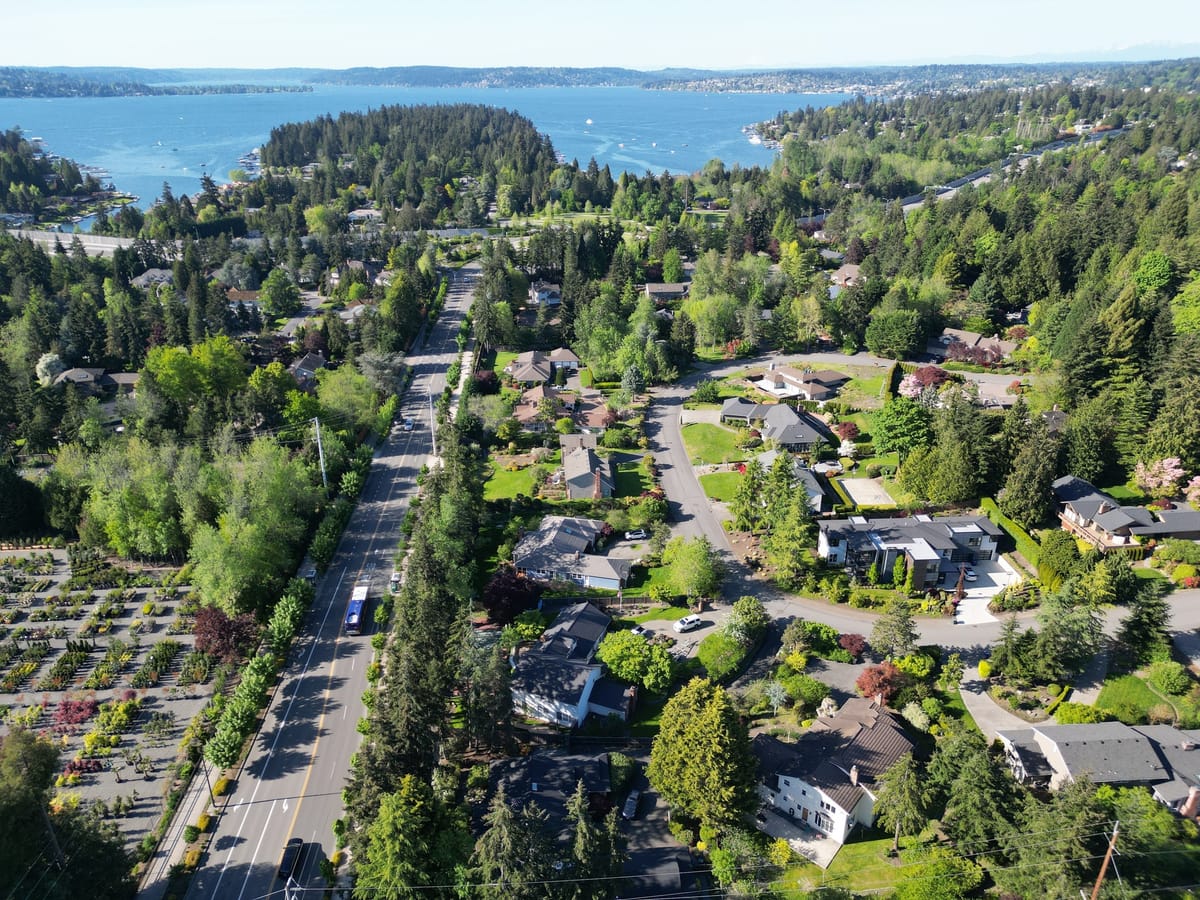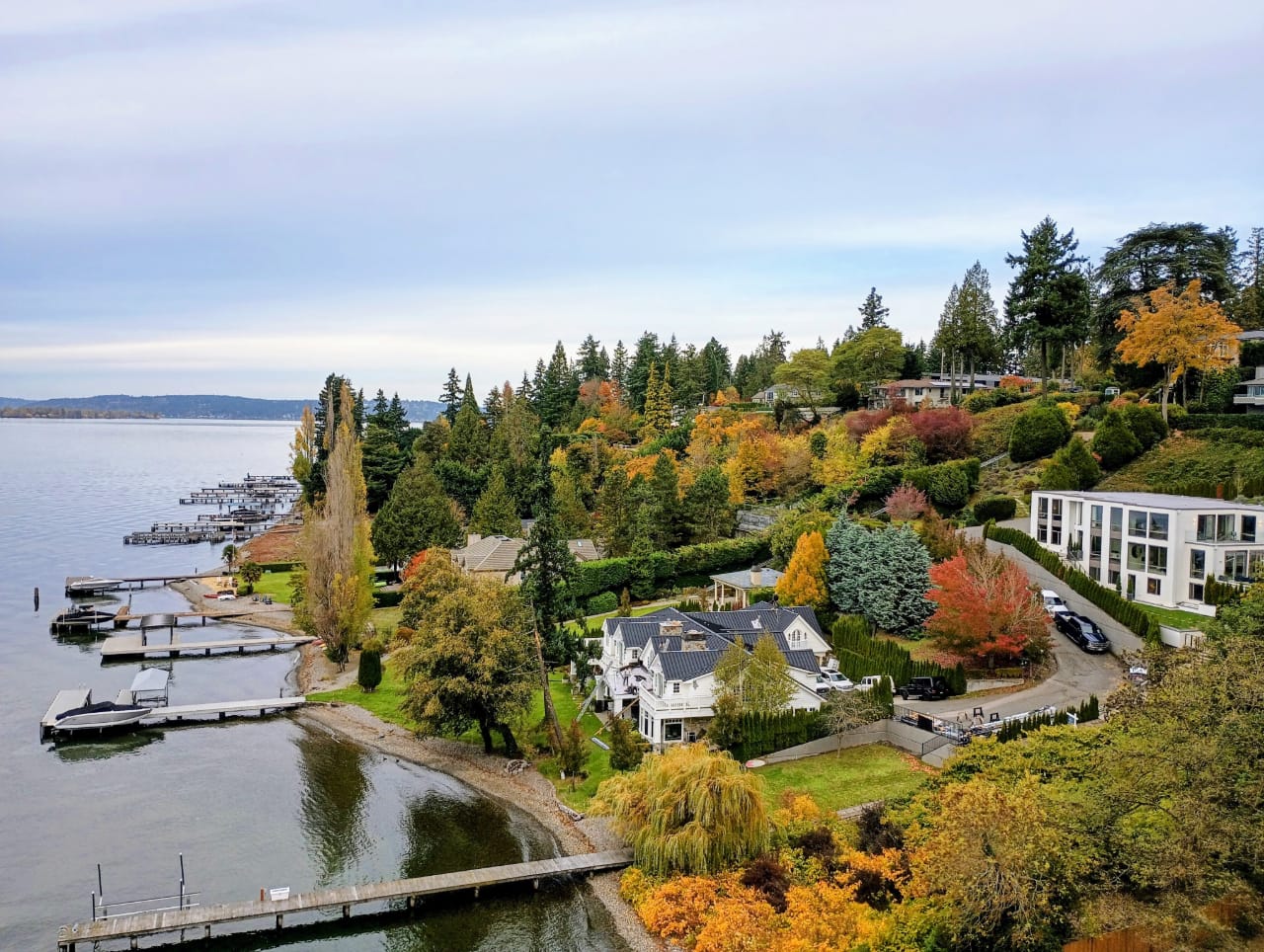
New emergency building regulations have clamped down even further on the types of homes that can be built in the mansion-heavy enclave of Medina. Put in place in the wake of one home construction project along high-profile Evergreen Point Road, the adjustments are intended to "allow harmony between residents" and have increased sideyard setbacks, imposed landscape buffer requirements, and fully eliminated a height bonus program that had existed for years.
Owners of properties in Medina determined to be vacant face additional regulations as well, including a requirement for all interior lights to be kept off and to avoid exterior lighting that "creates light trespass" onto nearby properties. Landscaped water features within building setbacks that can be heard from neighboring properties have also been banned.
The new rules were put in place on February 23 by a 5-1 vote of the Medina Council, after being discussed at an unrecorded council "study session" earlier in the evening – the first time appearing on any published agenda. They'll remain in effect for six months unless extended further, with a public hearing required within 60 days set to come later this month.
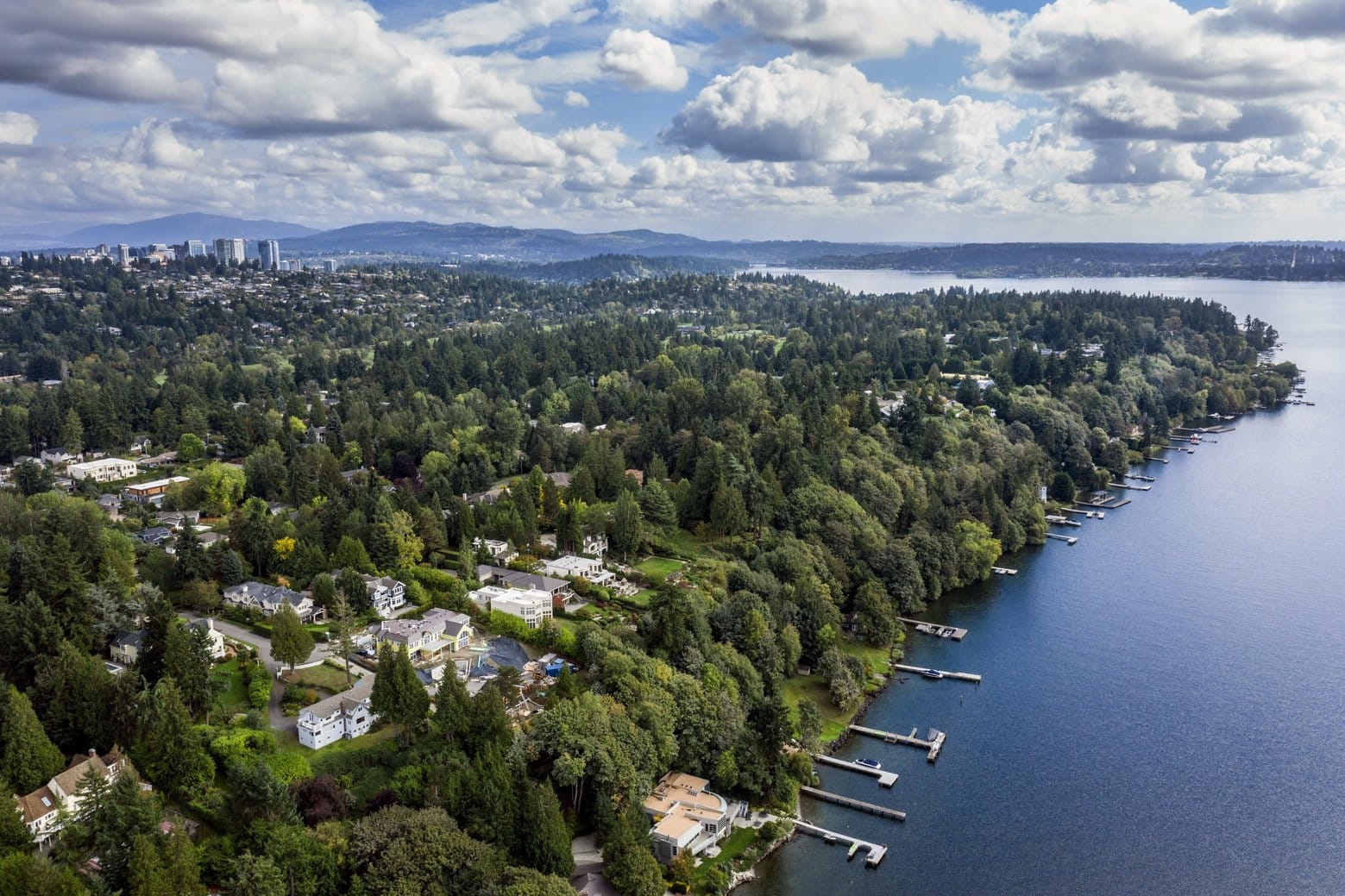
This makes Medina the latest Eastside city to take advantage of the ability to impose emergency building controls that make development more restrictive over recent months.
Last November, nearby Clyde Hill adopted a ban on cottage housing just a few months after legalizing it in an attempt to comply with new state "middle housing" requirements.
In January, the Bellevue City Council added regulations to development along the prized Old Main corridor using the same tool.
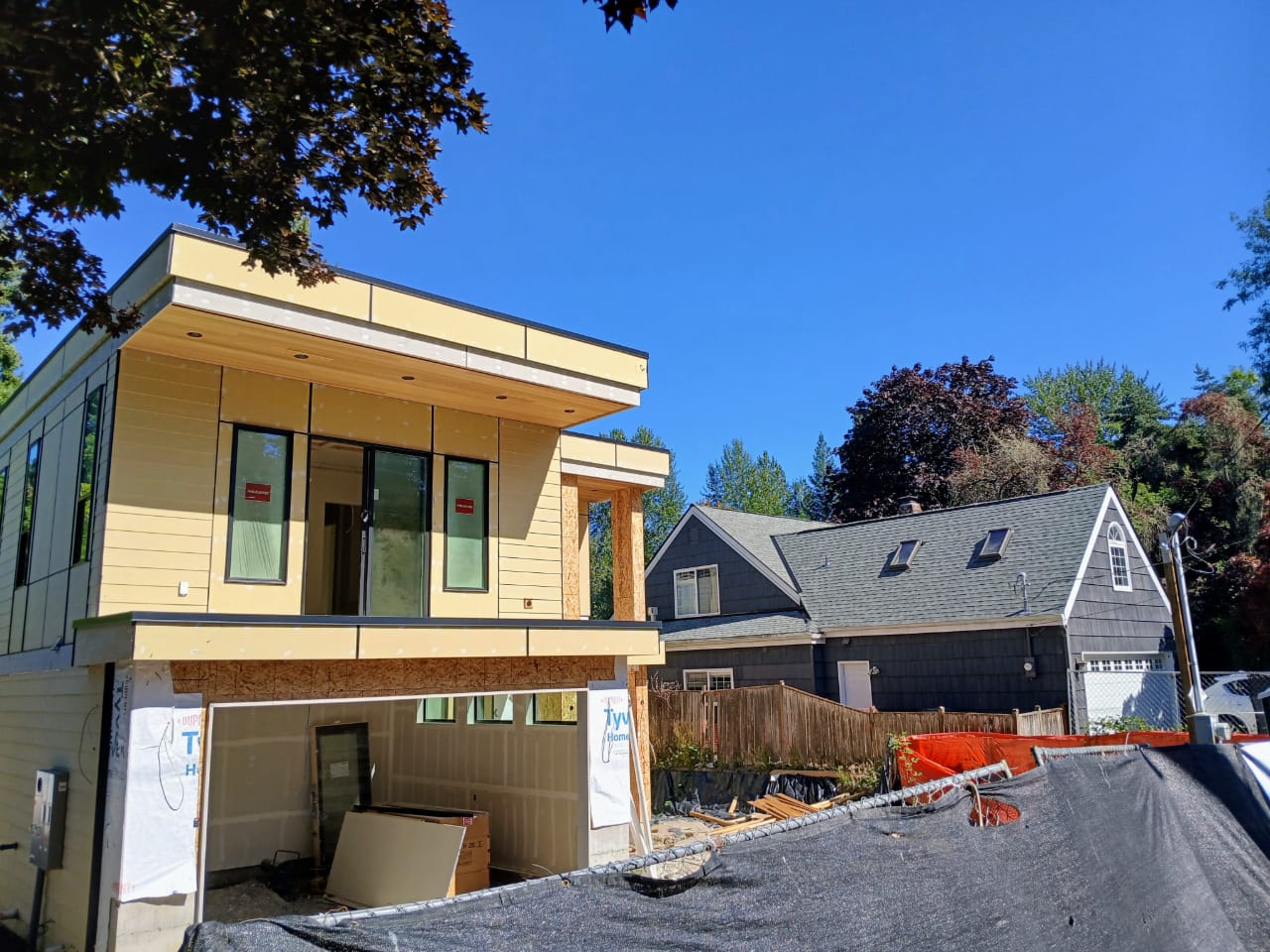
At the February meeting, numerous Medina residents showed up to raise concerns with a house being built at 3217 Evergreen Point Road, just north of SR 520. Despite being on a 34,111 square foot lot, those residents nevertheless had complaints about the building's height and scale. But city leaders have painted the issue as broader, with Medina's Development Services Manager Steve Wilcox referring to the "Medina megabox."
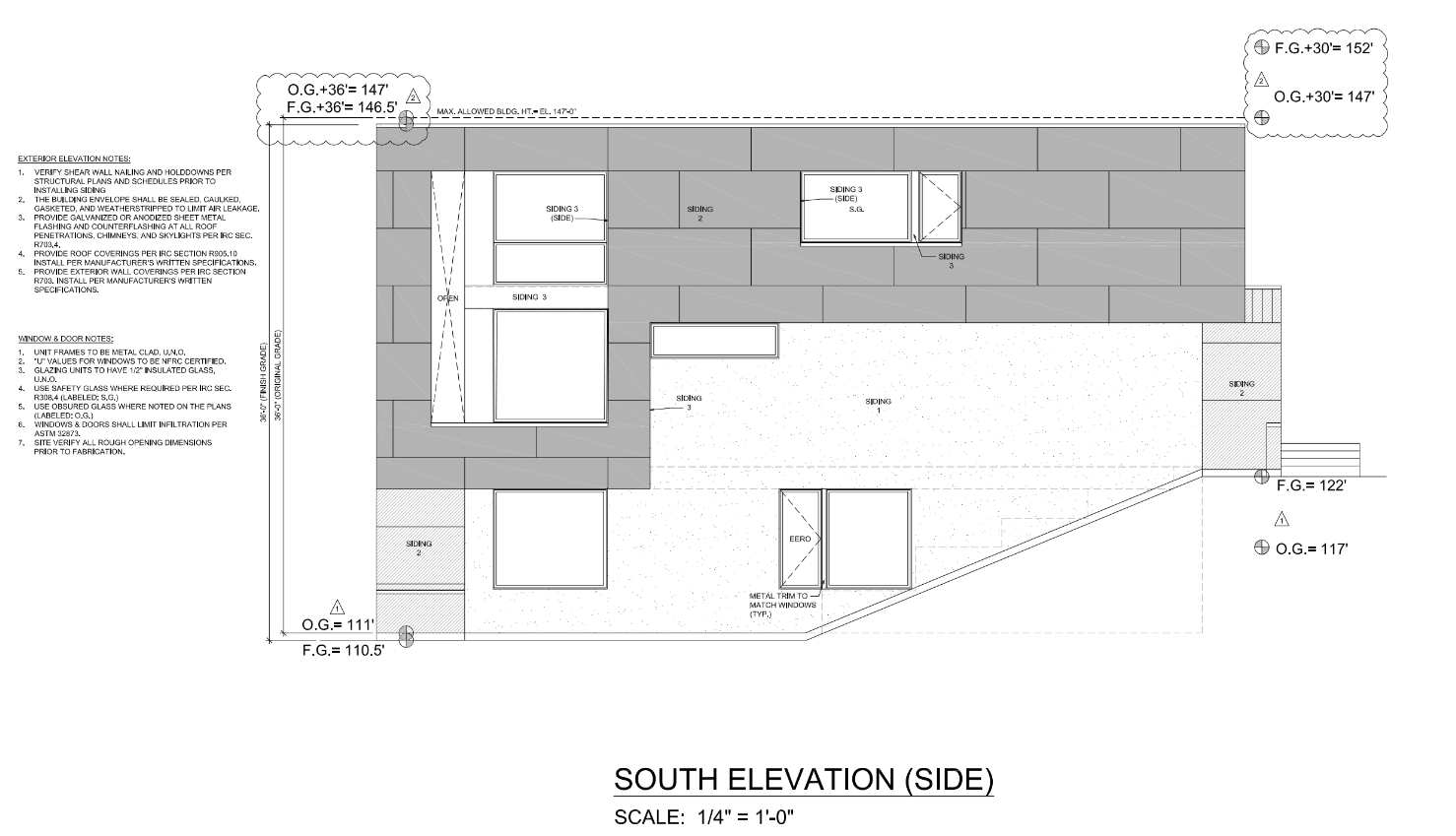
"It was a large, rectangular flat-roof building with little or architectural features on the outside and, quite frankly, little landscape to soften it," Wilcox said. "There's been at least a couple of extreme cases where existing residents lose some of the enjoyment of their property due to the large house being constructed next door to them, seemingly no architectural thought for the neighbors."
As a city that prides itself on its "sylvan" nature, Medina experienced considerable consternation around the idea of allowing additional density following the passage of House Bill 1110 in 2023. Cities of Medina's size only needed to allow two units per lot, and the city kept in place extremely high requirements for minimum lot size, which range from 16,000 to 30,000 square feet. But the idea of a duplex boom has always been more theoretical in Medina than its predominate development type: one older single family home being replaced by a much larger one.
"The impetus for this was that the Council was seeing some input from the public, both during the Comp Plan update and the middle housing [ordinance] about livability, privacy, light pollution, noise, etc. Homes that tend to be filled in the maximum [zoning] box appear to be looming over other neighbors," Medina City Attorney Jennifer Robertson, a former Bellevue Councilmember, explained to the Council.
Deputy Mayor Randy Reeves, one of the biggest advocates on the Council for imposing these changes, pointed at the Evergreen Point property directly. Reeves was in favor of taking swift action while the City considers more targeted changes that could result in less bulky buildings.
"The biggest problem is Exhibit A down the street, which cannot be allowed to happen again on our watch," Deputy Mayor Randy Reeves told his colleagues. "The toe should be amputated, for the good of the patient. We're dealing with gangrene. And if we don't deal with it now, other projects are going to be vested, and we're not going to like the result."
Heija Nunn, the only Councilmember to vote no, saw the emergency action as including too many different elements.
"I see trouble ahead," Nunn said during the study session, later telling her colleagues that she intended to vote "no" because she viewed the ordinance as biting off more than they could chew.
"Even in the face of hearing that we can take some things off the table in order to focus our attention on the bigger parts, we're choosing not to do that. And I think that doesn't serve the goal of actually coming up with this great solution for the bulk problem by doing too many things," Nunn said.
But even as Medina turns its attention from middle housing to McMansions, there is likely more work to be done to bring the city into compliance with state law around housing growth. As part of updating its Comprehensive Plan in 2024, Medina conducted a land capacity analysis that made clear that the city hasn't done its part to accommodate the 19 units of housing assigned to it as a growth target by King County. Under 2021's HB 1220, those units are required to be targeted at households earning at or below 80% of King County's area median income – around $97,000 for a family of two.
With an average home value in Medina hovering around $4.4 million, further actions will almost certainly be necessary for Medina to "make adequate provisions" for those new residents.
It's those requirements that ran nearby Mercer Island into trouble, with the Growth Management Hearings Board finding the city out of compliance with a number of requirements stemming from HB 1220. Futurewise, the nonprofit that filed the appeal against Mercer Island, has also filed a similar appeal against Clyde Hill that remains in negotiation.
Medina City Manager Jeff Swanson told The Urbanist that the new regulations aren't out of line with requirements to accommodate housing growth under the Growth Management Act.
"Medina takes its responsibility to comply with state law seriously," Swanson said. "The Medina Comprehensive Plan and middle housing code encourage the development of more housing in compliance with state standards. The interim official control regarding bulk is consistent with middle housing. As lots in Medina redevelop, having duplexes developed, instead of single-family homes that maximize the building envelope, will facilitate this goal. By requiring larger setbacks in sideyards as well as upper-story stepbacks, there is more incentive to build more reasonably scaled residences. This also helps drive affordability. In addition, by requiring landscape buffers when sideyards have intrusions, privacy and peaceful enjoyment will be enhanced for both the new residents and their neighbors. Regardless of home size, we want all Medina residents to enjoy a high quality of life."
 Ryan Packer