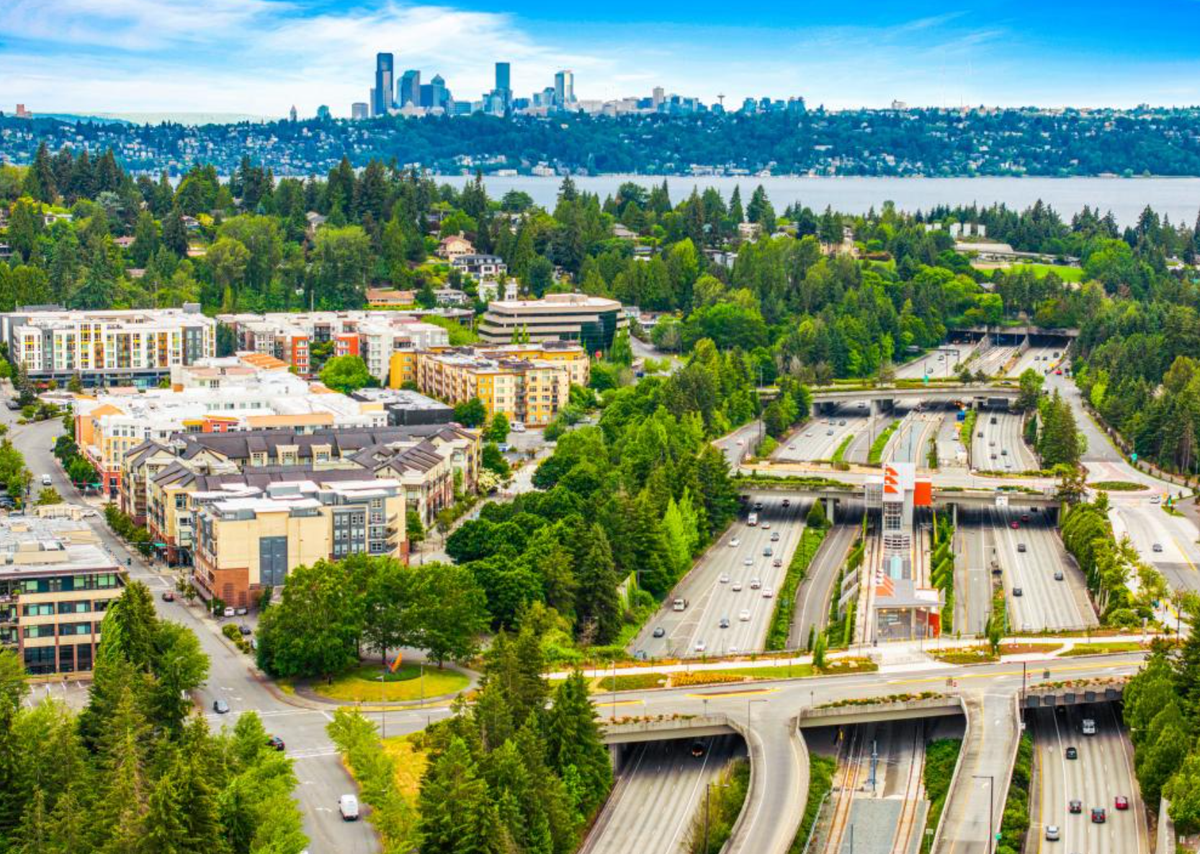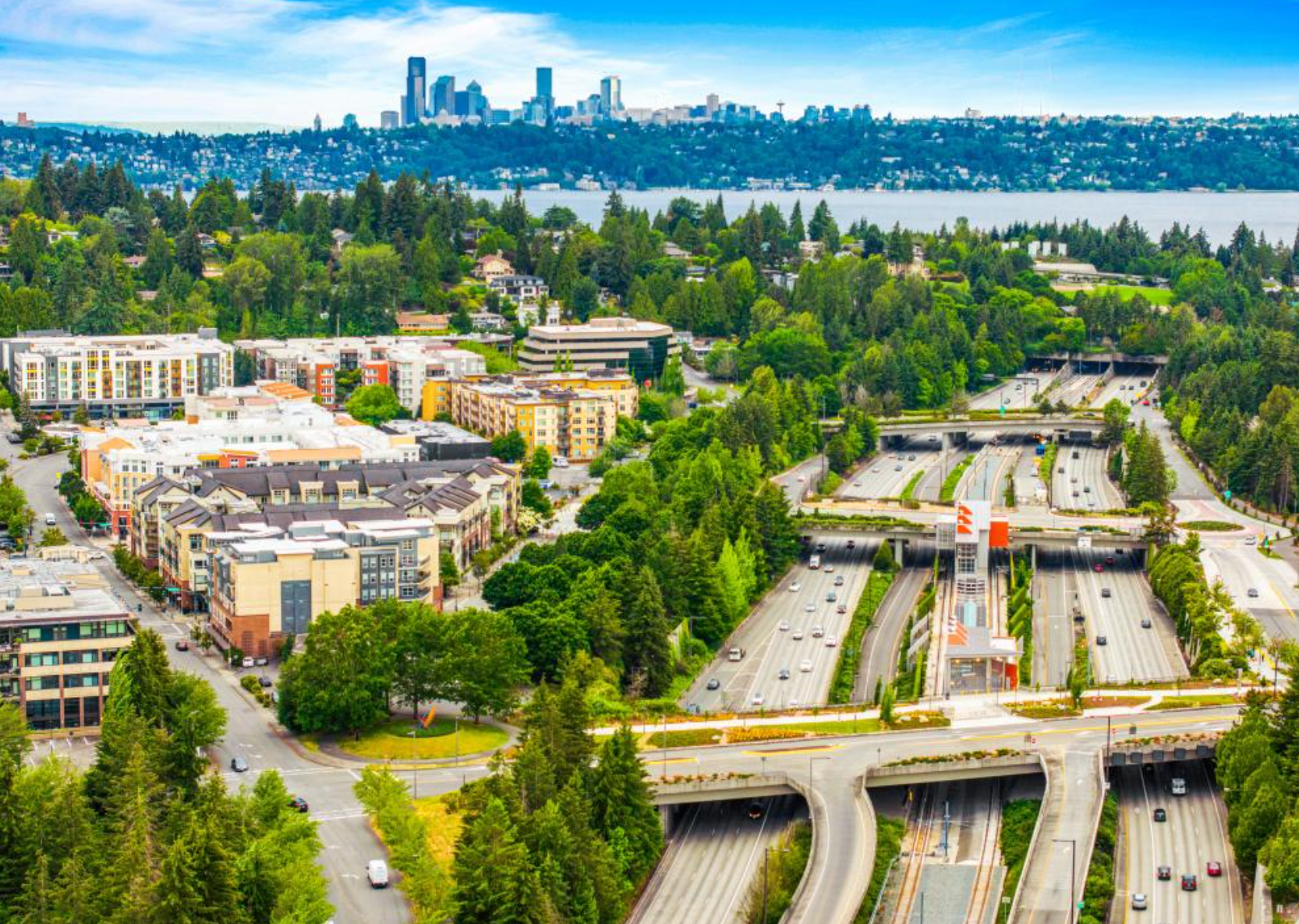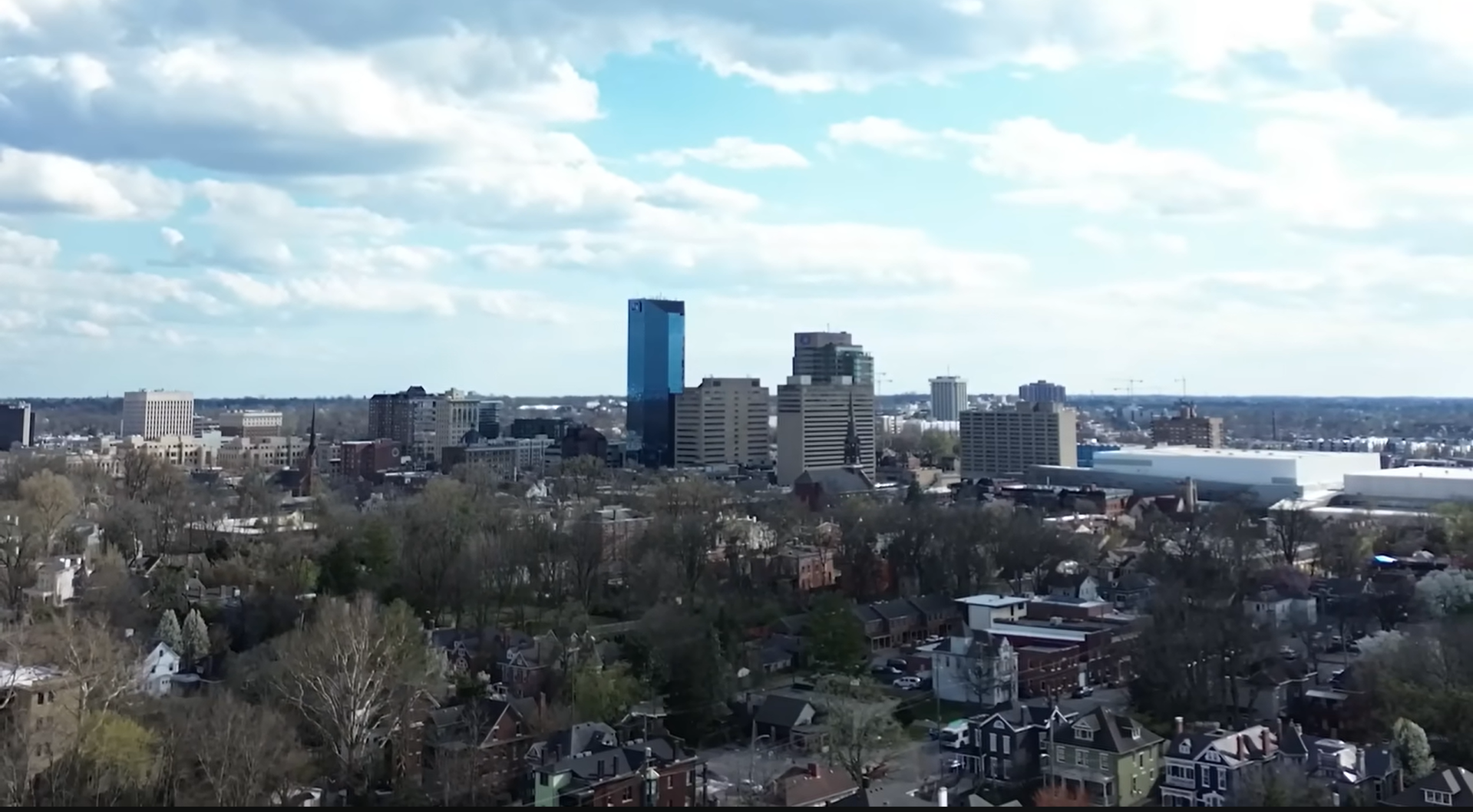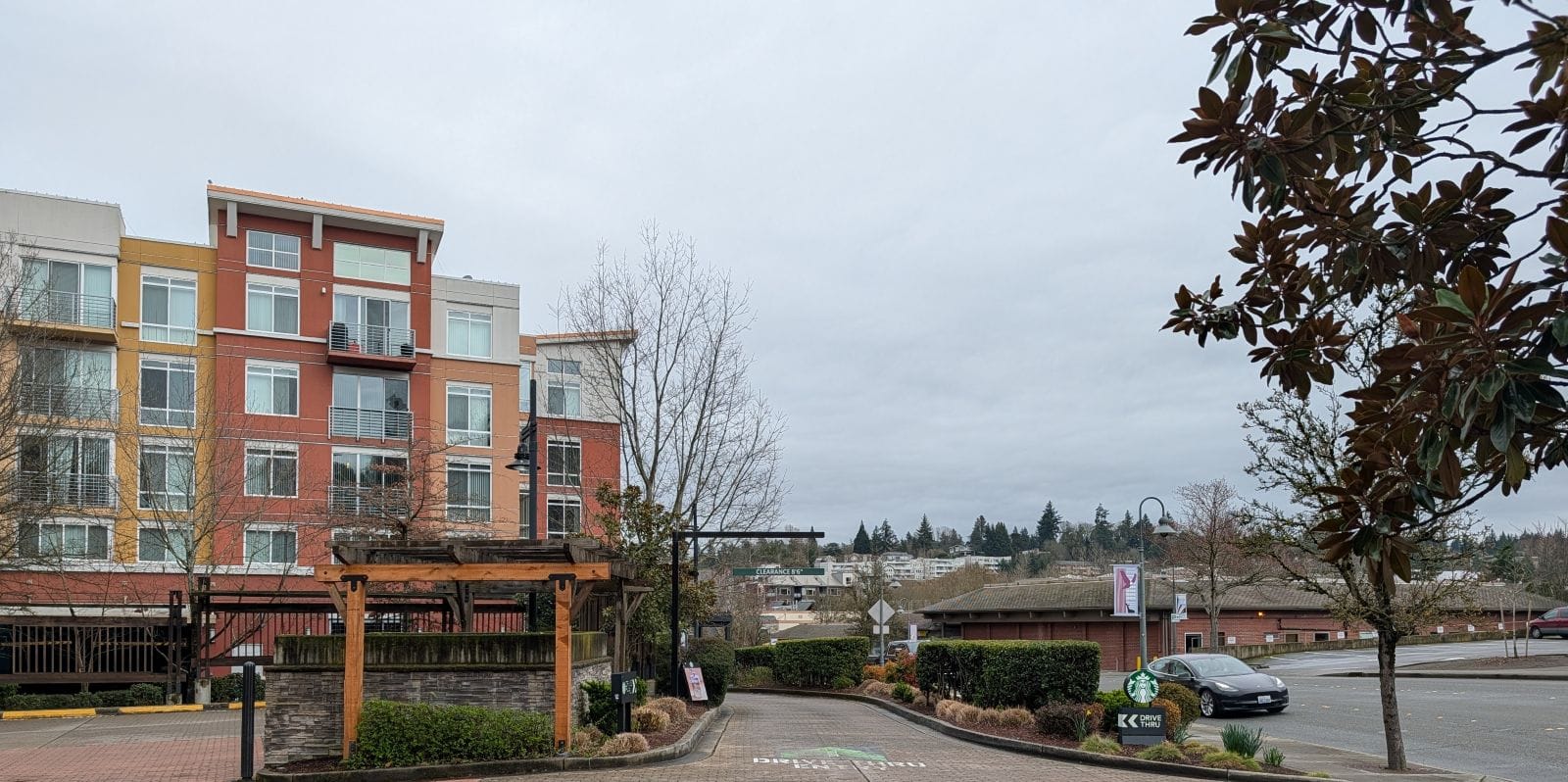
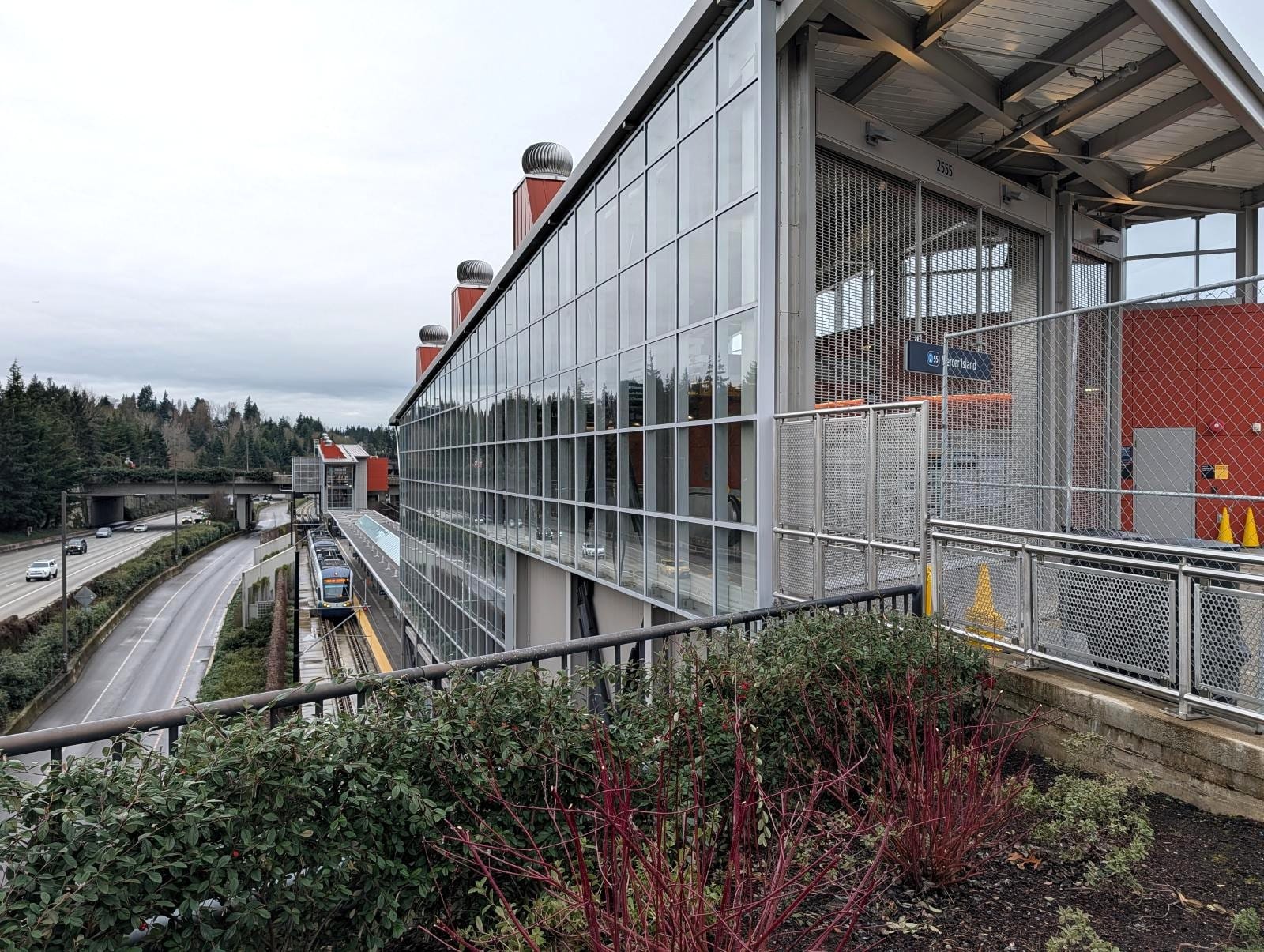
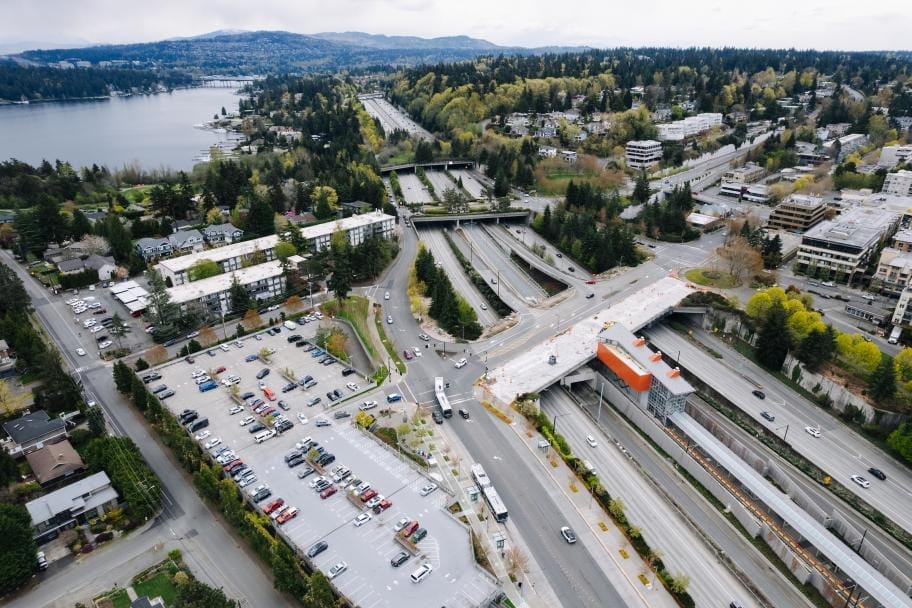
When light rail riders exit Mercer Island Station starting this Saturday, they'll encounter an urban facade with a smattering of five-story residential buildings. The facade gives way pretty quickly. The moment one passes by the first block or two of multifamily buildings near the station, which sits in the median of I-90, a familiar sight of low-slung suburban retail and sprawling parking lots emerges.
Mercer Island has allowed for a glacially slow buildout of multifamily buildings, mostly lining I-90. This is an island that prides itself on its suburban “livable” character, with most of the island set aside for single family homes on large lots. Mercer Island’s median home price is north of $2 million, and life is good… for those who can afford it.
While light rail has been long planned, Mercer Island has added just 549 multifamily homes in the area since 2010, with only one more building under construction to add 146 homes. Other cities have generally surrounded their 2 Line stations with far more housing.
Downtown Bellevue has about 14,000 homes either in the development pipeline or recently added, with big plans around Wilburton, Spring District, and Bel-Red, as well. Downtown Redmond has added 5,300 homes over the past two decades, and Redmond’s Overlake neighborhood has 8,000 homes either in the pipeline or recently added.
Mercer Island has lagged behind.
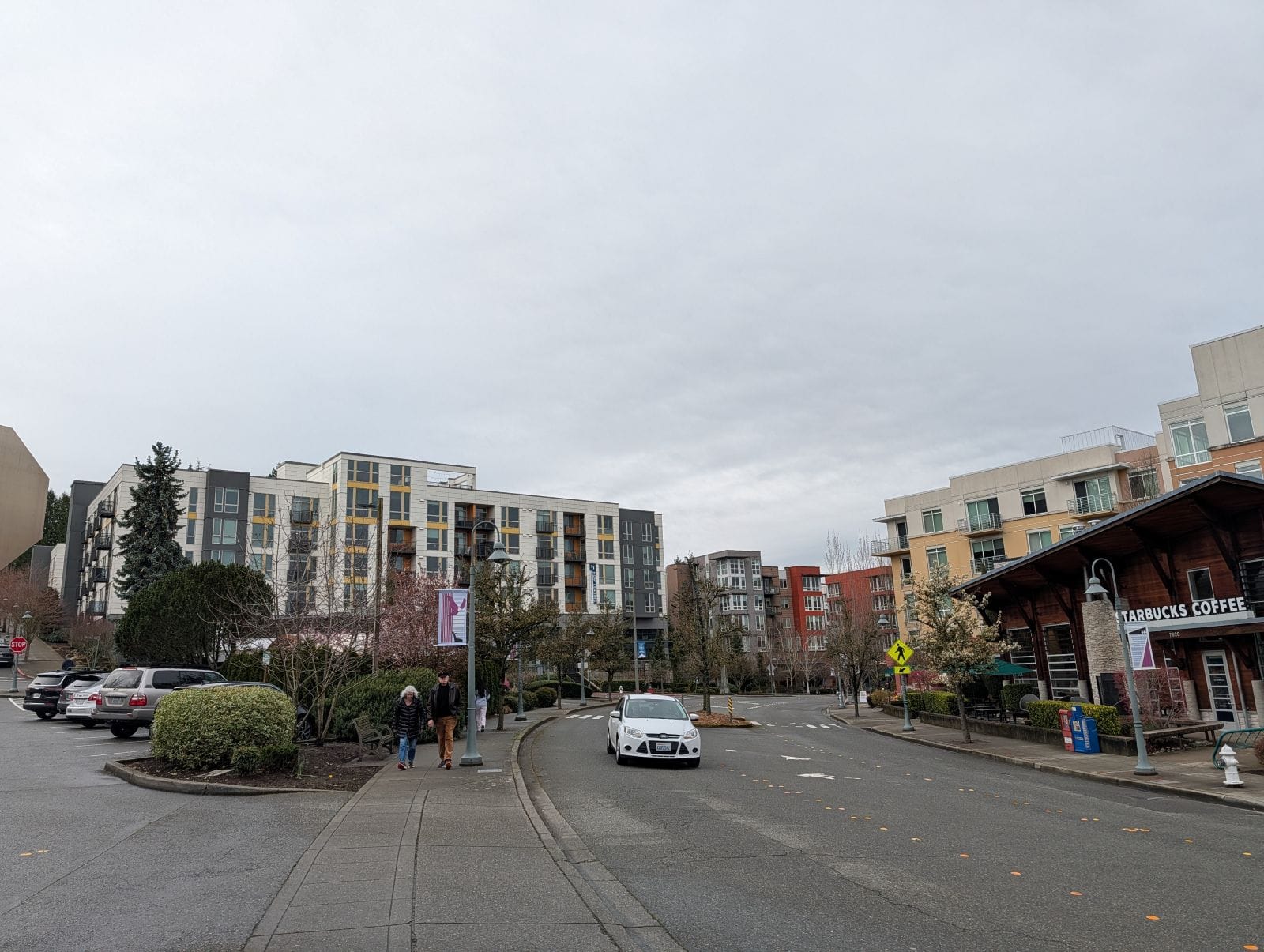
Much of the reason why newer apartment buildings are confined to the northern edge of Town Center can be traced back to a zoning regime enacted in 1995. The 1995 Town Center District Development and Design Requirements set several height limits in the zone, stepping down from a pinnacle (if one can call it that) of five stories in the north of Town Center down to four, three, and two stories in the rest of the area.
These restrictive limits remained until December of 2024, when the City’s Comprehensive Plan update came with height limit increases of one or two stories across Town Center – although other hurdles were added.
Mercer Island has also liberally used development moratoria in Town Center, often in the name of preserving storefronts. Nonetheless, the effect has been little new housing and a retail sector that is still very vulnerable, in part due to a stagnant population from which to draw customers. Mercer Island's population is less than 26,000, while its population density is under 2,000 residents per square mile.
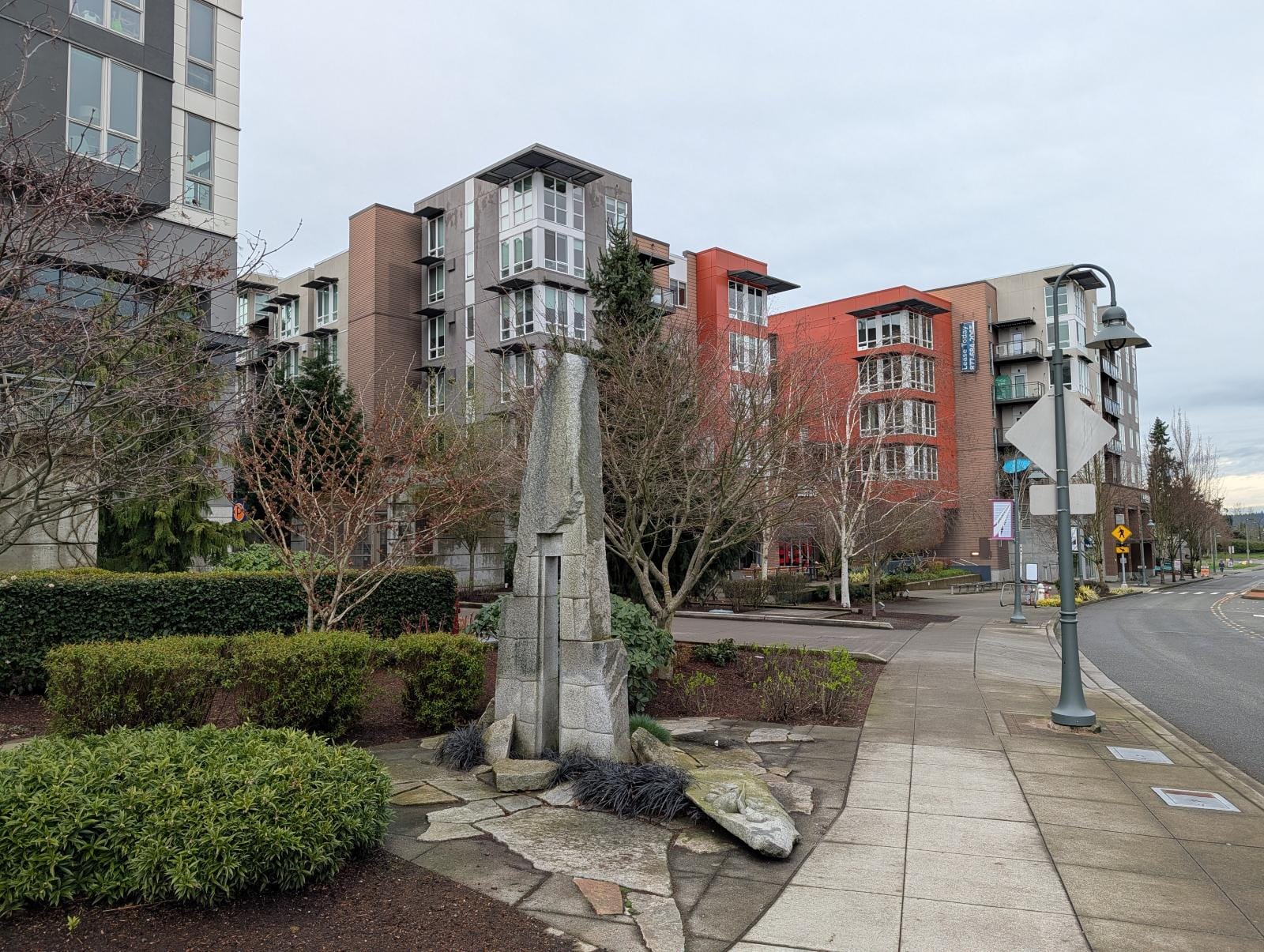
Mercer Island resident Kian Bradley became so frustrated with the lack of housing and transit-oriented development (TOD) that he joined a legal challenge of the City’s Comprehensive Plan spearheaded by the sustainable land use nonprofit Futurewise.
“It’s been quite frustrating to watch how little this area has changed,” Bradley told The Urbanist. “We could have a beautifully integrated waterfront neighborhood north of the station, but instead we act like this is a heavy burden that we have to mitigate. There’s really no vision for what we want this city to grow into.”
Transportation planning consultant Trevor Reed grew up on Mercer Island, but later moved away as an adult. Reed has contributed op-eds for The Urbanist arguing about the need to reform Sound Transit to avoid the myriad of issues the agency has run into, like planning snags, scope creep, station bloat, and ultimately a financial crisis. Another obstacle to light rail’s future success: communities like Mercer Island that fail to add more housing near their stations and resist reorienting their communities around transit and walkability rather than catering solely to cars. That will rob the system of riders in the long run, making it less efficient to operate.
“When I think about what made growing up on Mercer Island exceptional, it was a community of high expectations, not just home values,” Reed told The Urbanist. “It is disappointing that the island is failing to create opportunities for another generation of islanders.”
Reed pointed to the Hines project, a five-story proposal that hoped add at least 150 homes and a high-end grocery store near the station, but it ran into stiff resistance from a homeowner group called Save Our Suburbs that fought for a building moratorium and a costly redesign. Opponents succeeded in stalling out the project in 2015, where it long stayed in project purgatory until finally being overhauled as the Lunara project, with a lesser public benefits package (more on that later).
“Mercer Island’s dysfunction is what inspired me to pursue a career in transportation planning, fighting change has tangibly harmed the community, the collapse of the Hines project being a notable example,” Reed added. “We lost out on incredible public benefits a decade ago because we couldn’t get out of our own way. We will continue to lose out if we don’t get ahead of processes and are always fighting inevitable changes.”
Decades of resistance to multifamily housing created the Town Center we see today, with the built out northern edge and built out northeastern corner being the only areas for five-story buildings historically – although that is set to change due to state intervention. The map below (click on the icons for project details) shows how limited the new development has been.
The lower heights on that “wedding cake” zoning scheme have not appeared very enticing to builders in practice. For the past 30 years, builders have largely deemed five stories the only building height worth building in the island’s Town Center.
These newer buildings include:
- The Aviara Apartments at 2441 76th Ave SE
- A five-story 166-unit mixed use building with 15,000 square feet of commercial space and 312 parking stalls.
- Completed in 2012
- The Hadley Apartments at 2601 76th Ave SE
- A five-story 209-unit mixed use building with 8,200 square feet of commercial space and 227 parking stalls.
- Completed in 2016
- The Mercer at 2558 76th Ave SE
- A five-story 85-unit mixed use building with 1,884 square feet of commercial space and 151 parking stalls.
- Completed in 2014
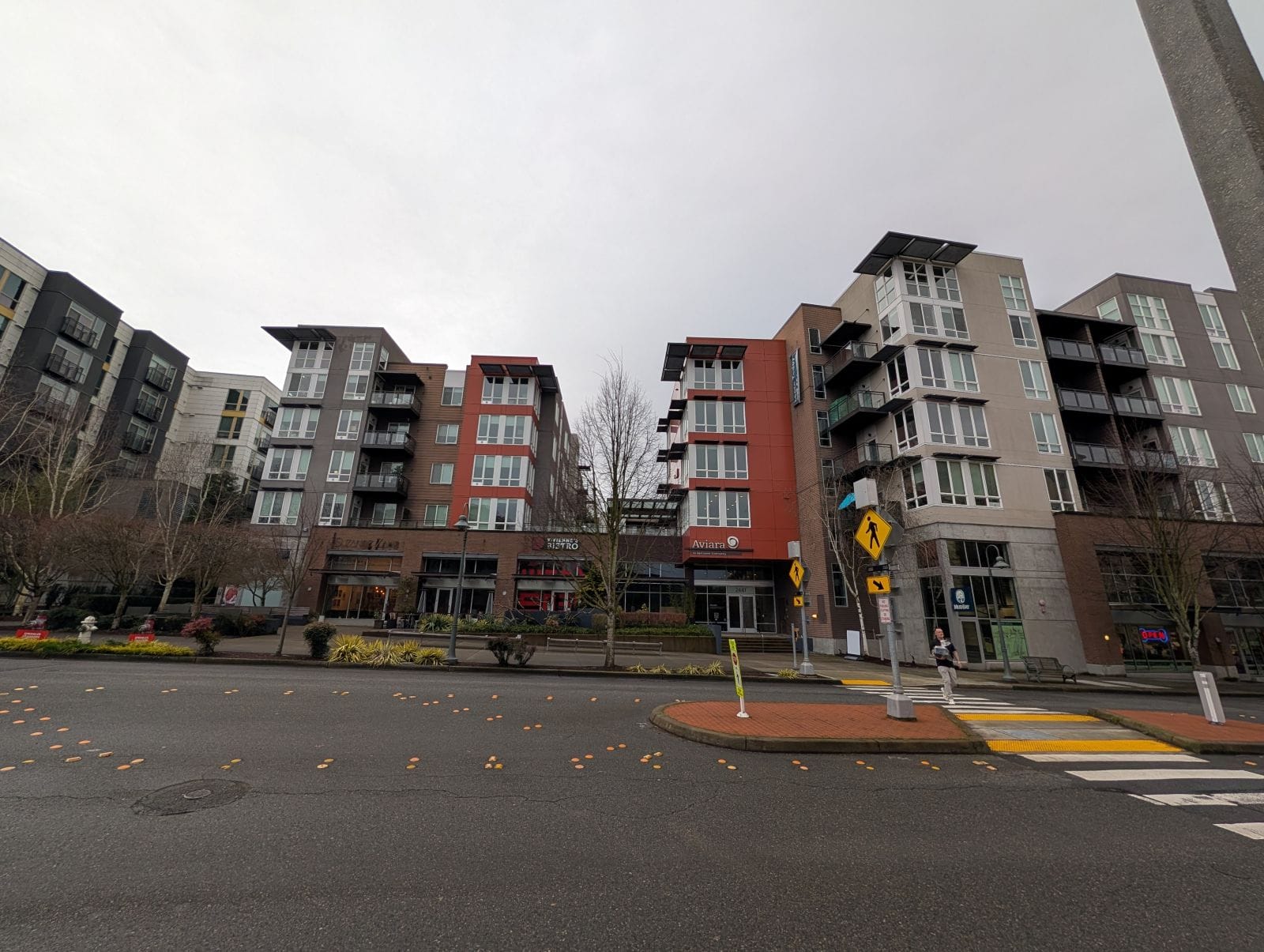
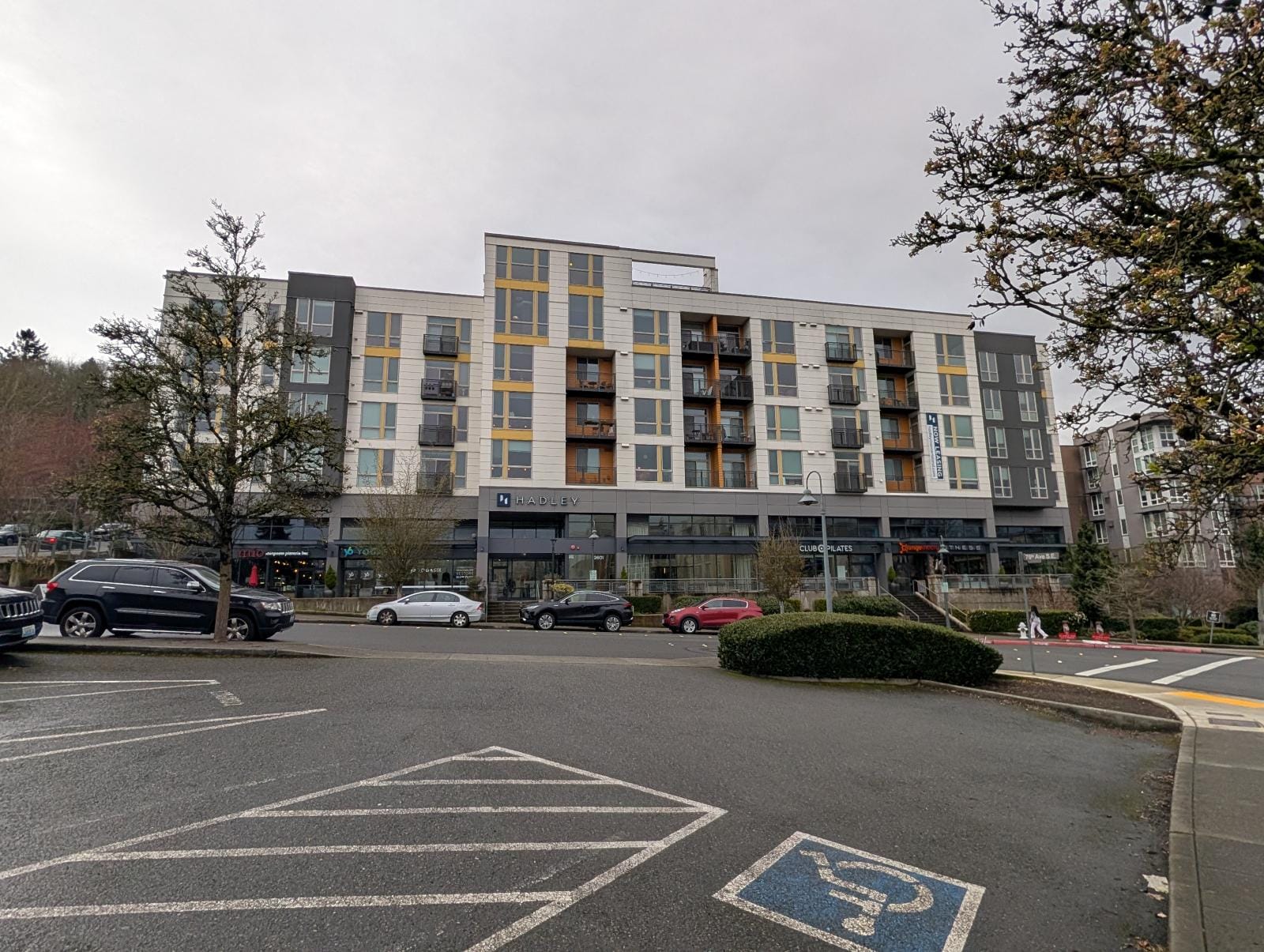
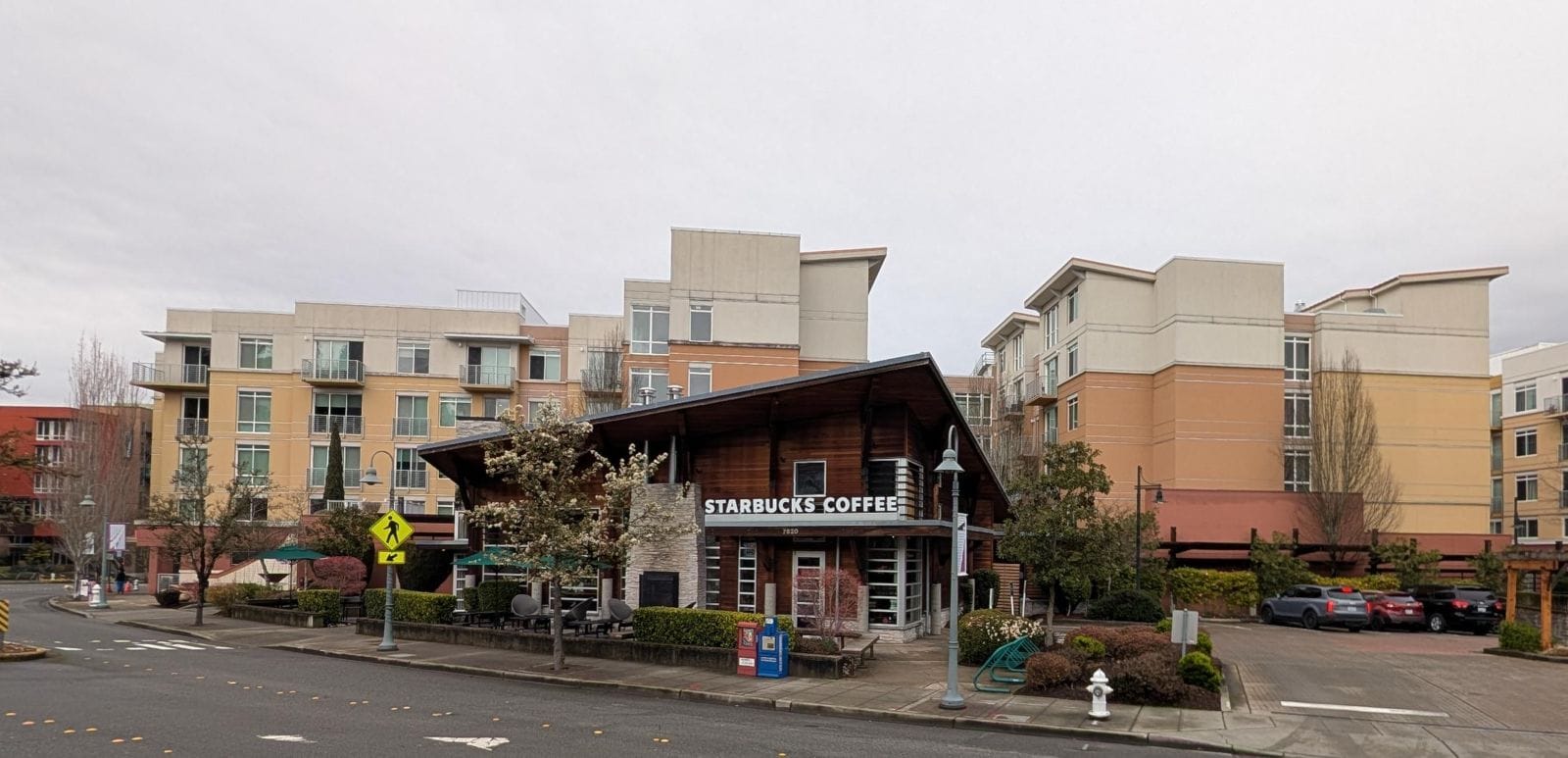
Five-story apartment buildings: Aviara (left), Hadley (middle), and The Mercer (right). (The Urbanist)
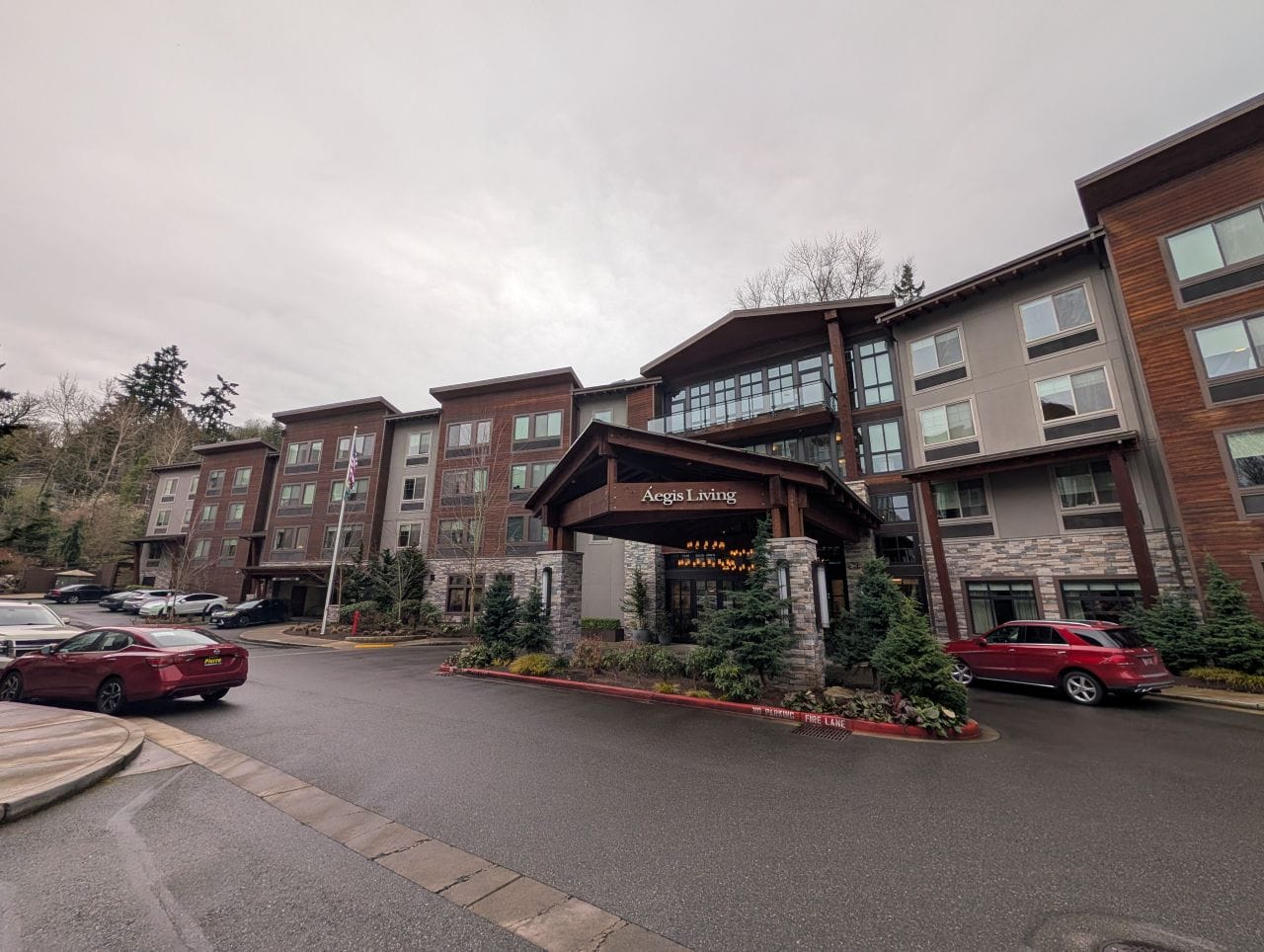
Right behind the Hadley and Aviara Apartments and just outside of the Town Center boundaries, another multi-family building was completed with the Aegis Mercer Island. The senior living center is four stories tall and features 89 homes, surface parking, and a garage. The facility is the latest completion in the area, having opened in 2019.
Today, there is one building under construction. Lunara at 7750 SE 29th Street is defying five-story convention with its four-story height. It’s being built in the southern half of Town Center on a parcel that was then zoned for four stories. The project will have 146 units, 11,284 square feet of commercial space, and 126 parking stalls.
With the winding saga as the Hines project, this long-studied building took more than a decade to come to fruition under a different developer as Lunara, with an additional level of height shaved off of it, as the City Council and Mercer Island Design Commission tinkered with the design and monkeyed with the zoning. Several of the public benefits pledged earlier evaporated, including 200 public parking stalls, intended to serve light rail commuters.
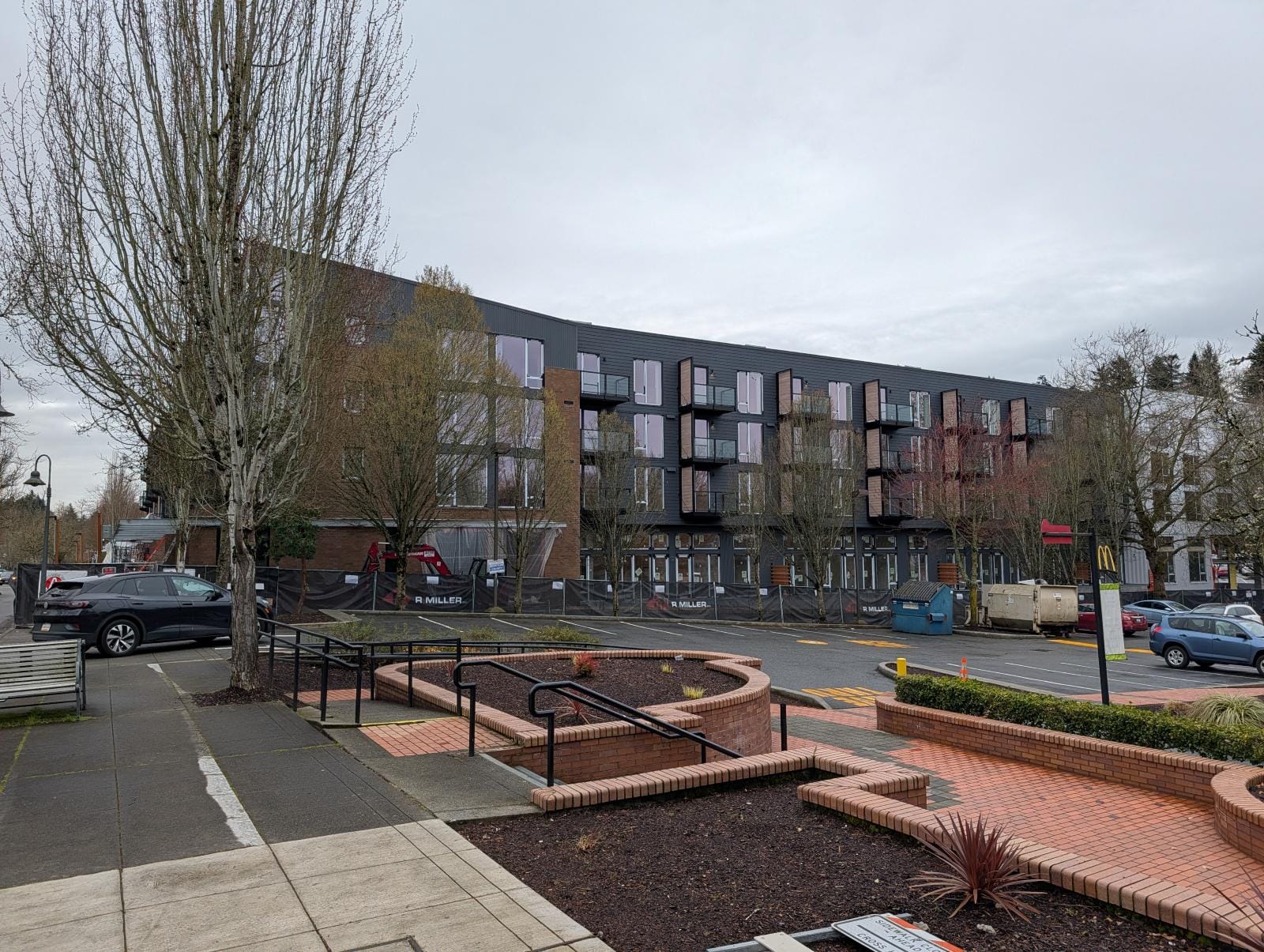
Altogether, 549 housing units, over 25,000 square feet of commercial space, and 690 parking stalls have been completed in Mercer Island’s downtown since 2010. When Lunara is completed, those numbers jump to 695 units, over 36,000 square feet of commercial space, and 816 parking stalls.
Typically, The Urbanist doesn’t have to reach back over 15 years to find projects to include in a neighborhood development article. However, Mercer Island has made it difficult to build these projects, slowing down the buildout of Town Center and the surrounding neighborhoods.
To even reach the five stories of viable height, the island requires developments to provide significant public benefit. Town Center also has long had exacting design requirements, green building standards, and affordable housing mandates, which were recently ratcheted up.
In December 2024, Mercer Island paired slightly increased height limits with some of the strongest affordable housing requirements in the region. Increasing requirements to 15% of total units to be affordable to those making 50% of the area median income for rental units in four- to seven-story buildings.
Those restrictive changes could be reduced as Mercer Island is confronted with its noncompliance ruling from the Growth Management Hearing Board, as The Urbanist reported last August. Facing the threat of lost state grant funding and revenue, Mercer Island has been working to become compliant.
On March 10, staff shared additional details on work to come into Growth Management Act (GMA) compliance, all of which will make building on the island more viable.
“With the recent TOD bill and GMA compliance work, I’m really looking forward to what’s to come,” Bradley said. “We’re going to end up with a nice walkable waterfront neighborhood directly north of the station. I just wish we had a city council that was optimistic about this instead of treating it as an annoying state requirement.”
So far, the plan (as we just reported) includes upzoning the entire Town Center to eight stories, more than doubling height limits in some areas. Considerations also include rolling back the 15% affordable housing requirement back to 10% and establishing an option for developers to pay a fee as an alternative to including affordable units in their projects. These proposals would bring Mercer Island more in line with its Eastside city peers, making it a more compelling place to build much needed housing.
Whether the proposals survive council deliberations intact and pass by the July 31 compliance deadline is far from guaranteed, given the city's history.
In the meantime, riders will have a partly built out station area to explore. Mercer Island has a variety of retail, restaurants, and parks close to its light rail station, but compared to its neighbors, much less housing. Few as they are, Town Center residents and office workers will also be better connected with the mainland with easy access to the rest of the Eastside and Seattle.
 Ryan Packer