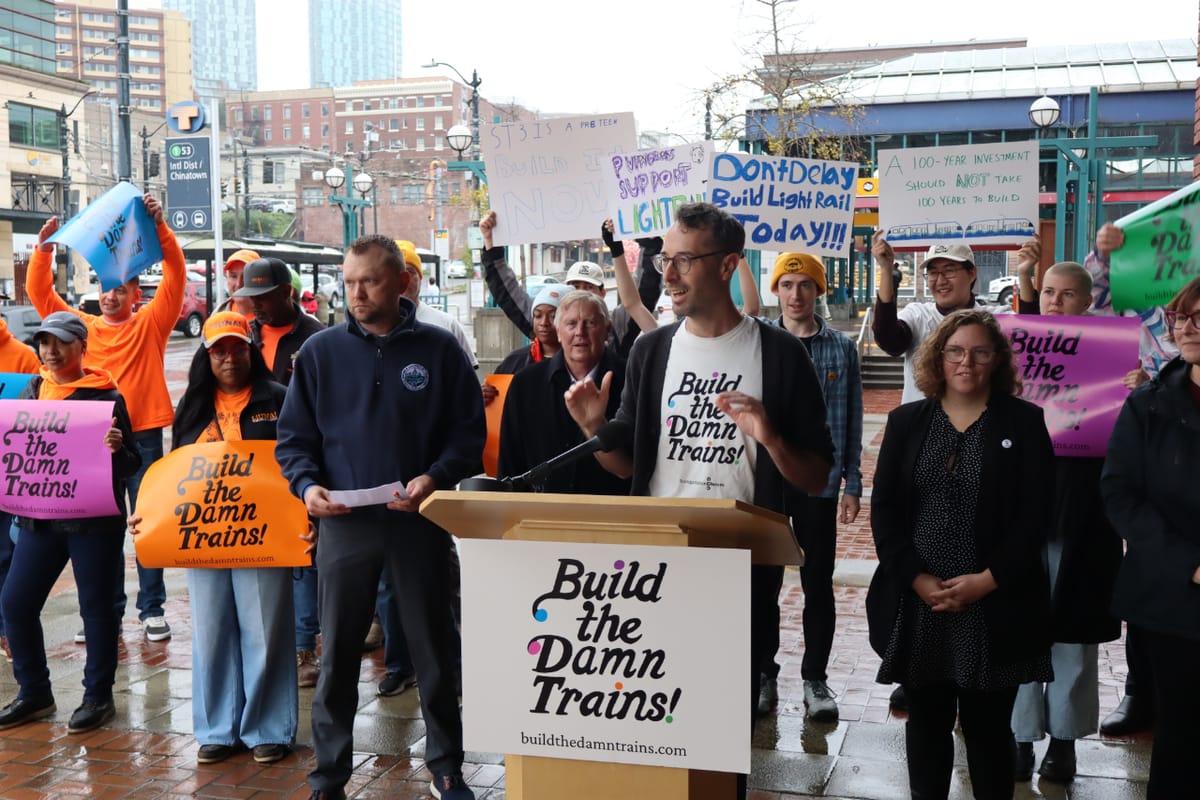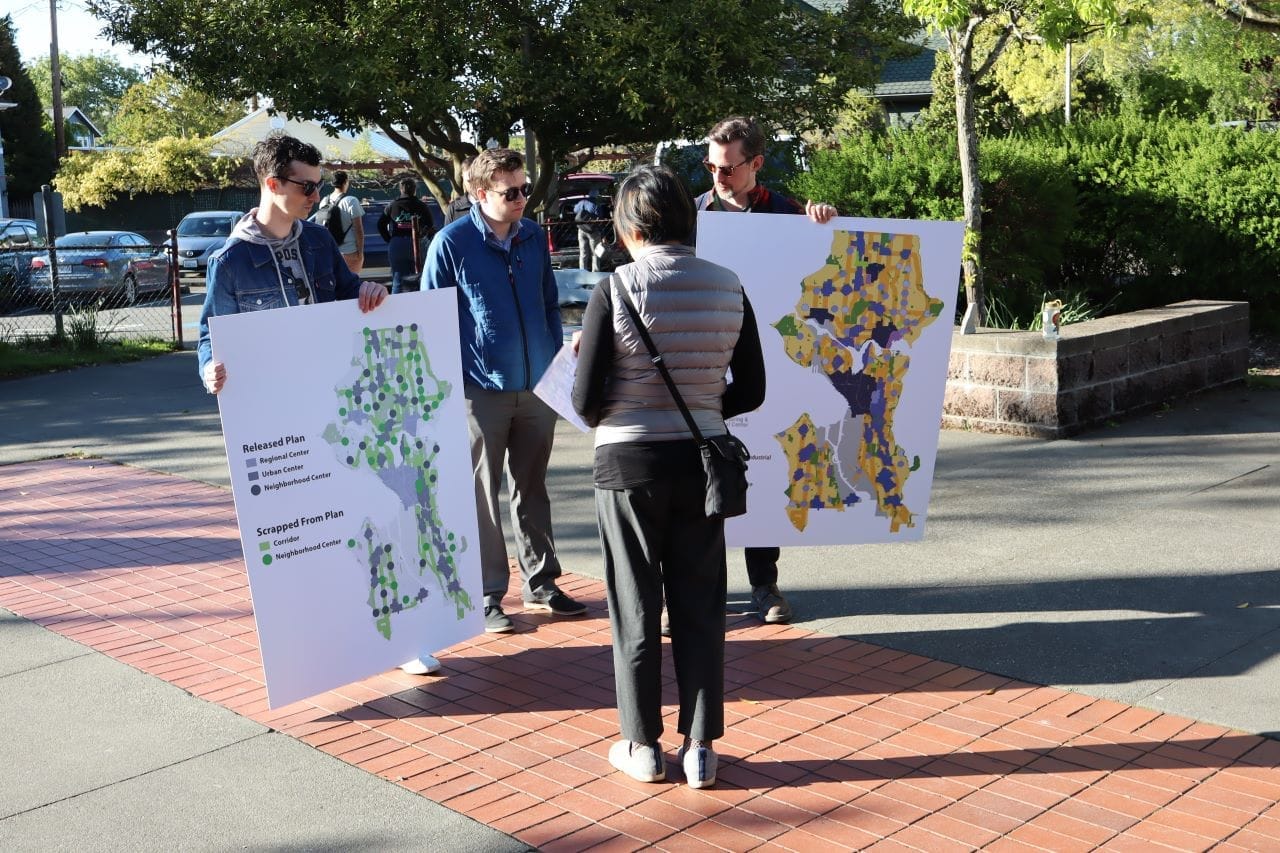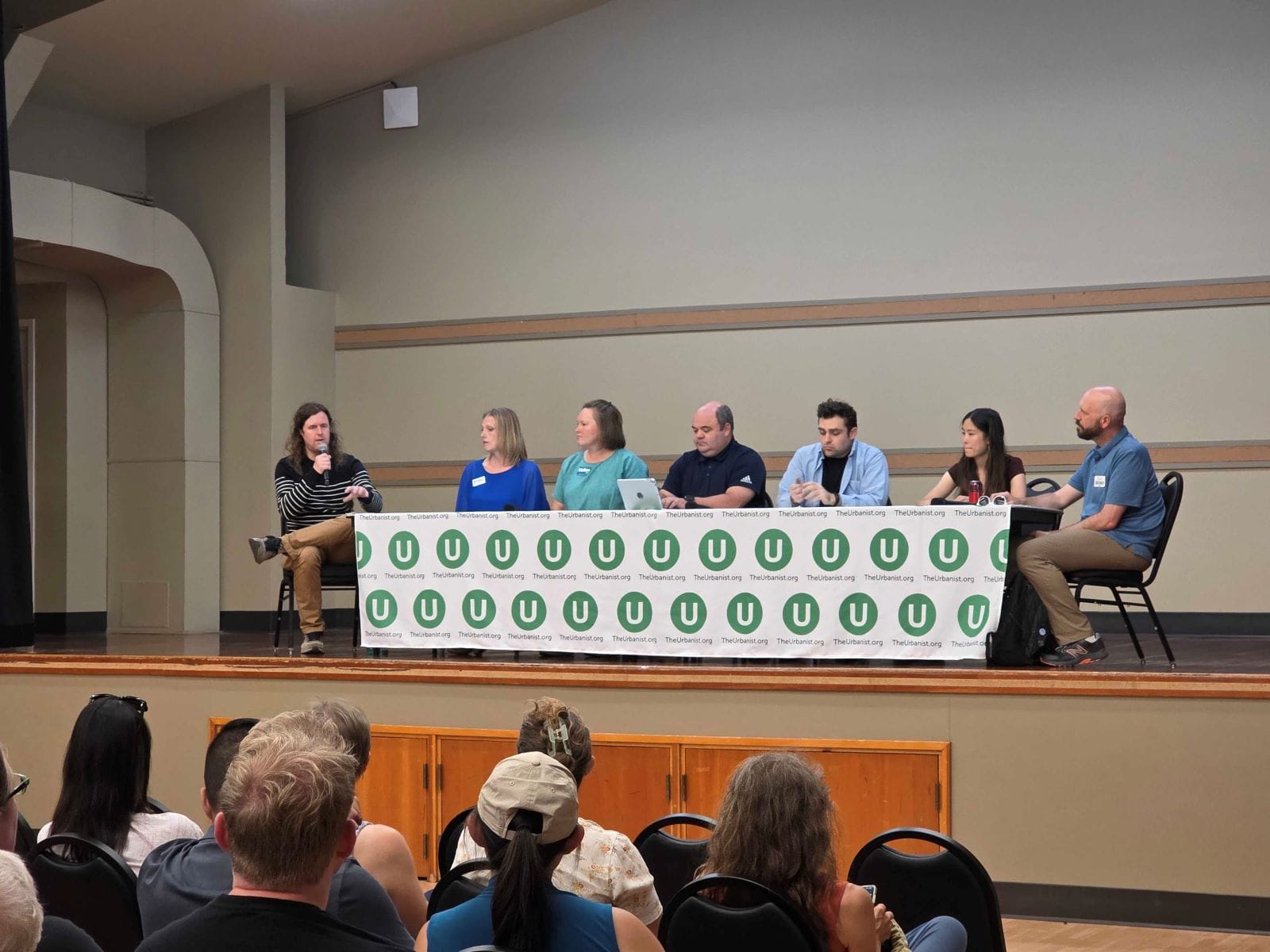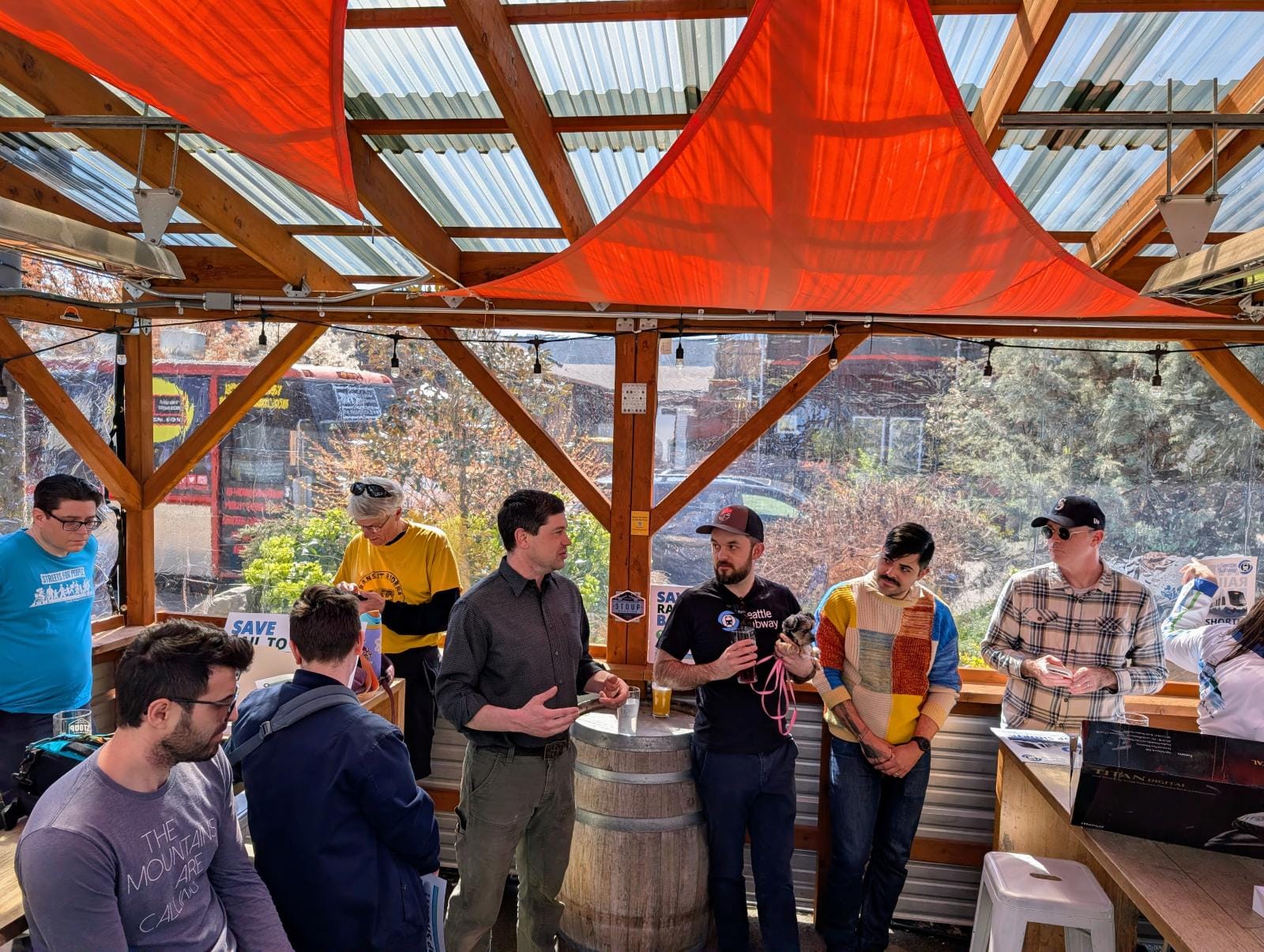
This past Saturday, Seattle Councilmember Dan Strauss emphasized that deferring Ballard's light rail station was not an acceptable option, during remarks at rally hosted by Seattle Subway and Ballard Alliance.
"I just want to really highlight the importance of this moment. It is critical that we finish the spine. It's critical that we keep Issaquah going. We have to keep the pressure up on West Seattle," Strauss said. "But of all of that, Ballard one of the only regional centers in this area not currently connected by light rail. It was the only one to completely fall off the map."
With nine new stations connecting Ballard, Interbay, Seattle Center, South Lake Union, and downtown, Ballard Link light rail is projected to carry 90,000 to 147,000 daily riders, the highest projected ridership in the Sound Transit 3 (ST3) package approved by voters in 2016.
It's also the most overbudget ST3 project. Last year, Sound Transit revealed that its earlier $12 billion estimate had ballooned past $20 billion.
Budget overruns for Ballard Link and other expansion projects has created massive headaches for Strauss and the 17 other members of the Sound Transit Board of Directors, now tasked with balancing the agency's long-term financial plan.
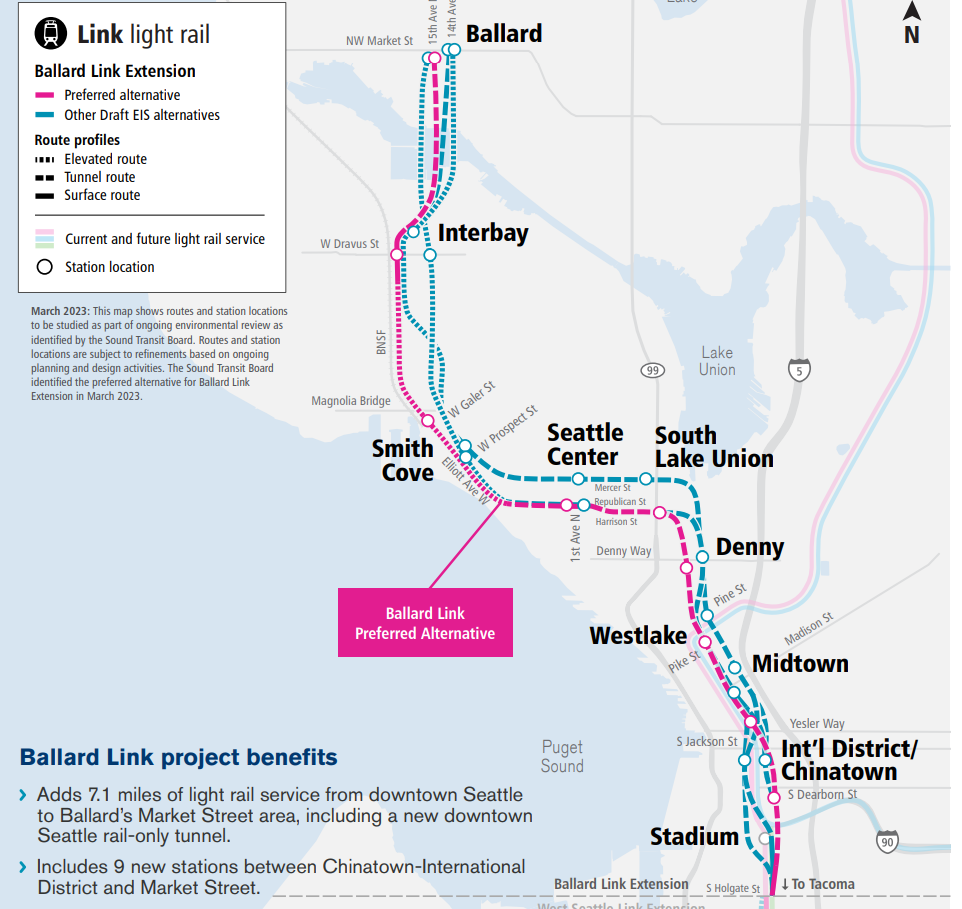
Despite the obstacles, Ballard advocates were adamant that canceling or deferring the station indefinitely should not be on the table, demanding that Sound Transit keep the project moving. Recently, the agency sent a strong signal that cutting Ballard indefinitely was very much on the table after it published three cost-cutting scenarios that all involved deferring stations in Ballard and Interbay and not even projecting an opening date – in hopes the rest of the line could advance largely on schedule while the agency considers other cost-saving measures.
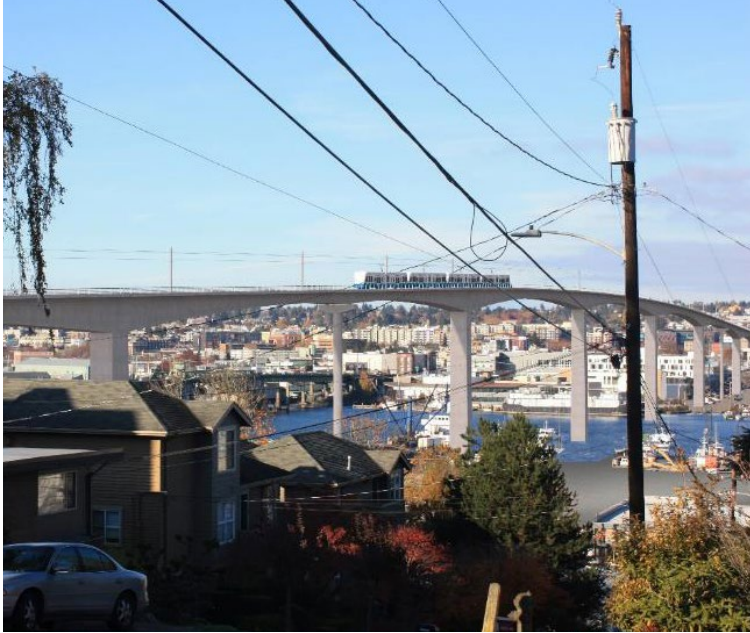
In response, the group Save Ballard Rail formed and launched a website and an online petition with more than 4,000 signatures in just a week. They have more events planned to rally support for Ballard Link, including a "March to Save Ballard Light Rail" at 1pm Sunday, April 19 starting at Gemenskap Park in Ballard, crossing the Ballard Bridge, and ending at Expedia Beach in Smith Cove. The route covers the span of light rail that Sound Transit is contemplating deferring indefinitely.
Strauss told rallygoers that Seattle advocates have been willing to work with Sound Transit to trim costs, including sacrificing stations, if it means keeping the project on schedule.
"We're losing Avalon Station. We're losing South Lake Union Station. These are subterranean stations that cannot infill right? These are things that we are already losing at this moment, and we cannot have the scarcity mindset for 100-year infrastructure," Strauss said. "We have to push forward to get farther."
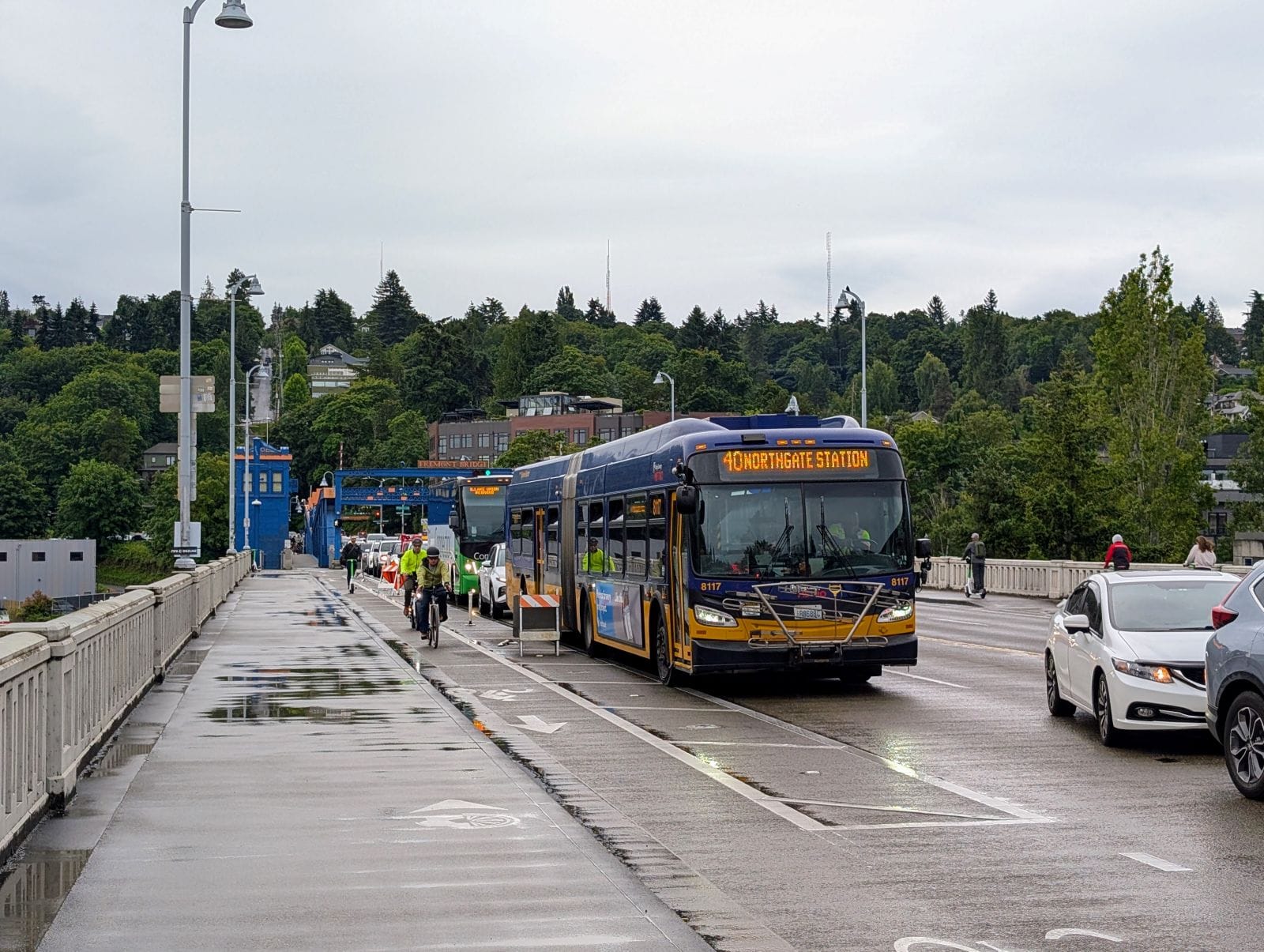
Bus service in Ballard leaves much to be desired, Strauss said Saturday, a point he's reiterated at other recent events. While Sound Transit funds "ST Express" bus lines connecting Downtown Seattle to the suburban transit centers, Ballard does not have a ST Express bus, since it's viewed as a local connection.
"We've got a perception problem in Everett and Tacoma, in Snohomish and Pierce counties, where they've got better bus service than Ballard does," Strauss said. "I'm serious, they've got better bus service than Ballard does, and it's because Sound Transit provides our express busses as a temporary and interim solution, but folks have become reliant on that and not recognize that Sound Transit is more than just light rail, right?"
While Ballard does benefit from frequent King County Metro bus routes like the RapidRide D Line, Route 40, and Route 44, those routes decidedly are not express, with limited transit priority as they pass through plenty of congested pinch points. Strauss recently called Route 40 a "milk run." Reliability improvements along the entire corridor have been hard-fought and fell short of a full "RapidRide" upgrade.
Also speaking at the event was Robert Cruickshank, a housing advocate who was communication director under former Seattle Mayor Mike McGinn. In addition to his leadership role at Sierra Club's Seattle chapter, Cruickshank has penned opinion columns for The Urbanist as a volunteer. Cruickshank underscored the importance of keeping promises and a spirit of regional cooperation on which Sound Transit was founded.
"Fifteen years ago, Sound Transit came to Seattle with a request and said, you know, we'd like to borrow some of the tax revenue that comes from Seattle to help Bellevue build a tunnel on the 2 Line," Cruickshank said. "And Mike McGinn, who was mayor at the time, said 'okay, but I have a request for you. I want you to advance the planning for rail to West Seattle and Ballard and make sure that West Seattle and Ballard line are in ST3.' The Sound Transit Board said, yes, we'll do that."
That Bellevue tunnel was built with $160 million in funding from the City of Bellevue itself – around half of its cost – with Sound Transit later advancing $2 million to study how exactly Ballard could connect with the rest of the regional transit system. The issue of "third party funding" for different elements of future light rail projects is a salient one, with tunnels to Ballard and West Seattle originally advanced with the understanding that Seattle would likely fork over some funding for those gold-plated features.
The Urbanist is a nonprofit newsroom powered by reader support. Become a member, get perks, and support local journalism.
Another point Ballard advocates have marshalled is that the ST3 ballot measure ran up huge margins in the Ballard area.
"And that became ST3, which we approved, and we here in Northwest Seattle, approved by a enormous margin, larger than anywhere else in the Puget Sound region, almost 90% in some places," Cruickshank said. "We are ready, because we wanted this. If you look around here, we've been building all this density, which is great in and of itself. We've also been building with the expectation that we're going to connect with rail."
Advocates argued they have answers to Sound Transit's financial woes – at least if they are given enough of a chance to put them out there.
"We need to have answers to how do we fund it? How do we build it more affordably? We've got people here to help talk about that, and we're going to do some work around that, but we don't have to have a single answer to those questions," Cruickshank said. "We just need to have options and say you could do X, Y and Z for the finances: tax increment financing, longer bonds and ST4 new revenue package on the construction. We could do automated trains. We can do cut and cover tunnels. We can do above grade rather than below grade in certain places. We don't have to agree on a single answer. We have to show the board that we have answers that make it so that we do not have to build at the highest prices in the world to expand transit."
That's where Cruickshank tapped in Scott Kubly, the former head of the Seattle Department of Transportation. Kubly is working with transportation planner Trevor Reed to seed ideas for cost-saving measures using their expertise in the industry. (Both have contributed Urbanist op-eds if you'd like to read more on their thinking: Reed's latest piece and Kubly's last op-ed.)
"We don't purport to have the solution, but we thought we needed to come up with a solution," Kubly said. "And so that was really looking at automated trains that have been deployed globally, all over the world."
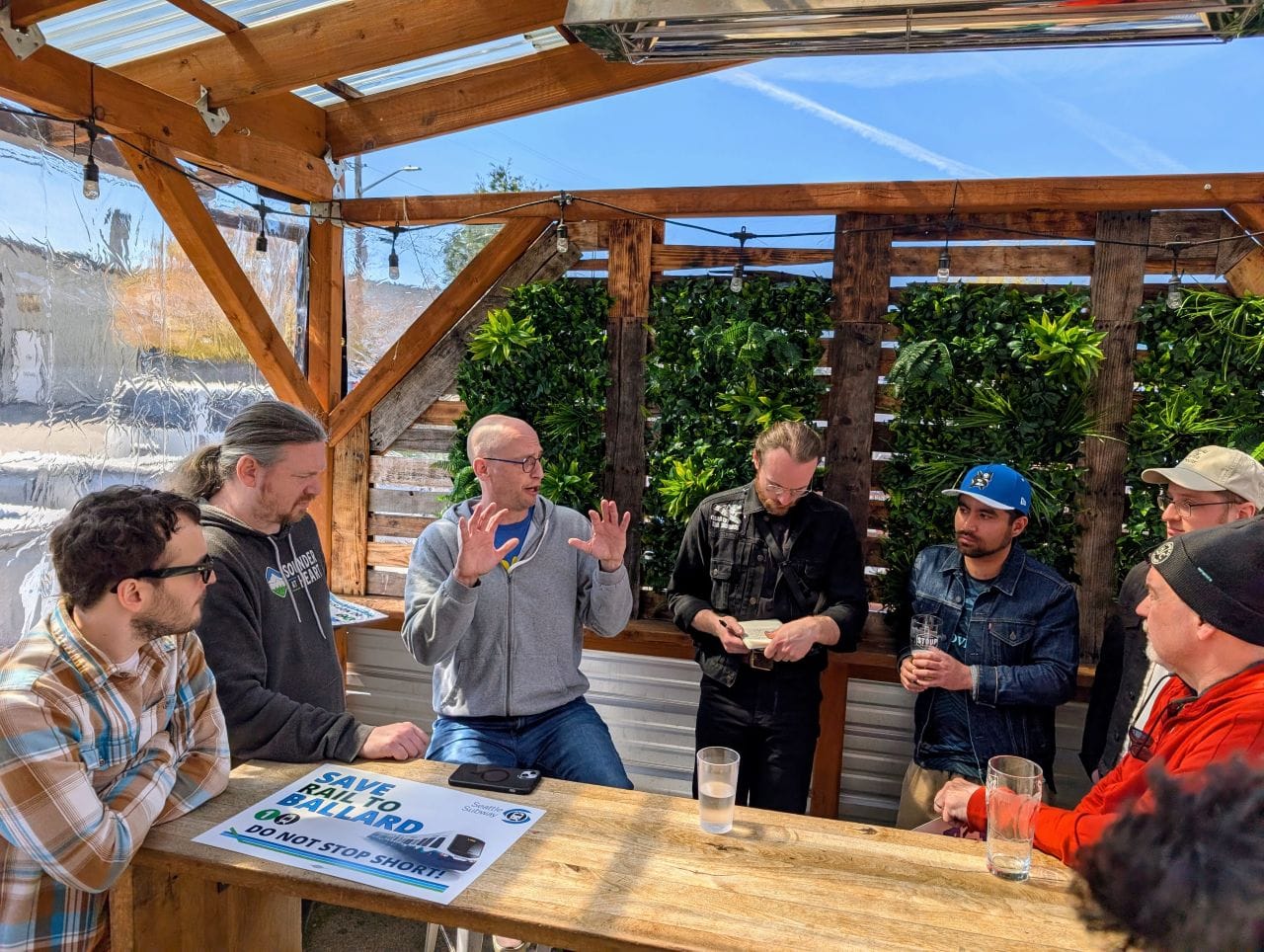
Kubly pointed to Copenhagen as a peer city that overhauled their metro rail plan to get better outcomes, pivoting to automated trains to save costs.
"We look at Copenhagen as an exemplar," Kubly said. "Democratic society, so they're going to have a process, similar cost of living, lots of water. And they built a system for about a quarter of the cost of Sound Transit, more stations, 100% tunnel. They built it at about a quarter cost. How they did that was shorter, more frequent trains, which leads to smaller stations, which leads to less excavation, which leads to faster delivery and a better passenger experience. So our proposal is really to Sound Transit, and Dow has seen it. It's been emailed to all of the board and a lot of staff."
Rally speakers emphasized that the push to save rail to Ballard was not intended to come at the expense of other light rail projects across the region. Strauss repeatedly said Sound Transit must "complete the spine," referring to the planned 62-mile light rail corridor from Tacoma to Everett. And he argued Sound Transit should still be thinking about ST4 and future expansion as they design lines.
"We have to complete the spine. We have to show them what Sound Transit really means," Strauss said. "And here in this area, West Seattle shouldn't stop at the Junction. It should get back to Renton and White Center. Ballard's line should get up to Crown Hill, reconnect back up to Northgate. But we don't have people in this moment getting loud, getting excitable. Sound Transit staff is already moving in a certain direction. If we don't hear from you, that's the direction we'll continue to go, and that's not the future I want to see. So help me, help all of us, make sure that Sound Transit delivers on the promises."
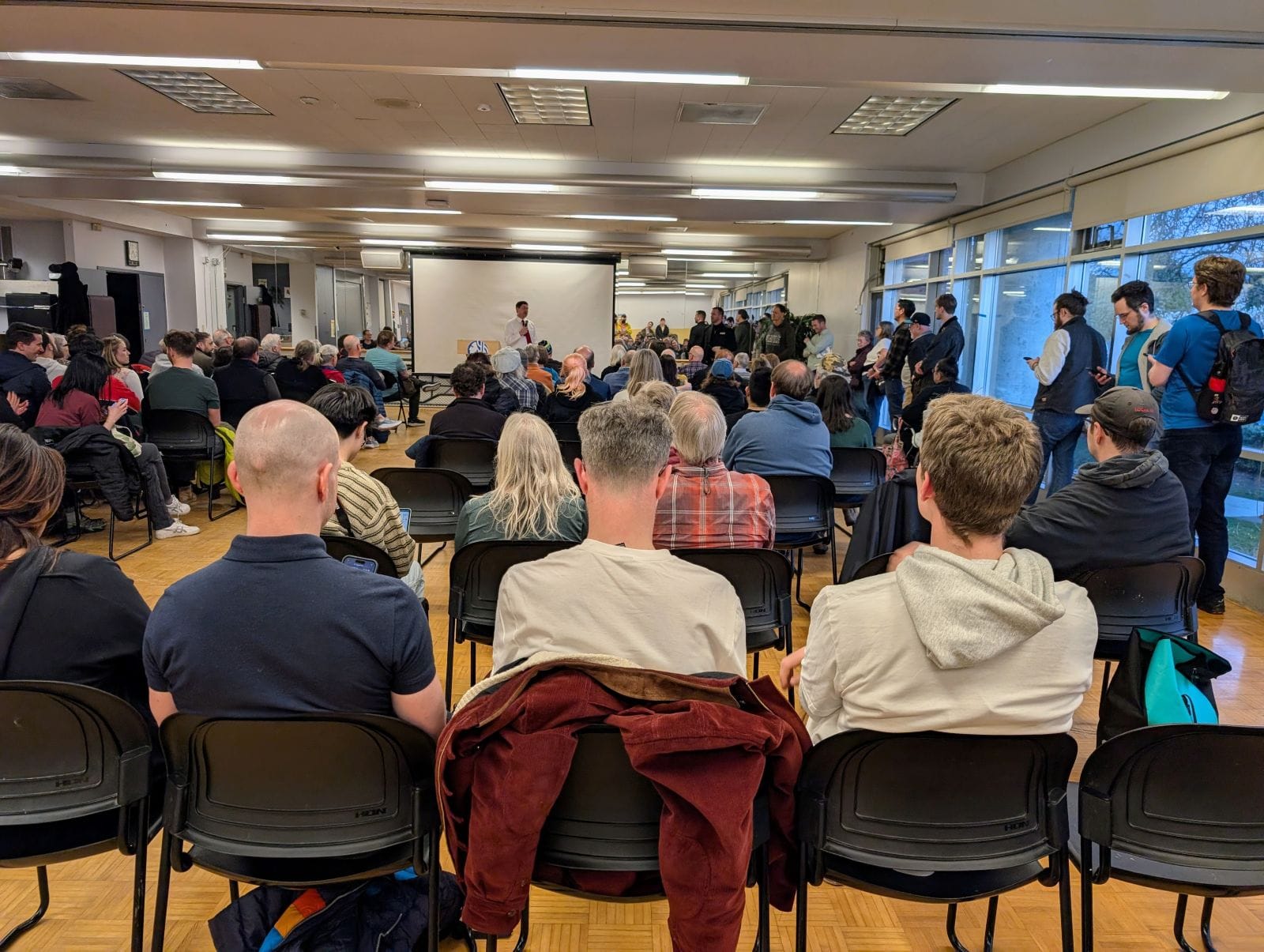
Dozens of residents also turned out to push to save rail to Ballard rail at a townhall event that Councilmember Strauss hosted at the Ballard Community Center on March 25. Strauss argued Ballard Link could see plenty of cost-saving measures in the future, but it was limited for now by the fact the project was less advanced in planning than West Seattle Link and several other ST3 projects.
"So talking about Sound Transit, your first question of have we applied cost-saving measures to the Ballard extension? And the answer is, no," Strauss said.
Part of challenge is to avoid delays with the Federal Transit Administration (FTA), which must sign off on the project before they can begin permitting and construction. Applying cost-saving measures prematurely could risk federal delays.
"The Record of Decision is what we have to receive in the Federal Transit Administration for us to be able to move forward with the project," Strauss said. "We have the record of decision for West Seattle. We do not have the record of decision for Ballard Link extension. And so that is the primary reason why cost-saving measures have been applied to West Seattle and not to Ballard, in part because if we start saying we're going to change our route while the FTA is reviewing it, they will come back and say, we're not done with the plan. Come back to us when we were ready, and we don't have that time to spend, right?"
Strauss reintroduced the topic of cost-sharing agreements between subareas of the Sound Transit Taxing District during his town hall. He made the argument that the second downtown tunnel contained with the Ballard Link project was crucial to the success of the entire network.
"Has anyone ridden the Route 40 bus? Slow as dirt, isn't it? That's a milk run," Strauss said. "And that's the same thing that would happen to that 1 Line from Everett to Tacoma – the consistency and the ability to keep that train on schedule would diminish."
Sound Transit has sought to price that regional contribution in to the financial plan with Seattle's North King subarea covering 51% of the downtown tunnel, and the other subareas contributing 49%, with the shares currently allotted by expected ridership in the tunnel coming from that subarea. Strauss argued the Seattle Center station should also be cost shared since the whole region has interest in attending events on the campus, alluding to the expected return of the Seattle Sonics NBA franchise as another draw.
At a broader scale, transit advocates have also launched the Build The Damn Trains coalition in 2025 to defend light rail expansion plans all over the region. Transportation Choices Coalition (TCC) is spearheading that group.
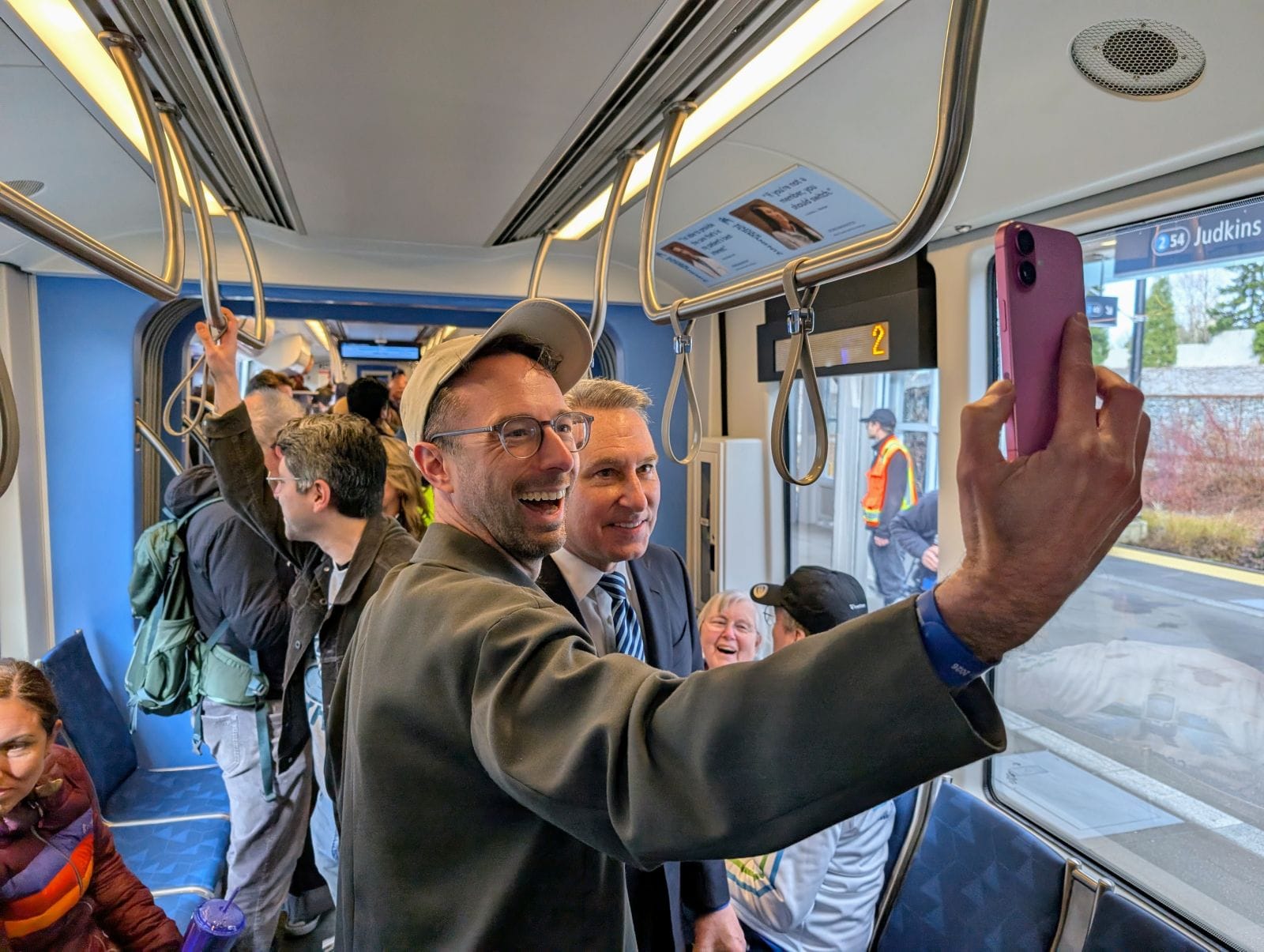
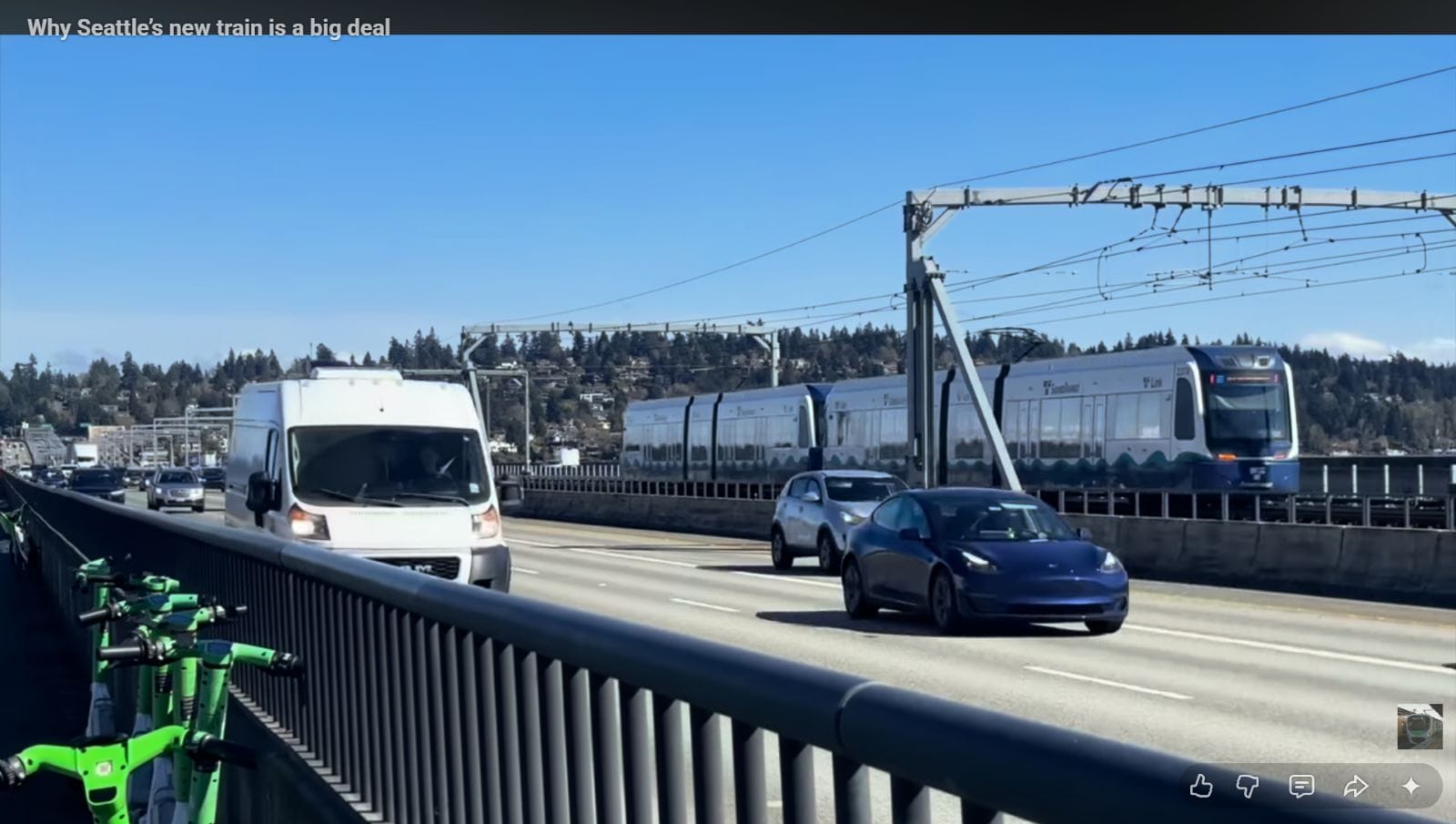
TCC executive director Kirk Hovenkotter struck an optimistic tone – granted The Urbanist interviewed him on the platform of Judkins Park Station while he was waiting for the first 2 Line train to cross Lake Washington during the line's March 28 grand opening. The agency estimated Link light rail attracted 205,000 riders on opening day, the second busiest day in agency history, showing the latent demand for these rail connections.
"[The 2 Line] overcame a great recession. It overcame a pandemic and to see what we got done and approved by voters, even before any trains had run, and now you have tens of thousands of people showing up at openings saying they want this," Hovenkotter said. "If you got that political support, that's a clear message to our Sound Transit Board members that they need to use creative solutions to be able to deliver this, and not just cuts. The message from the thousands of people here today is to build the damn trains."
 Ryan Packer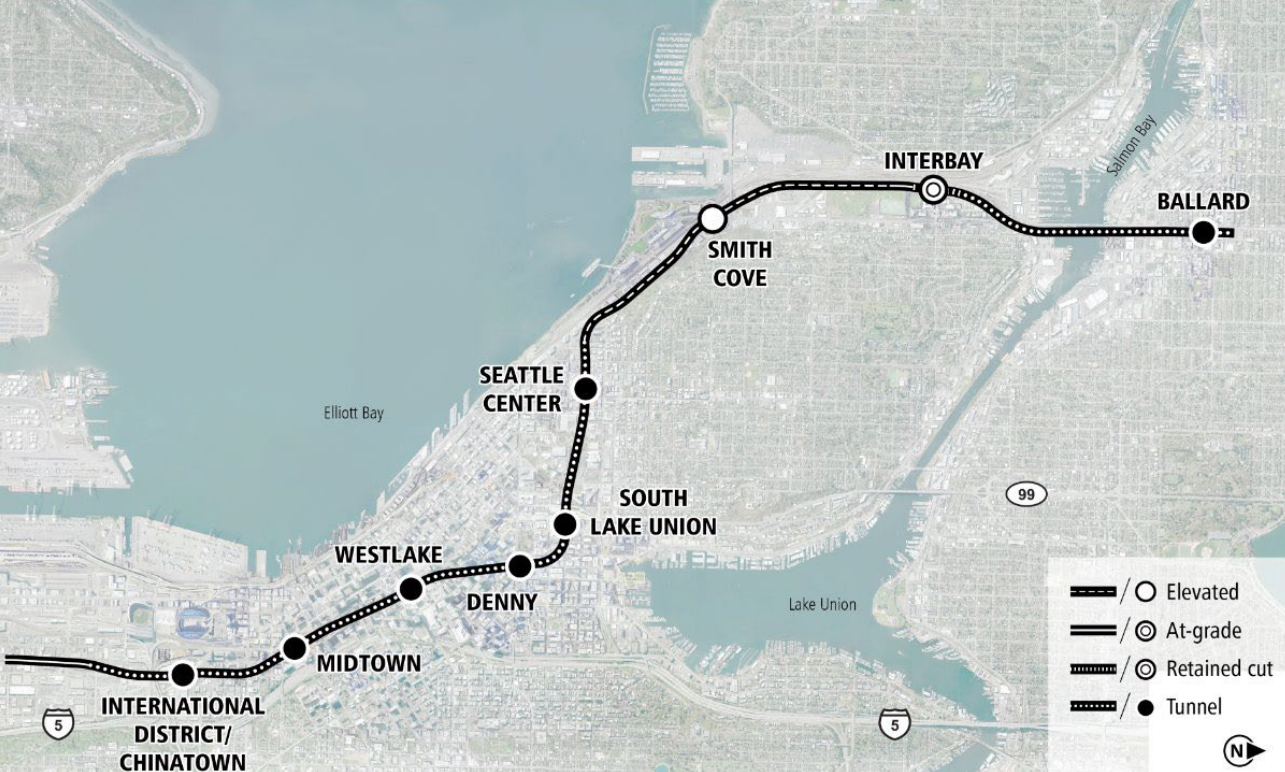
 Ryan Packer