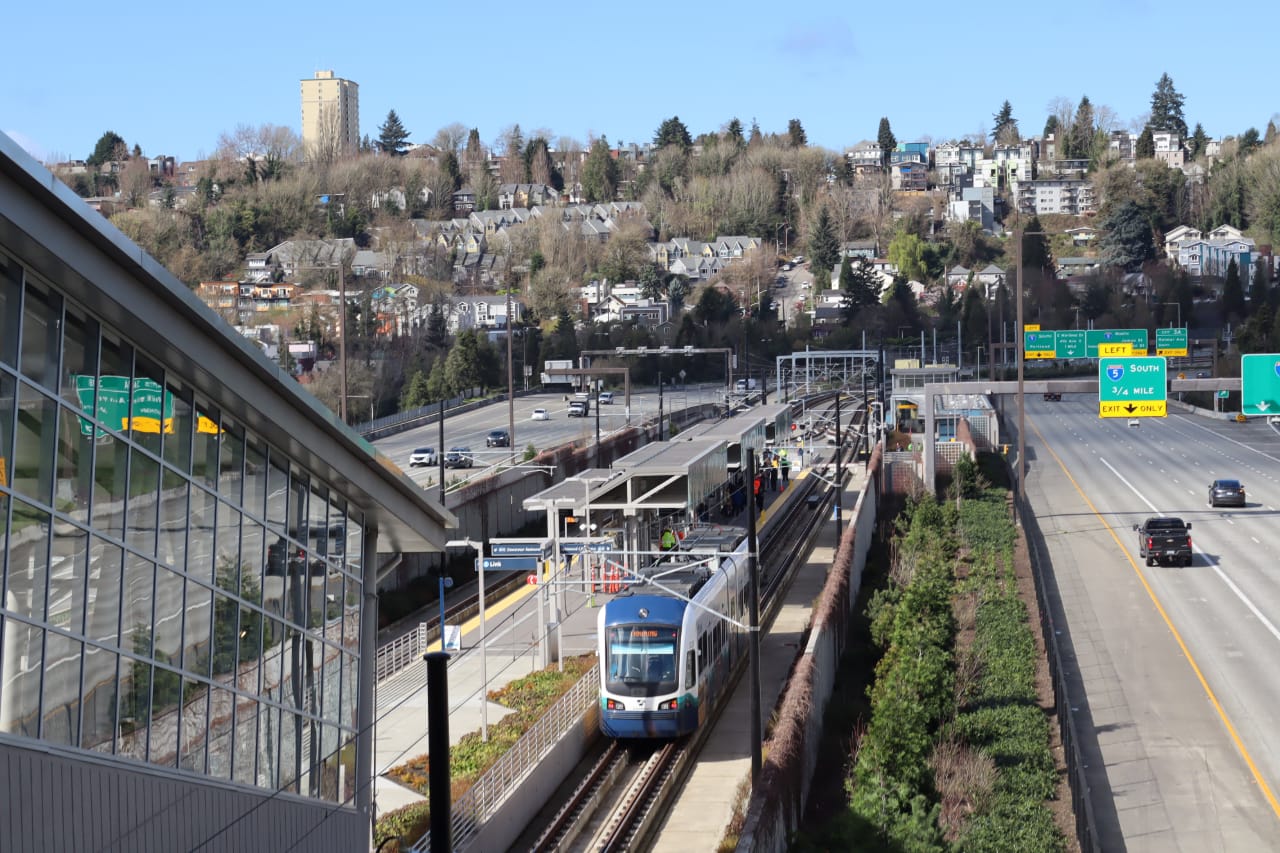
The day is fast upon the Seattle metro area to take arguably its biggest leap forward in transit connectivity ever. By 10am on Saturday, March 28, 2 Line light rail trains will finally cross Lake Washington on the I-90 floating bridge, connecting Bellevue and Redmond to Downtown Seattle and continuing north to Lynnwood.
Now that it is fully built out, the full 2 Line is expected to carry 50,000 daily riders by 2030, according to Sound Transit modeling. Underneath that jump in ridership is a better commutes for thousands and thousands of riders across a variety of trips.
The 2 Line’s crosslake connection will make the International District and Downtown Bellevue just 20 minutes apart. Downtown Redmond and Downtown Seattle will be about 40 minutes apart, shaving at least 10 minutes off the bus trip — more when traffic congestion is bad.
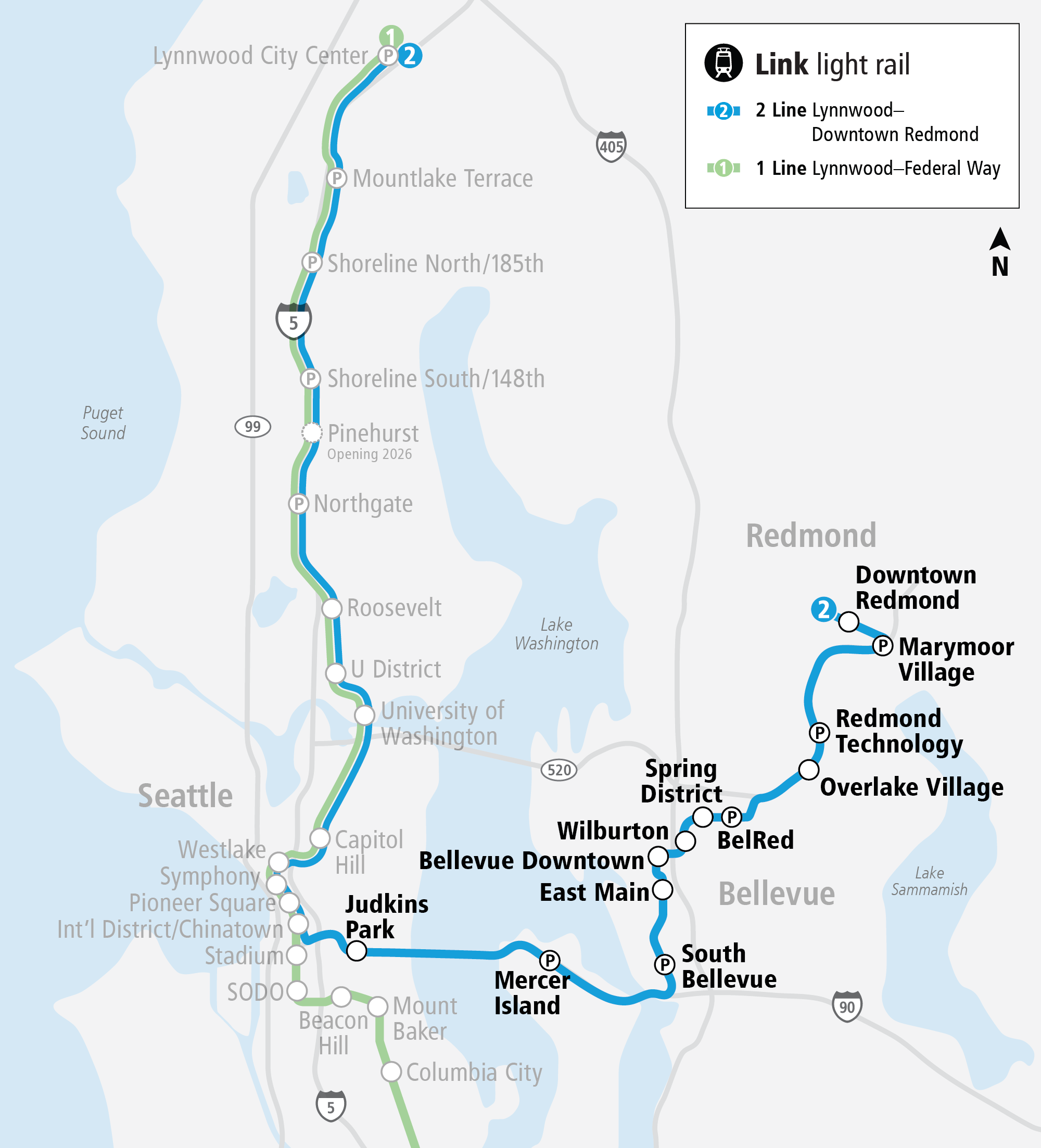
Saturday's opening will also add two new stations to Sound Transit's light rail network – Mercer Island and Seattle's Judkins Park – and it will also solidify increased train frequencies for all stations from Chinatown-International District (CID) north. That's because the 2 Line will share tracks with the 1 Line from the CID to Lynnwood.
At peak times both lines will operate at eight-minute headways, or a combined frequency of one train every four minutes for the overlapping segments, along the highest ridership stations in the system including Capitol Hill and Westlake.
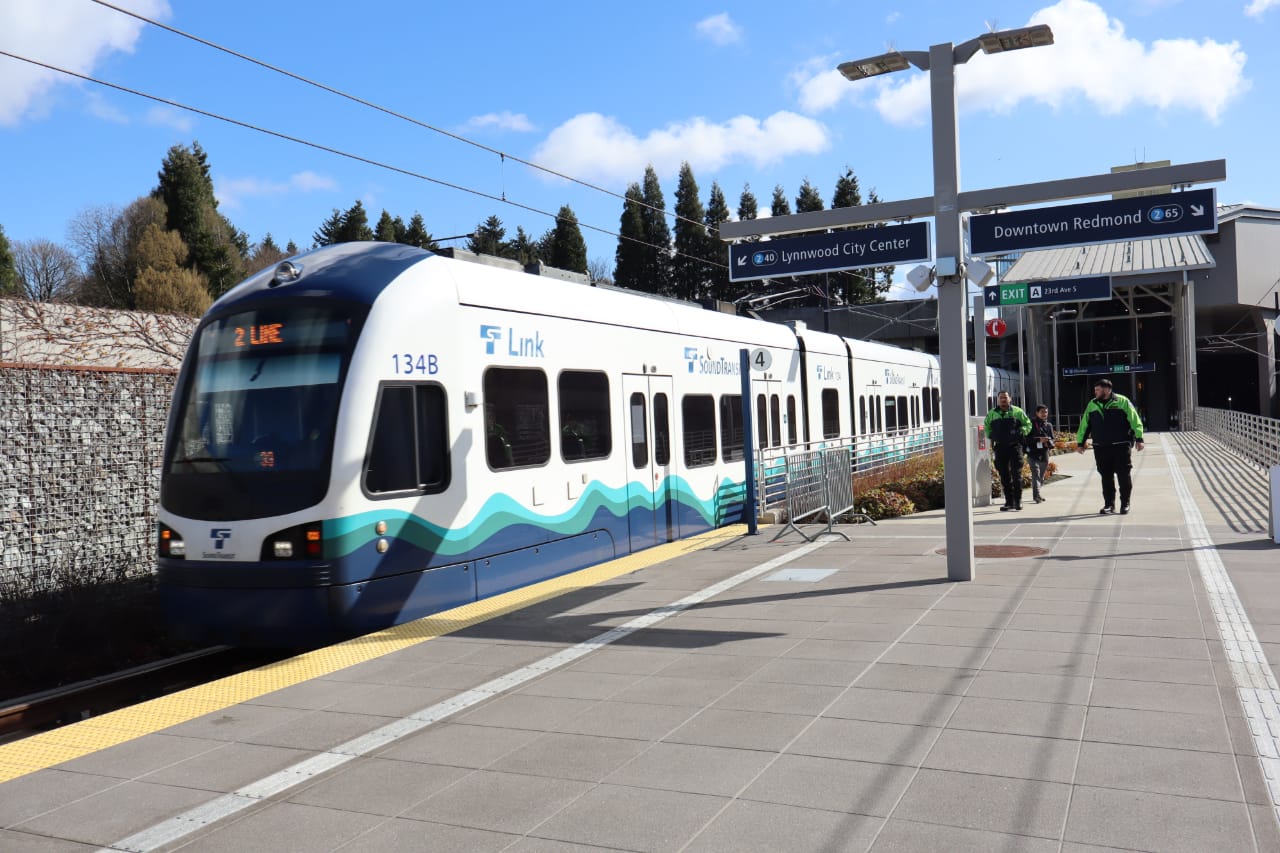
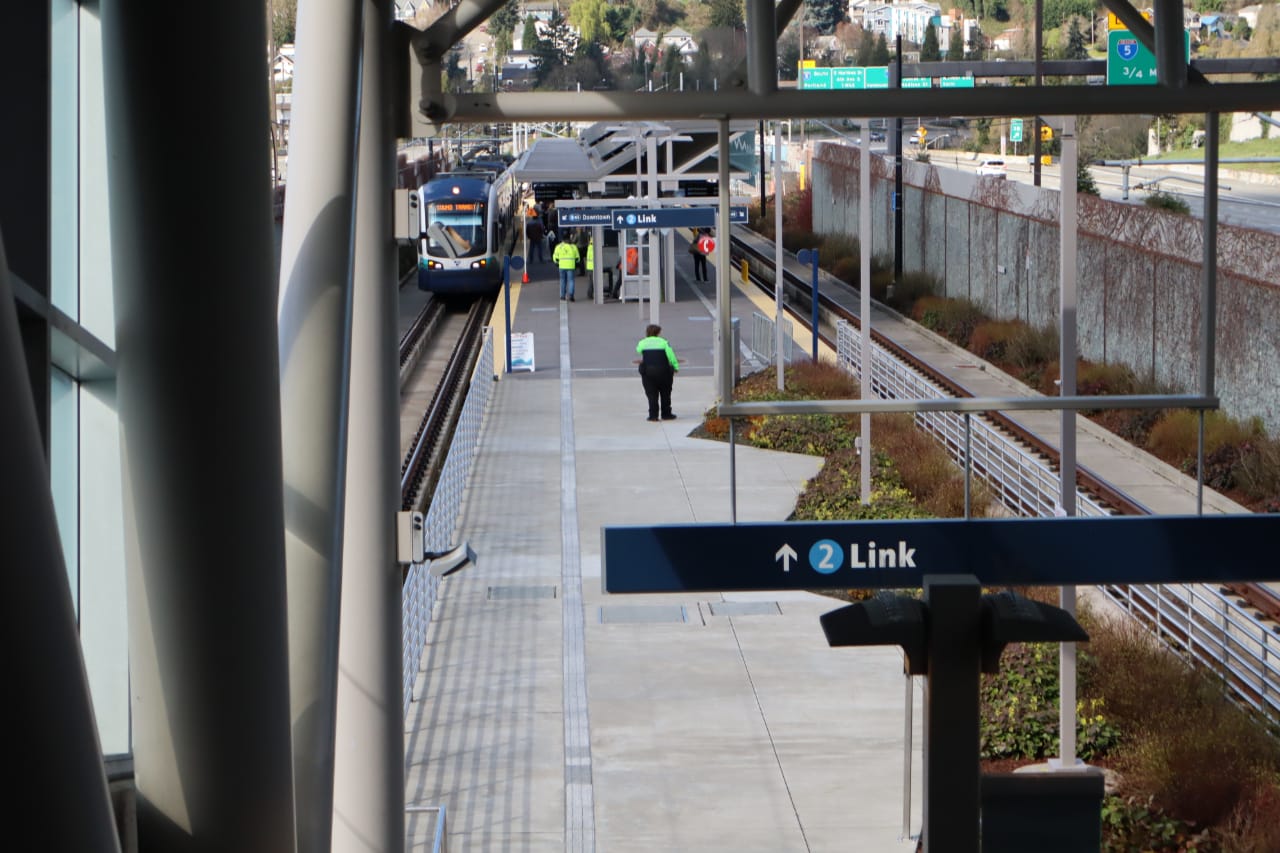
Achieving this took a groundbreaking engineering feat, as this is the first rail line to cross a floating bridge anywhere in the world. The jostling of the floating bridge in windy conditions makes running trains across it challenging - but not impossible.
This is the 2 Line, to Lynnwood City Center.
— Ryan Packer (@typewriteralley.bsky.social) 2026-03-26T17:58:30.641Z
During a press ride Thursday, members of the media were able to experience a smooth ride across the bridge – albeit in good weather.
Pulling off the 2 Line, both from the perspective of engineering and siting battles, was far from easy, as the agency ran into numerous hurdles and setbacks. Bridge engineering challenges were tied (but not fully responsible) to the construction delays that the 2 Line faced. During the planning phase, resistance from policymakers in Bellevue and Mercer Island also added delays.
Up until revealing major construction issues in August 2022, Sound Transit had still been officially hoping the crosslake connection would open in 2023. However, pervasive issues with concrete plinths that secured the tracks forced builders to rip out their work and rebuild it to tighter specifications. Repairs also were also required on non-floating I-90 track sections.
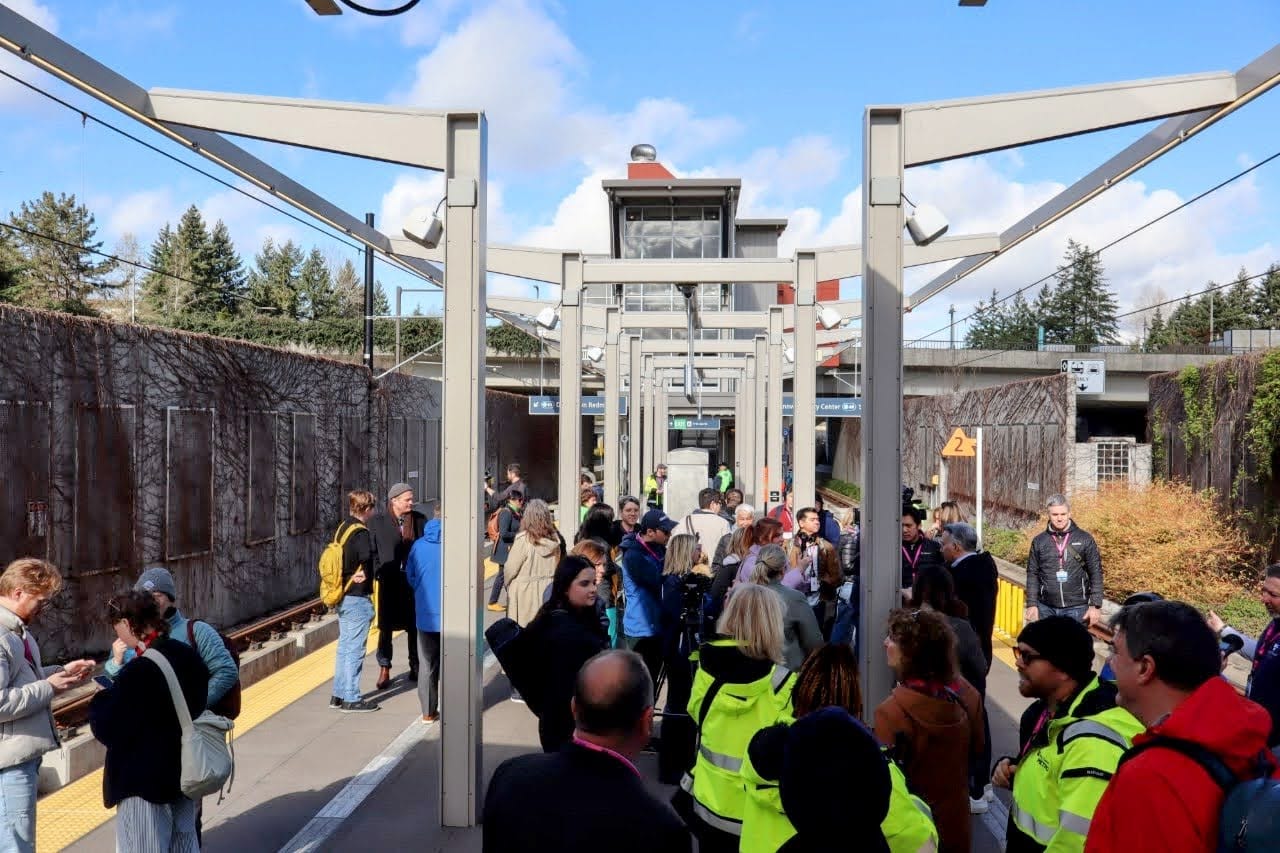
I-90 track repairs ended up forcing a three-year delay to the crosslake connection. Since the Eastside section sidestepped construction defect issues, Sound Transit opted to open that portion of the 2 Line earlier – responding to pressure from transit advocates, with board member Claudia Balducci raising the standard to champion the cause.
The 2 Line segment from South Bellevue to Overlake opened in April 2024, and extended to Downtown Redmond in May 2025. The Eastside-only 2 Line beat ridership projections averaging nearly 11,000 daily riders at its peak.
While the 1 Line will continue to feature four-car trains, the 2 Line will run with a mix of two-car and three-car trains initially, due to limited fleet availability that the agency is working to rectify with additional light rail vehicles.
Housing booms and busts along the line
Stations along the 2 Line had a huge variance of outcomes when it comes to housing growth and transit-oriented development (TOD). Some neighborhoods in Bellevue and Redmond have embraced housing growth and commercial development near their stations.
Holding down the laggard end, Mercer Island has added just 549 new homes over the last two decades in its "Town Center" near the station. Another 146 homes are under construction. This is by design, as the Mercer Island City Council has actively obstructed new housing with periodic development moratoria, exacting design requirements, and restrictive zoning.
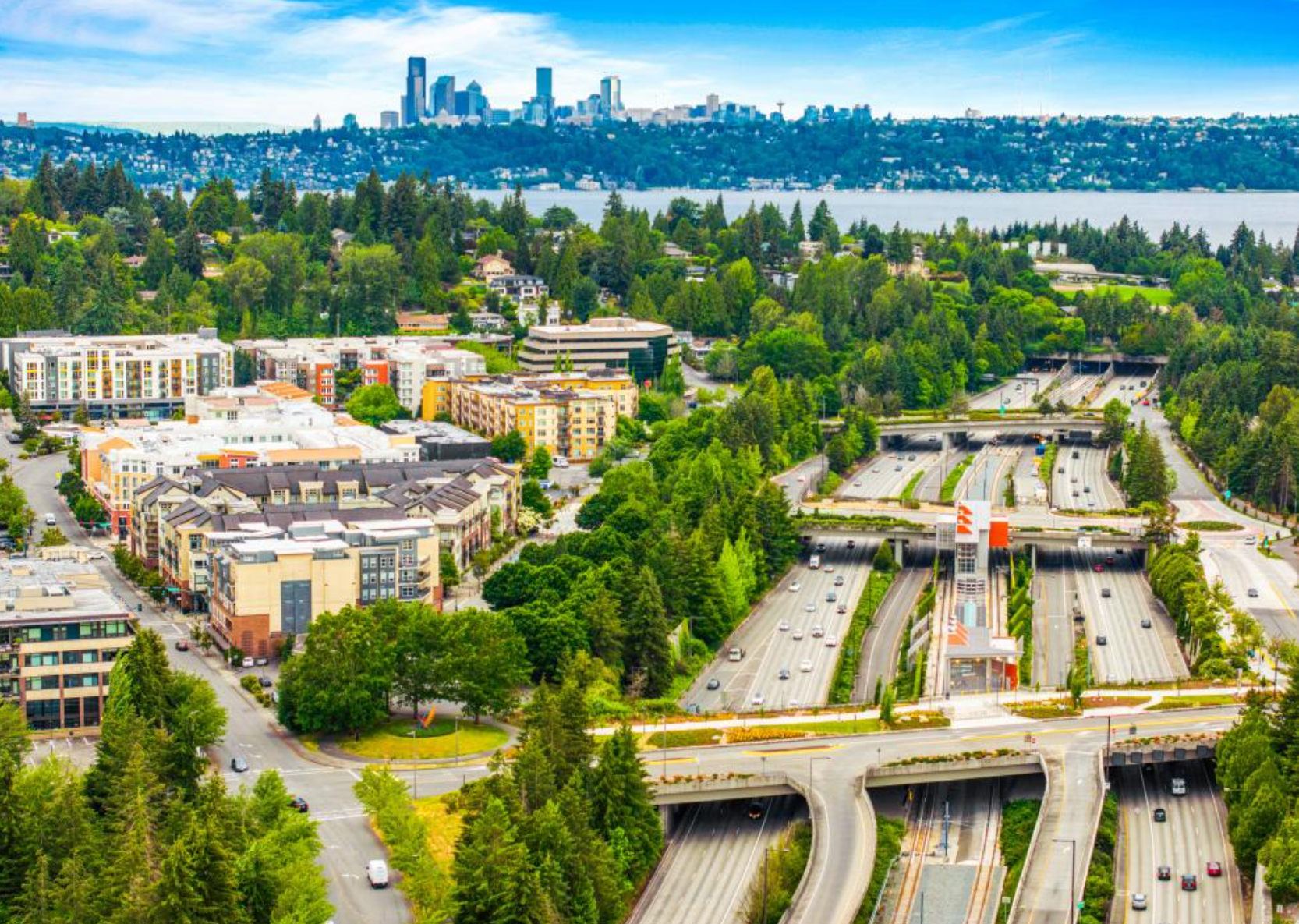
Mercer Island's obstruction was so pronounced that it ran afoul of state law, with a state hearings board declaring it out of compliance with Washington's Growth Management Act. Continued lack of compliance would jeopardize state grant funding and potentially other revenue sources, forcing City officials to revise their growth plan and move to relax zoning restrictions.
State invention may force Mercer Island to catch up with its peers in providing housing. Of perhaps, City leaders will once again find creative ways to thwart development, even under a new zoning regime.
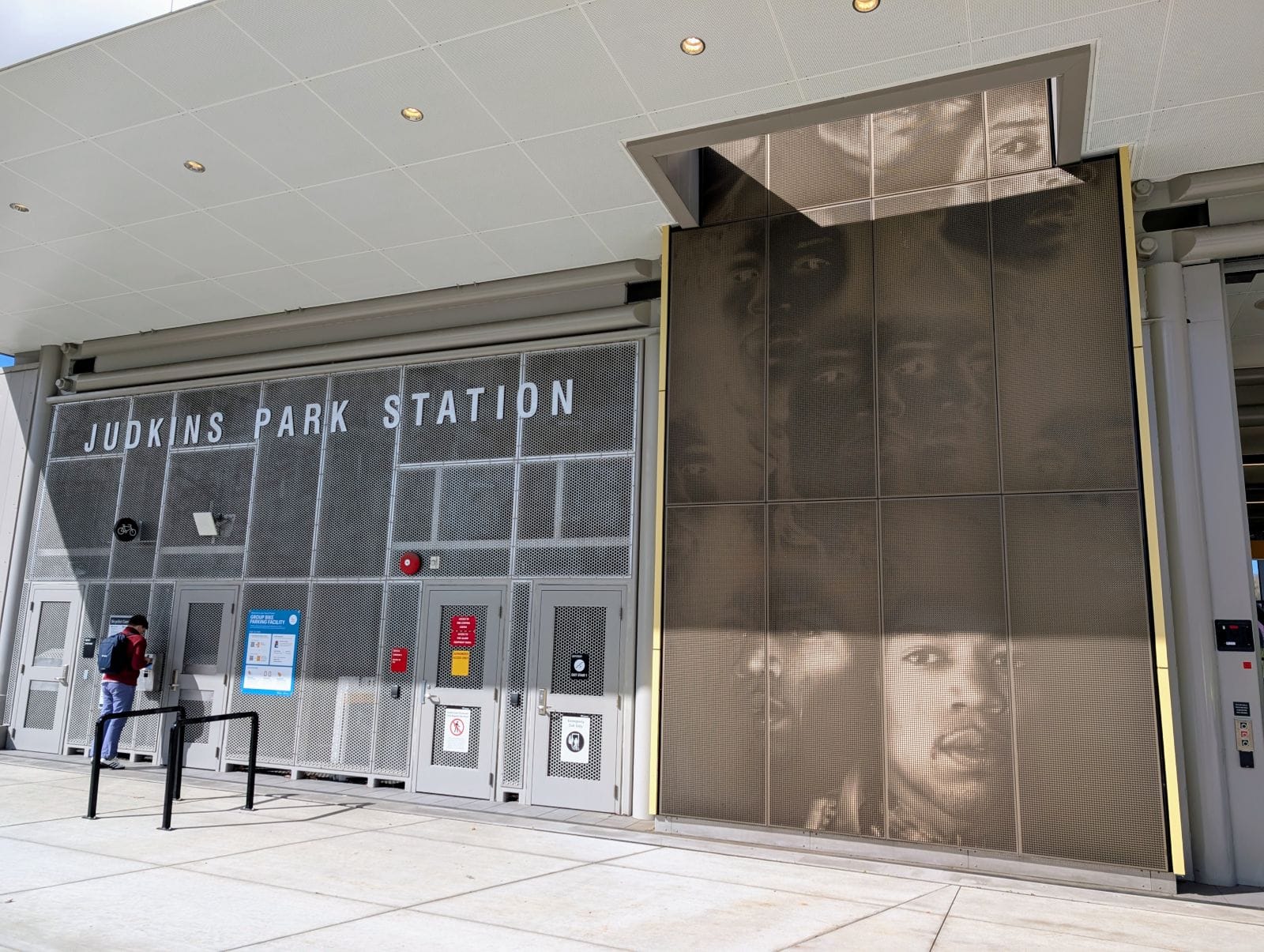
Judkins Park has seen more housing growth, with nearly 3,000 homes recently added or in the development pipeline, via a mixed of large apartment complexes and rows and rows of townhomes.
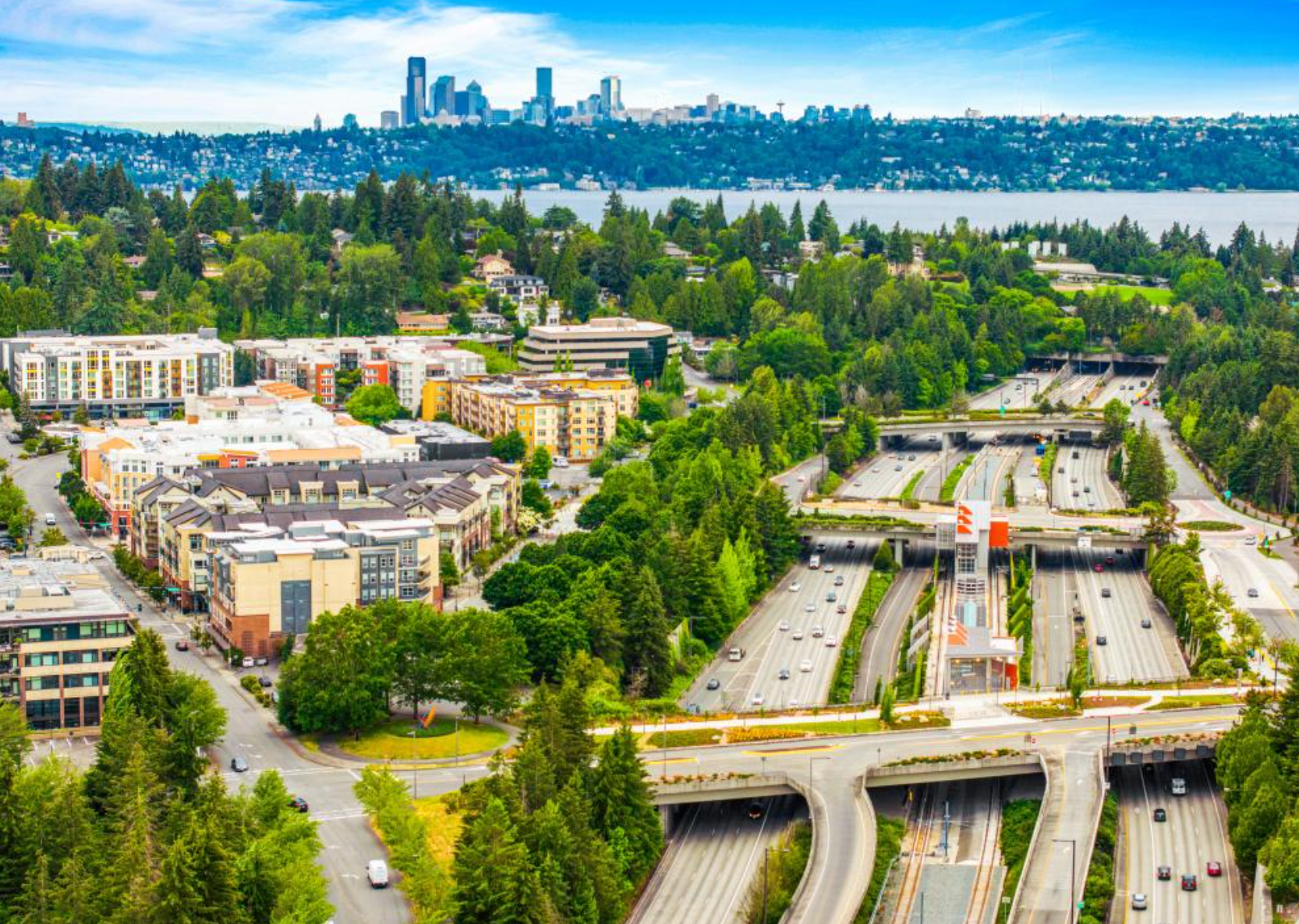
Being in the median of I-90 does create obstacles to redevelopment for both new stations, as most people are not thrilled to live next door to a freeway.
Downtown Bellevue has about 14,000 homes either in the development pipeline or recently added, with big plans around Wilburton, Spring District, and Bel-Red, as well. Downtown Redmond has added 5,300 homes over the past two decades, and Redmond’s Overlake neighborhood has 8,000 homes either in the pipeline or recently added.
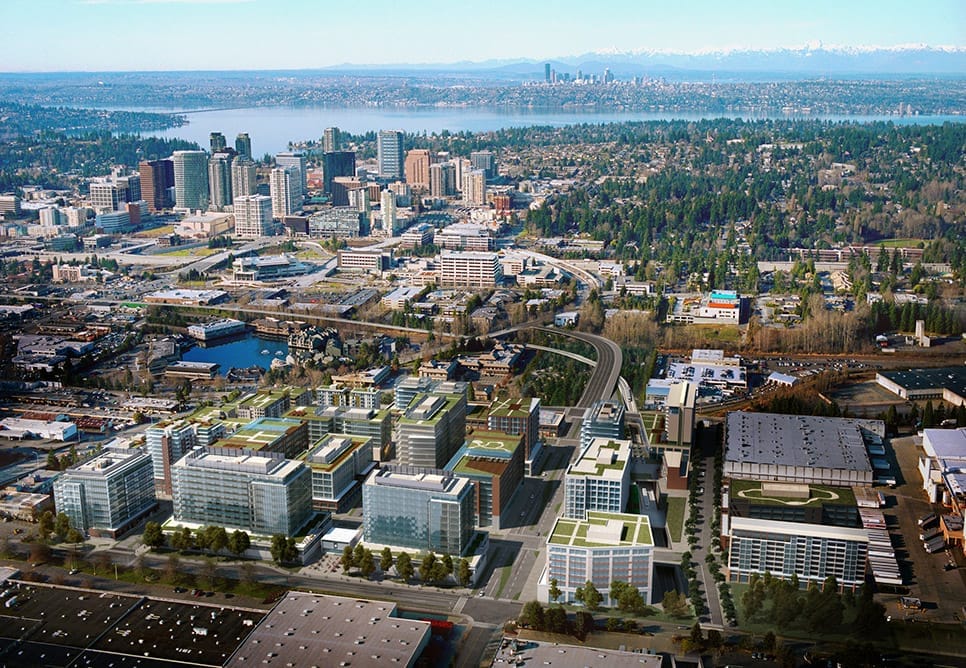
On the flip side, Bellevue has three stations that have been slow to redevelop. East Main and Wilburton seem likely to turn into more complete neighborhoods eventually, with a recent ambitious Wilburton rezone jumpstarting the process. South Bellevue is unlikely to see a housing boom anytime soon due to being hemmed in by the Mercer Slough Park and single family zoning.
Longtime rail vision fulfilled
Tying together Seattle and the Eastside with a metro rail network has long been a dream for regional policymakers. The idea went to the ballot as part of Forward Thrust in 1968 and again in 1970, but unfortunately was rejected, due to the bar being set at 60% approval. This ultimately led federal funding to go to Atlanta instead for its MARTA system, where local rules required only 50% approval.
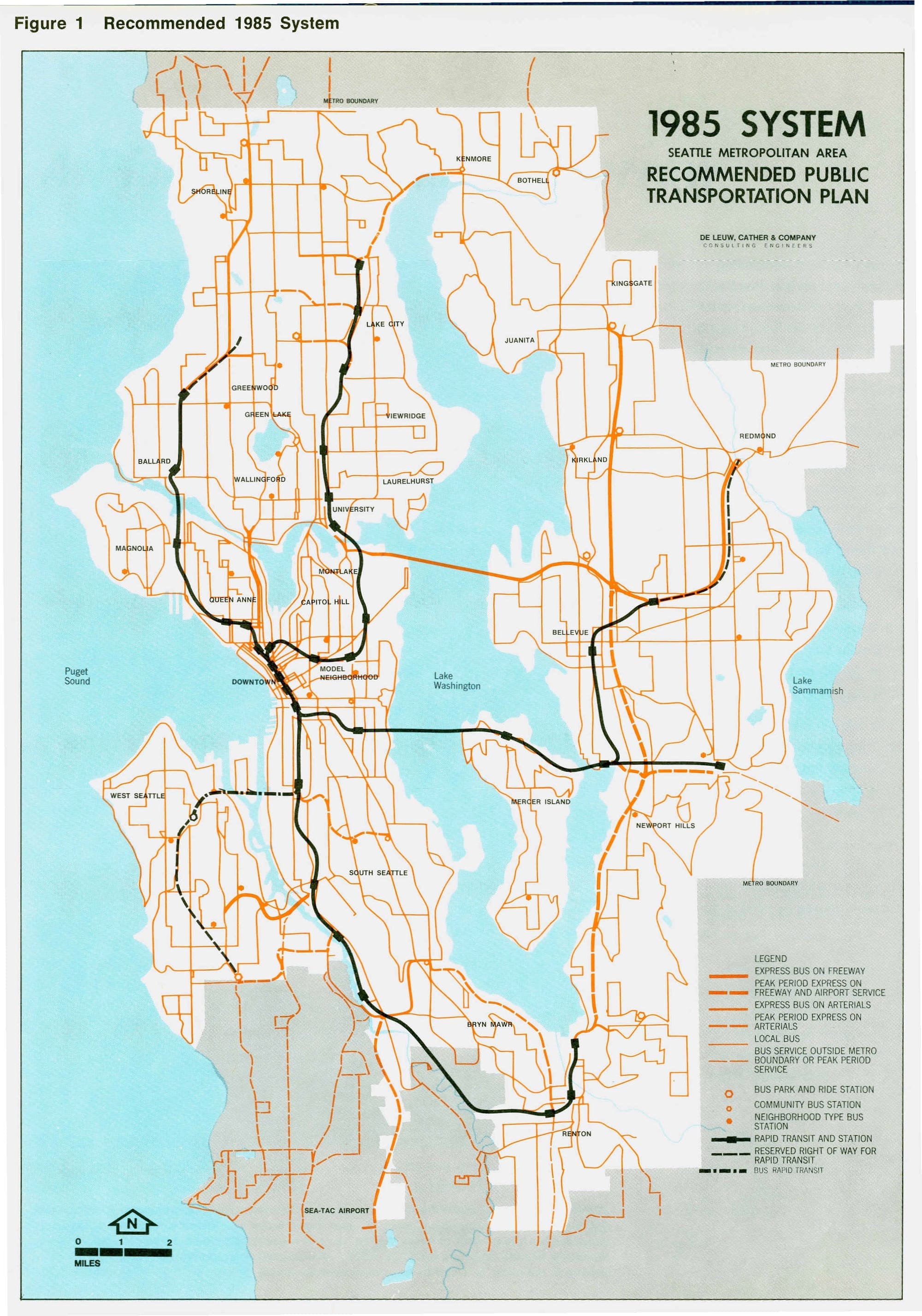
Had Forward Thrust's rapid transit measure been approved, boosters were pledging to build out the rapid transit network map shown above by 1985. With the measure rejected, that never happened, and the region waited – in a big "what if" moment for transit and the development patterns Puget Sound cities took as they grew.
The Sound Transit 2 (ST2) measure, which was approved in 2008, got the region back on course to pursue a similar vision as the one rejected 40 years earlier. The modern vision included more Eastside stations, accounting for the subsequent growth on the Eastside in the ensuing years.
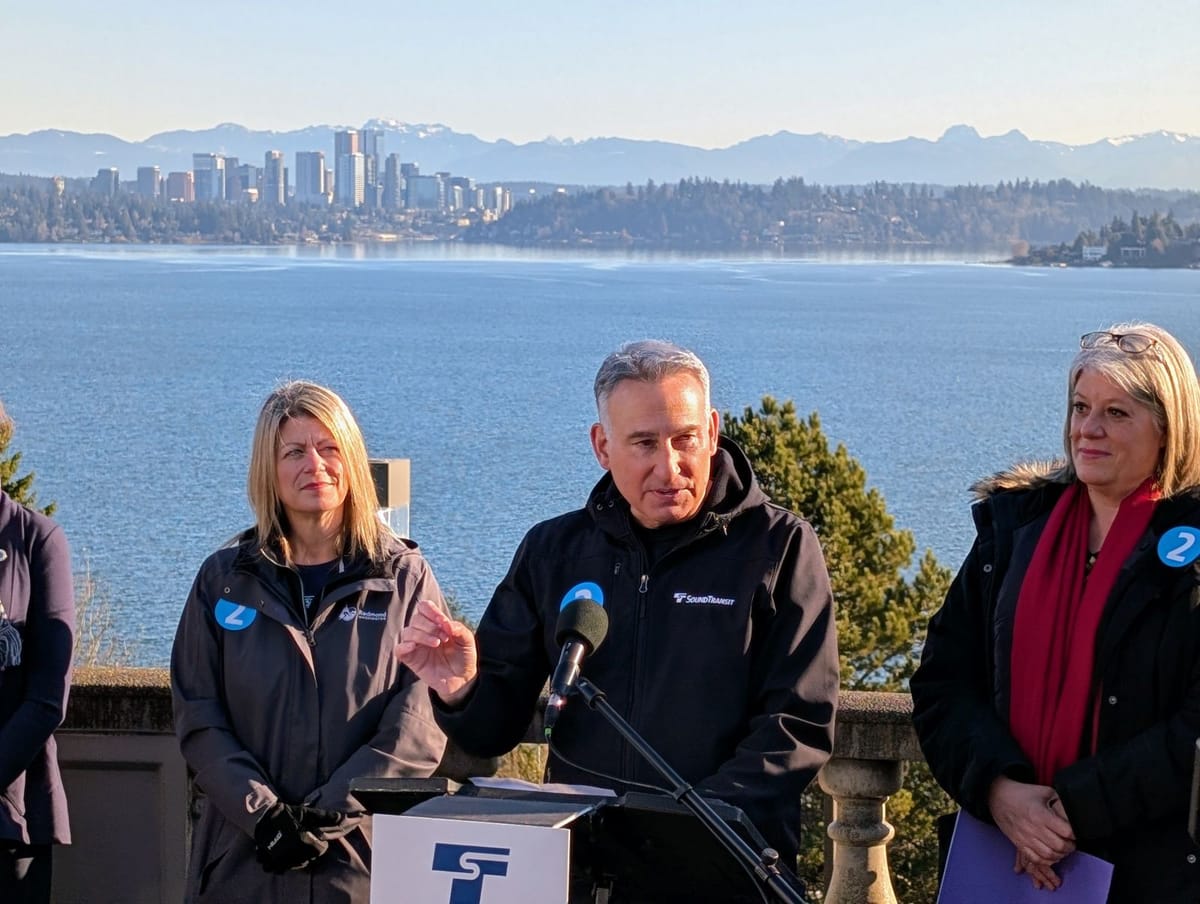
Sound Transit CEO Dow Constantine and King County Councilmember Balducci alluded to this history in their remarks when unveiled the countdown clock in January, spelling out the 2 Line crosslake opening date.
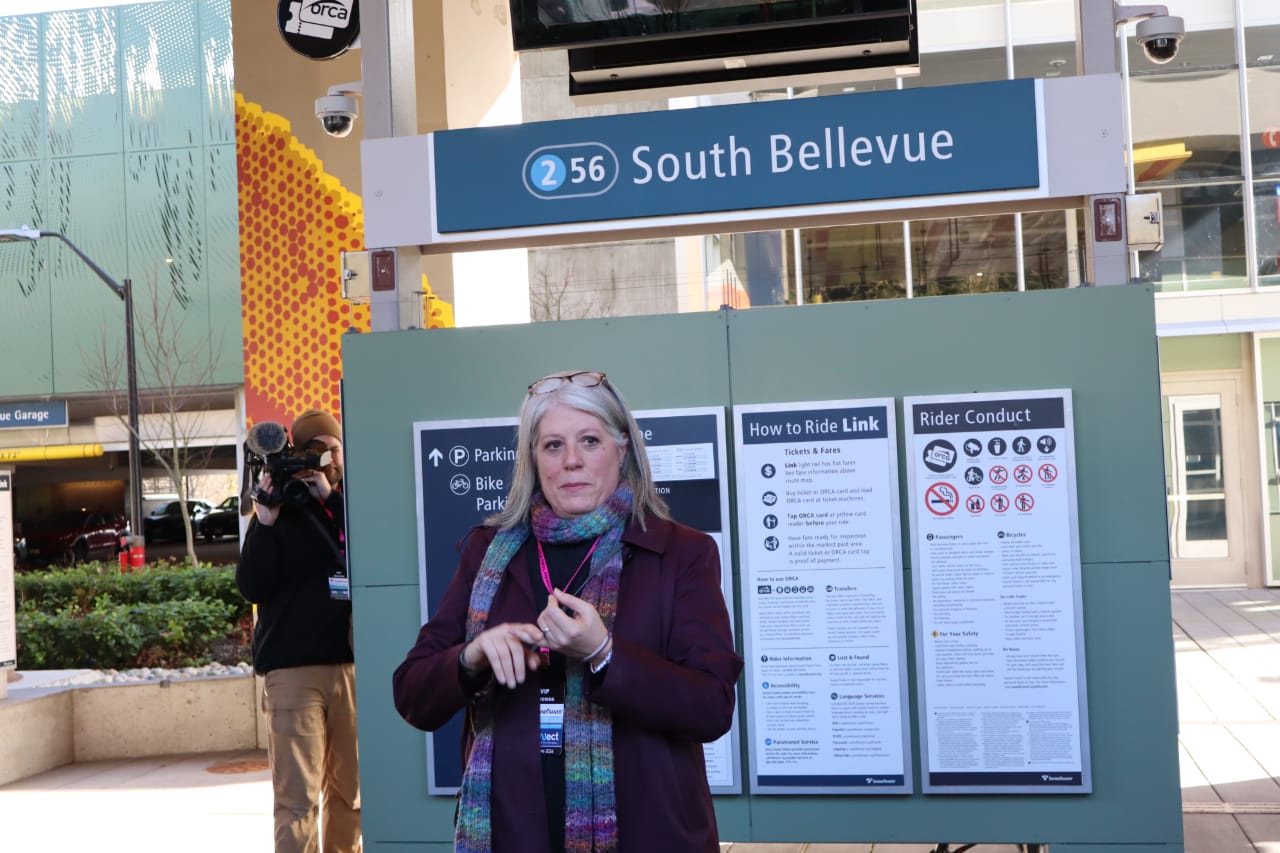
“We wouldn’t be here without those in the 1970s who ensured that the Homer Hadley bridge would be built from the start to eventually accommodate rail, even though it was purely speculative at that time, and it had never been done before,” Constantine said. “We wouldn’t be here without the regional foresight in the 1980s that brought us the Downtown Seattle Transit Tunnel. We wouldn’t be here without past leaders like Joni Earl and Greg Nickels and State Representative Ruth Fisher, with whom I had the privilege to serve. We would not be here without Jim Ellis, who really, 60 years ago, envisioned rail across this lake and brought the region this close to approving it.”
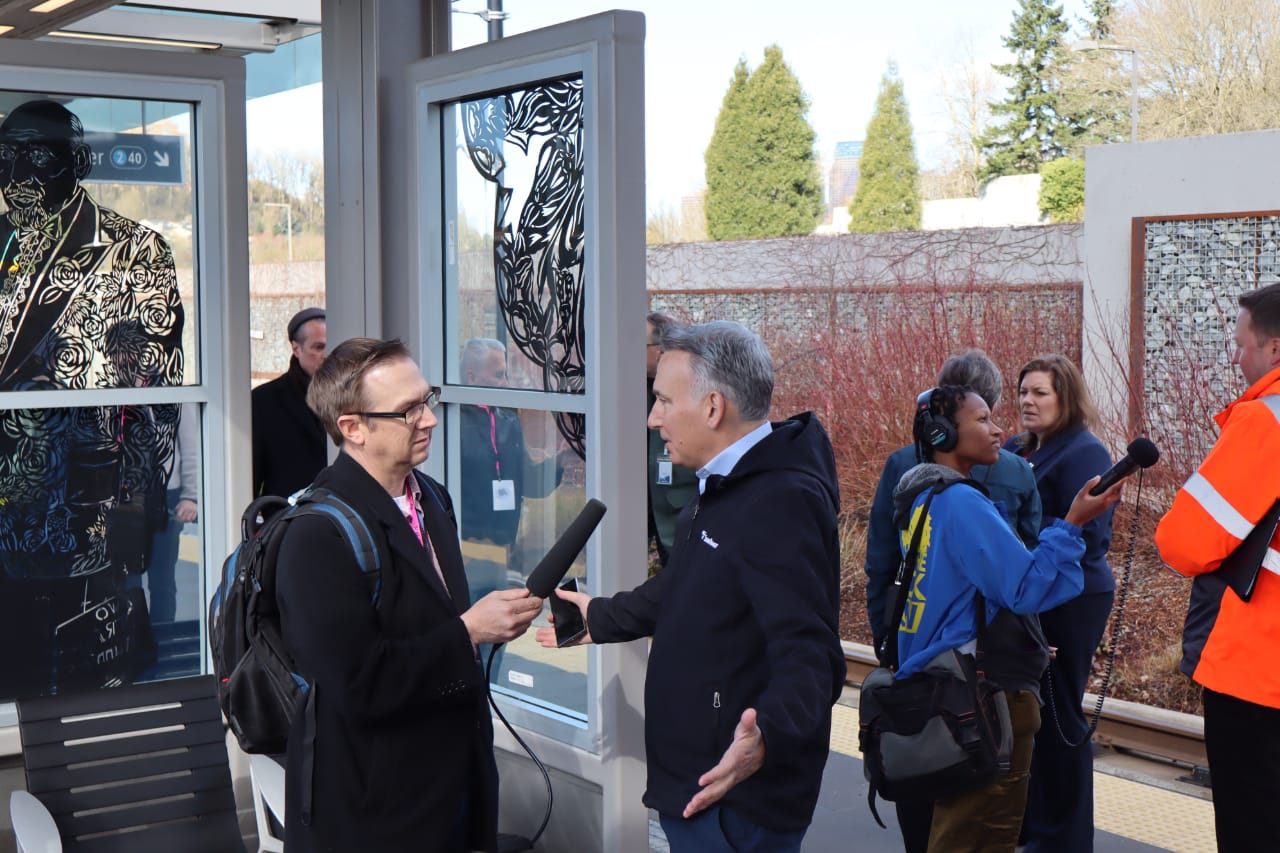
Leaders like Constantine and Balducci shepherded the project through its modern phase, getting Sound Transit on firm enough footing to go to the ballot a second time for expansion funding. They also fought to win hard-earned local approvals in Mercer Island and Bellevue, even when local powerbrokers like Bellevue real estate mogul Kemper Freeman were pushing to shunt light rail or the traffic or undesirables they feared they bring elsewhere, farther from their personal fiefdoms.
"It was approved by the voters in 2008 and has faced challenges of every imaginable kind in the interim to get here today,” Balducci said ahead of the unveiling of the countdown clock at I-90 Portal Park in Seattle.
The countdown clock is getting incredibly close to zero, and all the hard work and perseverance is tantalizingly close to bearing fruit. It's unlikely that the region will ever be the same.
 Doug Trumm