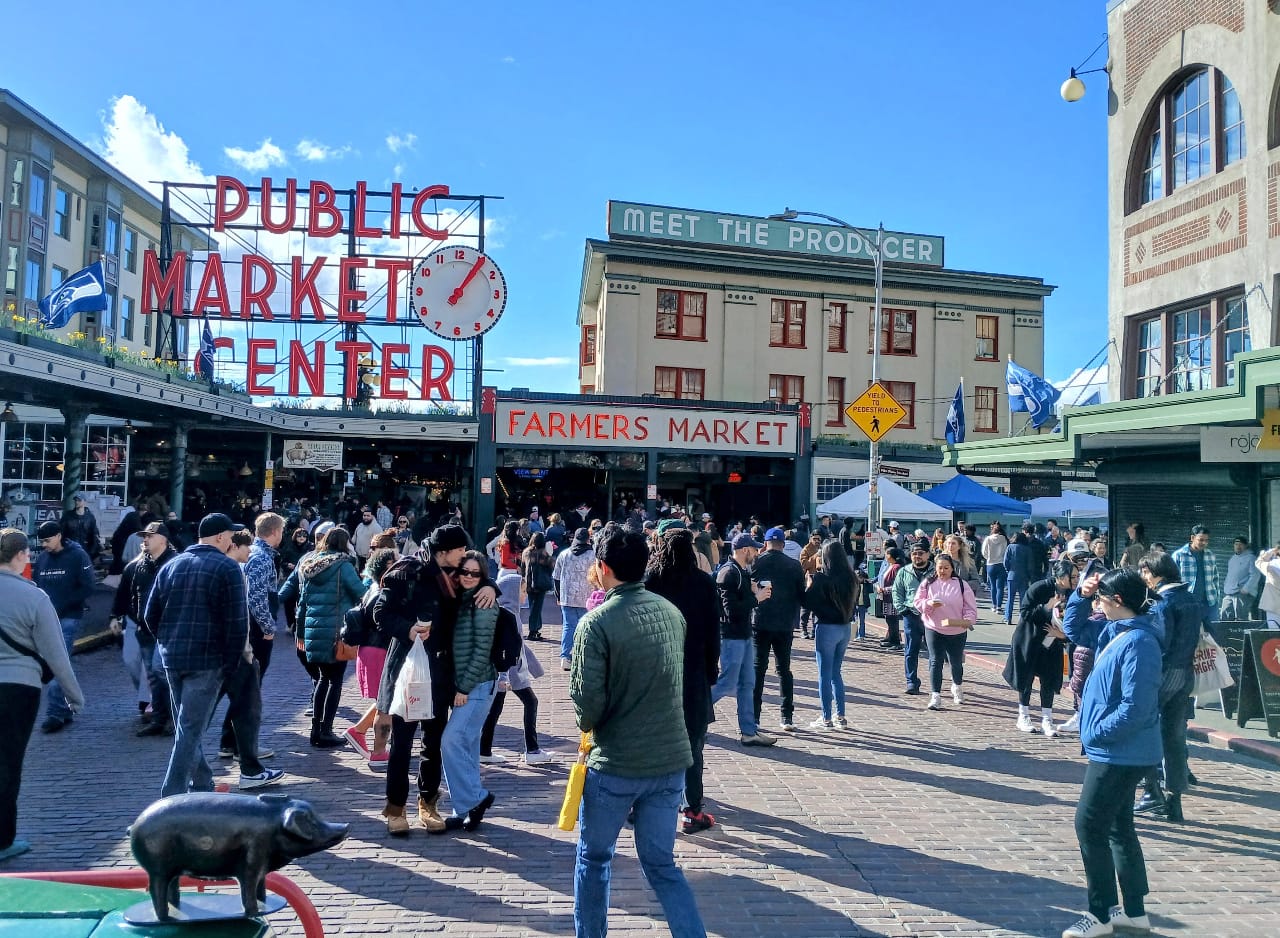
Last week, the Pike Place Market Historical Commission gave its unanimous approval to planned adjustments around vehicle access through Seattle's iconic market. Set to be in effect from October through next March, the adjustments represent the newest phase of a pedestrian pilot program that has been in effect for nearly 18 months, but have been lambasted as a retreat on an issue that has widespread city support – restricting unnecessary car traffic through the market.
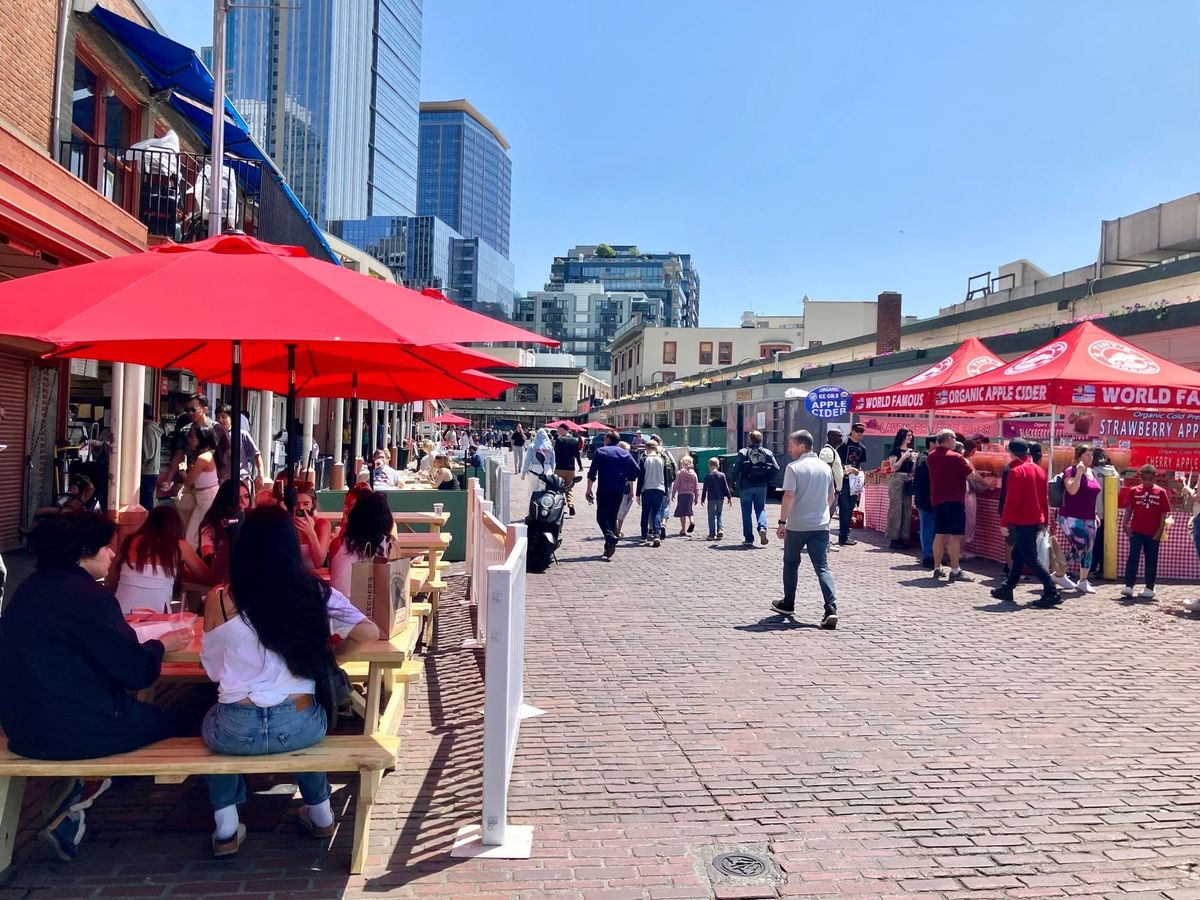
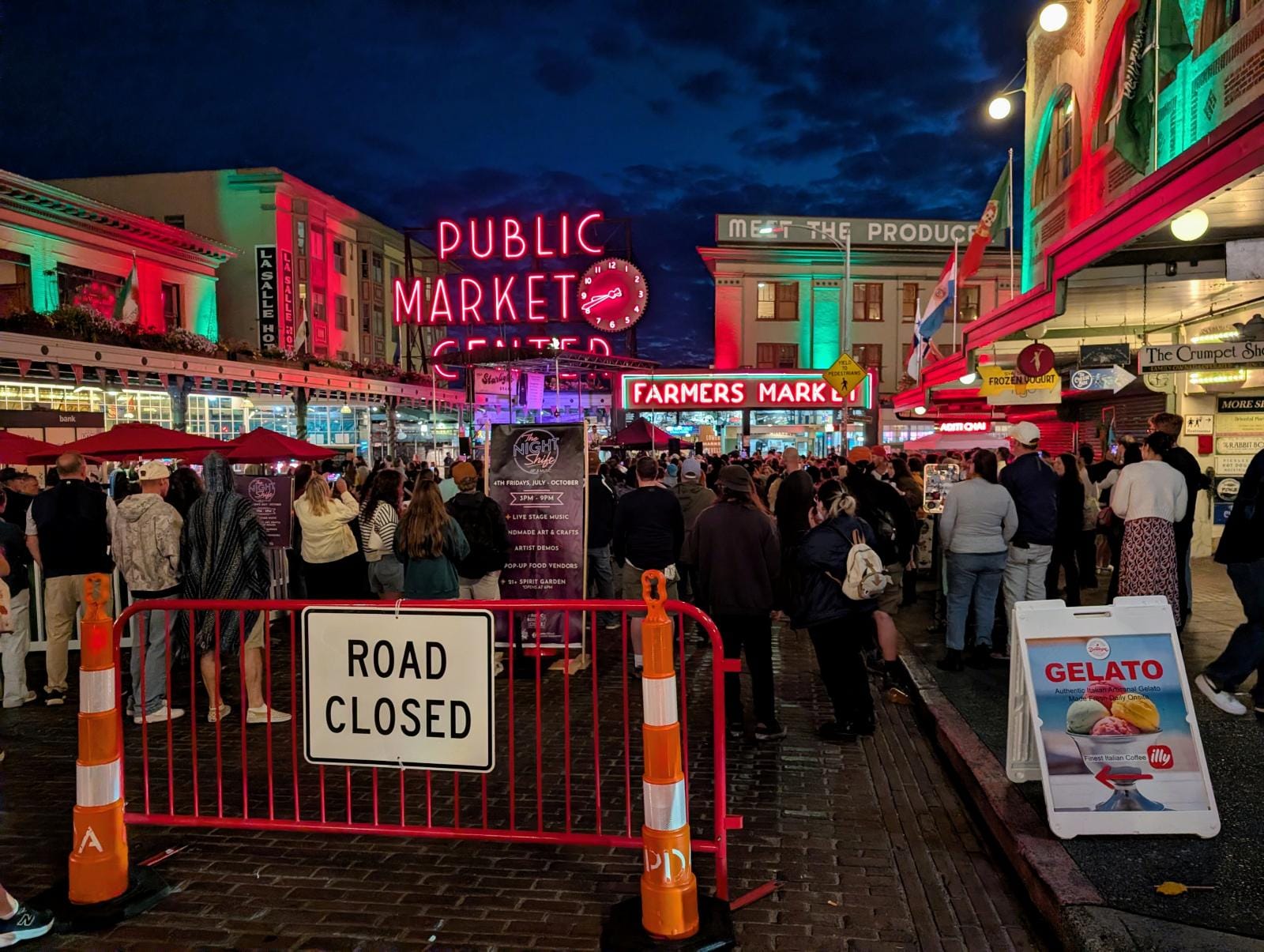
Under the Seattle Department of Transportation (SDOT) plan, the main corridor along Pike Place will only experience "soft closures" on Fridays, Saturdays, and Sundays, with the hours vehicles are restricted slightly tightened up to 11am to 4pm. Soft closures mean access is restricted to delivery vehicles, ADA access for disabled patrons, and market vendors.
Apart from major event days when the street will fully close with barricades, through car traffic will be unrestricted along the street with "street closed" signage switched to signage telling drivers to yield to pedestrians.
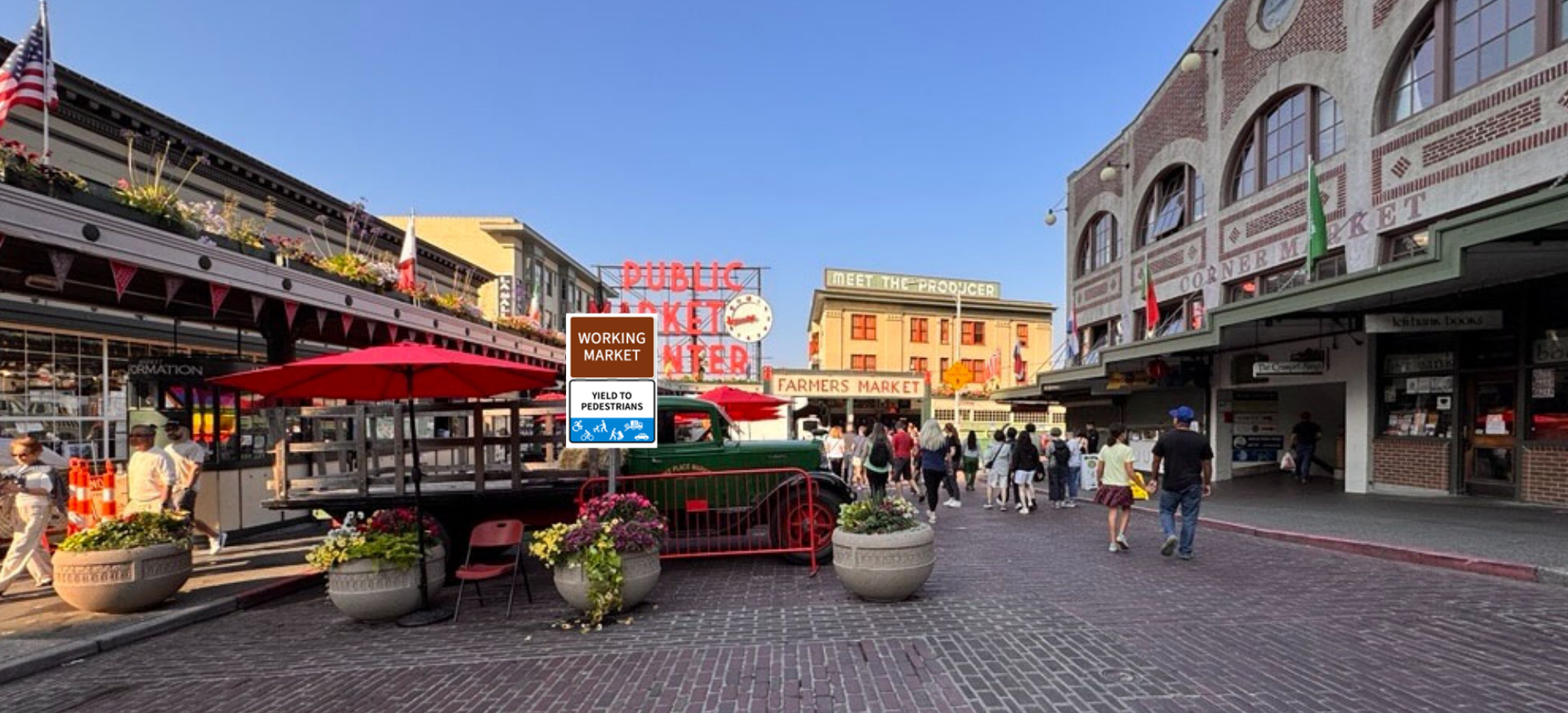
Pointing to a SDOT survey conducted earlier this year showing 98% support for maintaining vehicle barriers through the Market, a sizable contingent of Seattle urbanists have lamented the move as a backslide that isn't in alignment with the broader city's desires for a more pedestrian-oriented Pike Place. But many Market vendors have argued that they weren't included in the initial launch of the pedestrian pilot in April of 2025, a move made in response to a utility repair project along Stewart Street.
"There are a lot of strong feelings and ideas that we heard from a lot of different people. So, I think ideas are as diverse and dynamic as the number of businesses in the market and all the people who also use this street," Radcliffe Dacanay, the SDOT project manager who has been tasked with leading this work at Pike Place, told commissioners. "There were some increased sales [that] some vendors expressed, but not all vendors experienced increased sales. So, that data is varied. Some sales improved, some vendors [it did] not. But also, just this sense of the Market as a place to come to, and not just an errand space."
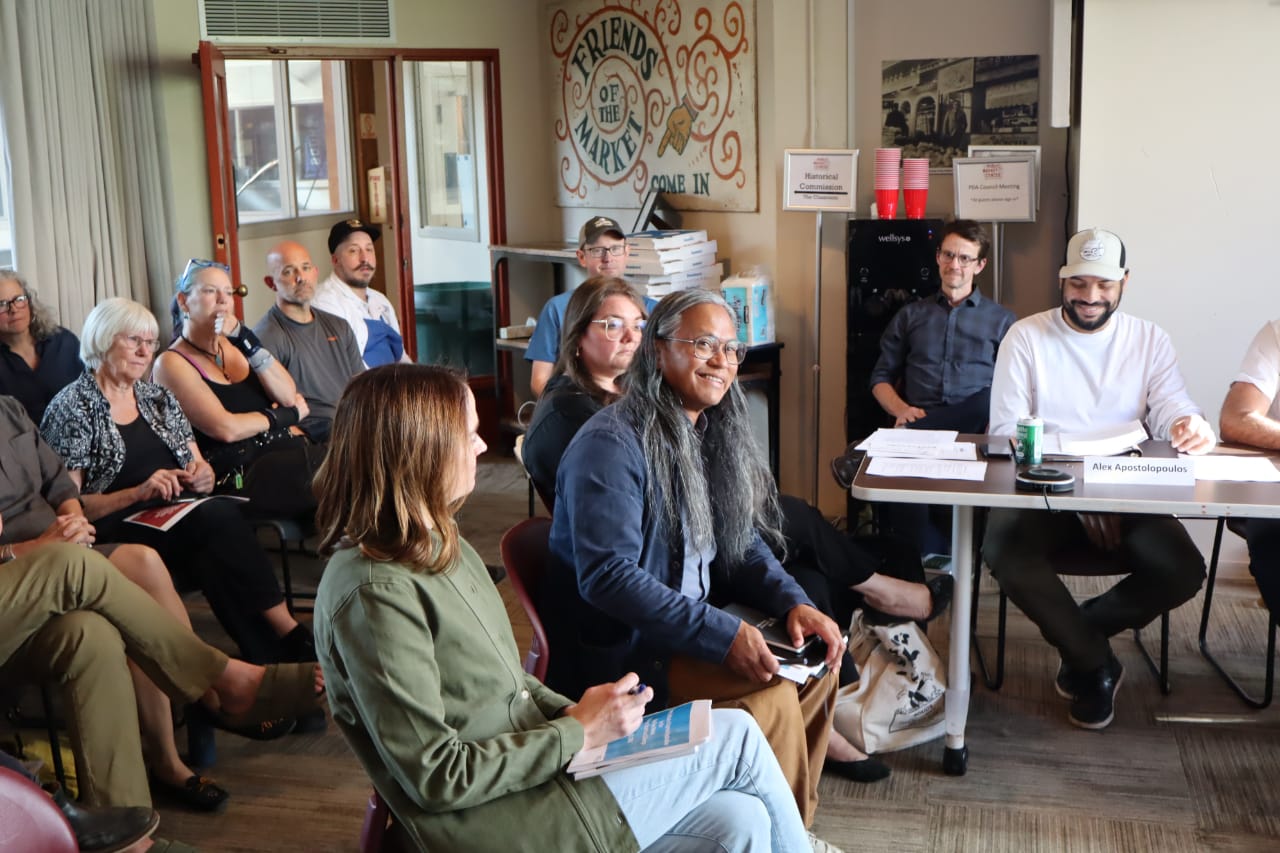
The historic commission does get final buy-off on changes of either use or design within the seven-acre historic district. But SDOT's recommendation for the pilot's next phase came about after months of discussions with Market power players, including the commission's chair Jon Cracolici, Alex Hudson from Mayor Katie Wilson's office, members of the Pike Place Merchant's Association (rebooted just this year after being defunct for years), and representatives for the Pike Place Public Development Authority (PDA) which directly maintains operations along the street.
During the meeting, PDA Chief Operating Officer Katie Trent framed the winter access plan as an improvement over last winter, because the PDA had not been enforcing vehicle access restrictions on any weekdays through the Market's quieter months. Trent's comments gloss over the change in signage that will fairly explicitly encourage drivers to head down Pike Place
Trent also provided a new counterpoint to the positive sales data seen at the market in 2025, when it comes to year-over-year (YOY) data for the first half of 2026.
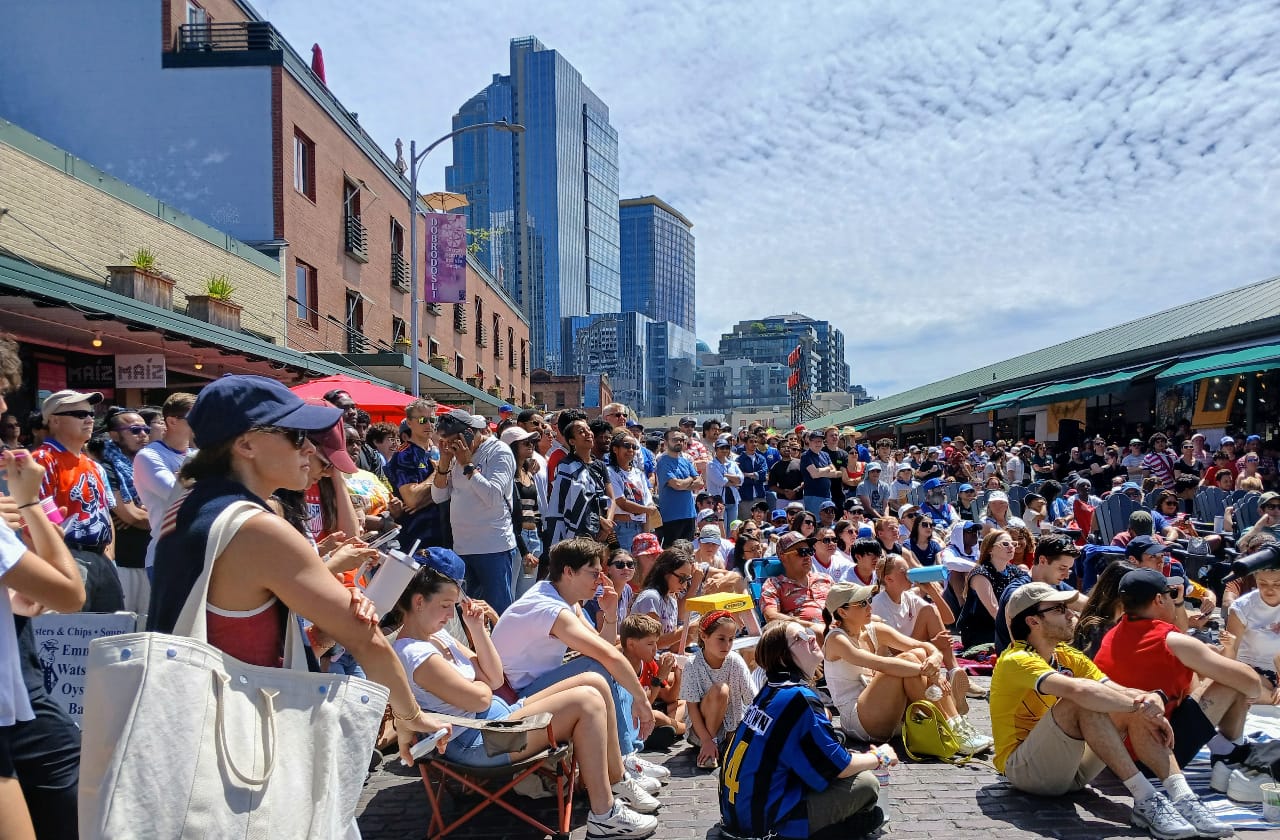
Between January and June, visits to the Market from local residents coming less than 30 miles declined by 11% compared to 2025, a trend that only started to reverse itself in July, with a 1% YOY increase seen in that month. Over those six months, total sales did continue to increase at the Market, but growth slowed from 7% in 2025 to 4.7% this year. Grocery sales took at 4.5% hit during the second quarter, a fact that can likely be traced to the shift in visitor trends during the FIFA Men's World Cup.
"There's all kinds of things that can contribute to what goes on with visitation and sales data, but the street has been an element in there," Trent said. "We have vendors coming to us and saying, 'I'm losing customers because of this, especially in the offseason. Why is the street closed?' That's impactful to what we want to promote as the operator."
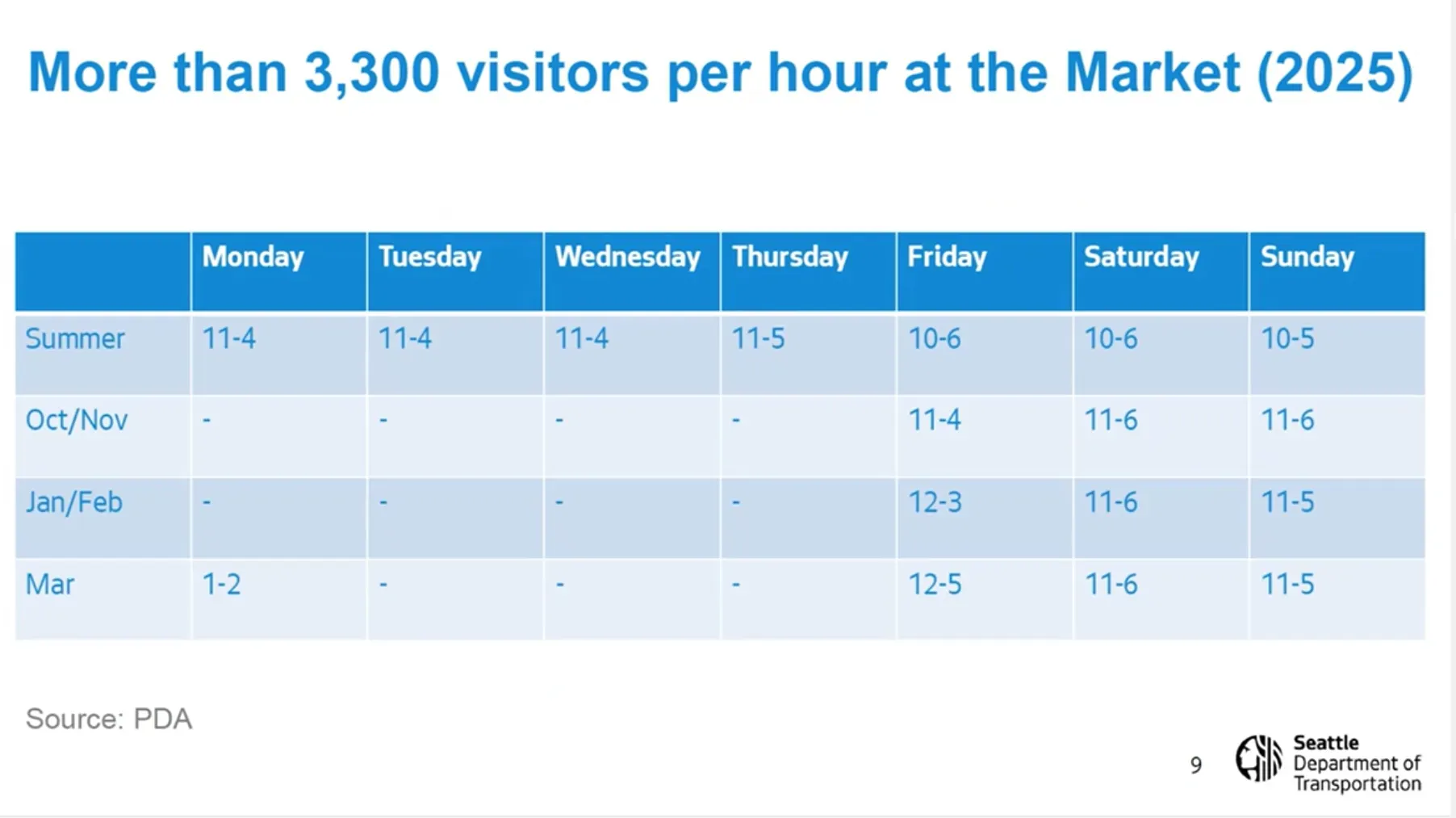
The shift toward seasonal operations was bolstered by a study conducted by the University of Washington's Urban Freight Lab – a study that makes some leaps on the way to getting to its conclusions, based on the fact that fewer people visit the Market in the winter overall than in the summer. But it became clear during Wednesday's meeting that SDOT and the PDA had come together to land on a threshold of Market visitation to justify the new schedule: 3,300 Market visitors per hour, or around 55 people passing through the street every minute.
During the summer months, that threshold has been easily met, but in the slower months it has not, according to PDA data from 2025.
Despite presenting the methodology behind the proposal, some merchants and commenters – including members of the advocacy nonprofit group Friends of the Market – wanted to drop soft closures on Fridays. That point of contention pushed this proposal toward looking more like a compromise. It's important to note that the PDA is also empowered to restrict vehicle access if foot traffic is more than expected – and in turn, to cancel soft closures early if the Market is a ghost town on a Friday in February.
"I support this plan. I thought it was very thoughtfully put together. As a vendor, I felt included in the process, both by Urban Freight Lab and the PDA and the working group. I really appreciate what SDOT did in hearing our needs and continues to," Bite Society owner Lendy Hensley said. "I didn't get everything I wanted in this. I suspect no one did, and sometimes I think that is the best kind of agreement. I hope the process continues, as somebody who's looking at Fridays and thinking maybe not that. So I'm hoping for continued conversation as we get to see what these winter months actually look like with this framework in mind."
Plenty of speakers at last week's meeting did provide a voice for the idea of keeping the pedestrian pilot in effect seven days a week.
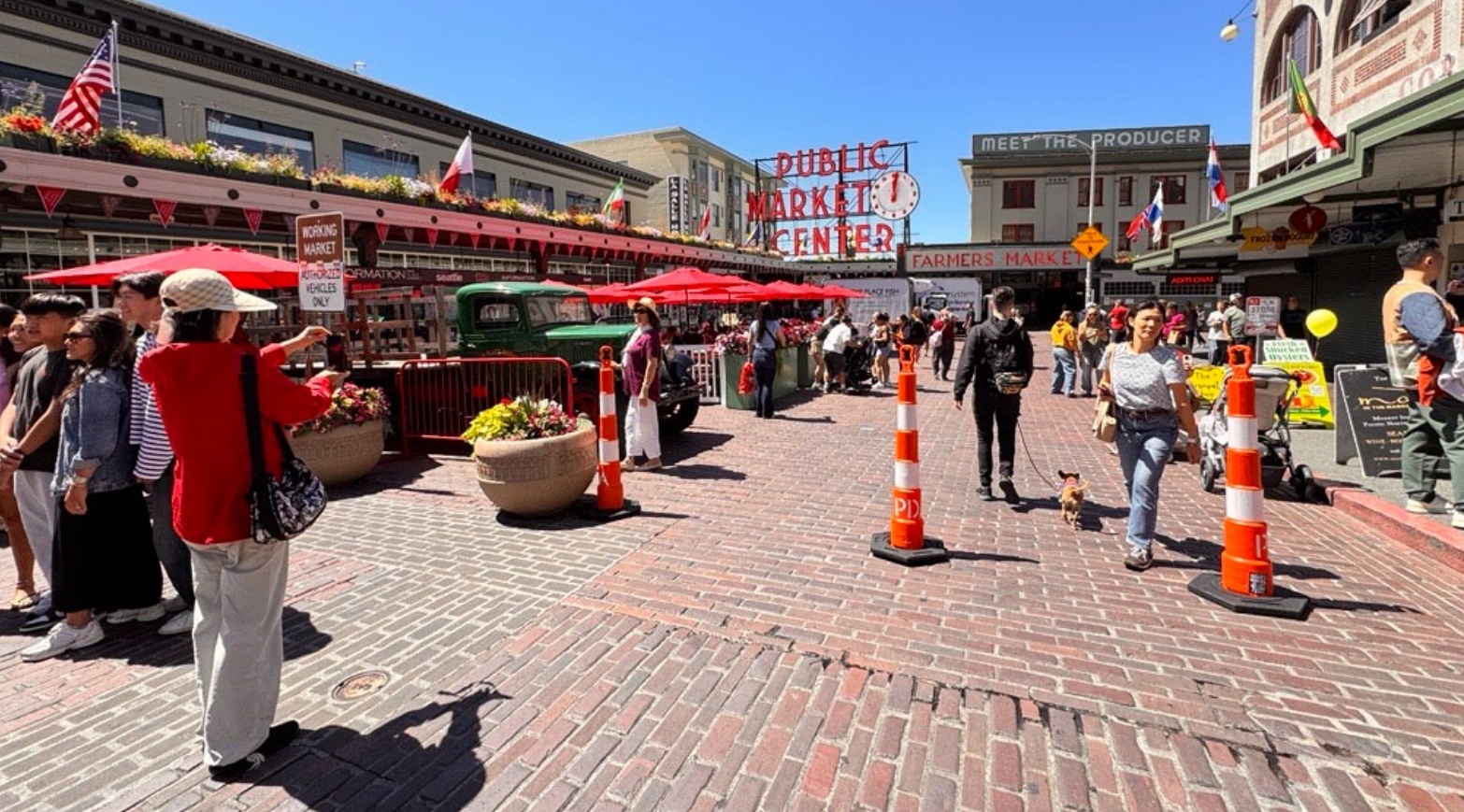
"I think the thing that I was very disappointed in when I moved to the Market is how uncomfortable it was to shop at the Market and to walk down the streets and try to find my way through the sidewalks," resident Larry Goetz said. "I really appreciate what SDOT did in closing the traffic for the last year and a half, I think it has worked beautifully, especially for the World Cup games. I think it really works. I would like to see it continue."
What happens this winter will likely only set the stage for the Market's next new normal, with SDOT set to return to the commission in January for a proposal for what next summer looks like at Pike Place, without a World Cup to plan around. But at some point, the pilot will need to draw to a close, shifting to a more permanent program.
"I hope that we don't do this every six months," commissioner Mark Childs said ahead of Wednesday's vote. "That this actually builds to something that can last for a period of time, and that there's certainty that people can build around."
 Ryan Packer
 Gordon Padelford