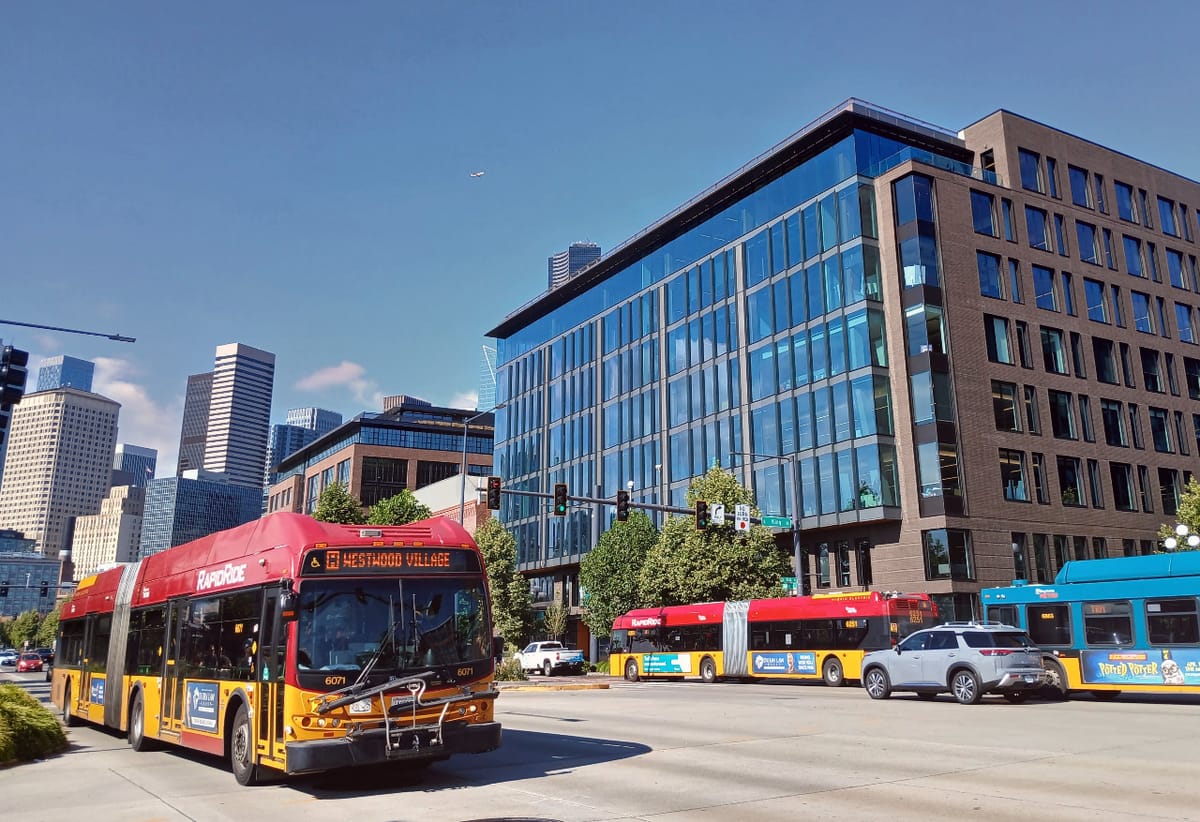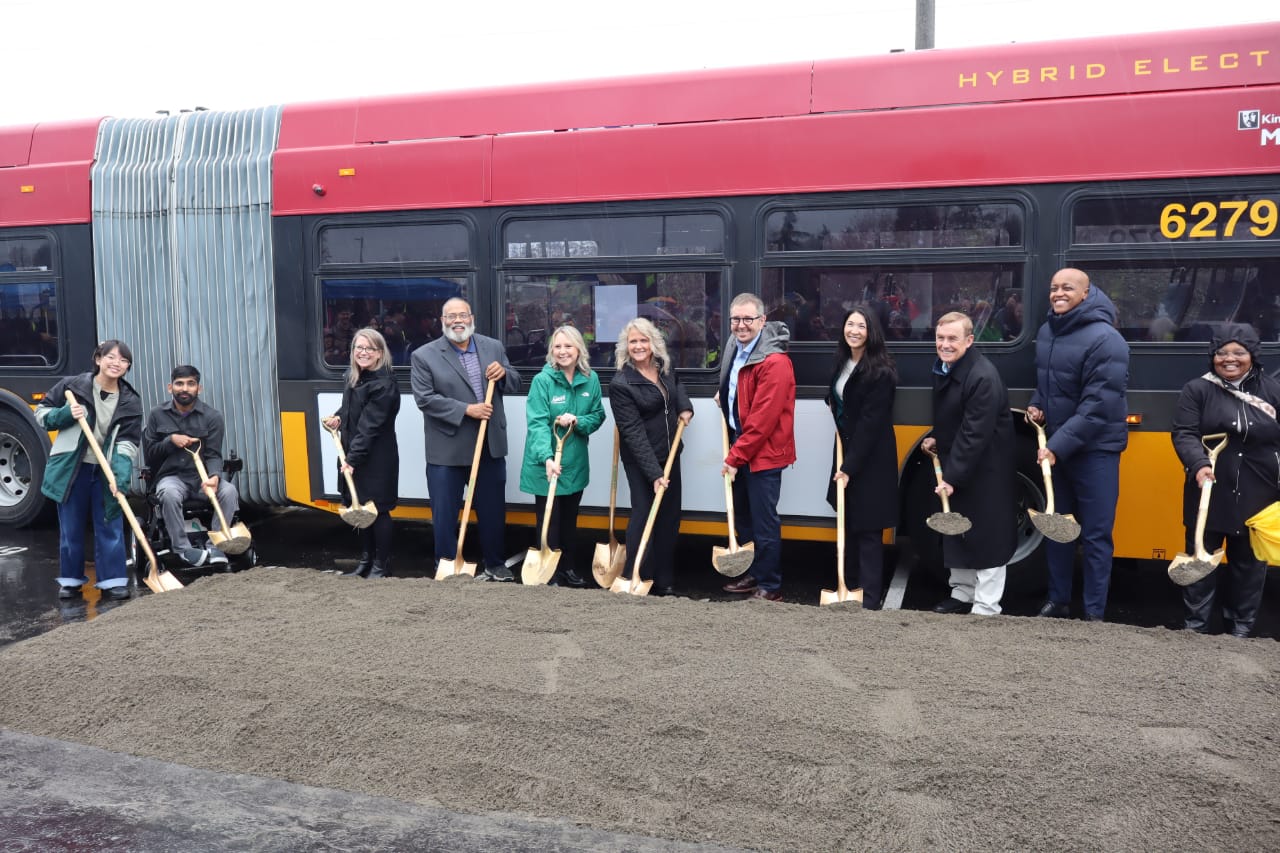
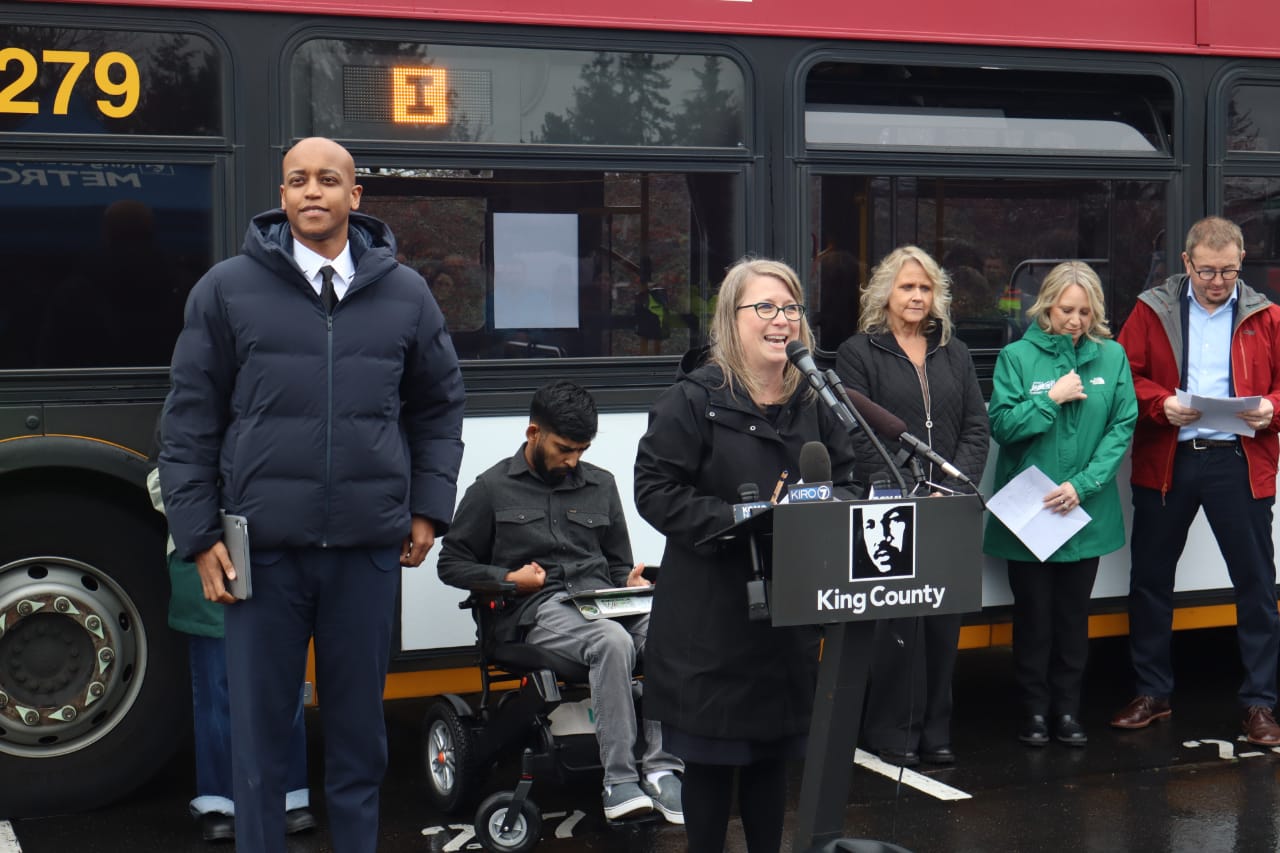
King County leaders along with officials from Renton, Kent, and Auburn put shovels in the ground Thursday to signal the start of construction on the RapidRide I Line, the first new bus rapid transit project in South King County in more than a decade.
A major upgrade for the existing Route 160 bus, the I Line will beef up a high-use north-south corridor and connect riders with major transit hubs in Renton, Kent, and Auburn. In addition to providing a direct connection to the Sounder S Line at Kent and Auburn Stations, the I Line will bring another frequent transit option to Sound Transit's planned Stride station at South Renton, a facility that is also under construction right now. That Stride line, along with the RapidRide F Line, will provide access to the broader Sound Transit light rail network.
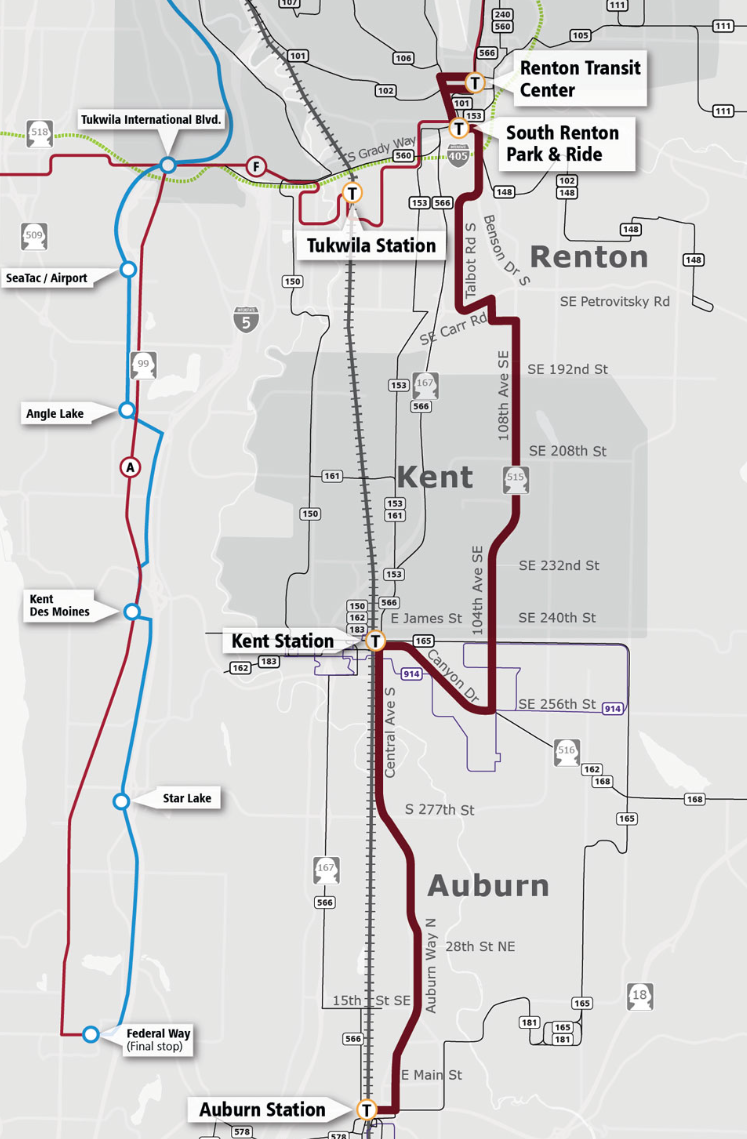
In contrast with other recent RapidRide projects including the G Line along Seattle's Madison Street or the H Line along Delridge Way SW, the I Line's upgrades represent a much lighter touch along the 17-mile corridor between Renton and Auburn. The biggest changes will occur at bus stops, with upgrades planned at 82 stations for both northbound and southbound I Line riders.
To keep transit moving a bit faster, 27 intersections will see overhauls, with targeted stretches of business access and transit (BAT) lanes providing dedicated space for buses at high-congestion locations. Construction is expected to wrap up in 2027.
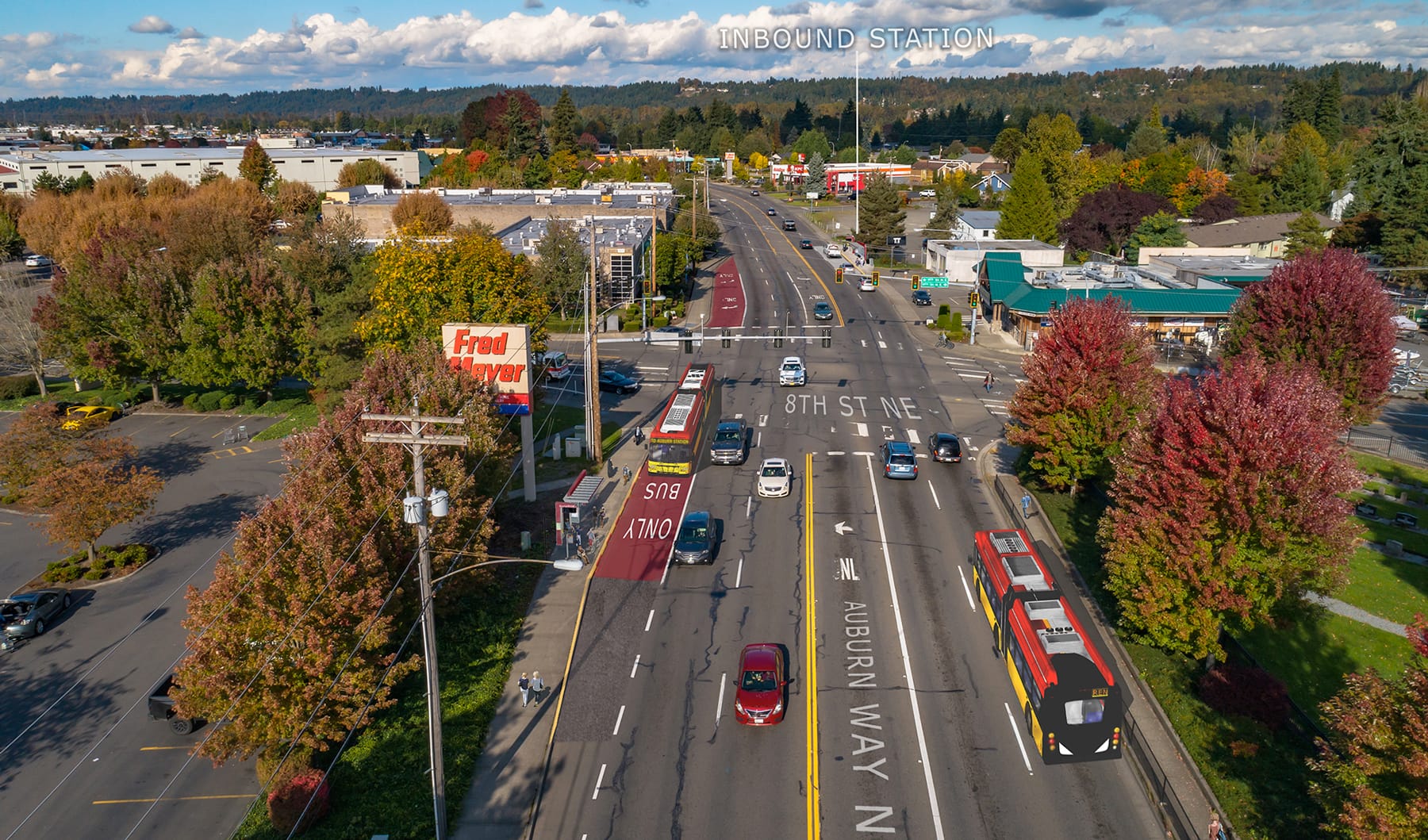
By 2040, as traffic levels increase throughout South King County, Metro expects these upgrades to save nearly 10 minutes per trip between Renton and Auburn during evening rush hour, and six minutes during the morning commute. Bus frequencies will increase to every 10 minutes during peak hours on weekdays, sticking close to their 15-minute frequency at other times of day.
The biggest gains will be seen on weekends, where that 15-minute service will be maintained, compared to the current service which comes every 20 minutes on Saturday and 30 minutes on Sunday.
"Today, we're not just breaking ground on a new transit line. We're breaking ground on the future where every person in South King County can move faster, breathe cleaner air, access more opportunity than ever before, and simply be on the move," Metro General Manager Michelle Allison said at Thursday's event.
A $174 million project, the I Line was able to secure a nearly $80 million federal grant during the Biden administration, with the wire transfer to King County completed just hours before the second Trump regime took power last January. That timing was likely impactful, with no new transit projects funded by a Trump-controlled U.S. Department of Transportation (USDOT) in the 14 months since then.
Additionally, $27.5 million in state funding was able to get the I Line across the finish line, along with $47.5 million in County funding.
"We know that South King County, more than any area in this region, is transit dependent," Kent Mayor Dana Ralph said. "Transit is not a choice for a lot of our residents, and the the under-investment in transit in South King County has been very clear for a long time, something we hear from our residents all of the time – that east-west connectivity matters. If you cannot use transit to get to transit, you don't get to use it."
The I Line has been moving forward since 2019, and has faced a number of roadblocks on its path toward this week's groundbreaking. Apart from the Covid-19 pandemic, King County faced a tough crowd at its negotiating table with local leaders from the three cities along the I Line. In 2023, Metro released a revamped design that responded to some of those requests from local officials, with station locations and pedestrian improvements reconfigured.
Further delays came when Metro ran into issues acquiring properties for the I Line's expanded stations and BAT lane segments, with a small number of property owners reluctant to sign agreements holding up the entire project. Ultimately, the agency went to the County Council to unlock the ability to utilize eminent domain, but concerns around an overly broad use of that authority prompted Metro to scale back its request before moving forward.
Without resolving those stalemates over right-of-way, the I Line might still be mired in planning.
Delays on the I Line took center stage last year with the release of a report on how to expedite future RapidRide projects. Among other recommendations, the report cited benefits that could be gained from getting local officials to sign off on interlocal agreements ahead of time, reducing the amount of time spent bartering over individual project elements. Staffing challenges on the local level were also cited as a major impediment.
"It became apparent throughout this process that Metro had underestimated the amount of time some jurisdictions would need to review design packages and the staff and management time it would require to resolve the quantity of comments toward completing design,” that report said of the I Line.
Beyond the I Line, the path to expanding the overall RapidRide program is unclear. In Seattle, RapidRide J has been under construction between Downtown and the University District since 2024 and is expected to open around the same time as the I Line. It's a much more intensive project, coming with significant upgrades to bike infrastructure.
After that, it's anyone's guess when a new RapidRide project will come online, with the K Line between Kirkland and Bellevue next in the queue followed by the R Line between Rainier Beach and Downtown Seattle. Both of those projects have seen delays and scope reductions in response to new "budget realities." Given a severe shortage of transit funding at the federal level, those realities aren't expected to be resolved any time soon.
Route 160 riders will certainly appreciate the upgrades coming to their route, and the connections that the I Line will enable to the rest of the region.
 Ryan Packer