Yet designing for cars continues to be a problem in the city’s fastest growing neighborhood.
When cataloging development in Kirkland, it’s evident where the City has focused much of its development capacity: Totem Lake, a neighborhood defined by its strip malls, car dealerships, car services, light industry, and office buildings, is taking on the most growth of the city’s neighborhoods. The zoned capacity, and thereby scale of change, is peerless compared to Kirkland’s other neighborhoods. But is the City properly addressing all the neighborhood level planning needed to make sure the growth is livable for future residents? In this article, the first of a three-part series focused on Kirkland, we’ll explore the significant development plans for Totem Lake and what kind of new neighborhood they seemed poised to create.
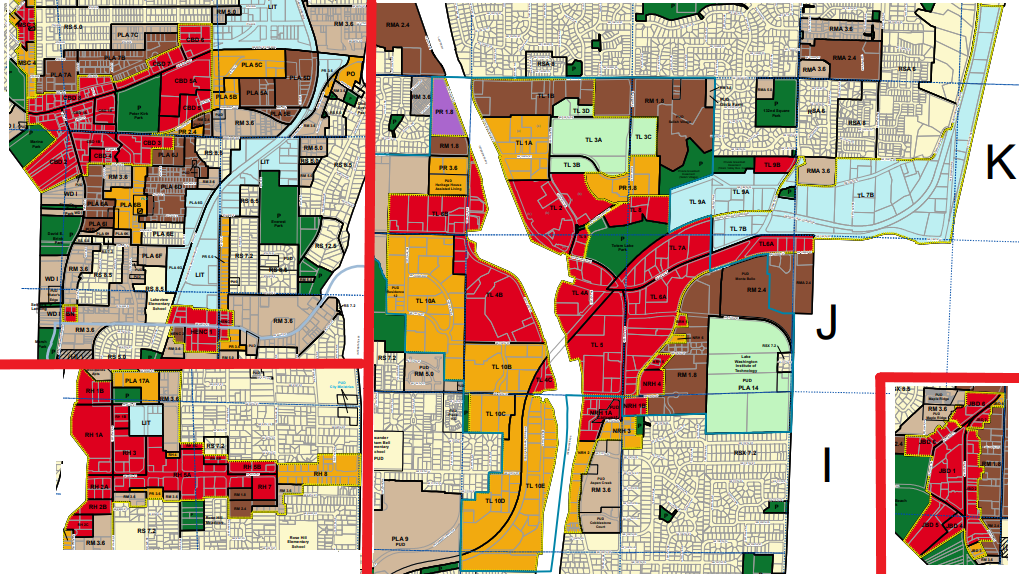
While tracking down recent, ongoing, and proposed development, it’s unmistakable why Totem Lake is the center of growth in Kirkland. There wasn’t a critical mass of single-family homeowners to push back against increases in density unlike in most other areas. Additionally, the industrial and commercial zoning mean there are larger lot sizes available for developers to purchase.
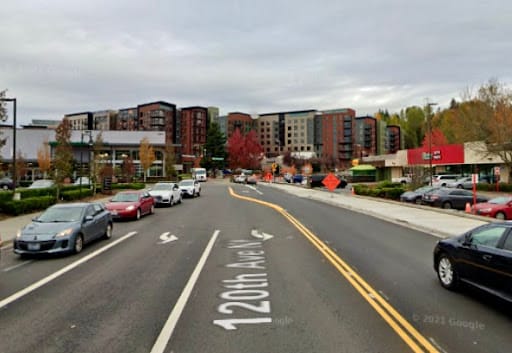
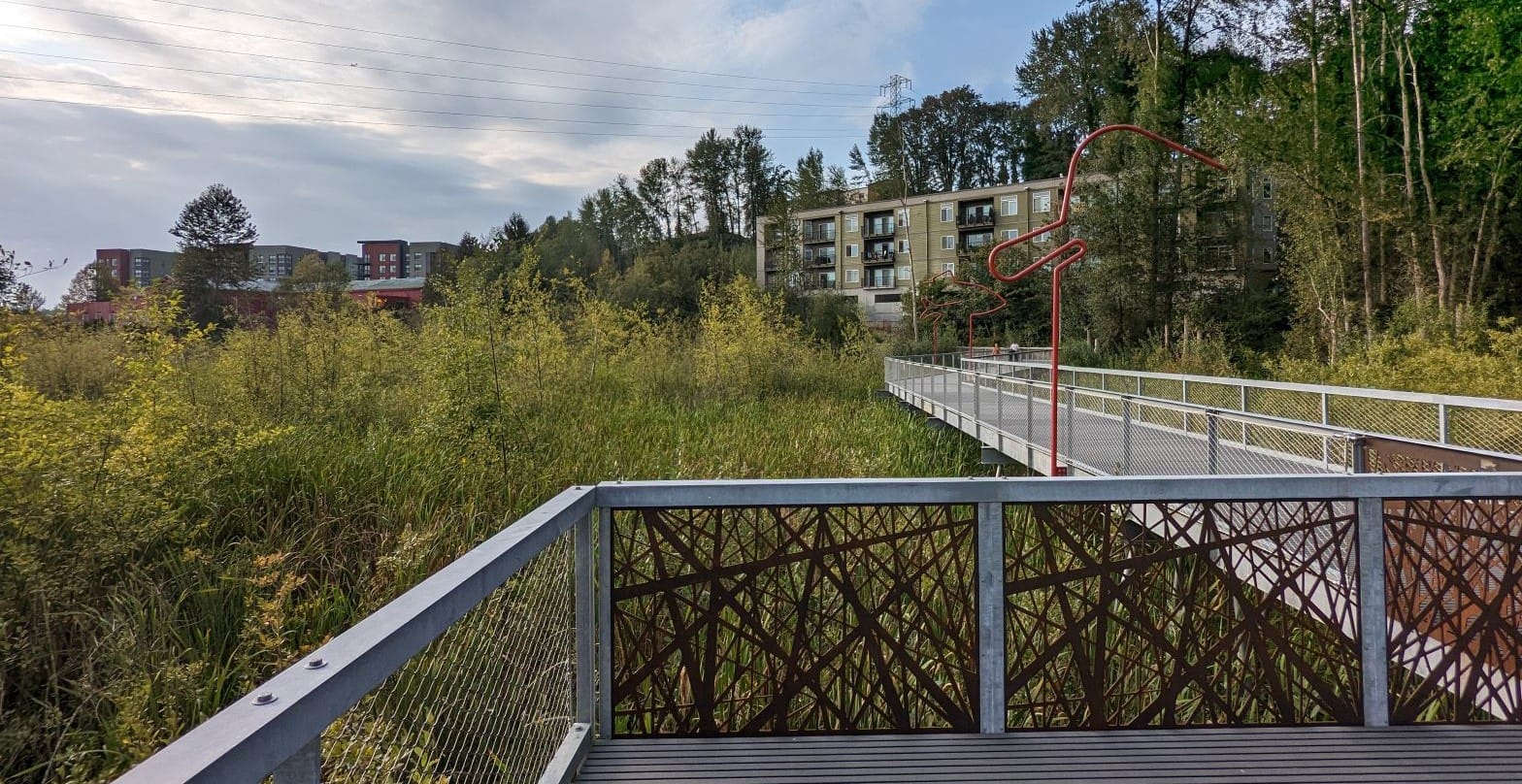
But this history in built environment and infrastructure has lent tremendous challenges for an upcoming neighborhood. Walking around Totem Lake, I juggled feelings of urbanist euphoria, confusion, surprise, and terror. One moment, I was strolling in an awesome wetland park walkway. In the next, I was navigating a patchy sidewalk network set against wide stroads, which combine commercial activity with high speed traffic, like 120th Avenue NE.
I-405’s bisection of Totem Lake also had me crossing a wide maze of pedestrian/car conflict prone highway ramps to navigate the neighborhood. Both the vision and reality for Totem Lake can be seen on the ground. This story can also be told through the active evolution of the neighborhood.
Building up Totem Lake
Kirkland categorizes Totem Lake into four subareas, but I think it makes more sense to roughly go north to south starting near NE 132nd Street and ending around NE 112th Street. Within this area residential and mixed-use development is dominant, and one can get a better sense of the transportation infrastructure with that progression. We will start with the most developed and well-connected section of the neighborhood with the frequent Route 255 in a reasonable walkshed and the planned Sound Transit Bus Rapid Transit station. RapidRide K, the planning for which is currently on hold but will hopefully return once King County reallocates funding, will also serve this area of Totem Lake eventually.
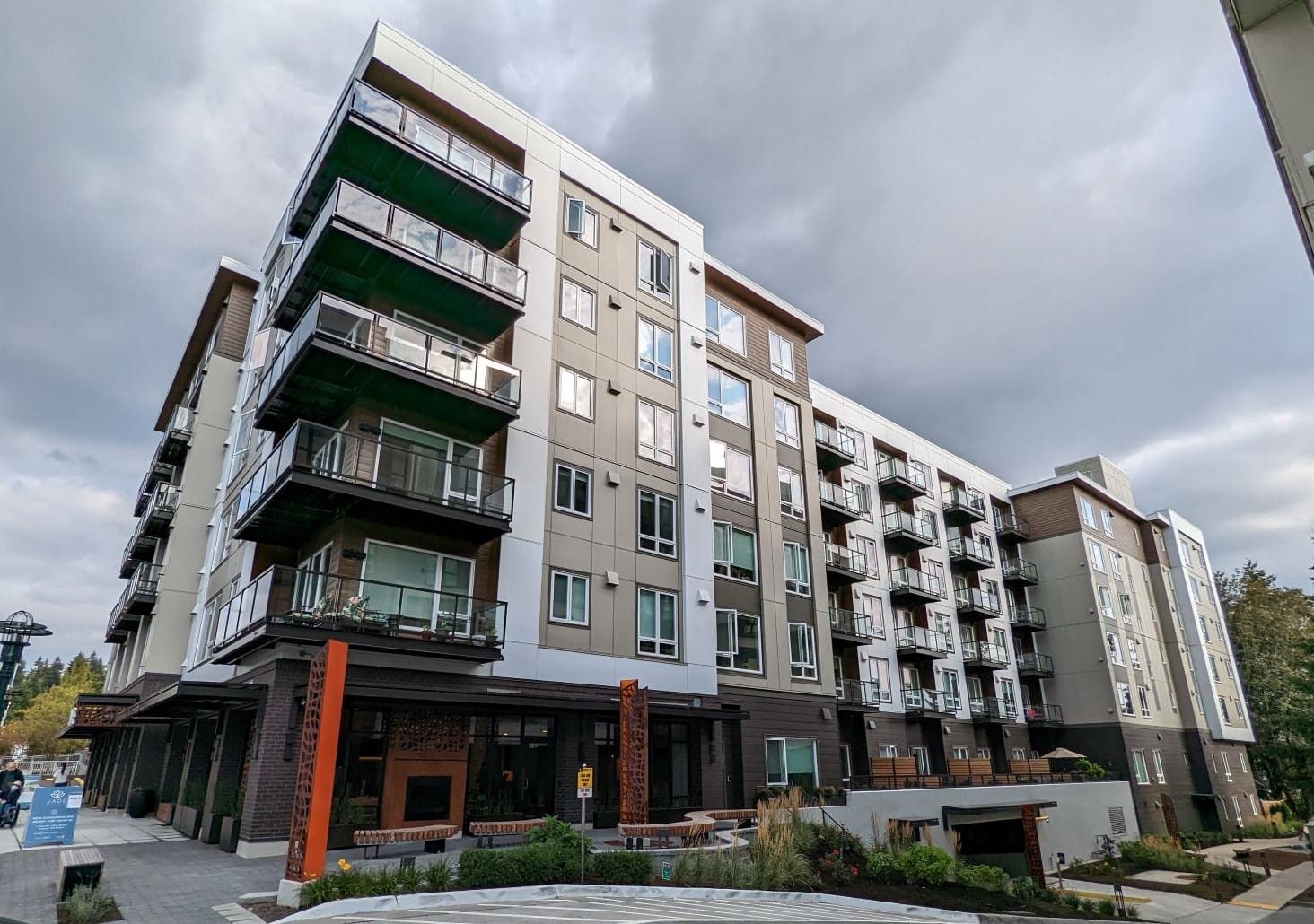
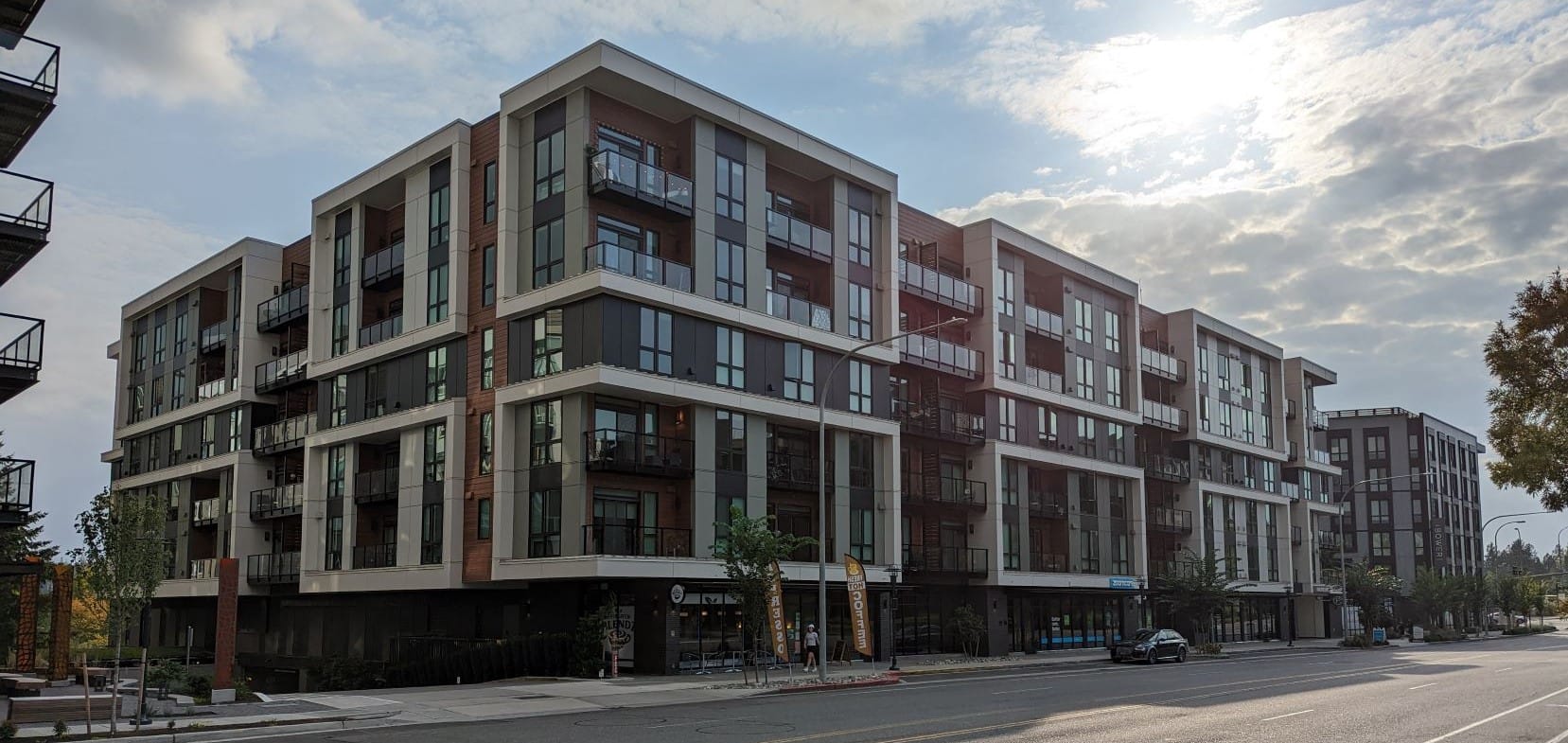
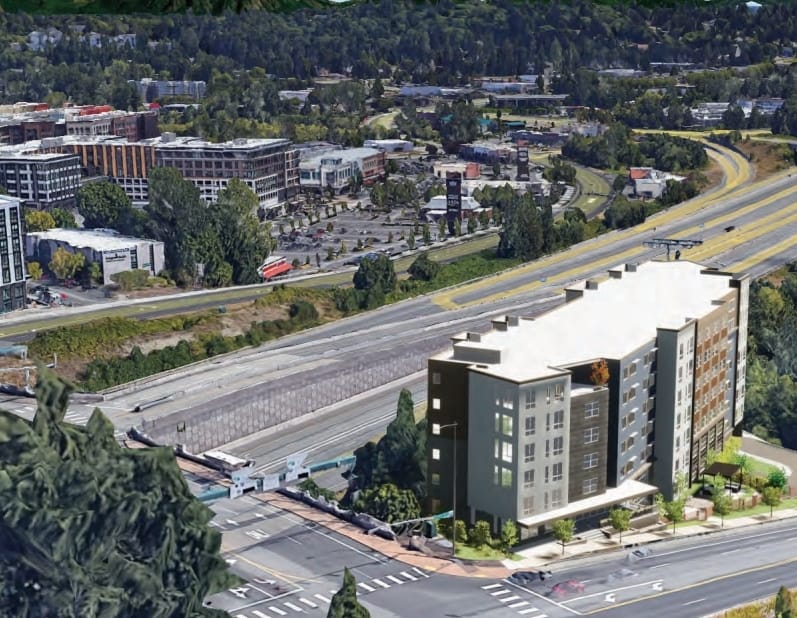
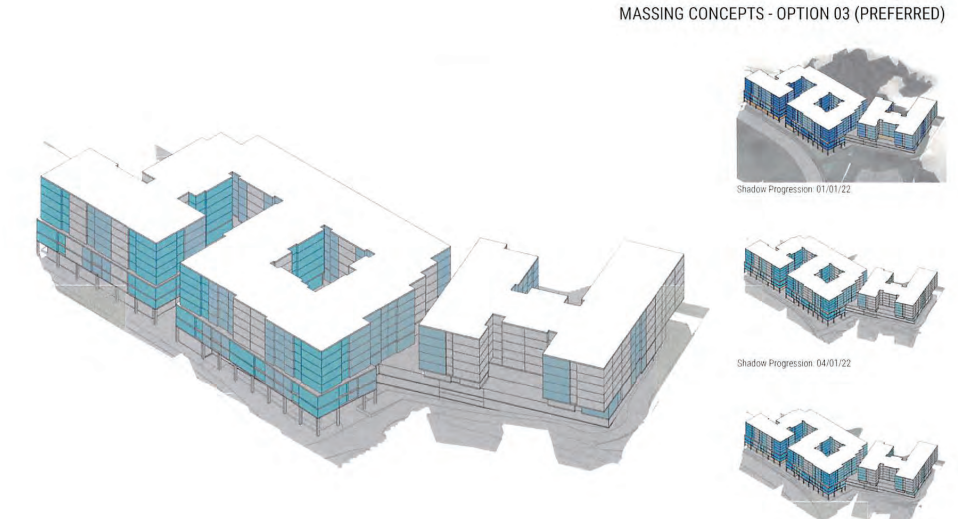
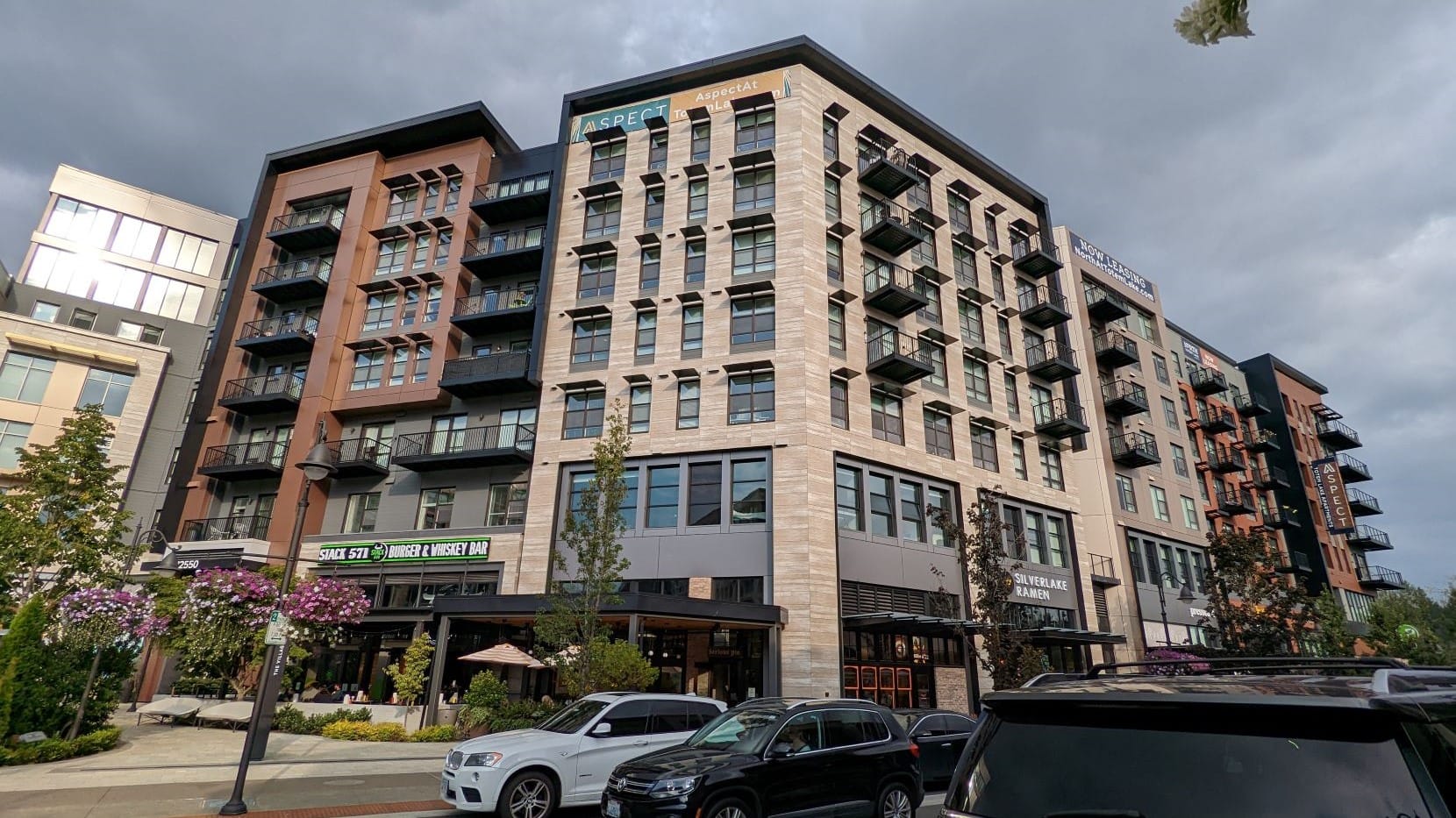
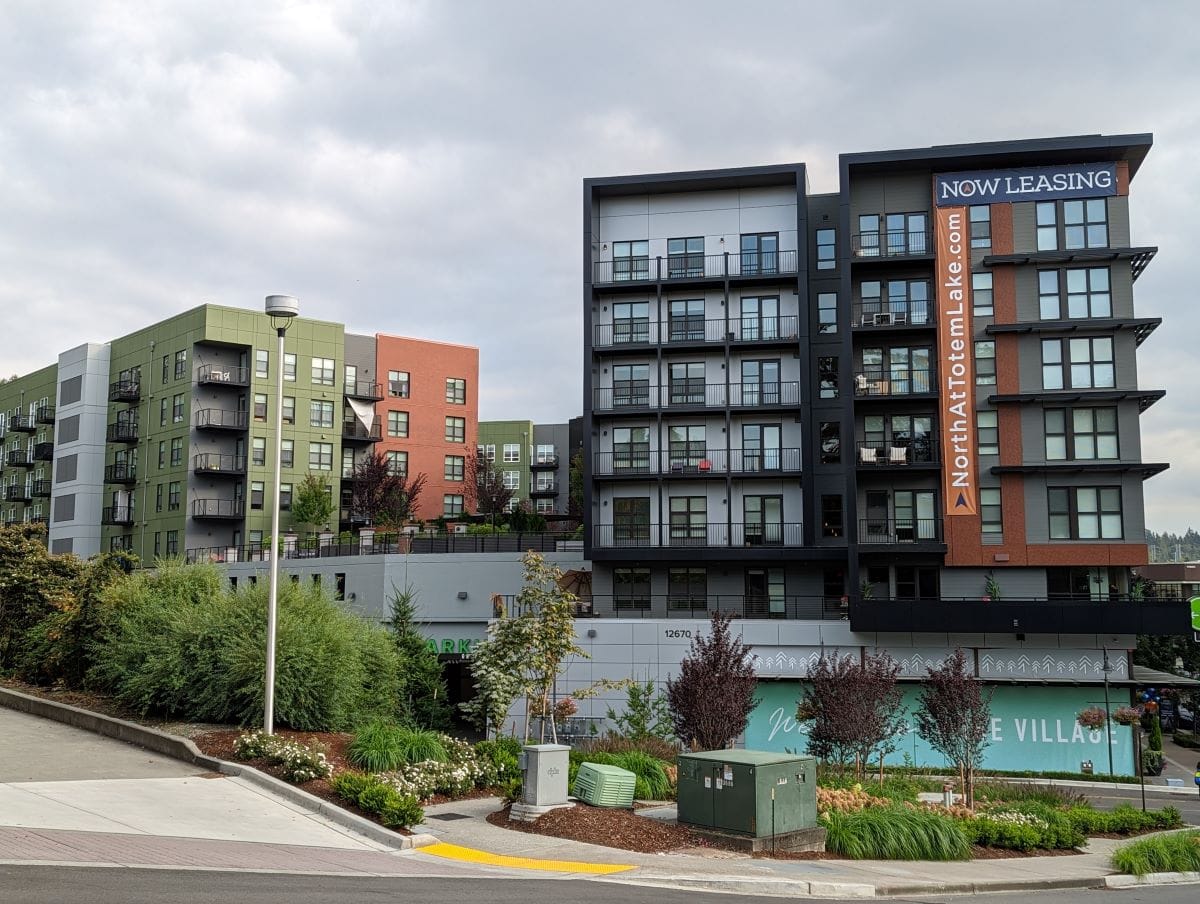
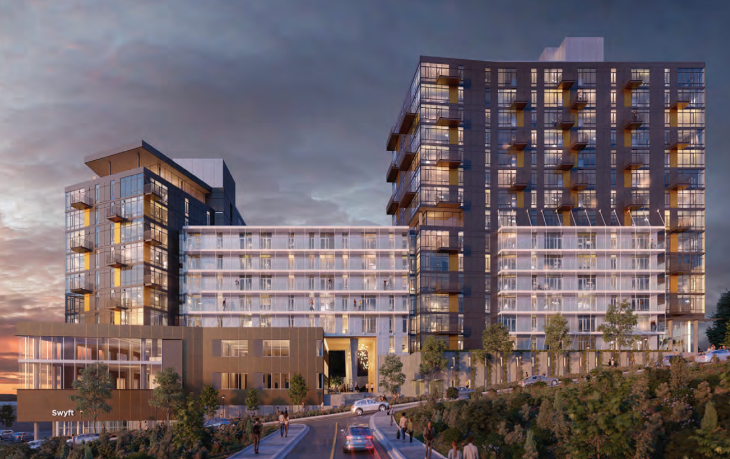
As we move farther south and east the transportation infrastructure worsens, as projects are now well outside of a reasonable walkshed of the 255 and the planned BRT station. This next batch only has access to the Cross Kirkland Corridor (Kirkland’s section of the Eastrail) and very infrequent bus routes that run once or twice an hour. In a few spots, sidewalk infrastructure is nonexistent. This part of Totem Lake still mostly contains car dealerships, strip malls, and other car-centric services that defines Totem Lake’s present and recent history. Here we start seeing mobility of future residents restricted in the direction of car dependency.
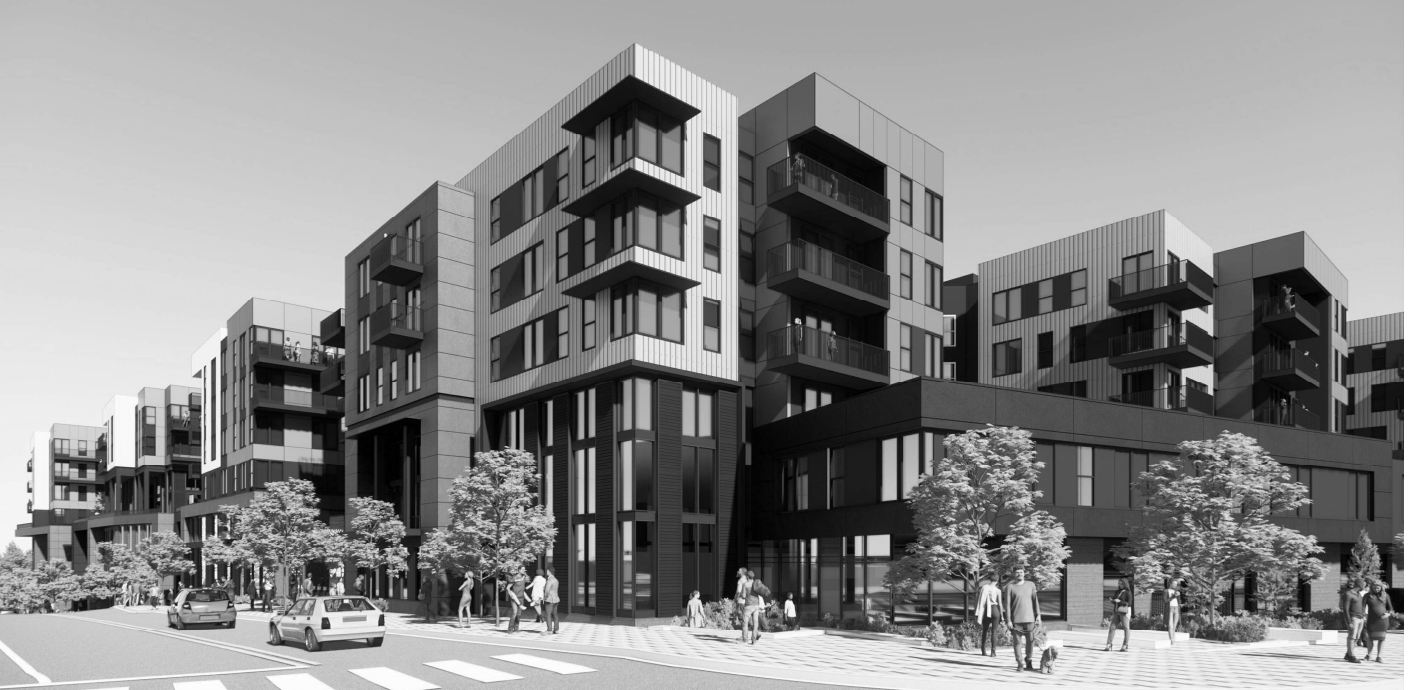
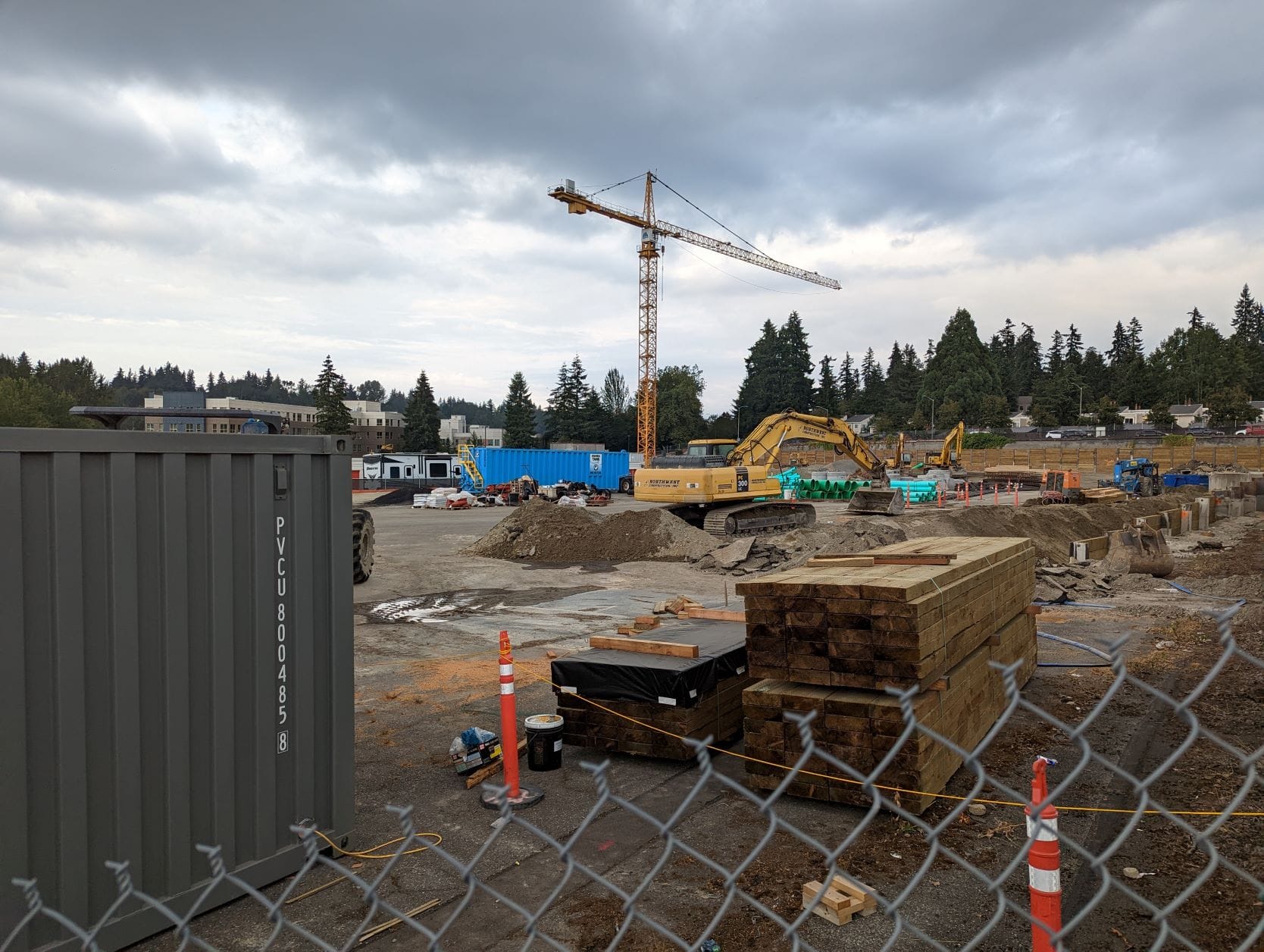
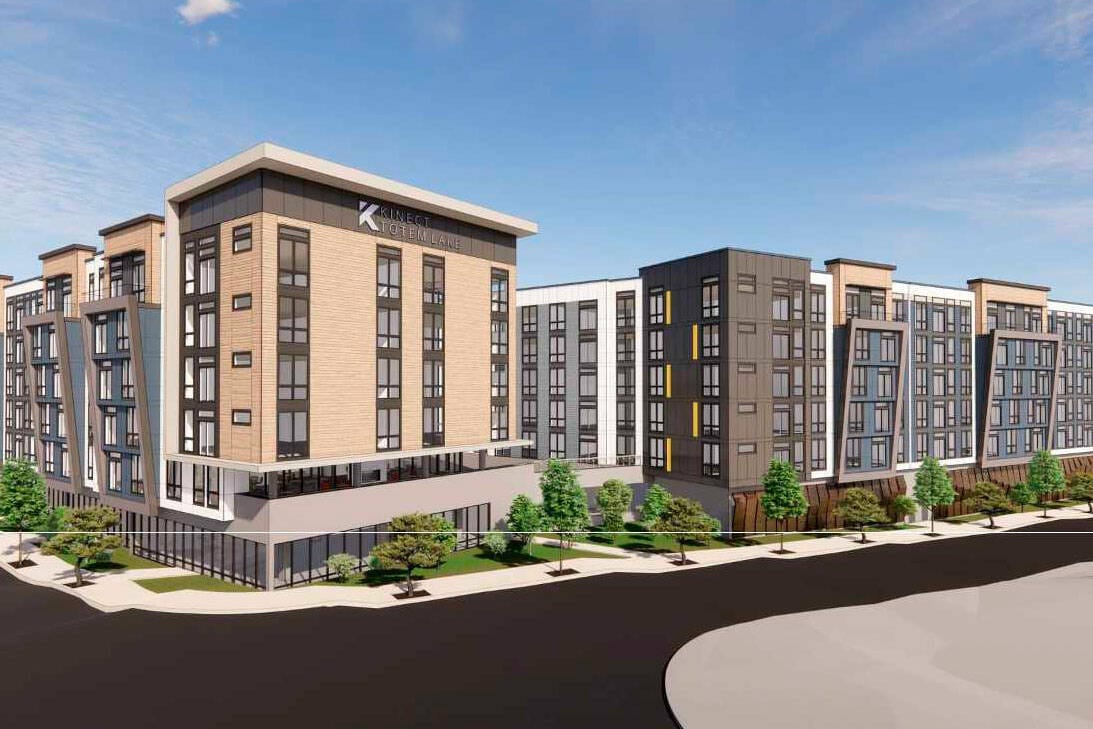
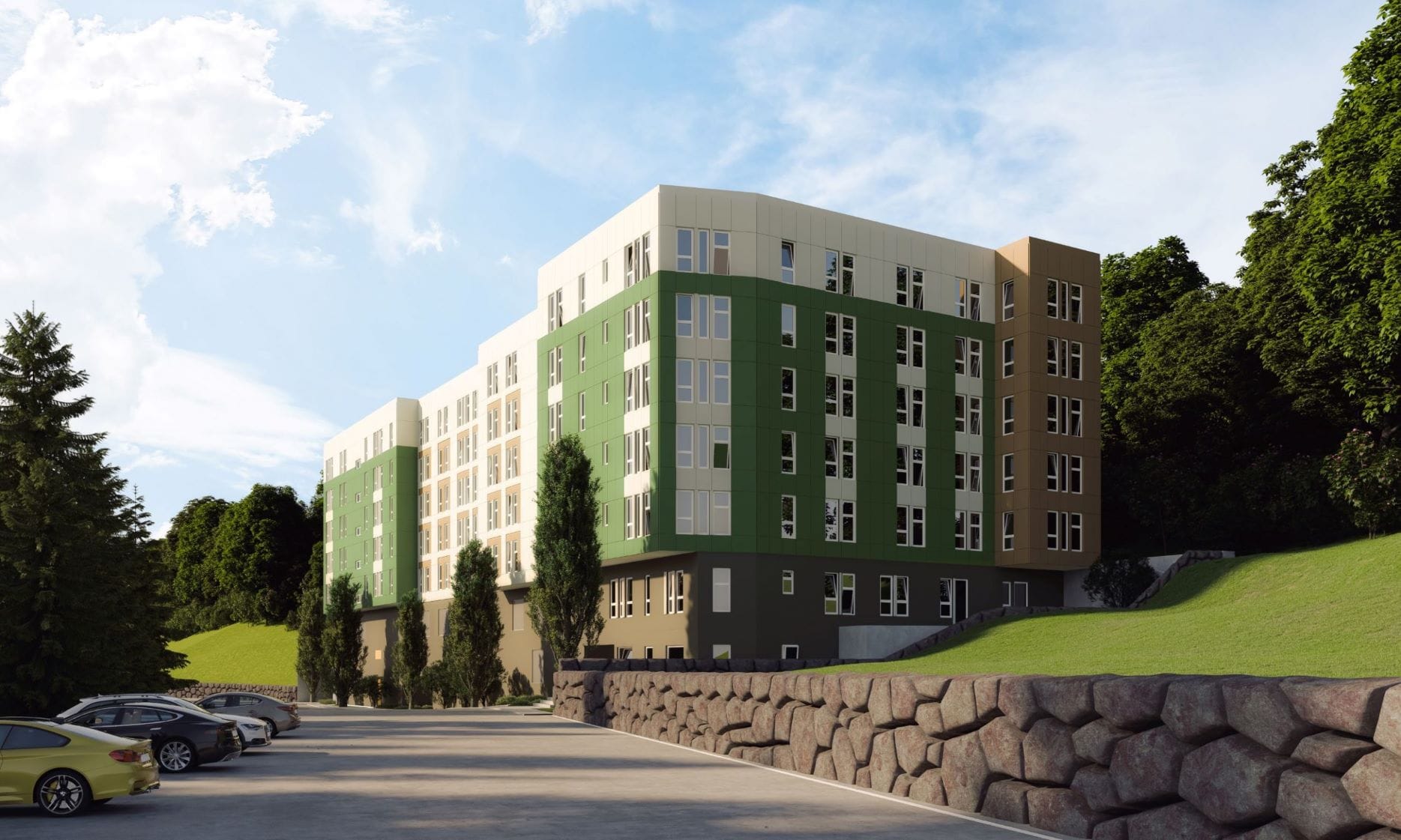
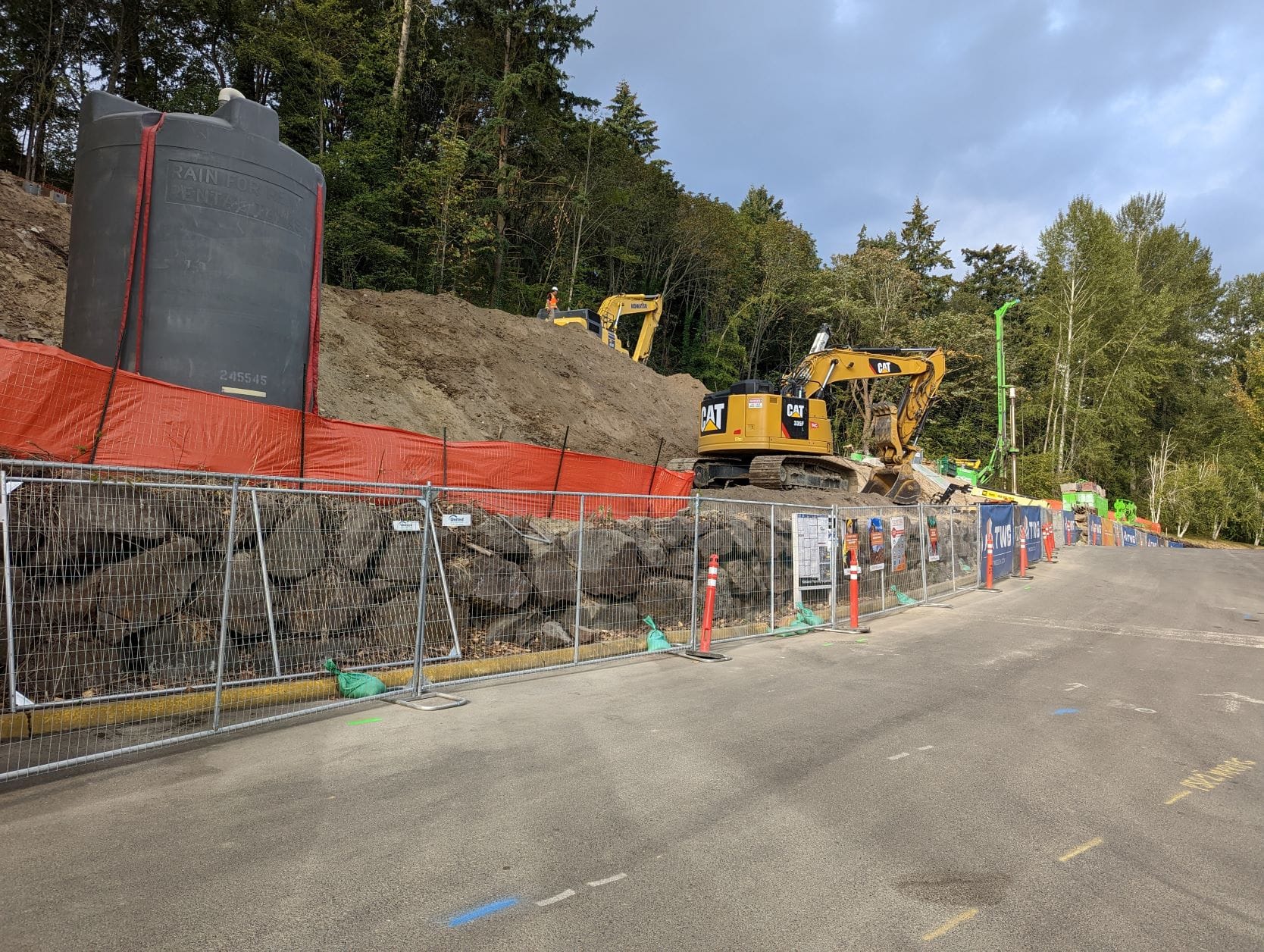
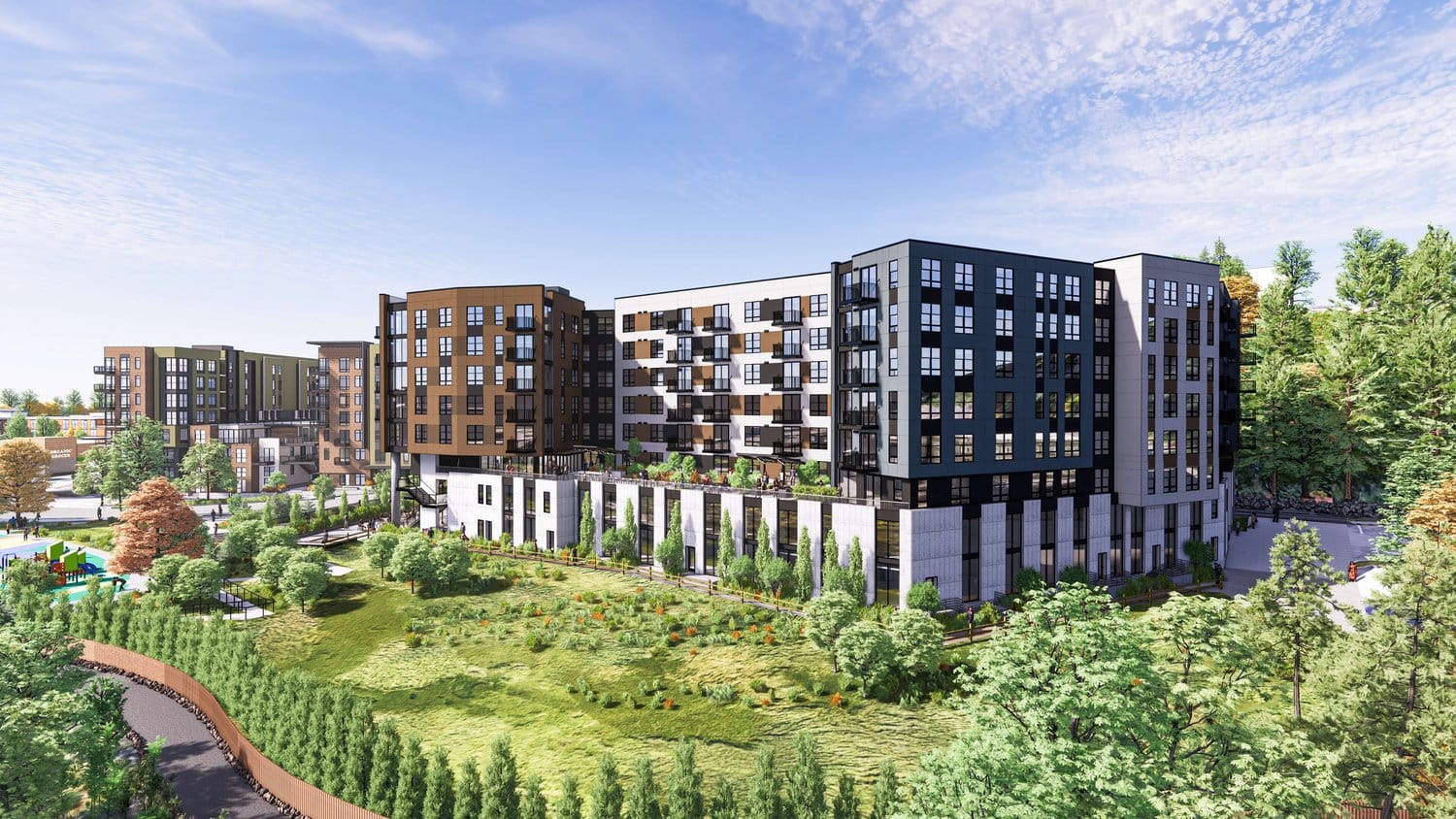
Outside of the typically midrise apartments, there are some wildcards thrown into Totem Lake’s development mix. Here we also see completely untouched section of Kirkland that one could see as sprawl. That Grata Totem Way site was also untouched greenery before its recent grading work.Troubling growth
As we continue farther south and west, we reach a segment of Totem Lake that has an unreasonable walking distance to any existing transit facilities. The only piece of transportation infrastructure here is the Cross Kirkland Corridor. The sidewalk network is the spottiest here. The transportation infrastructure here has actually worsened with loss of Route 236, which served NE 116th Street, in the North Eastside Bus Restructure in 2020. The large developments here have no choice to be car dependent, which is especially concerning given the scale of development planned and built.
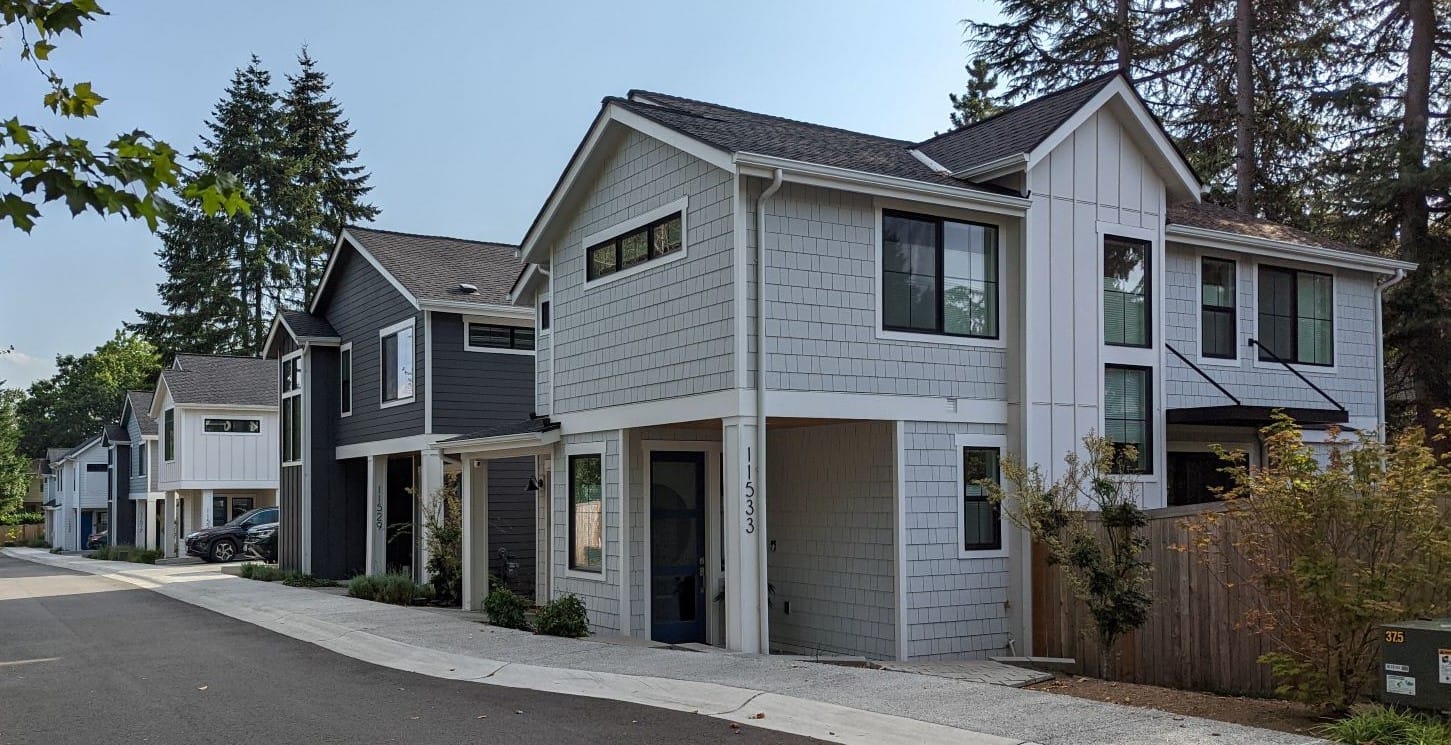
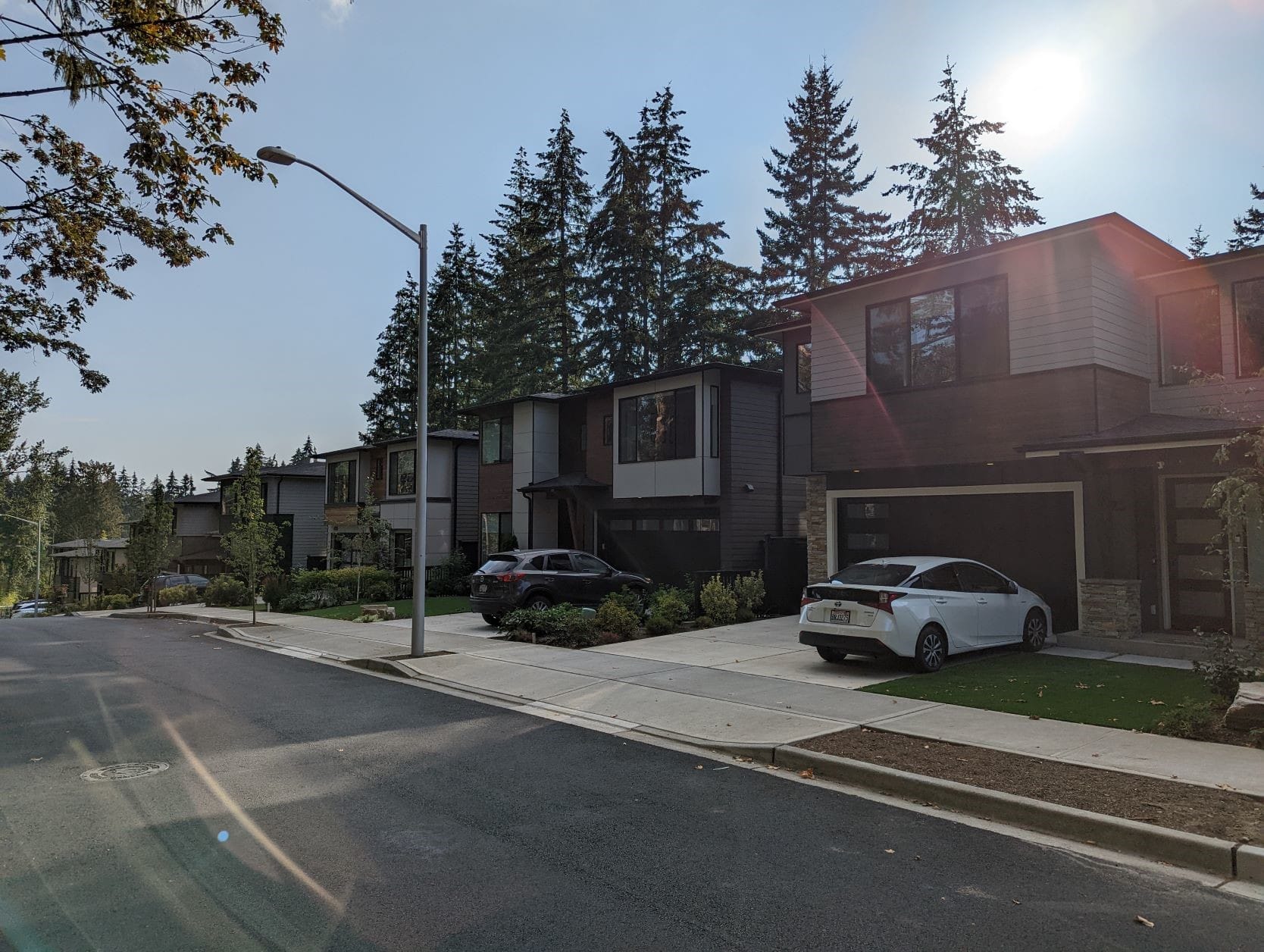
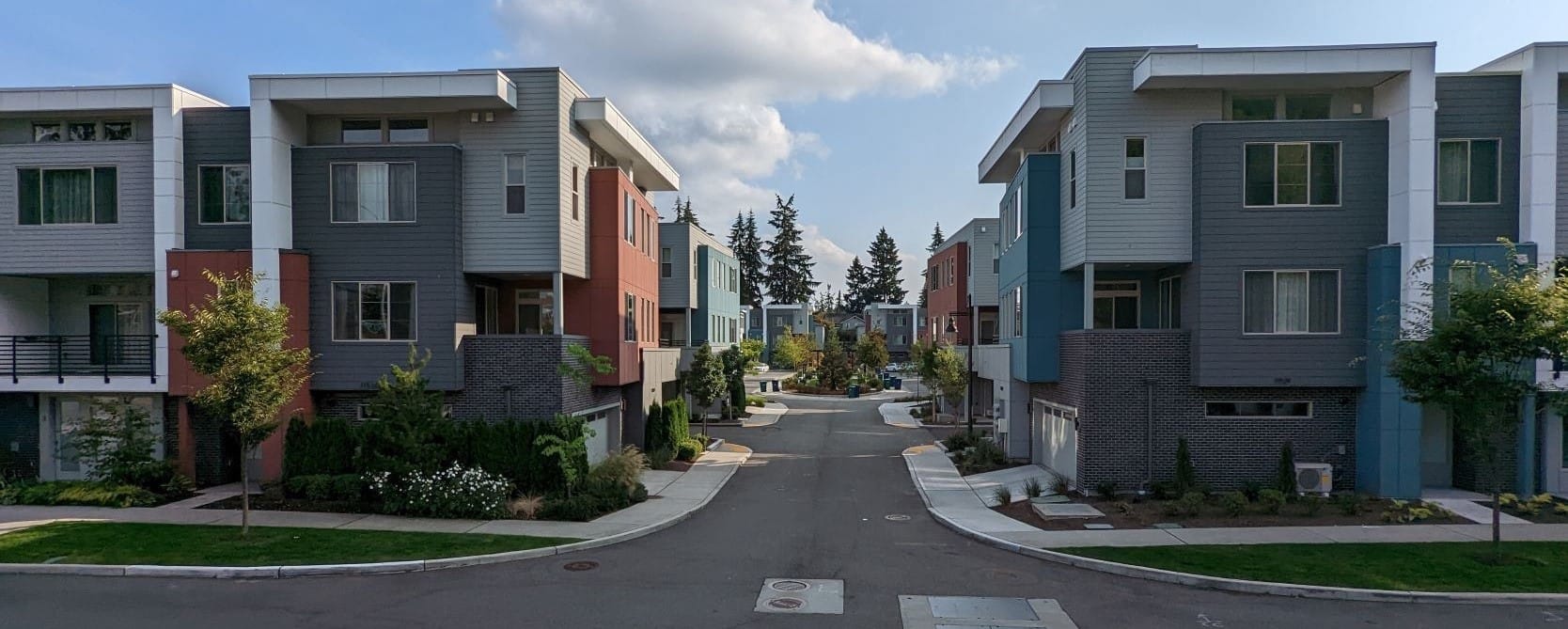
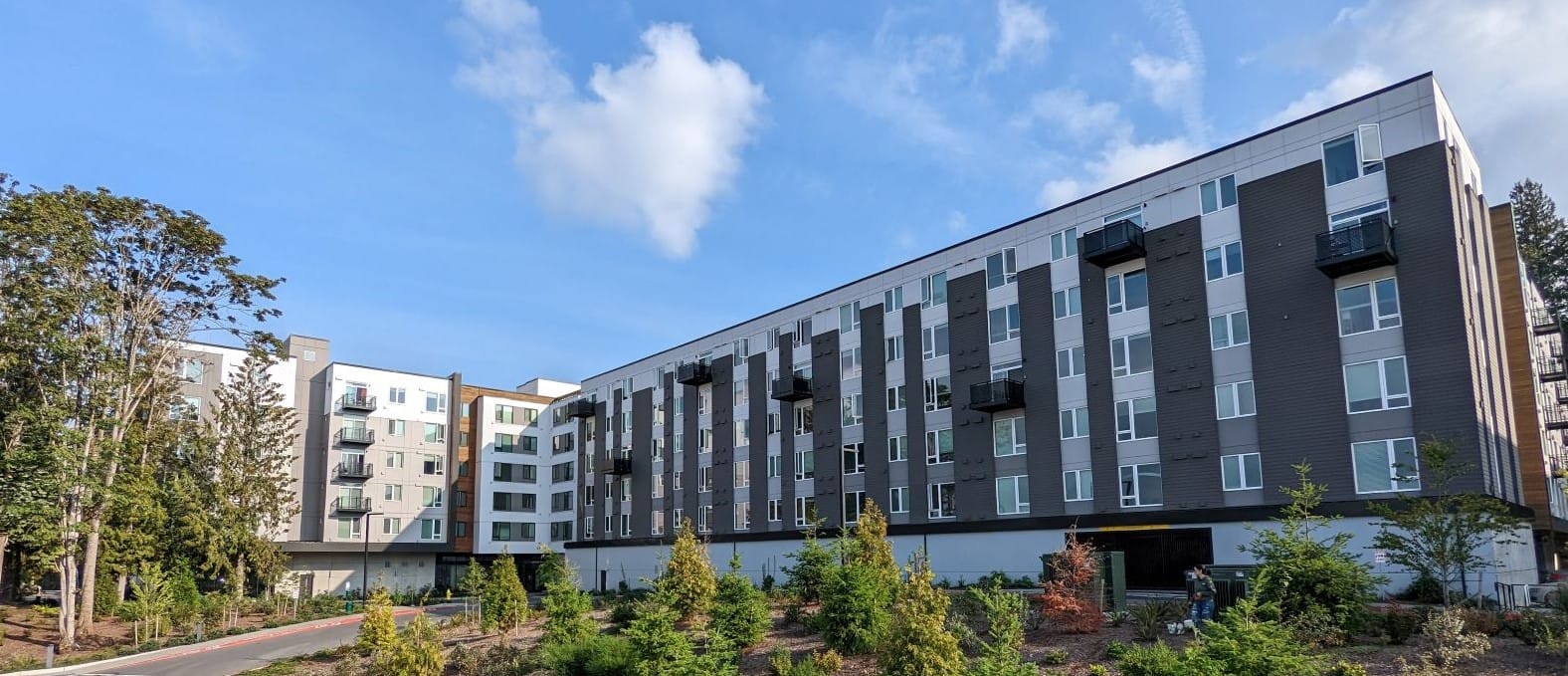
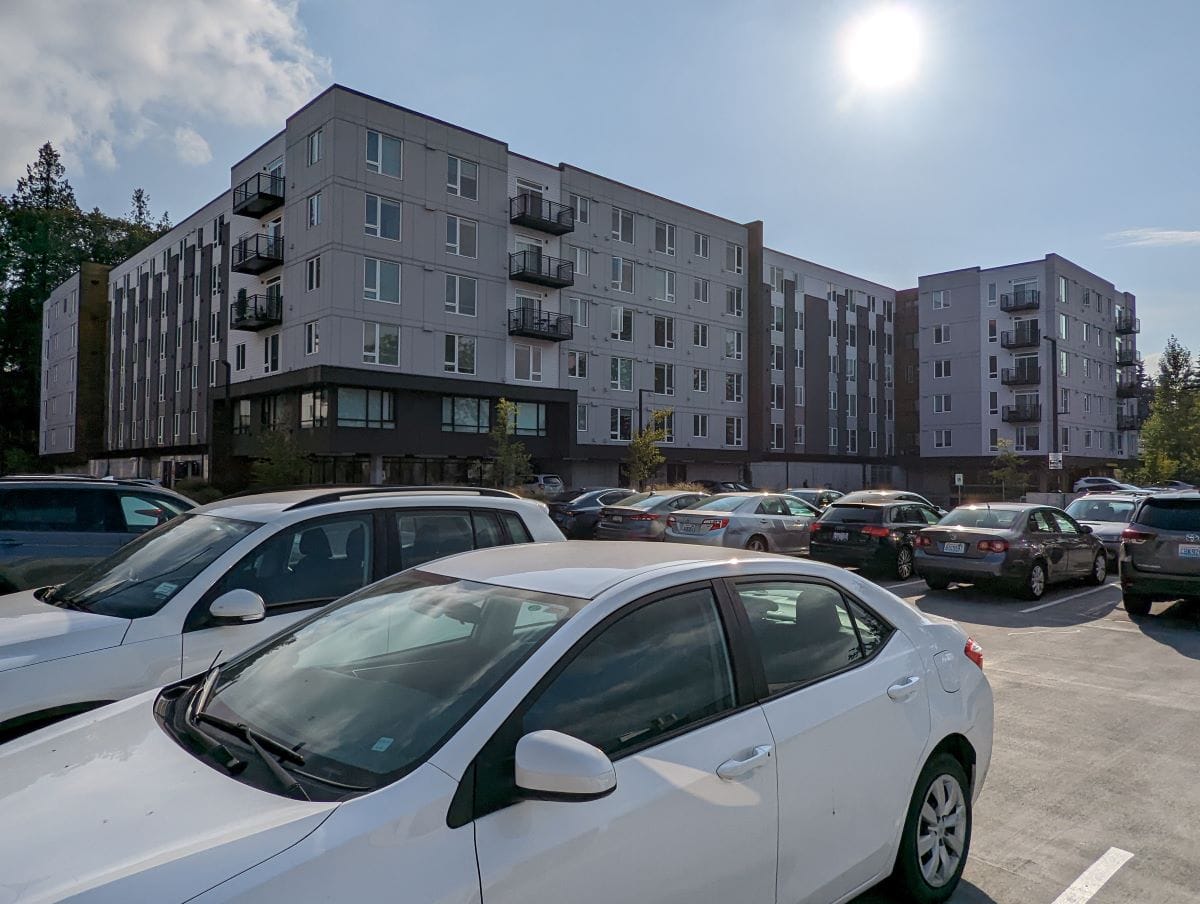
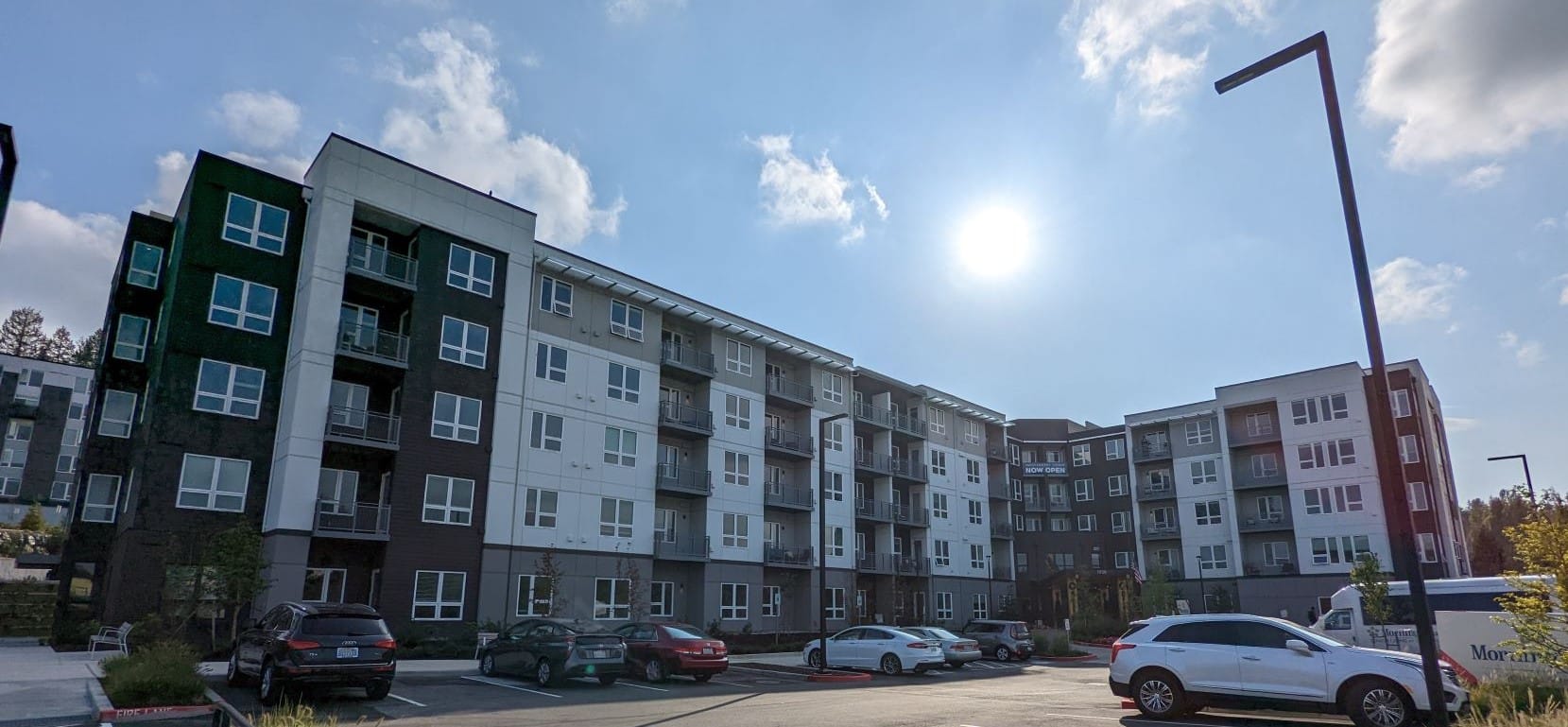
Outside of Totem Lake proper, there are projects that are well within Totem Lake’s orbit. Scattered throughout and below are projects that technically fall in neighborhoods like Juanita, Rose Hill, and Kingsgate, but could be considered more aligned with Totem Lake.A reflection of KirklandTotem Lake was built to be car-centric in the past. Without changing that base structure, this new development is being forced to take on that legacy in its design. Much of the neighborhood is simply not served by public transit. The sidewalk network is inconsistent throughout the neighborhood. Totem Lake is also completely bisected by I-405, weakening intra-neighborhood connections.
As a result of this reality and the code, much new development in Totem Lake remains car dependent. It’s just getting taller with apartment buildings, a trend that is clearly reflected in the numbers.
Since 2019, there have been around 1,848 units built with 3,128 parking stalls. Tens of thousands of square feet of commercial space do help balance the parking ratio, but the one-plus parking to unit ratio is known to encourage driving. Including what’s being planned and constructed, 4,648 units, 6,939 parking stalls, and nearly 340,000 square feet of commercial/institutional space have been built in Totem Lake since 2019 or are potentially or confirmed to be on the way in Totem Lake.
While the parking is a problem, one bright spot in all this development is that roughly 1,200 affordable units will be included in that 4,648 figure. This comes from the 829 units in completely affordable buildings, and the 10% inclusionary housing requirement that Kirkland has. More of these affordable units could be delivered with affordable housing programs like the Multifamily Tax Exemption Program.
Totem Lake’s existing and diverse conditions gives us a sample of the character of development happening throughout the rest of Kirkland. North Totem Hill resembles Downtown’s transit rich environment, while South Totem Hill is just like all the other transit deserts in the city. Increasingly dense areas in Kirkland without transit like South Totem Hill are consequential regarding congestion, climate, and accessibility. Especially with Totem Lake not ever near reaching zoned capacity, resolving the lack of transit is critical if the Kirkland has any appetite to reduce the neighborhood’s car dependency. Though with the thousands of new, and incoming parking stalls, in Totem Lake, the neighborhood and city will have a difficult time to course correct.
Build on Kirkland’s Success with More Housing Near Route 255 and a Simple Parking Fix